Ever wonder how to break into this digital era we currently live in? While you’re figuring out your niche and your audience, one thing to always keep in the back of your mind is how you’re going to tell your story. Whether you’re a musician looking to create a viral hit, or a young girl looking to share your creative ideas, learning how to tell a good story will propel you forward on any digital platform.
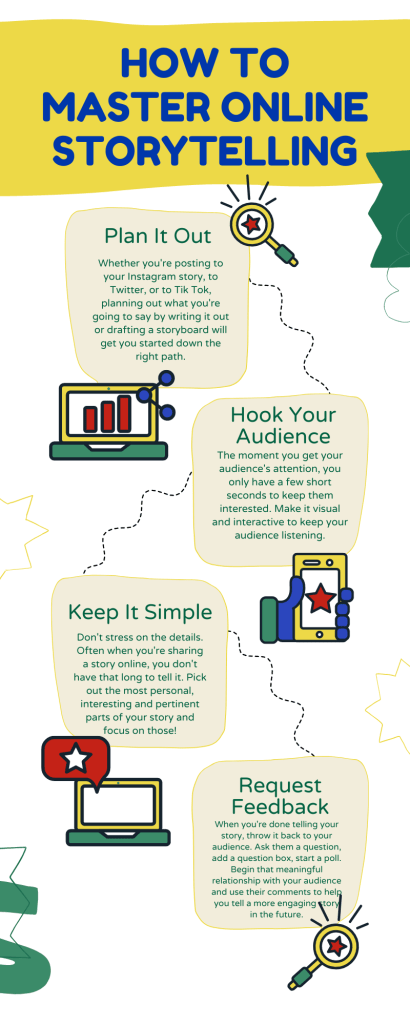
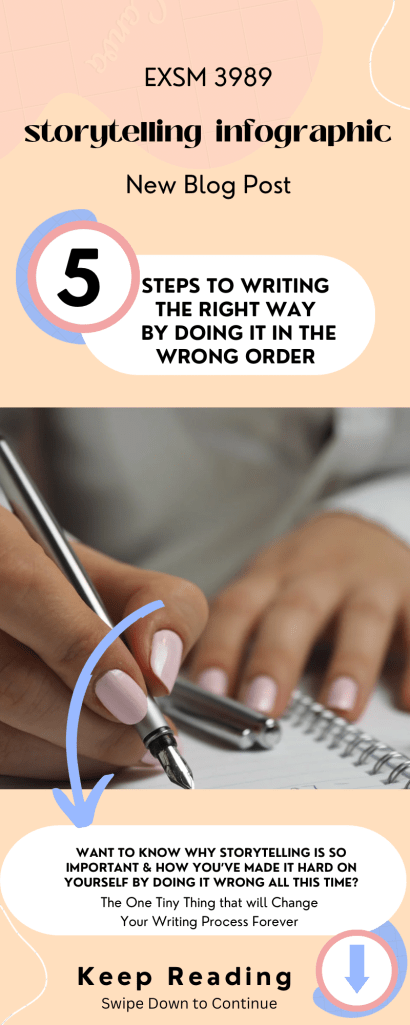
I’ve outlined the four steps necessary to mastering online story telling. Here are the highlights:
Plan It Out
Like any big project, essay, or vacation, planning is an essential step to any content you wish to create. This streamlines the development of the content and shows that you put effort into your work.
2. Hook Your Audience
With social media, our attention spans are getting shorter and shorter. It’s important that we find new and creative way to attract and maintain our audience’s attention.
3. Keep It Simple
Although it can feel like your audience is full of your friends, keeping granular details to a minimum when telling a story can be beneficial. This way you can focus on the most interesting parts of your story instead of cluttering your content with unnecessary details.
4. Request Feedback
It’s important that we engage with our audience. Make sure to always throw questions back to your viewers and readers to get their opinion in the comments. Not only will you build a better relationship with them, but you’ll also get direct feedback on how your content is doing and how to improve on it.
One of the biggest challenges in digital marketing today is swimming through the sea of information and getting your content to shine, especially when it comes to the endless plethora of posts on a social media newsfeed.
With shorter attention spans and a greater tendency for people to skim, digital marketers need to find ways to get their message out quickly, concisely, and in the most engaging way. With only seconds to convince the audience of your content, pitching your company or messaging in the digital marketing sphere seems even harder than pitching a product on Shark Tank.
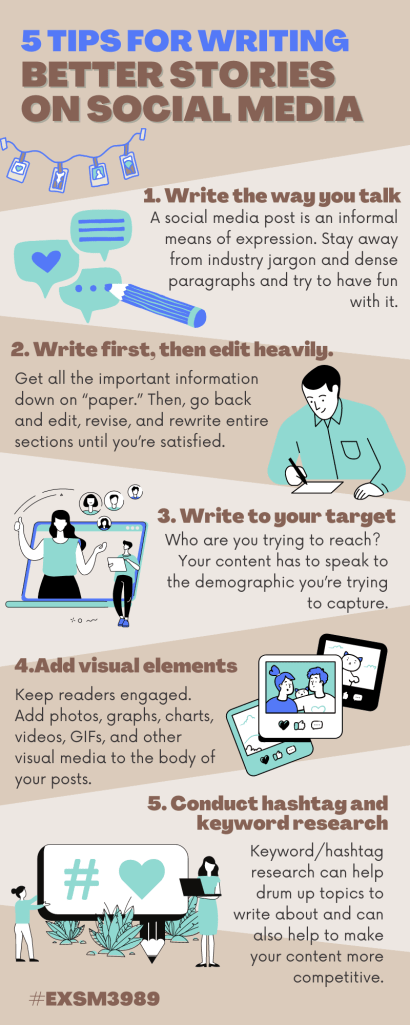
While it can be challenging, it is not impossible and Eric Goldschein gave some great points in The Non-Writers’ Guide To Writing Better Social Media Copy on how it can be done. Below are five of his tips that I feel are the most impactful:
Write the way you talk A social media post is an informal means of expression. It should be accessible to anyone who wants to learn more about you or your business. Stay away from industry jargon and dense paragraphs and try to have fun with it.
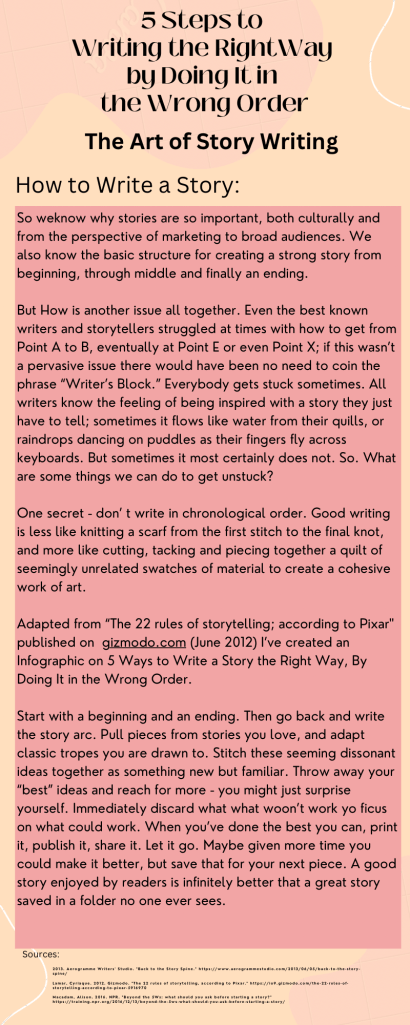
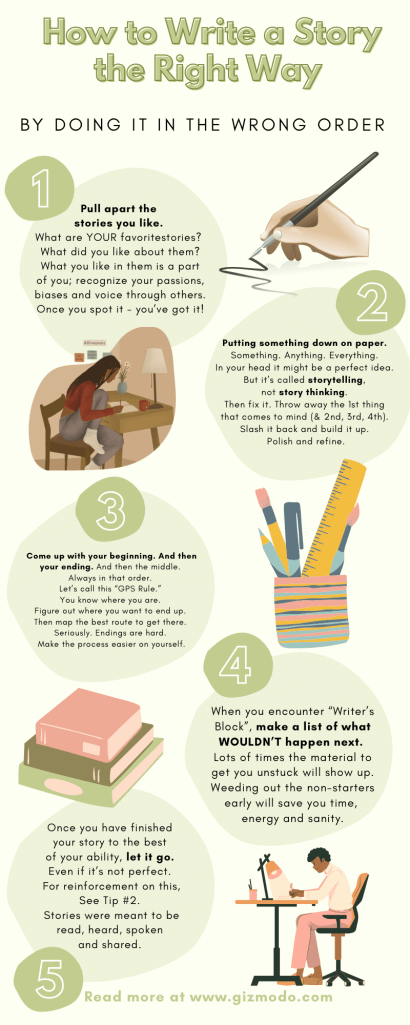
Write first, then edit heavily Get all the important information you need to say down on “paper.” Once you have a draft, go back and edit, revise, and rewrite entire sections until you’re satisfied.
Write to your target audience Think about who you are trying to reach.? Gen Z or Gen X? Your content has to speak to the demographic you’re trying to capture.
Add visual elements to your posts Keep readers engaged with visuals. Add photos – as well as graphs, charts, videos, GIFs, and other visual media – to the body of your posts.
Conduct hashtag and keyword research Keyword and/or hashtag research to come up with topics to write about, it can also help to make your updates more competitive in the sea of ever-growing content on the web.
We cannot deny that we are now operating and existing in a highly digital era. Social media is the new norm, and snippet form storytelling is even more common. As a result, we need to think a little more deeply about how we can story tell under these new societal circumstances.
I’ve highlighted 5 ways we can tell a better story in a digital era, I’ve summarized this in the text below as well as an infographic:
Understand the brain:
Our brain has some hardwired processing that we need to understand. Understanding that we process visuals much faster than text alone means we can ‘hack’ our way into our audience.
Understand how we’ve changed
Because we live in a digital era, we have to face the reality that it’s changed us! Because of the constant information overload, our attention span has been reduced. Understanding this means we can better understand the limitations we’re working with when we try to tell a story.
Appropriate language
Effective storytelling doesn’t need to be complicated. In fact, keeping it simple and writing as if we’re talking can actually go a long way.
Make a good impression
Stories that invoke a reaction tend to perform better.
Be intentional
Because of all the limitations we find ourselves with (short attention spans, social media limits), there needs to be a purpose in the stories we tell.
As companies start to write their digital brand stories, it’s important to consider diversity and inclusion in their storytelling. Despite many organizations adopting diversity, equity and inclusion efforts, there are still many barriers and issues that hinder underrepresented groups and their stories from being portrayed and represented within brands.
In addition to considering elements of storytelling on digital platforms, brands need to consider who they are telling these stories to/for and whether or not these stories are reaching all audiences. Audiences want to hear stories about their peers and this is especially true for diverse and minority groups that may not feel that they fit within a brand story due to underrepresentation.
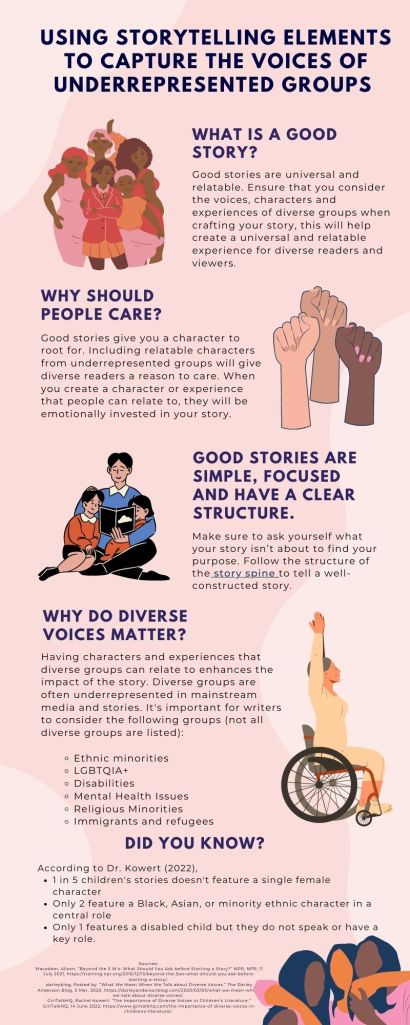
How to use basic storytelling elements to include diverse voices?
Create a relatable story. A story that will stick with your audience is one that is universal—this universality can be the message or theme, characters, setting or experience. If your diverse audience is able to relate to your story and you have created universality for them then they are more likely to identify with your story.
Think about the purpose of your story. What is the goal or reason that you are writing? What will make your diverse audience care? Is there a character that they care about because they relate to it? What about a certain setting or language? A message?
All stories should have a clear structure and focus. Write your story following the story spine structure and you will have a clear story arc.
Some diversity elements to consider when writing include ethnic groups, levels of physical capabilities, levels of mental health, religious groups and sexual orientation. This is not a comprehensive list but a starting point when considering the voices of underrepresented groups in digital storytelling.
It is important for all digital storytellers and marketers to consider these storytelling elements when representing diversity groups. Stories that represent diversity, equity and inclusion help create and foster safe spaces—it leads the groundwork for important conversations. That’s why it is important for brands and organizations to try harder to consider underrepresented groups in their digital storytelling and the digital medias that they produce.
I think we can all agree, we’ve gotten to the last TV episode of the night of our favourite show, it’s getting late and boom, cliffhanger! You couldn’t possibly watch one more episode…. right?
While we all KNOW there are cliffhangers and suspenseful writing keeps us on our feet, I’ve never thought about the important aspects of what goes into properly creating suspense in stories.
While the included tips help suspenseful storytelling, it is also important to include relatability, build up of tension and suspense, emotion, authenticity and urgency.
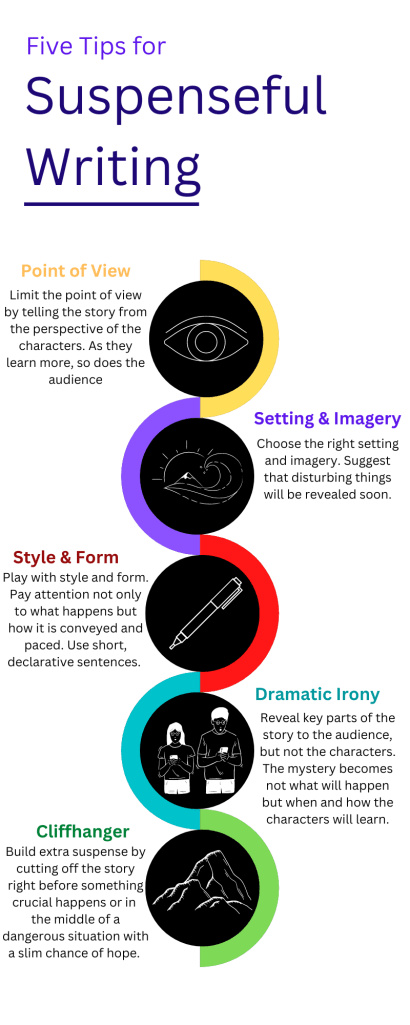
Limit the point of view by telling the story from the perspective of the characters. As they learn more, so does the audience
Setting & Imagery
Choose the right setting and imagery. Suggest that disturbing things will be revealed soon.
Style & Form
Play with style and form. Pay attention not only to what happens but how it is conveyed and paced. Use short, declarative sentences.
Dramatic Irony
Reveal key parts of the story to the audience, but not the characters. The mystery becomes not what will happen but when and how the characters will learn.
Cliffhanger
Build extra suspense by cutting off the story right before something crucial happens or in the middle of a dangerous situation with a slim chance of hope.
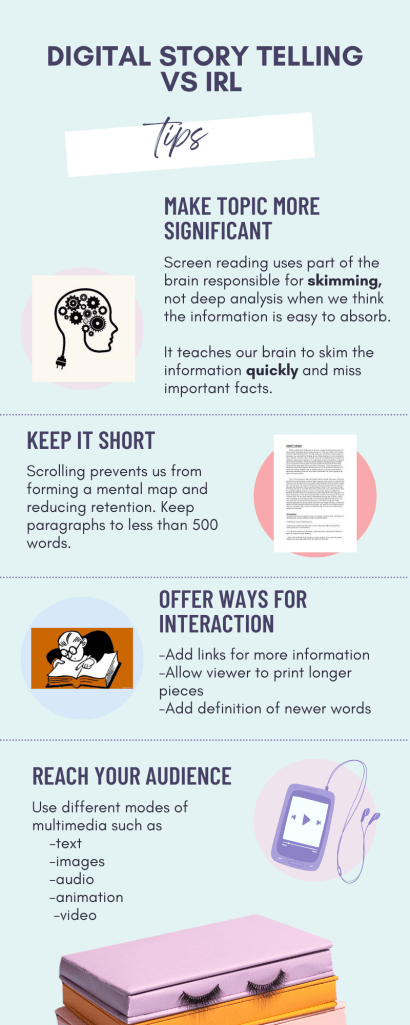
There is many benefits to a story viewed on a screen vs hearing it told orally or reading it in print.
For one, digital format allows us to present information in many different multimedia modes that reaches different audiences and allows for multi sensory information experience. As we know, some learn better by hearing the information, others by reading or watching it as a video.
However, more and more research has shown us that the two formats are not the same and to maximize the benefit from each, it’s important that we understand its differences. Brain analysis has shown that digital story telling engaging a different part of the brain, that is responsible for skimming the information and not analyzing it on a deeper level. This is partially affected by digital media presenting information in an attractive and easy to understand format. However, this means that when we perceive something as ‘easy’ or ‘not important’ we will skim through it quickly and likely miss the important facts of the message being delivered. Also when we apply this habit of quick skimming to other information that requires deeper analysis, such as school or work papers, we will not retain the information as well as is required.
Digital format of story telling also removes our ability to create a mental map as to where the information is located on the page when it is printed, which later aids in recall. The constant scrolling may force the reader to engage with the site longer but will cause them to retain less. As such, studies have shown that for best retention, digital stories should be limited to less than 500 words and reduce the need for scrolling and other distractions if the point is to education the reader.
Digital story telling can offer things that printed format cannot. It can allow the viewer to change the background, size of the font or link to definition of words or more detailed information.
As such there is a place for digital stories and a place for printed ones. Which one the author offers should take advantages of the benefits each one provides.
Universal Journal of Educational Research. Digital Storytelling vs. Oral Storytelling: An Analysis of the Art of Telling Stories Now and Then. HRPUB. (n.d.). Retrieved December 12, 2022, from https://www.hrpub.org/journals/jour_info.php?id=95
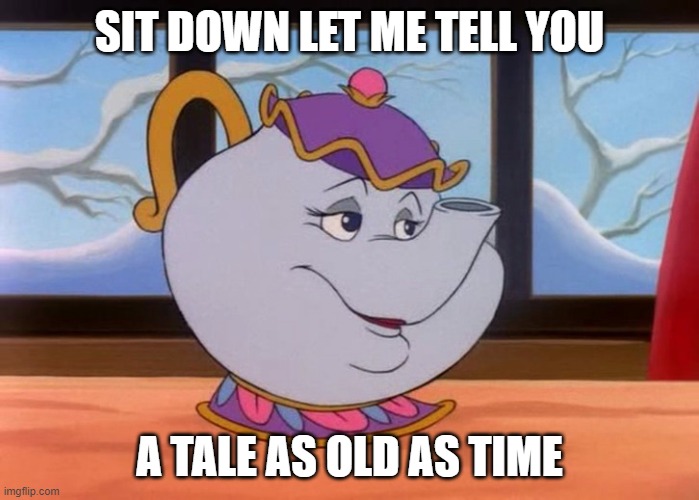
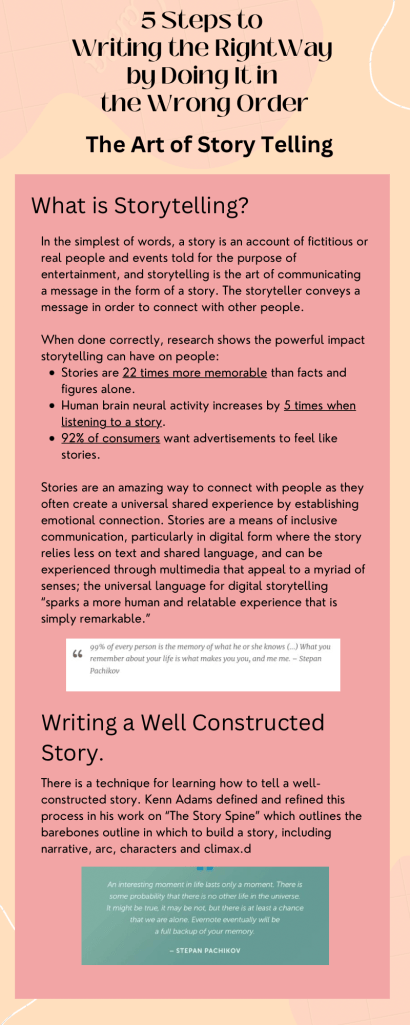
The Disney movie “Beauty and the Beast” got it right when Mrs. Potts sang “A tale as old as time”. Stories and storytelling are as old as time and universal. Each culture, religion, and tribe has its own stories that entertain and engage, unite, and connect. With the technologies available today, storytelling is evolving and taking on a radically different form, though the process stays the same. While the nostalgia of stories before bed, or around a campfire has its place, digital storytelling has risen to a deeper level. This is because of the addition and incorporation of videos, images, and audio files.
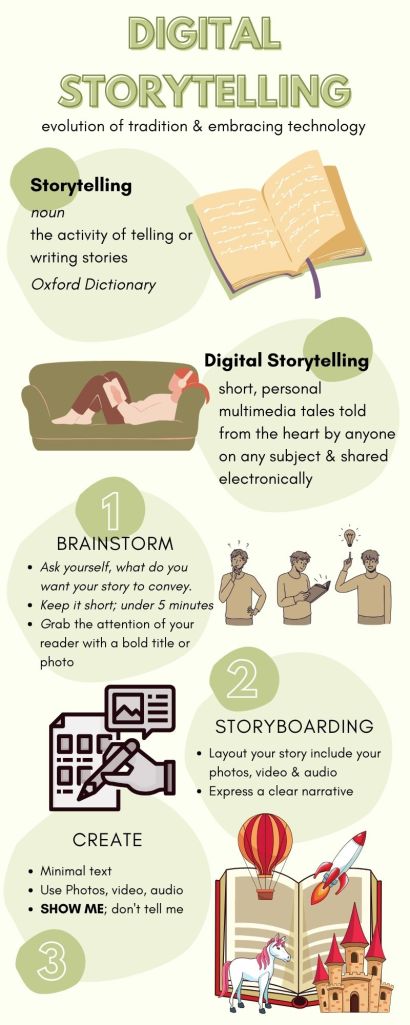
In digital storytelling, as well as in traditional storytelling, a particular topic and point of view are addressed. Author and educator Daniel Meadows described digital stories as “short, personal multimedia tales told from the heart.” The beauty of this form of digital expression is that it can be created by anyone, on any subject, and shared electronically with the world. He added digital stories are “multimedia sonnets.” (About Digital Storytelling, n.d.)[1]
“It’s like instead of just having a pencil to draw a picture, you are given the most radical and complex toolbox filled with paints, pastels, charcoal, different paper and canvas, crayons, markers, and a pencil. …imagine how much better your art, and the story you want to tell would be”?
Creating a digital story is an engaging way to share information through experimenting with your creativity with different technologies. Digital storytelling is all around us and has enhanced what we were taught about traditional storytelling. To quote Alice Barry on digital storytelling “It’s like instead of just having a pencil to draw a picture, you are given the most radical and complex toolbox filled with paints, pastels, charcoal, different paper and canvas, crayons, markers, and a pencil. …imagine how much better your art, and the story you want to tell would be? (Barry, 2018)[2]
Digital stories can cover a wide variety of topics. For example, you can share a personal adventure, explain a concept, inform your audience about an historical event or debate an issue. Though they are normally less than 5 minutes long, the process is like writing a traditional story.
Your Story
1. Brainstorm
Consider how easy it is for your reader to swipe past your story. Ask yourself what you want your story to convey and then KEEP IT SHORT. Have a lead-in that will grab the attention of your reader.
2. Script & Storyboarding
The script and storyboard will give you a layout as to exactly how your story will play out for the reader. Deliver content that expresses a clear narrative.
3. Create your digital story
Collect and/or create your content. Keep your text minimal. Images are more compelling. SHOW ME, don’t tell me.
[1] Digital Storytelling (n.d.).What is digital storytelling? Educational Uses of Digital Storytelling. Houston, TX





 EXSM 3989 - Digital Storytelling Class Blog