Categories
Uncategorized

The Story Spine

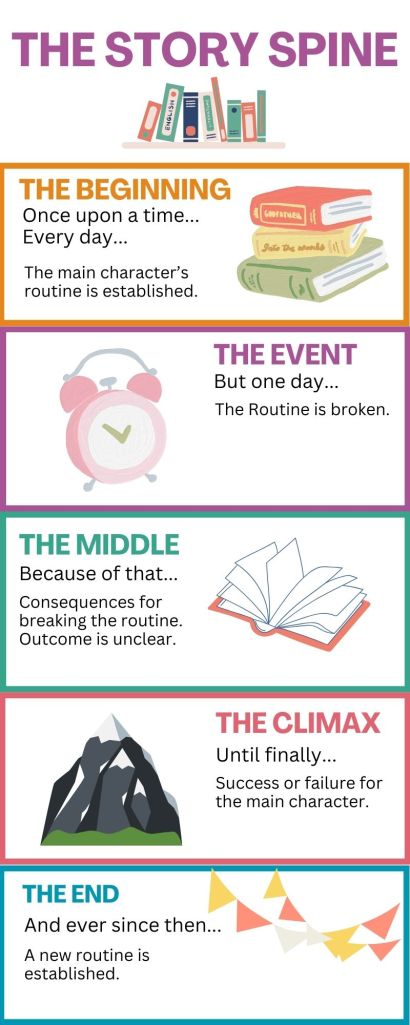
When storytelling, in any medium, it is important to have a clear structure and purpose. Using a story spine is a great way to do just that. The structure of the story spine is broken down into 5 sections.

1. The Beginning

This is when the main character’s world is introduced to the audience. The main character is described and their normal routine is established. The sentence starters used in this section of the story spine are:

  • Once upon a time…
  • Every day…

2. The Event

The next step in the story spine is the event, this is where the routine is interrupted. Something happens in the main characters life or world that breaks the normal everyday routine that is established in the beginning. The sentence starter used in this section of the story spine is:

  • But, one day…

3. The Middle

This is where the bulk of the story takes place. The main character experiences major consequences as a direct result of the routine being broken. There is no clear path and the outcome is unclear. The sentence starters used in this section of the story spine are:

  • Because of that…
  • Because of that…
  • Because of that…

Typically there are 3 incidents in the story that the main character experiences. One is a result of the other.

4. The Climax

This is where the main character’s journey comes to a peak. They experience success or failure as a direct result of what they were faced with. The sentence starter used in this section of the story spine is:

  • Until finally…

5. The End

For the main character the world has forever changed. Whether the they have success or failure, in the end, a new routine is established. The sentence starter used in this section of the story spine is:

  • And, ever since then…

The author, Kenn Adams, who created the story spine has said that over the 3 decades since he developed it others have taken it and modified it to make it their own. But some of these adaptations have made it less powerful. I think that the power of the story spine is in its simplicity. It gives the author a structure of a story of which they can build upon.
Categories
Uncategorized

Tips on Social Media Writing

You have a small window of opportunity to stop someone from scrolling and be interested in what your post has to offer. What can you say to make someone stop scrolling? How do you keep their attention? Make them react?

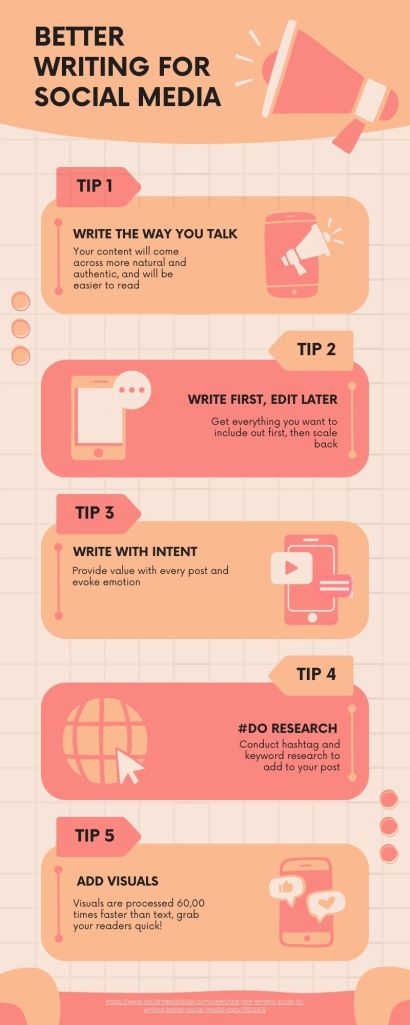
You want to convey a good story, all within the limitations of a social media platform. To do this, there are a few simple tricks that will help your social media writing and grab your readers’ attention:

The above are taken from an article by Eric Goldschein: The Non-Writers’ Guide To Writing Better Social Media Copy. This article helped me with my social media writing tremendously!

Categories
Uncategorized

No Wonder No One Cares About Science and Heritage… !

This week in EXSM 3989 we learned about the power of visual storytelling, and let me tell you, people in the fields of science and heritage have been doing this data sharing thing wrong for a very long time!

I wish that instead of teaching students how to calculate the radiocarbon date of organic material from the Holocene/Pleistocene transition in ARKY 101 I had taught them how to illustrate and visually express archaeological findings to ensure people outside of the field of heritage understand WTF they were saying and as a result, actually CARED…

It is really no wonder academics go nuts over a pretty map or a visually entertaining power point presentation when attending a talk that is more boring than watching paint dry. In fact, I am no longer shocked that people do not care about or read articles in the newspaper about the newest archaeological find, or why archaeological science and protecting heritage matters. It’s sad but if we cannot learn to communicate with others about why what we do actually matters, then maybe we too should go the way of the Pleistocene/Early Holocene Megafauna … (become extinct).

Archaeology, science and heritage need to start thinking about the visuals rather than the words! Visuals are processed 60,000 times faster than text and as Impact Advisors.com notes,

” if a scientific claim is presented in pure words or numbers, 68% of people will believe that the information is accurate and truthful. But if you put a simple graph with the claim, the number rises to 97%.”

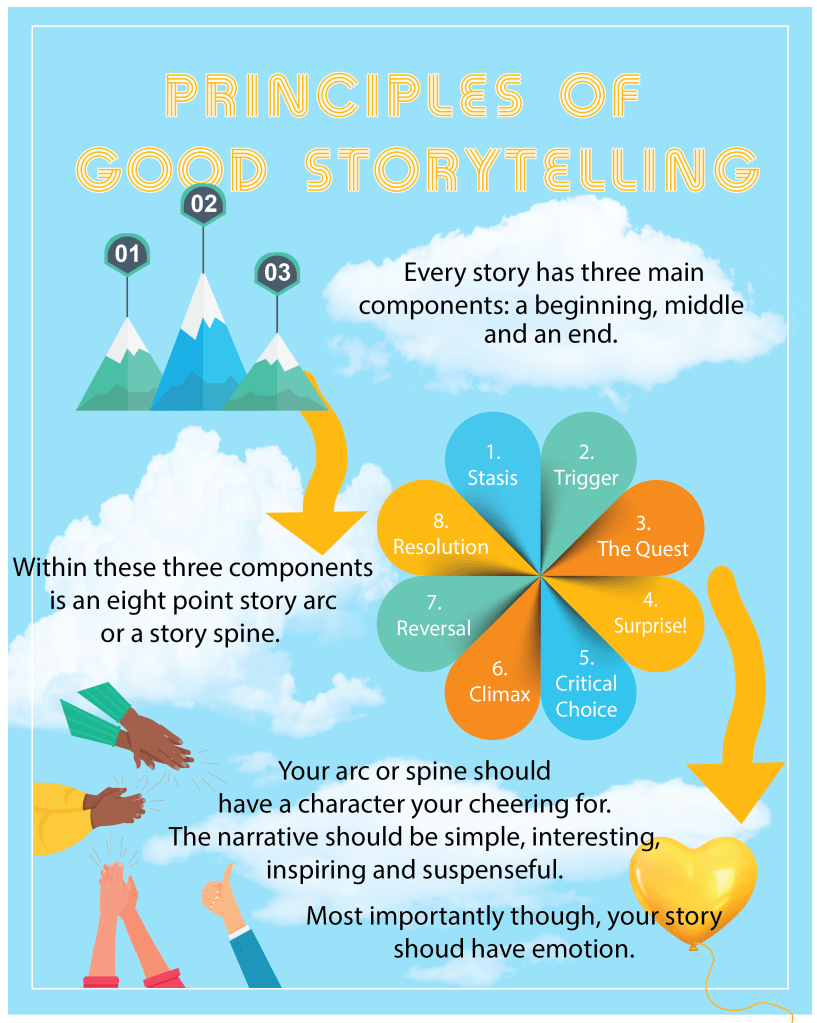
So when we were tasked this week to make an infographic on a topic we had learned about in the course (I chose the ‘Principles of Storytelling’), I WAS SUPER PUMPED! I wanted to learn this amazing skill! I wanted to visually seduce everyone into loving boring ass archaeology data by learning first how to do it by telling people how to write a good story! I felt like this was my new calling in life and I was going to blow everyone away!

But then my mother and father in law showed up a day early to our house as a surprise … so instead of knocking this assignment out of the park, I focused on the visuals, made the infographic pretty, bright and colorful. I focused less on mining the data to highlight the core principles of good story telling and rather, I took the key points I wrote down and used what I thought was the core principles and summarized them.

I hope you all enjoy it, but I know it could be better!

Please note: My mother and father in law have now returned to their own home and I am back, better and more focused than ever on becoming AMAZING at using visual data to tell stories rather than using words!

Categories
Uncategorized

EXSM 3989 Storytelling Infographic

Categories
Uncategorized

EXSM 3989 Storytelling Infographic

Categories
Uncategorized

EXSM 3989 Storytelling Infographic

Categories
Uncategorized

Storytelling Infographic

Categories
Uncategorized

EXSM 3989 Storytelling Infographic

Categories
Uncategorized

EXSM 3989 Storytelling Infographic

Categories
Uncategorized

Pondering Good Storytelling…

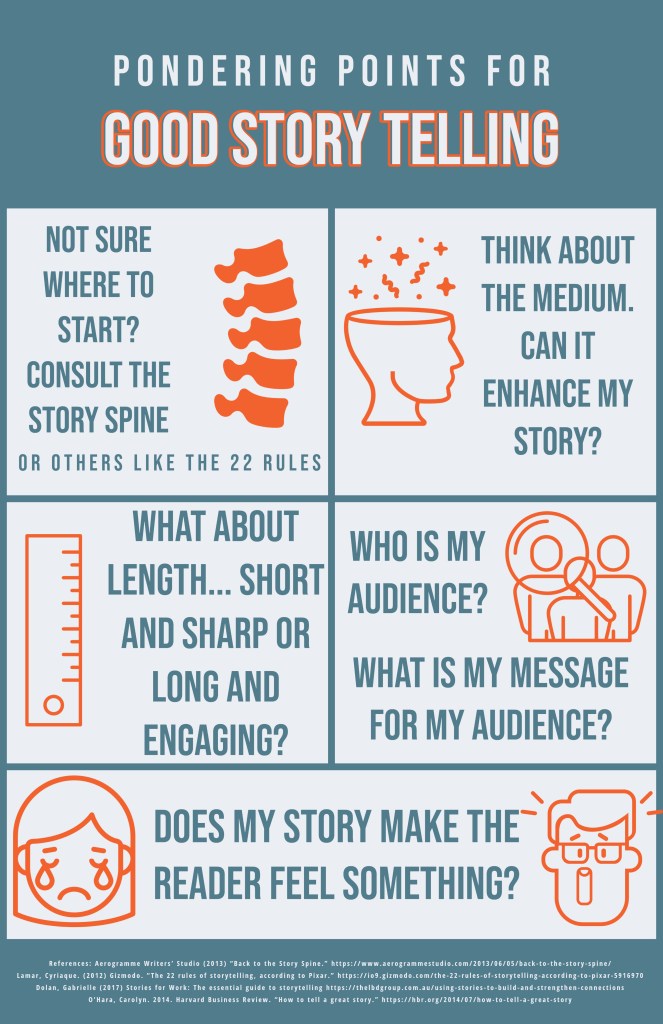
An Infographic of Pondering Points

If like me you are new to the nuances of the art of storytelling… it can be an overwhelming experience to suddenly start telling a story! You’ve heard about the idea of good storytelling…. but what does it mean? What should I think about?

Thinking about storytelling can be overwhelming!

People are natural storytellers… supposedly! Somedays I don’t feel like a natural storyteller… Purportedly that is what separates us from the animals (can we ever be sure animals aren’t storytellers???). I digress, but what we do know is there are certain core components, key considerations, or as I call them pondering points that can help create a good story!

There are lots of pondering points to help us along the way…. whilst we might not need to know the scientific detail of why our brains like stories… (Its true and Harvard says so and why here: Why Your Brain Loves Good Storytelling) but we can use the their academic findings to help us as storytellers. There are also plenty of quality opinion and experience pieces from really competent (and incredibly popular) storytellers like Pixar or even medium providers like Twitter than can help us in our quest for good storytelling!

Anyways I condensed my top pondering points from some excellent references into the handy infographic below to help you to start storytelling!

Pondering points for good storytelling

References:

Aerogramme Writers’ Studio (2013) “Back to the Story Spine.” https://www.aerogrammestudio.com/2013/06/05/back-to-the-story-spine/

Lamar, Cyriaque. (2012) Gizmodo. “The 22 rules of storytelling, according to Pixar.” https://io9.gizmodo.com/the-22-rules-of-storytelling-according-to-pixar-5916970

Dolan, Gabrielle (2017) Stories for Work: The essential guide to storytelling https://thelbdgroup.com.au/using-stories-to-build-and-strengthen-connections

O’Hara, Carolyn (2014) Harvard Business Review. “How to tell a great story.” https://hbr.org/2014/07/how-to-tell-a-great-story

Zak, Paul (2014) Why Your Brain Loves Good Storytelling https://hbr.org/2014/10/why-your-brain-loves-good-storytelling

Reese, Nick. 2018. Twitter Marketing. “How to use storytelling to craft better tweets.” https://business.twitter.com/en/blog/how-to-use-storytelling-to-craft-better-tweets.html 

Design a site like this with WordPress.com
Get started