You have a small window of opportunity to stop someone from scrolling and be interested in what your post has to offer. What can you say to make someone stop scrolling? How do you keep their attention? Make them react?
You want to convey a good story, all within the limitations of a social media platform. To do this, there are a few simple tricks that will help your social media writing and grab your readers’ attention:
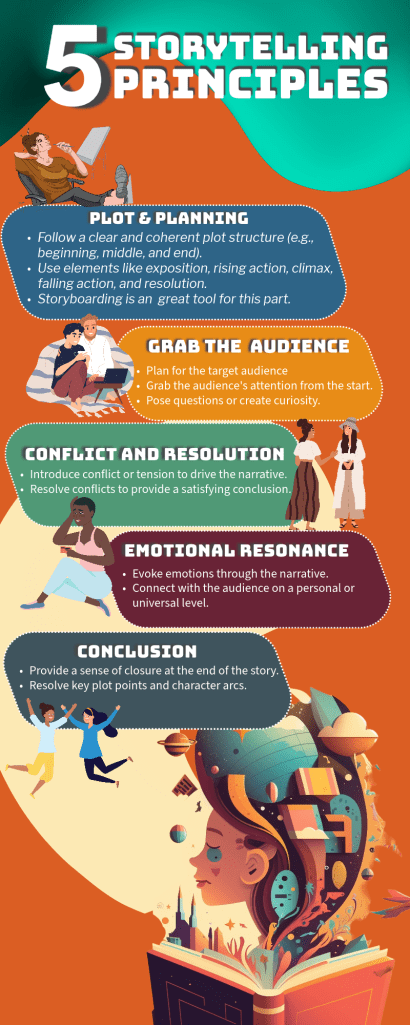
In the fascinating world of storytelling, every great narrative creates a story that is trying to help you. Whether you’re writing a book, blog, or a simple post, there are certain principles to develop your story from ordinary to captivating. Let’s unlock the secrets with these 5 essential storytelling principles:
1. Plot & Planning:
Plot and planning is the architect of the story, a blueprint that guides the characters throughout the journey. Thoughtful planning helps to develop a cohesive and engaging story, that leads the audience on a fascinating adventure. A Storyboard is helpful in this creative process it will flush out the main ideas.
2. Captivate the Audience:
A captivating story is one that grabs its audience from the start. By creating characters or a story that is relatability, and will solve an issue. Draw the readers or viewers into a place where they can invest emotionally. Captivating the audience requires building a connection between your audience and the story /characters, making them care about the outcome.
3. Conflicts & Resolutions:
A story is must contain conflict. It is the crucible in which characters are tried and changed. Conflicts and resolutions add layers to the story that develop tension and uncertainty. Whether internal struggles or external challenges, conflicts afford the risks that keep the audience wanting to know more. We want a solution, even in digital media the audience is looking for resolutions.
4. Emotions that Resonate:
Emotion is the essence of any story. Emotions that resonate stay with the audience long after the story ends. Whether it’s joy, sorrow, anger, or fear, evoking genuine emotions generates a thoughtful connection. Showcasing the human experience in all its complexity enhances storytelling, the story becomes unforgettable and impactful.
5. Conclusion that Makes Sense:
A satisfying conclusion is the string that ties a story together. A Conclusion that makes sense doesn’t automatically mean a tidy ending; rather, it suggests a resolution that feels earned and reasonable. It answers remaining questions, supplies closure to character arcs, and leaves the audience with a feeling of fulfillment.
Like most, I love me a good movie. It’s nice to be able to sit down and forget about reality for a bit and dive into the life of something or someone else.
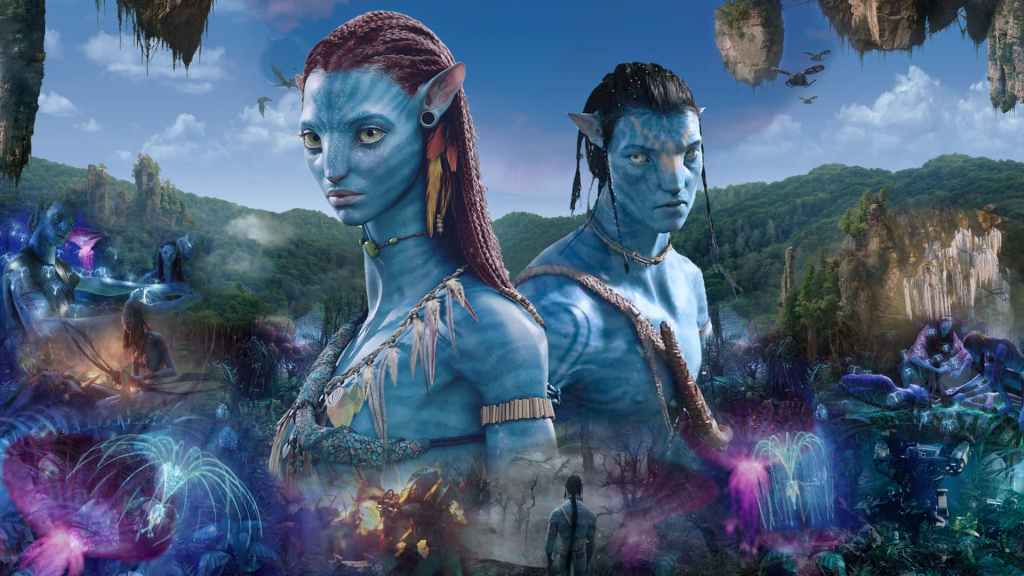
I watched a highly anticipated movie when it first came out in 2009, and to this day, it left a lasting impression on me. I remember feeling inspired, in awe, there was love and loss, conflict and resolution, and had a good, strong narrative. I remember feeling like I was having an existential crisis afterwards. The feeling and inspiration of wanting to do more.. be more.
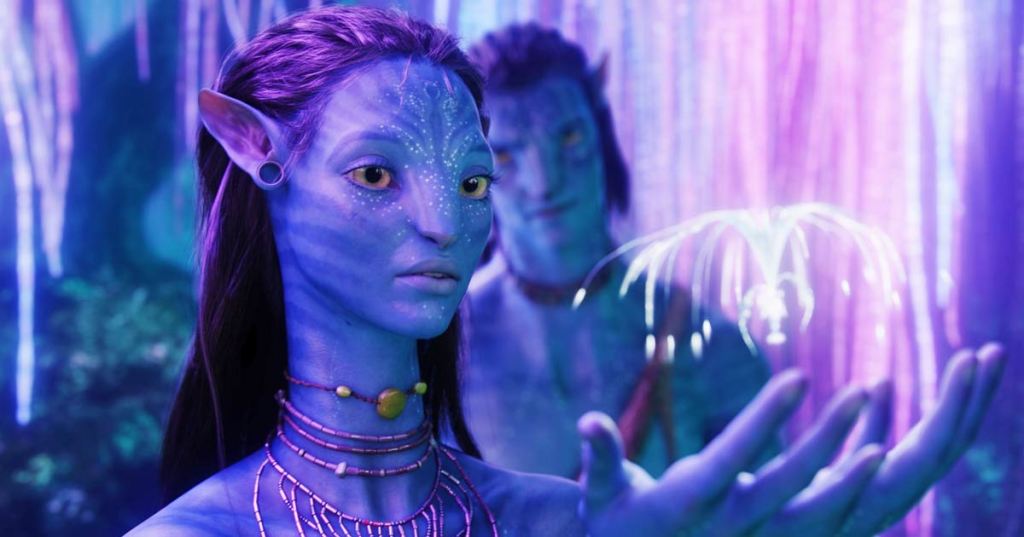
The Na’vi people have a word for “bond” or “connection” and it’s called Tsaheylu – a mental connection to one another. This connection in a way, was brought to life, when experiencing this movie for the first time. You felt like you were a part of the the character’s development and the trials and tribulations of Jake Sully, Neytiri, Dr. Grace Augustine, the Na’vi people, and the creatures of Pandora. Each with their own unique layers, motivations, and struggles. You had characters you fell in love with and were rooting for, and you had the villains you despised. The emotion put into every single detail of the alien environment, music and characters is fantastic and the story it told was remarkable. The connection between the current real world encroachment on our ecosystems is also very prevalent and really gives you something to think about and reflect upon.
Visually Captivating
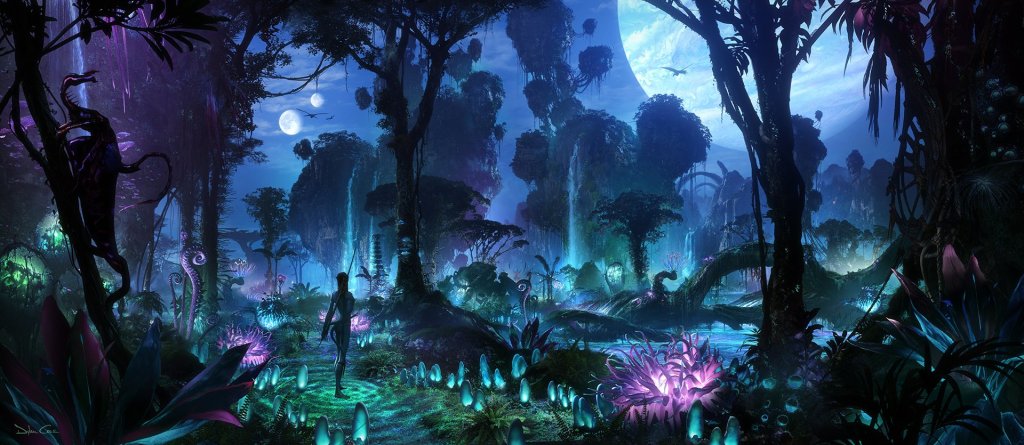
This movie was innovative and visually stunning especially for it’s time being released in 2009. The movie transported you to a world unlike anything you’ve ever seen before. The colors, CGI effects, movements, symbolism, and the elements of spirituality all tied in to create the most beautiful and captivating cinematic experience. During the plot development in the beginning of the movie (just when you thought the visuals couldn’t get any better) you’re introduced to Pandora at night. The subtle lighting cues and the experience of the bioluminescent environment is like something out of a dream. Avatar was pinnacle in the film industry, as it was one of the pioneers in 3D technology.
The Plot
The film’s plot follows a classic formula of an outsider thrown into a new world facing conflicts, and ultimately finding themselves aligned with the indigenous people. While this theme is not entirely original, Avatar manages to create a compelling narrative with a strong environmental message. The themes of corporate greed, exploitation, and the destruction of nature resonate, and they serve as a reminder of the importance of preserving our planet. The story is captivating, gripping and suspenseful – blending science fiction, action, and romance in a way that keeps you involved and on the edge of your seat from start to finish.
It’s a true masterpiece in it’s own way and it will leave you in awe long after the credits have rolled.
With the number of movies, I have viewed and books that I have read, this story stands out. It is their ability to compose a story that is universal, timeless, and leaves an impression on the heart. This storytelling masterpiece is Pixar’s Up. It was released in 2009, and continues to embrace audiences with its emotional journey, and memorable characters. It’s incredible visual storytelling weaves a wonderful unique story. Although it follows the principles of Pixar’s story spine, its relatable because its on base of the real-life story. The article “Even in death, ‘Up’ house owner Edith Macefield remains a mystery” written by Jayson Jenks tells a story that has some parallels to Up. There are similarities with both of the homes being threatened with construction of newer developments and the senior citizens owners are not wanting to sell their property. https://www.seattletimes.com/pacific-nw-magazine/searching-for-edith-macefield/ Although the Up movie has found its own heartfelt story and it takes you on a wild adventure. The parallels in both of these stories that I like is that money does not win.
Oh, that montage!
This warm-hearted journey has all the fundamentals of great storytelling, but the montage in the beginning creates an instant connection to the audience. This connection has us cheering for Carl, and wishing positive outcomes for him. We all share the experience the loneliness Carl is enduring within his life. The loss of Ellie his wife draws out a sense of empathy for Carl, we even forgive him for being a grumpy person. The audience recognizes that losing someone changes you. A bond has been established with Carl, the audience is engaged, earnestly anticipating to see what unfolds next for him. Up has found its audience and provides a meaningful connection that ensures this story to be memorable. Even within the IMBd website, the favorable reviews speak of Up being one of the best Pixar movies ever made, some even say it’s masterpiece. https://www.imdb.com/title/tt1049413/reviews?ref_=ext_shr_lnk In reading the reviews there is a common theme of the write ups, it is an emotional story that captures our hearts. This story crosses my thoughts from time to time, serving as a reminder that embracing change can be an adventure.
Up and away!
With the threat of being put into a senior’s facility and losing his home. Carl decides to have an adventure by attaching thousands of balloons to his home in hopes of fulfilling his promise to Ellie by reaching Paradise Falls and escaping the insistent developer. Although this idea may seem impossible, there was a group that tested this idea with surprising results. This experiment only adds more magic to this story and the excitement is evident on all the volunteers involved. ABC news reports on the Disney’s “Up” house created in real life and flown for National Geographic show. This is a must watch report that will stir up that magical feeling of wonder. https://youtu.be/rV6rNqin4P8?si=nOenIIP9d_o6GTmx
What now?
Even with the home taking flight, there are still many conflicts and challenges along the way. Such as Russell, the eager Wilderness Explorer who accidentally tags along on this adventure, adding another likable character to the mix. Russell and Carl find commonalities and build an unlikely friendship during this wild ride to Paradise Falls. Indeed, a villain is present in this story. Charles Muntz, is attempting to take the rare bird who is traveling with the duo. Charles and his speaking dog army are trying to steal the bird, no matter the cost. Doug, the gentle canine escapes Charle’s army, and joins Russell and Carl befriending them on the journey. This conflict helps these lovable characters in forging bond. They must collaborate to defeat Charles Muntz, and navigate the dangerous environment.
It’s a win!
After overcoming all of the obstacles, this adventure changes Carl. Who becomes a sympathetic mentor and friend to Russell, and far less grumpy. It reminds us of how to be courageous, be adaptable and the power of love. The end scenes will beautifully tie up all loose ends, leaving the audience with a profound sense of closure and fulfillment.
This story.
The manner in which this story is crafted along with the visuals, took my heart and I was ready to go the distance with Carl. The relatability of this movie shocked me at the beginning of how deep it went, especially for a Pixar picture. The sense of loss and loneliness is something I truly understand. This story reminds me that being uncomfortable will sometimes delivers the best growth moments in life.
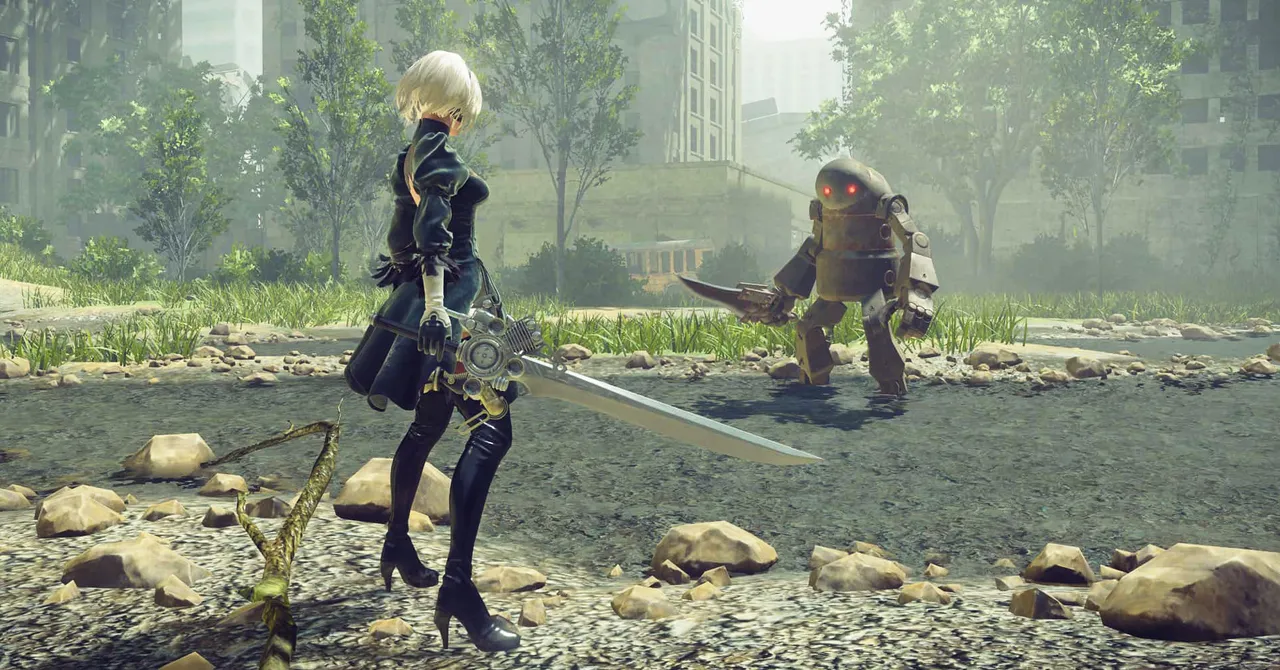
Whenever I experience a new story, I always begin with the hope that the story will leave me yearning for more — that the story will leave a lasting impression, that it will keep me up late at night after I’ve finished it and leave me with an endless stream of thoughts related to it. As someone who has read, played, and watched their fair share of stories and had several lasting impressions, there is one story that was able to do all of the above, except it wasn’t just for one night; it was for a whole week. And that story is called Nier: Automata.
Nier: Automatais an action RPG that follows earth in a dystopian future, one where androids (created by humans) and machines (created by aliens) are locked in a constant war. At its surface, Nier: Automata seems like a generic, dystopian plot – but that is far from what the story of the game is. The story of Nier: Automata is one that will ask you philosophical questions about life, death, the future, and everything in between. Now, why does this story resonate so much with me?
Nier: Automata goes beyond the five W’s. The game implements each excellently throughout the story to strengthen the narrative — it goes beyond to leave an impression, to leave the player wanting more. Within the game lie my personal taste of dream ingredients: loveable characters, an emotional rollercoaster of a story, quest lines that enhance the world, and music that is some of the most atmospheric I’ve ever heard in a game.
Take a listen to this song from the soundtrack. Do any of these words sound familiar? Do they sound kind of like a language, but not really? The story is set in the future, a future where they use “Chaos Language” — a language that is made from our own languages, but blended together as if the languages merged as time went on. The producer of the game, Yoko Taro, mentions that “[w]e wanted something that could truly serve as background music. If you don’t know what these mysterious words mean, you can’t get side-tracked.” By using a unique style of music like this, you not only keep the audience engaged with the story, but keep them engaged after the story — why the music uses what sounds like jumbled lyrics is actually a brilliant way to emphasize the dystopian world and make the world within the story stand out even more.
An element of storytelling that Nier: Automata uses to keep going beyond the five W’s, especially ensuring that different viewpoints are told and fair to who the story represents, is the fact that the game has three separate protagonists — 2B, 9S, and A2. Not only does the game have three protagonists, each protagonist has their own section of the game, and their own ending. Yes, that’s right — multiple endings. To get the true story of Nier: Automata, you must beat the game three times. (You probably want to play it an extra two times, too, to get the full story.) By playing as each separate protagonist, you get a feel for each character — you see their perspective of the same events, the differences in thoughts and feelings, and feel more of a connection to each character. Each character reacts to events differently; and that is part of what makes Nier: Automata such a special narrative experience. By showing how adversely different characters in the same situation can react — and letting the audience react with them.
Nier: Automata tells its story of the future through its soundtrack, its story of motivation and drive through its characters, its story of the world through quests and the narrative itself. There is one thing we do not have yet: what is the driving question of Nier: Automata? There is a reason that I’ve left this for last:
The game is unique in that you do not know the driving question until you finish the game.
At first, the story of the game may leave you with more questions than it asks you. The weaving of several endings and interwoven storylines leaves the player to have to piece together questions to end up at that answer. And once the story gives you the answer, it will leave you in awe. Because the question that comes up throughout the story is:
“What is the point? Why is the game’s narrative going in this direction?”
and then, the core question of the game clicks. All the puzzle pieces click together to ask you,
“What would you do if you found out everything you’ve been fighting for is pointless — there was no point. Would you keep fighting? Who would you keep fighting for?”
Nier: Automata is not a happy story, it is a story of strife, determination, about a bleak future where there does not seem to be an end to the fighting. But, there is one key element to Nier: Automata, and that is hope. Even when everything seems pointless, like there’s nothing more left, there still is one crucial element left: hope. Whether that hope lies in the world, in someone you love, or within yourself, that hope still shines through. That is why Nier: Automata’s narrative is one of my favourite: it excellently uses its format of a video game to weave that theme of hope everywhere: within the characters, the soundtrack, the world, and most importantly, the story.
When you need a reminder that hope still exists, check out Nier: Automata — it will be worth it.
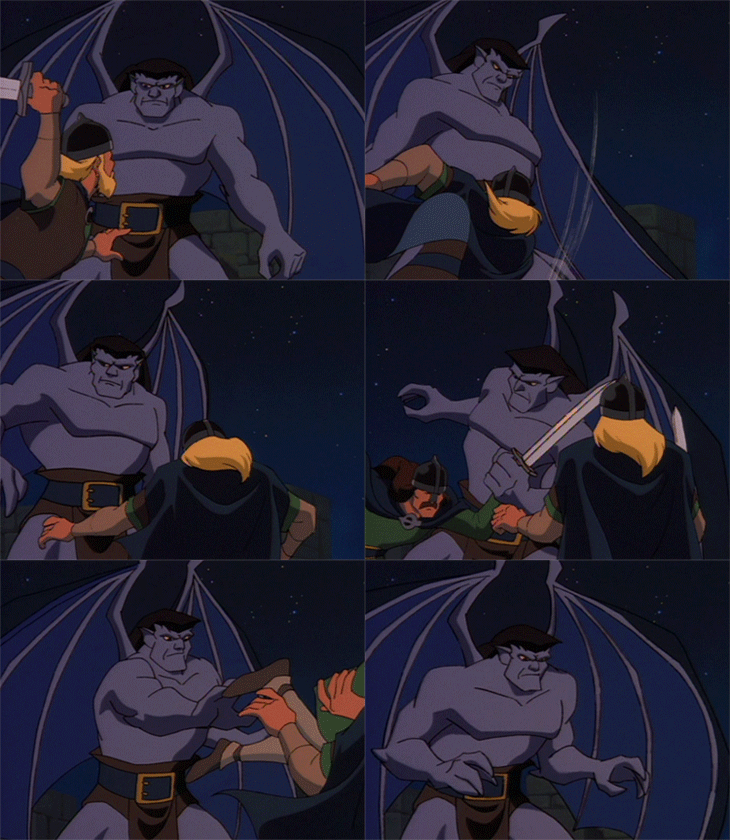
Growing up, my mother was big on introducing me to shows she watched as a child, which were primarily shows produced by Disney. One that has stuck with me from a young age was Disney’s Gargoyles, an animated show not normal for Disney in that time, the 90’s. It had complex storytelling, darker themes and would be considered a melodrama. I think the first time I watched it, I was in elementary school, I might’ve been as young as 8 or 9 when my mother introduced me to the show.
Even now, at 20 years old, I’ll go back and rewatch episodes of Gargoyles now that it’s available 24/7 on Disney+. It’s a show I’ve grown to immensely love and want to delve into deeper if given the chance, something I’d absolutely write an entire essay on if I was allowed. The show had on-going character development over the course of the four years it was aired, 1994-97.
The show’s darker themes and continuous storylines was probably what drew me in. I enjoy shows that aren’t episodic with its storytelling, like normal kids cartoons meant to keep children’s attention for the standard 15-20 minutes. The show would keep continuity from the first episode all the way to the end of season two. It ran for 65 episodes, plus a 13 episode third season that is not considered to be part of the main continuity, both by fans and the creator, Greg Weisman.
Overall the show is something I happily recommend to those looking for something new, or maybe even reminding people who have seen it before that it exists, prompting them to rewatch it like it’s brand new to them. It has dark themes and lots of tie-ins to Shakespeare works, giving interesting world building. I continuously rewatch it, probably having more than a few episodes subconsciously memorized at this point, and I’m happy to have it easily accessible so I can watch it now that I can fully comprehend the topics and overall story. The creator has even gone on to currently continue the series with comics, working more on the storytelling and happily showing more of what he wanted to do with the original series.
Gargoyles tells stories of the nocturnal, titular species, gargoyles, showing them grow accustomed to ‘modern day’, at least at time of first release it was. They were originally from 994, living in a castle in Scotland, before being forced to sleep in stone for a thousand years. ‘Modern day’ is referring to 1994, the year they awoke from their spell. It’s then, in Manhattan, that they must adapt to all the new technology and human customs in order to keep their clan alive. The show goes on to follow them in 1994, while occasionally diving back into the past either before 994 or in the thousand years of sleep, showing other characters’ backstories and how they came to still be alive and kicking in 1994. The episodes are full of brilliant ways to give children life lessons you’d traditionally find in other kids shows, though the show is more straightforward and doesn’t hide behind needing to censor everything to make sure it’s appropriate for young children to see.
We get to learn about and befriend all the characters we’re meant to learn to love, and we follow the characters through betrayals, losses and across-the-world adventures. The show gives us characters we’re meant to hate, but then learn why they act the way they do, and that they weren’t always the villain, now acting out of fear and self-hate for what they did in the past.
The show is a beautiful example of amazing, long term, storytelling, giving us reasons to pity the villains, love the heroes, and even give us chances to disagree with the characters we love the most. Practically every character ends up written so wonderfully that it’s clear any character flaws are meant to be a normal flaw you’d find in a person you’d meet every day.
I enjoy Shakespeare probably a little more than the average 20 year old, not a crazy amount, but just a slightly above average love that originated from Gargoyles. It used characters like Macbeth, Puck, Oberon and many more from Shakespeare’s works. It had characters use the same names and mirror the love triangle from the play Othello. The use of his works in Gargoyles made me interested in reading the actual plays, and I always get excited when it’s brought up in conversation.
I think the show is a wonderful example of storytelling and giving life lessons, not being afraid to delve into darker themes while still retaining its rating of TV-Y7. I’ll always recommend it to people and love hearing people get back to me after they’ve watched a few episodes and tell me their opinions!
With great power, comes great responsibility. Even to this day, those words spoken famously by Uncle Ben to his nephew Peter Parker, send chills down my spine. It is a quote forever marked in time. The story of Peter Parker, AKA Spider-Man will be forever marked in time. It has been classified as good storytelling since its inception by Stan Lee and Steve Ditko in August 1962.
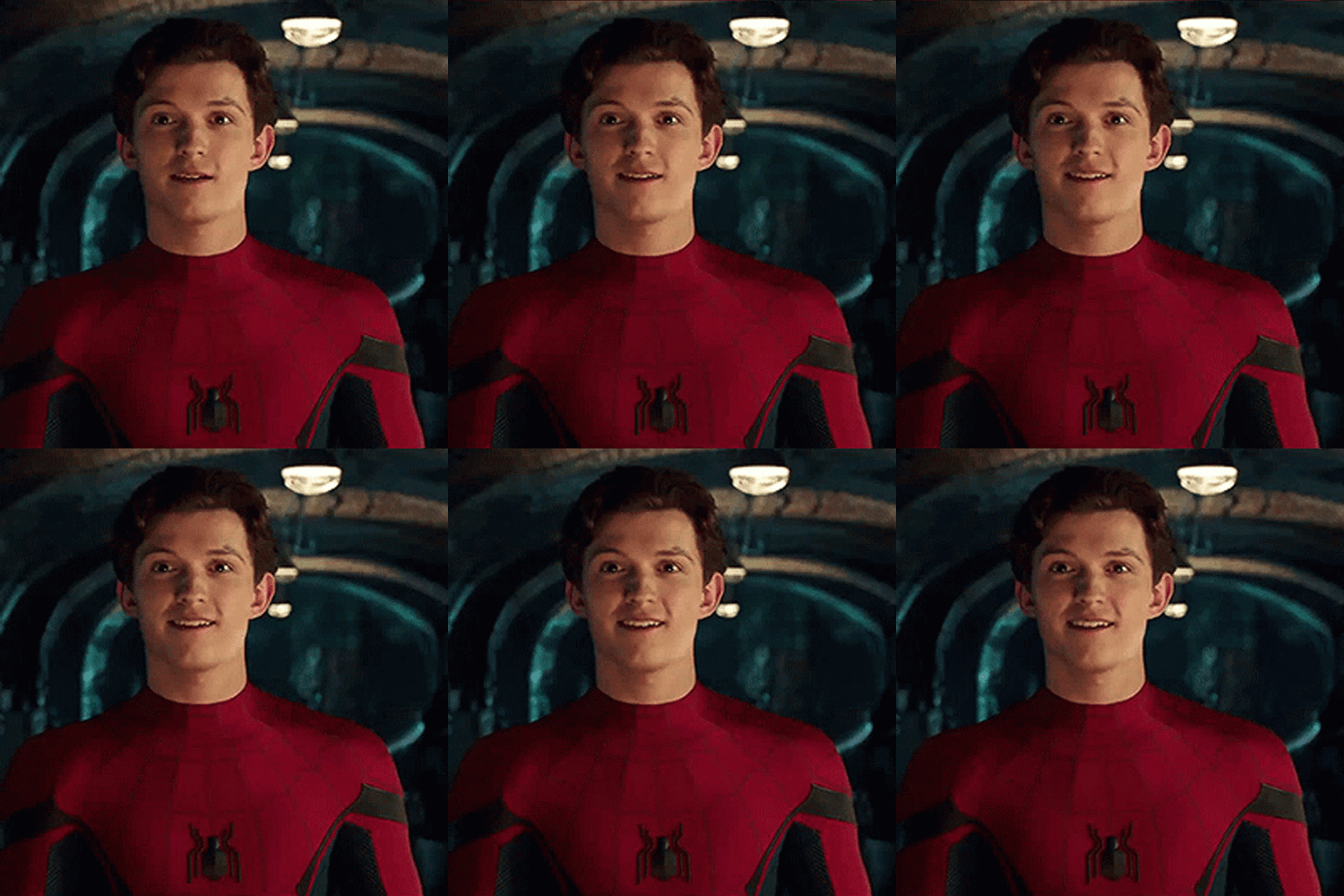
The story has evolved over time, from comics to tv shows, to numerous franchise movie reboots. Some done better than others (*Cough* Tom Holland *Cough*).
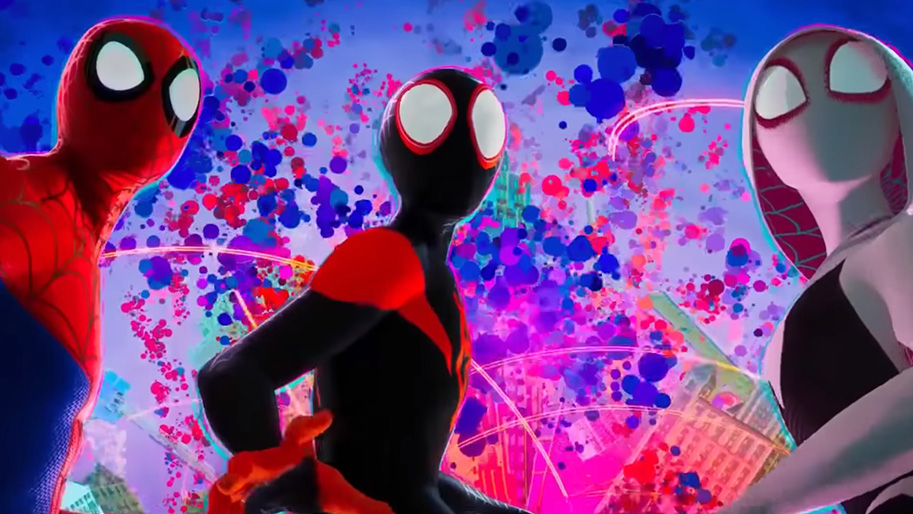
But most recently, Sony Pictures created a newly animated Spider-Man story that follows a young New York teenager named Miles Morales in the movie Spider-Man: Into the Spider-Verse, and this story has inspired a new and great storytelling platform for Spider-Man.
This story still has the fundamentals that make Spider-Man good, the unlikely hero we love and cheer for. Good vs. evil, the witty loveable supporting characters, the struggle to triumph journey. But what sets Into the Spider-Verse apart? It’s the visual storytelling.
The colours, the animation, and the digital design all draw you in because it is new and exciting. Something we have not seen done before.
Let’s dive deep into how visual storytelling is setting itself apart and why it’s paving the way for new ideas.
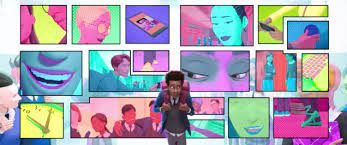
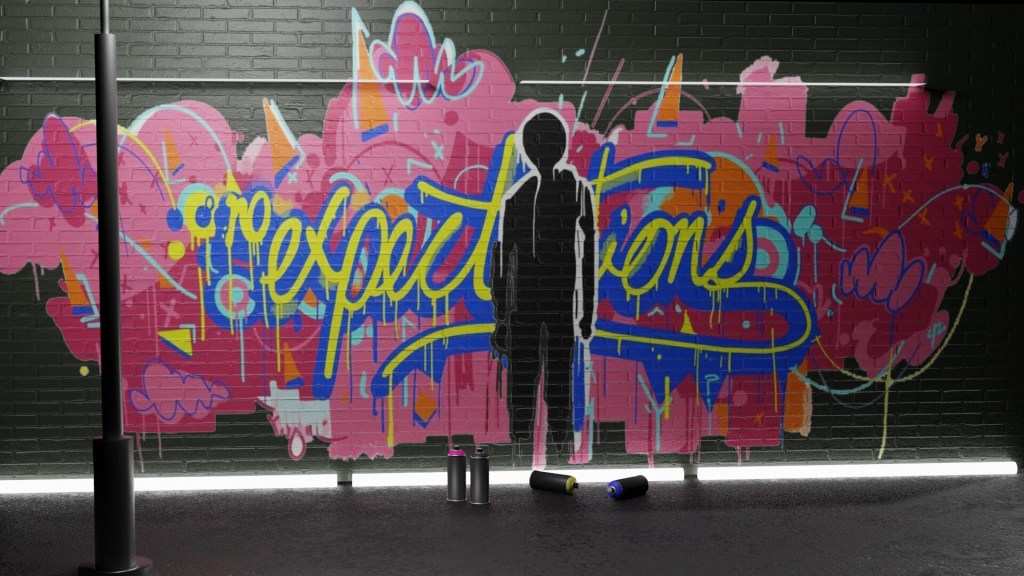
The unique modern-day comic book design hits the nostalgia button for all comic book readers, which still includes action and thought bubbles. The colours are bright and vibrant, which is shown off in the spray paint art Miles does at the beginning of the film, or the portals that open between different multiverse. You can’t help but have your eyes drawn in by it all.
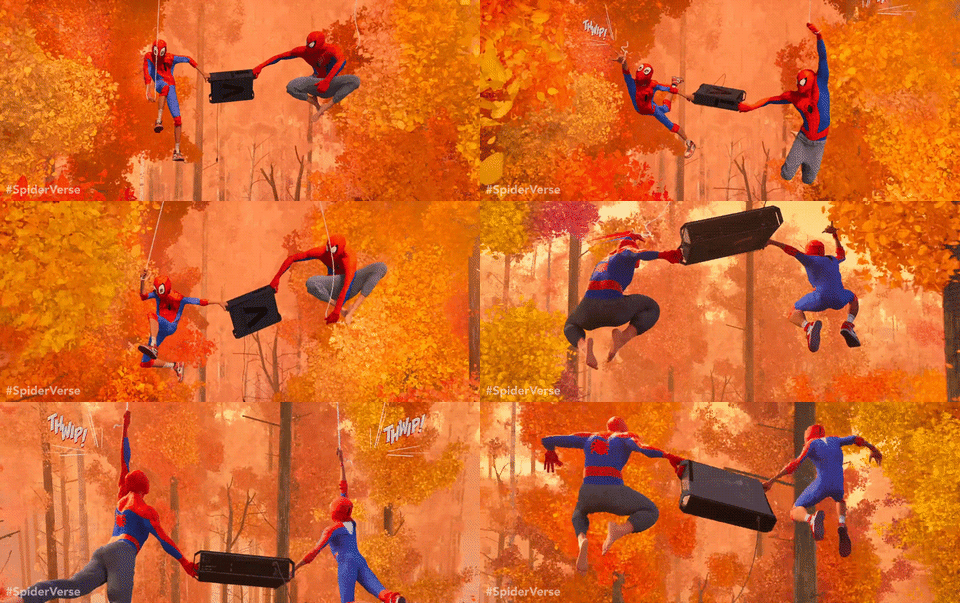
But the most intriguing aspect of the movie is the frames per second (FPS). When you first watch the movie as Miles learns about his powers and starts his journey to becoming Spider-Man, he is displayed as clumsy, awkward, and lacking confidence in the way he moves. Compared to Peter Parker, who is teaching Miles the ropes of being Spider-Man, who moves smoothly, and effortlessly across the screen. Typically, in animation, this is hard to show. Animators would have to use incidents, like dumping into things, falling down, etc. This conveys to our brain that the character is indeed, clumsy.
But as you watch Miles, his walking, running, and swinging just seems…wrong. This is where it gets interesting, and where Sony has stepped up visual storytelling. The movie and characters were filmed at a 24 fps for Into the Spider-Verse.
Watch how Peter Parker swings verses how Miles Morales swings…
But, Miles, at the beginning, was filmed at 12 fps compared the 24 fps around him. This creates a message to our brain, that something is off, that he seems to be slower and clumpier. As Miles becomes more confident as Spider-Man, Sony began to increase the fps on Miles until the end when he is finally at 24 fps with the rest of the film and easily glides across the screen. Pretty cool huh! This small attention to detail has set this film apart from other visual storytelling. It has become one of the most beloved Spider-Man movies to date.
Visual storytelling allows us to create these magical worlds and scenarios that seem impossible and fantastical. But when you take that storytelling outside of the box, like filming at different frames per second, the storytelling is taken to a whole new level.
For me, the story, the animation, and the characters have made Spider-Man: Intro the Spider-Verse one of my favorite stories, and it will continue to be for a very long time.
Those lyrics have haunted me since the first time I heard them.
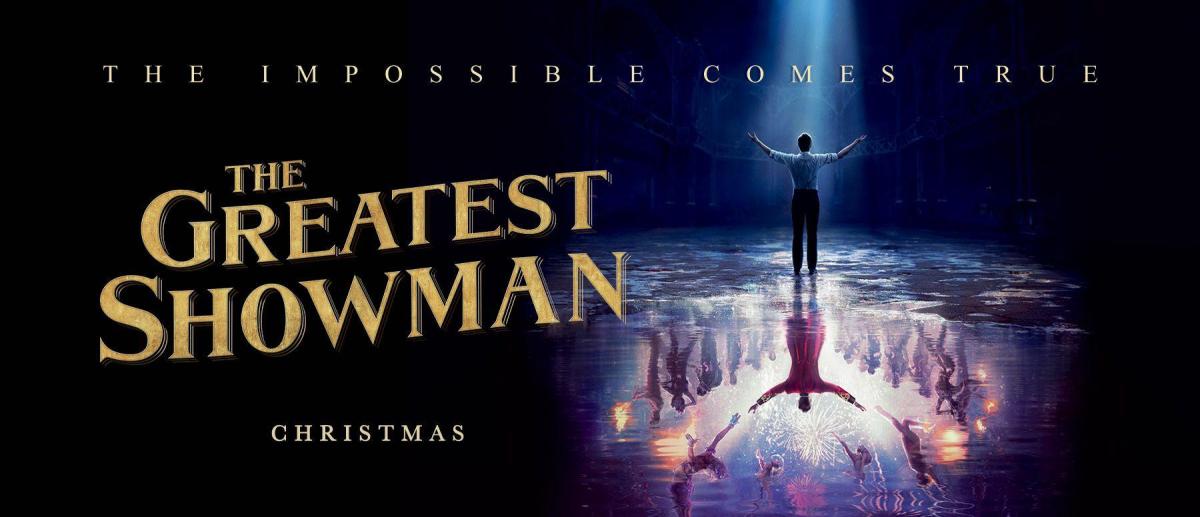
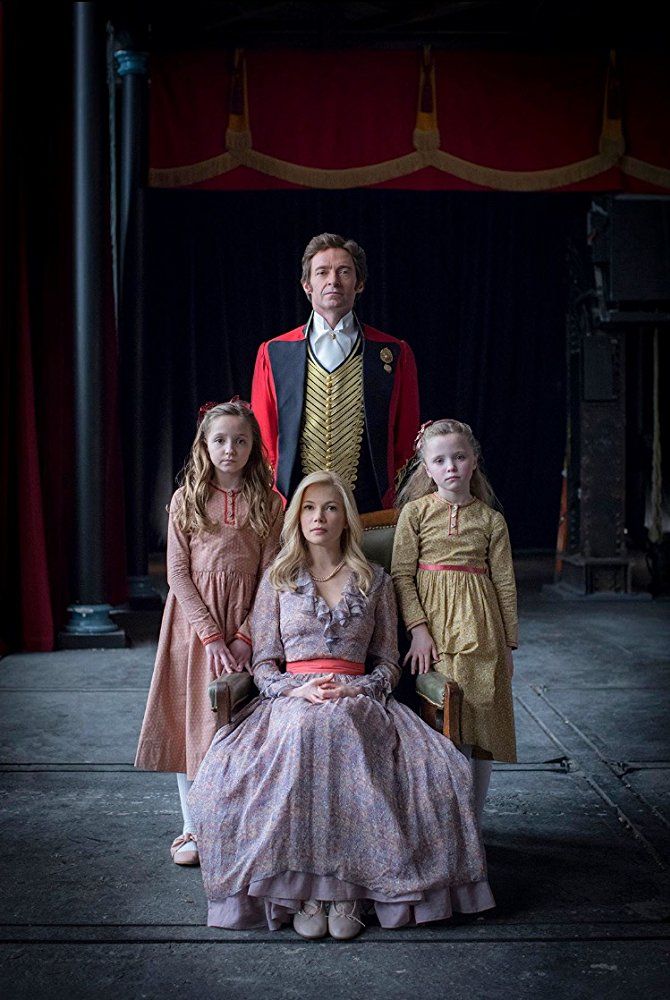
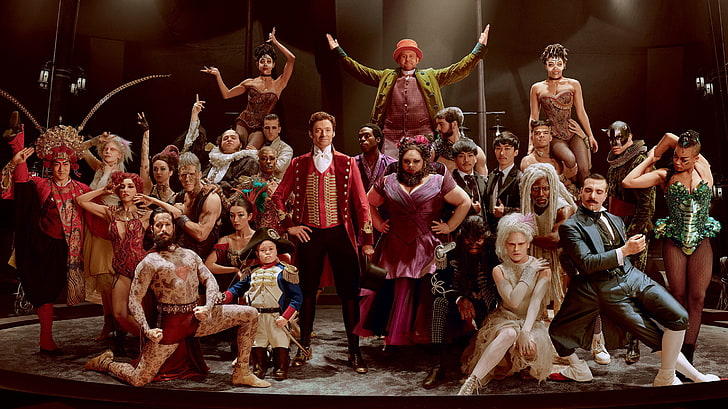
The Greatest Showman is a 2017 musical film that tells the story of P.T. Barnum, the founder of Barnum & Bailey Circus. The movie features an all-star cast including Hugh Jackman, Zac Efron, Michelle Williams, and Zendaya. From the very beginning, the movie captivates the audience with a powerful opening song that sets the tone for the rest of the story. The Greatest Showman delivers an inspirational message about acceptance and embracing diversity. A message everyone should hear.
The movie begins with a young Barnum who grows up in poverty and dreams of making something of himself. He falls in love with a girl from a wealthy family, Charity, and they build a life together despite her father’s reservations.
Barnum isn’t a stranger to hard work, and his dreams of success lead him to start a circus featuring “freaks” and outcasts from society. At first, the circus is a success, but it eventually leads to conflict and controversy.
One of the major themes throughout the movie is acceptance. The characters are all different in their own way, but they are brought together by their differences. Barnum’s circus becomes a safe space for people who are rejected by society and are seeking acceptance. The characters face adversity from society, but they find solace in each other and in their shared love of the circus.
Another theme in the movie is embracing diversity. Barnum’s circus features a diverse group of performers, including a bearded lady, a little person, and an African American trapeze artist. The movie portrays the characters as unique individuals who should be celebrated for who they are, rather than shamed for their differences. The movie encourages viewers to embrace diversity and see the beauty in what makes each of us unique.
Throughout the movie, the characters face conflicts and adversity. Barnum’s decision to feature “freaks” in his circus leads to protests and backlash from the community. The characters are forced to defend themselves on several occasions. Barnum’s ambition and desire for success lead him to neglect his family and the people who matter most to him. However, the characters overcome these challenges through their determination, resilience, and support for each other.
In the end, the characters learn valuable lessons about the importance of family, acceptance, and embracing diversity. Barnum learns that true success is not measured by wealth and fame, but by the relationships he has with the people he loves. The characters eventually realize that their differences make them unique and special, and that they should be proud of who they are.
The Greatest Showman is a memorable and engaging movie that delivers a powerful message about acceptance and embracing diversity. The characters face conflicts and adversity, but they overcome these challenges through their determination, resilience, and support for each other. The movie uses storytelling principles and concepts to deliver its message in a powerful and memorable way. The themes of acceptance and diversity are relevant in today’s society, and the movie serves as a reminder to embrace what makes us unique and celebrate our differences.
“If you haven’t been to the Barnum Museum lately, you haven’t been at the Barnum Museum.”
The Greatest Showman truly is a movie that I believe EVERYONE must see. It’s a valuable lesson to teach our children early in life so they can grow up to be accepting adults. For myself, it’s reminded me to focus less on the “stuff” in my life and more on the people, places and experiences that bring me joy.








 EXSM 3989 - Digital Storytelling Class Blog