Having hypnosis and improve come together is like a perfect storm. The power of relaxation and meditation, with the only thing holding you back is your morality and the power of suggestion. Mix that in with the force of improve with a Canadian legend, and you have yourself a winning combination. Hypnosis shows can be a little lackluster and repetitive, but when you have the comical mind and imagination of Colin Mochrie, it takes it to the next level!
I was lucky enough to have seen Colin Mochrie’s Hyprov comedy show for our company’s Christmas Party this year, and it was one for the books! I’m a 90’s baby, so I grew up watching Whose Line Is It Anyway? and I couldn’t pass up the opportunity to experience an inkling of the cult classic. The show was hilarious and the volunteers were great and it’s what prompted me to live tweet a segment from the show.
Just had my company’s Christmas Party. And oh. my. gOD. I NEED TO TELL YOU ABOUT IT HAHA. Let’s set the mood, right? Just had a nice, fancy dinner at Vicky’s Bistro (#iykyk get the Alaskan, it slaps so hard every time) #EXSM3989pic.twitter.com/0SUdbEQuOs
When I was live tweeting, I wanted to follow a few simple principles of snippet storytelling. I wrote the way I talk – I wanted to share my experience with others, and I wanted others to be as excited as I was. I wanted my thread to have intent and to set the stage for the joke. I tried to be relatable with how I posted, and wanted to build up the suspense for the zinger that one of the volunteers had. I tried to evoke a reaction/emotion, be it warm and fuzzy for remembering the joys of Whose Line Is It Anyway? or the absolute hilarity that ensued from the joke. I added hashtags where I could and also included visuals that would hopefully catch the eye and used punctuation in a way that would maybe stop someone from scrolling and be interested.
And now for a classic Whose Line Is It Anyway? moment #arctictern
As a single mom, there are lots of days I am home alone. When my kids are gone to be with their Dad, I find myself longing for the sights and sounds of another living entity in my condo. I started to think about getting a pet, something for the kids. But in reality, that was just a way for me to justify it … we all know the pet was for me. I have always had dogs, but living in a condo isn’t ideal for training a puppy; I am severely allergic to cats; Fish are not ones that can provide the companionship I was looking for.
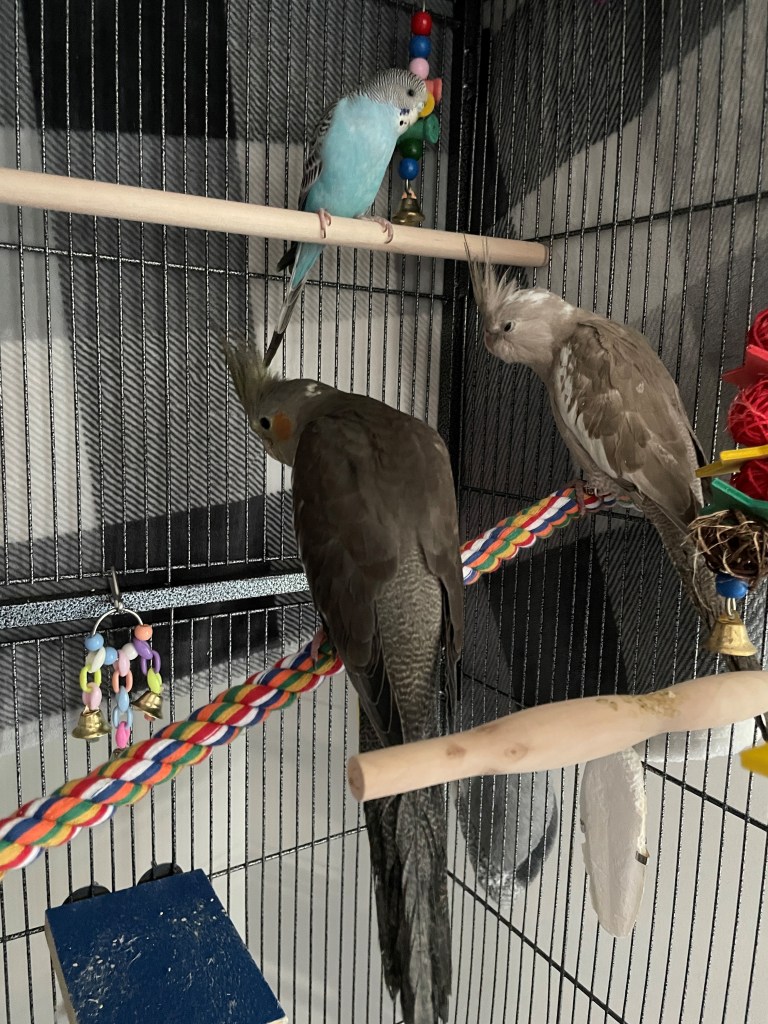
But as a kid I not only grew up with dogs, but we also had birds. My kids have been fascinated by birds for a long time too. I decided that a Cockatiel would be the best bird to fit into our family dynamic. They are friendly, love to be a part of the “flock” and can sing and talk if you spend enough time with them. I reached out to a local breeder and began the process of slowly setting up the condo for a Cockatiel.
Fast forward a few weeks later, and my neighbour who knew I was getting a bird, messaged me and said that they found a Budgie in a tree. After posting to the YYC Lost Pet Facebook page, no one claimed the little guy and they asked if I would like to take him home.
At this moment, my internal dialogue was more, at the moment, than a responsible adult rationale. Two birds, of course, would be totally better than one. Then they won’t be lonely. But what would be better than 2 birds??!! Why…. 3 birds of course. I quickly send a message to the breeder I was getting the original first Cockatiel from and asked if he would happen to have another Cockatiel available for adoption. He did…Sign me up! I have now turned into the crazy bird lady.
The first week of July, the kids and I packed up for a day trip to drive to Leduc to pick up our two new Cockatiels that would be joining Budgie. We bought this backpack we saw on TikTok that can be used as a cat carrier or… a bird carrier.
When telling this story on Twitter, I defaulted to the 8 points a Story Arc. I think in general most stories will fall under this story construct structure. Unless, of course, you write a cliffhanger… but with my story, well you all know how it ended.
I also included the typical beginning, middle and end. I am slowly starting to like storytelling through Twitter. But I am still a novel girl.
A question everyone needs to ask themselves when addressing aquatic species conservation.
This week we were tasked with live tweeting a story in real time, and while I can honestly say I did not excel at this task, I think that my story is kind of cute and quirky and I am going to repurpose it when I actually know how to use this technology. This tweet may be just the thing that draws more people into the wonderful world of aquatic species conservation, right!? (sigh, one can dream can’t she?)
Using Twitter is new to me. As I noted in my first Twitter post for this class, I always thought that it was for people with opinions (mostly political ones), and while I have lots of those, I don’t necessarily think that anyone needs to hear them.
I loved tweeting TBH. It allowed me to explore alternate ways to draw people into the projects I am working on. To think about key messaging and what I am really trying to communicate. And, while Twitter may not be where I excel in the realm of social media, it made me think that maybe it could just be a tool for me to use to draw people to my Instagram, Facebook and project websites whereIactually know what I am doing.
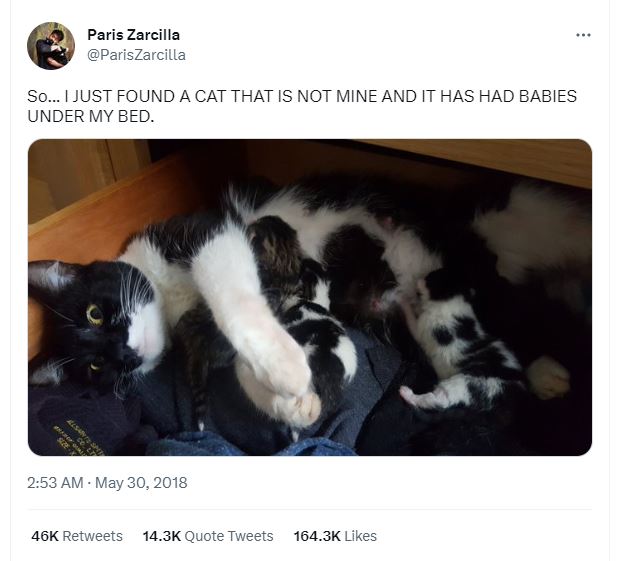
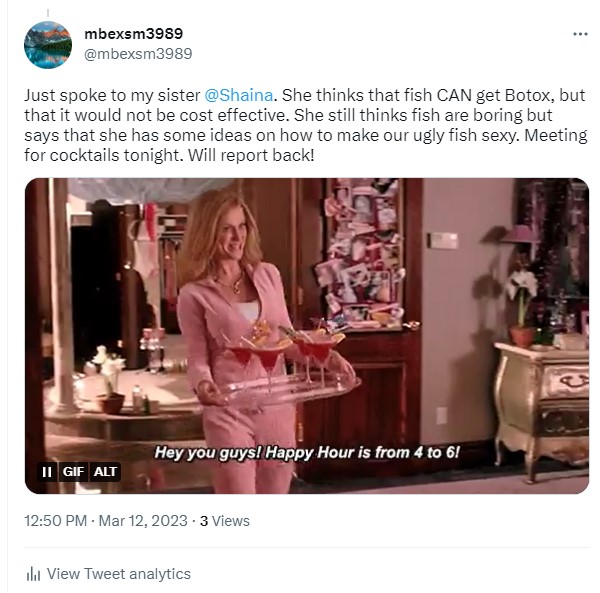
For my tweet I took advice from Gary Vayernchuk. He says, “Document. Don’t Create”, so that is what I did. I documented what I was doing at that moment, which was starting my journey to create a fish exhibit (thrilling, I know!). I then thought of the Cat dad on Twitter and his story thread, and tried to draw on that style of posting.
I pulled the flow and story development from the 8 Point Story Arc. I tried to set the scene, create the rise of action, and start the quest early in my post.
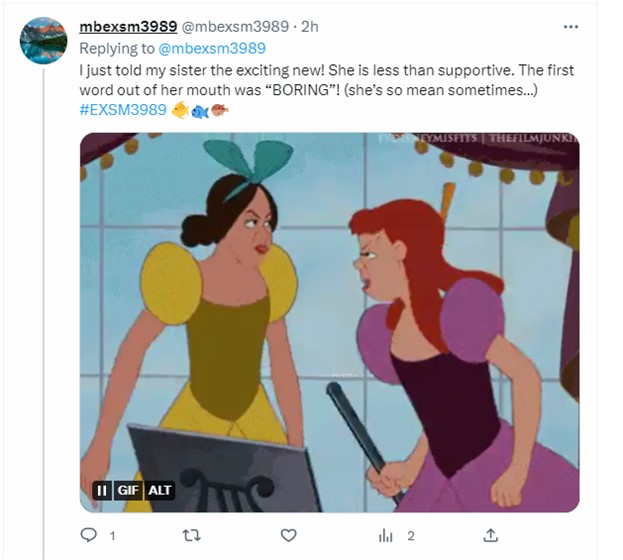
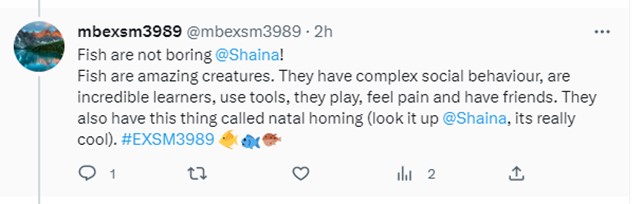
The protagonist is (obviously) me and the villain is my real life sister, Shaina. Shaina thinks that fish are boring, and I set out to show her that they are not boring. They are, in fact, very cool and beautiful.
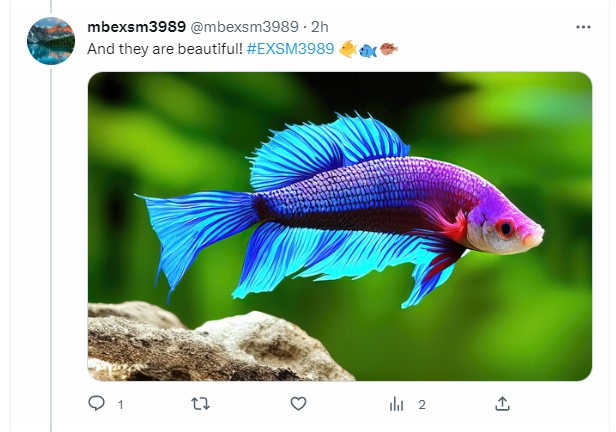
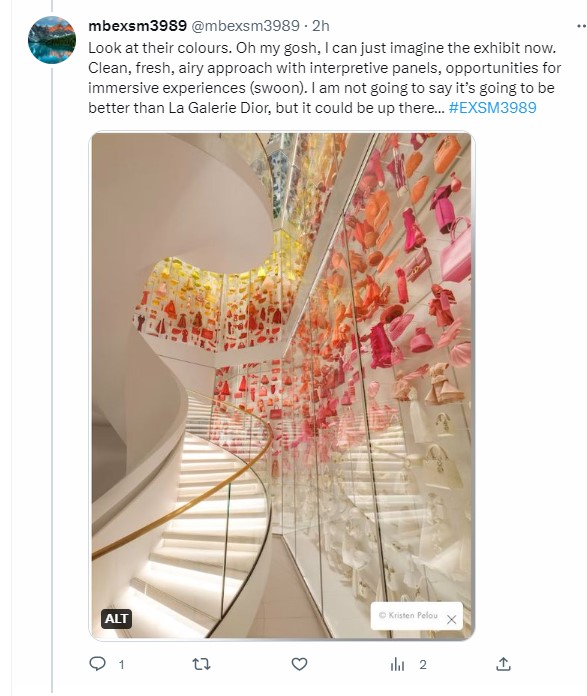
I let myself dream in the tweet about what this fish exhibit will look like. I talk about colour, beauty, and glamour, and lead my readers into thinking that this is going to be one pretty little exhibit that I am going to create.
Then I drop the surprise.
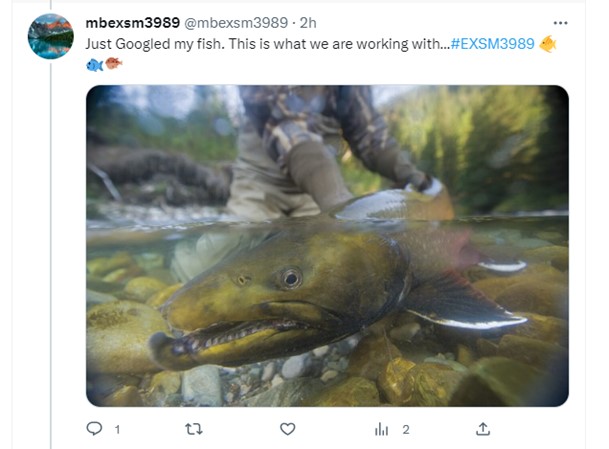
It is not that fish are boring. It’s that the one we are creating the exhibit around is … how do I say this?… it’s ‘UGLY’ (gasp!).
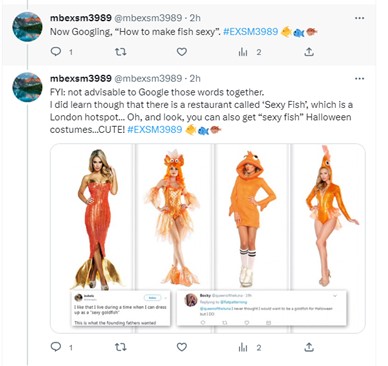
Now my quest is not to show that fish are cool, my quest is about how I am going to make this species beautiful and sexy; in order to sell their conservation and protection. This task takes us on a wild ride of ups and downs that are full of information and dialogue that no one see’s coming (hang on, it gets intense).
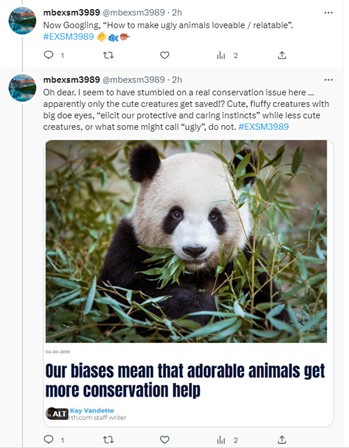
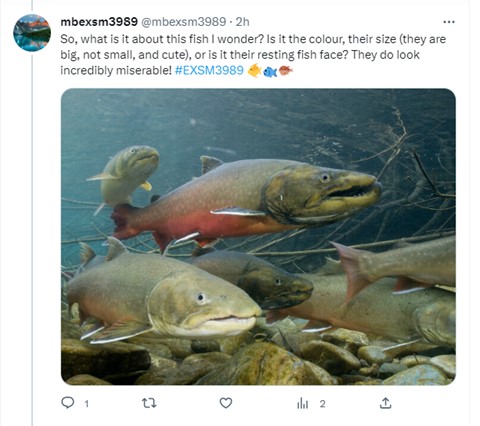
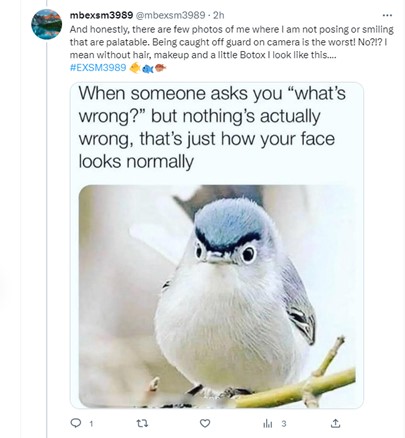
I tried to build tension in the thread and get to the point where I ask readers, why does everything have to be pretty and cute for us to pay attention to it? Why can’t we just embrace something that many would deem ‘ugly’ and use it as an advantage? What is it about this fish that people think is ‘ugly’? Is it their colour or their size? Or…. is it their RESTING FISH FACE?
I then tried to pose some questions about beauty standards to the readers. I hope that this will help many of the readers relate to these poor, ‘ugly’ fish, in a funny and sympathetic way.
I then tried to bring this thread and what I consider the first part of the fish story, to a climax. I consider that it is pretty unfair that we hold nature to the same beauty standards that we have for our selves.
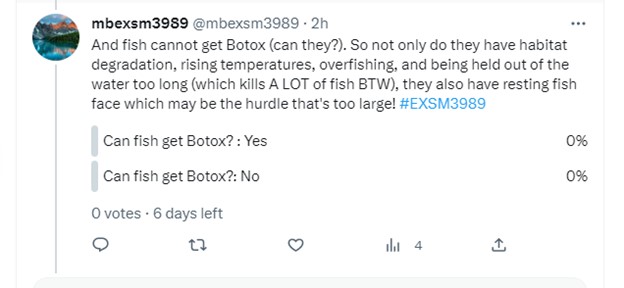
I mean, fish can’t get Botox, can they?
So, not only is their habitat slowly being destroyed, their waterways are rising in temperature, they are overfished, and they are commonly held out of the water too long by overzealous fisher people; on top of all of this, we don’t think they are cute enough. And, they cannot even help that because they are limited in their beauty regime.
What is interesting is that that fact alone may actually be the biggest hurdle I need to overcome in my fish exhibition journey.
Can fish get Botox? is a question that is meant to throw the reader for a loop, to catch them a bit off guard, make them laugh, but also make them think. I tried to add an interactive component where people can vote.
Bringing it to a close, I wanted to sign off, but leave an opportunity to pick the story back up at a later date and build on it. I wanted to leave the readers on a little bit of a cliff hanger in order to keep their interest. I re-introduce my sister, the villain, who may not actually be the villain after all. She calls and says she has some ideas for how we can make our ‘ugly’ fish sexy and maybe, a little less boring.
I hope readers will stay with us as we figure out how to make people care about these ‘ugly’, but important fish.
My live-tweet storytelling takes readers on a journey through the worst travel day I ever had – and don’t just take it from me, the lady next to me who had been travelling for 30 years agreed.
I lived in Turkey at the time and was just trying to visit my dad in Helsinki for a nice trip and the airline said ‘lol, bet’.
In all seriousness, it took me over 26 hours to get from my apartment in Ankara to a hotel room in Istanbul (a mere one-hour flight) with roller coaster turns along the way. Interested? Check it out here:
Storytelling Principles Used
I used various different writing techniques to help keep my writing suspenseful for this story. 1. This story was told entirely from my point of view. I had no clue when the number of lines would end or when I would get out there. Readers also experienced this as I did 2. I used different style and form, some portions where I make exclamations like ‘I was DONE’ helps get across the frustration and strain of the whole incident without getting to descriptive. The formatting and capitalization did that work for me 3. I left a number of my tweets on a mini ‘cliff hanger’ that encouraged readers to go to the next part to figure out just how the story could have gotten worse.
I also used some common themes of my experience to help tell the story better, including relatability (I’m sure we all have a horrible travel story in some capacity), emotion and authenticity. This is how I would have told the story verbally to someone sitting next to me.
I also tried to include paragraph breaks at the end of sentences to keep the content uncluttered and more appealing to read.
Overall this experience was horrible, especially considering I was a pretty new traveler at the time. But, I got through it and I hope you will too! Thanks 🙂
The story I am about to tell begins with one’s worst fears coming to fruition. The nightmares you think are sealed into the realms of the dreaming world when abruptly leak into the waking moments can leave you tensed, torn and terrified. Summer of 2021, when the world was trying to recover from the tragedy of the pandemic, the Universe was getting ready to jolt me out of my comfort zone. My mortal fears have always been made of the inability to choose and control the events in my life! I am a person who is dreadfully resistant to the idea of change. And I mean any change. A new couch that I thought would go well with the décor when actually placed in the living room can make me ruefully question my life decisions.
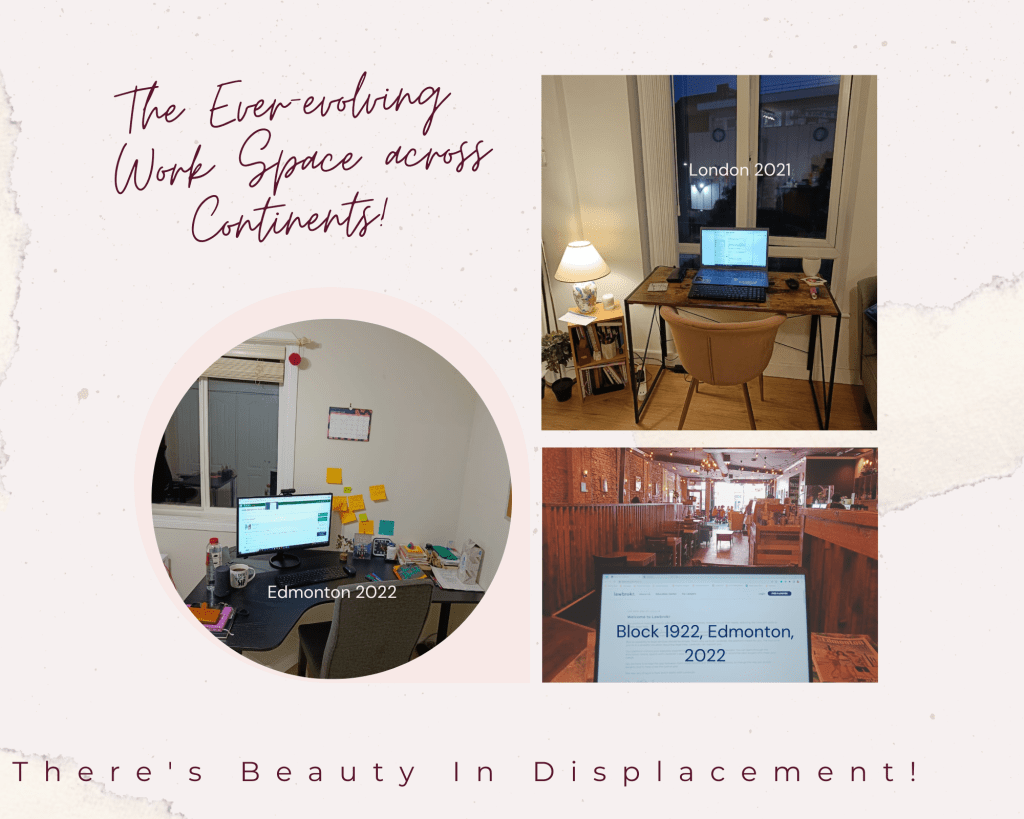
The change that was staring me in the eye this time was colossal! Circumstances were leading to the inevitable reality of giving up my London apartment, one that I pieced together bit by bit. One that was my constant and one I hoped to keep even when everything else would change. But this was not to be. And just like that, my home became Flat 8!
The following months after I packed away my home was challenging, one that was filled with grieving, anger and, at times lack of spiritual connection that I had never felt before. Everything seemed like a test that would eventually lead to another massive failure. How does one explain grieving, especially if it’s not a dear one that you are mourning but a way of life and space that was sacred? With a bruised ego and a broken heart, I decided to move away from the UK. Perhaps new meanings of home or hope lay elsewhere. The process of healing, like tragedies, has a way of finding you without warning. Edmonton, Alberta, was like a breath of fresh air.
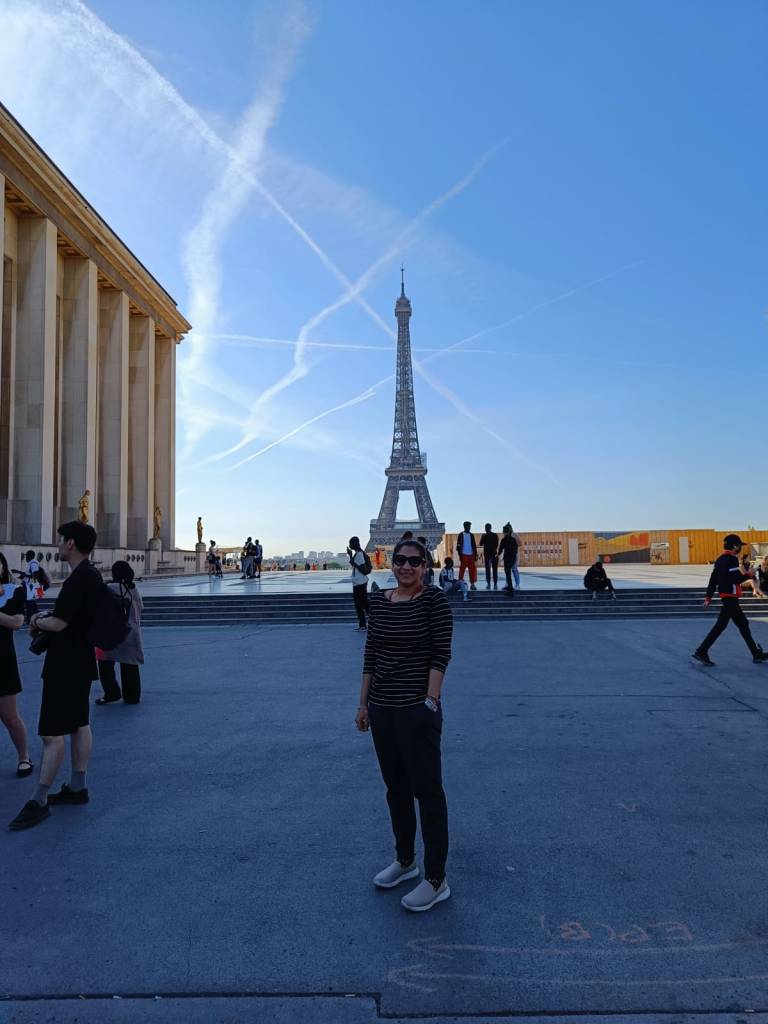
Someone like me, who rigidly prefers to stay on track and cannot fathom the idea of a detour while travelling to Canada via Paris, decided to make the most of a six-hour layover. I still have to pinch myself over it!
I knew something had to shift inside of me to breathe again. So, there I was, throwing caution to the wind, standing next to the Eiffel Tower, gleefully reminding myself that the choices of the living must remain in living and preferably in the present.
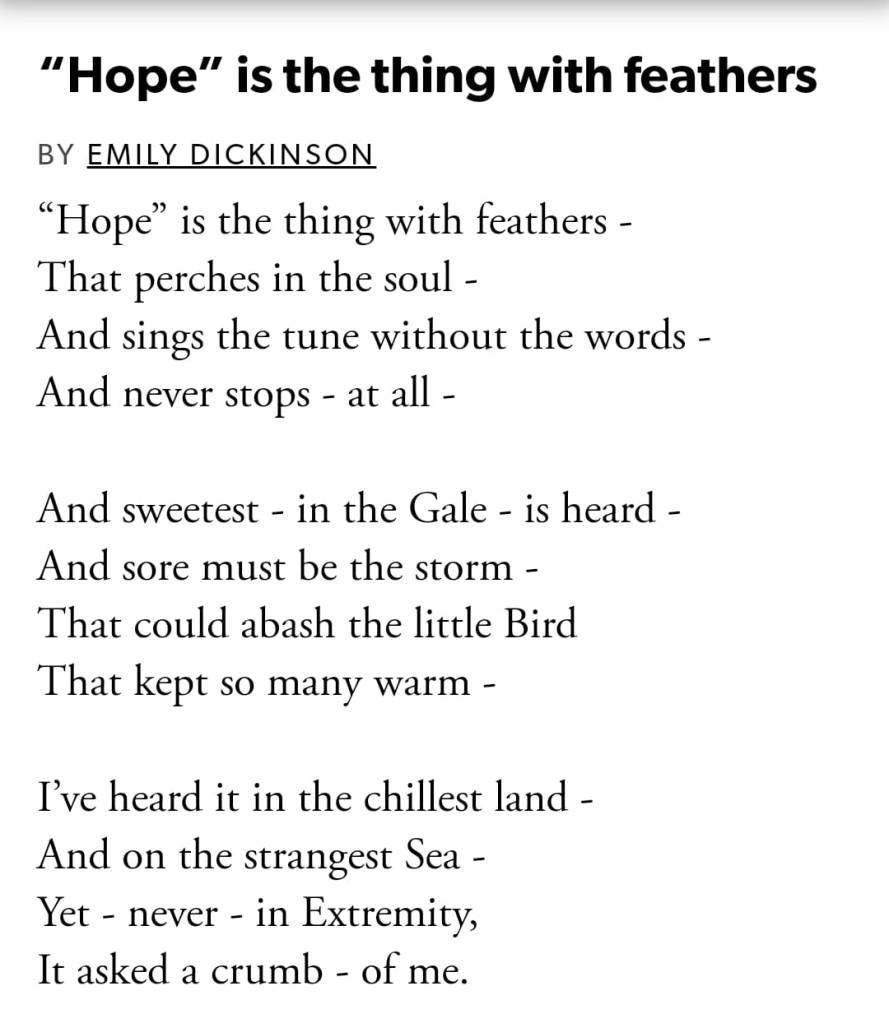
There could be myriad ways my story could have ended. One that began with displacement could have ended in me pirouetting around my fractured heart, engulfed in self-pity. Instead, my story ends with hope. No matter where I land, I must never give up on Hope because Hope is the thing with feathers bound to carry you to beauty and beyond!
This week, while learning about distributed stories and Multiplatform Storytelling I was reminded of the distributed story I have been finding during the last few years.
I first found it in a converted newsrack dispenser: after solving a riddle to unlock the box, I was rewarded with a treasure trove of more stories hidden inside.
Let me explain. It was a geocache.
Have you tried #Geocaching? I first heard of it from a friend’s IG post. While they were exploring the east coast with their kids, locals taught them how to follow clues & coordinates on their phones to locate caches. Each one is a piece of a bigger story…
In short, “Geocaching is a real-world, outdoor treasure hunting game using GPS-enabled devices. Navigate to a specific set of GPS coordinates and then attempt to find the geocache (container) hidden at that location.”1
But, what does the container look like?
What do you do when you find it?
There are simple and not-so-simple answers to both of these questions.
Under bridges, you might find trolls, you might find caches, or maybe both. So many stories! (Screenshot from Geocaching.com)
Usually, you just find the hidden box (there are ratings for size so you know if you are looking for something large, regular size, or little micros) and then sign the log as proof that you were there. The logbook inside could be considered a type of story spread across time and authors. Many people may have found it before, or you may be the very first finder!
The Logbook is a story
Sometimes the finders will write a message along with their name on the paper or the digital logbook about what the conditions were like on the day they found it, who they were with, why they were in the area, or a hint to help you locate the cache. Some days there may have been multiple finders, or there might have been long periods of time when no one could locate the container or it was hidden under snow. If you find a few geocaches in the same neighbourhood you may even see some names repeated, these people have added to the same story as you, but in a different order, and in a different time.
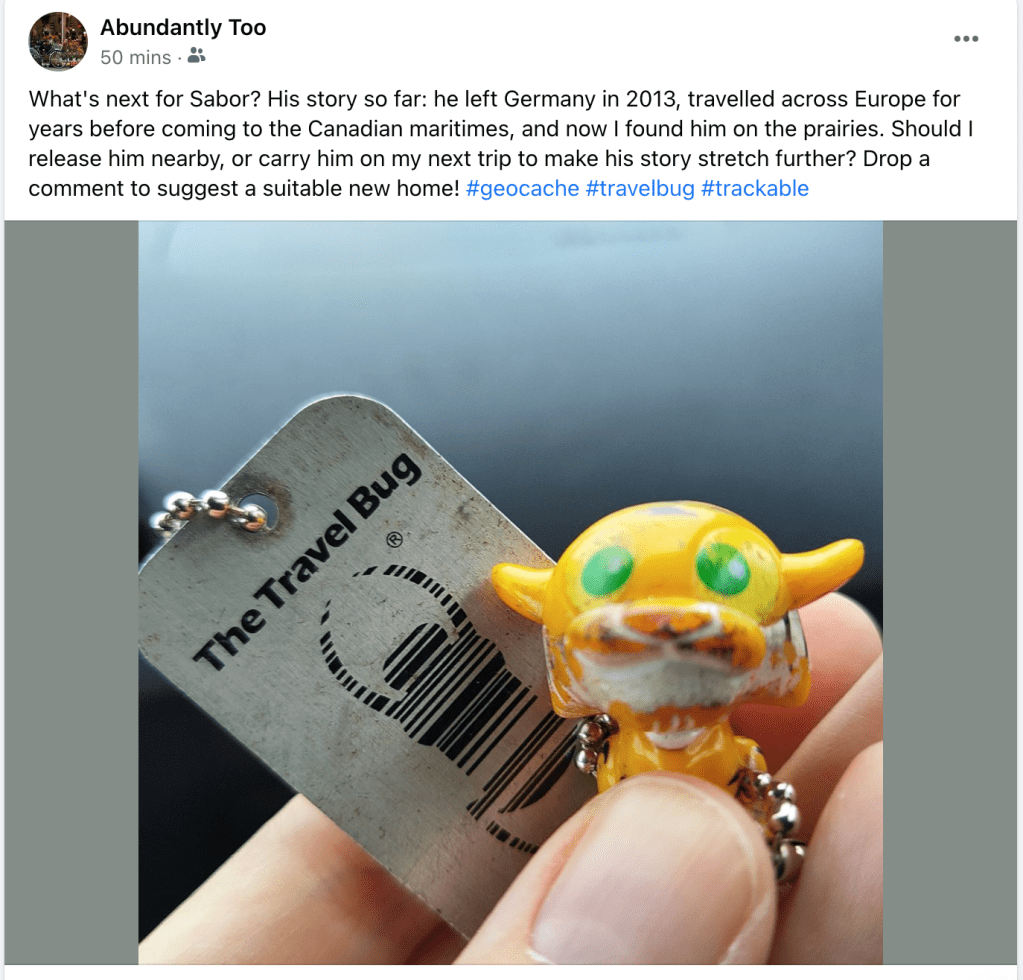
Then there are Travel Bugs like this little guy with his own travel tale.
Caches are stories distributed across every country and continent, with logs by thousands and thousands of different ‘authors’, across more than 20 years (ever since May 2000 when the first geocache was placed). And their story doesn’t even stop there.
Stories within Stories (Literally)
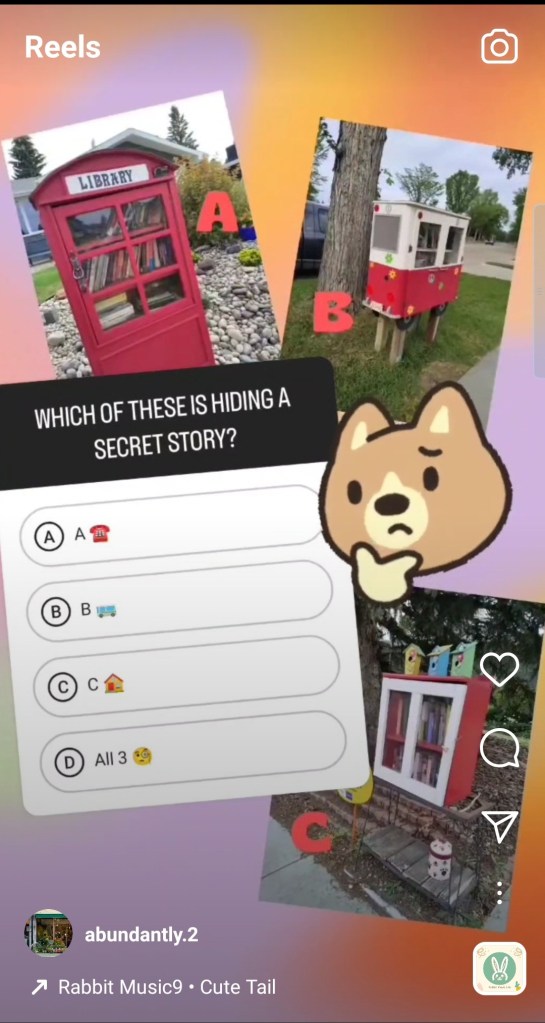
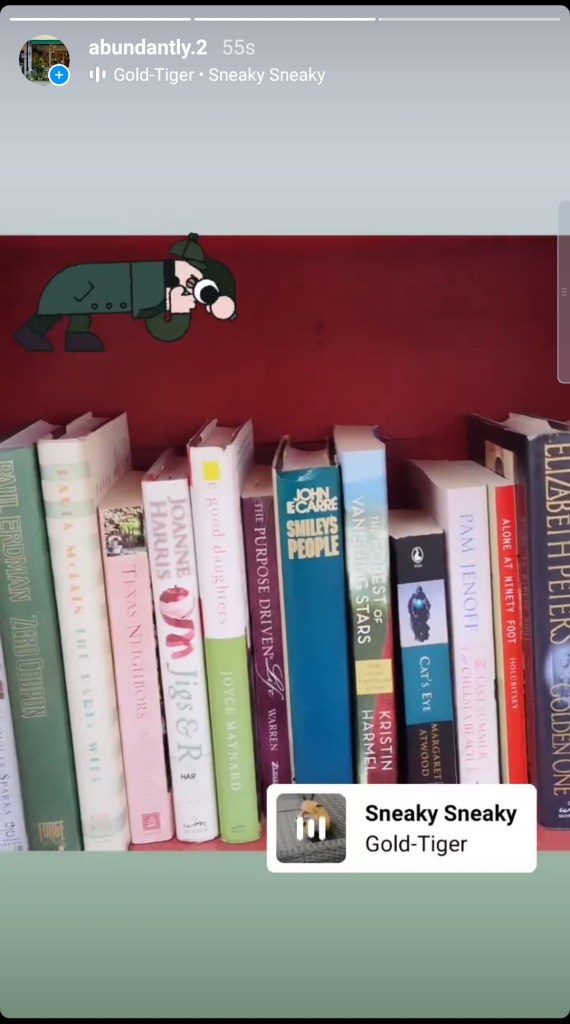
The physical caches can be very tricky, even when you are at the correct location you might not spot them. Is it actually a branch or rock, or a camoflauged hiding place? Is it a novel inside that Little Free Library, or is it a locked book safe or magnetic container?
This video about Little Free Libraries in New York shows that you may have a similar story hiding close to you.
Not to be limited to the ‘little free’ type of library, I have also found a cache in an actual municipal library. The clue was the Dewey Decimal number for the book and shelf, of course.
A few years ago I was inspired to read the novel “I Am a Cat” by Natsume Soseki after visiting Japan and finding a cache under this cat statue where the author’s home was originally located.
Original home of author Natusme Soseki, in Bunkyo, Tokyo, Japan with geocache cleverly hidden near the 2 cat statues
It was another example of distributed storytelling as I was physically in the setting of the book more than 100 years after it was written, signing my name to the log at the monument, then reading the full novel later and reliving the same neighbourhood through the eyes of author Soseki.
There are also ‘Other’ cache types – of which I can only scratch the surface. These include virtual caches, EarthCaches (going physically to a special geological location and answering questions to prove you were there), letterboxes, puzzle/mystery caches, gadget geocaches, events, GPS games, and multi-stage caches (like WherigoTM Caches or Lab caches), and more.
The Puzzle or Mystery caches are very interactive – before you can even get the location you need to solve a puzzle. It might be in code, rely on finding clues in the area, or involve finding hidden code in the web page of the cache itself – then deciphering how that relates to GPS coordinates. Those logbooks tend to be shorter when you’ve found them, but there is definitely a story inside about the people putting in the effort to add their names to the list.
Most recently, the story has been extended beyond the earth and its ocean and into even more rare territory. In 2008, one of the first space tourists hid a geocache in a locker on the International Space Station. In 2021, the Perseverance Rover landed on Mars with a geocaching trackable that could be logged by non-astronauts if they found the code on the images that were sent back to earth.
Can you find it?
The instructions and list of the 79,889 people (and counting) who have found it so far are here.
Then, you will have to look through NASA’s raw image files here to find it.
Look for a ‘selfie’ of the Rover.
Don’t get distracted by the hundreds of thousands of Mars vista and rock pics!
When you start looking around, will you find some of these stories or caches near you? When you do, will you just read and experience the story, thinking about who was there before, or will you add your name and be led into a new world of storytelling?
For over 30 years, The Simpsons has entertained families, adults and children alike. The Simpsons is a TV show about a family of 6: Homer (dad), Marge (mom), Bart (son), Lisa (daughter), Maggie (baby daughter) and Abe (grandpa). The first episode of the show aired on December 17, 1989.
Now you might think that I know all these details about The Simpsons because I, like audiences around the world, have enjoyed watching and rewatching episode after episode over the years. Well, you’d be wrong.
Confession time: I have never watched an episode of The Simpsons.
Not during a high school class, or even briefly while flipping through the channels when cable TV was still a thing.
So, why did I choose to live-tweet me watching my first episode of The Simpsons? As we learned in last week’s lesson, a good story is a relatable story. And what’s more relatable than the antics of a lovable (but slightly dysfunctional) family living in the suburbs of a town named Springfield?
To help tell my story and recount the events that took place during the episode to my Twitterverse audience, I used the 8-Point Story Arc:
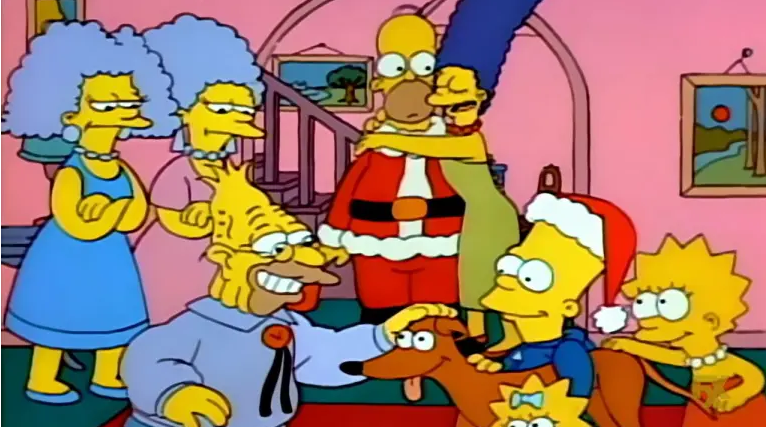
The stasis of the story takes place on a snowy night in December in The Simpson’s in Springfield. After getting home from a Christmas pageant, the family is gathered around the living room planning their holidays. Patriarch, Homer, is excited to plan a special Christmas for his family with some Christmas savings and an expected work bonus.
The trigger occurs when Homer’s boss informs staff that no bonuses will be given out. To make matters worse, Marge has to spend their Christmas savings on removing a tattoo that Bart had done.
Without telling his family about his bonus, Homer begins a quest to make the best Christmas.
The surprise occurs when Homer decides to make up the money for Christmas by becoming a Santa.
After learning that being a Santa only earns $13, Homer makes a critical choice to try betting his earnings at a dog racetrack in hopes of a Christmas miracle.
His quest reaches a climax as he chooses to bet his earnings on Santa’s Little Helper, a dog with a 99-1 odds of winning.
Homer loses his earnings, but a reversal occurs when he sees that Santa’s Little Helper is also down on his luck after being cast away following the dog race loss.
We reach a resolution as Homer decides to return home and confess to his family that he didn’t receive a bonus. After introducing Santa’s Little Helper to his family, Homer learns that the perfect Christmas isn’t filled with expensive gifts, but with love.
Painting A Yellow Picture
I knew I couldn’t group-watch the episode with everyone on Twitter, but I wanted to at least try and give audiences an idea of the world I was encountering on the TV screen.
Using gifs inserted throughout the thread, I shared with the audience some of my feelings and snippets of the episode to build a sense of community.
A Happy Ending or Beginning
Now, if every good story has a beginning, middle, and end, what is the end to this story of a girl who watched her first episode of The Simpsons? Well reader(s), I think I now understand what you see in the TV show. So check back on my Twitter to see if I catch a few other episodes along the way.
I moved to Edmonton in 2013, coming from Beirut, Lebanon. A Mediterranean city with distinct 4 seasons: Chilly autumns, wet windy winters, lovely springs, and humid summers. Like any other ancient city (Beirut has been inhabited for more than 5,000 years) it has tiny roads and is over-populated.
Beirut Downtown… busy tiny roads.
Everything is a walking distance in Beirut. Although in other parts of the country there is snow 6-8 months a year, because it is a coastal city it’s rare to witness snow in Beirut. So equipped with an umbrella, you could walk anywhere within minutes.
A ski resort in Lebanon
To Edmonton
Moving to Edmonton, I had to adapt to a snow winter city. Not only that, but Edmonton is also city spread wide! Walking from point A to point B is not an easy task in -25C, even if it’s only for 15-20 minutes. I was amazed to learn how well connected some buildings are to each other. My first experience was at the U of A, where I was able to cross the street from my residence, Newton Place, just across the U of A hospital on 114 str, go into the Li Ka Shing bldg, then walk indoors for 15 min and reach the Edmonton Health Clinic Academy on 112 street. For a Mediterranean person, walking indoors when it’s freezing is a bliss!
Walking indoors from residence to class while avoiding the -30C… heaven!
Walking, yes! but…
Moving to working in #yeg downtown got me excited! Have been working on campus since graduation. One of the things that I completely like about the city core is how busy, diverse, and lively it is during lunch break! I was always guilty of skipping lunch break before moving to #DTyeg. Now I look forward to my lunch break so I can get out and go on the scenic #yegrivervalley paths. There is the funicular, the river, the stairs… everything packed in a few miles around DT.
Edmonton’s beautiful funicular, stairs, and path in the background
But, given how wet our summers are, I had to skip my lunch walk to avoid getting wet. Even on dry days, if it’s humid, it’s certainly not advisable to walk outside in any office attire. I tired it once – so based on evidence, not even walking slowly helps!
I’ve got a “well-connected” friend…
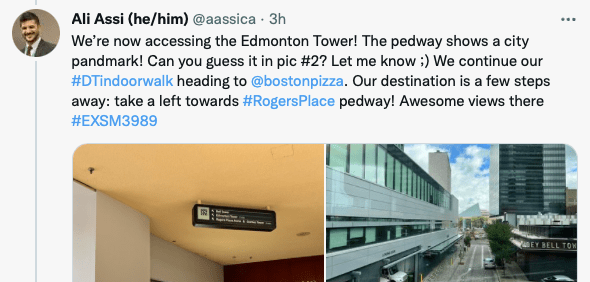
Realizing I skipped my walk a few times, my friend Derrick asked me if I’d like to join him for a walk.”It’s +28C… no thanks” I said, to which Derrick responded: “so we will walk inside!“. This is how I got introduced to the well-connected system linking Central Station all the way to Rogers Place.
Tunnels but overground!
I was fascinated by the different pedways and how strategically they are positioned to show different parts of downtown! And today, I decided to share this path with everyone who works or lives in DT and prefer the heated/air-conditioned lunch break walks when the outdoors is too much to handle!
Prepping to share my walk step-by-step, I got my phone ready to document the path and take pictures, my water bottle full of water, my earphones ready with soft music, and started the walk. No equipment ready: just your happy mood and comfy shoes. My thread started at Central Station, where my first tweet went live.
I wanted to share my walk in an engaging way, inviting my followers to engage and buying-in into how enjoyable an indoor walk can be! I mean, these blogs also live forever! So bookmarking it and using it as a guide in the winter is not a bad idea 😉
I tried to highlight what else is there to check indoors: the different nice cafes, food court options, and stores:
The other interesting aspect is that every medway highlights a different city skyline. I even asked my followers if they are able to identify some of these:
If you guessed “City Hall” you are correct!
Wow! I am an expert! Umm… nope.
Now walking through the different pedways while trying to focus on making it to Rogers Place and taking pictures is no easy task! I did end up by mistake somewhere where I was not supposed to be! But the nice thing about wearing comfortable shoes is to run away when needed. Nah joking. I simply tracked back my steps, and went to the nearest pedway and looked outside to identify the direction of Rogers Place. It’s so easy and cool. What I also like about these different paths is that every time you walk, any slight change or turn can lead you to a different place.
Engaging is key
The most important part of telling a story is to invite your audience on this exciting journey with you. Asking questions, showing pictures, and exchanging knowledge, all are key to better engagement. My walk felt way better knowing that many were join gin me on this trip, and even more through this blog post.
Do you know of any other secret paths, whether outdoors or indoors? I love to explore these. Next time, I will take you on a nice walk by the Mutant, and with enough motivation, I will share a secret spot to enjoy the view from the Muttart (for free!)
As a former political journalist watching the events turn out the way they did this summer in British politics has been nothing short of engaging and exciting.
The perfect recipe of a scandal remains intact in its ingredients – sex, lies, and cover-ups. The fall of Boris Johnson, who took office only three years ago after successfully organizing a coup against the then Prime Minister, Theresa May, has been a cringe-worthy affair. This will always be the story of a man who tainted the land’s highest office while he was in charge and was equally disgraceful as he exited it. The list of scandals and his denials were a match made in hell. The shambolic display of events eventually caught up with this jocular self-serving PM. Here’s how it all unfolded.
The elements of my story consist of the Setting, Character, Plot, Conflict and Arc, hence using the storytelling principles to craft better tweets but focusing on Twitter moments while deciding the topic and ways to make it engaging.
The Setting
The story revolves around Westminster Politics, and the downfall of yet another Tory Prime Minister marred with scandals and cover-ups. A summer of scandals indeed!
Character
At the forefront of it is the disgraced PM, Boris Johnson, who reeks of lies and deceit as soon as he opens his mouth. Not too far away is his Cabinet Ministers, who have defended him for far too long. Finally, the British Public are as much a part of this nasty business where they continue to be lied to and cheated upon simply because this PM will not stop lying.
Plot
One after another, the series of scandals tainted the pillars of this Tory government – Partygate and Pincher was the top of the list where the Prime Minister lied to the British public and misled the Parliament.
Conflict
The internal investigation of the Partygate scandal led by Senior Civil Servant Sue Gray revealed multiple gatherings, wine, vomiting and fights in the parties held in No 10.
“The report also reveals that a leaving do at No 10 on 17 June that year included “pizza and prosecco” and a karaoke machine. During this event – which went on until 03:00 – one person was sick, and there was a “minor altercation” between two others.“
While the British public followed the rules and stayed indoors, at the cost of being unable to be by the side of their dying loved ones in care homes and hospitals while not being able to attend funerals, those who made the rules thought themselves to be above those same set of rules.
It might have appeared that Boris johnson had survived Partygate by the skin of his teeth. When came the Pincher saga where it was the case of –Pincher by name, Pincher by nature! Serving the fatal blow to Johnson’s Premiership.
Arc
My story has a clear beginning, middle and end.
The End
Once the lies caught up and it was found out that the PM indeed was made aware of the sexual misconduct allegations brought against Chris Pincher even before he was appointed as the Deputy Chief Whip of the Tory Party, it was time for his backbenchers to draw blood. The Cabinet resignations sparked by Sajid Javed, the Health Secretary and Rishi Sunak, Chancellor of the Ex Chequer, forced the herd to leave Johnson’s side.
With almost 50 resignations, the PM was now hanging by a thread!
Twitter Moments
The chosen topic is an ongoing tale of British politics, hence relevant and timely. The political news story presented through snippet storytelling uses images, videos, hashtags and news links to inform and entertain the audience to evoke a reaction and improve discoverability.
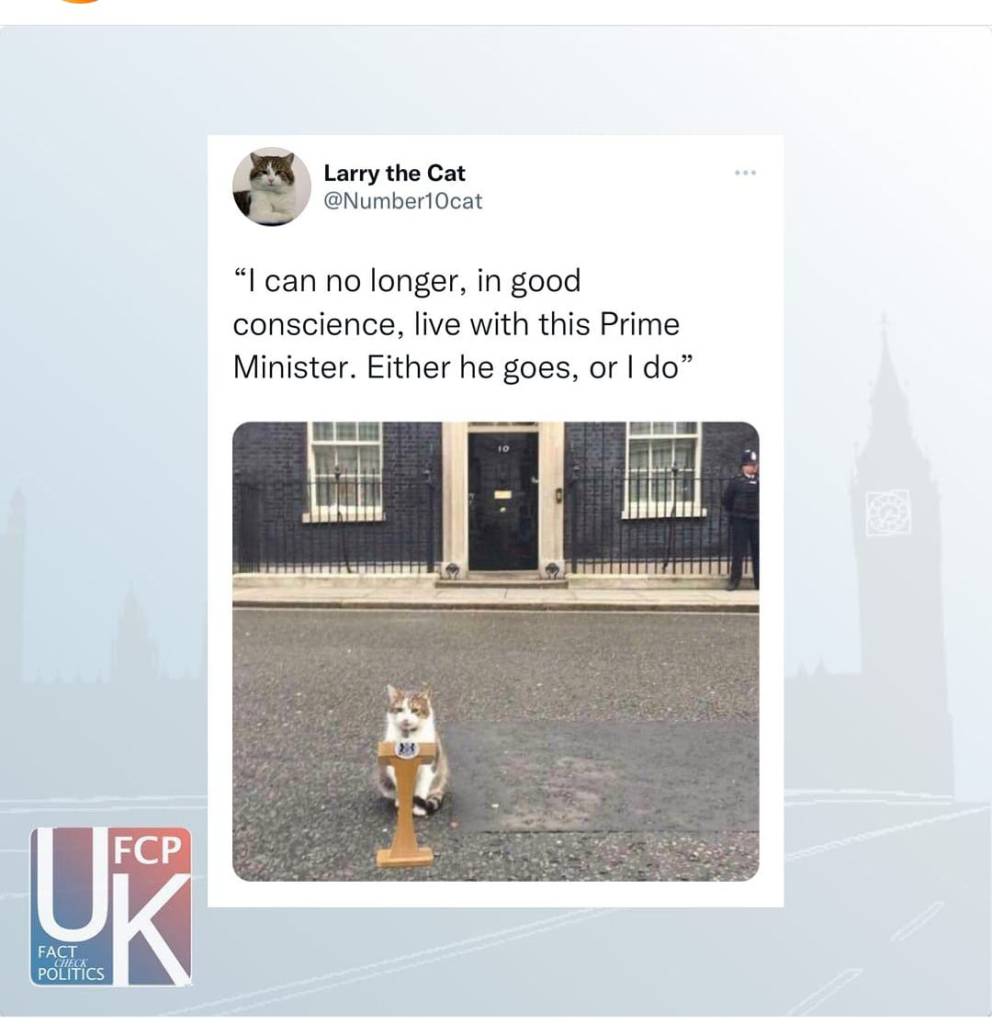
My Twitter story also adheres to the different types of moments as laid out in the Twitter Moments. It’s a commentary on a current story that uses humour and satire to reach a broader audience that does not consider itself political. You don’t have to like Boris the bonkers. You only have to say aww to Larry, the cat!
Although I think my life is quite habitual and unappealing to others due to my routine consisting of working, cooking, watching TV and reading with my spouse before bed with the off chance of gaining the motivation to use my yoga membership, I decided to try to document a scenario that occurred in my day for a Twitter thread. I challenged myself to use Vaynerchuks philosophy to simply document rather than create. “Just tell the world what’s going on. Describe your journey, outline your vision, and describe your thoughts, ideas, actions, wins, losses, anxieties and ambitions online.” I was surprised that the storytelling basics applied to my interaction with my cat that had me in hysterics and took a dip into my bank account. I came home to find my usually loyal cat meowing loudly in the basement, not at his usual place at the garage door keenly awaiting my return. I went downstairs to find him staring at a spider crying. I was a bit taken aback that he cowered in front of such a tiny creature, but I digress because I am no fan of any small critters myself. I took a Kleenex and swiftly disposed of the spider. The horrified look on my cat’s face when I did so, turned me from hero to villain within minutes. I used to be a beloved cat Mom, but my cat now painted me as a spider killer and refused to look at me physically turning his back when I entered the same space as him. Ridiculous? Absolutely! But I yearned for redemption. I ended up caving and going to Petsmart to purchase him yet another toy for his pile. And no, I did not get him a mouse now knowing he is not a hunter.
When? – late afternoon, main character returns from work
Why? – cat was scared of spider and then owner
The bonus question of “how” I was going to keep the audience’s attention was by using a GIF to convey my cats horror. The short story also had the suspense of wondering why my loyal cat didn’t greet me at the door, a bit of comical relief with a GIF chosen, and a plot twist making it engaging, because who doesn’t love when the heroine becomes the villain? Well…clearly not me as I was emotionally invested in my pet! However, it taught me that storytelling does not have to be complex. A story can be achieved from a small insignificant part of your day that you found interesting or inspiring.
Photo by u0410u043bu0435u043au0441u0430u043du0434u0430u0440 u0426u0432u0435u0442u0430u043du043eu0432u0438u045b on Pexels.com





















 EXSM 3989 - Digital Storytelling Class Blog