Storytelling dates back thousands of years when it adhered to visual and oral traditions using myriad ways to communicate them, including drawings, songs, chants and poetry. The evolution of storytelling remains fascinating because, as human beings, we continue to find novel ways of communicating and sharing our experiences through stories that can capture our imagination and make us feel connected.
So, while the new mediums challenge storytellers to adapt to novel ways of communicating and presenting stories, the principles around good storytelling have remained steadfastly resilient.
So, what principles continue to help create great stories that we deeply resonate with and remember? Read on to know more!
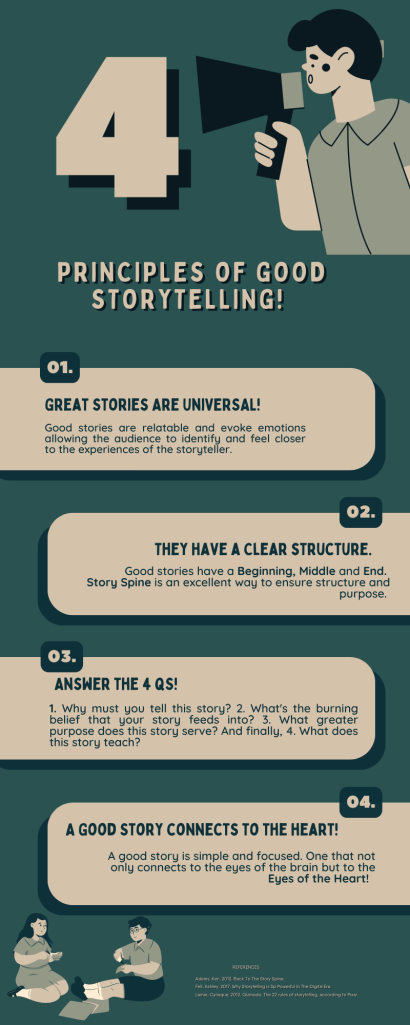
1.Stories That Have A Universal Appeal
The stories that offer universality through their characters and respective experiences instantly result in the most profound connections between the audience and the storyteller. According to Pixar Director Pete Docter, the relatable and identifiable stories also evoke emotions and remain with the audience, adding to their longevity.
2. Stories That Have A Clear Structure & Purpose
An appealing story must be able to draw its reader into its well-crafted world. For that to occur, it must be able to use the Story Spine and adhere to the guidelines of good storytelling, including the following:
1. The Beginning
2. The Event
3. The Middle
4. The Climax
5. The End
3.The 4Qs That Can Help Create Good Stories!
Good stories don’t just happen! Storytellers must cultivate the practice of self-awareness and honesty as part of the process. Before telling a story, answering these allows a storyteller clarity and purpose behind their work, often leading to memorable creations.
Ask yourself –
Why must you tell this story?
What’s the burning belief within you that your story feeds off of?
What greater purpose does this story serve?
What does this story teach?
4.Good Stories Have A Heart!
Good stories connect to the eyes of the brain but, more crucially, connect to the eyes of the heart! Principles of good storytelling, especially in the digital age, serve as a vital reminder. With more innovative platforms and mediums and their ever-growing tools, which certainly play a role in enhancing the audience’s experience, a good story, in the end, remains simple and one that speaks to the heart of its audience.
Conclusion
So, if you want to be able to tell incredible stories, follow these principles. Put yourself through the process, practice your craft and with perseverance, you will have your perfect story!
Great stories share common elements, from longer stories that follow a hero’s journey and full story spine approach to short advertising messages that make you the hero, solving your problem by using their product.
In learning about storytelling principles, I noticed that various authors count their rules differently, but that there are definite themes. This makes so much sense – as humans, we all respond to intense emotions and familiar situations.
In the 22 Rules of Storytelling According to Pixar, would-be storytellers are given some great hints for appealing to audiences. The Rules were distilled from years of making heartwarming animated movies, but do we really need all 22 rules for every type of storytelling?
Introducing the Short List
4 Storytelling Rules
Let’s explore these, and integrate the insights from another source,
This is based on Pixar’s rule #2 “You gotta keep in mind what’s interesting to you as an audience, not what’s fun to do as a writer. They can be v. different.”
You want to target your customer by thinking about what kind of content they want to see.
Down to Pixar’s rule #15 “If you were your character, in this situation, how would you feel? Honesty lends credibility to unbelievable situations.”
You can inspire emotions so your story is heartwarming, funny, uplifting, or gives fear of loss so the audience is moved to action. Like a photo album, each emotion builds into a larger narrative, and as long as they are authentic you can inspire nostalgia or fellow feeling or more. You can create a ‘friend’ bond with the right tone in the story.
The next rule is based on the Pixar article’s rule #16 “What are the stakes? Give us reason to root for the character.”
Your character can be the audience themselves, or a character or hero that you create. What problems are they facing? Include an apex where the audience can connect emotionally to the outcome, and use compassion. Solve the problem in a unique way to stand out from the crowd and make your audience really remember your story and your voice.
To finish, I used the last rule on Pixar’s list, #22 “What’s the essence of your story? What is the most economical telling of it? If you know that, you can build out from there.”
Use a strong level of detail to make a memorable story, but be wary of irrelevant information that is distracting. You want to make a vivid picture, and not lose focus. Also, use a photo or video to get your message across even more clearly. Our brains can process an image in just 13 milliseconds, get that on your side!
Try out the rules for yourself!
Whether you follow these 4 rules or you choose to lean on a different list of storytelling principles, just remember to get those stories out! No one can tell your stories but you.
I moved to Edmonton in 2013, coming from Beirut, Lebanon. A Mediterranean city with distinct 4 seasons: Chilly autumns, wet windy winters, lovely springs, and humid summers. Like any other ancient city (Beirut has been inhabited for more than 5,000 years) it has tiny roads and is over-populated.
Beirut Downtown… busy tiny roads.
Everything is a walking distance in Beirut. Although in other parts of the country there is snow 6-8 months a year, because it is a coastal city it’s rare to witness snow in Beirut. So equipped with an umbrella, you could walk anywhere within minutes.
A ski resort in Lebanon
To Edmonton
Moving to Edmonton, I had to adapt to a snow winter city. Not only that, but Edmonton is also city spread wide! Walking from point A to point B is not an easy task in -25C, even if it’s only for 15-20 minutes. I was amazed to learn how well connected some buildings are to each other. My first experience was at the U of A, where I was able to cross the street from my residence, Newton Place, just across the U of A hospital on 114 str, go into the Li Ka Shing bldg, then walk indoors for 15 min and reach the Edmonton Health Clinic Academy on 112 street. For a Mediterranean person, walking indoors when it’s freezing is a bliss!
Walking indoors from residence to class while avoiding the -30C… heaven!
Walking, yes! but…
Moving to working in #yeg downtown got me excited! Have been working on campus since graduation. One of the things that I completely like about the city core is how busy, diverse, and lively it is during lunch break! I was always guilty of skipping lunch break before moving to #DTyeg. Now I look forward to my lunch break so I can get out and go on the scenic #yegrivervalley paths. There is the funicular, the river, the stairs… everything packed in a few miles around DT.
Edmonton’s beautiful funicular, stairs, and path in the background
But, given how wet our summers are, I had to skip my lunch walk to avoid getting wet. Even on dry days, if it’s humid, it’s certainly not advisable to walk outside in any office attire. I tired it once – so based on evidence, not even walking slowly helps!
I’ve got a “well-connected” friend…
Realizing I skipped my walk a few times, my friend Derrick asked me if I’d like to join him for a walk.”It’s +28C… no thanks” I said, to which Derrick responded: “so we will walk inside!“. This is how I got introduced to the well-connected system linking Central Station all the way to Rogers Place.
Tunnels but overground!
I was fascinated by the different pedways and how strategically they are positioned to show different parts of downtown! And today, I decided to share this path with everyone who works or lives in DT and prefer the heated/air-conditioned lunch break walks when the outdoors is too much to handle!
Prepping to share my walk step-by-step, I got my phone ready to document the path and take pictures, my water bottle full of water, my earphones ready with soft music, and started the walk. No equipment ready: just your happy mood and comfy shoes. My thread started at Central Station, where my first tweet went live.
I wanted to share my walk in an engaging way, inviting my followers to engage and buying-in into how enjoyable an indoor walk can be! I mean, these blogs also live forever! So bookmarking it and using it as a guide in the winter is not a bad idea 😉
I tried to highlight what else is there to check indoors: the different nice cafes, food court options, and stores:
The other interesting aspect is that every medway highlights a different city skyline. I even asked my followers if they are able to identify some of these:
If you guessed “City Hall” you are correct!
Wow! I am an expert! Umm… nope.
Now walking through the different pedways while trying to focus on making it to Rogers Place and taking pictures is no easy task! I did end up by mistake somewhere where I was not supposed to be! But the nice thing about wearing comfortable shoes is to run away when needed. Nah joking. I simply tracked back my steps, and went to the nearest pedway and looked outside to identify the direction of Rogers Place. It’s so easy and cool. What I also like about these different paths is that every time you walk, any slight change or turn can lead you to a different place.
Engaging is key
The most important part of telling a story is to invite your audience on this exciting journey with you. Asking questions, showing pictures, and exchanging knowledge, all are key to better engagement. My walk felt way better knowing that many were join gin me on this trip, and even more through this blog post.
Do you know of any other secret paths, whether outdoors or indoors? I love to explore these. Next time, I will take you on a nice walk by the Mutant, and with enough motivation, I will share a secret spot to enjoy the view from the Muttart (for free!)
Although I think my life is quite habitual and unappealing to others due to my routine consisting of working, cooking, watching TV and reading with my spouse before bed with the off chance of gaining the motivation to use my yoga membership, I decided to try to document a scenario that occurred in my day for a Twitter thread. I challenged myself to use Vaynerchuks philosophy to simply document rather than create. “Just tell the world what’s going on. Describe your journey, outline your vision, and describe your thoughts, ideas, actions, wins, losses, anxieties and ambitions online.” I was surprised that the storytelling basics applied to my interaction with my cat that had me in hysterics and took a dip into my bank account. I came home to find my usually loyal cat meowing loudly in the basement, not at his usual place at the garage door keenly awaiting my return. I went downstairs to find him staring at a spider crying. I was a bit taken aback that he cowered in front of such a tiny creature, but I digress because I am no fan of any small critters myself. I took a Kleenex and swiftly disposed of the spider. The horrified look on my cat’s face when I did so, turned me from hero to villain within minutes. I used to be a beloved cat Mom, but my cat now painted me as a spider killer and refused to look at me physically turning his back when I entered the same space as him. Ridiculous? Absolutely! But I yearned for redemption. I ended up caving and going to Petsmart to purchase him yet another toy for his pile. And no, I did not get him a mouse now knowing he is not a hunter.
When? – late afternoon, main character returns from work
Why? – cat was scared of spider and then owner
The bonus question of “how” I was going to keep the audience’s attention was by using a GIF to convey my cats horror. The short story also had the suspense of wondering why my loyal cat didn’t greet me at the door, a bit of comical relief with a GIF chosen, and a plot twist making it engaging, because who doesn’t love when the heroine becomes the villain? Well…clearly not me as I was emotionally invested in my pet! However, it taught me that storytelling does not have to be complex. A story can be achieved from a small insignificant part of your day that you found interesting or inspiring.
Photo by u0410u043bu0435u043au0441u0430u043du0434u0430u0440 u0426u0432u0435u0442u0430u043du043eu0432u0438u045b on Pexels.com
Perhaps I should have paid more attention to the 6+ warning on the Nerf Super Soaker box, or maybe I should have just let the flowers enjoy their water. But we can’t live in the what ifs, so I’m here to share the story of what I thought was going to be a #momwin.
Thinking it was a great idea, I recently purchased some Super Soakers for my kids to enjoy while our summer actually feels like summer. However, what quickly transpired was far from my expectations. There was no epic water battle, just the rise and fall of a younger brother who thought he was invincible.
My real-time Twitter thread uses storytelling techniques and principals in a number of ways. It holds all the elements of a story:
Setting (the sunny backyard)
Characters (3-year-old and 5-year-old brother/sister duo)
Plot (Mom bought fun new super soakers for core summer memories)
Conflict (in its truest form: sibling conflict)
Arc (the rise and fall of a not-so-invincible younger brother)
Using the 8-point story arc as a reference, the Twitter thread’s stasis begins in the backyard. The super soakers are full and the kids are calmly watering the flowers. They have chosen their course of action and it’s peaceful, useful.
Then Mom steps in and triggers a change. The idea of chasing each other around the yard with cold water as ammunition excites both children, but only one remembers the one and only rule: if you spray your brother/sister, they can get you back.
The 3-year-old embarks on his life-long quest to take down his older sister. He pulls the trigger and soaks her back. He has won, he’s victorious, and he’s on top of the world.
The 5-year-old is surprised by her suddenly cold back and she makes the critical choice to challenge her brother. She begins to chase him around the backyard, anticipation is growing, the smile appears on her face, the dread on his.
The climax is reached as she narrows her sights on her younger adversary. Will she be successful and soak her brother with cold water? Will the water fight continue?
We come to the Twitter thread’s reversal when the 5-year-old makes contact with her target. Due to her critical choice and the actions taken during the climax, she has sprayed her brother with cold water and he is now on the ground. He sadly accepts defeat and retreats into typical 3-year-old ways.
The resolution of the story happens when the children agree to take a break and go back to watering flowers. Peace is restored and they return to a new, albeit somewhat scarred, stasis.
In addition to these storytelling principals, the Twitter thread includes images and video to engage the audience. In his article, How to use storytelling to craft better tweets, Nick Reese says that “Tweets with video [attract] 10x more engagement than Tweets without video”.
To keep the audience coming back for more, and to keep the story at the top of the feed, the Tweets are published separately, with the second Tweet coming an hour after the initial post was shared.
This Twitter thread is intended for everyone, however parents, guardians, and caregivers will be able to connect to the story the most. Its colourfulness offers an all-too-relatable story in a funny and entertaining way.
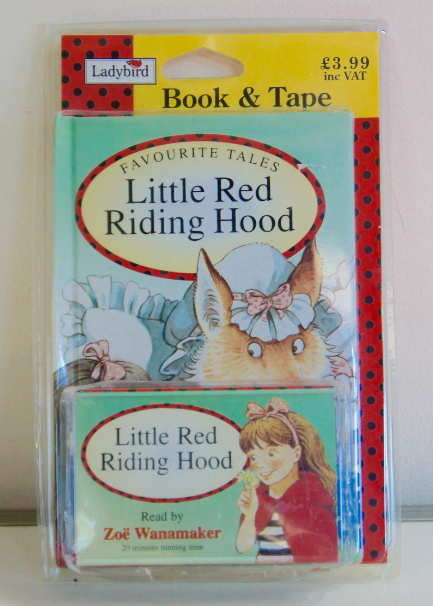
I remember the excitement I always felt when my parents bought us a new Ladybird book with its accompanying cassette. Yes, this is a story from when cassettes were a thing.
My sister and I attended a Francophone school. Born in a Francophone country, Lebanon, we only spoke and learned subjects in French. Although the Lebanese dialect is a spoken derivative of the Arabic language, classical (written) Arabic was only taught at my school as a language.
To enhance our learning, my parents would buy us a Ladybird book in Arabic with its accompanying cassette. That was the original form of an audiobook, which included narration and sound effects to supplement the storytelling. I can still remember the distinct beeping sound that indicated a page turn. We read Little Red Riding Hood, Sleeping Beauty, Cinderella, Hansel and Grettel, etc. But nothing was as magical, impactful, and exciting as The Little Mermaid.
Cover of the Arabic version of The Little Mermaid
Why was I excited? Because the story took place in the sea… a mysterious world that had a life of its own.
Let me share context to why I was fascinated by the sea. Living in Beirut, a city by the Mediterranean, we passed by the sea every day to and from school and witnessed the sunrise and sunset where the sun would disappear daily into the sea. My relationship with the sea was one of fascination and curiosity. Where does the sun go at night? What creatures live there? What do they eat? How do they sleep? Do they go to school? Do they sing? Do they live in tiny houses? These were a few of the many questions I asked myself staring at the sea.
The sandy shore of Beirut
Imagine this: I’m 7 years old and I get this new book. I held the book and I studied its cover: it’s about the sea… about a mermaid… fish… and a ship… Imagine how hard it was for me to sit still at the dinner table, with the book and cassette laying on the kitchen counter facing me. That day, we were having meat stew with peas and carrots. I don’t think I ever ate my dinner with no fuss the way I did that evening. I even finished all my vegetables and rushed to clean my dish. I was determined to avoid any distraction or unnecessary conversation that would delay me from grabbing the book, inserting the cassette into my dad’s Sanyo cassette player, and indulging in this magical story.
A Sanyo cassette player
I believe the love story and sacrifice aspect was too complex for me to understand, but the story answered many of the questions I had: there were creatures who lived deep in the sea; they had a family; they sang; they danced; they had dreams, hopes, and wishes. I identified with the main character, the Little Mermaid, who was curious, adventurous, fun, and kind.
You know the story! It begins by setting the stage for what was going on in that magical world: the mermaids, their life, their family, etc. But the Little Mermaid wanted more. Forbidden from going to the sea surface, that was exactly what she wanted. On her 16th birthday, she goes up to the surface and witnesses the sinking of a ship carrying the prince. She saves him but while doing so she falls in love with him. She was so much in love that she was willing to leave her family in pursuit of her dream. Unfortunately (spoiler alert, this is not the Disney version), the Little Mermaid decides to sacrifice her life for love and ends up turning into sea foam.
Devastating ending? Yes! But the story is so capturing and impactful, that every time I look at the sea and see it foaming, I think of that story. The writers followed the Story Spine in such a masterful way. Once upon a time, there was a little mermaid. Every day she lived her life the way it was dictated by her family. But one day, she decided she was not willing to follow rules that limited her hopes and capped her dreams. Because of that, she went to the sea surface and found the love of her life. Because of that, she decided to undergo a traumatic life-changing metamorphosis. Until finally, and for love, she decided to sacrifice herself and turn into sea foam letting the love of her life live happily. And ever since, the Little Mermaid lives as sea foam. Yep! For love you do anything. It can’t get more magical than that!
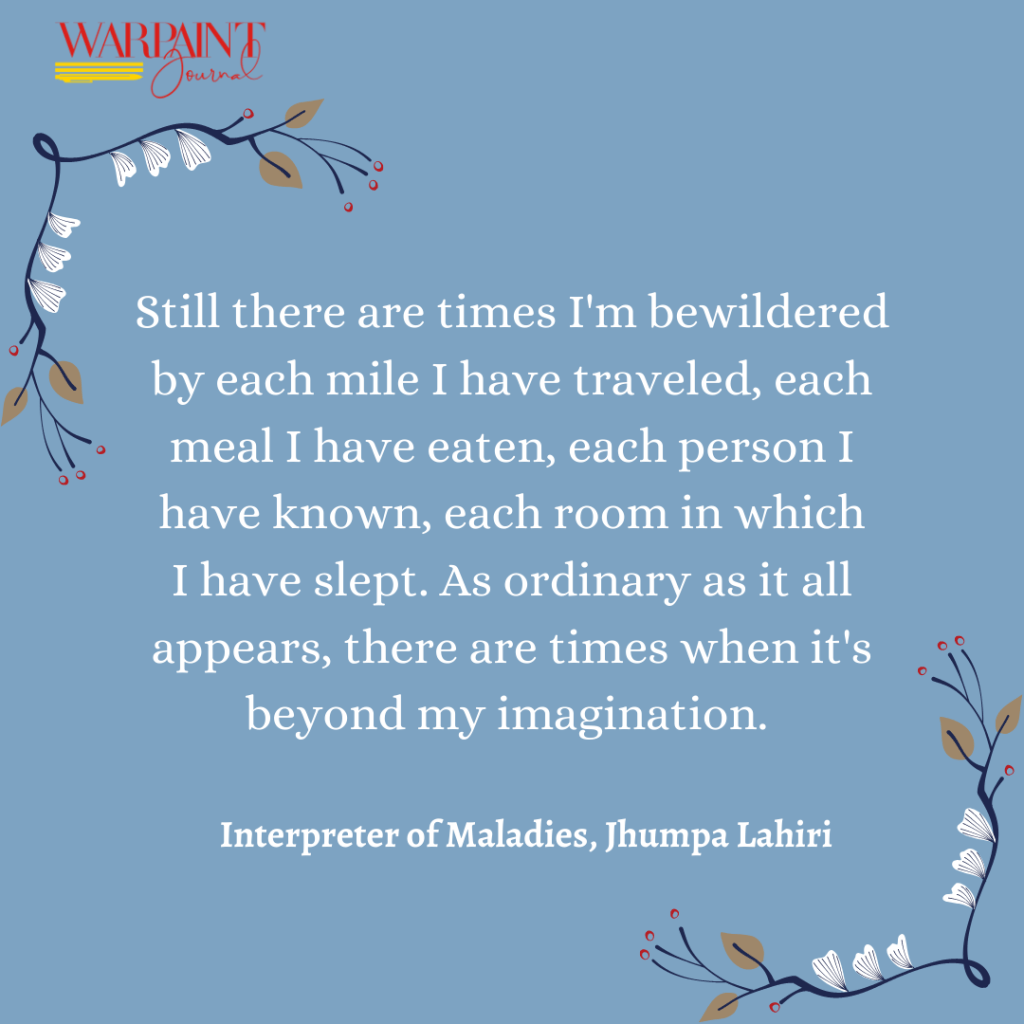
Interpreter Of Maladies by Jhumpa Lahiri is a collection of nine short stories that won the Pulitzer Prize, the Pen/Hemingway Award and the New Yorker’s Debut Book of the Year in 2000.
Lahiri tells the story of several characters as they try to find their place in the world. The book begins with a collection of short stories interconnected by their shared theme: what it means to be an immigrant or an outsider in America. In each story, a character feels like they do not belong—either because they have moved from another country to America or were born here but don’t quite fit in with those around them. Cultural displacement and the pathos of human loneliness cuts across the nine stories where the characters are continuously grappling with their identity.
I remember reading this book as a young girl, ready to leave home to pursue higher studies at Delhi University. What resonated with me was the universality of her characters and their struggle to find new meanings of familiarity and what they would eventually call or understand as ‘home.’
Appealing and Connecting
Structure
Lahiri employs the elements of the Story Spine much too cleverly. Although it is a collection of short stories, it places the nine stories in an order that adheres to the guidelines of good storytelling, including:
One of the many strengths that Lahiri displays, along with the relatability and humanness of her characters, is the simplicity and clarity of her writing that makes for an instant connection between her characters and the readers. The characters that populate Lahiri’s world live in the tense duality of being exiles but are proud to have left India to build a prosperous life in the West. However, the central theme that emerges through colourful details of Indian tradition, cuisine and celebrations are that of the universal struggle of adapting to the ways of a foreign homeland without losing one’s original roots. Their pain and angst intertwine with that of the reader, making it an intensely personal experience.
So whether it’s the married couple who rediscover each other after living together for years in the same house due to a power cut or the story which chronicles an affair between an aimless young American girl and a married Indian man – the stories probe into hope, pain, guilt, desire, dreams and temptation where Lahiri moves beyond a specific cultural identity, and plot to capture human elements, hence connecting to the very heart of its readers.
Lahiri’s Women
Finally, the women in Lahiri’s stories bring to mind other immigrant writers such as Jamaica Kincaid, Maxine Hong Kingston and Zora Neale Hurston. They all offer reactions against their culture’s view of gender roles, combining quiet strength with courage and rebellion.
There’s a story for everyone!
Interpreter of Maladies is both beautifully melancholic and seemingly uplifting in a cathartic way. The amalgamation of intense nostalgia coupled with the mundane quality of its characters’ everyday life makes this a story that has travelled well and beyond into the hearts of many around the globe. She is a master storyteller who knows when to pull in her audience for that personal experience, almost as if she is offering front-row seats with a promise of a special peek just for you.
Are you ready to hear about a great animated movie that has minimal dialog yet has all the emotional punch you would expect from a great story? No, I don’t mean the introductory story of Pixar’s Up, or the full-length movie Wall-E, although those are both fantastic, and each won an Academy Award for the Best Animated Feature Film in their respective release years.
Actually, the story I’m thinking of today is The Triplets of Belleville (Les triplets de Belleville) which is perhaps a lesser-known film that was the first from France to be nominated for the Academy Award for Best Animated Feature (it lost to Finding Nemo).
The story is simple:
Once upon a time, there was an elderly woman who lived alone with her grandson and their dog, Bruno.
Every day grandma Souza helps Champion train diligently for the Tour de France.
But, one day during the race he and two others are kidnapped by mobsters.
Because of that Madame Souza follows the clues with Bruno all the way across the ocean to the American city of Belleville, where she arrives penniless.
Because of that, she makes friends with other ladies her age who turn out to be the Triples of Belleville – sisters who were once famous for their vaudeville act and are now just as poor as Madame Souza and even more eccentric.
Because of that, they are able to find a key clue and then distract the kidnappers…
Until finally, they rescue the racers in the most dramatic chase you have ever seen with a cycle-powered ‘vehicle’ versus Citroëns.
And, ever since then the family has been reunited and able to return home.
You can see why the story was memorable – it has all the elements of a classic ‘Story Spine’. But there is a lot more you can’t tell from the bare-bones description.
Eye-grabbing
The Triplets of Belleville (2003) cover
If every good story needs to have colour, picture, and movement then you can bet that an animated film will explode with colour and movement every chance it gets. This movie definitely does that, but it also manages to surprise many people right away with its irreverent visual jokes in the opening scene when we see the Triplets in their singing heyday.
Then the pace slows down, and there is no background music for much of the movie. The bicycle, whistle, and dog each become important characters. I recently found a video with musical analysis about it The Triplets of Belleville: Music in Silence (Know the Score), and found it very interesting how the music comes in at key moments but the practical sound effects are given centre stage at other times.
Even long after the story is over, the audience can remember certain brief scenes vividly – Fred Astaire being turned on and eaten by his own shoes; the unique way that the older, destitute triplets source their dinner, and the musical way that they serve it; and a maitre d’ who literally bends over backward to his rich clientele.
For just a taste, see this excerpt of Madame Souza performing together with the Triplets of Belleville on improvised instruments while her dog Bruno finds a critical clue to find Champion.
A performance using some very unique upcycled instruments
Growing up in the 1990s to 2000s, I was that little girl who sat criss-crossed on my green velvet family couch watching Disney princesses manifest their Prince Charmings through song, and later watching young boys woo their crushes with boombox serenades. It’s no wonder I consider myself a ‘hopeless romantic’.
During that time, I lived for the “meet-cutes” where boy meets girl under adorable, often serendipitous, but nevertheless fated circumstances. That was my idea of a true love story.
But my favourite story – the one that I’m going to share here – is not that love story.
Once Upon a Time, There was Jane
I first read Jane Eyre by Charlotte Bronte in Grade 9. If you’re unfamiliar with the book, let me break it down using a technique created by Kenn Adams called the Story Spine.
Once upon a time, there was a young orphan named Jane Eyre, who after surviving a childhood of loneliness and abuse, becomes a private tutor for a young girl, the ward of an elusive businessman.
Every day, she tutors her student but continues to wonder about the businessman who hired her, Mr. Rochester, and the mysteries of her new home, Thornfield Manor.
But one day, Mr. Rochester returns to the manor and meets with Jane.
Because of that, Jane forms a relationship with Mr. Rochester, and they fall in love.
Because of that, Jane and Mr. Rochester plan to marry but during the ceremony Jane learns of Bertha, Mr. Rochester’s mentally ill wife, who he has hidden in the attic of Thornfield Manor.
Because of that, Jane is humiliated and runs away from Thornfield Manor.
Until finally, Jane returns to Thornfield Manor, learns that Bertha died after setting fire to the manor, and reunites with Mr. Rochester.
And ever since then, Jane lived a life of love, marrying Rochester and raising their family together.
If my ideal love story was one where a hypothetical couple meets coincidentally while travelling through a quaint village in Europe, spending their days riding Vespas and nights drinking wine at sunset, what made me fall in love with the tragic story of Jane Eyre?
Emotional Thread Connection
The book begins with young orphan Jane living with her abusive aunt and cousins. Her story goes from her being sent to a religious boarding school and living under similarly harsh conditions to facing humiliation and heartbreak while at Thornfield Manor. Alison McAdam writes in Beyond the 5 W’s: What should you ask before starting a story? that to engage an audience you must ask if there is “an emotional or intellectual thread that can run throughout the story”. Jane overcoming adversities hooked me in as if the emotional thread was a physical thread wrapped around my finger forcing me to turn another page.
Admiration Despite Challenges
A good story is often one where the audience isn’t focused on a happy ending but instead on the journey they’ve taken with the protagonist. As Pixar storyboard artist, Emma Coats, shares in her 22 Rules of Storytelling, “#1: You admire a character for trying more than for their successes.” While finishing the book was bittersweet, it was was Jane’s resilience throughout that solidifies the book as one of the greatest stories of love I’ve ever read.
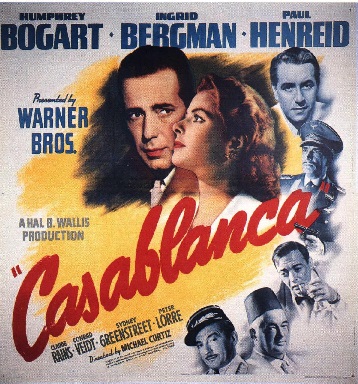
The Story Spine method helps convey the key moments. However, Casablanca is highly complex, explores multiple character arcs and has numerous twists, which is why the film is so enduring!
Act 1 – Setting the scene
Once upon a time, as people flee German occupied Europe desperate to reach safe-havens, they pass through Vichy controlled Casablanca.
Every day, cynical Rick manages ‘Rick’s Cafe Americian’, a popular Casablanca casino, which is known for it’s music. This song is one of the reasons I love this film!
“Play it again Sam” is never said in Casablanca!
Act 2 – all about the girl?
But one day, Victor and his wife Ilsa walk into Rick’s Cafe seeking help.
“Of all the gin joints in all the towns in the world, she walks into mine.”
Rick Blaine (played by Humphrey Bogart)
Because of that, Rick is conflicted, as he sticks his “neck out for nobody“. Through flashbacks we explore his history… we start to understand Rick’s jaded attitude…
Because of that, despite Isla’s pleas Rick won’t hand over the papers he has acquired that the couple need to escape. Victor is subsequently arrested at an underground resistance meeting. Rick still loves her???
Because of that, Rick tells the local Vichy French police chief, Captain Louis Renault, that he wants to leave Casablanca with Ilsa. Rick suggests the police release Victor and create a trap. If the police can detain Victor attempting an escape, he will face harsher punishment and Renault can win favour with the local German Commander. A cunning plan…
Until finally, Rick double-crosses Renault, forcing him to phone his officers sending them away. Unbeknownst to Rick, Renault calls the German Commander, who tries to stop the plane, but is shot by Rick. Ilsa and Victor to escape on a plane bound for Lisbon. Which was Rick’s plan all along… Plot twist!
Character motives and pasts are explored in flashbacks and call backs throughout the film.
Act 3 – Spoiler! He doesn’t get the girl…
And ever since then, Renault doesn’t arrest Rick nor stop the plane, but suggests he and Rick escape Casablanca and join the French resistance! Rick’s jaded outlook fades as he returns back to his idealist ways.
“Louis, I think this is the beginning of a beautiful friendship.”
Rick Blaine (played by Humphrey Bogart)
Bonus – Unsolved mystery
Rick’s past is alluded to, but we never find out why he can’t go home to America… Leaving an unanswered question divides critics, some feel it leaves the consumer empty whilst others feel it’s important to be left wanting more. I quite like that we are left with the mystery….

























 EXSM 3989 - Digital Storytelling Class Blog