Categories
Tag: Story Spine

Categories
EXSM 3989 Storytelling Infographic
Categories
EXSM 3989 Storytelling Infographic
Categories
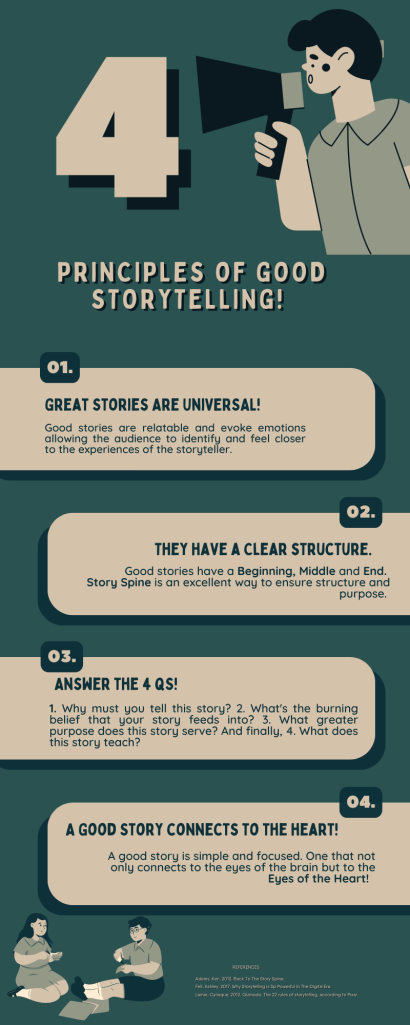
Principles Of Good Storytelling!
Storytelling dates back thousands of years when it adhered to visual and oral traditions using myriad ways to communicate them, including drawings, songs, chants and poetry. The evolution of storytelling remains fascinating because, as human beings, we continue to find novel ways of communicating and sharing our experiences through stories that can capture our imagination and make us feel connected.
So, while the new mediums challenge storytellers to adapt to novel ways of communicating and presenting stories, the principles around good storytelling have remained steadfastly resilient.
So, what principles continue to help create great stories that we deeply resonate with and remember? Read on to know more!
1. Stories That Have A Universal Appeal
The stories that offer universality through their characters and respective experiences instantly result in the most profound connections between the audience and the storyteller. According to Pixar Director Pete Docter, the relatable and identifiable stories also evoke emotions and remain with the audience, adding to their longevity.
2. Stories That Have A Clear Structure & Purpose
An appealing story must be able to draw its reader into its well-crafted world. For that to occur, it must be able to use the Story Spine and adhere to the guidelines of good storytelling, including the following:
1. The Beginning
2. The Event
3. The Middle
4. The Climax
5. The End
3. The 4Qs That Can Help Create Good Stories!
Good stories don’t just happen! Storytellers must cultivate the practice of self-awareness and honesty as part of the process. Before telling a story, answering these allows a storyteller clarity and purpose behind their work, often leading to memorable creations.
Ask yourself –
Why must you tell this story?
What’s the burning belief within you that your story feeds off of?
What greater purpose does this story serve?
What does this story teach?
4. Good Stories Have A Heart!
Good stories connect to the eyes of the brain but, more crucially, connect to the eyes of the heart! Principles of good storytelling, especially in the digital age, serve as a vital reminder. With more innovative platforms and mediums and their ever-growing tools, which certainly play a role in enhancing the audience’s experience, a good story, in the end, remains simple and one that speaks to the heart of its audience.
Conclusion
So, if you want to be able to tell incredible stories, follow these principles. Put yourself through the process, practice your craft and with perseverance, you will have your perfect story!
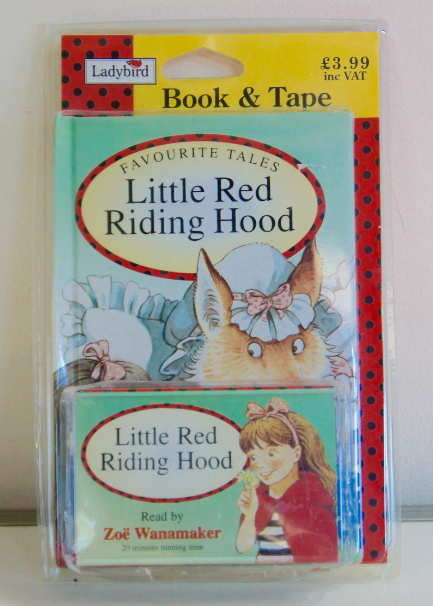
I remember the excitement I always felt when my parents bought us a new Ladybird book with its accompanying cassette. Yes, this is a story from when cassettes were a thing.
My sister and I attended a Francophone school. Born in a Francophone country, Lebanon, we only spoke and learned subjects in French. Although the Lebanese dialect is a spoken derivative of the Arabic language, classical (written) Arabic was only taught at my school as a language.
To enhance our learning, my parents would buy us a Ladybird book in Arabic with its accompanying cassette. That was the original form of an audiobook, which included narration and sound effects to supplement the storytelling. I can still remember the distinct beeping sound that indicated a page turn. We read Little Red Riding Hood, Sleeping Beauty, Cinderella, Hansel and Grettel, etc. But nothing was as magical, impactful, and exciting as The Little Mermaid.
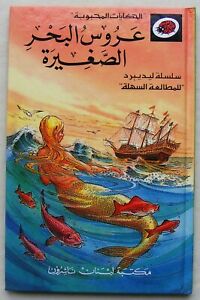
Why was I excited? Because the story took place in the sea… a mysterious world that had a life of its own.
Let me share context to why I was fascinated by the sea. Living in Beirut, a city by the Mediterranean, we passed by the sea every day to and from school and witnessed the sunrise and sunset where the sun would disappear daily into the sea. My relationship with the sea was one of fascination and curiosity. Where does the sun go at night? What creatures live there? What do they eat? How do they sleep? Do they go to school? Do they sing? Do they live in tiny houses? These were a few of the many questions I asked myself staring at the sea.

Imagine this: I’m 7 years old and I get this new book. I held the book and I studied its cover: it’s about the sea… about a mermaid… fish… and a ship… Imagine how hard it was for me to sit still at the dinner table, with the book and cassette laying on the kitchen counter facing me. That day, we were having meat stew with peas and carrots. I don’t think I ever ate my dinner with no fuss the way I did that evening. I even finished all my vegetables and rushed to clean my dish. I was determined to avoid any distraction or unnecessary conversation that would delay me from grabbing the book, inserting the cassette into my dad’s Sanyo cassette player, and indulging in this magical story.

I believe the love story and sacrifice aspect was too complex for me to understand, but the story answered many of the questions I had: there were creatures who lived deep in the sea; they had a family; they sang; they danced; they had dreams, hopes, and wishes. I identified with the main character, the Little Mermaid, who was curious, adventurous, fun, and kind.
You know the story! It begins by setting the stage for what was going on in that magical world: the mermaids, their life, their family, etc. But the Little Mermaid wanted more. Forbidden from going to the sea surface, that was exactly what she wanted. On her 16th birthday, she goes up to the surface and witnesses the sinking of a ship carrying the prince. She saves him but while doing so she falls in love with him. She was so much in love that she was willing to leave her family in pursuit of her dream. Unfortunately (spoiler alert, this is not the Disney version), the Little Mermaid decides to sacrifice her life for love and ends up turning into sea foam.
Devastating ending? Yes! But the story is so capturing and impactful, that every time I look at the sea and see it foaming, I think of that story. The writers followed the Story Spine in such a masterful way. Once upon a time, there was a little mermaid. Every day she lived her life the way it was dictated by her family. But one day, she decided she was not willing to follow rules that limited her hopes and capped her dreams. Because of that, she went to the sea surface and found the love of her life. Because of that, she decided to undergo a traumatic life-changing metamorphosis. Until finally, and for love, she decided to sacrifice herself and turn into sea foam letting the love of her life live happily. And ever since, the Little Mermaid lives as sea foam. Yep! For love you do anything. It can’t get more magical than that!
I found the Ladybird’s Little Mermaid narration in English… now I am listening to it and feeling nostalgic.

Photo: https://images.app.goo.gl/fSip7oCn9fSBM31e9
Interpreter Of Maladies by Jhumpa Lahiri is a collection of nine short stories that won the Pulitzer Prize, the Pen/Hemingway Award and the New Yorker’s Debut Book of the Year in 2000.
Lahiri tells the story of several characters as they try to find their place in the world. The book begins with a collection of short stories interconnected by their shared theme: what it means to be an immigrant or an outsider in America. In each story, a character feels like they do not belong—either because they have moved from another country to America or were born here but don’t quite fit in with those around them. Cultural displacement and the pathos of human loneliness cuts across the nine stories where the characters are continuously grappling with their identity.
I remember reading this book as a young girl, ready to leave home to pursue higher studies at Delhi University. What resonated with me was the universality of her characters and their struggle to find new meanings of familiarity and what they would eventually call or understand as ‘home.’
Appealing and Connecting
Structure
Lahiri employs the elements of the Story Spine much too cleverly. Although it is a collection of short stories, it places the nine stories in an order that adheres to the guidelines of good storytelling, including:
1. The Beginning
2. The Event
3. The Middle
4. The Climax
5. The End
A perfect marriage of themes and language
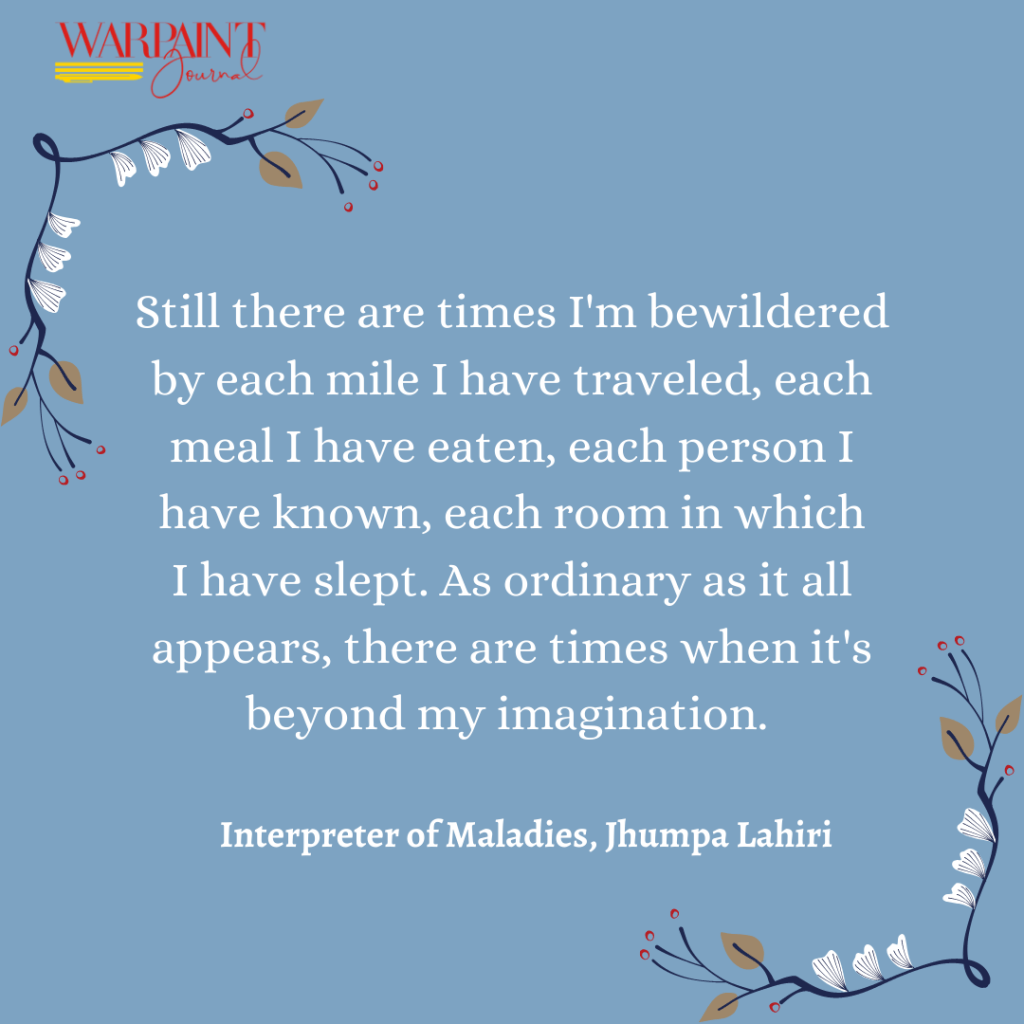
Photo: https://images.app.goo.gl/8k5VoWqeUFjHDCEH6
One of the many strengths that Lahiri displays, along with the relatability and humanness of her characters, is the simplicity and clarity of her writing that makes for an instant connection between her characters and the readers. The characters that populate Lahiri’s world live in the tense duality of being exiles but are proud to have left India to build a prosperous life in the West. However, the central theme that emerges through colourful details of Indian tradition, cuisine and celebrations are that of the universal struggle of adapting to the ways of a foreign homeland without losing one’s original roots. Their pain and angst intertwine with that of the reader, making it an intensely personal experience.
So whether it’s the married couple who rediscover each other after living together for years in the same house due to a power cut or the story which chronicles an affair between an aimless young American girl and a married Indian man – the stories probe into hope, pain, guilt, desire, dreams and temptation where Lahiri moves beyond a specific cultural identity, and plot to capture human elements, hence connecting to the very heart of its readers.
Lahiri’s Women
Finally, the women in Lahiri’s stories bring to mind other immigrant writers such as Jamaica Kincaid, Maxine Hong Kingston and Zora Neale Hurston. They all offer reactions against their culture’s view of gender roles, combining quiet strength with courage and rebellion.
There’s a story for everyone!
Interpreter of Maladies is both beautifully melancholic and seemingly uplifting in a cathartic way. The amalgamation of intense nostalgia coupled with the mundane quality of its characters’ everyday life makes this a story that has travelled well and beyond into the hearts of many around the globe. She is a master storyteller who knows when to pull in her audience for that personal experience, almost as if she is offering front-row seats with a promise of a special peek just for you.

Categories
Not Another Love Story

Growing up in the 1990s to 2000s, I was that little girl who sat criss-crossed on my green velvet family couch watching Disney princesses manifest their Prince Charmings through song, and later watching young boys woo their crushes with boombox serenades. It’s no wonder I consider myself a ‘hopeless romantic’.
During that time, I lived for the “meet-cutes” where boy meets girl under adorable, often serendipitous, but nevertheless fated circumstances. That was my idea of a true love story.
But my favourite story – the one that I’m going to share here – is not that love story.
Once Upon a Time, There was Jane
I first read Jane Eyre by Charlotte Bronte in Grade 9. If you’re unfamiliar with the book, let me break it down using a technique created by Kenn Adams called the Story Spine.
Once upon a time, there was a young orphan named Jane Eyre, who after surviving a childhood of loneliness and abuse, becomes a private tutor for a young girl, the ward of an elusive businessman.
Every day, she tutors her student but continues to wonder about the businessman who hired her, Mr. Rochester, and the mysteries of her new home, Thornfield Manor.
But one day, Mr. Rochester returns to the manor and meets with Jane.
Because of that, Jane forms a relationship with Mr. Rochester, and they fall in love.
Because of that, Jane and Mr. Rochester plan to marry but during the ceremony Jane learns of Bertha, Mr. Rochester’s mentally ill wife, who he has hidden in the attic of Thornfield Manor.
Because of that, Jane is humiliated and runs away from Thornfield Manor.
Until finally, Jane returns to Thornfield Manor, learns that Bertha died after setting fire to the manor, and reunites with Mr. Rochester.
And ever since then, Jane lived a life of love, marrying Rochester and raising their family together.
If my ideal love story was one where a hypothetical couple meets coincidentally while travelling through a quaint village in Europe, spending their days riding Vespas and nights drinking wine at sunset, what made me fall in love with the tragic story of Jane Eyre?
Emotional Thread Connection
The book begins with young orphan Jane living with her abusive aunt and cousins. Her story goes from her being sent to a religious boarding school and living under similarly harsh conditions to facing humiliation and heartbreak while at Thornfield Manor. Alison McAdam writes in Beyond the 5 W’s: What should you ask before starting a story? that to engage an audience you must ask if there is “an emotional or intellectual thread that can run throughout the story”. Jane overcoming adversities hooked me in as if the emotional thread was a physical thread wrapped around my finger forcing me to turn another page.
Admiration Despite Challenges
A good story is often one where the audience isn’t focused on a happy ending but instead on the journey they’ve taken with the protagonist. As Pixar storyboard artist, Emma Coats, shares in her 22 Rules of Storytelling, “#1: You admire a character for trying more than for their successes.” While finishing the book was bittersweet, it was was Jane’s resilience throughout that solidifies the book as one of the greatest stories of love I’ve ever read.

If you loved princesses, magic and balloons as a child of the 90’s then The Balloon Tree was likely on your bookshelf. The children’s storybook written and illustrated by Phoebe Gillman the author widely known for her popular children’s book Jillian Jiggs, also created a story that engaged children with a princess in peril, a villain and a wizard that comes to her rescue with a spell.
Rather than give a synopsis, the following outline of the book will be conveyed using the method of the story spine structure created in 1991 by Kenn Adams, detailing the main elements of the story. The story spine to The Balloon Tree is as follows:
Once upon a time there was a princess, Leona, who lived in a hilltop kingdom with her father the king.
Every day, the happy princess loved to sing, dance, and play with balloon which the castle was always full of.
But one day, an invitation arrived for the King summoning him and his knights to a Royal Tournament.
Because of that, the evil Archduke was put in charge of the kingdom.
Because of that, the Archduke ordered all the balloons in the kingdom to be destroyed and the princess be locked in her room.
Because of that, Leona escaped her room via a secret passageway and asked the wizard for help in creating more balloons to signal her father home.
Because of that, the wizard gave Leona a spell for the tree in the garden to produce more balloons.
Because of that, Leona searched the kingdom for a balloon to cast the spell, and was triumphant.
Because of that, balloons started sprouting from the tree filling the lands with balloons.
Until finally, the king saw a balloon at the edge of the forest and rushed home to rescue his daughter and townspeople from the Archduke.
And ever since then, the townspeople have been joyous and the Archduke has been in the dungeon blowing up balloons.

Much like a Disney movie the main character lived in a kingdom far, far away and was in distress. However, this story resonated with me not only due to my love of balloons as a child, but that the main character was a young girl. Unlike many movies and tales whose protagonist was an adult, Leona was a child who was very brave and able to be her own heroine. No knight or prince came to her rescue as often depicted in stories. A cleaver little boy did help her in time of need, and the wizard provided her a solution, but she was able to fulfill her mission of signaling her father by her own tenacity. “If the premise or character is relatable than the reader will be attached to the story due to the emotional tie” stated Social Media Strategist Linda Hoang in her lecture for Digital Storytelling and following Pixar artist Emma Coats rules 1 & 4 of storytelling. As a young child I was connected to the princesses character wanting to be savvy problem-solver, but also dependent on others for assistance. I was unaware of the term ‘girl power’ as I read this story for the first time in my grade two classroom, retrieving the book from a bin in the “read to self” corner of the room. However, I certainly retained the sense of empowerment and checked the book out of the library to continue reading it at home until my parents purchased me a copy which I have since gifted to my cousins children. This book has become an enduring favourite in their household as well. It entangles the concepts of courage, guidance and teamwork to achieve freedom. If you would like to add a copy to your children’s literary collection it can be purchased via Amazon or Chapters/Indigo.

Categories
A Monster Mini Golf Sunday

I remember when I was younger and I was excited about the Family Day long weekend because it meant no school or it meant time and a half pay if I had to work. I was missing the entire point of the holiday which was created in 1990 by Premier Don Getty for two reasons: to celebrate the family unit, and to lead the war on drugs. So, in my efforts to be a good citizen, I asked my family if they wanted to go out and have fun as a family. This is where the lesson is. As you will see, the idea that something will be fun and what is actually fun are so very different. Of course, there are many factors that play into the “having of fun”. Some of these include: the activity, the demographics of the people partaking in the fun, and the time of day the fun occurs. During all this “fun” I was live tweeting the events as they were folding.
Beginning
After I convinced my husband and five-year-old son that it would be a good idea for us to do something for Family Day, we had to find something, safe, age appropriate and available. While all the ideas put forward were fantastic ideas, especially the all-inclusive vacation my husband suggested, we ended up going back and forth between bowling, mini golf and swimming. The deciding factor was the amount of effort required for the activity. This final factor led us to mini golf.
Middle
If you haven’t been to Monster Mini Golf in Edmonton, check it out! The entire place is glow in the dark. It includes an arcade, live DJ and 18 holes of mini golf with moving monsters. We were given our clubs and balls and set off to hole number one. Not so bad! This is going to be so much fun! Until about hole four, then reality set in. My husband and I both looked at each other knowing exactly what the other was thinking…yes, we were only on hole four and had another 14 holes remaining.
As we are making our way through the course, it becomes apparent that no one showed our son how to play mini golf. I think he may have even been using the club backwards at some points. No one was really “playing” anymore. I think we were in the “let’s get this over with and get the hell out of here” stage. That’s when, we weren’t paying attention, and our son decided to drive the ball instead of putting. Well, that ball went flying! It bounced off a fake tombstone, jumped the glowing barricade, narrowly missing the head of a girl waiting to putt on the next hole, hit the wall behind her and landed by her feet. I notice my husband, who seen the entire event occur, do what husbands do. He casually walked away trying to act like he didn’t see the whole the thing. I send our son over to apologize while receiving dagger stares from the girl’s parents. Thankfully, no one was injured, and we reluctantly continued on.
End
Around hole 13 was when it got tough. At this point we were really debating the necessity of actually finishing the game but I’m always trying to teach my son that he needs to finish what he starts and there were really only five more holes. So, when we got to the last hole, it felt so good, almost like we were free. Don’t get me wrong, looking back, it was a fun evening with the family, would it have been better with a group of friends? Probably. Would it have been better in the evening with a babysitter? Probably. Would have been better with some pre-game cocktails? Probably. But will I do it again? Probably!
Live Tweets
In the live Tweets, I did my best to create a timeline of the events by mentioning which hole we were on. I was able to take some video and pictures throughout the experience which I included in the tweets to help give more context to the post and create a feeling. The posts were also short and concise, written how I would speak and included only the relevant details. I tried to make the posts relatable to anyone with young kids.
Storytelling Principles
Great Stories Are Universal
The mini golf story I was telling on Twitter would be relatable to many people with young children. They can relate to the pressure of trying to plan a family outing, the anxiety of a new activity with a young child and the relief when the activity is over.
Good Stories Have Structure
I set up my Twitter story to have a beginning, middle and an end. In the beginning, I introduce the situation and the characters. In the middle, there is tension and surprise. And at the end there is relief.
Good Stories Are Simple And Focused
This story was documenting events as they unfolded. It was simple since the subject matter was easy to understand. The story had an arc which kept it focused.
Good Stories Give you a Character to Root For
With the audience being parents, I would hope that they were rooting for me and my husband. I hope they would relate to the story and understand the predicament and challenges we were facing.
What family activities have you planned? Were they a success? Would you do them again? Let me know in the comments.
Categories
Five Little Indians

A great story is one that is memorable, it draws the audience in and brings up emotions and relatable themes. I recently read the book ‘Five Little Indians,’ by Michelle Good, and upon thinking of a memorable story, this one popped into my head. I’m a woman who watches a lot of tv shows and movies, but this book sticks with me most. I grew up as a mixed-race Indigenous person who knows nothing about my family or my history. My indigenous father was adopted in the sixties scoop and my curiosity is spiking more as I get older. Where do I come from? Why is their so much intergenerational trauma? What is our/my story? The story Five Little Indians is not about my family personally, but it is about Canadian indigenous people and there struggles with and after being in residential schools. This story personally relates to me and the emotions I have been feeling this year especially with the data being released regarding the number of bodies being found on residential school sites. It has heroes to root for, a strong theme, and hooks you in with each chapter.
Lucy leaned back in her chair hands folder in her lap.
“They call us survivors.”
“Yeah.”
“I don’t think I survived. Do you?”
What is this story about?
This story follows 5 children who were taken from their families and sent to a remote residential school. The children are barely teens when they are released from the school with no sense of family, home, language, culture, or self anymore. These teens are left with nothing but a one-way bus pass to downtown East Vancouver to fend for themselves. The world around them does not accept them and the children must learn to overcome their personal trauma. As the children get older, they all find different paths, one is drawn to the Indian Movement, one is constantly in dangerous situations, one can’t stop running from his past, one spends time in prison, and one becomes a young mother. This story shows the emotional quest these children go through to find their place in the world and the effects of trauma and loss of culture.
In a simple context, this story can be described using Kenn Adams ‘Story Spine.’ This is a great outlining story device and a good way to deconstruct a story.
Once upon a time there was five young Indians who were forced out of their family homes and into a strange and isolating residential school.
Every day, they were tormented, abused, unhappy and missed their families.
But one day, they were released back into society. Given a single ticket into East Vancouver they were left to fend for themselves in a new world.
Because of that, they had a hard time finding work, friends, a place to live, and their place in society.
Because of that, they suffered from their own personal traumas and struggles to find themselves.
Because of that, they needed each other to move forward. Their lives crossed at different points but led them to better places.
Until finally, they found their own purposes. One joined an Indian movement and got back to her roots. One started a family. Others must learn some hard lessons but grew from their experiences.
And ever since then, they were known as survivors who went through hell and back and someone ended up okay.
Was this story fair to the people and ideas it represents?
Author Alison MacAdam, asks what questions should you ask before starting a story? One of the questions is, was the story fair to the people and ideas it represents. She asks it all the characters are represented equally; does it have multiple perspectives? The story, ‘Five Little Indians’ represents each of the five characters equally expressing all of their pains and individual stories. The book also does a fair job of representing Indigenous culture in Canada. Michelle Good is a Cree author with ancestors who attended residential schools and a strong story to tell.
 EXSM 3989 - Digital Storytelling Class Blog