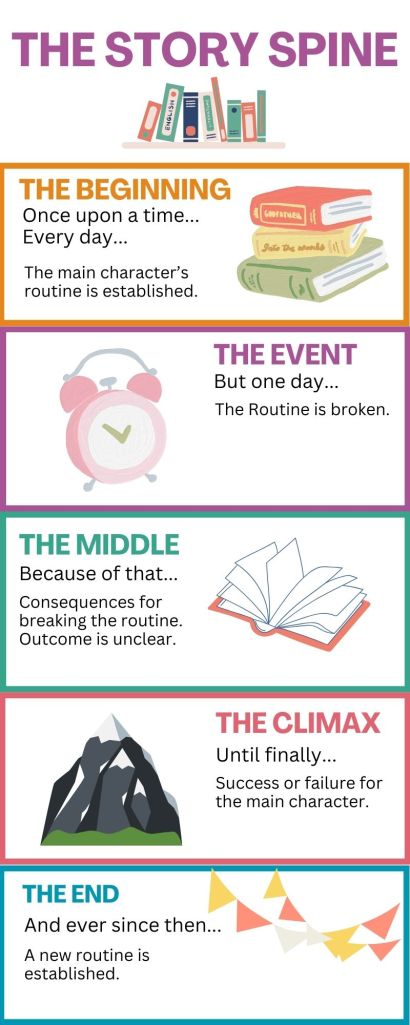
When storytelling, in any medium, it is important to have a clear structure and purpose. Using a story spine is a great way to do just that. The structure of the story spine is broken down into 5 sections.
1. The Beginning
This is when the main character’s world is introduced to the audience. The main character is described and their normal routine is established. The sentence starters used in this section of the story spine are:
Once upon a time…
Every day…
2. The Event
The next step in the story spine is the event, this is where the routine is interrupted. Something happens in the main characters life or world that breaks the normal everyday routine that is established in the beginning. The sentence starter used in this section of the story spine is:
But, one day…
3. The Middle
This is where the bulk of the story takes place. The main character experiences major consequences as a direct result of the routine being broken. There is no clear path and the outcome is unclear. The sentence starters used in this section of the story spine are:
Because of that…
Because of that…
Because of that…
Typically there are 3 incidents in the story that the main character experiences. One is a result of the other.
4. The Climax
This is where the main character’s journey comes to a peak. They experience success or failure as a direct result of what they were faced with. The sentence starter used in this section of the story spine is:
Until finally…
5. The End
For the main character the world has forever changed. Whether the they have success or failure, in the end, a new routine is established. The sentence starter used in this section of the story spine is:
And, ever since then…
The author, Kenn Adams, who created the story spine has said that over the 3 decades since he developed it others have taken it and modified it to make it their own. But some of these adaptations have made it less powerful. I think that the power of the story spine is in its simplicity. It gives the author a structure of a story of which they can build upon.
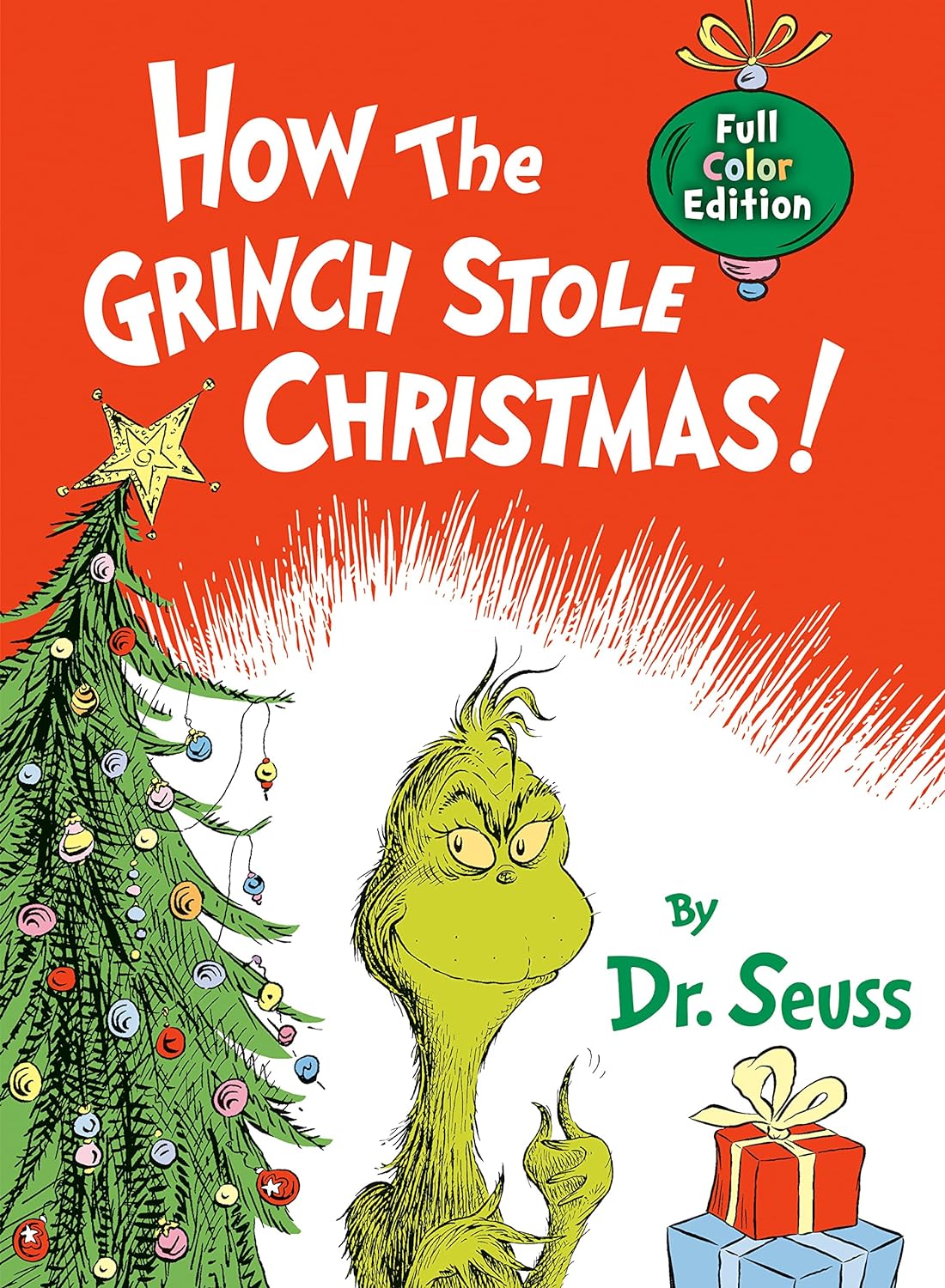
Everyone knows the classic tale of the hairy green outcast that plans to ruin Christmas for the whimsical town of Whoville. The story is not so much about How the Grinch Stole Christmas, even though it is the title, but Why the Grinch Stole Christmas and What he learned in the process. This story is simple, it follows a well planned story spine, is relatable and even though the main character is a grumpy, selfish, beast, in the end we all fall in love with him. But why is that? Why does this interest us? Lets take a closer look at the mechanics of the story.
Once upon a time…
The story begins by describing a secluded Grinch. The author, Dr. Seuss, paints a picture of an outcast that is not like others. “Every Who down in Who-ville liked Christmas a lot… but the Grinch, who lived just north of Who-ville did NOT!”
His location is outside of the town. His name is and identity are different; he’s a Grinch not a Who. And he is the only one that does not like Christmas. While I don’t always like to admit it, there have been times in my life where I felt like I didn’t fit in, like I was not part of the group. Making that connection with the character, makes it feel like we are involved in the story.
Every day…
As the story continues, we learn that every Christmas the Whos’ wake early (disrupting the Grinch’s sleep), quickly open their presents and make a lot of “Noise! Noise! Noise! Noise!” They are then described to sit down to a feast of “Who-pudding, and rare Who-roast-beast”. And if that weren’t enough they would then join hands and start singing!
When it seems like everyone around us is jolly and enjoying all the events, festivities, music, materialism of the season but all we feel is stress, chaos, and empty wallets. I think this one of the reasons this story is so powerful as there are so many that can relate to how the Grinch feels like an outsider, all alone in the craziness of the season. If it wasn’t already, by now the readers interest is peaked. We have an understanding of why he is so grinchy but what will the Grinch do?
But, one day…
For the Grinch this is too much to bare “I must stop this whole thing! Why, for fifty-three years I’ve put up with it now! I MUST stop this Christmas from coming!… But HOW?” All of a sudden, the Grinch got an idea that would finally break the Christmas routine for the Whos’.
This is where the Grinch is able to break the routine he has become accustomed to. He is no longer willing to endure the joy of the Whos’ and has decided to take action. The storytelling is a bit suspenseful here as the author doesn’t tell us exactly what the idea is and is a great way to keep the reader engaged.
Because of that…
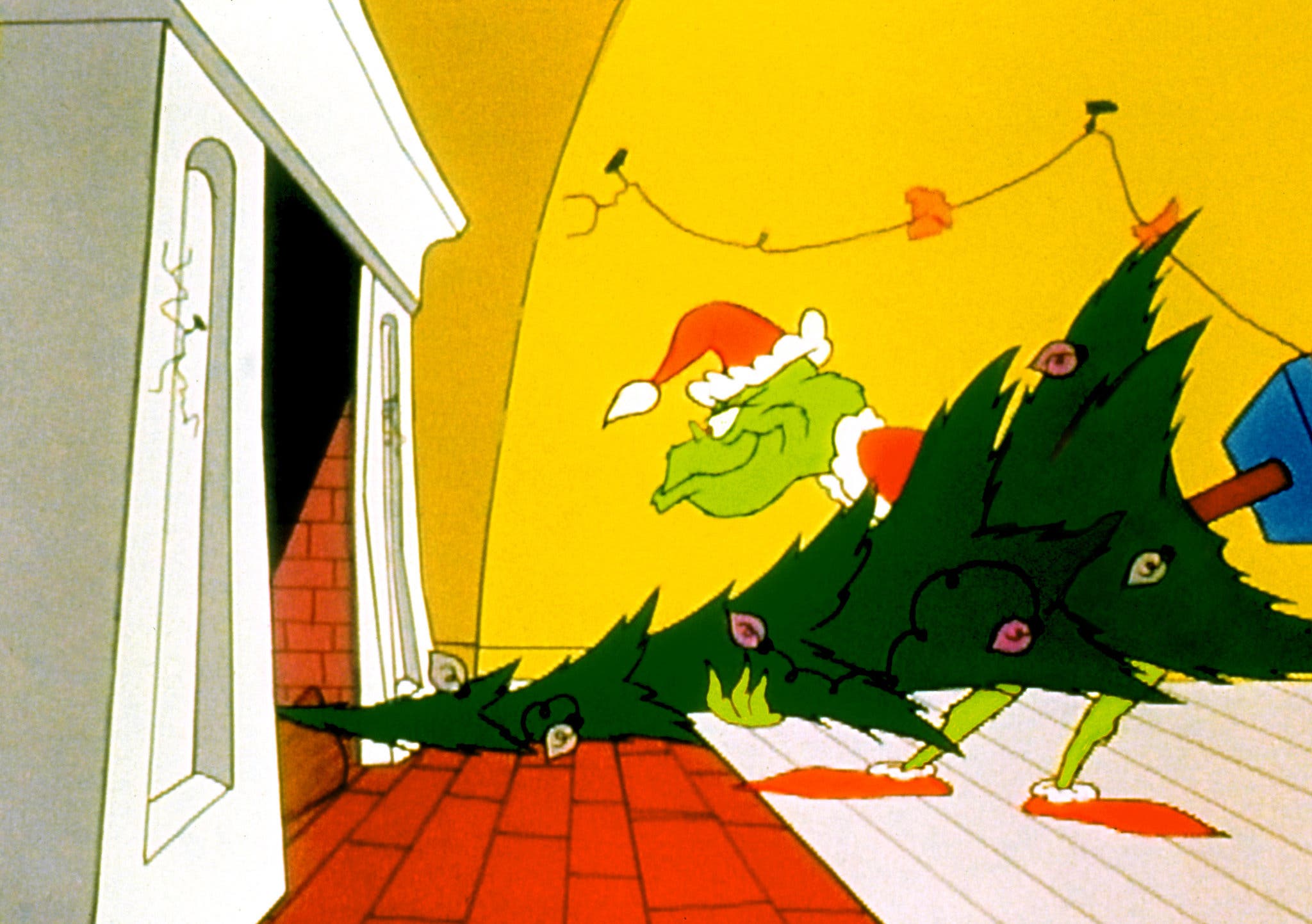
The Grinch now must put his idea into action. First, he dresses the part “What a great Grinchy trick! With this coat and this hat, I look just like Saint Nick!” He even enlists the help of his sidekick, his dog Max to play the part of the reindeer.
At this point in the story we are not too sure what the Grinch is up to but we appreciate his creativity and ingenuity. Our curiosity keeps us engaged, which can be challenging today with our short attention spans. This book was original published in 1957 but this story has a strong narrative that promises to keep the readers attention.
Because of that…
They journey to Whoville on a sleigh with empty boxes and sacks in anticipation. In a rather clever way the Grinch imitates Santa Clause and goes down every chimney and clears out every home in Whoville. “Then he did the same thing to the other Whos’ houses. Leaving crumbs much too small for the other Whos’ mouses!”
While the thought of breaking and entering another persons home is not something that most of us would condone, we can relate. There has been times in everyone’s life when we have been driven to the brink of insanity and had thoughts of doing things that are questionable. Watching someone act on those thoughts is interesting. To anyone that has ever thought “what if?” this is a glimpse into that reality. This is yet another way the reader feels involved in the story.
Because of that…
Once their mission is complete they travel back up north to dump everything that was collected. The Grinch is filled with excitement in anticipation of what all the Whos’ will find when the awake. “They’re finding out now that no Christmas is coming!” He waits to hear their disappointment, so he can rejoice in their sorrow.
We know that the climax of the story is coming and we are anticipating the outcome. We expect that the Whos’ will wake and be saddened by what they find, much like the Grinch.
Until finally…
To the Grinch’s surprise what he hears is joy. He is confused that Christmas still comes even though he had stolen all the material items that make Christmas. But then he comes to the realization that ” ‘Maybe Christmas,’ he thought, ‘doesn’t come from a store. Maybe Christmas… perhaps… means a little bit more!’ ” The Grinch then takes back all the presents and food and decorations to Whoville.
This is where the theme or message of the story is revealed. And it is the opposite of what we had thought would be the Whos’ reaction. It instructs us and provides meaning that, while at Christmas time there are presents and decorations and food and drinks and materialism, that is not the true meaning of Christmas. It is about the friends and family you share your time with. It is about giving. It is about celebrating together. It is about community. It is about believing in the magic that we all have inside of us. This is where I get those warm fuzzy feelings of Christmas.
And ever since then…
The Grinch then joins the Whos’ in their celebration. “And he… HE HIMSELF…! The Grinch carved the roast beast!
This is the resolution of the story. It eludes to the fact that from that time forward the Grinch participates in Christmas with the Whos’. And I’d like to think that he is no longer an outsider. The Whos’ accept the Grinch into the community the whole year. In the end this leaves us with a sense of happiness and the belief in the magic of Christmas. The ending inspires us to live the true meaning of Christmas.
A Classic Christmas Tradition
As you can see the story has a good foundation. The story spine shows the simplicity of the timeless tale. And the 4 I’s of good storytelling definitely hit the mark. Because of this How the Grinch Stole Christmas has had longevity and a timelessness that has been proven time after time in the many different adaptations of the tale. From the first animated cartoon, to the live action movie, a full length animated movie and even a Broadway musical, audiences through the generations have embraced the true meaning of Christmas.
Like most, I love me a good movie. It’s nice to be able to sit down and forget about reality for a bit and dive into the life of something or someone else.
I watched a highly anticipated movie when it first came out in 2009, and to this day, it left a lasting impression on me. I remember feeling inspired, in awe, there was love and loss, conflict and resolution, and had a good, strong narrative. I remember feeling like I was having an existential crisis afterwards. The feeling and inspiration of wanting to do more.. be more.
The Na’vi people have a word for “bond” or “connection” and it’s called Tsaheylu – a mental connection to one another. This connection in a way, was brought to life, when experiencing this movie for the first time. You felt like you were a part of the the character’s development and the trials and tribulations of Jake Sully, Neytiri, Dr. Grace Augustine, the Na’vi people, and the creatures of Pandora. Each with their own unique layers, motivations, and struggles. You had characters you fell in love with and were rooting for, and you had the villains you despised. The emotion put into every single detail of the alien environment, music and characters is fantastic and the story it told was remarkable. The connection between the current real world encroachment on our ecosystems is also very prevalent and really gives you something to think about and reflect upon.
Visually Captivating
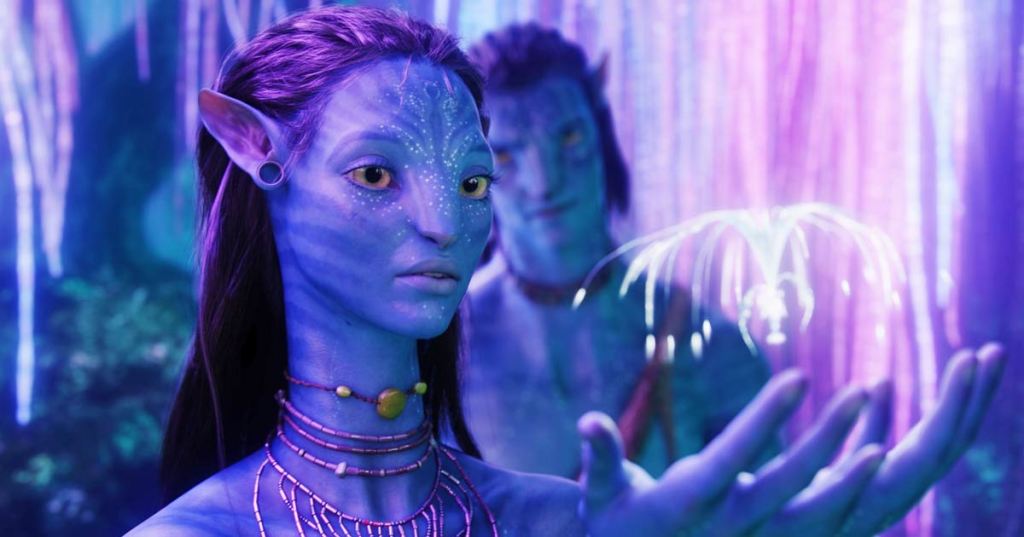
This movie was innovative and visually stunning especially for it’s time being released in 2009. The movie transported you to a world unlike anything you’ve ever seen before. The colors, CGI effects, movements, symbolism, and the elements of spirituality all tied in to create the most beautiful and captivating cinematic experience. During the plot development in the beginning of the movie (just when you thought the visuals couldn’t get any better) you’re introduced to Pandora at night. The subtle lighting cues and the experience of the bioluminescent environment is like something out of a dream. Avatar was pinnacle in the film industry, as it was one of the pioneers in 3D technology.
The Plot
The film’s plot follows a classic formula of an outsider thrown into a new world facing conflicts, and ultimately finding themselves aligned with the indigenous people. While this theme is not entirely original, Avatar manages to create a compelling narrative with a strong environmental message. The themes of corporate greed, exploitation, and the destruction of nature resonate, and they serve as a reminder of the importance of preserving our planet. The story is captivating, gripping and suspenseful – blending science fiction, action, and romance in a way that keeps you involved and on the edge of your seat from start to finish.
It’s a true masterpiece in it’s own way and it will leave you in awe long after the credits have rolled.
When Toy Story was released in 1995 I remember being enthralled from the initial scene. It was the first animated movie of its time and told an engaging and stimulating story, for children and adults alike. It even holds up as I can watch it today and still be fully entertained. I believe it contains multitudes of good storytelling elements that will endure for generations to come.
Child’s Play Plot
Toy Story does a phenomenal job of following Kenn Adam’s: The Story Spine. Now a longstanding strategy that Pixar Animation Studios employs for their productions, The Story Spine follows a simple structure for planning a story. The plot of Toy Story follows it as below:
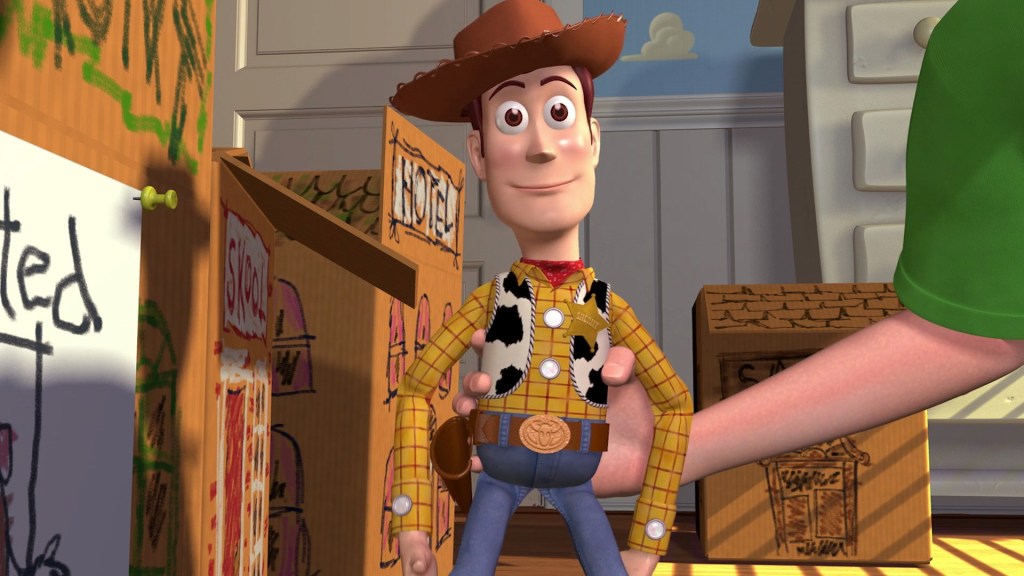
Once upon a time there was a toy cowboy named Woody who is the favorite toy of little boy Andy. Every day, Andy played with Woody and Woody is the leader of all the other toys.
Andy playing with Woody, his favorite toy (image source).
Until one day Andy has a birthday party and receives the newest and coolest toy, Buzz Lightyear. Buzz quickly becomes Andy’s favorite toy and gets played with more than Woody. Even the other toys are more impressed with Buzz and his galactic technology.
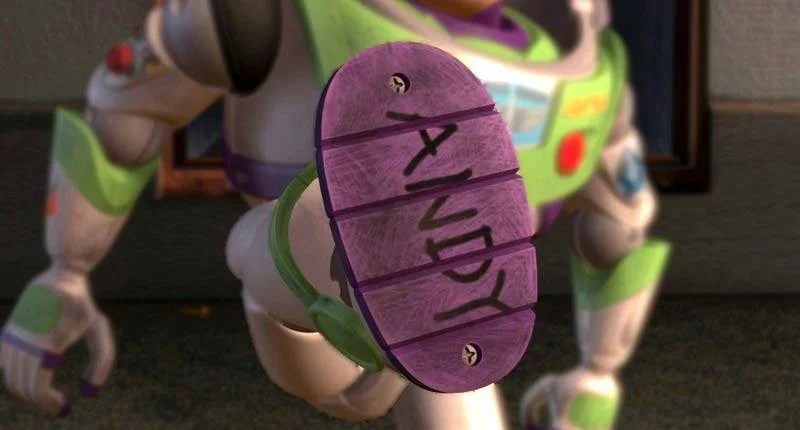
Andy’s name on Buzz Lightyear’s boot (image source).
Because of all of that, Woody becomes jealous of Buzz and starts acting out against him, mainly verbally. But because of that, when Buzz accidentally falls out of a window, the other toys assume Woody pushed him on purpose and they work together to remove him. Because of that Woody and Buzz end up at the neighbour’s house. While that sounds non-threatening, the boy next door is Sid, who is abusive and torturous to toys. Because of that Woody and Buzz need to work together to escape. They are able to overcome their differences and formulate a plan. Until finally, they shoot themselves out of the window and Andy sees them on the ground. They are reunited with Andy and he is able to take them on his move to his new house. And ever since then, Woody and Buzz have been friends and happily share Andy.
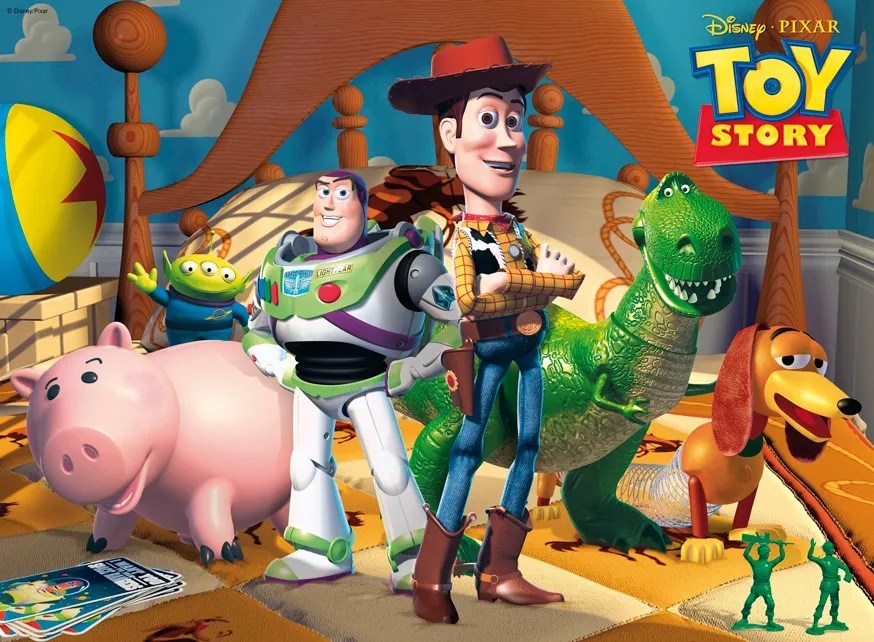
Some of the toys in Andy’s collection (image source).
The story seems rather basic when it is broken down in such a way and there are definitely many other plot elements but at its core, this is the story being told. The themes of friendship, overcoming jealousy, and being accepting of others shine throughout and can teach some very valuable life lessons.
Revolutionary Talent
The bright and colourful nature of Toy Story was truly revolutionary. And it was not only revolutionary because of its computer animation but also because of the phenomenally engaging story it told. The voice acting was performed by a vast cast of talented actors and the main characters were played by A-list actors Tom Hanks and Tim Allen. This was probably the initial draw to the movie for a lot of adults.
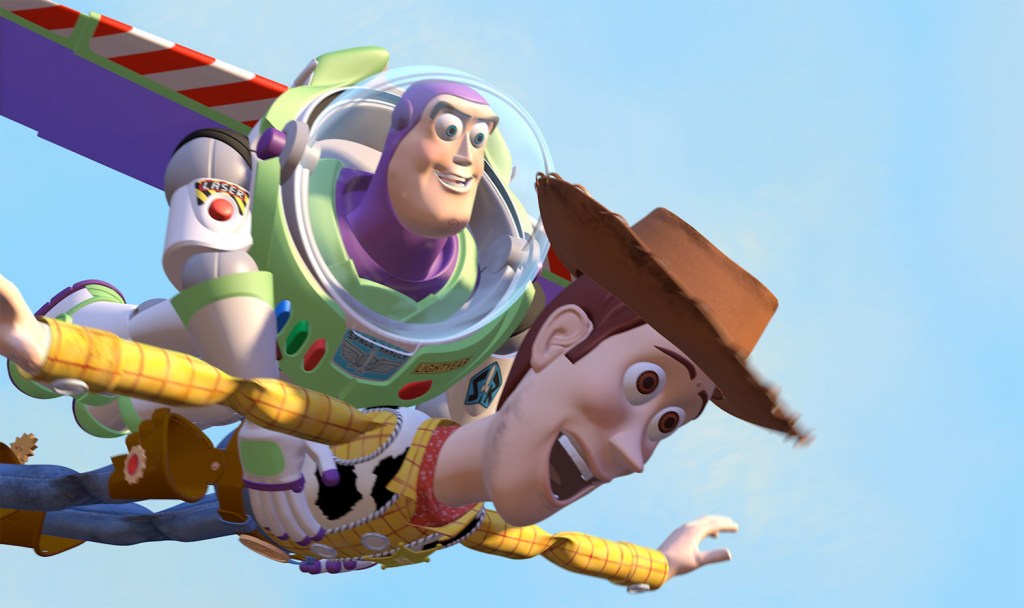
Stars Tom Hanks and Tim Allen with their characters (image source).
From the opening montage, the music in Toy Story is heartwarming and catchy. The soundtrack, performed by Randy Newman, does such a good job of conveying emotion and making the viewer feel the same way that Woody does.
To Infinity and Beyond!
Toy Story is excellent at employing the four I’s of engaging storytelling. It is immersive and maintains the viewer’s interest and attention. You are drawn in to see what will happen to Woody and captivated by his emotional journey. The audience is involved when Andy is playing with his toys with such passion that you remember playing with your own toys that way. Children can relate in real time and adults can reflect back on their own childhoods. Toy Story provides instruction and has meaning with how it relays life lessons through Woody and Buzz. Woody overcomes his jealousy as told in the main plot but Buzz also has challenges to overcome. He starts the film not realizing he is a toy and believing he is an actual astronaut with flying abilities. When he discovers he is not, he needs to deal with accepting himself for what he is and it resonates with the audience’s own need to do so. Finally, the story really inspires viewers to maintain good friendships and value those around them. By the end of the movie, you feel happy and have a childlike view of life which makes it a great viewing success.
With the number of movies, I have viewed and books that I have read, this story stands out. It is their ability to compose a story that is universal, timeless, and leaves an impression on the heart. This storytelling masterpiece is Pixar’s Up. It was released in 2009, and continues to embrace audiences with its emotional journey, and memorable characters. It’s incredible visual storytelling weaves a wonderful unique story. Although it follows the principles of Pixar’s story spine, its relatable because its on base of the real-life story. The article “Even in death, ‘Up’ house owner Edith Macefield remains a mystery” written by Jayson Jenks tells a story that has some parallels to Up. There are similarities with both of the homes being threatened with construction of newer developments and the senior citizens owners are not wanting to sell their property. https://www.seattletimes.com/pacific-nw-magazine/searching-for-edith-macefield/ Although the Up movie has found its own heartfelt story and it takes you on a wild adventure. The parallels in both of these stories that I like is that money does not win.
Oh, that montage!
This warm-hearted journey has all the fundamentals of great storytelling, but the montage in the beginning creates an instant connection to the audience. This connection has us cheering for Carl, and wishing positive outcomes for him. We all share the experience the loneliness Carl is enduring within his life. The loss of Ellie his wife draws out a sense of empathy for Carl, we even forgive him for being a grumpy person. The audience recognizes that losing someone changes you. A bond has been established with Carl, the audience is engaged, earnestly anticipating to see what unfolds next for him. Up has found its audience and provides a meaningful connection that ensures this story to be memorable. Even within the IMBd website, the favorable reviews speak of Up being one of the best Pixar movies ever made, some even say it’s masterpiece. https://www.imdb.com/title/tt1049413/reviews?ref_=ext_shr_lnk In reading the reviews there is a common theme of the write ups, it is an emotional story that captures our hearts. This story crosses my thoughts from time to time, serving as a reminder that embracing change can be an adventure.
Up and away!
With the threat of being put into a senior’s facility and losing his home. Carl decides to have an adventure by attaching thousands of balloons to his home in hopes of fulfilling his promise to Ellie by reaching Paradise Falls and escaping the insistent developer. Although this idea may seem impossible, there was a group that tested this idea with surprising results. This experiment only adds more magic to this story and the excitement is evident on all the volunteers involved. ABC news reports on the Disney’s “Up” house created in real life and flown for National Geographic show. This is a must watch report that will stir up that magical feeling of wonder. https://youtu.be/rV6rNqin4P8?si=nOenIIP9d_o6GTmx
What now?
Even with the home taking flight, there are still many conflicts and challenges along the way. Such as Russell, the eager Wilderness Explorer who accidentally tags along on this adventure, adding another likable character to the mix. Russell and Carl find commonalities and build an unlikely friendship during this wild ride to Paradise Falls. Indeed, a villain is present in this story. Charles Muntz, is attempting to take the rare bird who is traveling with the duo. Charles and his speaking dog army are trying to steal the bird, no matter the cost. Doug, the gentle canine escapes Charle’s army, and joins Russell and Carl befriending them on the journey. This conflict helps these lovable characters in forging bond. They must collaborate to defeat Charles Muntz, and navigate the dangerous environment.
It’s a win!
After overcoming all of the obstacles, this adventure changes Carl. Who becomes a sympathetic mentor and friend to Russell, and far less grumpy. It reminds us of how to be courageous, be adaptable and the power of love. The end scenes will beautifully tie up all loose ends, leaving the audience with a profound sense of closure and fulfillment.
This story.
The manner in which this story is crafted along with the visuals, took my heart and I was ready to go the distance with Carl. The relatability of this movie shocked me at the beginning of how deep it went, especially for a Pixar picture. The sense of loss and loneliness is something I truly understand. This story reminds me that being uncomfortable will sometimes delivers the best growth moments in life.
**Trigger Warning: Please note that this post discusses an Episode of an HBO show that contains death, personal loss, and suicide.**
I love when I hear, read, or see a great love story. Whether they are set in the past, take place currently, or are in the future, I am a sucker for them. I am not sure if it is the emotion of love or the exploration of relationships in love stories that is so captivating to me. But I love that love stories are not always what they seem, they are dynamic, and they can be interpreted in many ways (whether that’s a good or bad thing).
As an archaeologist, I know firsthand that love stories are not something that is highly visible in the archaeological record. Love is an emotion, and you cannot see emotion, you can only infer that it was there based on other material evidence. What you can see in the archaeological record is relationship. So, for example, when we hear in the news that a “Lover’s Burial” has been uncovered somewhere overseas, it is that archaeologists are probably interpreting the relationship of materials and objects found in that burial as inferring love.
While you cannot always see love in the deep past, we know, or maybe we hope, that it was there and love stories existed. Love stories are unique in this way. Other stories or narratives can be interpreted more clearly in the archaeological record but love and human connection are not the easiest to see without additional context.
Love is universal which makes it a perfect storytelling device. While everyone experiences love differently, there is something about it that is relatable. Love stories have a formula that slides smoothly into the ‘Story Spine’ . They generally start with the ‘meet cute’ and build from there. Love stories can be the center of the narrative being told or woven throughout the background.
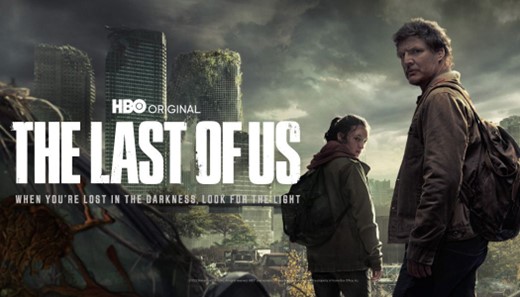
My favorite love story, this week, is the story told in Episode 3 of the HBO series, ‘The Last of Us’. ‘The Last of Us’ isn’t really a show that I would normally choose to spend my time watching. It has gained my attention simply because it was filmed in Alberta and the Kardashians are between seasons. So, every week my anxiety level hits an all-time high as things that make creepy noises jump out from dark shadows.
HBO’s ‘The Last of Us’, is a show about a disease outbreak that, when it infects, it alters people’s behavior and turns them into flesh-eating zombies. These creatures are not like regular zombies though, they are fungi zombies that look like deadly decomposing tree mushrooms. The story is set in 2023, 20 years after the outbreak that saw people turn on each other, governments betray their citizens in the name of containment of the disease, and individuals do things they probably thought they would never do in order to survive. The main story is about Joel, a man that lost his daughter at the beginning of the outbreak due to government policies on containment, and Ellie, a teenager that was born after the outbreak and has never known life outside of government-ruled compounds created to keep the infected out. Their story revolves around the fact that Ellie is immune to the disease and Joel is smuggling her to a rebel base where they can use her blood to make a cure.
The story that I wanted to share today is not Joel and Ellie’s though, it is Frank and Bill’s.
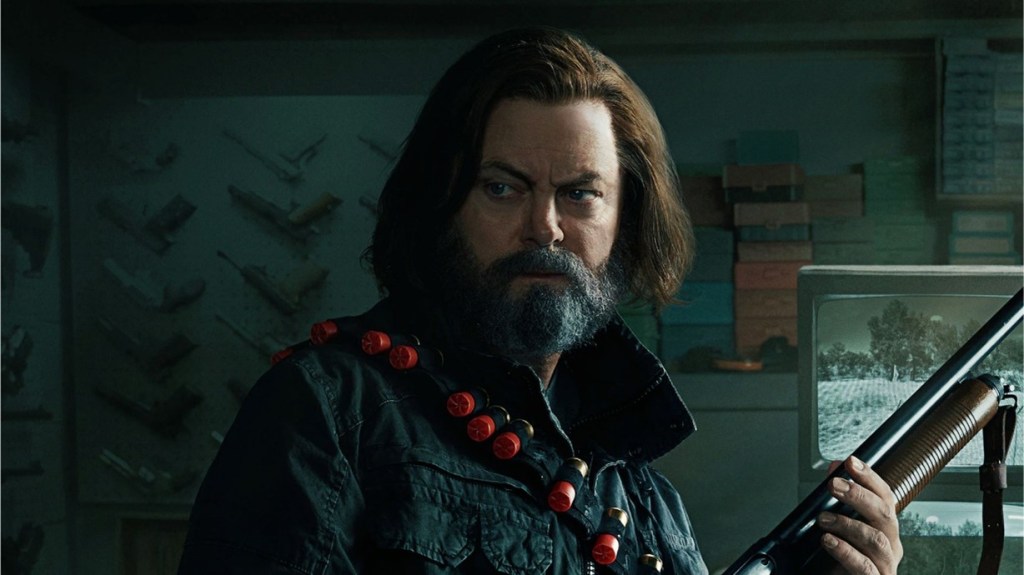
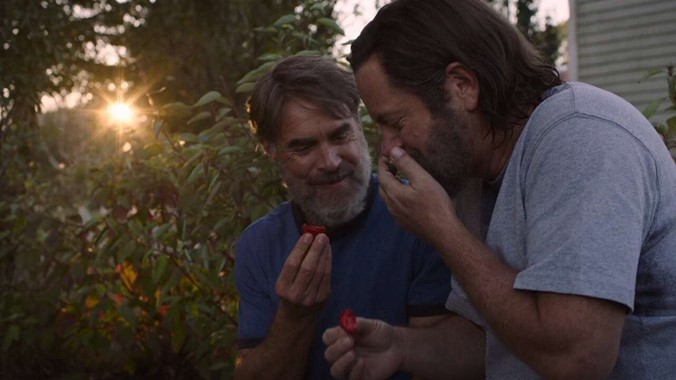
Frank and Bill are introduced in Episode 3 of the series. Bill is presented to us as a middle-aged man who lives in a small town in Massachusetts. He is essentially a prepper that is described as defensive, has unique social skills, and what would be considered to many, a different way of looking at the world. When the outbreak hits and people are told to leave their homes, he defies those orders and stays. He builds a large, impenetrable fence and creates his own compound for survival. He has good food, wine, and a lovely home where he lives alone in a solitary, but safe, and fearless existence.
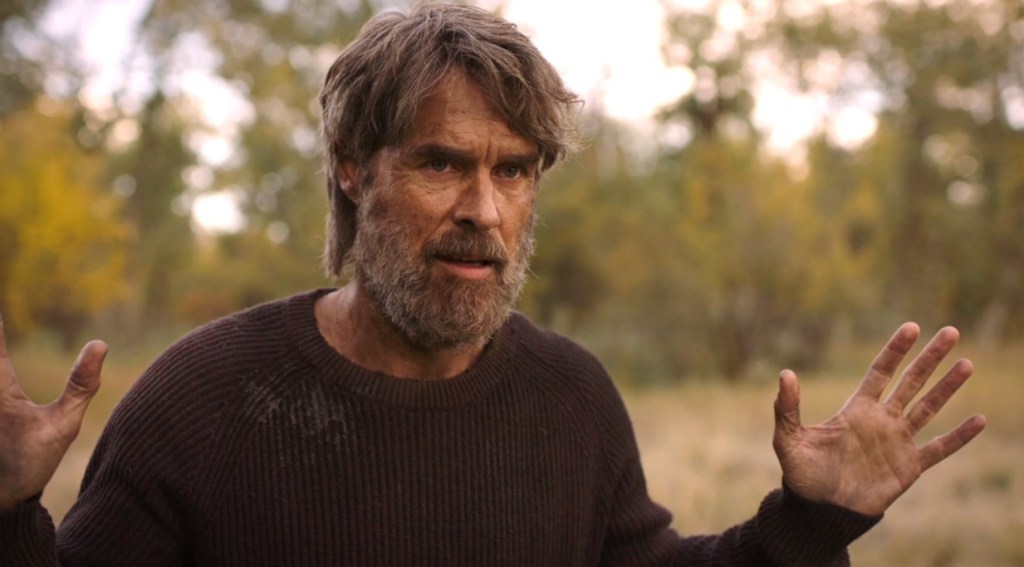
One day, alarms go off outside of the fences Bill has put up and he meets Frank. Frank is the opposite of Bill. He is outgoing, friendly, confident, and self-assured.
The story of Frank and Bill is a bright love story set in the dark world of a global pandemic. Their story is one of give and take, vulnerability, love, and agency. Within the episode, there is incredible symbolism, visuals, and foreshadowing. Their story takes viewers on an hour-long journey spanning 20 years, showing the development of their relationship and them as individuals. The story tells how they overcome loneliness and seclusion, how they develop friendships, and tells how they experience everyday situations in a changing world. Their story highlights how letting people in, and in their case, loving someone (even if that makes you vulnerable), changes you as a person. It tells how in life, no matter how dark it is, there can be amazing moments of light.
“I was never afraid before you”.
Bill to Frank in HBO’s ” The Last of Us”
At the end of the episode, Ellie reads a note that Bill wrote to Joel. While hearing the note, I turned to my partner and said through tears, “Well I really hope that Joel and Ellie leave that piece of paper behind. It would really help archaeologists from the future interpret Bill and Frank’s bright little love story”.
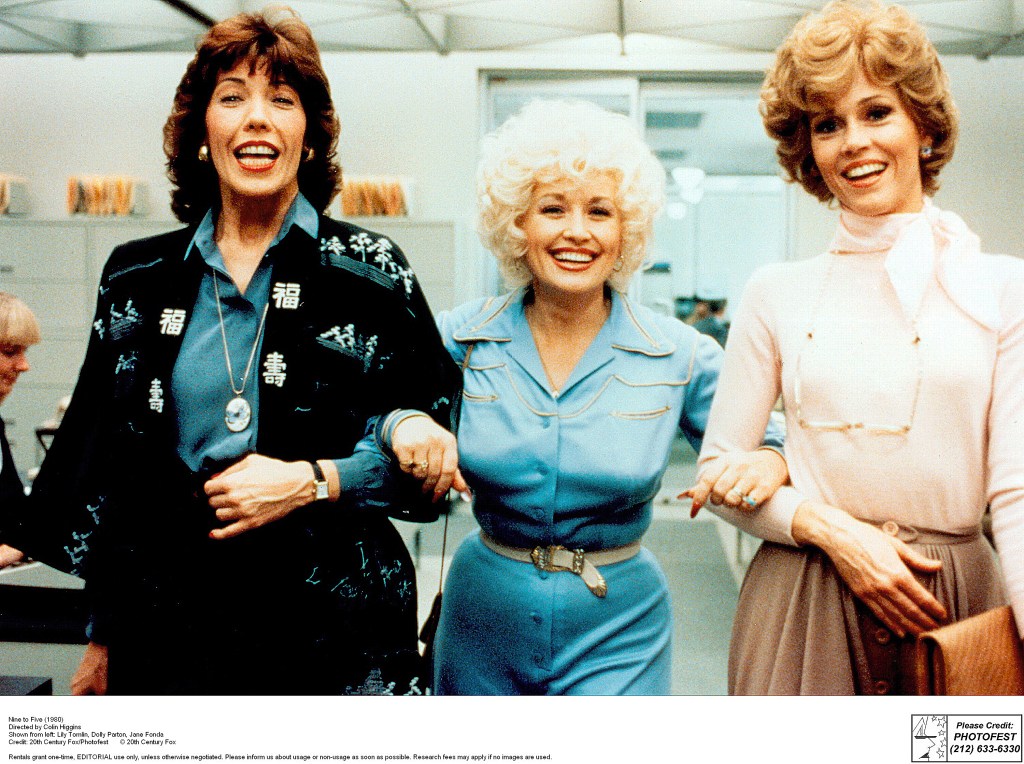
First of all, who has NOT seen this movie?! I just checked and it looks like its streaming on Disney+, Amazon Prime, and Crave…I highly you recommend you watch it. I admit, I love love love this movie because I love love love Dolly Parton but of course, there is much more to this movie than the Queen, Dolly. Go give the iconic song “9 to 5” a listen while you’re at it; Dolly Parton wrote it on set to kill time!
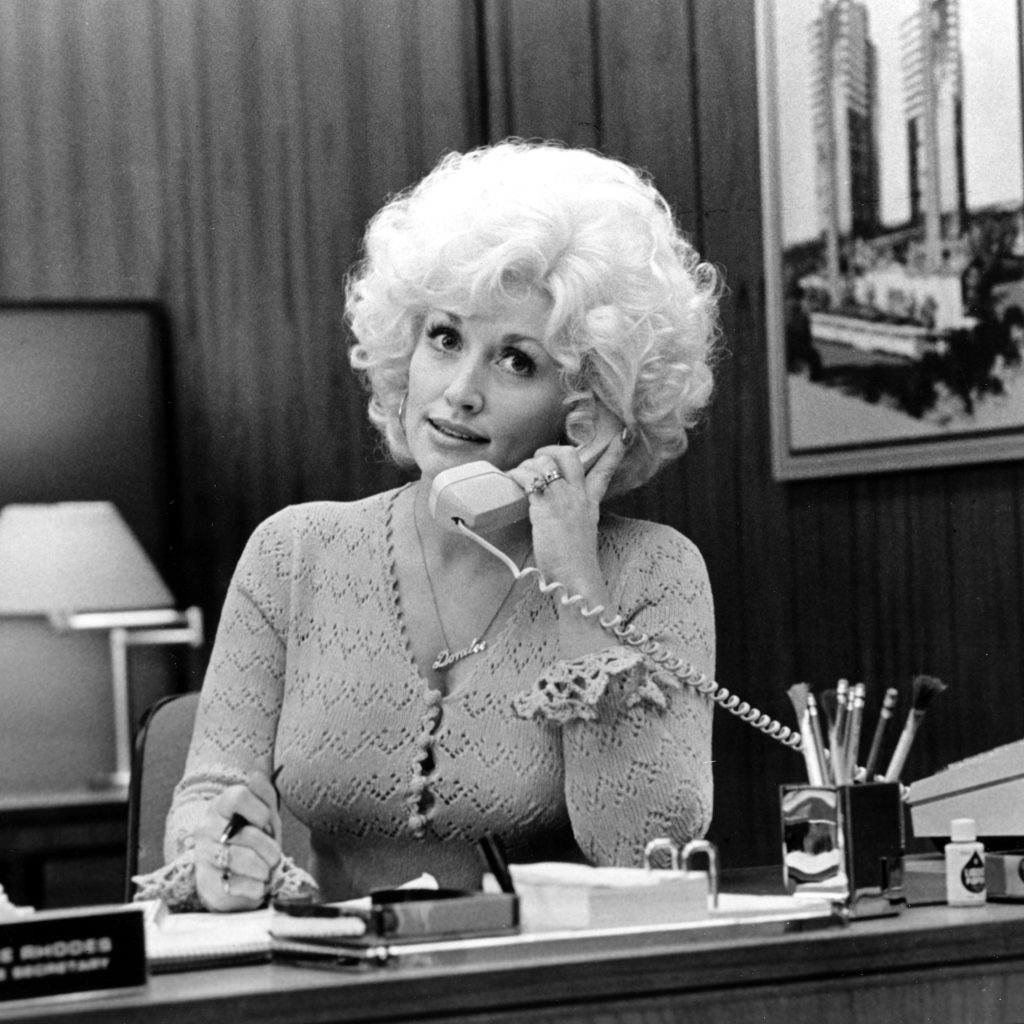
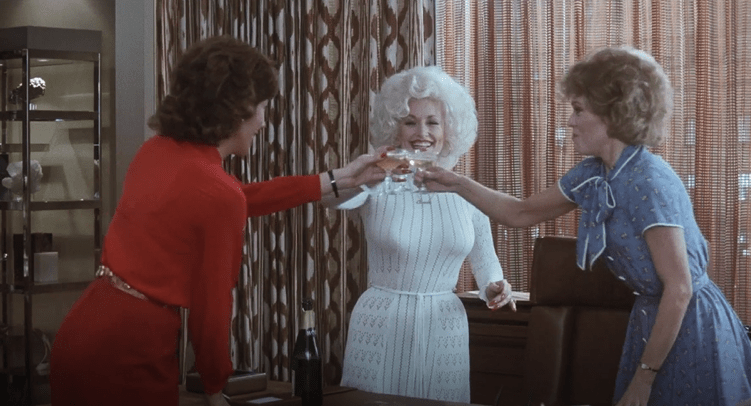
Once upon a time there was a receptionist, Doralee, who was beautiful and sexy, but also kind and smart. Every day, two other women in the office, Violet and Judy, would gossip about Doralee, implying she is sleeping with the Boss, Franklin, who by the way is a chauvinist and sexually harasses Doralee on a daily basis. But, one day Violet and Judy see they were wrong and that Doralee is the loveliest lady and a devoted wife. Because of that, they decide to teach Franklin a lesson and through a whirlwind of nonsense, end up kid napping him. Because of that, the 3 women end up running the office and make a ton of changes all under the guise of Franklins instruction, like daycare, flexible hours, job sharing, etc . Until finally, Franklin manages to escape and the ladies have no other option but to go to the office with him where he plans to out them; the Chair of the Board happens to show up and praises Franklin for all the changes he has made to boost morale ( the ladies unfortunately still do not get any credit because it was all done under Franklins name). And ever since then, Franklin was rewarded for his “hard work” by being promoted to a new position in Brazil and the women will no longer be subject to his chauvinistic ways. In fact, Violet gets promoted and takes over Franklins position in the office!
The story has it all – characters you are rooting for and can identify with, especially if you are a woman or have ever felt over looked at your job, it inspires us to stand up for ourselves, to incite change, and visually it grabs your attention, especially if you are a vintage lover. Whenever I watch an older movie or period pieces, I am always excited by the styling and design – it is a huge part of the story for me. Doralee, especially grabs my attention. While this movie takes place in the early 80s, Doralee has a lot of 50s/60s styling, she puts a lot of effort in to her look, and it’s one of the reasons she is a target; that could be a whole blog post on its own – why are women who do their hair and makeup, who put obvious thought in to their outfits, who have any sex appeal “hated” and labelled as stupid, slutty, distracting, etc., by, often and sadly other women, but also just society in general. It isn’t until Judy and Violet are forced by the situation to get to know Doralee that they realize she is kind and smart and only interested in her own husband. Which, I think, makes Dolly Parton the absolute perfect person to play this part.
Throughout the story, you establish an emotion connection with the characters, you are able to justify their actions, and you are really rooting for them to come out the other end as champions. This story has all the ingredients for a compelling story and is able to combine them in the exact way to give the audience, me, you, a great story, that is visually fantastic, but would be great if told in any era or medium.
What’s interesting still, is that the story of 9 to 5, while about 40 years old, is still pretty relevant, which, again, is a whole different blog post. So, in the meantime, read this Rolling Stones article, that talks about how the themes in the movie still hold true today, in real life.
















 EXSM 3989 - Digital Storytelling Class Blog