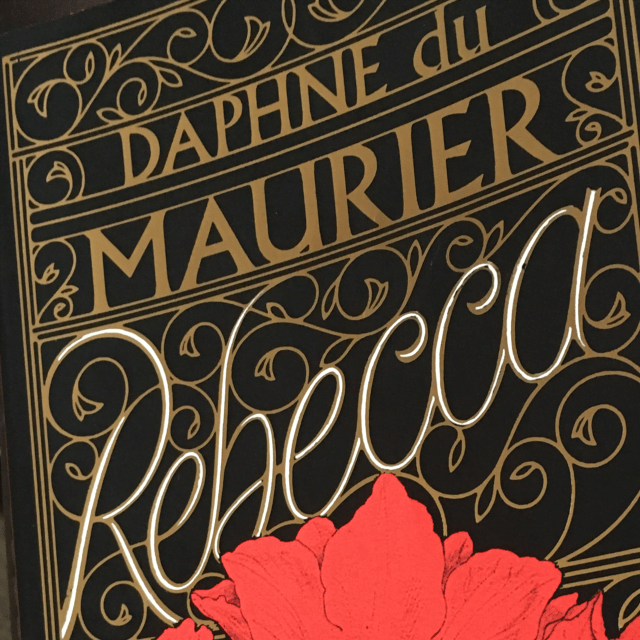
Rebecca, by Daphne DuMaurier, was recommended to me by a friend over ten years ago when I young, wild and free, and it’s still the best book I’ve read as an adult. It has the dark feel of Gothic, Bronte-esque literature with a more modern setting – a truly emotional thriller with themes that are as relevant now as they were when the book was written in 1938.
Principles of Storytelling
As all good stories are, Rebecca is universal – it follows a young woman who feels herself to be inadequate, plain, slow-witted, unremarkable, and out of place…not to assume that everyone feels this way, but I think that most of us have been there at some point in our lives. We all have deep-rooted fears about our worth and how we compare to others, and because of this, I connected deeply with the main character and felt like I understood her discomfort and insecurity throughout the novel. Because the story is related to the reader entirely by the main character’s narration, you become tangled up in her mind, feelings, and suspicions, and we question the events going on around her as she does. She is the character that we root for, because we are her; we have become unavoidably entwined with who she is and what she feels. We want her to succeed because we are connected to her. As the story unfolds, it becomes more and more evident that it is her well-being that is at stake, and even her life at one dark point. The mental turmoil that threatens the main character is dangerously relatable – we want her to make it through the story because we fear her failure deep within ourselves.
Rebecca does an excellent job of connecting the reader to both the story and the main character (whose first name we never learn, which perhaps helps to further this link) as well as laying out the purpose of the novel very early on. Despite the feelings of not knowing as we read, of being purposefully kept in the dark, we understand almost from the very beginning that the narrator needs to uncover the mystery of Rebecca and ultimately be free of her. She needs to know the truth that is being kept from her, which I think is another universal theme in the story.
Story Spine
The narrative takes us through the basic story spine; we are introduced to the main character and her mundane routine, but one day she meets Maxim DeWinter, which leads to a series of events spanning the novel, climaxing in uncovering the truth about Rebecca as well as Maxim’s true feelings about her, and ending with the destruction of the DeWinter estate, Manderley, and the couple’s relocation abroad. Rebecca has all the components of a good, solid story, but beyond that it is all the more engaging because of the depth with which we connect to the main character. The mystery of the story, too, entices you to keep reading, because like the unnamed narrator, you are constantly guessing at what is really going on, wanting to understand, and unsure of everything. I think that these two elements together, the reader’s connection to the narrator as well as the mystery, allow you to engage with the story in a very emotional and meaningful way.
 EXSM 3989 - Digital Storytelling Class Blog