Whenever I experience a new story, I always begin with the hope that the story will leave me yearning for more — that the story will leave a lasting impression, that it will keep me up late at night after I’ve finished it and leave me with an endless stream of thoughts related to it. As someone who has read, played, and watched their fair share of stories and had several lasting impressions, there is one story that was able to do all of the above, except it wasn’t just for one night; it was for a whole week. And that story is called Nier: Automata.
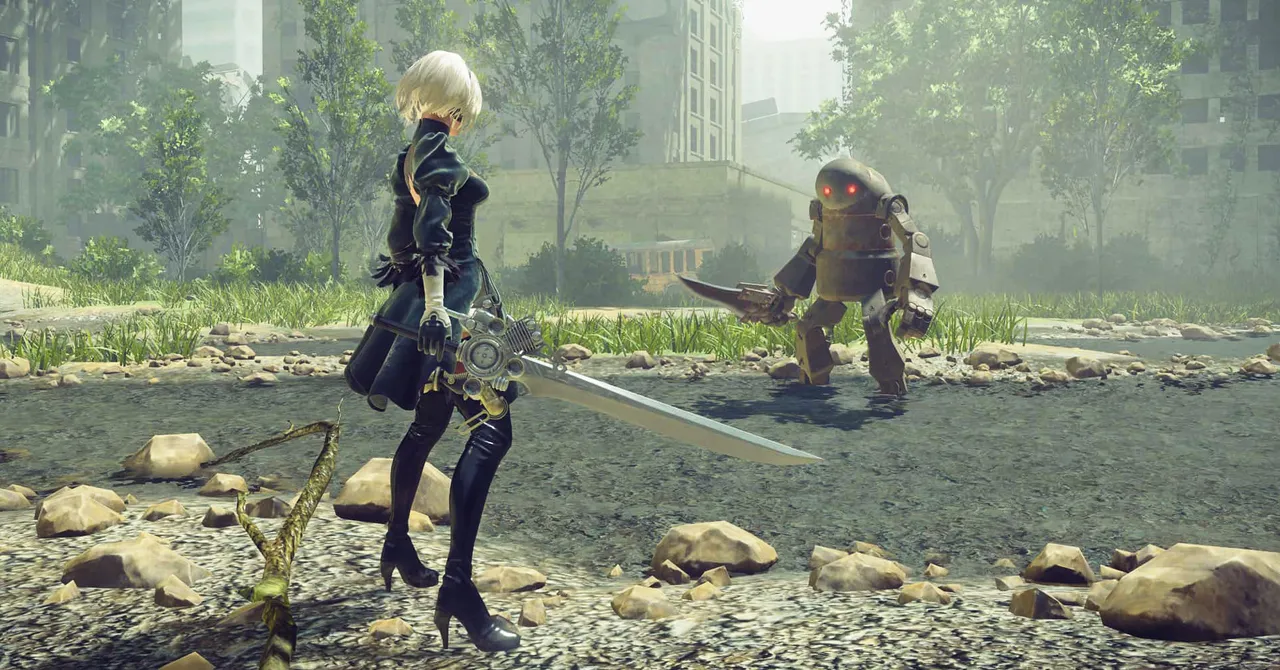
Nier: Automata is an action RPG that follows earth in a dystopian future, one where androids (created by humans) and machines (created by aliens) are locked in a constant war. At its surface, Nier: Automata seems like a generic, dystopian plot – but that is far from what the story of the game is. The story of Nier: Automata is one that will ask you philosophical questions about life, death, the future, and everything in between. Now, why does this story resonate so much with me?
Nier: Automata goes beyond the five W’s. The game implements each excellently throughout the story to strengthen the narrative — it goes beyond to leave an impression, to leave the player wanting more. Within the game lie my personal taste of dream ingredients: loveable characters, an emotional rollercoaster of a story, quest lines that enhance the world, and music that is some of the most atmospheric I’ve ever heard in a game.
Take a listen to this song from the soundtrack. Do any of these words sound familiar? Do they sound kind of like a language, but not really? The story is set in the future, a future where they use “Chaos Language” — a language that is made from our own languages, but blended together as if the languages merged as time went on. The producer of the game, Yoko Taro, mentions that “[w]e wanted something that could truly serve as background music. If you don’t know what these mysterious words mean, you can’t get side-tracked.” By using a unique style of music like this, you not only keep the audience engaged with the story, but keep them engaged after the story — why the music uses what sounds like jumbled lyrics is actually a brilliant way to emphasize the dystopian world and make the world within the story stand out even more.
An element of storytelling that Nier: Automata uses to keep going beyond the five W’s, especially ensuring that different viewpoints are told and fair to who the story represents, is the fact that the game has three separate protagonists — 2B, 9S, and A2. Not only does the game have three protagonists, each protagonist has their own section of the game, and their own ending. Yes, that’s right — multiple endings. To get the true story of Nier: Automata, you must beat the game three times. (You probably want to play it an extra two times, too, to get the full story.) By playing as each separate protagonist, you get a feel for each character — you see their perspective of the same events, the differences in thoughts and feelings, and feel more of a connection to each character. Each character reacts to events differently; and that is part of what makes Nier: Automata such a special narrative experience. By showing how adversely different characters in the same situation can react — and letting the audience react with them.
Nier: Automata tells its story of the future through its soundtrack, its story of motivation and drive through its characters, its story of the world through quests and the narrative itself. There is one thing we do not have yet: what is the driving question of Nier: Automata? There is a reason that I’ve left this for last:
The game is unique in that you do not know the driving question until you finish the game.
At first, the story of the game may leave you with more questions than it asks you. The weaving of several endings and interwoven storylines leaves the player to have to piece together questions to end up at that answer. And once the story gives you the answer, it will leave you in awe. Because the question that comes up throughout the story is:
“What is the point? Why is the game’s narrative going in this direction?”
and then, the core question of the game clicks. All the puzzle pieces click together to ask you,
“What would you do if you found out everything you’ve been fighting for is pointless — there was no point. Would you keep fighting? Who would you keep fighting for?”
Nier: Automata is not a happy story, it is a story of strife, determination, about a bleak future where there does not seem to be an end to the fighting. But, there is one key element to Nier: Automata, and that is hope. Even when everything seems pointless, like there’s nothing more left, there still is one crucial element left: hope. Whether that hope lies in the world, in someone you love, or within yourself, that hope still shines through. That is why Nier: Automata’s narrative is one of my favourite: it excellently uses its format of a video game to weave that theme of hope everywhere: within the characters, the soundtrack, the world, and most importantly, the story.

When you need a reminder that hope still exists, check out Nier: Automata — it will be worth it.
 EXSM 3989 - Digital Storytelling Class Blog