With great power, comes great responsibility. Even to this day, those words spoken famously by Uncle Ben to his nephew Peter Parker, send chills down my spine. It is a quote forever marked in time. The story of Peter Parker, AKA Spider-Man will be forever marked in time. It has been classified as good storytelling since its inception by Stan Lee and Steve Ditko in August 1962.
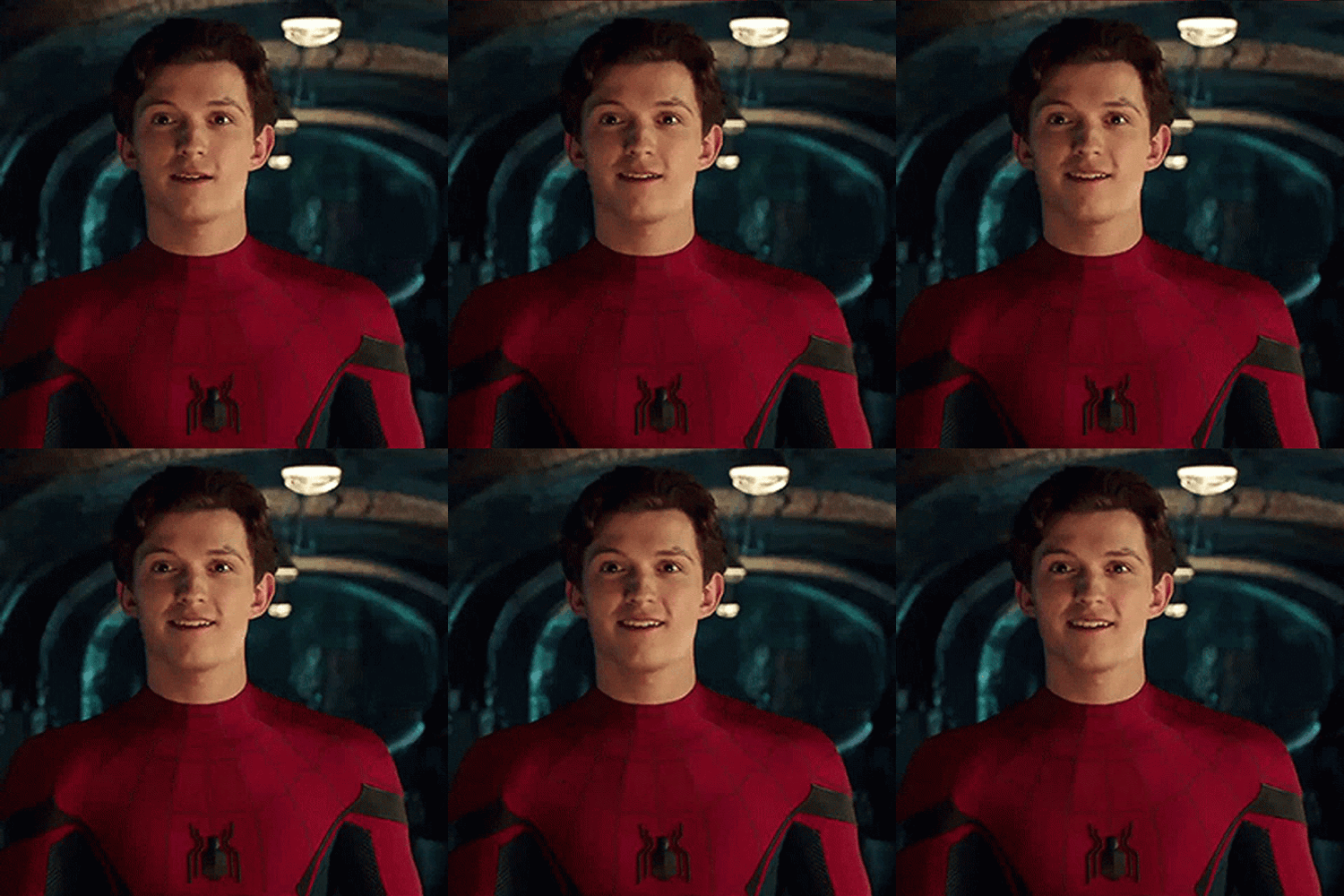
The story has evolved over time, from comics to tv shows, to numerous franchise movie reboots. Some done better than others (*Cough* Tom Holland *Cough*).
But most recently, Sony Pictures created a newly animated Spider-Man story that follows a young New York teenager named Miles Morales in the movie Spider-Man: Into the Spider-Verse, and this story has inspired a new and great storytelling platform for Spider-Man.
This story still has the fundamentals that make Spider-Man good, the unlikely hero we love and cheer for. Good vs. evil, the witty loveable supporting characters, the struggle to triumph journey. But what sets Into the Spider-Verse apart? It’s the visual storytelling.
The colours, the animation, and the digital design all draw you in because it is new and exciting. Something we have not seen done before.
Let’s dive deep into how visual storytelling is setting itself apart and why it’s paving the way for new ideas.
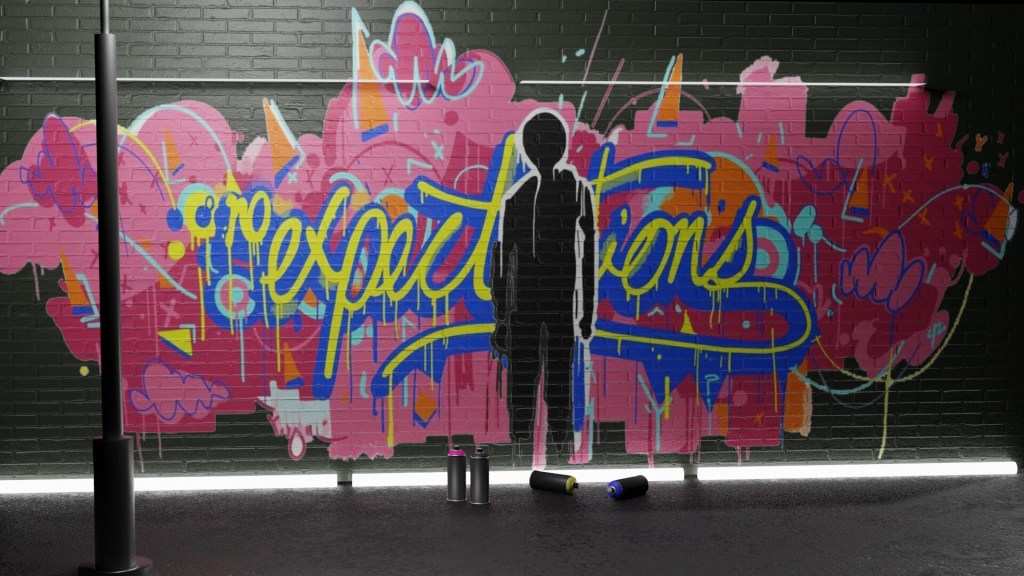
The unique modern-day comic book design hits the nostalgia button for all comic book readers, which still includes action and thought bubbles. The colours are bright and vibrant, which is shown off in the spray paint art Miles does at the beginning of the film, or the portals that open between different multiverse. You can’t help but have your eyes drawn in by it all.
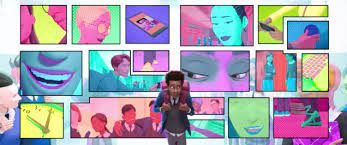
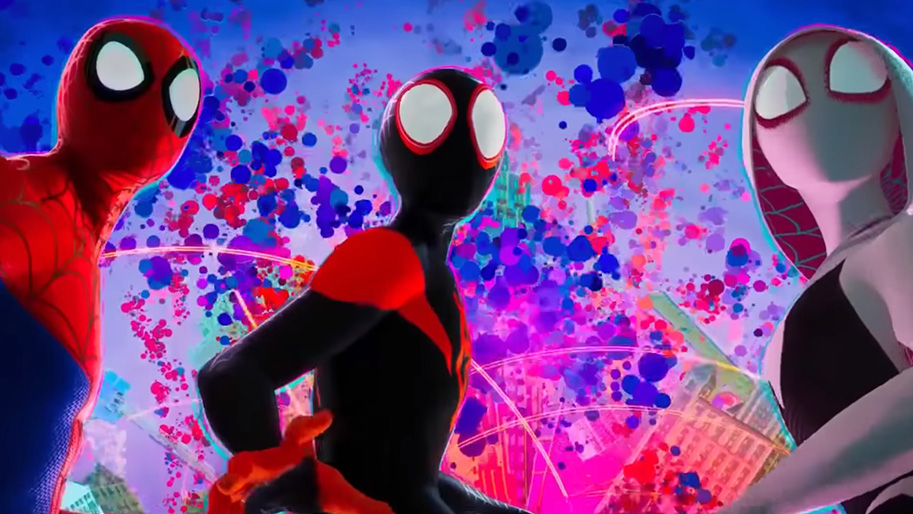
But the most intriguing aspect of the movie is the frames per second (FPS). When you first watch the movie as Miles learns about his powers and starts his journey to becoming Spider-Man, he is displayed as clumsy, awkward, and lacking confidence in the way he moves. Compared to Peter Parker, who is teaching Miles the ropes of being Spider-Man, who moves smoothly, and effortlessly across the screen. Typically, in animation, this is hard to show. Animators would have to use incidents, like dumping into things, falling down, etc. This conveys to our brain that the character is indeed, clumsy.
But as you watch Miles, his walking, running, and swinging just seems…wrong. This is where it gets interesting, and where Sony has stepped up visual storytelling. The movie and characters were filmed at a 24 fps for Into the Spider-Verse.
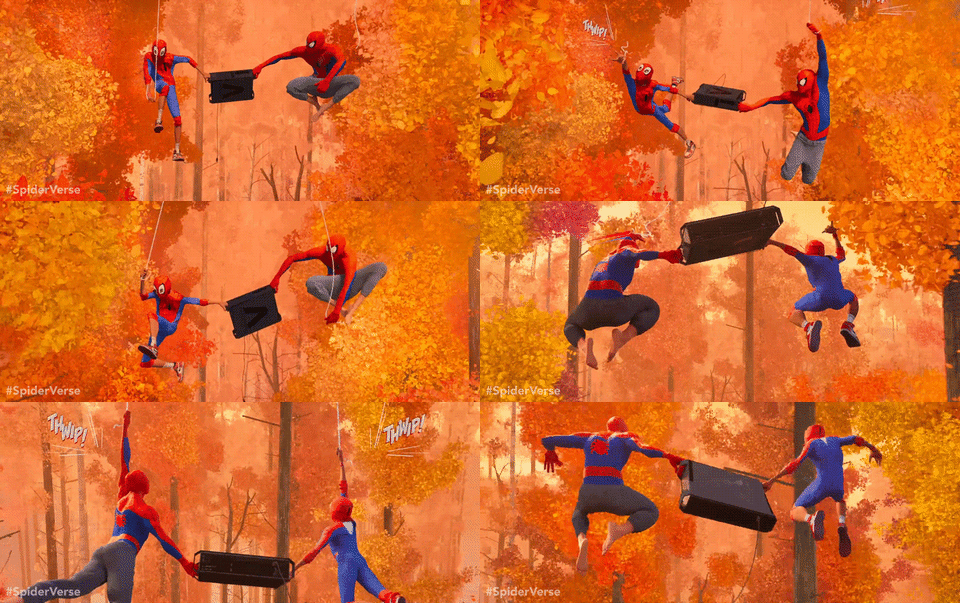
But, Miles, at the beginning, was filmed at 12 fps compared the 24 fps around him. This creates a message to our brain, that something is off, that he seems to be slower and clumpier. As Miles becomes more confident as Spider-Man, Sony began to increase the fps on Miles until the end when he is finally at 24 fps with the rest of the film and easily glides across the screen. Pretty cool huh! This small attention to detail has set this film apart from other visual storytelling. It has become one of the most beloved Spider-Man movies to date.
Visual storytelling allows us to create these magical worlds and scenarios that seem impossible and fantastical. But when you take that storytelling outside of the box, like filming at different frames per second, the storytelling is taken to a whole new level.
For me, the story, the animation, and the characters have made Spider-Man: Intro the Spider-Verse one of my favorite stories, and it will continue to be for a very long time.
 EXSM 3989 - Digital Storytelling Class Blog