Categories
Uncategorized

Interpreter Of Maladies: A journey beyond mind, body and moral!

Photo: https://images.app.goo.gl/fSip7oCn9fSBM31e9

Interpreter Of Maladies by Jhumpa Lahiri is a collection of nine short stories that won the Pulitzer Prize, the Pen/Hemingway Award and the New Yorker’s Debut Book of the Year in 2000. 

Lahiri tells the story of several characters as they try to find their place in the world. The book begins with a collection of short stories interconnected by their shared theme: what it means to be an immigrant or an outsider in America. In each story, a character feels like they do not belong—either because they have moved from another country to America or were born here but don’t quite fit in with those around them. Cultural displacement and the pathos of human loneliness cuts across the nine stories where the characters are continuously grappling with their identity.

I remember reading this book as a young girl, ready to leave home to pursue higher studies at Delhi University. What resonated with me was the universality of her characters and their struggle to find new meanings of familiarity and what they would eventually call or understand as ‘home.’ 

Appealing and Connecting

Structure

Lahiri employs the elements of the Story Spine much too cleverly. Although it is a collection of short stories, it places the nine stories in an order that adheres to the guidelines of good storytelling, including:

1. The Beginning 

2. The Event 

3. The Middle 

4. The Climax 

5. The End  

A perfect marriage of themes and language
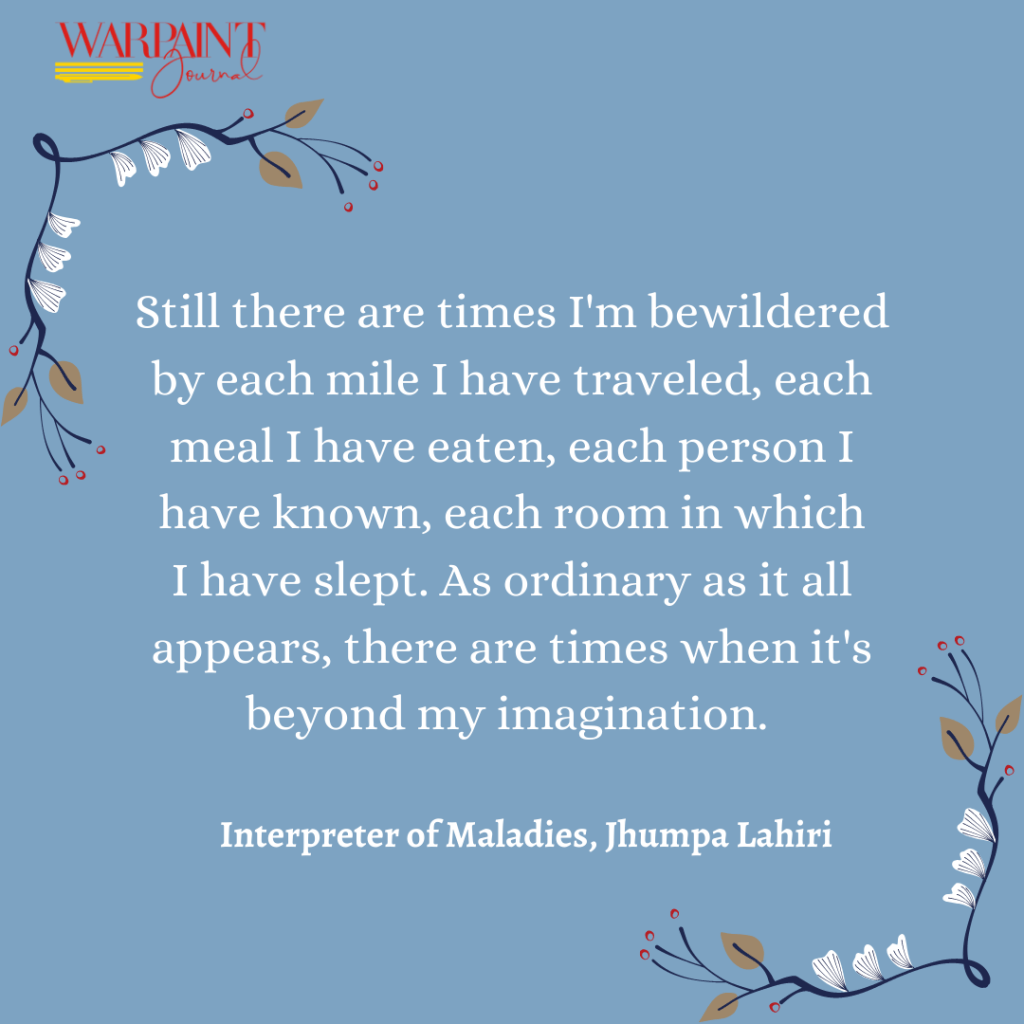
Photo: https://images.app.goo.gl/8k5VoWqeUFjHDCEH6

One of the many strengths that Lahiri displays, along with the relatability and humanness of her characters, is the simplicity and clarity of her writing that makes for an instant connection between her characters and the readers. The characters that populate Lahiri’s world live in the tense duality of being exiles but are proud to have left India to build a prosperous life in the West. However, the central theme that emerges through colourful details of Indian tradition, cuisine and celebrations are that of the universal struggle of adapting to the ways of a foreign homeland without losing one’s original roots. Their pain and angst intertwine with that of the reader, making it an intensely personal experience. 

So whether it’s the married couple who rediscover each other after living together for years in the same house due to a power cut or the story which chronicles an affair between an aimless young American girl and a married Indian man – the stories probe into hope, pain, guilt, desire, dreams and temptation where Lahiri moves beyond a specific cultural identity, and plot to capture human elements, hence connecting to the very heart of its readers

Lahiri’s Women

Finally, the women in Lahiri’s stories bring to mind other immigrant writers such as Jamaica Kincaid, Maxine Hong Kingston and Zora Neale Hurston. They all offer reactions against their culture’s view of gender roles, combining quiet strength with courage and rebellion.

There’s a story for everyone! 

Interpreter of Maladies is both beautifully melancholic and seemingly uplifting in a cathartic way. The amalgamation of intense nostalgia coupled with the mundane quality of its characters’ everyday life makes this a story that has travelled well and beyond into the hearts of many around the globe. She is a master storyteller who knows when to pull in her audience for that personal experience, almost as if she is offering front-row seats with a promise of a special peek just for you. 

Categories
Uncategorized

Balloons, Wizardry, and a Villain Oh My!

Photo by Padli Pradana on Pexels.com

If you loved princesses, magic and balloons as a child of the 90’s then The Balloon Tree was likely on your bookshelf. The children’s storybook written and illustrated by Phoebe Gillman the author widely known for her popular children’s book Jillian Jiggs, also created a story that engaged children with a princess in peril, a villain and a wizard that comes to her rescue with a spell.

Rather than give a synopsis, the following outline of the book will be conveyed using the method of the story spine structure created in 1991 by Kenn Adams, detailing the main elements of the story. The story spine to The Balloon Tree is as follows:

Once upon a time there was a princess, Leona, who lived in a hilltop kingdom with her father the king.

Every day, the happy princess loved to sing, dance, and play with balloon which the castle was always full of.

But one day, an invitation arrived for the King summoning him and his knights to a Royal Tournament.

Because of that, the evil Archduke was put in charge of the kingdom.

Because of that, the Archduke ordered all the balloons in the kingdom to be destroyed and the princess be locked in her room.

Because of that, Leona escaped her room via a secret passageway and asked the wizard for help in creating more balloons to signal her father home.

Because of that, the wizard gave Leona a spell for the tree in the garden to produce more balloons.

Because of that, Leona searched the kingdom for a balloon to cast the spell, and was triumphant.

Because of that, balloons started sprouting from the tree filling the lands with balloons.

Until finally, the king saw a balloon at the edge of the forest and rushed home to rescue his daughter and townspeople from the Archduke.

And ever since then, the townspeople have been joyous and the Archduke has been in the dungeon blowing up balloons.

Much like a Disney movie the main character lived in a kingdom far, far away and was in distress. However, this story resonated with me not only due to my love of balloons as a child, but that the main character was a young girl. Unlike many movies and tales whose protagonist was an adult, Leona was a child who was very brave and able to be her own heroine. No knight or prince came to her rescue as often depicted in stories. A cleaver little boy did help her in time of need, and the wizard provided her a solution, but she was able to fulfill her mission of signaling her father by her own tenacity. “If the premise or character is relatable than the reader will be attached to the story due to the emotional tie” stated Social Media Strategist Linda Hoang in her lecture for Digital Storytelling and following Pixar artist Emma Coats rules 1 & 4 of storytelling. As a young child I was connected to the princesses character wanting to be savvy problem-solver, but also dependent on others for assistance. I was unaware of the term ‘girl power’ as I read this story for the first time in my grade two classroom, retrieving the book from a bin in the “read to self” corner of the room. However, I certainly retained the sense of empowerment and checked the book out of the library to continue reading it at home until my parents purchased me a copy which I have since gifted to my cousins children. This book has become an enduring favourite in their household as well. It entangles the concepts of courage, guidance and teamwork to achieve freedom. If you would like to add a copy to your children’s literary collection it can be purchased via Amazon or Chapters/Indigo.

Categories
Uncategorized

Country Music Stories: Coat of Many Colours

One of the best storytellers is Dolly Parton. Yup, you read that correctly! What makes her songs so good are the stories she’s able to tell. Her song, “Coat of Many Colours”, released in 1971, is a perfect example of storytelling through music. Even if you are not a fan of old country music, I’m talking about the original country music, you must admit most of the songs of this genre fit all the parameters for a great story. Great stories are universal. Great stories resonate with the audience by being relatable or emotional. Great stories have structure and purpose but are simple and focused at the core, and great stories have good characters, particularly a character the audience wants to see succeed. So, let me show you why “Coat of Many Colours” is truly a great story!

Great stories are universal, relatable, or emotional

Country music has evolved over the years and has become a mixture of many types of music, but it originated in the deep south among the poor working-class trying to survive off the land. Country music stories, like all other good stories, are relatable or emotional. “Coat of Many Colours” is a song about adversity and love, both relatable emotions. In this story, the little girl has a loving family and although she is teased for being poor, she doesn’t feel poor because of the love she gets from her mom. Most of us have felt love from a parent or guardian, most of us were probably teased at some point in our life. The descriptions Dolly uses in her story evoke emotion in the listener because they have been in a similar situation and, through the story, they relive those emotions helping them feel the story.

Great stories have structure and purpose but are simple and focused at the core

While “Coat of Many Colours is told through music, it still has structure and a purpose. Dolly starts by describing how their family was gifted a box of rags and because they were poor and fall was coming, her mother used the box of rags to make her a coat. Dolly watched her mother make this coat and put her love into it. She was very proud of her coat and while their family didn’t have money, she felt rich wearing this coat made with her mother’s love. At school, she was teased by the other kids because of her coat made of rags and for being poor. At the end of the song, Dolly tells the listener how she dealt with the bullies. The ending reveals the purpose of this story. We see a little girl unphased by the teasing, full of love from her family and proud of where she comes from. This story has a structure, a clear beginning, a middle, and an end. There are also events throughout the story that create difficulty for the character and in the end, we see the resolution.

This isn’t a long song. Dolly’s stories are simple and focused while still including details that draw in the listener and paint a picture for them. The music that accompanies the stories also helps to shape the mood and emotions that go with them.

Great stories have good characters

The main character in “Coat of Many Colours” is a sweet innocent little girl. She explains that she knew her family was poor but never felt poor because of the love she always received. Her innocence didn’t allow any of the adult stresses to bother her. She is a character you feel for at the beginning of the story because of her situation. You then feel for her again when she is teased. But, in the end, you feel proud of her for how she handles herself and for what she can see despite her family’s financial situation. She is a great character that is endearing and lovable.

While music isn’t necessarily the first medium you think about when you think about a good story, country music has always been based on telling stories and many of the songs of this genre tell great stories. Examining “Coat of Many Colours”, the storyline is relatable and evokes emotion which is enhanced through the music. Although the song is short, it is focused and follows a structure. Lastly, it has a great character that we can easily fall in love with. Using the principles of great storytelling, Dolly Parton’s “Coat of Many Colours” is truly a great story.

What is your favorite country music story? Let me know in the comments.

Categories
Uncategorized

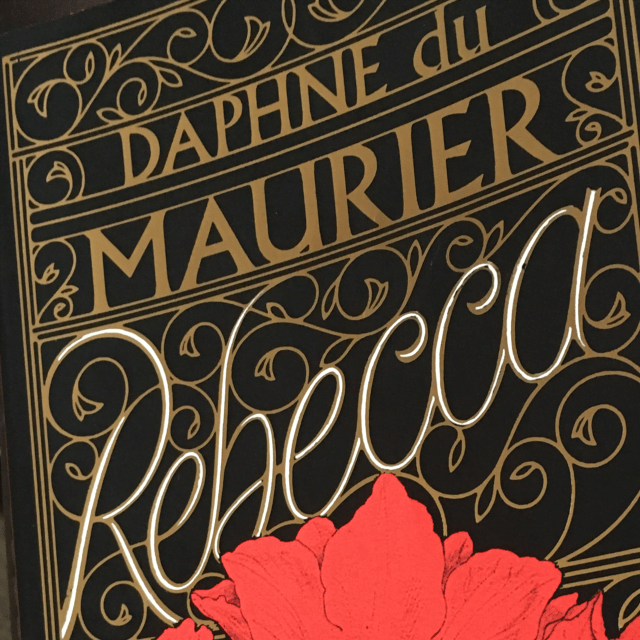
Rebecca

Rebecca, by Daphne DuMaurier, was recommended to me by a friend over ten years ago when I young, wild and free, and it’s still the best book I’ve read as an adult. It has the dark feel of Gothic, Bronte-esque literature with a more modern setting – a truly emotional thriller with themes that are as relevant now as they were when the book was written in 1938.

Principles of Storytelling

As all good stories are, Rebecca is universal – it follows a young woman who feels herself to be inadequate, plain, slow-witted, unremarkable, and out of place…not to assume that everyone feels this way, but I think that most of us have been there at some point in our lives. We all have deep-rooted fears about our worth and how we compare to others, and because of this, I connected deeply with the main character and felt like I understood her discomfort and insecurity throughout the novel. Because the story is related to the reader entirely by the main character’s narration, you become tangled up in her mind, feelings, and suspicions, and we question the events going on around her as she does. She is the character that we root for, because we are her; we have become unavoidably entwined with who she is and what she feels. We want her to succeed because we are connected to her. As the story unfolds, it becomes more and more evident that it is her well-being that is at stake, and even her life at one dark point. The mental turmoil that threatens the main character is dangerously relatable – we want her to make it through the story because we fear her failure deep within ourselves.

Rebecca does an excellent job of connecting the reader to both the story and the main character (whose first name we never learn, which perhaps helps to further this link) as well as laying out the purpose of the novel very early on. Despite the feelings of not knowing as we read, of being purposefully kept in the dark, we understand almost from the very beginning that the narrator needs to uncover the mystery of Rebecca and ultimately be free of her. She needs to know the truth that is being kept from her, which I think is another universal theme in the story. 

Story Spine

The narrative takes us through the basic story spine; we are introduced to the main character and her mundane routine, but one day she meets Maxim DeWinter, which leads to a series of events spanning the novel, climaxing in uncovering the truth about Rebecca as well as Maxim’s true feelings about her, and ending with the destruction of the DeWinter estate, Manderley, and the couple’s relocation abroad. Rebecca has all the components of a good, solid story, but beyond that it is all the more engaging because of the depth with which we connect to the main character. The mystery of the story, too, entices you to keep reading, because like the unnamed narrator, you are constantly guessing at what is really going on, wanting to understand, and unsure of everything. I think that these two elements together, the reader’s connection to the narrator as well as the mystery, allow you to engage with the story in a very emotional and meaningful way.

Categories
Uncategorized

The Boy Who Lived

“Words are, in my not-so-humble opinion, our most inexhaustible source of magic. Capable of both inflicting injury, and remedying it.”

-J.K Rowling

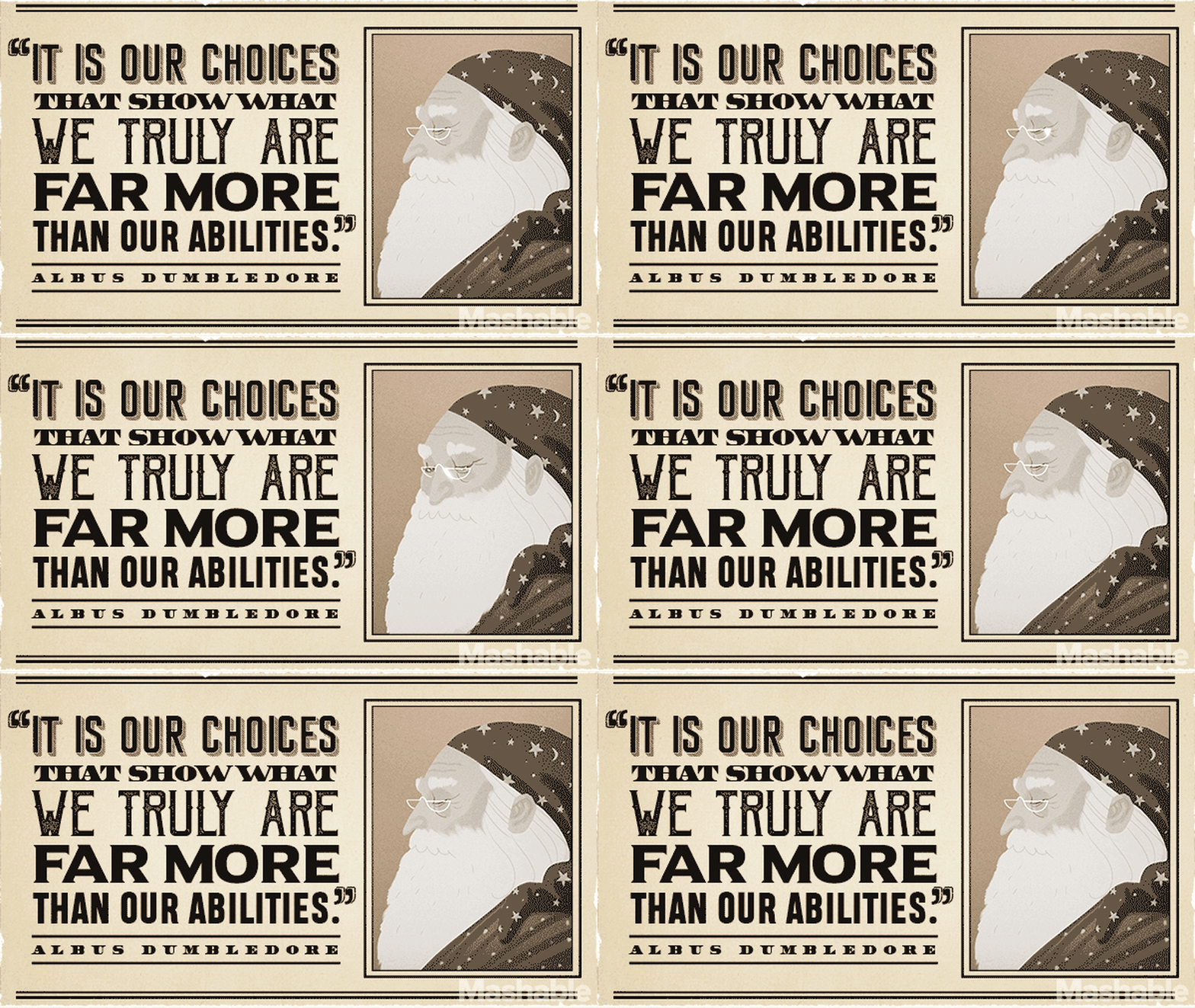
The task of picking a favourite story was daunting, as an avid lifelong reader, it was near impossible. But then I thought of the above quote in J.K. Rowling’s fantasy series, Harry Potter; words are amazing and with them, people are able to create whole new worlds and stories that bring people out of their normal lives and into something, well, magical, which is exactly what J.K. Rowling did for me when I was young.

The story of Harry Potter is well known around the world. On his eleventh birthday, a young boy named Harry Potter discovers that he is a wizard and possesses the ability to use magic.

He is then introduced to the Wizarding World, where unbeknownst to him, he is already famous for being the Boy Who Lived, having survived a killing curse as a baby from the powerful dark wizard, known as He-Who-Must-Not-Be-Named.

To harness his new found abilities, Harry goes to Hogwarts School of Witchcraft and Wizardry, a boarding school in which young witches and wizards are sorted into houses based on their qualities. There he encounters new friends (and enemies) and find a place in which he finally feels he truly belongs.

Throughout their six years at Hogwarts, Harry and his friends find themselves continually drawn into the struggle against Lord Voldemort, while still navigating the challenges of adolescence and well as understanding and growing their magical abilities. This journey’s story concludes with an epic war between the forces of good and evil at Hogwarts with the final showdown of Harry and Lord Voldemort.

The saga of Harry Potter is one that so clearly follows the rules of storytelling. The story is simple and focused: Harry must defeat Lord Voldemort for the Wizarding World to survive. The characters are highly relatable, as it is easy to find something of yourself in each of them so inevitably you want to keep rooting for them. They also never give up, despite being so young and having many obstacles thrown at them, they persevere and move forward. Yet they each have their own opinions and are not scared to show it; they understand that they all bring something unique to the table that an ultimately help.

“To have been loved so deeply, even though the person who loved us is gone, will give us some protection forever.”

– J.K. Rowling

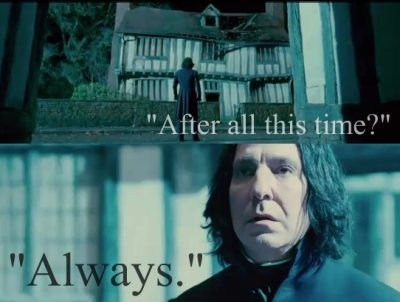
The main theme that resonated with me through all seven books was that of love. Harry’s mother was able to protect him because of the love she had for him, even though she was gone; Harry’s friends continually risk their lives for one another because of the love they share. And even Snape, one of the most despised characters throughout the series, is heartbreakingly redeemed (in my opinion) by love.

The love that is seeped into the whole series is what makes it a great story; it brought purpose, gave the characters a reason to continue fighting, and made the story relatable, even though it’s set in a fantasy world that we can only envision. It is also what brings people back to the story and what audiences will remember when its over.

Categories
Uncategorized

The Great Gatsby

So we beat on, boats against the current, borne back ceaselessly into the past.

F. Scott Fitzgerald

The quote above is the final line in F. Scott Fitzgerald’s classic novel, The Great Gatsby. It’s stuck with me for years ever since I read the novel in high school. The novel, published in 1925, is widely considered to be one of the greatest stories ever written even though it’s author died believing it a failure.

For those of you who haven’t read it – or maybe wiped it from your mind! – the novel is set in 1920’s New York and follows a summer with Jay Gatsby, a strange newcomer to the high society scene who loves to throw lavish parties but never attend them. The novel is written in the classical, typical format and harkens back to the era of the Roaring Twenties when anything seemed possible and anyone could rise above their upbringing and become someone else. The book has been converted onto film many times, with the latest offering from back in 2012. Allowing for some artistic liberties, I think the trailer below captures the absolute decadence and opulence of the upper classes in the 1920s. It also provides an interesting introduction to the main character.

Gatsby is often described as “magnetic, paradoxical, and chimerical,” but the lack of descriptive attributes given to Gatsby within the novel allows you, as the reader, to create Gatsby in your own mind. Gatsby could be you or it could be your neighbor, friend. This makes the novel relatable on an intimate level. In fact, no one in the novel actually seems to know who Gatsby actually is or where he came from and so lavish, extravagant stories are generated about him. This relatability aligns with many of Pixar’s “Rules of Storytelling:”

#5: Simplify. Focus. Combine characters.

All of the characters in The Great Gatsby have a role to play and it is well defined in the novel and through their actions. There are limited side characters so there is limited side stories that could potentially through the novel off track and lose momentum.

#13: Give your characters opinions.

This is especially relevant with our narrator Nick. He’s not shy in sharing his opinions about the people he’s encountering, including his less than favorable outlook on his cousin Daisy and her husband Tom. Having the novel written from the viewpoint of a single character, also allows you to put yourself in their place. As though you were there at Gatsby’s party, observing exactly what Nick is describing.

#21: You gotta identify with your situation/characters, can’t just write ‘cool’. What would make YOU act that way?

This is where I believe that Fitzgerald excels. In making his characters relatable and providing just enough information for you to form a picture, the reader is able to put themselves in the place of those characters. For example, the reader roots for Gatsby although you don’t necessarily understand him. The reader initially roots for Daisy, believing that she’s trapped in a loveless, cheating marriage but as the story evolves, you become more and more dissatisfied with her actions and you realize she wants the best of both worlds – Gatsby’s love and Tom’s money. It makes the reader say, “I would never do that!”

Fitzgerald has managed to keep readers engaged in his story for close to 100 years. Although set in a certain time period, the general themes throughout the novel, transcend time and are applicable, albeit in a different way, to the present day. For me, I appreciate the classical way that the novel is written. It makes me long to pick up an actual book – not just read it on my phone or tablet. It makes me want to curl up with a tea and a warm cat, and immerse myself in the world that he has managed to create. Isn’t that what a good story is supposed to do? Take you out of your current and into somewhere else?

Reading gives us someplace to go when we have to stay where we are.

Mason Cooley

Design a site like this with WordPress.com
Get started