How Digital Technology is Changing Storytelling
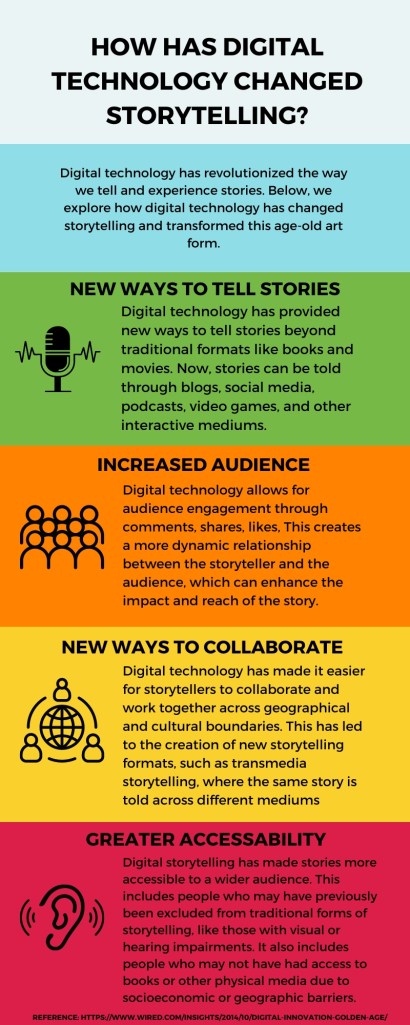
Storytelling has come a long way since the days of ink and paper. With the advancement of digital technology, we have seen an explosion of new ways to tell stories. From interactive websites to immersive virtual reality experiences, digital technology has opened up a world of possibilities for storytellers.
One of the biggest advantages of digital technology is the increased audience it can reach. Social media platforms like Facebook, Twitter and Instagram provide a massive audience for stories to be shared and discovered. This increased exposure has created new opportunities for storytellers to connect with fans and build communities around their work.
Collaboration is another area where digital technology has had a significant impact. Online tools like Google Docs have made it easier than ever for writers, artists and other creative professionals to work together on projects from different locations. This has led to the emergence of new collaborative storytelling formats such as webcomics and podcasts
Digital technology has made storytelling more accessible than ever before. With the rise of ebooks and audiobooks, readers can now access stories from anywhere in the world with just a few clicks. This has opened up new opportunities for writers to reach audiences who might not have been able to access their work otherwise.
The impact of digital technology on storytelling has been enormous, providing new ways to tell stories, increasing audience reach, fostering collaboration and making storytelling more accessible to everyone. As technology continues to evolve, it’s exciting to think about what new storytelling possibilities lie ahead.
 EXSM 3989 - Digital Storytelling Class Blog