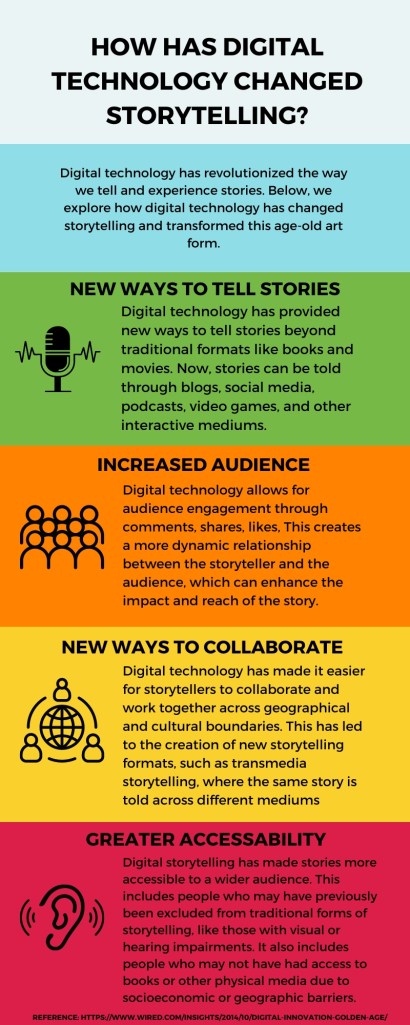
Storytelling has come a long way since the days of ink and paper. With the advancement of digital technology, we have seen an explosion of new ways to tell stories. From interactive websites to immersive virtual reality experiences, digital technology has opened up a world of possibilities for storytellers.
One of the biggest advantages of digital technology is the increased audience it can reach. Social media platforms like Facebook, Twitter and Instagram provide a massive audience for stories to be shared and discovered. This increased exposure has created new opportunities for storytellers to connect with fans and build communities around their work.
Collaboration is another area where digital technology has had a significant impact. Online tools like Google Docs have made it easier than ever for writers, artists and other creative professionals to work together on projects from different locations. This has led to the emergence of new collaborative storytelling formats such as webcomics and podcasts
Digital technology has made storytelling more accessible than ever before. With the rise of ebooks and audiobooks, readers can now access stories from anywhere in the world with just a few clicks. This has opened up new opportunities for writers to reach audiences who might not have been able to access their work otherwise.
The impact of digital technology on storytelling has been enormous, providing new ways to tell stories, increasing audience reach, fostering collaboration and making storytelling more accessible to everyone. As technology continues to evolve, it’s exciting to think about what new storytelling possibilities lie ahead.
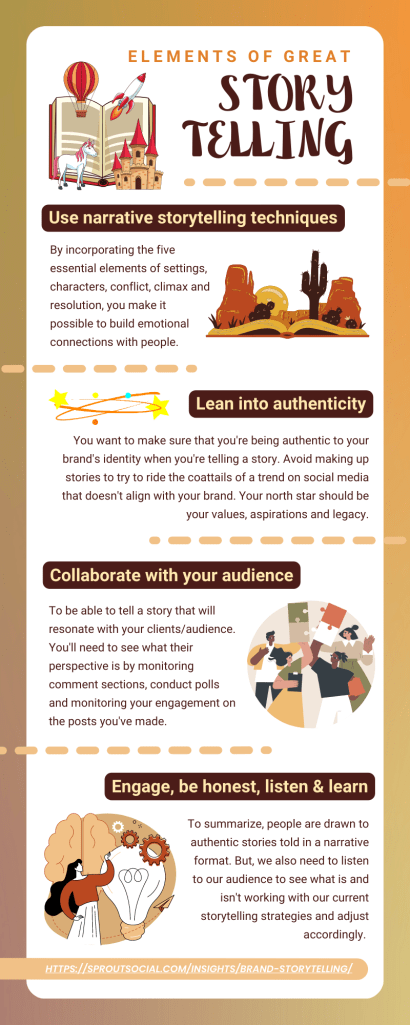
Storytelling isn’t always a natural talent everyone possesses, some of us have to take the time to learn how to tell a great story. This blog post and infographic will be a starting point for you on your journey of learning how to be a better storyteller for your brand online.
When telling a story, you need to make sure that you have a clear beginning, middle and end. No one wants to listen to a story where they don’t understand who the characters are or if you’ve left out how they ended up in a difficult situation or if you fail to mention what they did to resolve their dilemma.
You’ll want to follow the storytelling principles of a story spine.(Once upon a time..) At first you want to start the story off by building the scene and introducing who the characters are. (And Every Day..) This is when you’ll introduce the character’s conflict or challenge they’re facing and subtly hinting at what might be the big change. (Until One Day…) Then, the big event that changes everything and pushes the character to do something drastic. (And Because of This…) Which moves into the part of the story where the character evolves and faces the challenge ahead of them. (Until finally…) The climax of the story happens where the character either fails or succeeds in their mission. (And, ever since then…) This concludes the story and tells the audience what the new routine is.
Be Authentic
When you’re telling your story, you want to be authentic. That way you’re ensuring you’re drawing the right people to your brand and demonstrates the integrity of your brand. Your values and aspirations should not be swayed based on current trends. Only participate if you know the message with remain true to who you are and how you want other’s to receive your message.
Listen to your audience
But, with that, you also want to make sure you’re telling stories your viewers can relate to and resonate with. Clients want to know that you care about their values and their needs so here’s a few ways different things you can do:
Monitor your comment section and listen to what your clients are saying about their experience with you and don’t hesitate to ask for their feedback.
Create interactive polls to help your engage with your clients and gain insight on what they want to see.
Watching for other methods of engagement such as posts about your organization or comments on other posts about your organization.
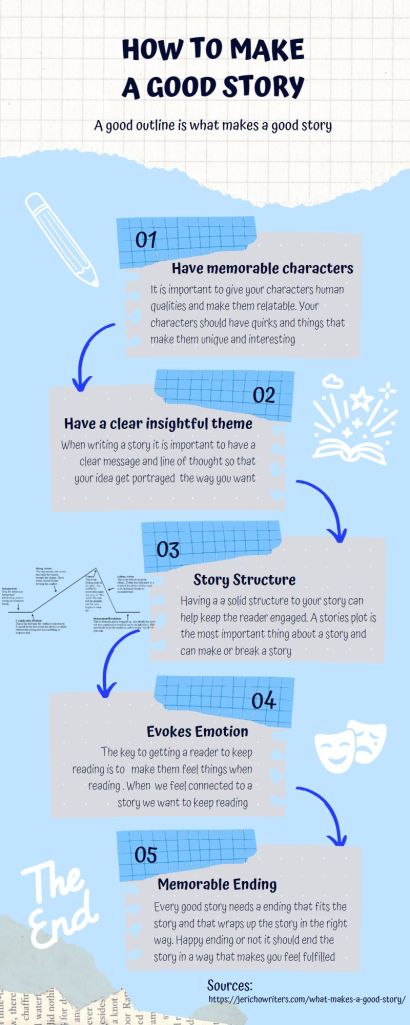
Creating a good story starts with the planning, when starting to brainstorm to write a story there are many things you have to think about and little details you need to include to make your story a good one. When writing a story there is a lot of details that can set a good story apart from a bad one.
Stories have been being told since the beginning of time in many different ways, from campfire stories to a novel to drawings on a cave wall, they are all stories that have been told to people to provide knowledge, entertainment, or life skills. Stories are the original way to pass knowledge around and if we didn’t have stories we wouldn’t have the knowledge about the past that we do today. The structure is the biggest part of making a good story, if you don’t have memorable characters, a clear theme, story structure, a memorable ending and something that evokes emotions. This formula for a story can put you on the track to writing a good memorable story that people will enjoy and recommend to their friends.
Whenever I am reading a story these five main points are what makes me think that the story is good. When a writer is able to make the story relatable and full of emotion it has the ability to pull a reader in and get them to keep reading. When a novel is emotionless or gives no details into the story you can’t visualize the world you are reading about, imagine reading Harry Potter without knowing Harrys home life or knowing what Hogwarts is and trying to read through the series without the details that makes Harry Potter the magic world that it is known to be. People wouldn’t have made it through the first book much less the series if they didn’t have detail or evoked emotion.
We all love a good story. Whether it’s a captivating book, a favorite movie, or a memorable conversation with a friend, stories have a way of engaging us and leaving a lasting impression. But storytelling isn’t just about entertainment – it’s a powerful tool for communication that can inspire action, build empathy, and help us remember important information. In this blog post, we’ll explore the power of storytelling, and explain why it matters in our personal and professional lives.
“Listen, and you will realize that we are made not from cells or from atoms. We are made from stories.” ― Mia Couto
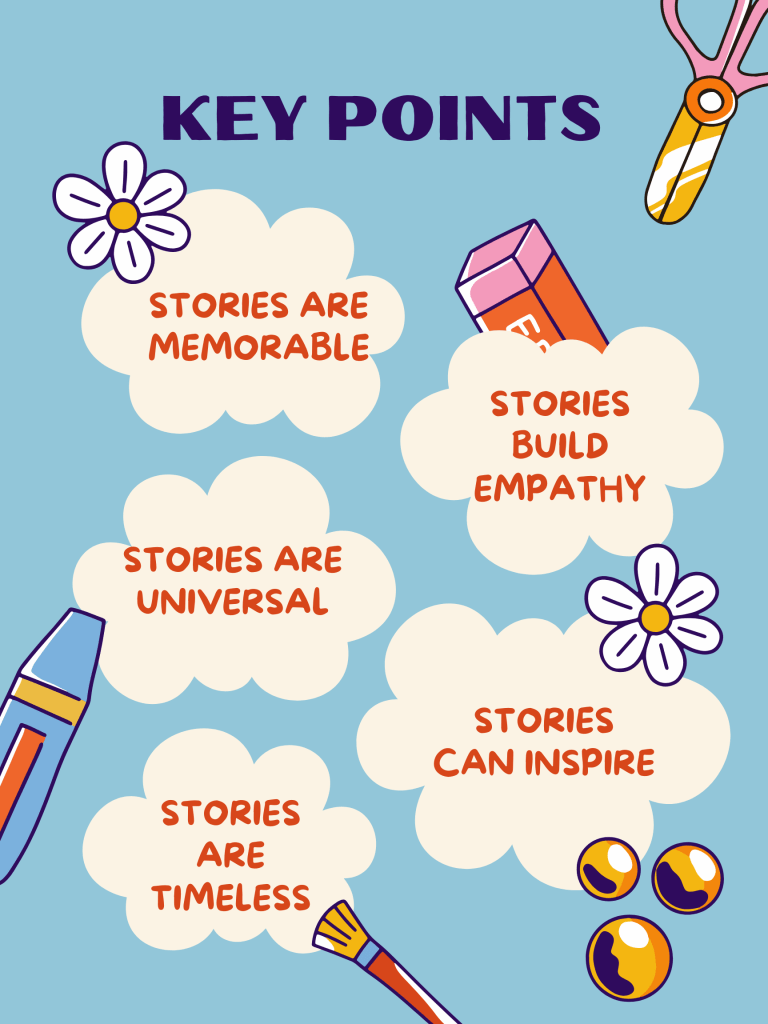
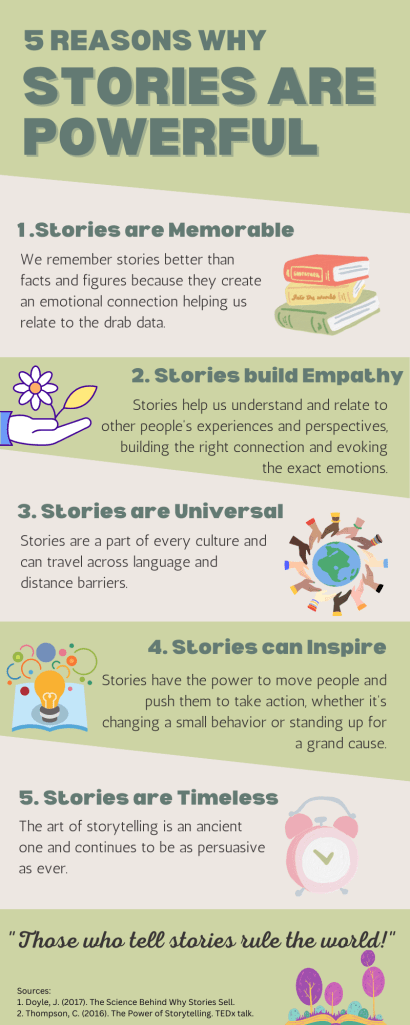
Stories are memorable…
One of the key benefits of storytelling is that it helps us remember information better. Research has shown that we remember stories better than facts and figures because they create an emotional connection that helps us relate to the information. When we hear a story, our brains release oxytocin, a hormone that helps us feel more connected and engaged with the information. This is why marketers, educators, and communicators often use storytelling to help people remember important messages.
Stories build empathy…
Another important benefit of storytelling is that it helps build empathy and understanding. When we hear a story, we are more likely to put ourselves in the shoes of the person telling the story, and to relate to their experiences and perspectives. This is why storytelling is often used in diversity and inclusion training, as well as in social justice movements. By sharing stories that illustrate different perspectives and experiences, we can build empathy and understanding across different groups.
Stories are universal…
Stories are a part of every culture and can be used to communicate across language and cultural barriers. Even if we don’t speak the same language, we can still understand the emotions and themes conveyed through a story. This is why storytelling is such a powerful tool for cross-cultural communication and understanding. By sharing stories that resonate with people from different backgrounds, we can build bridges and foster greater understanding and connection.
Stories can inspire…
Perhaps one of the most powerful aspects of storytelling is its ability to inspire action. When we hear a compelling story, we are more likely to be moved to take action – whether it’s changing our behavior, supporting a cause, or sharing the story with others. This is why storytelling is often used in advertising, advocacy campaigns, and social movements. By crafting stories that inspire action, we can create positive change in the world.
Stories are timeless…
The art of storytelling has been around for thousands of years and continues to be a powerful tool for communication. Whether it’s around a campfire, in a book, or on social media, stories have a way of capturing our attention and engaging our emotions. As we continue to grapple with complex challenges in our personal and professional lives, the power of storytelling will only become more important.
To conclude…
Storytelling is a powerful tool for communication that can help us remember information, build empathy and understanding, inspire action, and connect with others across language and cultural barriers. Whether we’re marketers, educators, advocates, or simply human beings trying to connect with one another, storytelling is a skill that we can all cultivate and harness for greater impact. By embracing the power of storytelling, we can make our messages more memorable, our relationships more meaningful, and our world more connected.
Here’s an infographic summarizing the key insights of this blog post.
Sources:
Doyle, J. (2017). The Science Behind Why Stories Sell. Harvard Business Review.
Green, M. C., & Brock, T. C. (2000). The Role of Transportation in the Persuasiveness of Public Narratives. Journal of Personality and Social Psychology.
Pratten, R. (2016). Getting to the Heart of Storytelling: 10 Steps to Creating a Compelling Story. Forbes.
Salmon, C. T., & Atkin, C. K. (2016). Storytelling: A Critical Review. The Handbook of Communication Science.
Thompson, C. (2016). The Power of Storytelling. TEDx talk.

 EXSM 3989 - Digital Storytelling Class Blog