Categories
Uncategorized

Why the Grinch Stole Christmas

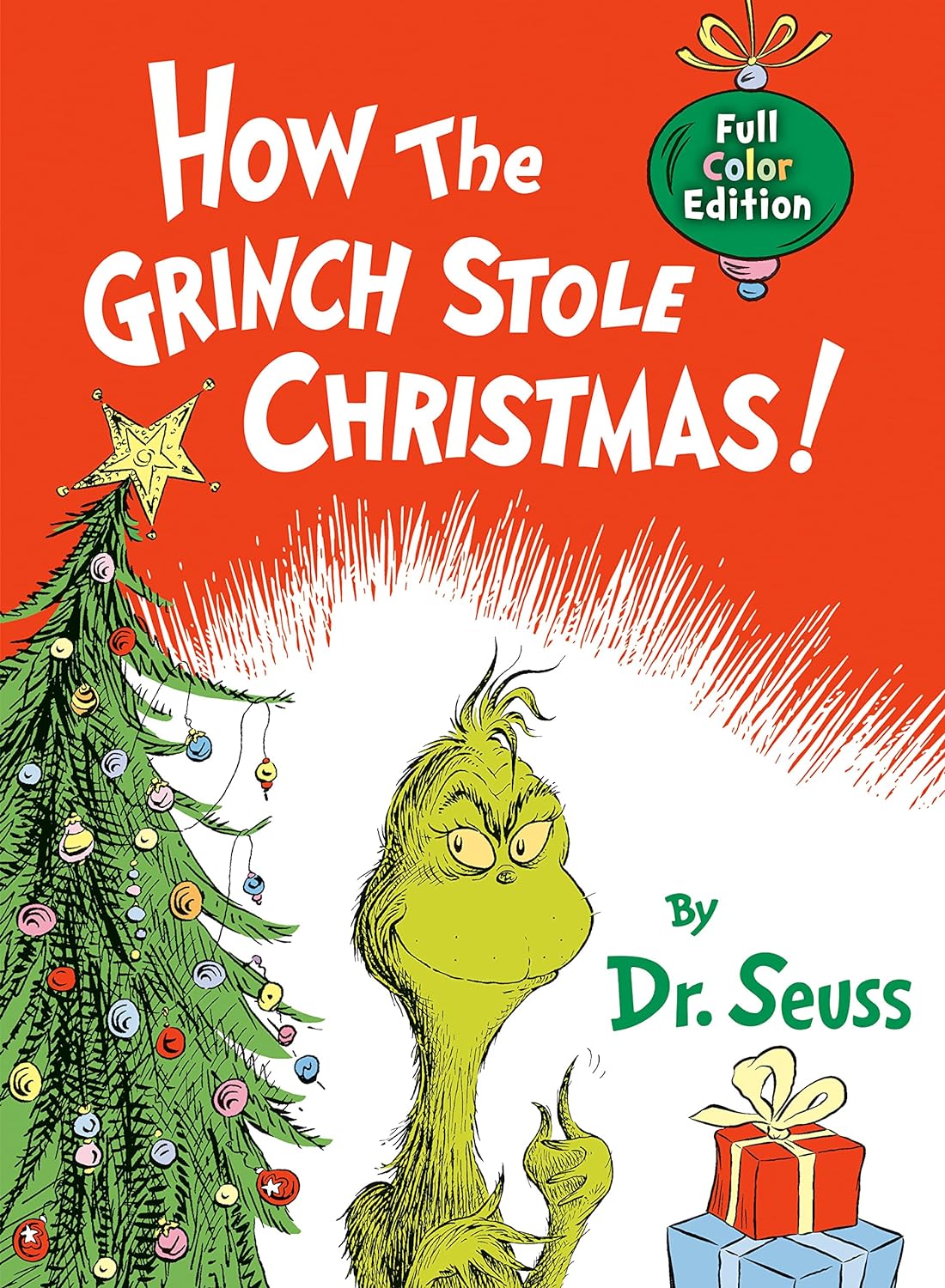
Everyone knows the classic tale of the hairy green outcast that plans to ruin Christmas for the whimsical town of Whoville. The story is not so much about How the Grinch Stole Christmas, even though it is the title, but Why the Grinch Stole Christmas and What he learned in the process. This story is simple, it follows a well planned story spine, is relatable and even though the main character is a grumpy, selfish, beast, in the end we all fall in love with him. But why is that? Why does this interest us? Lets take a closer look at the mechanics of the story.

Once upon a time…

The story begins by describing a secluded Grinch. The author, Dr. Seuss, paints a picture of an outcast that is not like others. “Every Who down in Who-ville liked Christmas a lot… but the Grinch, who lived just north of Who-ville did NOT!”

His location is outside of the town. His name is and identity are different; he’s a Grinch not a Who. And he is the only one that does not like Christmas. While I don’t always like to admit it, there have been times in my life where I felt like I didn’t fit in, like I was not part of the group. Making that connection with the character, makes it feel like we are involved in the story.

Every day…

As the story continues, we learn that every Christmas the Whos’ wake early (disrupting the Grinch’s sleep), quickly open their presents and make a lot of “Noise! Noise! Noise! Noise!” They are then described to sit down to a feast of “Who-pudding, and rare Who-roast-beast”. And if that weren’t enough they would then join hands and start singing!

When it seems like everyone around us is jolly and enjoying all the events, festivities, music, materialism of the season but all we feel is stress, chaos, and empty wallets. I think this one of the reasons this story is so powerful as there are so many that can relate to how the Grinch feels like an outsider, all alone in the craziness of the season. If it wasn’t already, by now the readers interest is peaked. We have an understanding of why he is so grinchy but what will the Grinch do?

But, one day…

For the Grinch this is too much to bare “I must stop this whole thing! Why, for fifty-three years I’ve put up with it now! I MUST stop this Christmas from coming!… But HOW?” All of a sudden, the Grinch got an idea that would finally break the Christmas routine for the Whos’.

This is where the Grinch is able to break the routine he has become accustomed to. He is no longer willing to endure the joy of the Whos’ and has decided to take action. The storytelling is a bit suspenseful here as the author doesn’t tell us exactly what the idea is and is a great way to keep the reader engaged.

Because of that…

The Grinch now must put his idea into action. First, he dresses the part “What a great Grinchy trick! With this coat and this hat, I look just like Saint Nick!” He even enlists the help of his sidekick, his dog Max to play the part of the reindeer.

At this point in the story we are not too sure what the Grinch is up to but we appreciate his creativity and ingenuity. Our curiosity keeps us engaged, which can be challenging today with our short attention spans. This book was original published in 1957 but this story has a strong narrative that promises to keep the readers attention.

Because of that…

They journey to Whoville on a sleigh with empty boxes and sacks in anticipation. In a rather clever way the Grinch imitates Santa Clause and goes down every chimney and clears out every home in Whoville. “Then he did the same thing to the other Whos’ houses. Leaving crumbs much too small for the other Whos’ mouses!”
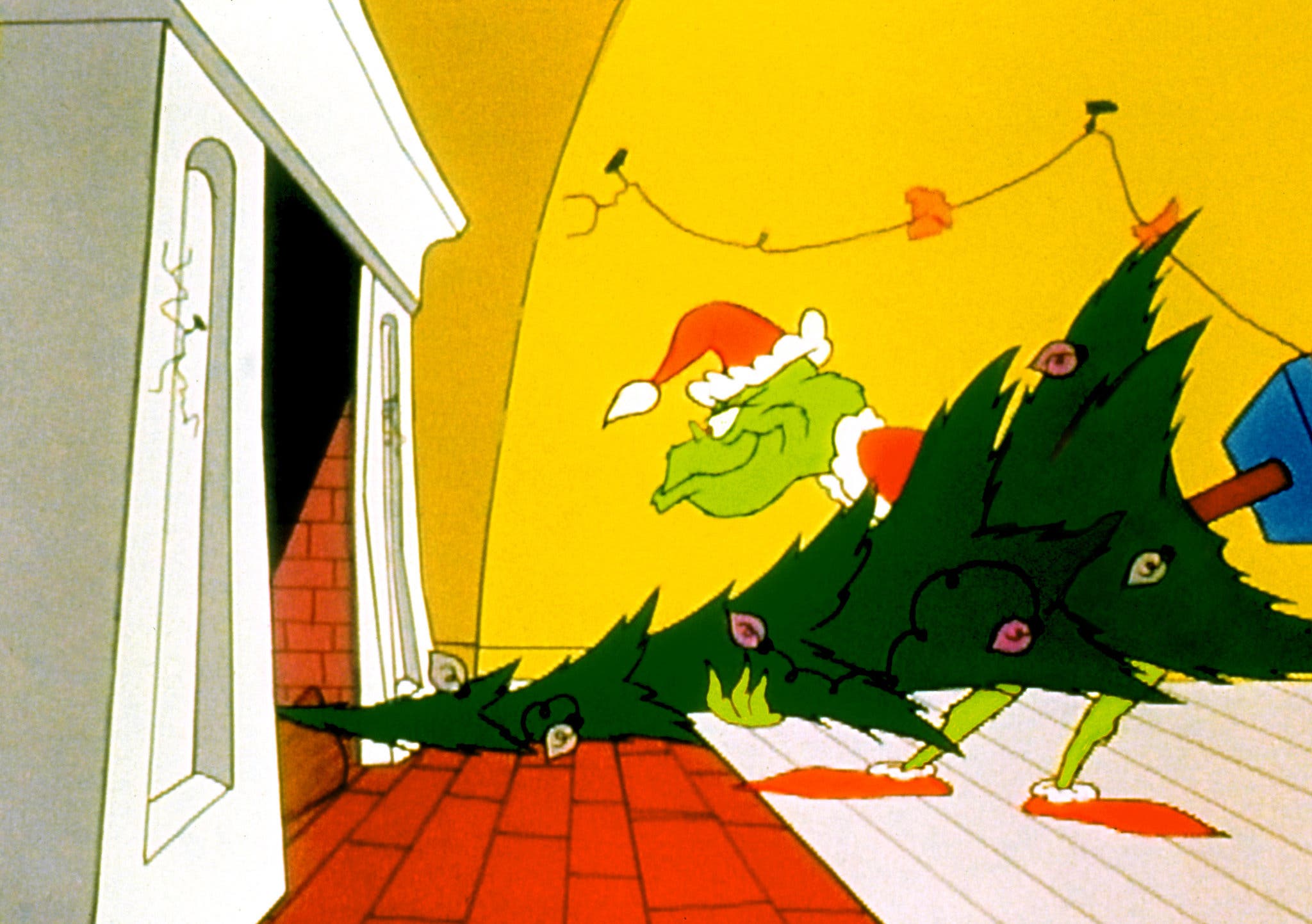
While the thought of breaking and entering another persons home is not something that most of us would condone, we can relate. There has been times in everyone’s life when we have been driven to the brink of insanity and had thoughts of doing things that are questionable. Watching someone act on those thoughts is interesting. To anyone that has ever thought “what if?” this is a glimpse into that reality. This is yet another way the reader feels involved in the story.

Because of that…

Once their mission is complete they travel back up north to dump everything that was collected. The Grinch is filled with excitement in anticipation of what all the Whos’ will find when the awake. “They’re finding out now that no Christmas is coming!” He waits to hear their disappointment, so he can rejoice in their sorrow.

We know that the climax of the story is coming and we are anticipating the outcome. We expect that the Whos’ will wake and be saddened by what they find, much like the Grinch.

Until finally…

To the Grinch’s surprise what he hears is joy. He is confused that Christmas still comes even though he had stolen all the material items that make Christmas. But then he comes to the realization that ” ‘Maybe Christmas,’ he thought, ‘doesn’t come from a store. Maybe Christmas… perhaps… means a little bit more!’ ” The Grinch then takes back all the presents and food and decorations to Whoville.

This is where the theme or message of the story is revealed. And it is the opposite of what we had thought would be the Whos’ reaction. It instructs us and provides meaning that, while at Christmas time there are presents and decorations and food and drinks and materialism, that is not the true meaning of Christmas. It is about the friends and family you share your time with. It is about giving. It is about celebrating together. It is about community. It is about believing in the magic that we all have inside of us. This is where I get those warm fuzzy feelings of Christmas.

And ever since then…

The Grinch then joins the Whos’ in their celebration. “And he… HE HIMSELF…! The Grinch carved the roast beast!

This is the resolution of the story. It eludes to the fact that from that time forward the Grinch participates in Christmas with the Whos’. And I’d like to think that he is no longer an outsider. The Whos’ accept the Grinch into the community the whole year. In the end this leaves us with a sense of happiness and the belief in the magic of Christmas. The ending inspires us to live the true meaning of Christmas.

A Classic Christmas Tradition

As you can see the story has a good foundation. The story spine shows the simplicity of the timeless tale. And the 4 I’s of good storytelling definitely hit the mark. Because of this How the Grinch Stole Christmas has had longevity and a timelessness that has been proven time after time in the many different adaptations of the tale. From the first animated cartoon, to the live action movie, a full length animated movie and even a Broadway musical, audiences through the generations have embraced the true meaning of Christmas.

Categories
Uncategorized

Love You Forever

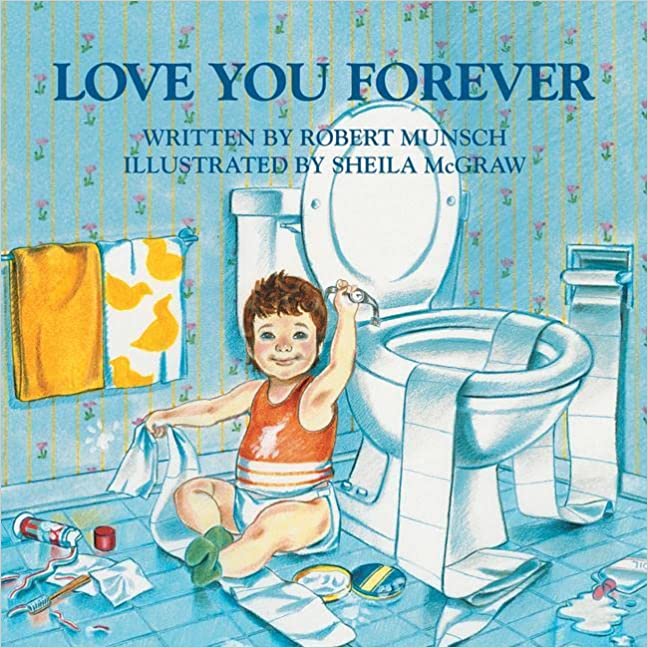
I will never forget the first time I read, Love You Forever, a 1986 children’s book written by Robert Munsch and illustrated by Sheila McGraw. While the book has been in circulation for over 30 years, I encountered it for the first time just a few years ago when I became a new mom. I still remember the feeling of disbelief as the book I thought would be a light read with cute pictures had unexpectedly moved me to tears.  

The story is centered around a mother who sings a lullaby to her sleeping son during various stages of his life. As you watch the son grow, you see the mother go through the many challenges of raising a child, but despite all the struggles she comes back to her son at night to express her unconditional love, even as she becomes weak and approaches her final days. 

What I loved about the book 

The book stood out to me in many ways and while it is considered a children’s book, I would argue it is more so a book that provides many lessons for parents or caregivers. It triggered an emotional connection for me as a mother as I identified with the hardships of the mother in the story, especially the moments when she wanted to sell her son to the zoo! However, at the same time it depicts how a mother’s love is resilient and while you test her in many ways, she somehow continues to love you through and through. 

Reading this story also allowed me to reflect upon my own relationship with my mother and the many ways I pushed her patience while growing up. The story moves you to appreciate loved ones in your life a little more and truly value the time you have with them as we go through the circle of life. 

Why it is good at storytelling 

This book is particularly good at story telling because it covers all the four I’s that are needed to create an engaging story as indicated by Ashley Fell in “Why storytelling is so powerful in the digital era”. The story captured my interest and maintained my attention throughout the book as we moved through each stage of the boy’s life.  It instructs us by providing me with meaningful reflections on my own relationships with my son and my mother. It involved me as I could identify with the character in the story and saw myself in the mother.  Finally, it inspired me by encouraging me to cherish time with loved ones and recognize that there will always be hardships throughout life but no matter what you do, you have people that will always be there. 

Many feel that Love You Forever is a divisive book. Some like me think it is a beautiful story of motherhood and the circle of life, while others hate it and incite ridicule that it is okay for an old woman to sneak into her adult son’s room and pick him up. Whatever the case, for a children’s book, it is an engaging story that brings out emotions and leaves you deep in thought. and would make the perfect gift for an expecting parent. 

Categories
Uncategorized

The Little Mermaid… my childhood fascination.

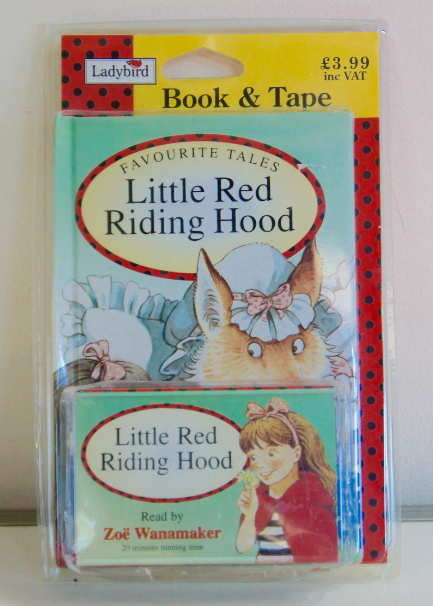
I remember the excitement I always felt when my parents bought us a new Ladybird book with its accompanying cassette. Yes, this is a story from when cassettes were a thing.

My sister and I attended a Francophone school. Born in a Francophone country, Lebanon, we only spoke and learned subjects in French. Although the Lebanese dialect is a spoken derivative of the Arabic language, classical (written) Arabic was only taught at my school as a language.

To enhance our learning, my parents would buy us a Ladybird book in Arabic with its accompanying cassette. That was the original form of an audiobook, which included narration and sound effects to supplement the storytelling. I can still remember the distinct beeping sound that indicated a page turn. We read Little Red Riding Hood, Sleeping Beauty, Cinderella, Hansel and Grettel, etc. But nothing was as magical, impactful, and exciting as The Little Mermaid.

Why was I excited? Because the story took place in the sea… a mysterious world that had a life of its own.

Let me share context to why I was fascinated by the sea. Living in Beirut, a city by the Mediterranean, we passed by the sea every day to and from school and witnessed the sunrise and sunset where the sun would disappear daily into the sea. My relationship with the sea was one of fascination and curiosity. Where does the sun go at night? What creatures live there? What do they eat? How do they sleep? Do they go to school? Do they sing? Do they live in tiny houses? These were a few of the many questions I asked myself staring at the sea.

Imagine this: I’m 7 years old and I get this new book. I held the book and I studied its cover: it’s about the sea… about a mermaid… fish… and a ship… Imagine how hard it was for me to sit still at the dinner table, with the book and cassette laying on the kitchen counter facing me. That day, we were having meat stew with peas and carrots. I don’t think I ever ate my dinner with no fuss the way I did that evening. I even finished all my vegetables and rushed to clean my dish. I was determined to avoid any distraction or unnecessary conversation that would delay me from grabbing the book, inserting the cassette into my dad’s Sanyo cassette player, and indulging in this magical story.

I believe the love story and sacrifice aspect was too complex for me to understand, but the story answered many of the questions I had: there were creatures who lived deep in the sea; they had a family; they sang; they danced; they had dreams, hopes, and wishes. I identified with the main character, the Little Mermaid, who was curious, adventurous, fun, and kind.

You know the story! It begins by setting the stage for what was going on in that magical world: the mermaids, their life, their family, etc. But the Little Mermaid wanted more. Forbidden from going to the sea surface, that was exactly what she wanted. On her 16th birthday, she goes up to the surface and witnesses the sinking of a ship carrying the prince. She saves him but while doing so she falls in love with him. She was so much in love that she was willing to leave her family in pursuit of her dream. Unfortunately (spoiler alert, this is not the Disney version), the Little Mermaid decides to sacrifice her life for love and ends up turning into sea foam.

Devastating ending? Yes! But the story is so capturing and impactful, that every time I look at the sea and see it foaming, I think of that story. The writers followed the Story Spine in such a masterful way. Once upon a time, there was a little mermaid. Every day she lived her life the way it was dictated by her family. But one day, she decided she was not willing to follow rules that limited her hopes and capped her dreams. Because of that, she went to the sea surface and found the love of her life. Because of that, she decided to undergo a traumatic life-changing metamorphosis. Until finally, and for love, she decided to sacrifice herself and turn into sea foam letting the love of her life live happily. And ever since, the Little Mermaid lives as sea foam. Yep! For love you do anything. It can’t get more magical than that!

I found the Ladybird’s Little Mermaid narration in English… now I am listening to it and feeling nostalgic.

Categories
Uncategorized

Interpreter Of Maladies: A journey beyond mind, body and moral!

Photo: https://images.app.goo.gl/fSip7oCn9fSBM31e9

Interpreter Of Maladies by Jhumpa Lahiri is a collection of nine short stories that won the Pulitzer Prize, the Pen/Hemingway Award and the New Yorker’s Debut Book of the Year in 2000. 

Lahiri tells the story of several characters as they try to find their place in the world. The book begins with a collection of short stories interconnected by their shared theme: what it means to be an immigrant or an outsider in America. In each story, a character feels like they do not belong—either because they have moved from another country to America or were born here but don’t quite fit in with those around them. Cultural displacement and the pathos of human loneliness cuts across the nine stories where the characters are continuously grappling with their identity.

I remember reading this book as a young girl, ready to leave home to pursue higher studies at Delhi University. What resonated with me was the universality of her characters and their struggle to find new meanings of familiarity and what they would eventually call or understand as ‘home.’ 

Appealing and Connecting

Structure

Lahiri employs the elements of the Story Spine much too cleverly. Although it is a collection of short stories, it places the nine stories in an order that adheres to the guidelines of good storytelling, including:

1. The Beginning 

2. The Event 

3. The Middle 

4. The Climax 

5. The End  

A perfect marriage of themes and language

Photo: https://images.app.goo.gl/8k5VoWqeUFjHDCEH6

One of the many strengths that Lahiri displays, along with the relatability and humanness of her characters, is the simplicity and clarity of her writing that makes for an instant connection between her characters and the readers. The characters that populate Lahiri’s world live in the tense duality of being exiles but are proud to have left India to build a prosperous life in the West. However, the central theme that emerges through colourful details of Indian tradition, cuisine and celebrations are that of the universal struggle of adapting to the ways of a foreign homeland without losing one’s original roots. Their pain and angst intertwine with that of the reader, making it an intensely personal experience. 

So whether it’s the married couple who rediscover each other after living together for years in the same house due to a power cut or the story which chronicles an affair between an aimless young American girl and a married Indian man – the stories probe into hope, pain, guilt, desire, dreams and temptation where Lahiri moves beyond a specific cultural identity, and plot to capture human elements, hence connecting to the very heart of its readers

Lahiri’s Women

Finally, the women in Lahiri’s stories bring to mind other immigrant writers such as Jamaica Kincaid, Maxine Hong Kingston and Zora Neale Hurston. They all offer reactions against their culture’s view of gender roles, combining quiet strength with courage and rebellion.

There’s a story for everyone! 

Interpreter of Maladies is both beautifully melancholic and seemingly uplifting in a cathartic way. The amalgamation of intense nostalgia coupled with the mundane quality of its characters’ everyday life makes this a story that has travelled well and beyond into the hearts of many around the globe. She is a master storyteller who knows when to pull in her audience for that personal experience, almost as if she is offering front-row seats with a promise of a special peek just for you. 

Categories
Uncategorized

Five Little Indians

A great story is one that is memorable, it draws the audience in and brings up emotions and relatable themes. I recently read the book ‘Five Little Indians,’ by Michelle Good, and upon thinking of a memorable story, this one popped into my head. I’m a woman who watches a lot of tv shows and movies, but this book sticks with me most. I grew up as a mixed-race Indigenous person who knows nothing about my family or my history. My indigenous father was adopted in the sixties scoop and my curiosity is spiking more as I get older. Where do I come from? Why is their so much intergenerational trauma? What is our/my story? The story Five Little Indians is not about my family personally, but it is about Canadian indigenous people and there struggles with and after being in residential schools. This story personally relates to me and the emotions I have been feeling this year especially with the data being released regarding the number of bodies being found on residential school sites. It has heroes to root for, a strong theme, and hooks you in with each chapter.

Lucy leaned back in her chair hands folder in her lap.

“They call us survivors.”

“Yeah.”

“I don’t think I survived. Do you?”

What is this story about?
This story follows 5 children who were taken from their families and sent to a remote residential school. The children are barely teens when they are released from the school with no sense of family, home, language, culture, or self anymore. These teens are left with nothing but a one-way bus pass to downtown East Vancouver to fend for themselves. The world around them does not accept them and the children must learn to overcome their personal trauma. As the children get older, they all find different paths, one is drawn to the Indian Movement, one is constantly in dangerous situations, one can’t stop running from his past, one spends time in prison, and one becomes a young mother. This story shows the emotional quest these children go through to find their place in the world and the effects of trauma and loss of culture.

In a simple context, this story can be described using Kenn Adams ‘Story Spine.’ This is a great outlining story device and a good way to deconstruct a story.

Once upon a time there was five young Indians who were forced out of their family homes and into a strange and isolating residential school.

Every day, they were tormented, abused, unhappy and missed their families.

But one day, they were released back into society. Given a single ticket into East Vancouver they were left to fend for themselves in a new world.

Because of that, they had a hard time finding work, friends, a place to live, and their place in society.

Because of that, they suffered from their own personal traumas and struggles to find themselves.

Because of that, they needed each other to move forward. Their lives crossed at different points but led them to better places.

Until finally, they found their own purposes. One joined an Indian movement and got back to her roots. One started a family. Others must learn some hard lessons but grew from their experiences.

And ever since then, they were known as survivors who went through hell and back and someone ended up okay.


Was this story fair to the people and ideas it represents?

Author Alison MacAdam, asks what questions should you ask before starting a story? One of the questions is, was the story fair to the people and ideas it represents. She asks it all the characters are represented equally; does it have multiple perspectives? The story, ‘Five Little Indians’ represents each of the five characters equally expressing all of their pains and individual stories. The book also does a fair job of representing Indigenous culture in Canada. Michelle Good is a Cree author with ancestors who attended residential schools and a strong story to tell.

Categories
Uncategorized

Country Music Stories: Coat of Many Colours

One of the best storytellers is Dolly Parton. Yup, you read that correctly! What makes her songs so good are the stories she’s able to tell. Her song, “Coat of Many Colours”, released in 1971, is a perfect example of storytelling through music. Even if you are not a fan of old country music, I’m talking about the original country music, you must admit most of the songs of this genre fit all the parameters for a great story. Great stories are universal. Great stories resonate with the audience by being relatable or emotional. Great stories have structure and purpose but are simple and focused at the core, and great stories have good characters, particularly a character the audience wants to see succeed. So, let me show you why “Coat of Many Colours” is truly a great story!

Great stories are universal, relatable, or emotional

Country music has evolved over the years and has become a mixture of many types of music, but it originated in the deep south among the poor working-class trying to survive off the land. Country music stories, like all other good stories, are relatable or emotional. “Coat of Many Colours” is a song about adversity and love, both relatable emotions. In this story, the little girl has a loving family and although she is teased for being poor, she doesn’t feel poor because of the love she gets from her mom. Most of us have felt love from a parent or guardian, most of us were probably teased at some point in our life. The descriptions Dolly uses in her story evoke emotion in the listener because they have been in a similar situation and, through the story, they relive those emotions helping them feel the story.

Great stories have structure and purpose but are simple and focused at the core

While “Coat of Many Colours is told through music, it still has structure and a purpose. Dolly starts by describing how their family was gifted a box of rags and because they were poor and fall was coming, her mother used the box of rags to make her a coat. Dolly watched her mother make this coat and put her love into it. She was very proud of her coat and while their family didn’t have money, she felt rich wearing this coat made with her mother’s love. At school, she was teased by the other kids because of her coat made of rags and for being poor. At the end of the song, Dolly tells the listener how she dealt with the bullies. The ending reveals the purpose of this story. We see a little girl unphased by the teasing, full of love from her family and proud of where she comes from. This story has a structure, a clear beginning, a middle, and an end. There are also events throughout the story that create difficulty for the character and in the end, we see the resolution.

This isn’t a long song. Dolly’s stories are simple and focused while still including details that draw in the listener and paint a picture for them. The music that accompanies the stories also helps to shape the mood and emotions that go with them.

Great stories have good characters

The main character in “Coat of Many Colours” is a sweet innocent little girl. She explains that she knew her family was poor but never felt poor because of the love she always received. Her innocence didn’t allow any of the adult stresses to bother her. She is a character you feel for at the beginning of the story because of her situation. You then feel for her again when she is teased. But, in the end, you feel proud of her for how she handles herself and for what she can see despite her family’s financial situation. She is a great character that is endearing and lovable.

While music isn’t necessarily the first medium you think about when you think about a good story, country music has always been based on telling stories and many of the songs of this genre tell great stories. Examining “Coat of Many Colours”, the storyline is relatable and evokes emotion which is enhanced through the music. Although the song is short, it is focused and follows a structure. Lastly, it has a great character that we can easily fall in love with. Using the principles of great storytelling, Dolly Parton’s “Coat of Many Colours” is truly a great story.

What is your favorite country music story? Let me know in the comments.

Design a site like this with WordPress.com
Get started