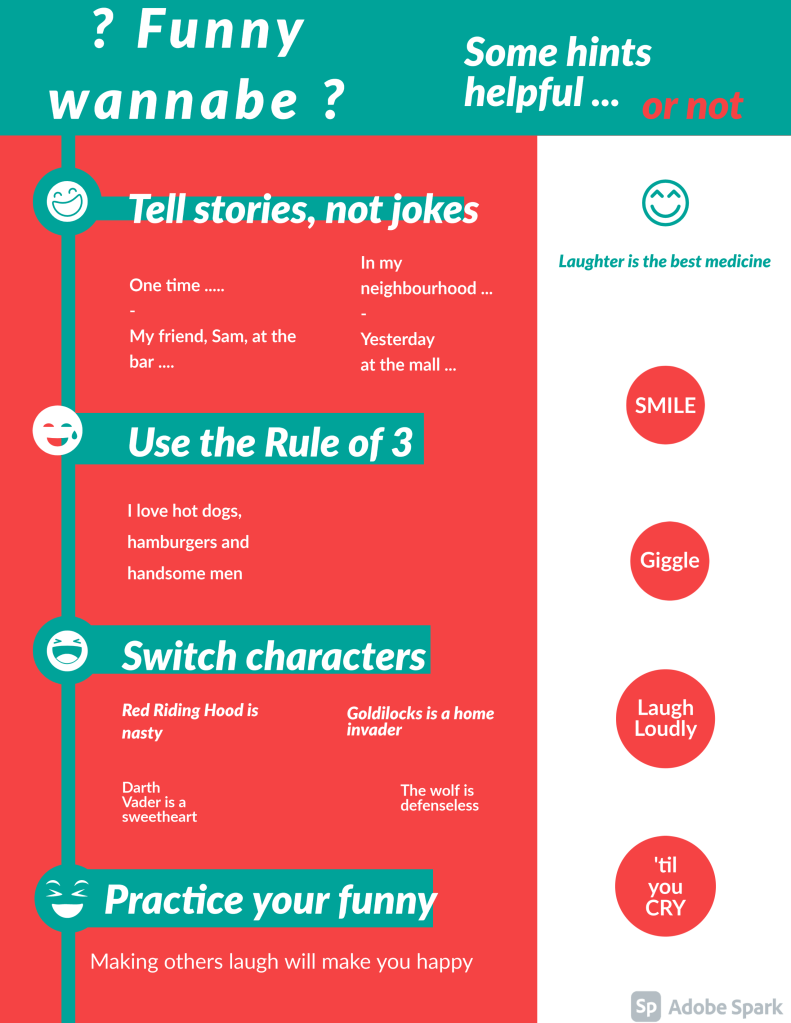
 So what’s the message?
ssssh SEND SOME SMILES SOON HOPE
So what’s the message?
ssssh SEND SOME SMILES SOON HOPE
So what’s the message?
ssssh SEND SOME SMILES SOON HOPE
So what’s the message?
ssssh SEND SOME SMILES SOON HOPE
Memes and GIF’s are funny. Some are hilarious. They are meant to make us laugh. At their core is joy. Their sole intent is humour.
What makes us laugh?
What tickles us, brings a grin, smirk, smile, sneer?
How about that giggle, chuckle, howl, roar?
What makes us laugh? How is humour funny?
Inquiring minds want to know!
To me this guy is hysterically funny?
@domdunkhousee is huge on TikToc. 2.6 million likes 320,200 fans
He has pioneered the art of FACE DANCING.
Explaining Funny : Theories that are fails
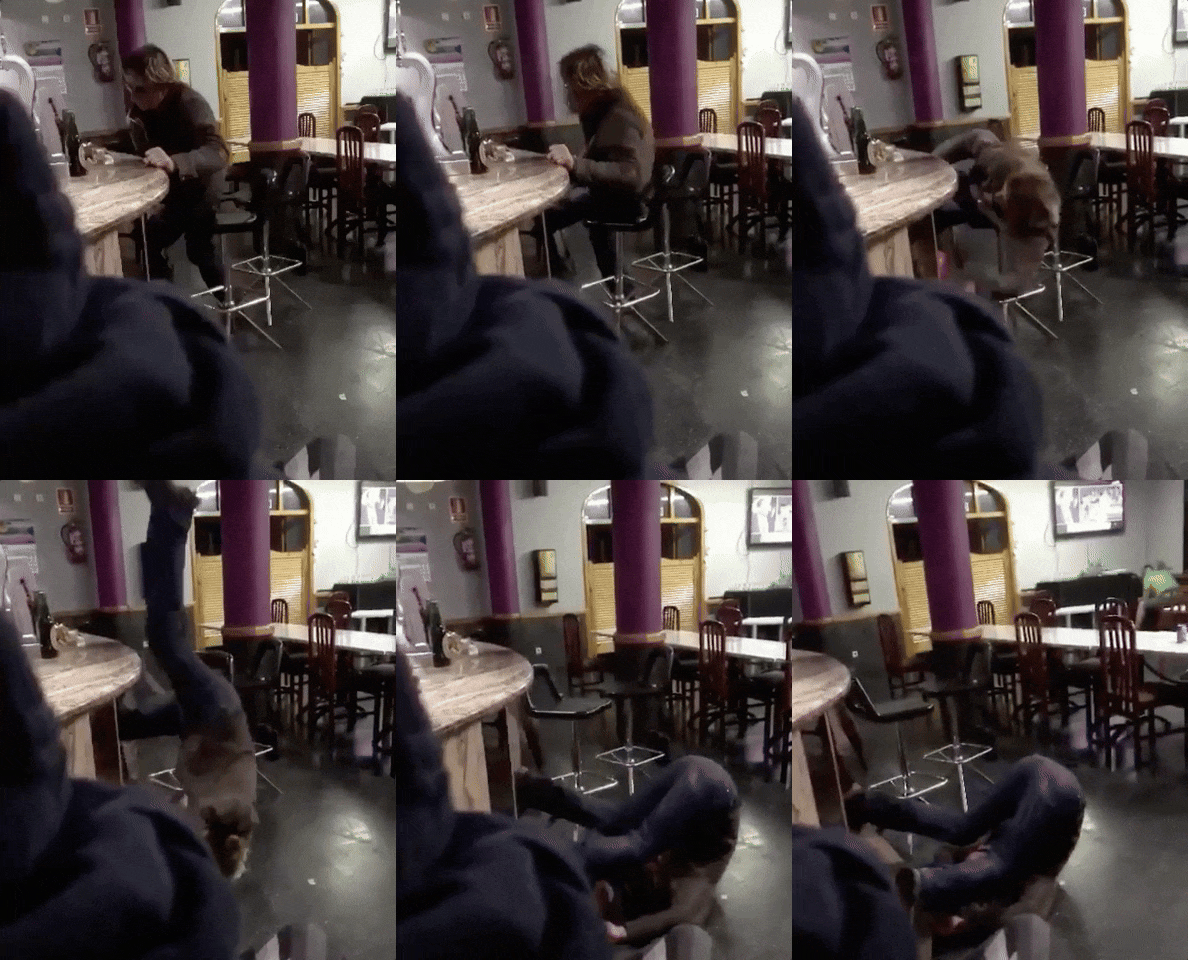
Trying to explain what makes something funny dates all the way back to Plato and Aristotle. These philosophers mused on what makes us ahhh-mused and called it, the Superiority Theory.
Simply put, people find amusement in the misfortune (yikes) of others because it makes them feel superior (oh boy). Slapstick and teasing have a place in this theory but not much else.
via GIPHY OUCH!
Then a bunch of centuries go by.
Sigmund Freud, the Father and Founder of Psychoanalysis, (you know, the Oedipal Complex guy) presents his Relief Theory. Basically, he believed that laughter is the way people express:
2. release their psychological tension
3. reveal their suppressed fears and desires
4. overcome their inhibitions.
5. yada, yada, yada ……
Relief Theory explains the fun in dirty jokes.
Not so much when things are “punny”.
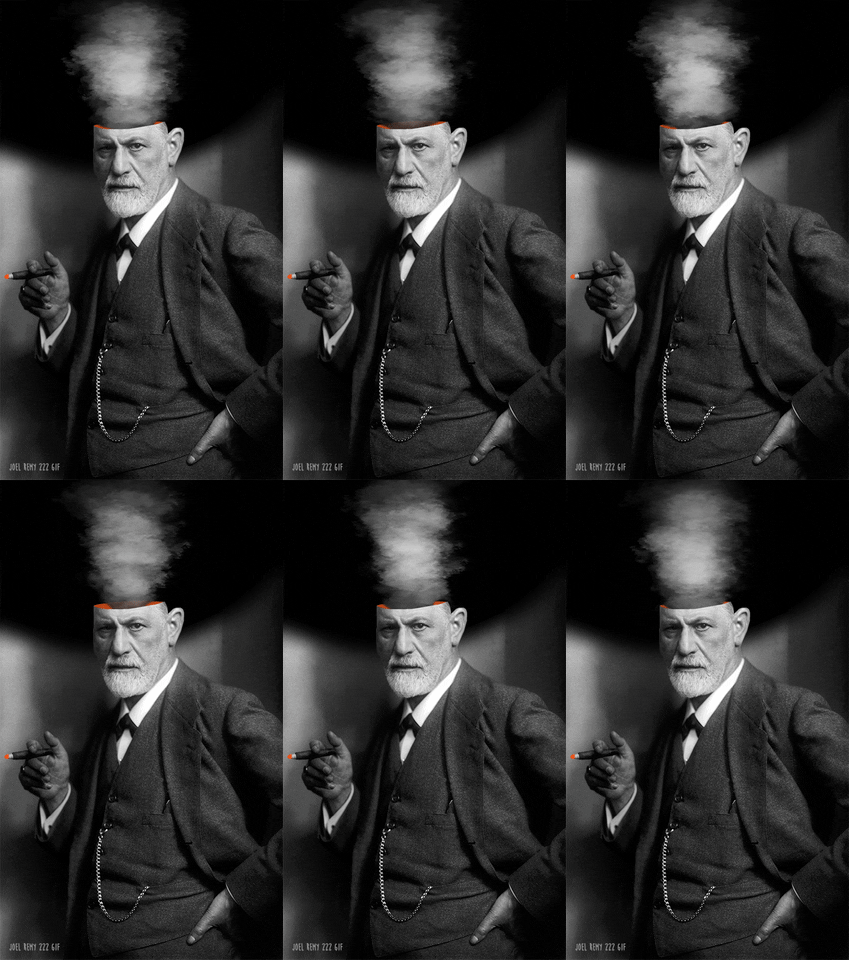
Puns can be seen as linguistic violations that still make grammatical sense.
“Today a man knocked on my door and asked for a small donation towards the local swimming pool, so I gave him a glass of water.”
“I wrote a song for a tortilla. Well, its more of a wrap.”
“You didn’t hear about the three big holes in the ground? Well, well, well.“
Overtime, continued research resulted in the Incongruity Theory. It has a few variations. Basically, it says that people rely on preconceived notions and expectations. When what they expect to happen doesn’t – bingo! It’s funny. The unexpected, that inconsistency makes us laugh.
EXPLAINING FUNNY: the theory that works
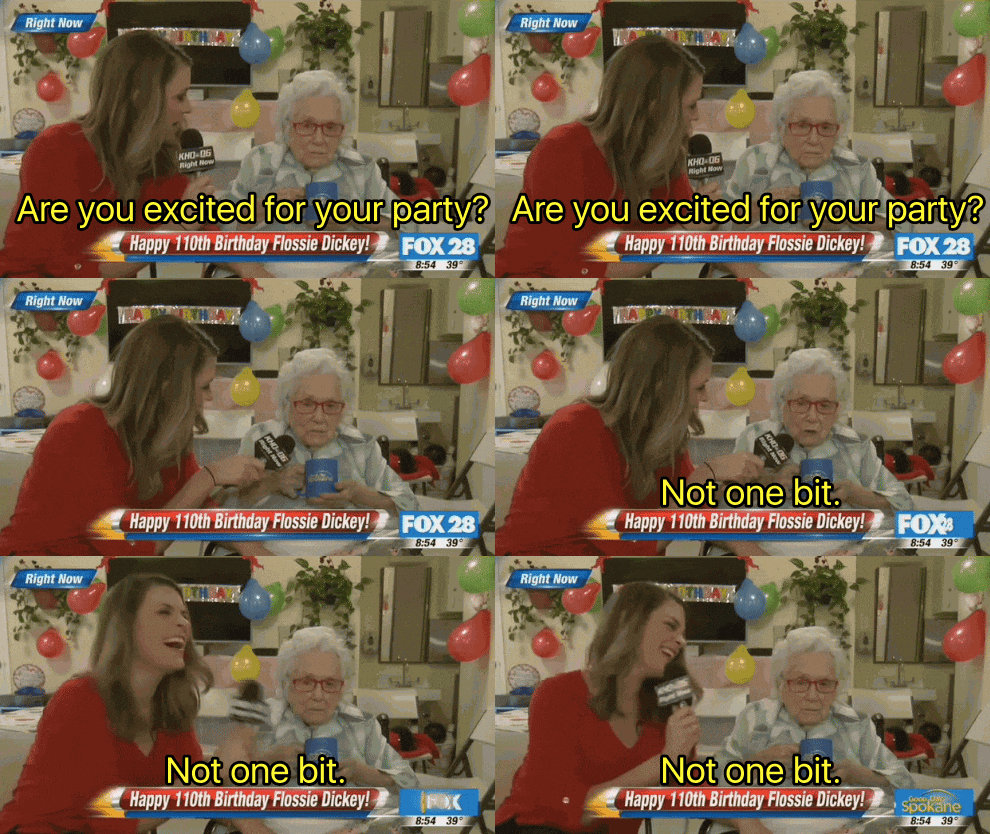
This is The One, Neo, the Benign Violation Theory by Peter McGraw.
When something seems wrong or threatening but is simultaneously okay or safe, it becomes FUNNY.
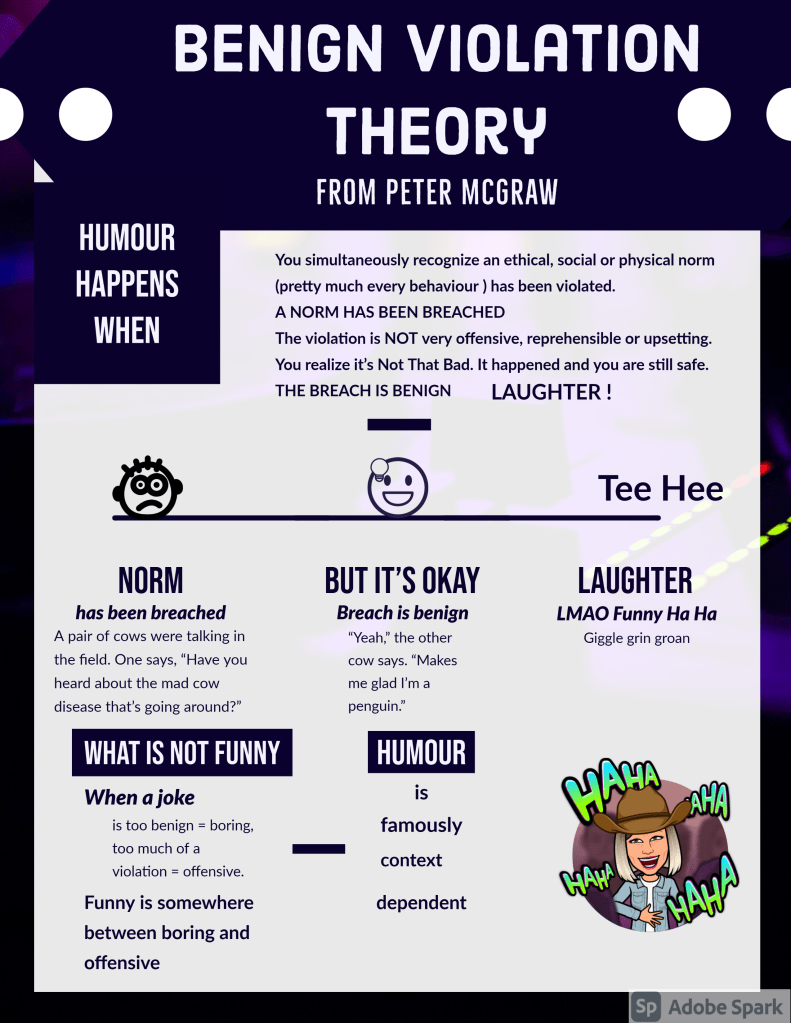
A Funny Aside: “tickling involves violating someone’s physical space in a benign way. People can’t tickle themselves—a phenomenon that baffled Aristotle—because it isn’t a violation. Nor will people laugh if a stranger tries to tickle them, since nothing about that is benign”. Peter Warner, Bold New Attempt at a Unified Theory of Comedy.
There are a couple more theories of humour that deserve mention but that’s all, mention only. The Theory of Evolution: Humour
and
Quantum Theory As It Relates to Why Jokes Are Funny.
Seriously, OMG!
Research into what makes us laugh, what we find amusing continues. Because it all happens in our brains, it has been very difficult to isolate and identify.
No problem for the rest of us.
All we want to do is LAUGH. And share a funny, uplifting moment.
In 2020 we went camping, as we normally do, at our usual location by a small creek, and we ended up being in a flood and wrote-off two vehicles to get out. As if COVID wasn’t enough for 2020!
Every year we camp in the bush on crown land close to a little creek near Lodgepole, Alberta. It was July long weekend, 2020, and my family and friends headed out to the camp to set up for an extra-long weekend. Canada Day fell on a Wednesday, so most of us went out on Tuesday night and planned on staying until Sunday afternoon – almost a week out in the bush – where we all planned on spending some socially distanced time together after the world hit us with COVID only 3.5 months prior.
It was raining when we arrived, but we were optimistic that it would dry up soon. Plus we always found a way to have fun, rain or shine.
After the first night, my parents took a look at the creek and noticed that it rose an entire foot overnight, which was pretty alarming. My parents were parked only 3 feet from the creek, and my boyfriend and I were in a tent, maybe only 20 feet further up. But the forecast said that it was going to stop raining; so, we had our breakfast and coffee, spent the day playing games under tarps and umbrellas, and before we knew it, we were around the fire enjoying the evening rain-free.
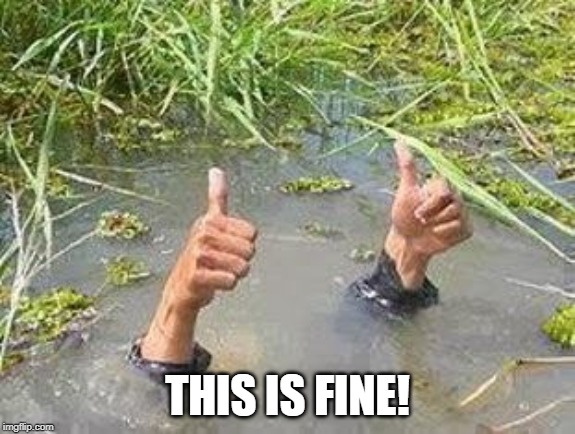
After we went to bed that evening, it started to rain a little more, and when we woke up the following morning, my dad told me that the creek was continuing to rise, and now is only inches from going over the banks. We were now moving to higher ground. My parents hooked up their trailer and moved within a few minutes, and my boyfriend and I took down our tent and reset it up, also higher up. It wasn’t long before our little camp was surrounded by water.
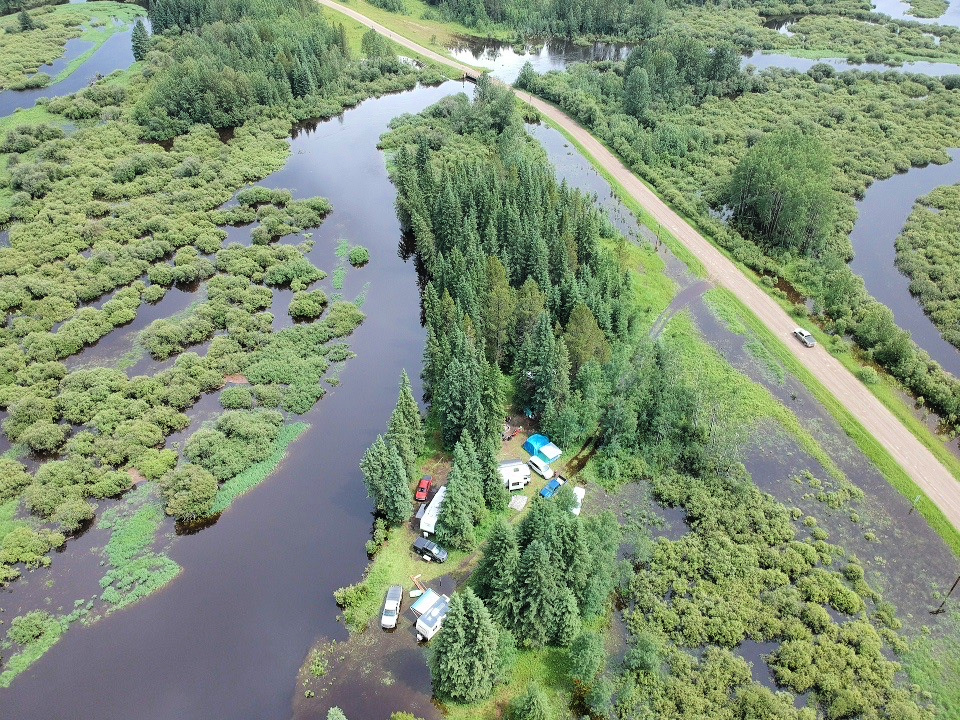
We went back to the creek and started putting stakes in the ground to mark the rise of the creek, watching for the creek to crest. A “crest” is the level at which a river peaks before it goes down. Our day consisted of looking at weather forecasts further west from us and watching the water rise above the stakes we had staked. New stakes were added, and we carried on with games and another dry night around the fire.
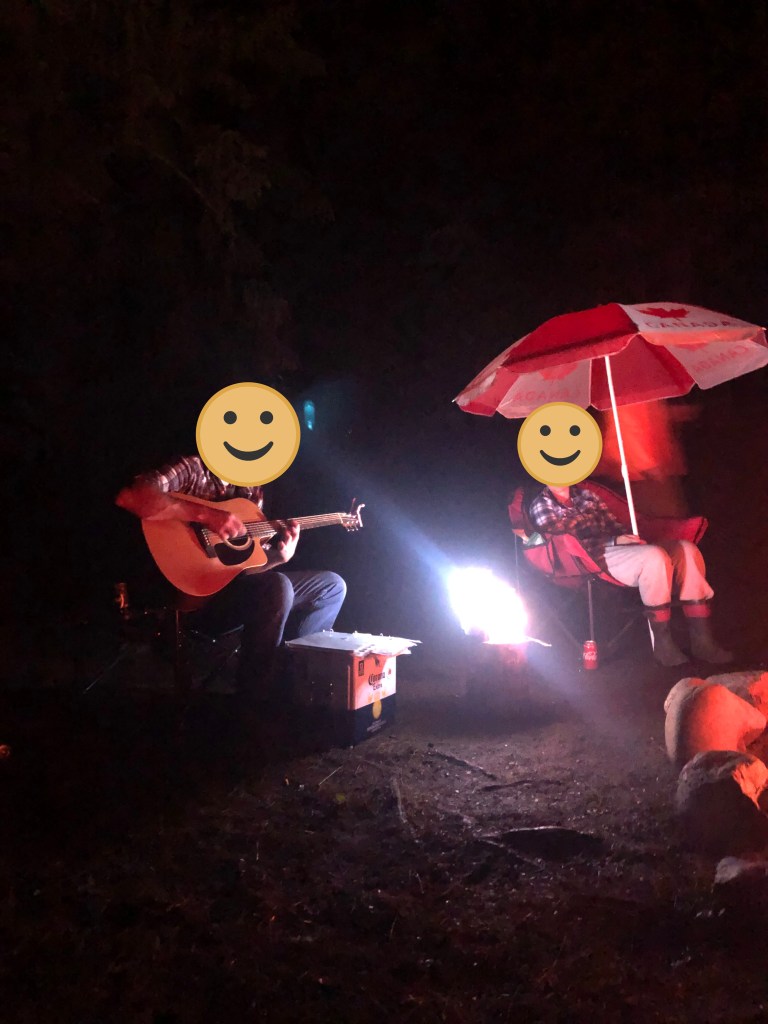
Sploosh!! That was the sound that woke us up the next morning, as we heard my cousin drive in through a few feet of water to get to a spot where he wanted to camp. We all welcomed him to our island and showed him all of the stakes we had placed to watch the water. The rain was letting up again and we had a full day of mostly dry weather, but really, we knew that didn’t matter. What mattered was the weather that was happening upstream in the mountains. This is where the overflow was coming from. We also knew at this point; we were stuck until the creek crested and receded. My cousin set up his trailer, and within hours, he was in water. Being a carpenter with a few pieces of wood in his truck, he built himself a pier to get to his trailer.
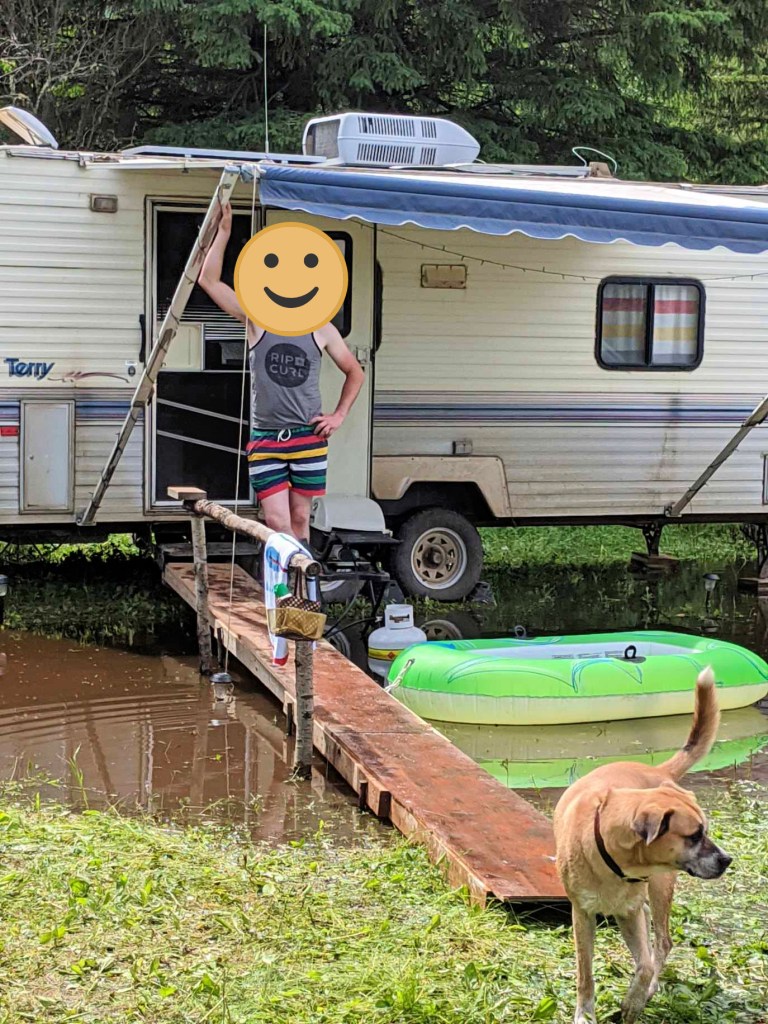
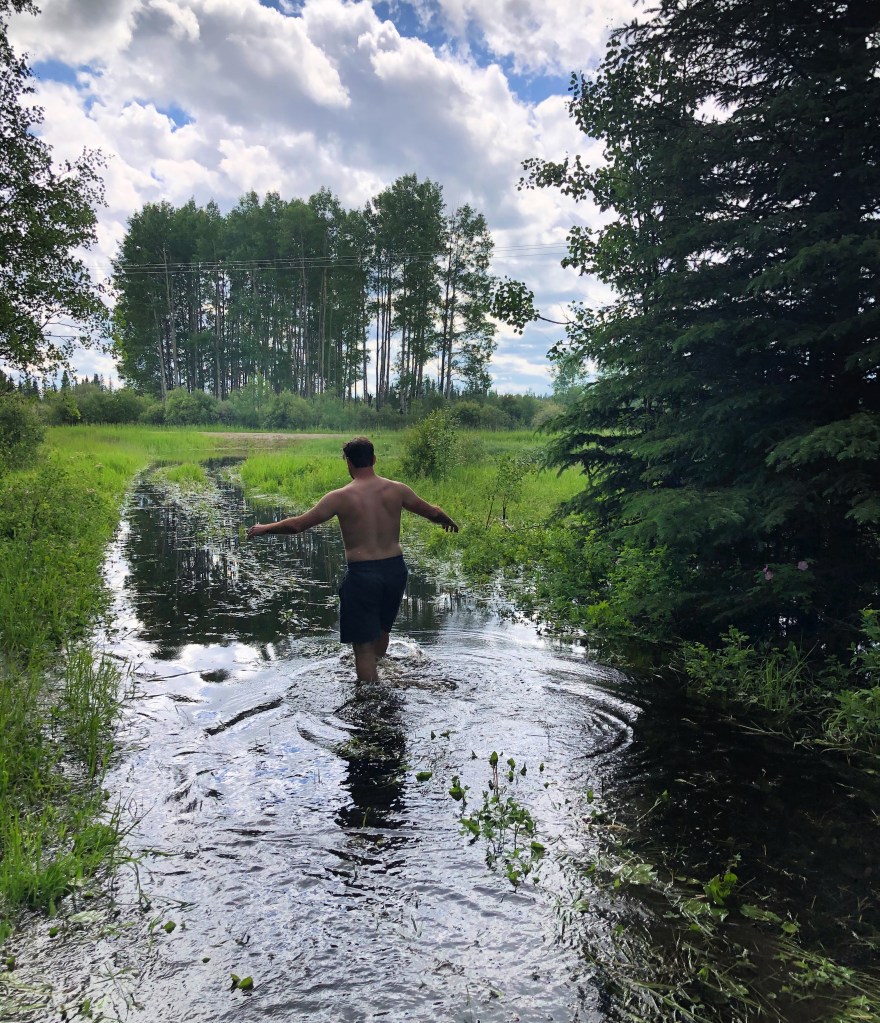
Water was still rising, and rising fast. We had planned on being out there for 4 more nights anyways, so we decided we mind as well make the best of it and find entertainment in watching for the water to change against the stakes. Once that started going the other way, we could really celebrate! Some of us (not me) decided to try swimming in what was once our road to get into the camp!
On the second last day, the water was slowly receding, but it was apparent that it wasn’t going to be fast enough to dry out the way out before we leave. Most of the group was hauling trailers, which was scary, and we had a two-wheel-drive vehicle. Also scary. We made plans that the big 4X4 trucks were going to go out first so we had someone to tow us out if another vehicle got stuck. Most of us waited on the road watching each truck come out through so much water.
Check out the video of my uncle driving his truck and trailer out of camp:
https://platform.twitter.com/widgets.jsThe Great Flood of 2020 – a short story I wrote for my #EXSM3989 class – this video is of my uncle, getting his truck and trailer out of our camp, after 6 days of flooding. pic.twitter.com/sYMfVrp5mQ
— Chews and Brews (@chewsandbrewsca) December 5, 2021
When it was our turn to go up the hill through the water, we decided since we were the only one with only 2-wheel drive, we would attach a tow rope to the front chassis before we took our turn through the water. Low and behold, we couldn’t make it up the hill through the water and had to be towed out. My cousin’s Jeep also got stuck on the hill but made it out without a tow. That didn’t matter too much since both the Jeep and our 2-wheeled vehicle had to be towed back to Edmonton – both ended up with water in the engine, and ours was written off completely.
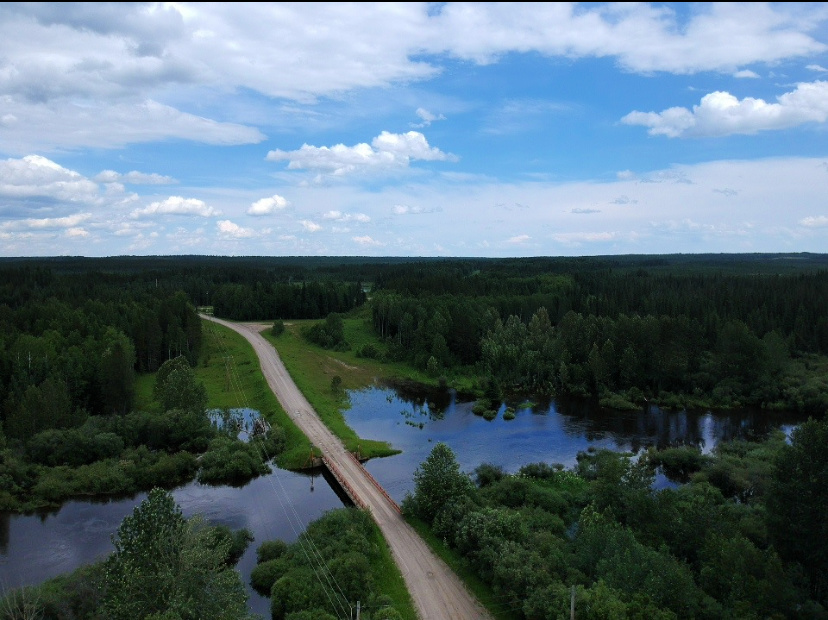
We spent a few hours on the road waiting for the tow, brought out the snacks and played some tunes. In times of what seems like a crisis, my family and friends always find a way to make the best out of a bad situation. We never panicked (even though maybe we should have), and we stuck it through the whole camping trip together (even though we probably should have left after the creek rose a foot in one night). We have a great story to share and more camping skills under our belts. One rule of thumb – never go camping without rubber boots! I couldn’t have imagined walking around camp in anything but!
In the end, we were all okay (except for the vehicles), and we went back camping in August 2020, and everything was completely dry like it never happened.
All of the photos and videos are also posted on Instagram.
In 2006, the research project TRACE (Teens Report on Adolescent Cannabis Experiences) was launched. Researchers at the Nursing faculty at the University of British Columbia strived to understand the context in which youth cannabis use took place. The ‘data’ of the research consisted of interviews with teenagers. The research team interviewed 77 teenagers who shared their thoughts and experiences with cannabis.

Of course, of course, let me explain why this is relevant.
The study uncovers that many teenagers use cannabis to deal with feelings of distress. These feelings could be depression or/and anxiety. Additionally, teenagers were NOT aware of resources that could help them alleviate their feelings of distress.
Considering these findings, is NOT surprising that youth (15-24-year-olds) are age group LESS likely to seek help for mental health problems. Ultimately, these unattended mental health problems can affect youth academic, interpersonal, and societal spheres. That’s why it’s important.

Shortly after, the team involved in the TRACE project started rolling out articles. These articles addressed smoking cannabis considering gender, the effect of school staff on students’ cannabis use, smoking cannabis in nature, and using cannabis to relieve feelings of distress.
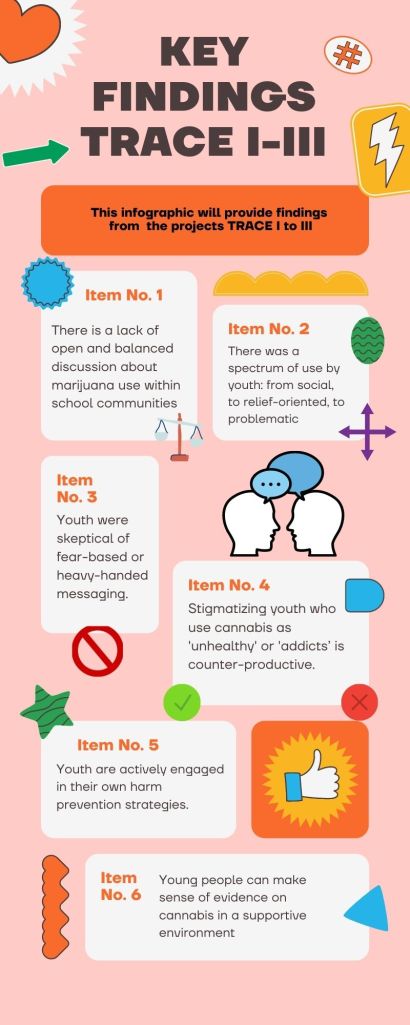
The projects TRACE I -III uncovered essential findings, which can be found in the infographic below
Based on the findings of TRACE I and II, the research team put together a film as part of TRACE III. Cycles is a film that embodies knowledge translation by exploring how high school students engage in decision making as to whether to use or not use cannabis. The film is a fictional drama that revolves around two main characters, teenagers. The film portrays how different factors influence teenagers to use and not use cannabis. It is NOT a moral tale; however, it allows for the viewer to reflect on the consequences of potentially consuming cannabis.
Moreover, the film calls the viewer to ponder the complex context of cannabis consumption, which reflects reality’s decision-making. The film can be used in classroom settings as an educational resource. There is a Facilitator’s guide with lesson plans, designed for teachers or any individual who decides to facilitate the session.

TRACE IV was carried out between 2017- 2018; this consisted of conversations with PARENTS of teenagers who have used cannabis. The researchers wanted to understand how the conversations took place and if any resources could facilitate these discussions.
The findings uncovered that parents who use cannabis have been excluded from conversations. Parents believe that a harm reduction approach should be prioritized or, at a minimum, a pragmatic “abstinence-plus” approach. Parents who consumed cannabis felt stigmatized, impacting the context for the conversation with their adolescent children.
Based on the data of TRACE IV, there have been two publications so far, one article that addresses the assumption that parents are the best cannabis use prevention and analysis of resources available for parents.

You may think that there will be no more TRACE projects, 4 are enough, but NO

Currently, we launched TRACE V. What are we trying to study now? Youth who may have experienced health or social inequities and use cannabis.
The GOAL is to identify how marginalized youth (outside “the mainstream”) perceive the potential risks of using cannabis and including youth as co-developers of harm reduction messages…..through Digital Storytelling

So far, we have talked with 33 youth ( ages 17-24) across Canada. These people have been kind enough to share their experiences with cannabis and personal life experiences with what I like to call health and social struggles, including mental illnesses, discrimination, chronic illnesses, trauma, child maltreatment, and low income.
TRACE V has its own Instagram, where you can find its awesome study flyer (tracev.letstalk) and a video honouring some of TRACE’s accomplishments over the last decade. Additionally, the link in the bio leads to a linktr. ee that provides links to articles, the Cycles video, and links to cannabis education.
Thank you for reading; consider yourself informed!
I’m not sure how many of you have had to pay attention to youth sports lately, but before Covid-19 you could most likely find a team for your youth to join. We are almost 24 months into Covid-19 and in central Alberta we had 36, 14 year old girls trying out for 12 spots on one volleyball team. As you can imagine that leaves a bunch of girls looking for places to play. A lot of the communities these girls come from do not have gyms at the recreation facilities and with Covid-19 the school divisions have not allowed user groups to rent the gyms even though they have multigroup user agreements. Here is a look at how competitive this year is to make a team.
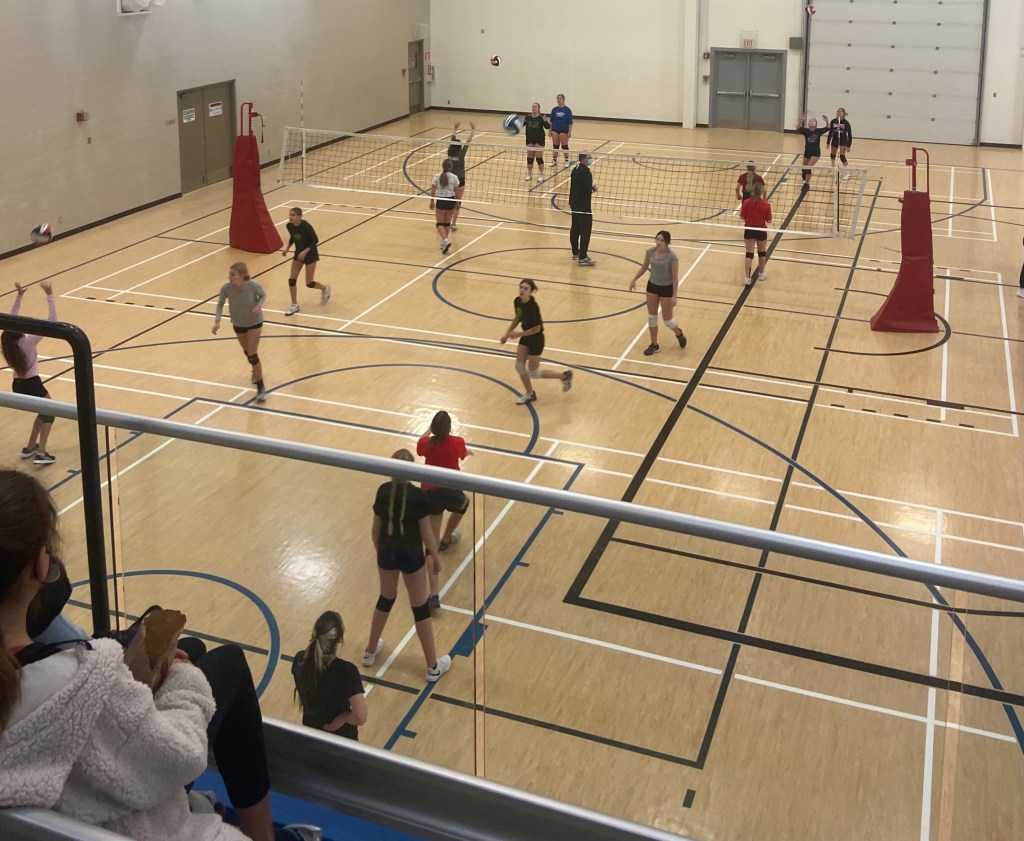
This try out was 4 hours long, it started at 10 am warm up to be competed before hand. Moving onto some rally game play.
Then off to H.I.T.T training because the next day is new set of tryouts with 65 girls and 24 spots!
#volleyball
https://www.instagram.com/stories/socialmediabydesign.ca/2719390329408307851/
It can be difficult for a company to connect a brand with an audience, especially in our current fast-paced media climate and with so much competition in the marketplace. One of the best ways currently to promote a product and drive engagement is with brand storytelling.
Brand storytelling is an exciting marketing tool that uses the elements of storytelling to connect to an audience and help make a brand or company more relatable. Stories about either fictional or non-fictional people or situations can span across social media platforms and increase a product’s visibility and popularity with a community.
If you’ve got content, share it. If your company helps the community, make it known. Involve your customers in your brand.
-Megan Wenzl, “How to engage customers on social with brand storytelling”
Audiences will trust a brand that provides trustworthy resources, participates in the community or stands for something they believe in and allows the audience to participate via social media campaigns.
People don’t want to be friends with your business; however, when you add a human element into your content marketing efforts, they will feel like they know the characters of the story you’re trying to tell.
-Vanhishikha Bhargava, “Why Storytelling and Content Marketing are a Match Made in Heaven”
Building that story across multiple platforms may seem like an overwhelming task, but there are guiding principles that will make it easier to not only expand a company’s reach but also build a sincere reputation.
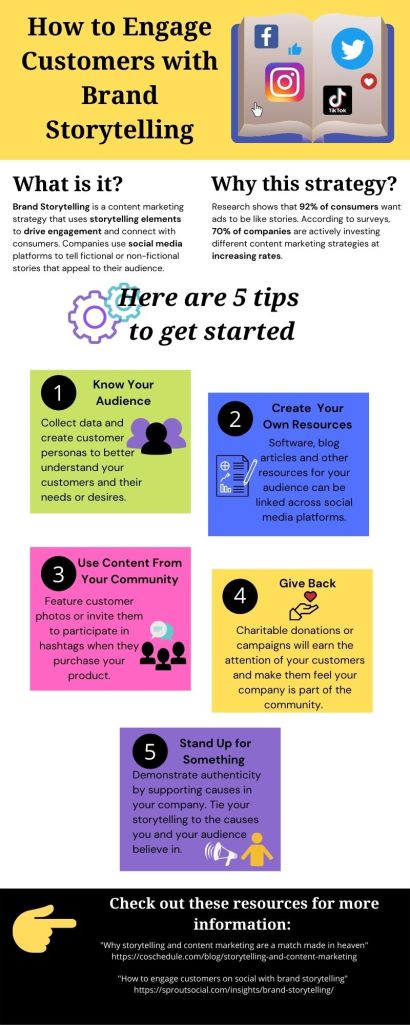
Below are some interesting truths about brand storytelling and five ways a company can utilize it to the fullest potential:
Sources:
Bhargava, Vanhishikha. 2021. CoSchedule Blog. “Why storytelling and content marketing are a match made in heaven” https://coschedule.com/blog/storytelling-and-content-marketing
Wenzl, Megan. 2019. Sprout Social. “How to engage customers on social with brand storytelling” https://sproutsocial.com/insights/brand-storytelling/
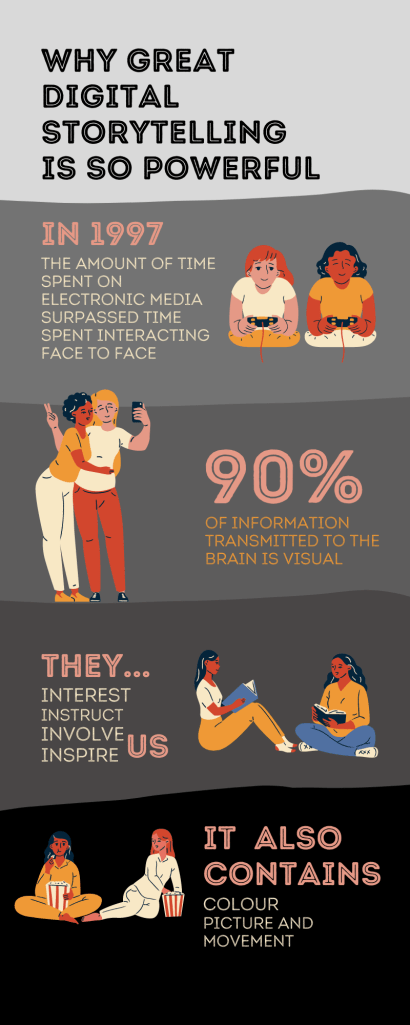
Storytelling has shifted overtime from word of mouth, to print and Shakespearean plays, to it’s most recent form in digital. Great digital stories contain these key elements that keep people engaged. See why great digital storytelling is so powerful.

Storytelling is a fundamental aspect of our lives. It doesn’t matter where you are in the world, chances are you’ve heard a few stories and have told some too! Stories are told in many different ways – by spoken word, in written format, by performance on stage or on tv, in graphic format, and the list goes on.
So, how do you tell a story? So much research has been done and so much has been written about storytelling. There’s actually a formula to it, and while there are several different frameworks you could follow, such as the Story Spine, Pixar’s rules, or the 5Ws, among others, they all inform essential pieces of the storytelling puzzle.
Stories aren’t limited to children’s books or adult fiction. They are widely used in all aspects of life, including business where your brand story helps attract customers and ultimately sells your product or service.

The channels in which you can share your story are ever expanding and they provide the opportunity for creativity. This means you can take advantage of visual storytelling and include images, gifs, memes, infographics, video, and all of sorts of visual aspects to enhance your story and make it more memorable in the minds of your audience.
And that’s what it comes down to. You want to make your stories stick in the minds of your audience and visual cues are amazing at helping with that. After all, the human brain processes visuals 60,000 times faster than it does text.
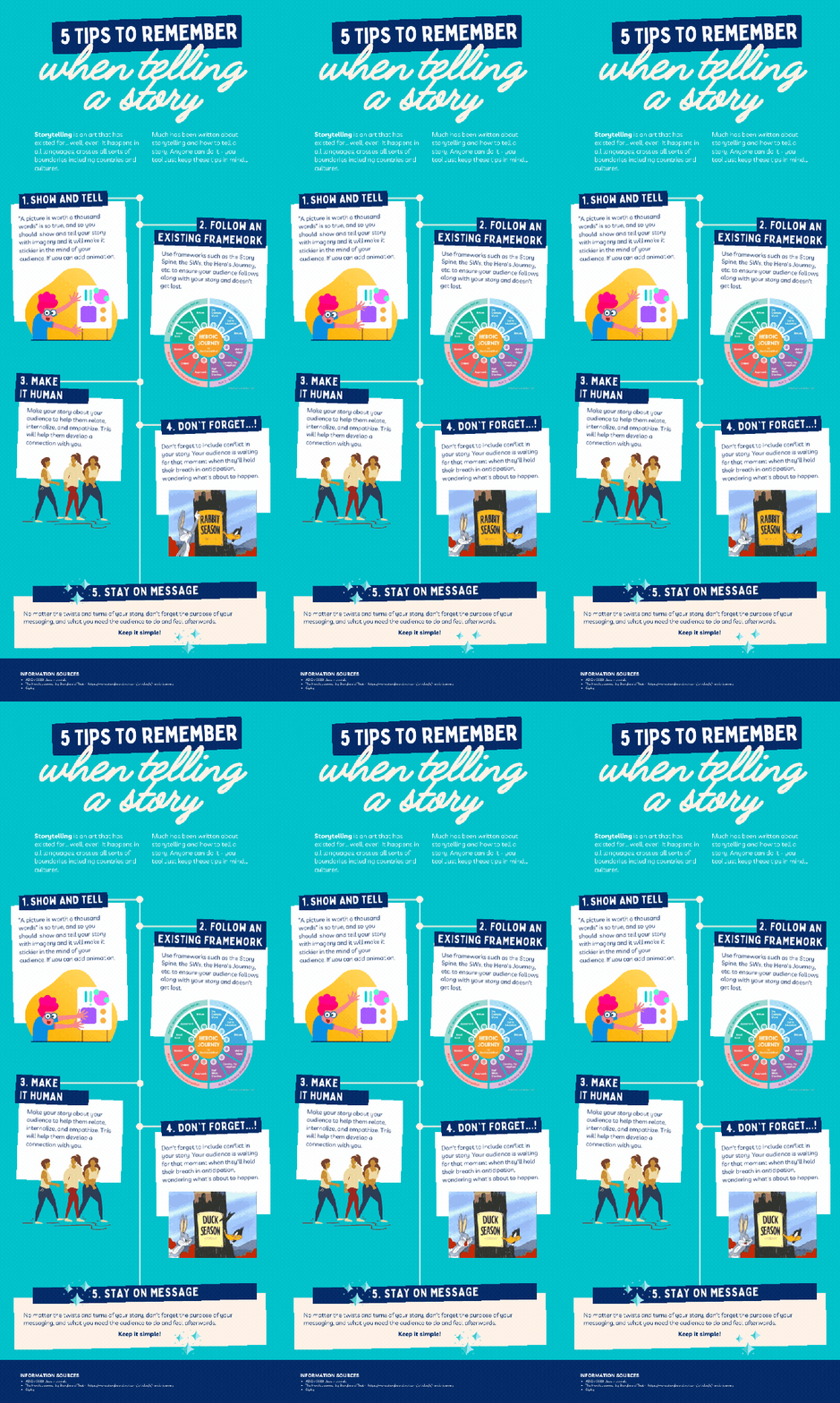
When thinking about writing your story, whether its for your personal following or for your business, here are a few tips to remember:
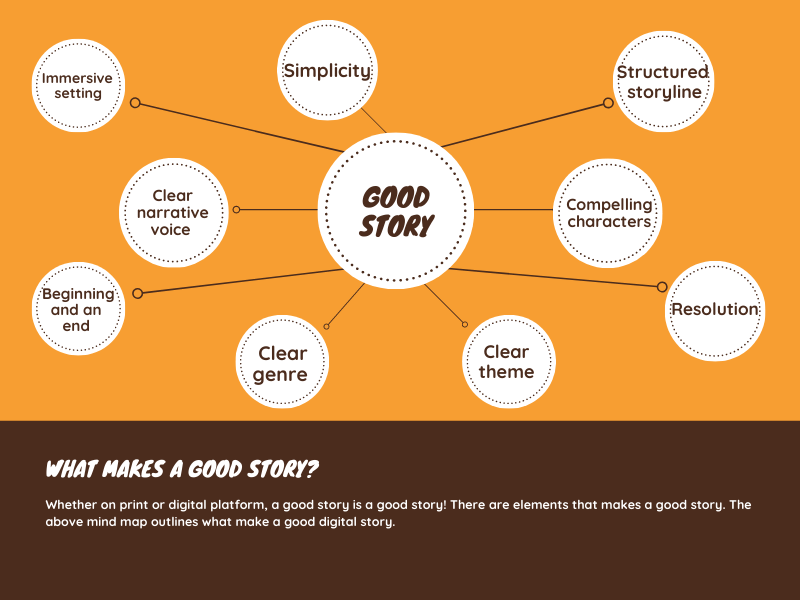
Whether on print or digital platform, a good story is a good story! There are elements that makes a good story. This mind map outlines what make a good digital story.
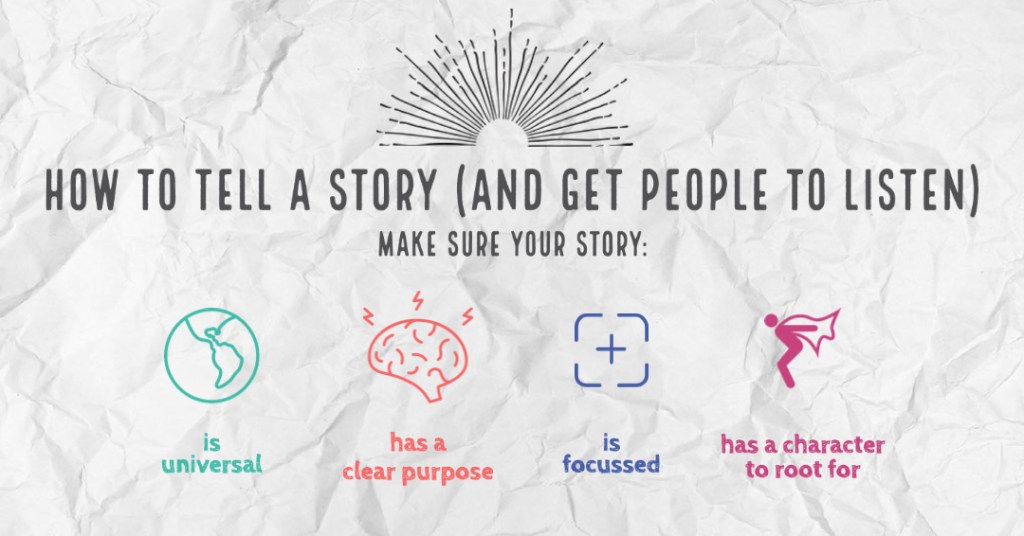
Creating an engaging and impactful story isn’t always easy, whether in analog or digital format, but keeping these four points in mind can help you to formulate a plan and execute your story successfully!
 EXSM 3989 - Digital Storytelling Class Blog