Categories
Uncategorized

Just A Quick Little Run Around the World

L.M. Striemer

It’s 2007, I’m delayed in northern Thailand waiting for a boat ride to take me south towards Bangkok.  I had been visiting my grandfather and step-grandmother, who live in Chang Rai, for the past few months working on the farm. While waiting for the boat, I decided to wonder to the free library hanging on the streetlamp – I was really hoping for something interesting, there were few books, and even fewer printed in English except for one – “A Quick Little Run Around the World” by Rosie Swale Pope. 

Rosie Swale Pope, 2004

At the age of 57, after losing her husband to Cancer, Rosie put on her running shoes one day and decided to go for a quick walk around the block.  After 5 years and 20,000 miles later, Rosie became the only person in the world to have run-around-the-world solo and unsupported by carrying her belongings on a cart behind her – https://rosieswalepope.co.uk/

I now see how Rosie, back in 2003, had already applied the advice offered by Carolyn O’Hara in her article “How to Tell a Great Story” published almost 11 years later. Carolyn O’Hara offers specific Do’s and Don’ts when telling a story:

Principles to Remember

Do:

  • Consider your audience — choose a framework and details that will best resonate with your listeners.
  • Identify the moral or message your want to impart.
  • Find inspiration in your life experiences.

Don’t:

  • Assume you don’t have storytelling chops — we all have it in us to tell memorable stories.
  • Give yourself the starring role.
  • Overwhelm your story with unnecessary details.

In remembering Rosie’s story, I also now understand how well her story was constructed by her usage of the above key principles.  Rosie is considerate of her audience by not only including her personal story with her struggles, challenges and wins, but by also by weaving the stories of the people she meets on her journey into her story.  Rosie offers her story in this framework to Identify her message that she wants to impart – the importance of getting testing for cancer.  She uses the inspiration from her experience of running around the world to showcase the perseverance, resilience of the human spirit and the small simple kind acts of others. 

What made this story so memorable for me was how I felt after reading it.  Rosie’s story is compelling, insightful, adventurous and humbling.  It made an impact on me because I was so engaged with her adventures and her challenges of running around the world solo that I was inspired and found myself cheering her on, each turned page.

If you have multiple questions, you probably have multiple stories. Stick to one and answer it well. Your audience will stay with you.

Alison Macadam, Beyond the 5 W’s: What should you ask before starting a story?

And just like the advice given in the article Beyond the 5 W’s: What should you ask before starting a story?, Alison Macadam points out that it’s also important to identify what the story is NOT about.  In Rosie’s story, it was not about her grief, her loss or the specifics of the illness of cancer itself, but rather about the human spirit, its experiences with illness, its resiliency, its triumphs, its challenges, its similarities no matter where one lives or the language they speak.

In the few hours that I was waiting for the boat, I finished the book! I couldn’t put it down, page after page I was hooked, time flew by, and I felt so inspired and humbled after those few hours that since reading Rosie’s story, I often have moments where I ask myself, what would Rosie do? I will always remember this story simply because it ultimately made me miss my boat!

Have you ever missed something or forgotten to do something because you got caught up in a story?


Categories
Uncategorized

Mundane Problems, But Make It a Story.

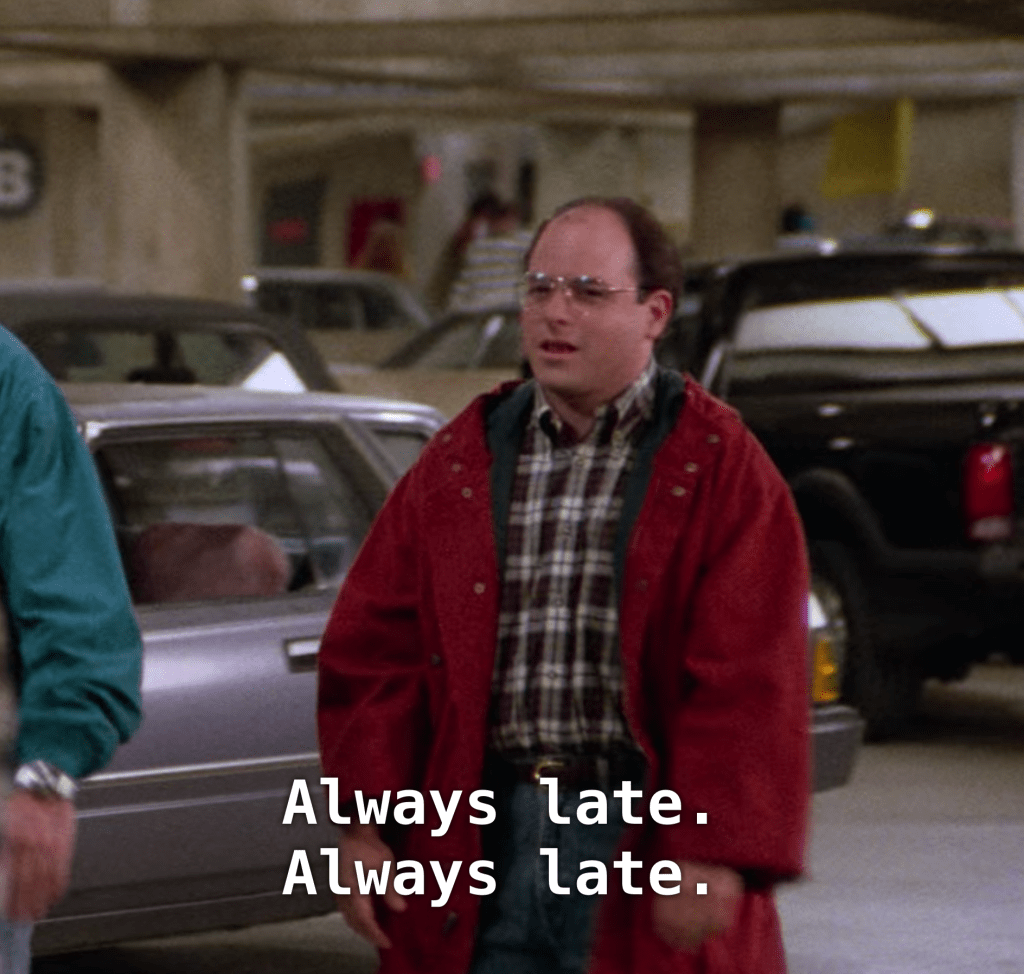
“Seinfeld is a great show. It’s literally about nothing,” said my friend when I asked for a recommendation, and boy was she ever right! Making something out of nothing is the show’s appeal factor; Seinfeld chronicles the lives of four single friends; comic Jerry Seinfeld, hopeless George Costanza, frustrated working gal Elaine Benes and eccentric neighbor Kramer who are navigating the absurdities of everyday life. With a runtime of 9 seasons, the show cheekily dedicates 20 minute episodes to exploring mundane problems. Despite its comical nature, these stories are deeply relatable, keeping viewers tuned in decades after the last episode aired.

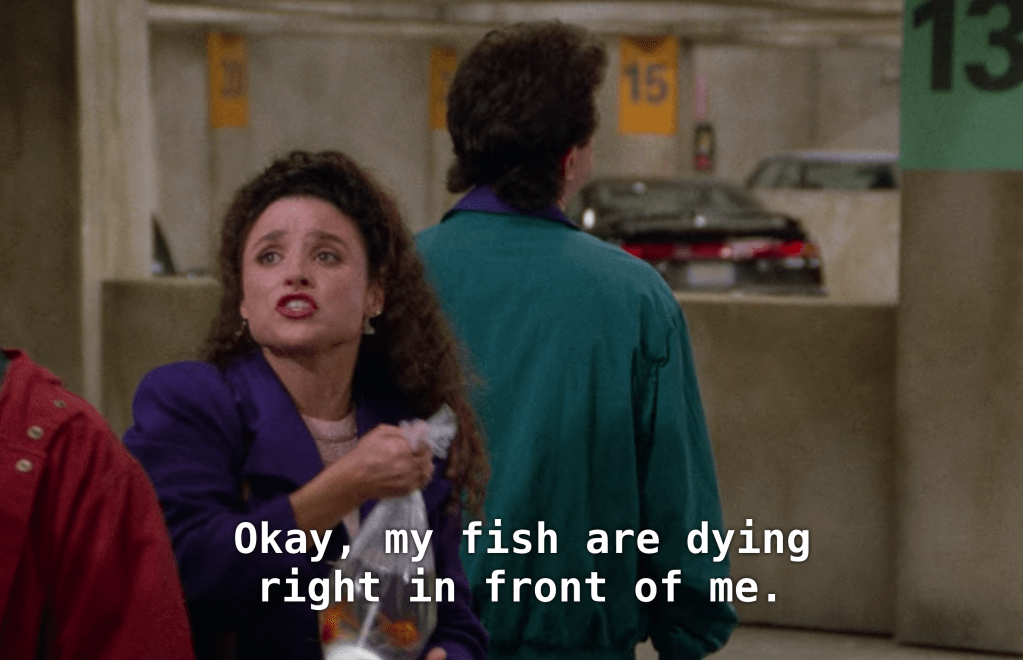
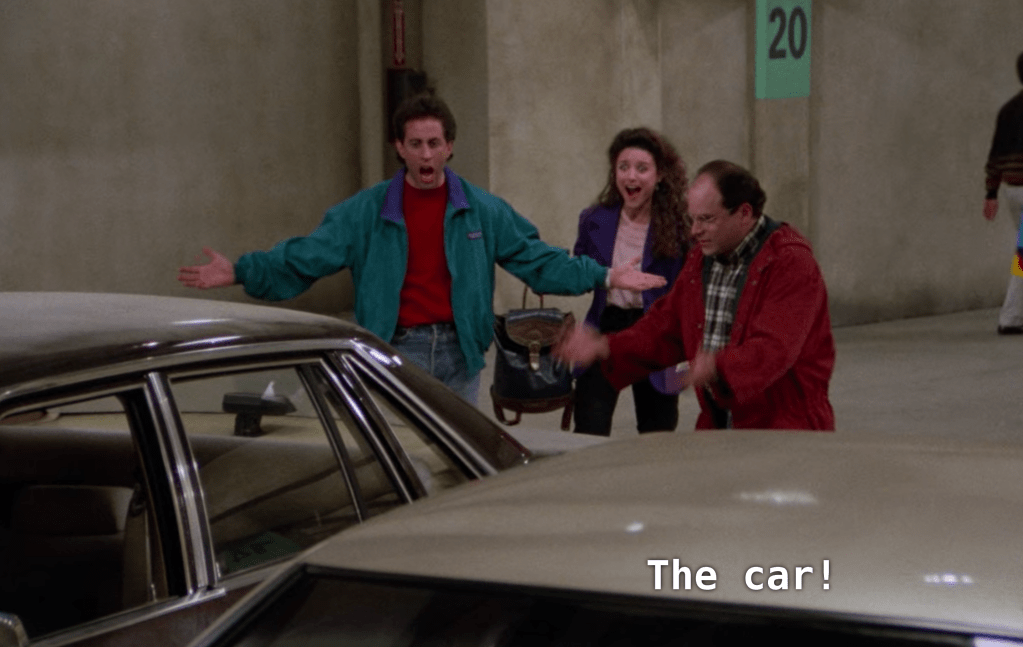
Seinfeld, Season 3 Episode 6: The Parking Garage.

I recently watched an episode titled “The Parking Garage,” where the entire storyline is about getting lost in a parkade. As someone who (often) finds themselves lost in a parking lot, what makes this episode memorable is how relatable the situation is. You quickly empathize with each character as you watch them navigate through some hilarious– but very real – scenarios, like needing to pee really badly when there’s no public washroom, or running very late for an important event. The urgency keeps you hooked and hoping that they find the gosh darn car soon! 

A Good Story Is: Building Something Out of Nothing 

A good story is simple, focused and intentional. It doesn’t overwhelm the audience with questions and information they need to figure out themselves. 

Adam Kens created the Story Spine in 1991 to help writers outline their stories without getting overwhelmed in the details. Here’s an outline of Seinfeld’s The Parking Garage: 

Once upon a time…There were a group of friends named Jerry, George, Elaine and Kramer.
Every day…The group would hang out and go shopping.
But, one day…They forgot where their car was parked, and got lost in the mall’s parkade.
Because of that…Jerry can’t find a washroom, and he really needs to pee. Finally, he gives in and relieves himself in the parkade.
Because of that…Jerry gets caught and arrested by the mall cop for public urination.  
Because of that…Elaine, Kramer and George go searching for Jerry separately, and lose each other in the parkade. 
Until finally…Jerry is released and reunited with his friends. They eventually find the car.
And, ever since then…They agree to write down where they park next time.

At first glance, the story spine doesn’t scream “chaotic hilarity,” but as Kens notes, a story spine “is not the story” but rather the bare-boned structure upon which the story is built. It’s a powerful tool that allows a writer to look at the structural core and ensure that the basic building blocks are in the right place. The story spine helps focus the story, and establishes the 5 W’s: who, what, when, where, why and how. When you’ve got these narrowed down, you can start dabbling beyond the basics.

The Luring In

A good story is one that hooks you in immediately and keeps you attentive. As soon as you lose your audience, your story inherently fails in being heard. You have to be careful to add meat to your storyline without adding too much. Ask yourself: How will I engage my audience — and hold them? A storyteller has to teeter the fine line between delivering too much or too little without straying from the main message.  

In her 2017 TEDX Talk on storytelling in the digital era, social analyst and communications expert Ashley Fell, explains that engaging stories embody the 4 I’s: interest, instruct, involve and inspire. Great stories:

  1. Create interest and maintain our attention;
  2. Instruct: they have meaning;
  3. Involve us; 
  4. and most importantly, great stories inspire us.

This episode does an excellent job in delivering just enough chaos in a short span of time to keep you interested, but not overwhelmed with information. The episode stays focused on the gang trying to find their car, but introduces each character’s motivation to get home quickly.

Jerry needs to go home and use the washroom:

George needs to go home and meet his parents for their anniversary dinner:

Elaine needs to go home and save her goldfish:

The Buy-In: I Care Because I Relate

The best storytellers look to their own memories and life experiences for ways to illustrate their message. Good stories create “sticky” memories by attaching emotions to things that happen. While I’ve personally never been arrested for public urination, I empathize with Jerry because I know the feeling of needing to go really really badly, but not being able to for whatever the reason may be. We’ve all been there at one point, and while the context might be different, the feeling is universal, and that is what makes this story arc brilliant. 

You can’t help but extend your empathy to not only Jerry’s dilemma, but also George who promised his parents that he would meet them for their anniversary dinner, or Elaine, who needs to get her pet goldfish into a tank before they die. 

The stakes are high for each character- and you’re invited to stay engaged and see what happens. When you feel connected, you start to care. When you care, you remember, and what is a good story if it’s not one that sticks with you long after you’ve finished it? 

When the gang does eventually find their car, they agree to write things down next time. Unfortunately, it stalls in the parkade and the episode ends. Do they learn their lesson? Maybe! Maybe not. But the ending, while memorable, isn’t the reason why I gravitate towards this episode.

If you too need some comfort in the universality of your #FirstWorldProblems, I highly recommend watching Seinfeld. Let me know what elements of the episode captures (and keeps) you engaged!

Categories
Uncategorized

Has anyone heard of the Left/Right Game?

There’s a warning that comes with listening to The Left-Right Game podcast: “Use caution if operating a motor vehicle as it may seem like sounds are coming from … behind you.” 

After hearing that warning for the first time I thought, “What am I getting myself into?”

Categories
Uncategorized

“Like Mother, Like Daughter” – Gilmore Girls, a Story in Review

A Brief Introduction…

When sixteen-year-old Lorelai Gilmore finds out she’s pregnant, she runs away from her well-established family home and raises her daughter all by herself.

https://giphy.com/gifs/gilmoregirls-netflix-gilmore-girls-l0ErOKzQcir2IRFY

Through hard work and determination, she supports the two of them and gives them the most wonderful life filled with an array of fantastic opportunities and new friends. Rory grows up to be an educated, independent, and worldly woman – a journalist. Through ups and downs, family drama, and lots more the Gilmore Girls begin and end their journey as the best of friends. 

Of course, that’s not all of it, there are seven seasons to the show! But, let’s put that in the Story Spine,

Once upon a time…There was a sixteen-year-old girl named Lorelai Gilmore.
Every day…She was forced by her parents to fit into their rich and lavish lifestyle which she did not feel comfortable in.
But, one day…She got pregnant!
Because of that… She ran away from home to a small town called Stars Hollow and sought shelter at the local Inn where she worked as a maid.
Because of that…As her daughter, Rory, grew up, she continued to work hard and support the two of them and eventually made it up the ranks to be the inn manager. 
Because of that…She and Rory learned to dream big. Rory went to private school and eventually, Yale University and Lorelai opened her own inn.
Until finally…She needed her family’s help with school tuition for Rory.
And, ever since then…While Lorelai and Rory had a new family in Stars Hollow, there was enough room for Lorelai’s parents in their life as well. 

While there is so much more to the series than just the brief description above, ultimately, Gilmore Girls is the story of a hardworking single mother and her bookworm daughter navigating life in what has been referred to as “The Best Mother-Daughter Relationship Ever…”.

A Dollop of Familiarity and a Hint of Comfort

The story of Gilmore Girls is a universal story. It is simple, funny, and extremely relatable. Aya Tsintziras points out that “while not everyone grew up with a cool single mom who felt like a peer, many fans can still relate to much of Gilmore Girls… Whether it was the show’s smart depiction of high school life or the way that the mother/daughter duo acted in their academic/professional and personal lives, there were many Gilmore Girls storylines that made a lot of sense to viewers”. Simply put, the interwoven storylines presented real-life scenarios that resonated with its audience. There was no indication of a far-fetched reality, but rather one that is familiar to all. 

As Ashley Fell mentions in her TEDx talk, an important characteristic of a good story is a main character you can identify with. ‘Gilmore Girls’ gives its audience two main characters of different age groups (adult and teen) who are undergoing different challenges in their lives. Challenges that mirror those the audience might go through in their own respective lives. 

I saw a lot of myself in Rory. Just like Rory, I am a reader, a writer, and a girl with big dreams. Just like her, I wanted to go to University and eventually end up writing for a living. Ironic, isn’t it?

A good story also gives its audience a character to root for and appeals to their deepest emotions. Shannon Carlin points out that the series “has always made fans cry… Sometimes, these were happy tears; other times, not so much. But if there’s one thing fans already know about this show, it’s that it definitely requires you to keep the tissues handy”. The down-to-earth atmosphere of the story and characters makes it easy for the average viewer to connect with and root for the main characters. This then leads to a strong emotional response when the characters either succeed or fail at something that the audience feels like they have been a part of. 

https://www.vanityfair.com/hollywood/2014/09/10-episodes-gilmore-girls-hooked

The Story of My Life

You may be asking yourself, “Why Gilmore Girls?”. Well, I first watched Gilmore Girls with pure curiosity. I never realized the story would be so similar to that of my own. Just like Lorelai, my mom had me at a young age (not at sixteen but she was still young) and raised me primarily on her own. When I was five years old, we had lost my father and for a while, it was just the two of us against the world. Like Lorelai, who takes on a job as a maid at an inn, my mom took on many different jobs to support the two of us and provide us with a life we could both enjoy. 

After years of seeing happy large families on TV, there was finally something that represented me. This story, while not directly related to me in any way, made me feel heard. It spoke to my own life story, upbringing, and even future goals. 

Just like Lorelai and Rory, it’s always been me and my mom!

Do you have a television series that speaks to your heart? Leave a comment below!

Categories
Uncategorized

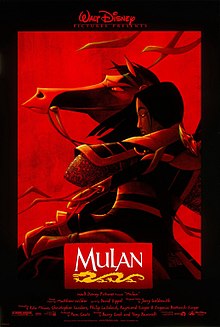
Mulan: A Timeless Classic

One of my favourite movies of all time is Mulan, the 1998 animated classic.

This story follows the story spine perfectly, making it a clear and concise tale:

  • Once upon a time there was a girl named Mulan who was afraid of disappointing her parents.
  • Everyday she struggled to fit in the role she was meant to play in society.
  • But one day her father was called to war, and she took his place instead.
  • Because of that she joined the army as a man.
  • Because of that she was discovered and told to go home.
  • Because of that she became determined to save China and her friends.
  • Until finally she protected the emperor from his attackers.
  • And ever since then she was seen as a hero, by both her family and her country.

As you can see, Mulan fits the story structure, having a beginning, middle, and end. Another reason this story is so well enjoyed is because it sticks to some of the fundamental rules of storytelling. Firstly, it’s universal. It is a story about a girl struggling to fit in to her world, wanting to please her parents, and deciding to help others- themes that most people can relate to. As well, the story gives you someone to root for, to care about. The audience sympathizes with Mulan’s struggle and wants her to succeed and save the day. The story is also simple and focused, it doesn’t drift away from our main character or over complicate the themes by adding too many subplots and extra characters. It works to engage the audience through its stunning graphics, catchy songs, funny jokes, unique characters, and action filled plot. Just like Ashley Fell mentioned in her TED Talk on powerful storytelling, the story includes colour, picture, and movement which grab our attention.

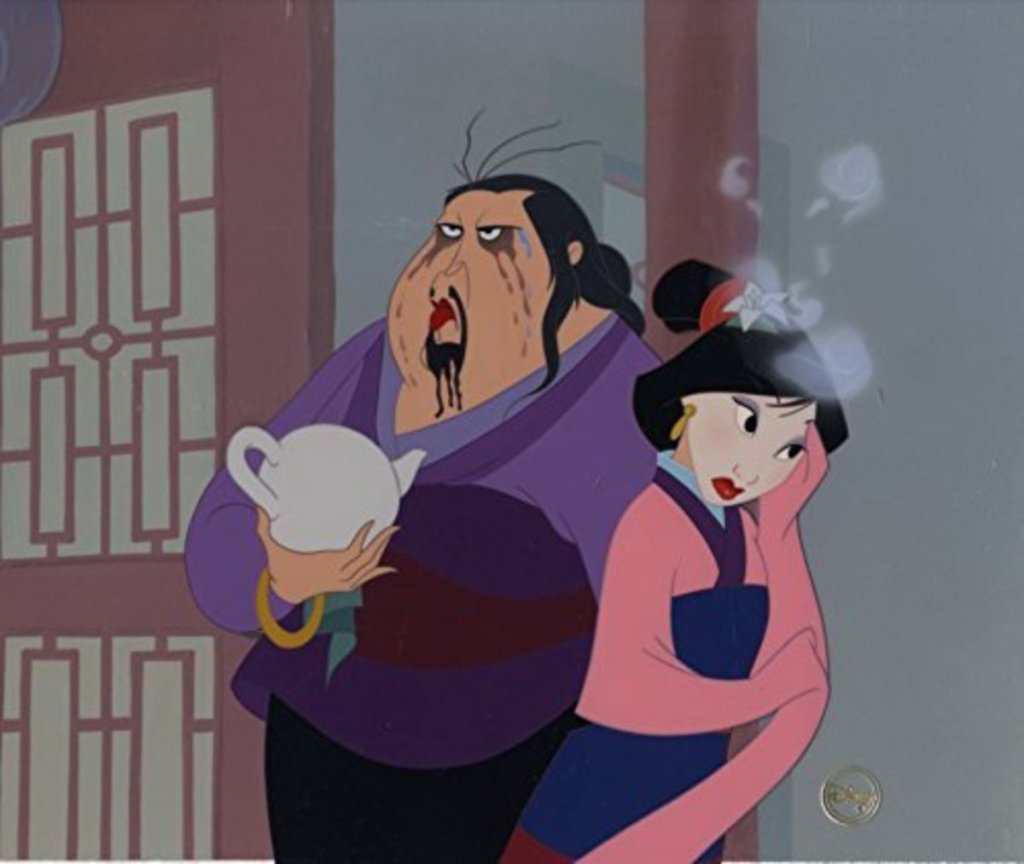
Another area of the story that really brings it to life is that the characters are given opinions, as mentioned in by Cyiaque Lamar in the article “22 Rules of Storytelling According to Pixar”. This is best seen in the musical number “A Girl Worth Fighting For”, where the different characters express what kind of women they like, all having their own fantasies of what the perfect girl would be. One of the rules mentions that the character should be admired for trying more than for their success. This is very true in Mulan’s story. She fails many times, messing up her meeting with the matchmaker, struggling to train for the army, etc. But through hard work she eventually succeeds. These aspects make her character more relatable to the audience, as we admire her imperfections, courage, and effort.

One of these 22 rules also mentions that coincidences should get your characters in trouble, not out of trouble. This happens in the story when Mulan is injured in battle, coincidently on her chest, meaning the doctor discovers that she is a woman. Lamar also reminds us that stakes are an important part of storytelling. The movie is full of high stakes for the main character. First, she has to make her family proud with the matchmaking meeting, then there is the high stake of trying to not be discovered as a woman, then there are the stakes of war and if she and her friends will survive, as well as the stakes of saving the emperor. The movie’s stakes get more and more intense over time, until Mulan’s actions lead to saving her own country!

Overall Mulan is a relatable, universal, inspiring, and action-packed tale that has still excites viewers like myself today, no matter how many times I watch it! It follows many story rules and points that allow it to hold its ground as timeless classic.

Images Retrieved From:

https://reelrundown.com/animation/Mulan-1998-Being-True-to-Ones-Heart

http://www.opinionatedpodcast.com/moviereviews/2020/9/13/mulan-1998

https://ketagalanmedia.com/2020/09/19/mulan-1998-is-still-a-film-worth-fighting-for/

https://ohmy.disney.com/quiz/2016/11/30/quiz-how-well-do-you-know-the-lyrics-to-ill-make-a-man-out-of-you/

Categories
Uncategorized

Arrival Changed my Life

Warning: Spoilers for Denis Villeneuve’s Arrival (2016)

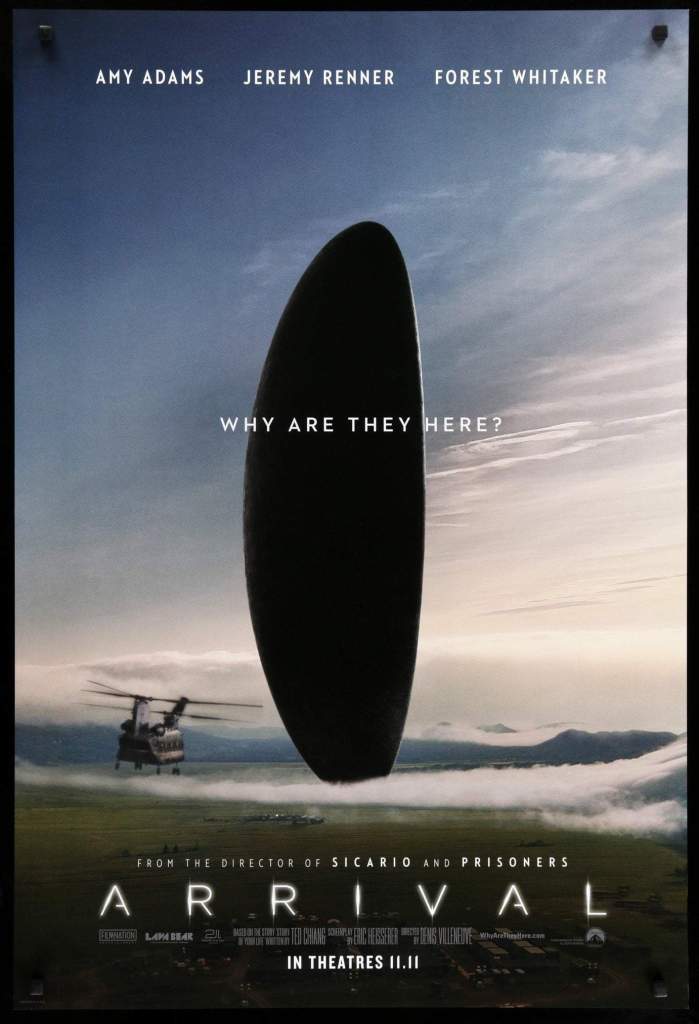
I don’t think I was expecting anything more than a fun movie-going experience when I first went to watch Denis Villeneuve’s film Arrival in theatres, but I wasn’t expecting to get chills from watching the interactions of the human scientists making first contact with aliens. The film’s imagery and storytelling have stuck with me and have led me to rewatch the film many times since that first experience.

Why is it so effective?

For the second week of my course Digital Storytelling, we looked into the essential elements of good storytelling. This goes beyond just what makes a good film or even a digital story, but taps into the core of how people make communicate meaningfully. I would like to apply this lens to my favourite film, Arrival, to explore makes it so memorable.

The Story Spine

In his blog post, Back to the Story Spine, Kenn Adams discusses the narrative technique of the story spine—a kind of barebones outline that allows us to pare a story to its “structural core”. When applying this technique to Arrival, we can see how tight the film’s focus is on the protagonist, Louise Banks.

Once upon a time…There was a linguist named Louise who was incredibly skilled with translating unfamiliar languages.
Every day…She taught at her university, settled in her routine.
But, one day…The appearance of alien ships sent a military team to collect Louise, in the hopes that she could use her skills to find out what the aliens wanted.
Because of that…Louise studied the aliens closely, and began to suspect they didn’t mean any harm.
Because of that…She learned to perceive time the way the aliens did.
Until finally…Louise was able to use her foresight to stop a war among the humans, and the aliens left her with the key to their language.
And, ever since then…Louise became an expert on the alien language, while needing to continue her life while perceiving time in a non-human way.
An example of the story spine

While the spine misses the flavour and details of a story, this device is useful for showing us the essence of a plot. And, despite being about non-linear time, the core of Arrival tightly follows Louise’s personal, linear journey as she learns to speak like the aliens, the Heptapods. But, of course, there is much more to the story that sparks the imagination. What are the elements that make Arrival an effective story?

The Four I-s

Writers and marketing experts, responding to the short attention spans of a digital audience, argue that good storytelling distills a plot to its essentials. For example, a quick Google search for Pixar’s Rules of Storytelling reveals that the universally-loved studio follows the same guidelines to create powerful movies.

Social analyst and communications expert Ashley Fell, in her 2017 TEDX Talk on storytelling in the digital era, explains that memorable stories exhibit the 4 I’s.

Screenshot from TEDx Talk: “Why storytelling is so powerful in the digital era” by Ashley Fell. 

Interest: Stories hold our attention through stakes. Cyriaque Lamar, quoting Emma Coats’ 22 Rules of Pixar, asks us to “give a reason to root for the character” and to consider “what happens if they don’t succeed”. In Arrival, we not only fear the motivations of the Heptapods, but also the outbreak of a global war as a result of misunderstanding the aliens’ words.

Instruct: Deeper than simply featuring a lesson, a story needs to have meaning. Pixar’s rule #22, echoing the ideas behind Kenn Adam’s story spine, asks “What’s the essence of your story?” Arrival is really about humans learning to connect to others despite cultural divide, arguing that we cannot survive without communication.

Involve: Stories should involve us by asking us to engage our empathy. Pixar Rule #15 asks writers to put themselves into the shoes of their characters, adding that “honestly lends credibility to unbelievable situations.” Arrival succeeds by having the characters react viscerally and believably to meeting the aliens for the first time. The fear and awe are clear on their faces when entering an unknown spaceship—as is the nausea from being inside a ship with variable gravity.

Inspire: Finally, Pixar prompts its writers to ask what inspires them: “What’s the belief burning within you that your story feeds off of? That’s the heart of it.” Fell compares powerful stories to the experience of watching the shape, colour, and movement of a campfire. Just how a flame draws us in, a story should be visual, whether these are real images or vibrant prose that triggers our imagination.

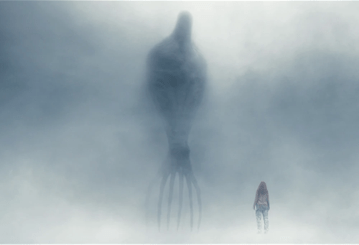
And here, Arrival has truly impactful visuals, only enhanced by its music. A giant form floating above a flat field; creatures occupying the uncanny space between sea creature and a human hand; Louise reaching to touch her palm to a transparent wall, fingertip inches away from the trails of ink that make up the Heptapod’s language. Despite being a simple story at its core, these images are why Arrival has continued to inspire me.

What does story mean to us?

When I was in the theatre, I couldn’t articulate all these reasons that Arrival really meant something to me. Even now, equipped with Fell’s “4 I-s of storytelling” and Pixar’s “22 Rules”, I still feel that some spark is missing when talking about why this story inspired me to study science fiction and deeply influenced my own writing. Yet I think these rules still come close to evoking that spark. The powerful visuals, deeply human characters, and underlying message of collaboration make up the true colour and motion of Arrival’s flames.

Categories
Uncategorized

“You’re not thinking fourth-dimensionally”: A Study in Storytelling

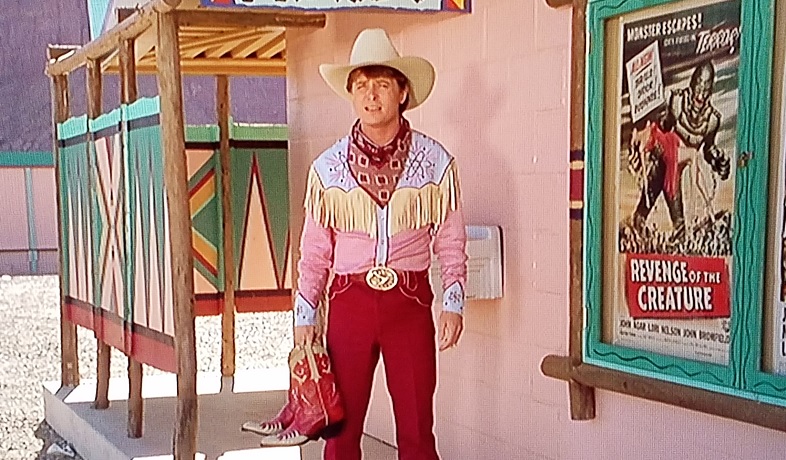
For a certain sci-fi fandom, words such as “DeLorean,” “gigawatt,” “88 MPH” and “flux capacitor” can only mean one thing: the BACK TO THE FUTURE trilogy. The adventures of Marty and Doc as time-tourists, told through three original motion pictures, have been one of my favourite stories since childhood.

When released, the first Back to the Future (BTTF) movie was an immense success becoming the highest grossing film of 1985. Two sequels were soon added, and since then the trilogy has inspired a theme park ride, cartoon series, merchandise and, most recently, a musical.

What makes this science fiction story a timeless classic for countless adoring fans, myself included? Let’s examine some of the basic storytelling principles at work in BTTF.

The Driving 88 MPH Question

For starters, the plot’s genesis was a simple question from co-creator Bob Gale: if he and his dad attended high school together, would they have been friends? For Alison MacAdam, having a question that drives the story is key at the beginning of the creative process. In her article “Beyond the 5 W’s: What should you ask before starting a story?,” she explains that this question provides the storyteller with a mission. From Gale’s initial question, a great story was born.

If we break BTTF’s story down to its Story Spine, a tool described by Kenn Adams in his article “Back to the Story Spine,” it would read something like this:

  1. Once upon a time, there was a typical American teenager named Marty McFly who was friends with an eccentric scientist named Emmett L. “Doc” Brown.
  2. But one day, Marty gets sent to the past (November 5, 1955 to be exact) in Doc’s time machine.
  3. Because of that, he must locate 1955 Doc to help him get back to the present.
  4. Because of that, he runs into his future parents setting off a chain reaction that puts his very existence in danger.
  5. Because of that, he must first work to make things right so that his parents fall in love before he can get back to the future.
  6. Until finally, Doc helps him successfully return to his life in 1985 (which is somewhat altered because of his adventures in 1955).
  7. Ever since then, cue the sequels!

Nobody calls me chicken: the endearing protagonist

At its most basic, the BTTF story is not only simple and focused, but it also provides an endearing character to root for in the form of Marty McFly. These fundamental elements are described in the article “The 22 rules of storytelling, according to Pixar,” in particular rule #16 which stipulates that the audience needs a reason to cheer on the protagonist who has the odds stacked against them when the stakes are high.

To quote the U.S. National Film Registry (of which BTTF is an inductee), Marty “must not only find a way home, but also teach his father how to become a man, repair the space/time continuum and save his family from being erased from existence. All this, while fighting off the advances of his then-teenaged mother,” oh, and not to mention do it all with enough time left to be in the DeLorean going 88 MPH precisely as the Clock Tower is struck by lightning. With so much high-stakes drama, the audience must hang on for a wild ride!

Whoa, this is heavy: the universal space/time continuum conundrum

BTTF’s story succeeds and resonates with audiences because it addresses an ageless and universal issue: time travel. Whether a trip to the past or the future, who among us, from school-aged children to NASA scientists, hasn’t at some point pondered this fundamental question?

For myself, this fascination with time travel has gone hand-in-hand with my love of history and longing to magically travel through time to witness historic moments in the making (and hopefully return unscathed to the present!).

In the end, there are many elements that make this story memorable to audiences. Certain images from BTTF, like those mentioned in the opening paragraph – as well as others such as Mr. Fusion, hover conversion and hoverboard – have become iconic, leaving indelible impressions upon our imagination.

But perhaps most compellingly, the lasting message from these movies is one of optimism: you control our own destiny. As Doc so eloquently puts it in BTTF III: “Your future hasn’t been written yet. No one’s has. Your future is whatever you make it, so make it a good one!”

Your kids are gonna love it: a touch of nostalgia

To end on a personal note, the BTTF trilogy is not only a great story but, from a nostalgic and emotional perspective, it will forever live in my heart because of the cherished memories I have of spending time with my family watching these films together. The number of movies we agree on as a family is few and far between, but BTTF has always been, and will always be, a story that units us and one we all love – Great Scott!

The creators of BTTF imagined license plates of the future (2015) to be barcodes.

If you put your mind to it, you can accomplish anything.

– George McFly

If you love all things BTTF, be sure to check out the official site:

~ OUTATIME / The End ~

Categories
Uncategorized

Country Music Stories: Coat of Many Colours

One of the best storytellers is Dolly Parton. Yup, you read that correctly! What makes her songs so good are the stories she’s able to tell. Her song, “Coat of Many Colours”, released in 1971, is a perfect example of storytelling through music. Even if you are not a fan of old country music, I’m talking about the original country music, you must admit most of the songs of this genre fit all the parameters for a great story. Great stories are universal. Great stories resonate with the audience by being relatable or emotional. Great stories have structure and purpose but are simple and focused at the core, and great stories have good characters, particularly a character the audience wants to see succeed. So, let me show you why “Coat of Many Colours” is truly a great story!

Great stories are universal, relatable, or emotional

Country music has evolved over the years and has become a mixture of many types of music, but it originated in the deep south among the poor working-class trying to survive off the land. Country music stories, like all other good stories, are relatable or emotional. “Coat of Many Colours” is a song about adversity and love, both relatable emotions. In this story, the little girl has a loving family and although she is teased for being poor, she doesn’t feel poor because of the love she gets from her mom. Most of us have felt love from a parent or guardian, most of us were probably teased at some point in our life. The descriptions Dolly uses in her story evoke emotion in the listener because they have been in a similar situation and, through the story, they relive those emotions helping them feel the story.

Great stories have structure and purpose but are simple and focused at the core

While “Coat of Many Colours is told through music, it still has structure and a purpose. Dolly starts by describing how their family was gifted a box of rags and because they were poor and fall was coming, her mother used the box of rags to make her a coat. Dolly watched her mother make this coat and put her love into it. She was very proud of her coat and while their family didn’t have money, she felt rich wearing this coat made with her mother’s love. At school, she was teased by the other kids because of her coat made of rags and for being poor. At the end of the song, Dolly tells the listener how she dealt with the bullies. The ending reveals the purpose of this story. We see a little girl unphased by the teasing, full of love from her family and proud of where she comes from. This story has a structure, a clear beginning, a middle, and an end. There are also events throughout the story that create difficulty for the character and in the end, we see the resolution.

This isn’t a long song. Dolly’s stories are simple and focused while still including details that draw in the listener and paint a picture for them. The music that accompanies the stories also helps to shape the mood and emotions that go with them.

Great stories have good characters

The main character in “Coat of Many Colours” is a sweet innocent little girl. She explains that she knew her family was poor but never felt poor because of the love she always received. Her innocence didn’t allow any of the adult stresses to bother her. She is a character you feel for at the beginning of the story because of her situation. You then feel for her again when she is teased. But, in the end, you feel proud of her for how she handles herself and for what she can see despite her family’s financial situation. She is a great character that is endearing and lovable.

While music isn’t necessarily the first medium you think about when you think about a good story, country music has always been based on telling stories and many of the songs of this genre tell great stories. Examining “Coat of Many Colours”, the storyline is relatable and evokes emotion which is enhanced through the music. Although the song is short, it is focused and follows a structure. Lastly, it has a great character that we can easily fall in love with. Using the principles of great storytelling, Dolly Parton’s “Coat of Many Colours” is truly a great story.

What is your favorite country music story? Let me know in the comments.
Categories
Uncategorized

Siddhartha’s Journey: Transcending Suffering

The real life story of Siddhartha Gautama, perhaps better known as the Buddha, has been around for centuries. Myself, I discovered it somewhat more recently than that, about 25 years ago while in my early 20s after seeking out a counselor on a desperate whim one winter’s night and speaking to her about the pointlessness and pain of my existence that felt like it had reached a tipping point. I didn’t know what might happen had I not made this choice. I only knew suffering in silence was breaking me.

She spoke to me for a time about reframing my relationship to my suffering by being open to receiving the message or messages that my pain had manifested in order to communicate to me. While I wasn’t totally in sync or on board with whatever she was trying to convey to me at the time, I was certainly able to resonate with the faint sense of deeper meaning to my life that transcended any external circumstances that her words pointed to, and that I had credited for just barely sustaining me through those first two tumultuous decades of my own life journey. Just before I left her office, she directed me to two books. One was called The Buddha Within by Lama Surya Das. The other was the novel Siddhartha by Herman Hesse based on the Buddha’s life and it was here that I first learned the story of Siddhartha’s journey for liberation from suffering.

Siddhartha’s Story

The story began some time around 567 B.C.E. with the birth of a boy, Siddhartha Gautama. Siddhartha was born into royalty, a prince, prophesied several years prior to his conception to grow up to be either a powerful monarch or a great sage. Determined that his son would not become an ascetic, the king kept Siddhartha shielded from the world beyond the palace walls. Every day, the prince grew up surrounded by luxury, instructed by brahmins, and trained in archery, swordsmanship, wrestling, and athletics. As soon as he came of age, he married and fathered a son of his own. He had everything he could ever want.

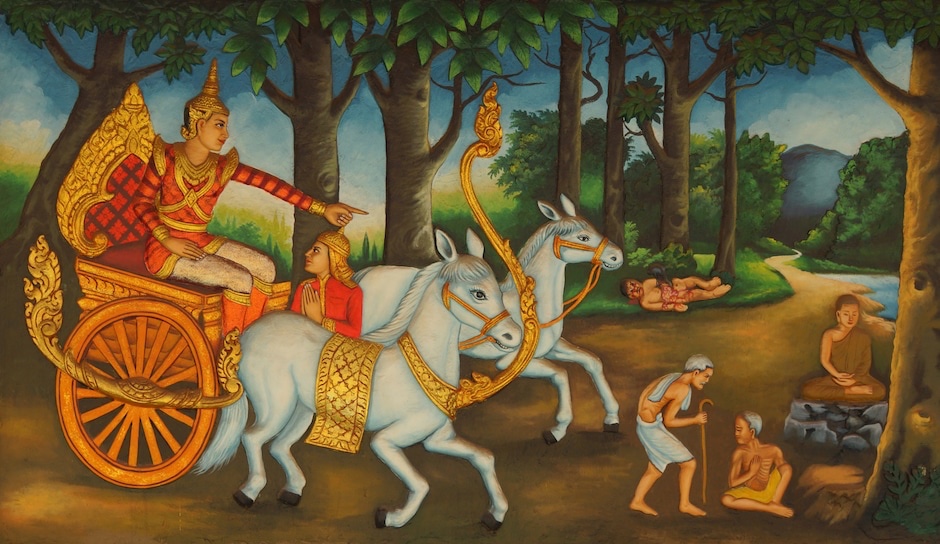
However, one day, driven by curiousity and a calling too strong to ignore, he ventured out beyond the palace walls. There, he saw three things that would change his life forever. He saw a sick man, an old man, and a dead man and learned for the first time that all beings experience sickness, old age and death. Those sights, along with a fourth on his return trip to his palace, that of a wandering ascetic, a meditating monk, would forever alter his life and history.

The four sights Siddhartha saw upon venturing beyond his palace walls for the first time

So profoundly moved by these sights and insights was Siddhartha that he embarked on a path that saw him renounce his life of luxury, his kingdom and his family to set off in search of an answer to the problem of suffering. He became an ascetic and joined an entire class of men who had left Indian society behind in search of liberation.

He thus began a spiritual journey to find the greatest spiritual teachers of his time. For some time, he committed himself to extreme asceticism, denying the flesh to strengthen the spirit. Near death from the practice of subsisting on one grain of rice a day, he finally realized this wasn’t bringing the liberation he sought, nor was it helping others. Abandoning the practice, he entered a village and begged for food. His strength soon returned and in a desperate state, he resolved to sit beneath the Bodhi tree, solid and unmoving until he attained enlightenment. Finally, he awakened, realizing that what he had been seeking had never been lost, nothing to attain and therefore no struggle to attain it.

Thus becoming the Buddha, the “enlightened one”, he could have transcended mortality and the karmic cycle of birth and rebirth but instead chose to stay in this suffering world to teach others the path by which they could attain liberation. He served mankind, teaching his four noble truths and the eightfold path that would form the tenets of Buddhism, until his death 45 years after attaining liberation from suffering.

The Buddha’s Lessons For Us

It’s themes of leaving behind the only life he’s known in search of deeper meaning and understanding reflect a universal story of growing up to find one’s self in the context of the larger world beyond our childhood homes. His story feeds off the belief that the nature of life is suffering and that opening one’s heart to their own suffering provides a direct path into knowing the nature of existence and of self. A lot of what my suffering was made up of back when I first learned the story of the Buddha was related to the dissonance I experienced between who I believed myself to be and what others reflected back to me about who I was and in the meaning of my own existence. Lost in that dissonance was the false belief that the truth of who I was must lay in either one extreme or the other, or even somewhere in the middle.

In the years and decades since beginning my own version of Siddhartha’s search for liberation, while being in no way comparable, I’ve come to gradually lean more into the curiousity and courage demonstrated in Siddhartha’s path of what my suffering can teach me rather than becoming identified with and consumed by it to the point of self annihilation. And yet, somewhat ironically, his journey of transcending his suffering and teaching an end to suffering is predicated on that very same annihilation of the self but in life, rather than through the taking of one’s own life which, as it turns out, does nothing to transcend suffering.

The Siddhartha Gautama candle/incense holder on display in my living room

Inspired by his example of surrender, sacrifice, and selflessness, I’m coming to recognize what the truth of myself is not. It’s neither the ego, the “I” that navigates my own subjective experience of the world nor is it what others tell me it is based on their subjective experiences of who I appear to be to them. These are simply examples of some of the very illusions that Siddhartha encountered and transcended along his journey into the nature of suffering. The greater purpose of the story of how Siddhartha Gautama fulfilled his destiny of becoming the Buddha is to direct us all towards connecting with our own Buddha nature, inherent in each of us beneath the trappings of society and culture that conditions us from birth into false, limited versions of who we came here to be and express through our humanness.

Categories
Uncategorized

A Very Shocking Holiday

In July of 2019, my boyfriend Calum and I had just left Edmonton on a road trip to Penticton with my parents. We were all very excited about the road trip, as it was the first trip we did as a group, and we packed for a week of relaxation and wine drinking.

View from a Penticton Winery

As we exited the Edmonton area our hot summer’s day had quickly turned cloudy and grey, which we were ok with because it meant we didn’t need to stare into the sun on the highway! However, within a matter of minutes, it started to rain heavily. We kept driving and were heading south towards Ponoka.

Suddenly, we heard a huge bang! Then, we saw a MASSIVE fireball on the hood of the car!!! It was gone in a flash (literally lol). We immediately thought we had hit something, but none of us saw anything on the road prior to the sound. As all of this was happening, we were still driving 100km/h, so we had to pull over to assess the situation!

It became clear to us that our minivan had been struck by lightning! The lightning bolt hit the hood of the van, and travelled through the chassis, exiting the car through the back tires.

The reason we were ok after being struck by lightning is due to the Faraday cage effect, as I explained in this short video:

https://www.britannica.com/video/185595/physics-lightning-strikes-channel-Faraday-cages-objects

Once we got to the roadside tried to get out of the car, but the doors were stuck shut, which we later realized was due to the metal frame fusing together on impact. Calum and I had to climb out the driver’s door. It also became clear to me right away that electrical systems of the car were shot, and that if we turned off the vehicle, we would likely not be able to start it again.

My dad and the tow truck driver

So, an hour into our summer vacation my mom, dad, boyfriend, and I were standing on the side of the highway in the rain, emotionally shocked but physically fine!!

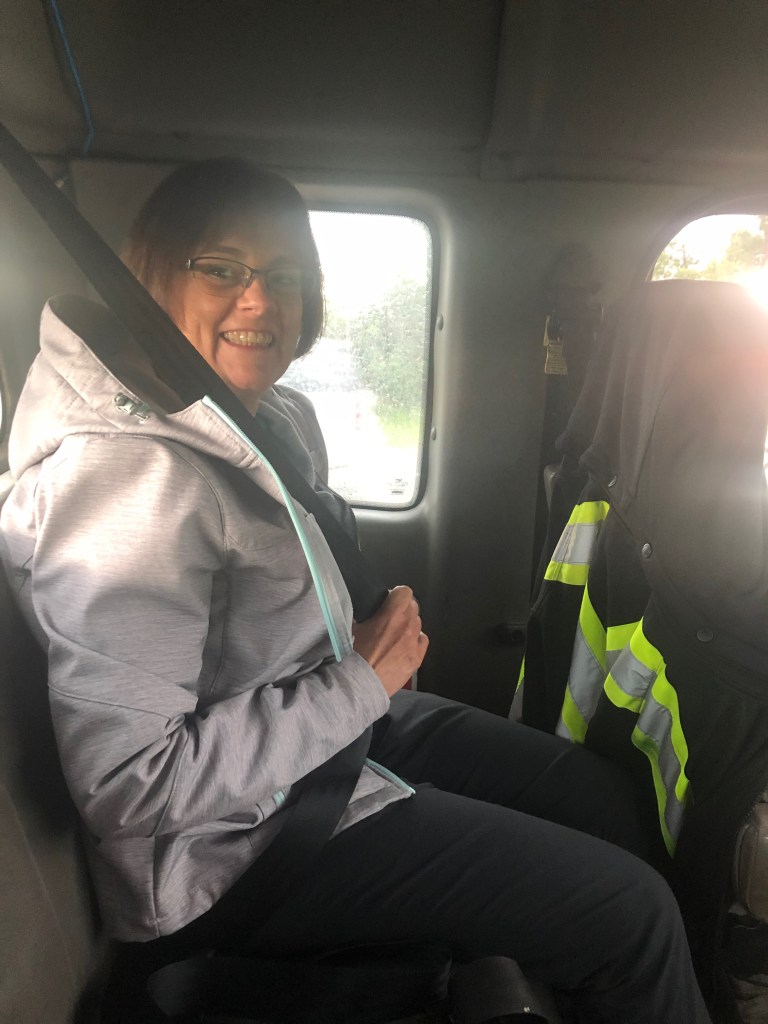
My mom in the tow truck, happy she is not on fire

We called a tow truck who had to bring a flatbed for the van, not because of the size but due to the nature of the accident. Because we got hit on the front of the van, the battery became supercharged and would possibly break the tow truck if connected!

We arrived at a Honda dealership in Red Deer, where our van was assessed for an “Act of God”. The battery supercharge also caused the headlights to stay lit when the vehicle was turned off.

With our vehicle totalled we got a tiny rental car and decided to go ahead with the rest of our vacation, wowing everyone along the way with our funny story. A week later, we returned to Red Deer to see if we could salvage anything from the van, but the dealership said that the entire frame of the vehicle had super-heated and melted EVERY SINGLE joint. Oof. Not only was that van unsalvageable, but the CDs in the player were melted and the license plated fused onto the back door. Oh well! We still feel incredibly lucky, even if it cost us a vehicle!

Very small marks on the car – this is where the electricity melted the metal frame

Luckily, I had help documenting the experience, as my friend wrote an article for the Edmonton Journal about the incident! Here’s the link:

https://pressreader.com/article/281646781727314

Follow this story on my social media for more details:

Design a site like this with WordPress.com
Get started