As this course comes to a close I wanted to share a few things I have learnt about digital storytelling throughout the last 7 weeks.
Here are 3 things:
The value of Messaging
Messaging is key in digital storytelling because it forges connections among people and between people and ideas. Adding personal touches into your story helps your audience relate to the story, ultimately giving the feeling of being more connected. Knowing your audience helps navigate how you tell your story. If you know the type of people your audience is this will help create compelling stories to increase social and emotional engagement with your stories.
2. The influence of Images and Graphics
The use of images and graphics in your digital storytelling is essential. This helps create a scene, vibe or mood that your story is trying to relay to your audience. Images can show us what a character or object looks like, graphics can provide the audience with data or just imagery and GIFs and Memes can tell a story without even using words. I love how the internet can connect using imagery as a form of communication
3. The importance of Planning
This course has shown me the importance of planning your story or posts. Whether you are just jotting down some ideas or nots on a notepad or using an online planning tool/calendar, I think it is extremely helpful. Planning ensures you have all the elements of your story in your story/post.
This course has shown me how much really goes into each post you see on social media. Whether it is a blog post, an Instagram story or an advertisement, there is a story that is trying to get through to their audience.

A new school term is around the corner. The Students Association of Northwestern Polytechnic Executive Team is thrilled to have the halls filled with students once again. It’s eerie being in an empty building all summer getting organized for the year ahead. Although attending post-secondary schooling is an exciting milestone in one’s life it is also an expensive endeavor. For some student’s tuition and rent take priority over diet and hygiene needs. A Macleans article stated a staggering 40% of Canadian post-secondary students are food insecure (Sing, 2021). Here at the Students’ Association (SA) we want students to thrive in class and be focused on their STUDIES not their next meal. We have a student foodbank entitled the Room of Plenty to aid in food insecurities on our campus as well as hygiene needs. The items are collected via donation at various events the SA will be hosting for students on campus through out the school terms.
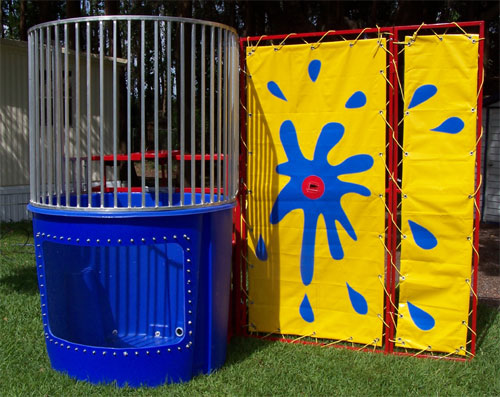
The first event of the year that we will be hosting in order to collect donation items is a Drunk Tank for well…dunking! Those sitting awaiting their fate will be NWP staff members including the Deans and various department professors and staff members. Wanting to donate and item to try to dunk a specific staff member into cold water? Their timeslots are noted on the poster with their photo and name on them, please come to the SA to view who is on the roster or check out the campus bulletin boards! The dunking begins at 10 am on Sept 2, 2022 at the Outdoor Amphitheatre. Check out the NWPSA events page for more information and to view other events hosted by the SA on campus.

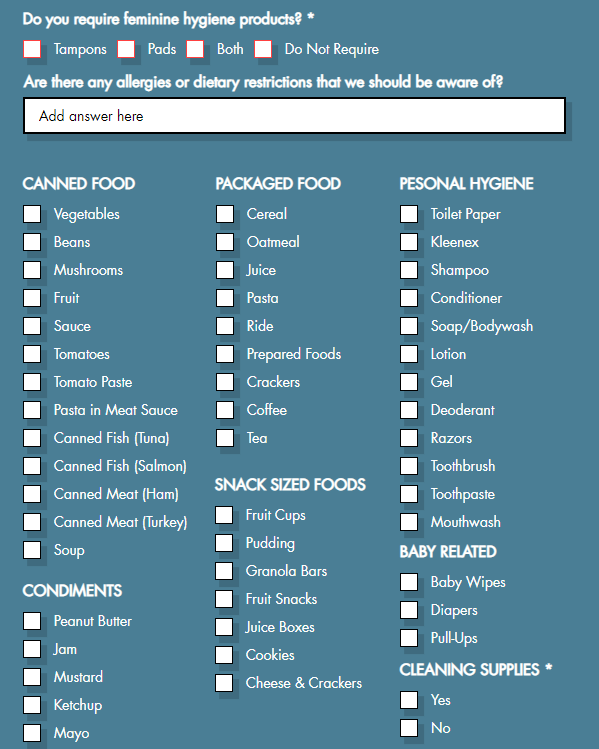
Know of a fellow student who is food insecure or in need of some hygiene products? Perhaps you are a bit strapped for cash this month and are in need of some assistance. If so, don’t sorry you don’t have to come into the SA and disclose your situation if you don’t want to, you may simply fill out this simple form on the NWPSA website. You will receive an e-mail when your order has been filled much like a ‘click and collect’ service the SA will have your items placed discretely in one of the NWP bags all students receive during orientation week so no one will notice you leaving our offices with grocery bags.
Several studies have associated food insecurity with mental health issues such as depression, anxiety disorder, mood disorders or suicidal thoughts. If you are in need of mental health resources, please note there are several resources for students to access. We wish everyone on campus a wonderful school year and hope the Room of Plenty as well as other student lead initiatives on campus ensure each student thrives in their studies!
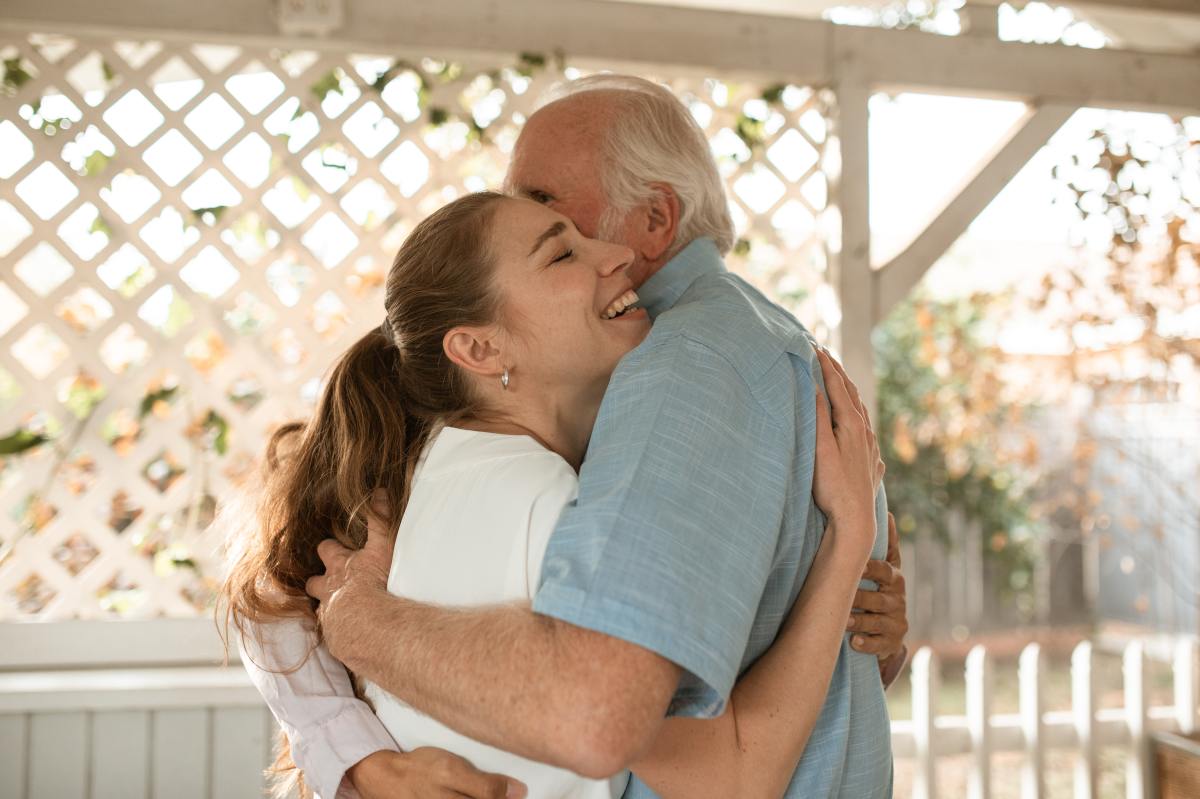
In case you missed it, last year I discovered I had an estranged sister after a chance meeting at a coffee shop in my small hometown. You can read the story on my Twitter.
My name is Marie Smith and I was born in a small town named Towntown, British Columbia.
My parents Mary and Joseph Smith were also born in Towntown and have lived in the town their whole lives.
I also spent my whole life in Towntown until I moved away at the age of 18 to go to school at the University of Northern British Columbia.
Haven’t heard of Towntown? That’s ok. Most people haven’t. The town’s tagline is “The town so nice, they named it twice!”. It’s a beautiful town and for those looking to visit, it’s about a 4-hour drive west from Prince George.
As a high school project I actually documented ‘5 Places To Be in Towntown, BC’. (It features Martine’s Coffee Shop where I met my sister!)
But enough about me! I’m sure you’re here to learn more about my family secrets and how I discovered after 18 years of being an only child that I had a sister.
I knew when we drove up to my parent’s house that something was wrong. Both my mom and Annie had the same wide-eyed look on their faces. Like they both encountered the same ghost.
Turns out Annie was the ghost. Well, the daughter that left at 18 seeking independence from her “overbearing” small-town parents.
I found out that Annie hated growing up in Towntown and resented our parents for not moving away sooner. There were a lot of fights and eventually it reached a boiling point. My sister at the age of 18 packed her bags and left Towntown; she asked not to be contacted and my parents fearing they’d lose her forever agreed.
Life As I Know it Now
And that brings us to the present day. I’ve learned a lot of lessons since meeting Annie last year and reuniting our family after 18 years apart.
There’s no such thing as a perfect family. Even a happy family has their secrets.
The past can be broken but love (and therapy) can mend most things.
Having an older, wiser sister is actually so much better than being an only child.
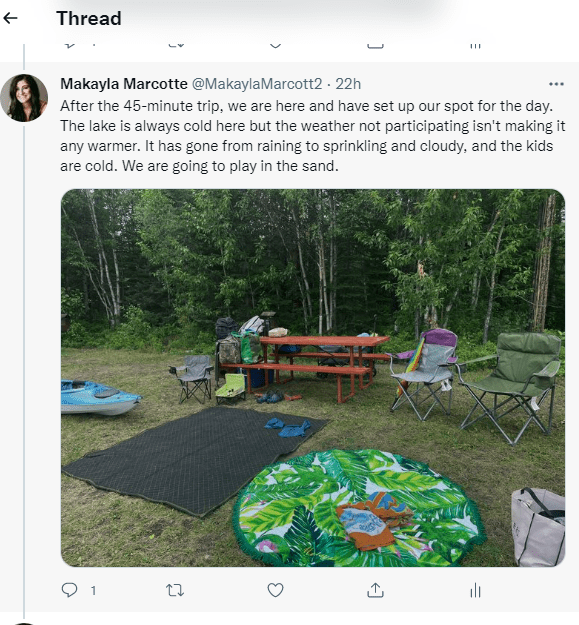
Live tweeting was a little difficult for me. I felt like it kept pulling me out of the day, perhaps because I was with children or maybe I am just not a huge Twitter person. Doing an Instagram post after the fact as a reflection or sharing the story of my day feels more manageable to me. I can organize my thoughts better, but I also use Instagram outside of this course and Twitter is brand new to me. Live tweeting felt a little chaotic and while I did remember the hashtags and got the right number of tweets it was difficult to get a lot of the good elements of storytelling properly tied in, or strong grammar and writing.
There is a beginning, middle, and end to the story but sharing videos and photos of our day was really the key in helping bring the story to life. It was my first attempt at a Twitter thread, perhaps live tweeting most of a day was too long a time to continuously tweet about it. Next time I will try live tweeting something exciting that takes a shorter time frame, like 45 minutes to an hour.
The synopsis of my Twitter thread is that I took a day trip to Musreau lake with a few close friends (Stefanie, Megan, and Jordon) and my goddaughters (Megan’s girls Ryley and Devynn). While I assumed that the story’s major conflict would have been my godchildren’s behavior, it turned out to be some less cooperative weather in the morning.
I am starting to get the hang of Twitter threads, and have been working to apply the basic principles of storytelling to get a more complete story.
Beginning: Preparing for the trip, picking up Stefanie, and the Journey out.
Middle- Climax or Conflict: Our arrival – we ate lunch, but the weather was not improving, and at this point, I was pretty convinced we were going to have to pack the kids up and head back into town.
End: The weather got better, and we ended up having a really wonderful afternoon of bonding time.
This week, while learning about distributed stories and Multiplatform Storytelling I was reminded of the distributed story I have been finding during the last few years.
I first found it in a converted newsrack dispenser: after solving a riddle to unlock the box, I was rewarded with a treasure trove of more stories hidden inside.
Let me explain. It was a geocache.
Have you tried #Geocaching? I first heard of it from a friend’s IG post. While they were exploring the east coast with their kids, locals taught them how to follow clues & coordinates on their phones to locate caches. Each one is a piece of a bigger story…
In short, “Geocaching is a real-world, outdoor treasure hunting game using GPS-enabled devices. Navigate to a specific set of GPS coordinates and then attempt to find the geocache (container) hidden at that location.”1
But, what does the container look like?
What do you do when you find it?
There are simple and not-so-simple answers to both of these questions.
Under bridges, you might find trolls, you might find caches, or maybe both. So many stories! (Screenshot from Geocaching.com)
Usually, you just find the hidden box (there are ratings for size so you know if you are looking for something large, regular size, or little micros) and then sign the log as proof that you were there. The logbook inside could be considered a type of story spread across time and authors. Many people may have found it before, or you may be the very first finder!
The Logbook is a story
Sometimes the finders will write a message along with their name on the paper or the digital logbook about what the conditions were like on the day they found it, who they were with, why they were in the area, or a hint to help you locate the cache. Some days there may have been multiple finders, or there might have been long periods of time when no one could locate the container or it was hidden under snow. If you find a few geocaches in the same neighbourhood you may even see some names repeated, these people have added to the same story as you, but in a different order, and in a different time.
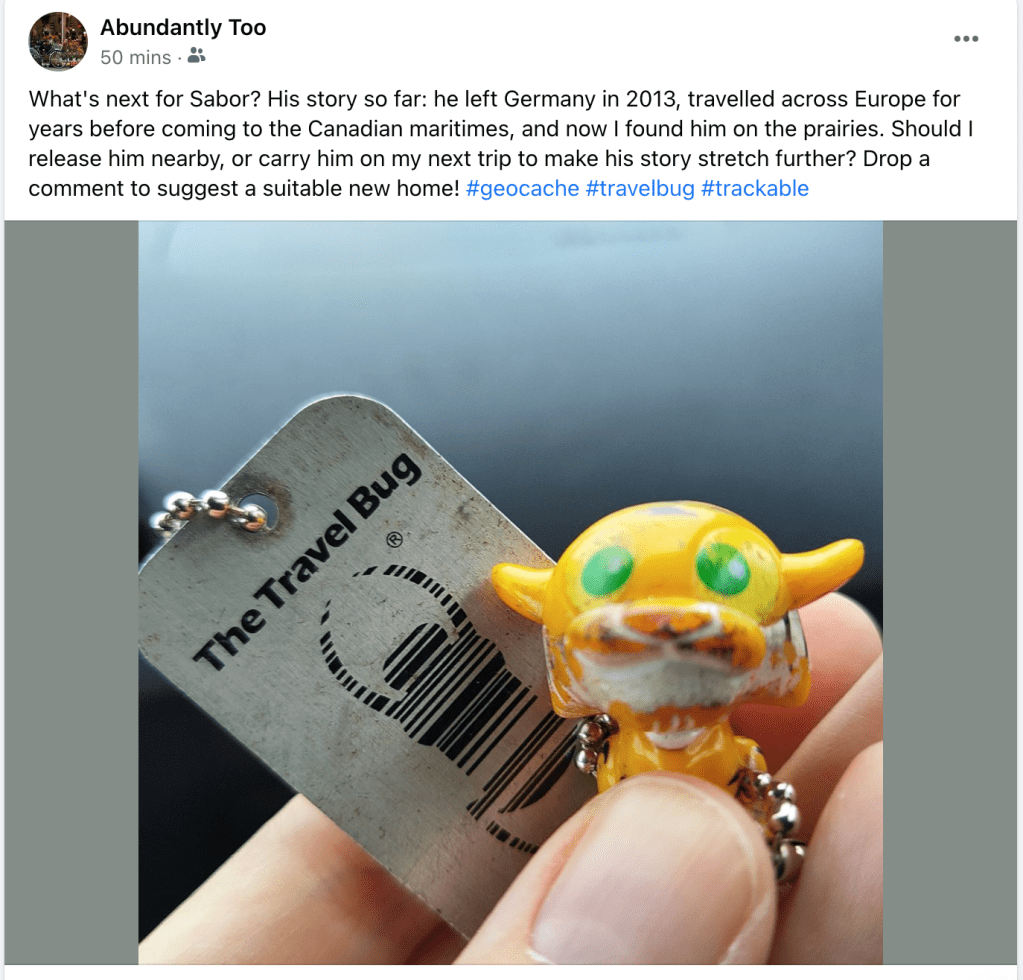
Then there are Travel Bugs like this little guy with his own travel tale.
Caches are stories distributed across every country and continent, with logs by thousands and thousands of different ‘authors’, across more than 20 years (ever since May 2000 when the first geocache was placed). And their story doesn’t even stop there.
Stories within Stories (Literally)
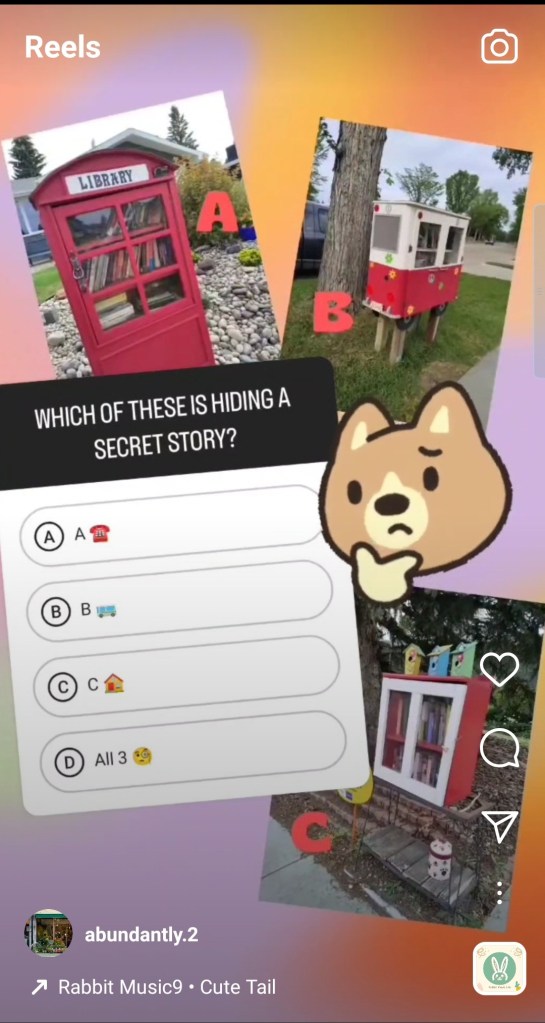
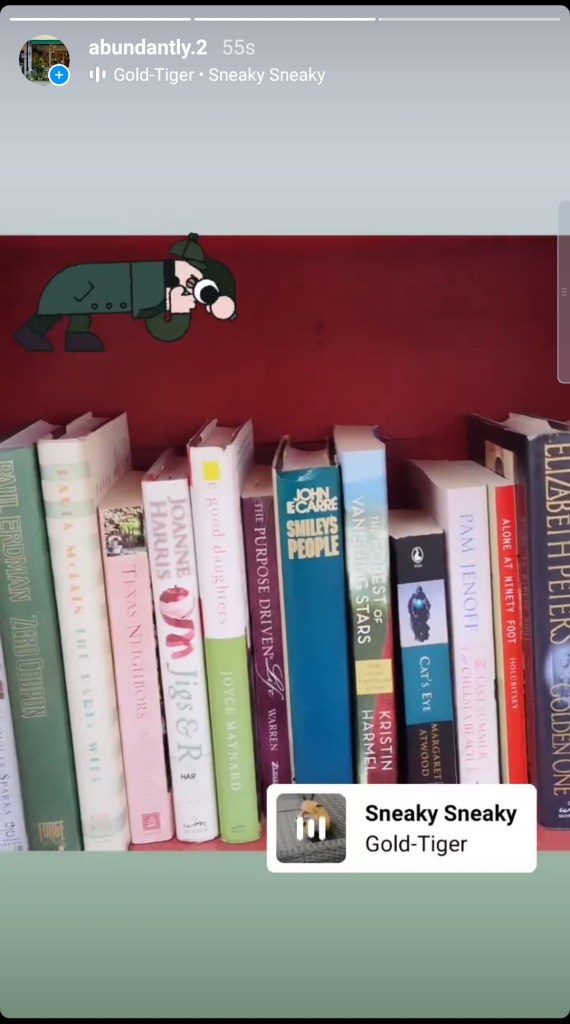
The physical caches can be very tricky, even when you are at the correct location you might not spot them. Is it actually a branch or rock, or a camoflauged hiding place? Is it a novel inside that Little Free Library, or is it a locked book safe or magnetic container?
This video about Little Free Libraries in New York shows that you may have a similar story hiding close to you.
Not to be limited to the ‘little free’ type of library, I have also found a cache in an actual municipal library. The clue was the Dewey Decimal number for the book and shelf, of course.
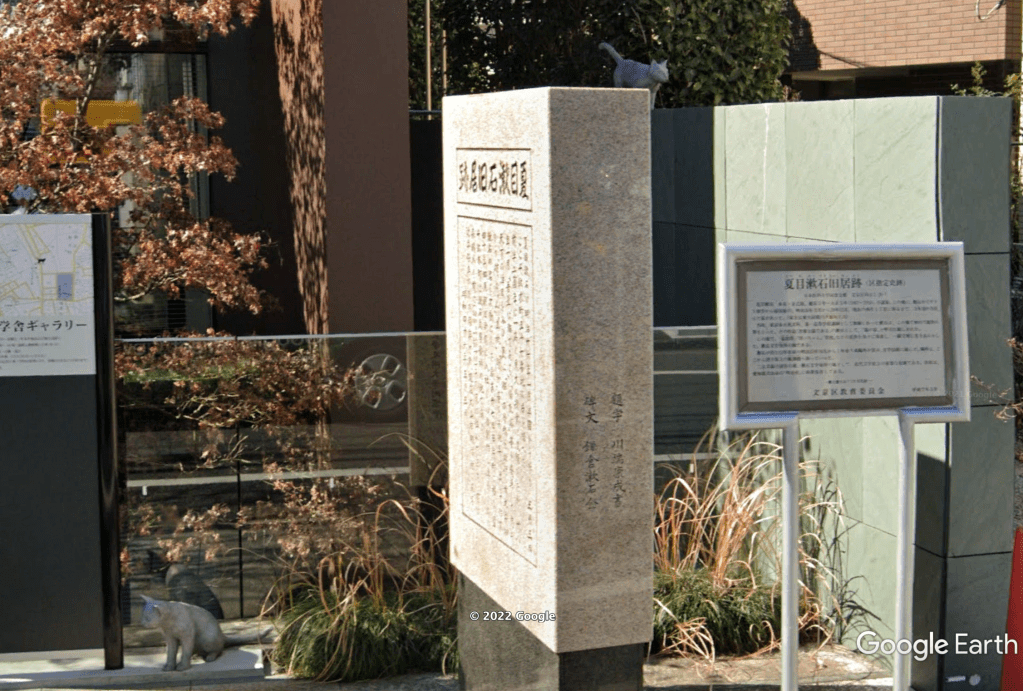
A few years ago I was inspired to read the novel “I Am a Cat” by Natsume Soseki after visiting Japan and finding a cache under this cat statue where the author’s home was originally located.
Original home of author Natusme Soseki, in Bunkyo, Tokyo, Japan with geocache cleverly hidden near the 2 cat statues
It was another example of distributed storytelling as I was physically in the setting of the book more than 100 years after it was written, signing my name to the log at the monument, then reading the full novel later and reliving the same neighbourhood through the eyes of author Soseki.
There are also ‘Other’ cache types – of which I can only scratch the surface. These include virtual caches, EarthCaches (going physically to a special geological location and answering questions to prove you were there), letterboxes, puzzle/mystery caches, gadget geocaches, events, GPS games, and multi-stage caches (like WherigoTM Caches or Lab caches), and more.
The Puzzle or Mystery caches are very interactive – before you can even get the location you need to solve a puzzle. It might be in code, rely on finding clues in the area, or involve finding hidden code in the web page of the cache itself – then deciphering how that relates to GPS coordinates. Those logbooks tend to be shorter when you’ve found them, but there is definitely a story inside about the people putting in the effort to add their names to the list.
Most recently, the story has been extended beyond the earth and its ocean and into even more rare territory. In 2008, one of the first space tourists hid a geocache in a locker on the International Space Station. In 2021, the Perseverance Rover landed on Mars with a geocaching trackable that could be logged by non-astronauts if they found the code on the images that were sent back to earth.
Can you find it?
The instructions and list of the 79,889 people (and counting) who have found it so far are here.
Then, you will have to look through NASA’s raw image files here to find it.
Look for a ‘selfie’ of the Rover.
Don’t get distracted by the hundreds of thousands of Mars vista and rock pics!
When you start looking around, will you find some of these stories or caches near you? When you do, will you just read and experience the story, thinking about who was there before, or will you add your name and be led into a new world of storytelling?
With each post on social media, your hope is to interest your readers long enough that they learn, sign up, or get inspired, amused, angry, and a whole spectrum of emotions you can evoke. If you want your message remembered and maybe even shared, your story will contain some tenets of story structure; a beginning, middle and end; a story spine outline where possible, and answers to the 5 W’s.
Social Networking
On LinkedIn, your professional network will want to share your content if they believe their network will find it valuable. They’ll want it to be factual, and maybe even include reputable sources. If you decide to story tell on Facebook and Twitter, your social network will expect to read your story in your voice. Your profile will allow you to interact with your readers, which further engages them.
Your story can't just live in your head. To flush it out, solidify the structure so you can concentrate on creating magic. #EXSM3989 ⬇️ More…
Avoid “vaguebooking“, which leaves the reader with a line of question marks and potentially a damaging impression of how you handle emotions. You can do this by sharing the facts (the 5w’s) and considering why you feel it’s important to share.
Photo Sharing
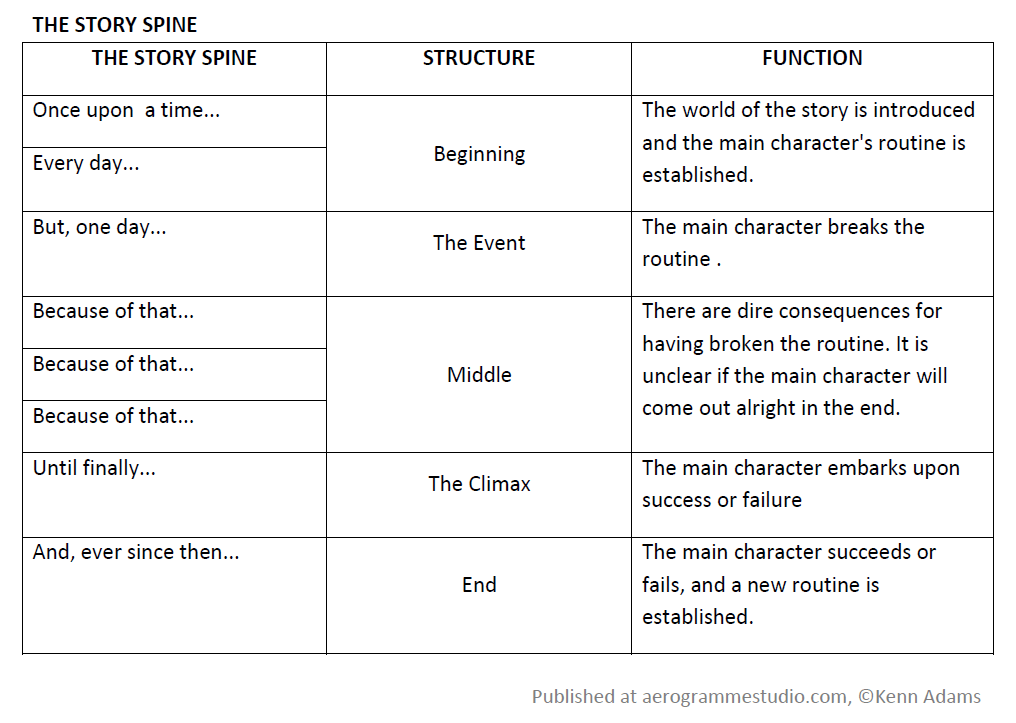
Instagram and Pinterest are the major photo-sharing platforms. Where a picture is worth a thousand words, the visuals shared on Instagram are powerfully influencing, but don’t allow you to link out within your captions. Even with this limitation, the Stories feature lets the creator share snippets the reader can click through. This could provide a platform to follow the story spine (2) structure:
No matter what story you are sharing, YouTube and Vimeo both help you dig into all the details and bring forward emotions through moving images, sounds and structure. Embed your video within a post if you want to elaborate, or let it stand alone. For the smoothest delivery, create a storyboard and a script. Although you want to avoid reading the script (and sounding like an animatron), scripting the video will help make sure all your points are covered. Starting your story with the audience in mind will help you to get the algorithm working for you.
Interactive Media
If you have a funny, visually exciting or educational story to share, sharing on Snapchat or TikTok can be a great way to reach younger (-thinking) audiences. You can tell your story in a creative way, including video, filters, music and overlay text. Plan your story in parts that will fit within the time allowances for each platform.
Blogging/Community Building Sites
Much like this blog, yours can be a final landing place where the readers collect all the details. You can also use it as a launching pad from which your readers discover all the pieces of your story. Tumblr and Redditt are split into categories or niches, where a WordPress blog might be entirely based on one niche. Much like Social Networking sites, the ability to engage with the audience keeps the story alive and growing. The blog format provides space to use multiple images and videos, and longer stories tend to rank higher in Google searches, especially if you link out to other resources.
Wrapping it all up
With all the choices available to tell your story, it’s easy to get overwhelmed and frustrated. Keep it simple and keep it structured to leave room for your creativity to flow!
Storytelling… Digital storytelling… Is there actually a difference?
Well the answer is a little more complicated than yes or no.
Yes, there is a big difference in medium used to create and express the story. Digital stories have movement, images, action, videos and text. Generally, traditional storytelling is either verbal or written, with few images unless we are discussing a children’s book.
So what are these 5 key points?
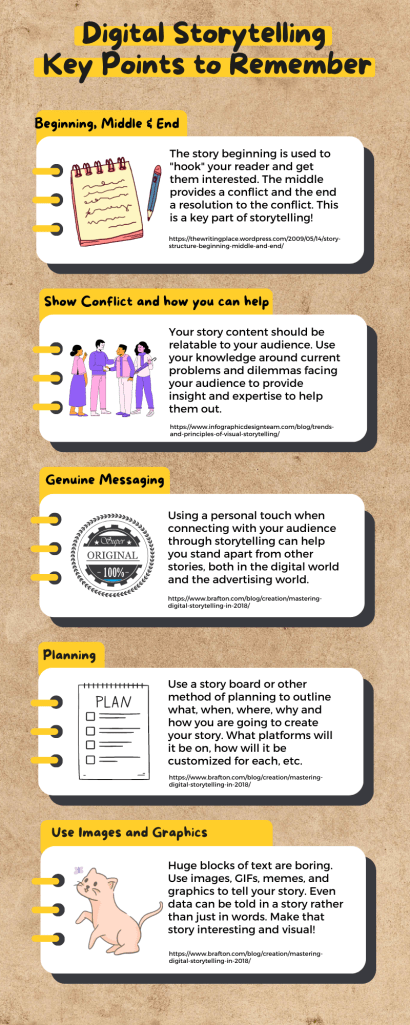
Check out this infographic, which in theory, tells you a story about what you should have included in your digital story:
Ross, 2022
Did any of that make sense? Did it relate back to traditional storytelling for you? That’s good! It should have! Many of the important parts of digital storytelling come from traditional storytelling, such as the importance of a beginning, middle and end to your story. Planning, conflict, they are all important in any type of storytelling. But this is where we divert off course…
Digital storytelling… the difference
If I was sharing this infographic on a website or social media post, you would see the pencil moving across the notebook as well as the cat stretching to reach the butterfly. Why? Because movement is important to catch your audience’s attention.
As the Infographic Design Team mentions in their article 10 Trends and Principles of Visual Storytelling That Every Designer Must Follow, digital storytelling is all about visual storytelling. Posts on Twitter and Facebook with images or videos have more likes and shares than plain text posts. Attention spans are dwindling, and story telling needs to change with them!
To conclude…
Make sure your stories are compelling online by making them visual.
And when you can, end your blog post with a GIF of a kitten. Because what is the internet good for, if not for kitten GIFs.
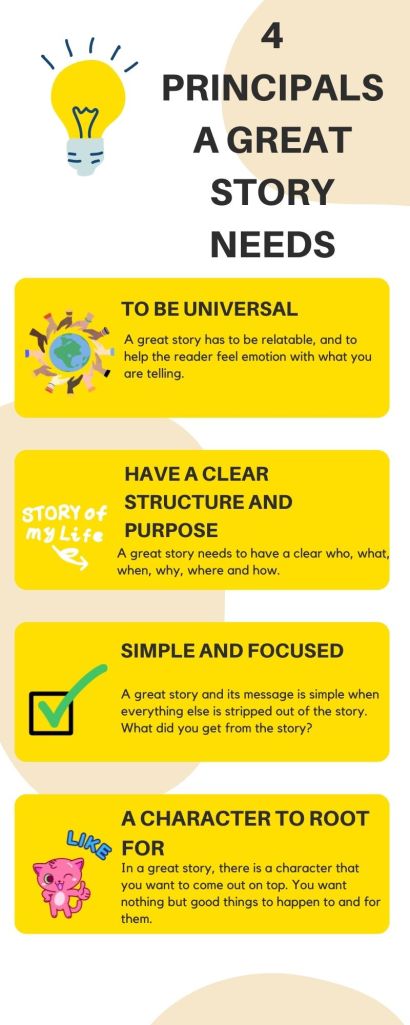
A great story, whether it is a book, a movie, a play or anything you can read or watch, all have a few things in common. Here are 4 principals that help create the stories you fall in love with:
To Be Universal
A great story needs to have a relatable story. It needs you as the watcher or the reader to feel emotions that the characters are having. To want to cry when they do and to be angry with the situation when they are. That is what draws us in to a good movie. We know what it feels like when the character is struggling. We can relate with how the main character decides about a certain situation.
2. To have a clear Structure and Purpose
Following the story spine when creating a story helps to know what is happening and when. It lays everything out so that it the story is easy to follow.
3. Simple and Focused
Every story has a message, the main point is to make sure it is simple and noticeable. What is the reader/watcher going to take away from this? How is this going to impact them once they are done? Lessons people take away from books or movies are sometimes something they keep close to them for life.
4. A Character to Root For
No matter how many books or movies you watch, there is always someone that you want to succeed. The best part of the movie is the happy ending. The character coming out on top and having all of the amazing things happening to them is what we all want out of a story. Who likes a unhappy ending?? I don’t think anyone does.
There are a ton of tips and rules of making a great story but these are ones that I have found helpful.
This week I decided to share 5 of the key elements I believe make for good storytelling in digital marketing.
Having a well-thought-out writing plan is always beneficial in organizing your ideas and composing your story. This is a good opportunity to utilize a storyboard. The video link does a great job of explaining the process in a different way.
I like to start projects with the end in mind. Setting a goal for the length of your project makes it easier to stay on track.
Every story needs a challenge and a solution. I have always enjoyed stories that have a hero, especially in fiction. The hero’s journey typically makes up most of the story itself. The article linked gives a great example of the hero’s journey in two popular movies.
Incorporate visuals to make your story memorable and resonate with your reader. Neil Patel has a great article about incorporating images into blogs.
Feedback is an important part of storytelling and digital marketing. Share your writing when you have the opportunity to do so.
Hope you enjoy my infographic. Thank you for reading mine.
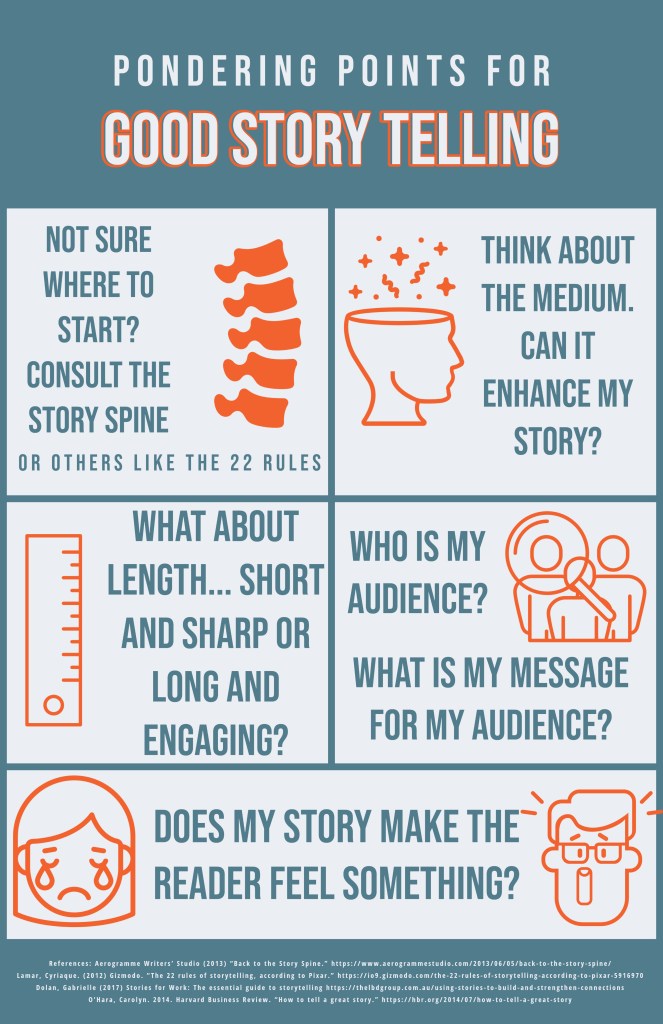
If like me you are new to the nuances of the art of storytelling… it can be an overwhelming experience to suddenly start telling a story! You’ve heard about the idea of good storytelling…. but what does it mean? What should I think about?
Thinking about storytelling can be overwhelming!
People are natural storytellers… supposedly! Somedays I don’t feel like a natural storyteller… Purportedly that is what separates us from the animals (can we ever be sure animals aren’t storytellers???). I digress, but what we do know is there are certain core components, key considerations, or as I call them pondering points that can help create a good story!
There are lots of pondering points to help us along the way…. whilst we might not need to know the scientific detail of why our brains like stories… (Its true and Harvard says so and why here: Why Your Brain Loves Good Storytelling) but we can use the their academic findings to help us as storytellers. There are also plenty of quality opinion and experience pieces from really competent (and incredibly popular) storytellers like Pixar or even medium providers like Twitter than can help us in our quest for good storytelling!
Anyways I condensed my top pondering points from some excellent references into the handy infographic below to help you to start storytelling!






 EXSM 3989 - Digital Storytelling Class Blog