Categories
Uncategorized

Harry Potter: The Boy We Grew Up With

Nicole Neagu

If we are asked to go down memory lane and think of our favourite story growing up, I guarantee that for at least a few of us, Harry Potter by J.K. Rowling will pop into our minds. For those who haven’t yet been introduced to the Wizarding World of Harry Potter, it’s a series that follows a young boy, who on his eleventh birthday is invited to study at the Hogwarts School for Witchcraft and Wizardry after the lovable and aloof Hagrid, delivers his iconic “Yer a wizard, Harry.” The series continues and centres around Harry and his best friends, Ron and Hermione, over the course of seven books (and eight movie adaptations) and the hijinks and adventure that ensue.

While that was a very watered-down recounting of what the Harry Potter series is all about, one thing is for certain, Harry Potter played a crucial role in millions of people’s lives.

Where it began

I was one of the lucky few that discovered Harry Potter and the Philosopher’s Stone in elementary school at the young age of eleven (coincidence?). I think this is where the charm of the story really began for me. All of a sudden, I’m reading about a little boy, the same age as me, who learned he was special and had the opportunity to drop everything that was sad in his life for a world of mystery and magic. Doesn’t everyone want that? I found myself waiting outside my door for that letter with emerald green writing to arrive and invite me to study at Hogwarts.

While that day never came, I was still able to attend Hogwarts through reading the series. What makes his journey so captivating and intriguing is the fact that we grew up with Harry and it felt like we were right alongside him. Although we didn’t know him personally, in reading the books, we truly got to know him and his story. This may not be the case to those who read the books later into their adulthood, but for the young readers, Harry was a friend. In all, Harry was relatable to us at a young age because he was just a small boy dealing with fear, authority, bravery, and new surroundings.

The four I’s

I can sit here and talk about why I love Harry Potter forever, but let’s look at the facts. Is Harry Potter powerful storytelling? To do so, I will be using Ashley Fell’s Four I’s from her TED Talk, Why storytelling is so powerful in the digital era:

Interest. I think in looking at the absolute beast that the Wizarding World franchise has become, it is clear that there was interest in the books, and later on an interest in the movies.

Instruct. What did Harry Potter teach us? While it’s important to separate the author (and her problematic views) from her work, Harry Potter taught us the importance inclusion, whether that’s including friends who have a different background than you or working together to fight a common enemy.

Involve. One thing about the writing style in the Harry Potter books that I enjoyed is the fact that you learned along with Harry. Harry became aware of important plot points right along with us. We felt emotionally connected to the story and felt sadness with Harry as well as happiness.

Inspire. If Harry Potter did one thing, it inspired. From videos like Harry Potter Puppet Pals to full musicals like Harry Potter and the Cursed Child, and references and jokes in mainstream media on shows like SNL, The Simpsons, and Southpark, Harry Potter inspired many to create (whether in parody form or not).

Ultimately, Harry Potter is one of the most memorable and engaging stories that exists in our lifetime. The franchise has quickly grown outside the original stories and we will continue to see it grow in the years to come.
Categories
Uncategorized

Turning Red (2022): A Memorable Story

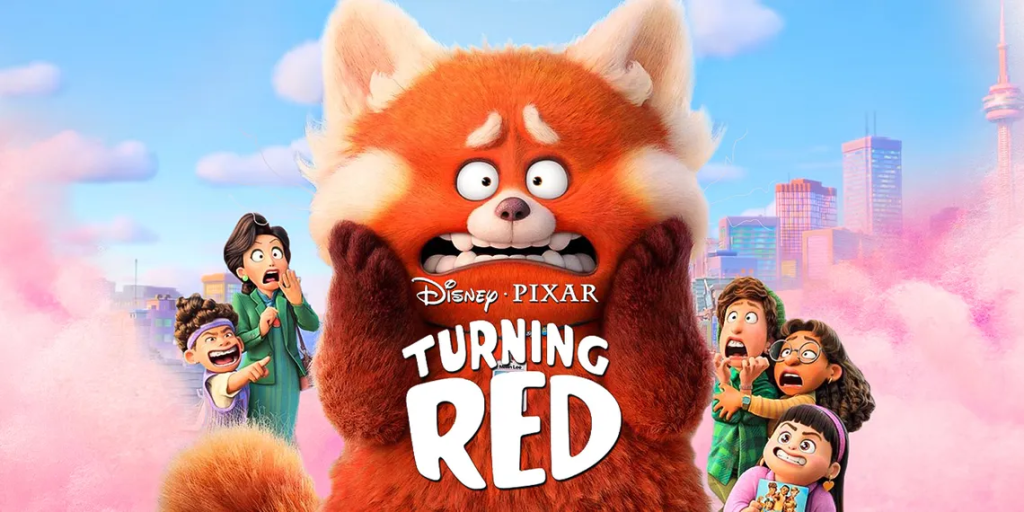
Turning Red is just one of many coming-of-age stories released by Disney and Pixar. However, it was a particularly memorable and a stand-out story for me as it fostered an emotional connection to the characters and their experiences – we will dive further into this shortly. For those who have not seen it, Turning Red follows 13-year-old Mei Lee’s journey from preadolescence to becoming a teenager amongst the heavy weight of parental expectations, personal desires, and uncontrollable biological changes.

Why I Loved It

While there are tons of Disney and Pixar movies that I have grew up on and have personally loved over the years, the 2022 release of Turning Red is just one of those movies that managed to creep its way into my heart for to easily become one of my favorite movies of all time:

  • It is heartfelt: I know we’ve all experienced that awkward and stressful transition from preadolescence to the teenager years where puberty begins to hit. We watch Mei Lee go through the struggle of this throughout the movie. In her case, Mei Lee turns into a red panda whenever these emotions begin to rise. However, we see that she is not alone and has the love of friends and family to guide her through.
  • It’s familiar: Throughout the movie, we can see that the movie takes place in Toronto – a familiar Canadian city that we all might recognize. It features the famous CN Tower, Chinatown, and even the transit system!
  • It Represents: Mei Lee is a young Asian girl growing up in a big Canadian city. Throughout the movie, we can see visual references to aspects of Chinese culture. I think it is wonderful and important to see representation in stories and have this lens amplified to an audience.
  • It’s Personal: For me, I could relate to a lot of what Mei Lee was experiencing and that was also what stood out. I myself am also a Chinese Canadian so I was able to identify with Mei Lee’s character. The movie features some nostalgic elements that I also saw in my childhood – like a Tamagotchi.

Why Turning Red is Good Storytelling:

In a TedTalk by Ashley Fell, on Why storytelling is so powerful in the digital era, she goes over a few key components: A good story is one you can identify with, they interest us, instruct us, involve us, inspire us in some way, and good stories are inherently visual. Turning Red does a good job at putting these principles into action, and thus managing to tell a memorable story.

Turning Red is Universal and Interest’s Us

As a coming-of-age story, I think most of us can identify with the aspect of ‘growing up’ and trying to find ourselves as we juggle a period of discovery regardless of age, gender, or culture – that experience is familiar. In the movie, we see Mei Lee even hide a journal from her mother. I’m not sure about you, but I definitely also had a journal when I was a tween that I tucked away.

It humanizes the experience of growing pains in a digestible way. And Turning Red does not shy away from showing the very real internal emotional and relational conflicts and what some might consider to be a more taboo topic such as puberty. This is also what makes the story so compelling: it’s relatability and confidence in telling a story that some may argue as uncomfortable to talk about. Some parents have critiqued this story in that it touches on topics that should be left out of childrens story.

And let’s not forget about the captivating visuals in this animation that help bring the story to life. The characters are fully animated, colorful, and expressive. Ashely Fell also mentioned that the three key components of a great story include: color, picture, and movement. As an animation – we get to see all of this unfold before our eyes. We see a girl transform not just figuratively, but literally into this giant red panda!

Turning Red Instructs Us

We get to see the development of a character. We get to see the impact of positive friendships as a core support. We get to see the very real aspect of a girl trying to meet her mother’s expectations. We get to see this character wrestle with these experiences and ultimately learn to accept them as part of who she is growing into. Turning Red teaches us that these things are normal, and not something to shy away from. It teaches us to embrace ourselves and that eventually we will figure it out.

Turning Red Inspires Us

This story is inspiring because it amplifies a topic that maybe mainstream society may find uncomfortable or challenging to talk about. Despite the criticisms that Turning Red has received, I think it challenges the narrative of just spewing out happy fairytales and opens the dialogue for maybe addressing other real and human topics and putting it at the forefront of a story as a learning experience.

Furthermore, if we take some time to delve into why the story was written by director Domee Shi, we can see that Shi actually was pulling from a lot of her own experiences growing up. In turn, Pixar also saw this universality in her story and chose to bring it to life for a larger audience. Perhaps this best serves as an example as to how our own stories can become something more as long as we give it a voice.

For me, Turning Red will always be a movie that if someone were to ever ask me what a ‘good story is’ – it would the first one I think of for these reasons listed above. If you have not watched it already, I highly suggest at least seeing the trailer to get a taste of what the story has to offer. And I hope that you find it as memorable as I did.

Categories
Uncategorized

How The Reader uses elements of storytelling to capture its audience and get you to question your morals

By Joanna Chu

I can still recall the moment I first decided to watch The Reader, a romance/drama film set in post-Nazi Germany. I was a budding young pre-teen who was starting to understand the intricacies of our world, and the forbiddenness of watching a movie that was rated R made the film and the story to follow so much more enticing to me. I first watched this movie on a flight, and it would become the “long-lost film” in my head as I could not recall any details from it other than the main plot. It wasn’t until early adulthood, when I discovered Yahoo Answers (RIP), that I could pop my question in and long lost, it was no longer. This movie really affected me, and I thought about it often. The simple fact that I could not determine or figure out what movie this was caused even more internal conflict and drama because I wanted to find out so badly! 

Although The Reader only scored a 63% critic rating on Rotten Tomatoes, I can assure you that the Google audiences scored this film relatively high with a 90% positive rating. It may make you cry, it may anger you and it may even make you question your morals–all the great tensions and emotions that come with compelling storytelling.  

(Warning: Spoilers Ahead!) 

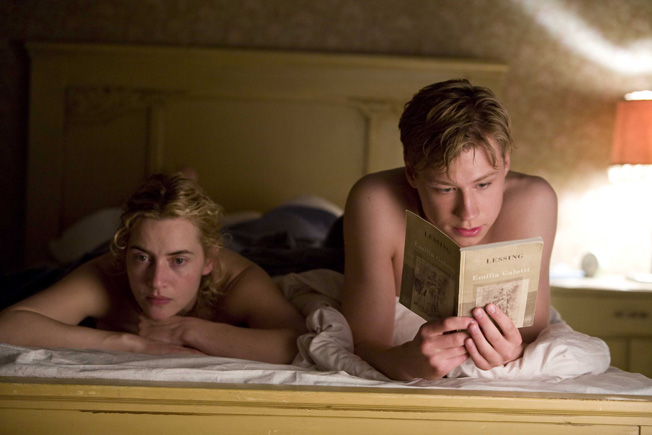
The movie follows the protagonist and narrator, Michael Berg, who we learn is having a sexual relationship with an older woman, Hanna Schmitz, when he is only 15 years old. Frequently, before their passionate love-making, Michael would read to Hanna upon her request. “Reading first. Sex afterwards.” One day, Hanna packs up and leaves without warning, and it isn’t until later in the movie, when Michael is a young law student, that their paths cross again. We discover that Hanna is on trial for Nazi war crimes and her part in being an SS prison guard. Michael battles with his moral beliefs but ultimately decides to rekindle a relationship with Hanna while she is in prison. He sends audio tapes of himself reading aloud like he did when he was younger, and we unearth Hanna’s biggest secret: she is illiterate. The theme of illiteracy is vital in this film because it sets the tone for a moral dilemma for Hanna and is a turning point for the audience when they discover this. Hanna should be paying for her part in the Nazi war crimes, however, there is a part of you that almost feels bad for her due to the context of the illiteracy. (Trigger warning ahead: mention of death and suicide). Before Hanna is about to be released from prison Michael decides to visit Hanna. Shortly after, Hanna dies by suicide, leaving the viewer to wonder if she passes due to her struggle with her moral dilemmas or Michael visiting her. 

Impactful stories are universal and relatable. This story caused an internal struggle within me, where the simple concepts of right and wrong and what justice is began to blur. It was not so black and white. Kate Winslet, who played Hanna Schmitz, expressed how difficult it was to portray this character and that the most challenging element to display accurately was “learning how to be illiterate.” 

The Reader does a good job of following the Story Spine and, fundamentally, is written as a well-constructed story with a proper beginning and end, a groundbreaking event, a middle part that covers the consequences and a primary and secondary climax. This story is compelling as it displays tension from the different viewpoints presented and has even been criticized for displaying themes of Holocaust Revisionism for making Hanna the object of audience sympathy. The film is adapted from the novel, The Reader by Bernhard Schlink. With that, the author and director could have been more mindful of the questions to ask before starting a story. The question that may have combatted some of this critique would be to ensure that this story is fair to the people and ideas it represents. Conclusively, this proves that this story was captivating as it had the power to engage its audience, hold them and ensure that they would remember it for years to come. 

Categories
Uncategorized

Moana (2016)

Moana is a Disney animated movie that tells the story of a teenage girl who, despite protest and disapproval from her tribe, sets out on a dangerous sailing adventure to try to save her people. Moana is expected to follow her Father’s footsteps and become the next chief of her tribe, but her heart pulls her in a different direction which takes her on a brave and dangerous journey throughout the movie.

What Makes Moana a Good Story?

  1. Moana’s storyline is relatable

According to TEDx Talk: “Why storytelling is so powerful in the digital era” by Ashley Fell good stories are ones that are relateable and that we can identify with. In the movie Moana the daughter of a tribe’s Chief grows up being prepped to one day take over her father’s position as her islands Chief. However Moana dream of her own was not to be Chief, but instead she felt called by the ocean and was on a mission to become a master way finder. Moana struggled with not wanting to follow in her father’s footsteps she did not want to let her parents down. A theme i am sure we all can identify with.

For me, when I graduated highschool and I was trying to decide “what I wanted to be when I grew up” I struggled with pleasing my parents or pleasing myself. I was expected to follow a certain path but it was not the path I wanted to follow. I relate to Moana’s story and in a way felt like I could understand the internal struggle she was facing with doing what she thought she was supposed to, or following her heart.

2. Moana is a character we want to root for

As mentioned in our Module 2 video , one of the main principles of storytelling (according to Pixar) is that a good story gives you a character to root for. Moana is a character that is easy to root for because it is easy to put yourself in her shoes of struggling with making the right decision and being conflicted with being who others want you to be, or being who you want to be.

3. Moana has conflict, a climax, and a resolution

According to our Module 2 video a good story includes conflict, a climax, and a resolution.

Conflict: Moana main conflict throughout her story is whether or not she follows her heart and her own dream, or if she follows the path she is expected to take. This theme is something I am sure we have all struggled with at some point. As a people please myself this is a reoccurring theme for me and is one of the reasons why this film resonates with me so much.

Climax: Moana’s sailing journey is centered around her trying to find demi-god Maui to have him restore the heart of Te Fiti to save the people of her island. The climax of the story is when Moana, with the help of Maui, is able to return the heart to Te Fiti and save her island.

Resolution: At the end of the movie Moana returns to her island, reunites with her parents, and later becomes chief of her island and a wayfinder.

Categories
Uncategorized

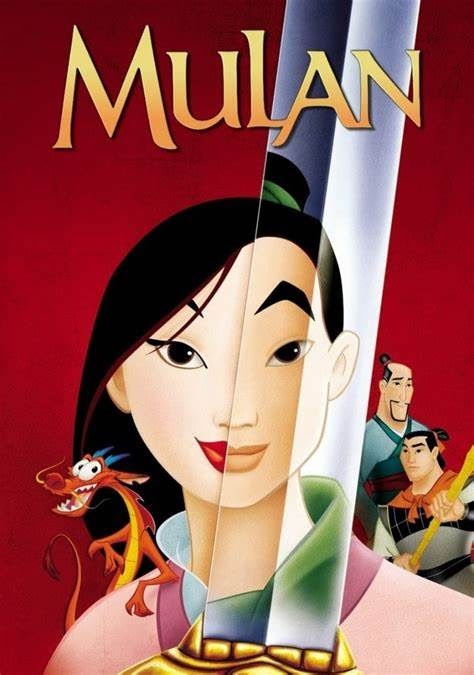
Film: Mulan (1998)

“The flower that blooms in adversity is the most rare and beautiful of all”

Mulan is an animated Disney movie from 1998 based on the Chinese legend of Hua Mulan. In the story Mulan leaves home to take her father’s place in the army during the Hun invasion. The movie follows her path from being an outcast to becoming a strong warrior who eventually saves the Emperor and China.

Why I love Mulan as a Story

I’ve loved this story since I was a child, it had the perfect combination of action, drama, romance and suspense especially for an animated film. Additionally, Mulan was one of the first female-lead Disney movies that wasn’t a princess and made the lead character a regular person that didn’t include a traditional Disney version of ‘femininity’ and happily ever after.

Mulan & the Four Principles of Good Storytelling: Universal

As a story, Mulan hits every single point of Pixar’s four principles of good storytelling and incorporate a number of its 22 rules of storytelling. The first point, “great stories are universal” applies because many of us have struggled with being an outcast, trying to fit in or facing adversity to better yourself. We can also all relate to the reasoning why Mulan chose to risk her life and potentially bring dishonour to her family: the love of her father and being worried for his wellbeing and wanting to make her family proud. These themes are universal among many people in society and helps the audience connect to this story.

Mulan & the Four Principles of Good Storytelling: Clear Structure and Purpose

Mulan also has a very clear structure and purpose as the audience can easily follow along the different steps of her journey to get to the final. The structure, based on Helping Writers Become Authors website would (generally) be:

  • Mulan fails at the matchmaker
  • Mulan takes her father’s place in the army
  • The Huns challenge the Chinese army
  • Mulan retrieves the arrow at the camp
  • The Chinese army is attacked
  • Mulan is discovered as a woman and let go of the army
  • The Huns kidnap the emperor
  • Mulan kills the Hun leader
  • Mulan returns to her family with honour as a hero.

Mulan & the Four Principles of Good Storytelling: Simple & Focused

Mulan as a story is also very simple and focused, while many elements are going on the primary focus is Mulan finding herself and growing into a warrior who honours their family. By keeping this focus, we feel even more connected to the character and root for them even more because we know what they are working towards.

Mulan & the Four Principles of Good Storytelling: Give a Character to Root for

Finally, the last principle of good storytelling, Mulan is absolutely a character to root for. Through her rejection at the matchmaker to her going through base camp and getting stronger and initially being rejected by the other soldiers we all want to see her succeed and bring honour to her family. They showed not only her highs and lows but also how she got from her lowest to her highest.

Categories
Uncategorized

How To Catch A Star

The Meaning, Magic & Moral of Oliver Jeffers’ “How To Catch A Star” to a girl who loved stars very, very much

A story that has stayed with me for close to 17 years is the children’s picture book  “How to Catch a Star” by Oliver Jeffers.

In my experience, stories imprint on us due to a) the quality of the story/author/storyteller, b) the emotion or moral the story elicits AND c) timing. We hear stories or songs and see pictures or video differently at different times in our lives because of the emotion, the nostalgia, the memories and the connection we feel to the story or characters in those moments. The story/words/dialogue don’t change between repeat listening, reading or viewing, but our experiences have. 

In 2006 two important things had changed for me. I had moved from my high school English classroom to the library, where I become the librarian for a K-Gr.12 school of 800 students in Winnipeg, and my first child had just turned two.

These two events created the perfect work/home life scenario. I was exploring new authors and illustrators, reading Caldecott winning picture books, and finding new series and characters that had emerged between the time of me being a kid and learning to read in the 1980’s, to me having a kid who was starting to understand the concept of reading, books, and bedtime stories. I came home with armloads every night for him and I to discover. We found “How to Catch a Star” and I was hooked – so much so that two years later when his sister arrived and took up residence in the “nursery” his “big boy room” was inspired by the book. 

“How to Catch a Star” was written and illustrated by Oliver Jeffers. Jeffers’ illustration style is recognized for it’s unique and instantly identifiable use of minimalism, mixed media and open space composition. It is simultaneously simplistic and bold – holding the reader’s attention but not distracting or overstimulating the reader from the protagonist’s simple but important quest. 

The protagonist is a young boy. He is only ever referred to a “the boy”, making him both a real character but also a blank canvass in which the reader can imagine “childhood” conceptually. 

What do we know about the boy? Very little. He was a boy. And he loved stars very much. He loved stars so much he decided to try and catch a star of his very own.

Who wouldn’t want a star of their very own?

It is the boy’s undeniable innocence but complete rationale that makes him so endearing. He knows catching a star will be hard so he makes a plan to get up at dawn, when the star will be most tired from shining all night long, making it easier to catch. But the star disappears on him. So he patiently waits all day, weighing his options “that didn’t work” and reformulating his plan in a textbook example of “because of that…” described in  Ken Adams’ story spine structure. The only hint that the boy is imagining this all in his head and not serious in his quest is when he remembers he can’t take his rocketship up to the star because it ran out of gas when he flew to the moon last week. But he is patient and persistent and purposeful. And we want him to succeed, even though we know he won’t.. As with Pixar’s 1st of 22 rules, we admire him for trying, despite knowing success is impossible.

And then he sees a star in the water. And through Jeffers’ illustration we see it too – and it’s oddly emotional. We are startled it never occurred to us to look anywhere but the sky. We are excited for the boy. Hopeful that his wonder and belief in all things possible is reaffirmed. Sad because we know that he will not catch this star either. But his quest continues. He is still just a little boy who loves stars very much, walking up and down the sand waiting for his star to wash up on shore. So we let him believe. There’s no harm.

But then, with a magic normally reserved for Hallmark Christmas movies, there it is!! A star laying on the beach! His star. A star of his very own… 

And we are happy for him. We smile gently behind his back at his lack of understanding, his naivete, his childlike belief in the impossible. Let him believe he caught a star. 

But he doesn’t care. His wish came true and his quest was a success. He has a star of his very own. He smiles back. He knows what many of us have forgotten – if we don’t set lofty goals because they seem impossible, if we don’t try a different strategy because we failed, if we don’t look for the answers to our prayers in ways other than we expected or demanded, we will always miss the magic that happens everyday all around us.  

I think that is a perfect example of Kenn Adam’s favorite new addition of  “and the moral of the story is….”

And it’s a great moral. 

Categories
Uncategorized

Film: The Princess Bride

by: Brenda G. Smith

During the infamous “COVID” shutdown, confined to our homes, many books, movies, and TV series were consumed. My favorite movie, The Princess Bride, was my go-to. With both hands and feet, I cannot count the number of times I have watched The Princess Bride. It is a timeless classic that has held up with the warmth and coziness that envelops you even as Fred Savage is enveloped in his blanket, waiting for Peter Falk to read his story. This story has become iconic for its characters and its movie quotes. As an example, my husband and I were asked to officiate a wedding, and the bride wanted The Princess Bride’s marriage speech recited during the ceremony.

The Princess Bride movie was adapted from a 1973 novel written by William Goldman. In the opening scene, you see a young boy, played by Fred Savage, home from school and playing video games. His grandfather comes into his room to keep him company for the day. In his hand is a book that he would like to read to his grandson, who rolls his eyes at the idea.

The grandfather is persistent and reads the story of a farmhand named Westley. Westley works on the farm where the beautiful Buttercup lives with her family in the fictional kingdom of Florin. Whenever Buttercup tells the farmhand Westley to do something, he always obliges with an “As you wish.” The two eventually fall in love. Westley aspires to do more than just be a farmhand for Buttercup and leaves to make his fortune on the sea. The Dread Pirate Roberts attacked his ship. Westley is presumed dead, leaving Buttercup devastated.

Through a series of events, Buttercup has been forced into an arranged marriage with Florin’s Prince Humperdinck, but she is still in love with “her Westley.” Before the wedding can take place, three outlaws, Vizzini, Fezzik and Inigo Montoya kidnap Buttercup. However, an unknown masked man in black follows them.

The man in black confronts the outlaws and, one by one, he defeats the three. He flees with Buttercup, and she assumes he is the Dread Pirate Roberts. Buttercup’s anger at the Dread Pirate Roberts ignites as she believes he is responsible for “her Westley’s” death. The two tussle and she pushes him down into a gorge. As he rolls down, he shouts, “As You Wish!” Buttercup recognizes Westley, and follows him. They are reunited for a short time before Prince Humperdinck recaptures Buttercup and throws Westley into the Pit of Despair.

Through events, Westley is reacquainted with Fezzik and Inigo Montoya. They set out to rescue his true love Buttercup, from the evil Prince Humperdinck.

Woven into the narrative are the conversations between the grandfather and grandson. The grandson was taken by the story and the events sparked his imagination. At the end of the movie, the boy eagerly asks his grandfather to read the story again the next day. The grandfather responds with “As you wish.” (The Princess Bride (film), n.d.)

The Princess Bride, released in the fall of 1987, is an old yet modern-day fairy-tale brimming with action, romance, and comedy told through a sweet relationship between a grandfather and grandson. This story told through the medium of film captured my heart and imagination as the grandfather sat down to engage the grandson in a story. This struck a personal memory in my childhood as it reminded me of my grandparent watching over me when I was sick. I would hear stories of my grandparents coming to Canada and making their way to Alberta. In its own way, my grandparent’s story had action, some comedy, and a bit of romance.

In listening to the TED Talk – Why Storytelling is so Powerful in the Digital Era by Ashley Fell, she states that “a good story has a character that you can identify with.” I could identify with the young boy at home from school listening to a story told to him by his grandparent. The story piqued my interest from the very start, as the grandfather was very strategic in arousing the grandson’s interest in the story. I wanted, like the grandson, to see what the story was about. I wanted to keep watching. The story carried the premise of good over evil. Would the underdog Westley triumph over the evil Prince Humperdinck and how would that happen? As the movie played out and jumped from the story in action to the story being told by the grandfather, or rather the grandfather stating that the “story may be too much” and the young boy crying out that he wanted to hear more. It involved me as the viewer, and I wanted to continue to the end.

In conclusion, through the inspiration of justice triumphing, Westley, Buttercup, Fezzik, and Inigo Montoya ride off on white horses. Ashley Fell stated in her TED Talk, the story did not just connect with the eyes of my brain but it fully connected with the eyes of my heart.

Categories
Uncategorized

The Notebook

I am a common man with common thoughts, and I’ve led a common life. There are no monuments dedicated to me and my name will soon be forgotten, but I’ve loved another with all my heart and soul, and to me, this has always been enough.

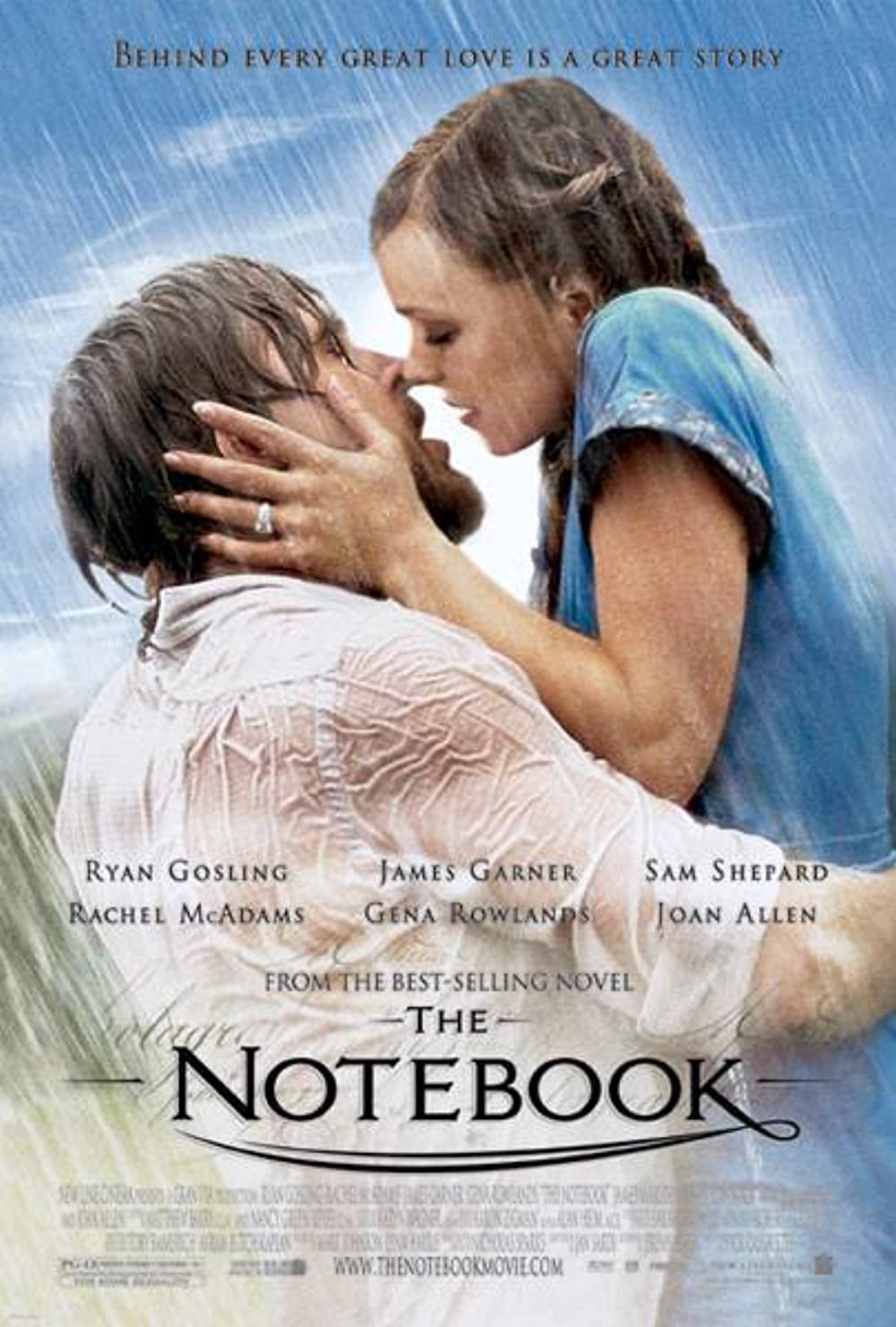
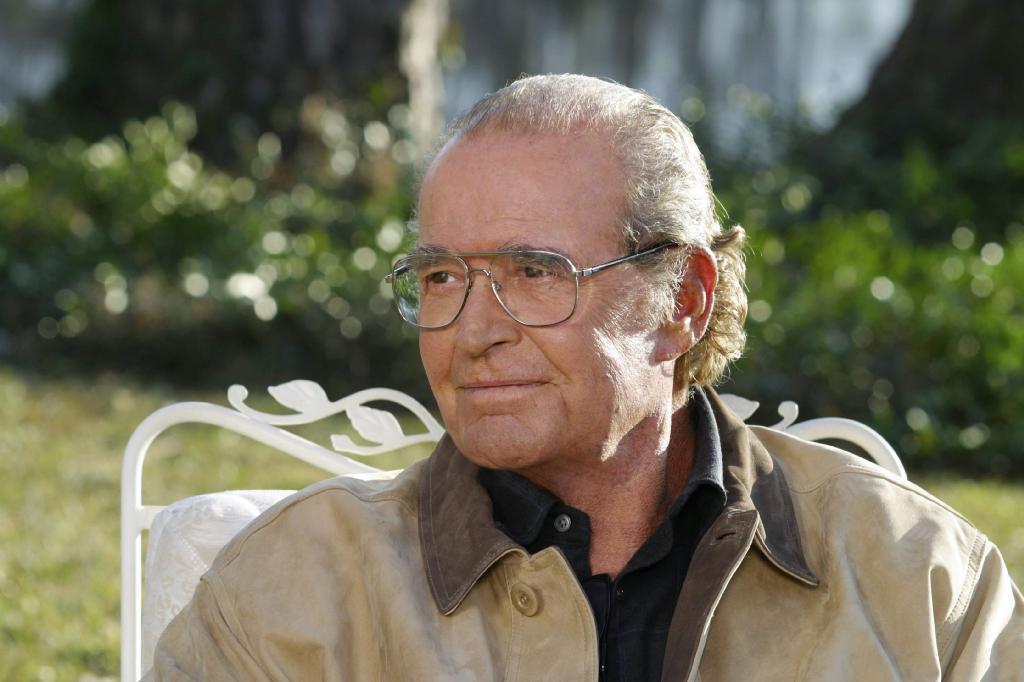
This beautifully written love story begins with this poignant statement, narrated by the renowned James Garner. It immediately tells the viewer that they are in for a heartfelt story that is sure to evoke emotion. As any good story should begin, it grabs your interest and you want to know more about this man and his true love. His comment that he’s just a common man, makes him genuine and relatable right off the bat. The tag line at the top of the above photo says “Behind every great love is a great story”, and lets you know there’s more to learn.

I chose this movie because the first time I saw it I immediately fell in love with it, and yes, I have seen it countless times! If you like sappy romance and aren’t afraid to cry, then this movie is sure to make your top 10! It was originally a novel that was written by Nicholas Sparks and was inspired by his wife’s grandparents who were married for over 60 years. The movie goes back and forth between present day and the past and explores the young relationship between Noah, played by Ryan Gossling and his sweetheart Allie, played by Rachel McAdams.

The movie is relatable as it describes a young hopeful romance and first love and the careless joy that goes along with it. Weaving back and forth between James Garner reading from a journal to his companion played by Gena Rowlands and tells the story of young Allie and Noah. She is captivated and wants to know more about them. It stirs up memories and emotions and she is passionate to know how this love story ends. The author has kept the audience intrigued and wondering too. There’s a tenderness between the two friends and you can’t help but be drawn into the narrative he is describing. Creating hope that everything works out for the young lovers. However, the story doesn’t end there though and it takes a few twists and turns as their romance doesn’t go as expected. After years apart, the two meet up again and are faced with a  difficult decision . All good stories have a point of conflict and this one lays their relationship on the line once and for all. The viewer is on the edge of their seats, wondering what they will decide. Hoping these two soulmates end up together. There is anguish and confusion and the viewer is rooting for young Noah.

Does their love story get resolved and they live happily ever after? Clearly, I LOVE this sweet movie and I won’t spoil the ending but it definitely left a memorable impression and I still cry every time I watch it.

Categories
Uncategorized

Film: Catch and Release

By: Heather Bell

One of my favorite all time movies is the film, “Catch and Release” which stars Jennifer Garner, Timothy Olyphant and Kevin Smith.  It is a romance/drama film set in 2006.  Garner plays Grey, a woman whose fiancé, named Grady, has just died from a tragic skydiving accident.  She is very sad and in mourning because now she does not know what her future will hold.  Many of his friends have arrived for the funeral and stay to keep her company. 

                One night a message is left on Grady’s phone.  It is a young woman named Maureen looking for the child support cheque for a child she and Grady share.  Maureen is not aware that Grady has died.  Grey is very upset about this message because she doesn’t know anything about another woman and especially about the child he fathered. It is revealed that his friend knew about the woman and the child.  Grey ignores the message, thinking Maureen will go away.

                Unexpectedly, Maureen and her son show up at Grady’s house, looking for Grady and more importantly, the support cheque she desperately needs.  Grey is confused about what to think because the woman appears to be likeable.  As well, the child bears a striking resemblance to the father.  Grey’s anger and resentment towards Grady grows and it quickly consumes her every thought.  How could he do this to her?  How long has this been going on?  To exasperate the situation, Grady’s mother blames Grey for her son stepping out on the relationship, stating that ‘a satisfied man doesn’t have affairs with massage therapists.’  Grey doesn’t know who to blame for the situation.

                Since Grady is no longer alive to give Maureen child support payments, his mother agrees to do so, but only once a paternity test is completed to prove that Grady is the father of the child.  On one hand, she doesn’t want to believe that her son would make such a poor decision to get involved with another woman outside of his relationship.  But on the other hand, this child represents the last link to her son whom she desperately misses.  The more time that Maureen and her son spend around Grady’s friends and family, the more they start to accept her.  Perhaps she is not the home wrecker she was initially believed to be.

                Unfortunately, the paternity test comes back that Grady is in fact not the father of the child.  Everyone involved is very confused, except for the child who doesn’t seem to care one way or the other.  Grey finds herself in unfamiliar territory.  She wants to help the child financially because those were Grady’s wishes.  Grey makes an agreement with Grady’s mother, that the child will continue to receive support.

                After much contemplation about what happened in their relationship, Grey decides to let go of the of the anger she felt towards Grady.  She instead chooses to remember the good parts of him and the good parts of the relationship.  She moves on with her life be beginning a romantic relationship with a new partner, one of Grady’s friends.

                This story really stuck with me because it took the main character out of her comfort zone and it threw her in the polar opposite and I liked how Grey dealt with the interpersonal issues. What appealed to me as well is that it gave me a character, several characters actually that I could root for.  As the story went along, my opinions of different characters began to change because I developed empathy for some of them.

Categories
Uncategorized

Burundi: A History of Conflict

Burundi is a small country in east Africa. The Kingdom of Burundi dates back as far as the 16th century. During the 19th century, Germany colonized the area, creating the colony of German East Africa. An attack on the region by allied forces during World War I saw the area shifted to be under Belgium’s control, and after World War II, the area was classified as a United Nations Trust Territory.

Burundi gained its independence from Belgium in 1962, following upheaval in the area, including the Rwandan Revolution. Ethnic tensions in the country were high, and a failed coup d’etat occurred in 1965 because of that. Two more coups shortly thereafter succeeded in deposing the country’s monarchy, and Burundi was declared a Republic.

However, King Ntare V returned to Burundi in 1972, during a rebellion. Ntare was quickly assassinated, and the rebellion was countered with what became known as the First Burundian Genocide. Tensions between ethnic groups remained pronounced for decades, with the balance of power shifting back and forth, until 1992 when an attempt at introducing a system of multiple political parties resulted in a civil war, which caused the Second Burundian Genocide. Hundreds of thousands of Burundians were killed in the genocides and civil war.

At the start of the 21st century, peace talks and involvement from the United Nations led to a calming of conflicts, and reconstruction efforts began in 2006. Unrest has plagued the nation, however, with the United Nations Human Rights Council calling on the Burundian government to end its continued practice of serious human rights violations. To this day, Burundi remains one of the world’s poorest nations, with a lack of stability, security, and resources.

UNICEF has identified that 78% of Burundian children are living in poverty. Roughly 500,000 Burundian children live in extreme poverty. Because of this, the work that nonprofit Harbor4Life does is essential. Running an orphanage outside of the capital of Bujumbura, H4L has helped dozens of children and young adults to be cared for, receive the necessities of life, and be educated.

Please see these social media posts to learn more about the work that Harbor4Life does, and how you can help it achieve its goals and support the children that depend on it.

Design a site like this with WordPress.com
Get started