Creating a good story starts with the planning, when starting to brainstorm to write a story there are many things you have to think about and little details you need to include to make your story a good one. When writing a story there is a lot of details that can set a good story apart from a bad one.
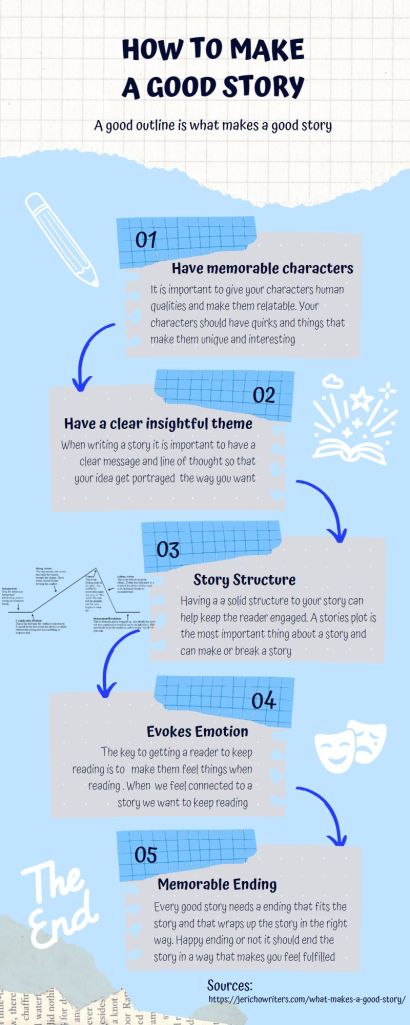
Stories have been being told since the beginning of time in many different ways, from campfire stories to a novel to drawings on a cave wall, they are all stories that have been told to people to provide knowledge, entertainment, or life skills. Stories are the original way to pass knowledge around and if we didn’t have stories we wouldn’t have the knowledge about the past that we do today. The structure is the biggest part of making a good story, if you don’t have memorable characters, a clear theme, story structure, a memorable ending and something that evokes emotions. This formula for a story can put you on the track to writing a good memorable story that people will enjoy and recommend to their friends.
Whenever I am reading a story these five main points are what makes me think that the story is good. When a writer is able to make the story relatable and full of emotion it has the ability to pull a reader in and get them to keep reading. When a novel is emotionless or gives no details into the story you can’t visualize the world you are reading about, imagine reading Harry Potter without knowing Harrys home life or knowing what Hogwarts is and trying to read through the series without the details that makes Harry Potter the magic world that it is known to be. People wouldn’t have made it through the first book much less the series if they didn’t have detail or evoked emotion.
Storytelling is a timeless art form that has been a part of human culture for centuries. From campfires to books, movies to podcasts, storytelling has evolved over time, but the principles of what makes a good story remain the same. At its core, storytelling is about engaging an audience and transporting them to another world, whether that be a fantastical realm or a real-life experience. The power of a good story lies in its ability to connect with people on an emotional level, leaving a lasting impact long after the story has ended. In this blog post, we will explore the principles of good storytelling and how they can be applied to create compelling narratives that captivate and inspire.
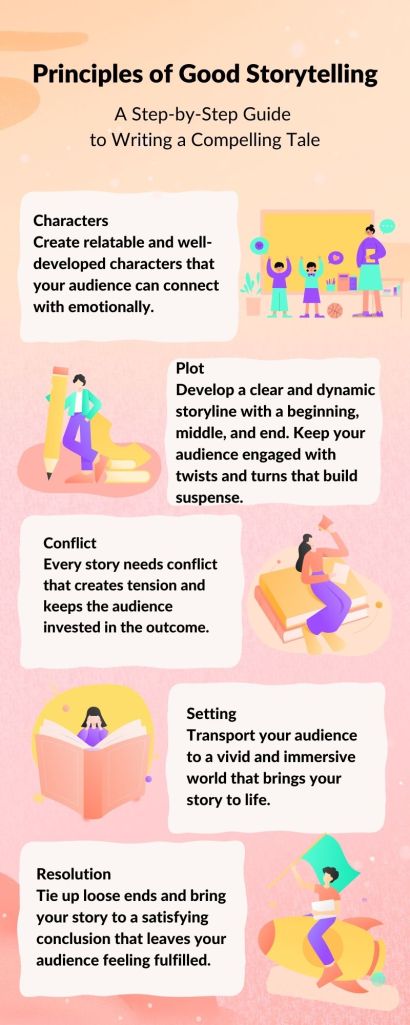
Characters
Create relatable and well-developed characters that your audience can connect with emotionally. Characters are the heart of your story, and they need to be fully realized in order for your audience to care about them. Consider giving your characters distinct personalities, backstories, and motivations that drive the plot forward. Whether your characters are heroes or villains, make sure they have flaws and weaknesses that make them more human and relatable.
Plot
Develop a clear and engaging storyline with a beginning, middle, and end. Keep your audience engaged with twists and turns that build suspense. A good plot takes your characters on a journey and challenges them to overcome obstacles along the way. Consider using storytelling techniques like foreshadowing and cliffhangers to keep your audience guessing and invested in the outcome. A strong plot should have a clear structure that guides the audience from the setup to the climax and resolution.
Conflict
Every story needs a conflict that creates tension and keeps the audience invested in the outcome. Conflict can take many forms, whether it’s a physical battle, an emotional struggle, or a moral dilemma. Consider what your characters want and what’s standing in their way, and then raise the stakes to keep the tension high. Conflict is what drives the plot forward and keeps the audience engaged.
Setting
Transport your audience to a vivid and immersive world that brings your story to life. The setting of your story can be just as important as the characters and plot. Consider the time and place in which your story takes place, and use sensory details to create a vivid and immersive world that your audience can picture in their minds. Use setting to create atmosphere and mood, and to help establish the tone of your story.
Resolution
Tie up loose ends and bring your story to a satisfying conclusion that leaves your audience feeling fulfilled. A satisfying resolution is what separates a good story from a great one. Make sure that your ending is consistent with the rest of your story and that it resolves any lingering questions or conflicts. Consider what your audience will take away from your story and what message or emotion you want to leave them with. A good resolution should tie up loose ends while also leaving room for interpretation and reflection.
“A life without stories would be no life at all. And stories bound us, did they not, one to another, the living to the dead, people to animals, people to the land?” — Alexander McCall Smith
Each of these principles helps to create a powerful and memorable story that resonates with your audience. By mastering these principles, you can become a skilled storyteller who captures the hearts and minds of your listeners or readers. So go ahead, embrace the principles of good storytelling, and bring your stories to life.
We all love a good story. Whether it’s a captivating book, a favorite movie, or a memorable conversation with a friend, stories have a way of engaging us and leaving a lasting impression. But storytelling isn’t just about entertainment – it’s a powerful tool for communication that can inspire action, build empathy, and help us remember important information. In this blog post, we’ll explore the power of storytelling, and explain why it matters in our personal and professional lives.
“Listen, and you will realize that we are made not from cells or from atoms. We are made from stories.” ― Mia Couto
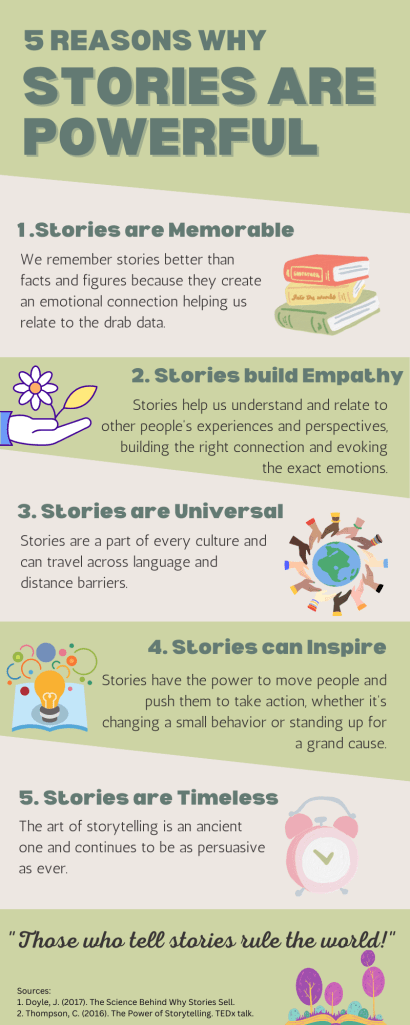
Stories are memorable…
One of the key benefits of storytelling is that it helps us remember information better. Research has shown that we remember stories better than facts and figures because they create an emotional connection that helps us relate to the information. When we hear a story, our brains release oxytocin, a hormone that helps us feel more connected and engaged with the information. This is why marketers, educators, and communicators often use storytelling to help people remember important messages.
Stories build empathy…
Another important benefit of storytelling is that it helps build empathy and understanding. When we hear a story, we are more likely to put ourselves in the shoes of the person telling the story, and to relate to their experiences and perspectives. This is why storytelling is often used in diversity and inclusion training, as well as in social justice movements. By sharing stories that illustrate different perspectives and experiences, we can build empathy and understanding across different groups.
Stories are universal…
Stories are a part of every culture and can be used to communicate across language and cultural barriers. Even if we don’t speak the same language, we can still understand the emotions and themes conveyed through a story. This is why storytelling is such a powerful tool for cross-cultural communication and understanding. By sharing stories that resonate with people from different backgrounds, we can build bridges and foster greater understanding and connection.
Stories can inspire…
Perhaps one of the most powerful aspects of storytelling is its ability to inspire action. When we hear a compelling story, we are more likely to be moved to take action – whether it’s changing our behavior, supporting a cause, or sharing the story with others. This is why storytelling is often used in advertising, advocacy campaigns, and social movements. By crafting stories that inspire action, we can create positive change in the world.
Stories are timeless…
The art of storytelling has been around for thousands of years and continues to be a powerful tool for communication. Whether it’s around a campfire, in a book, or on social media, stories have a way of capturing our attention and engaging our emotions. As we continue to grapple with complex challenges in our personal and professional lives, the power of storytelling will only become more important.
To conclude…
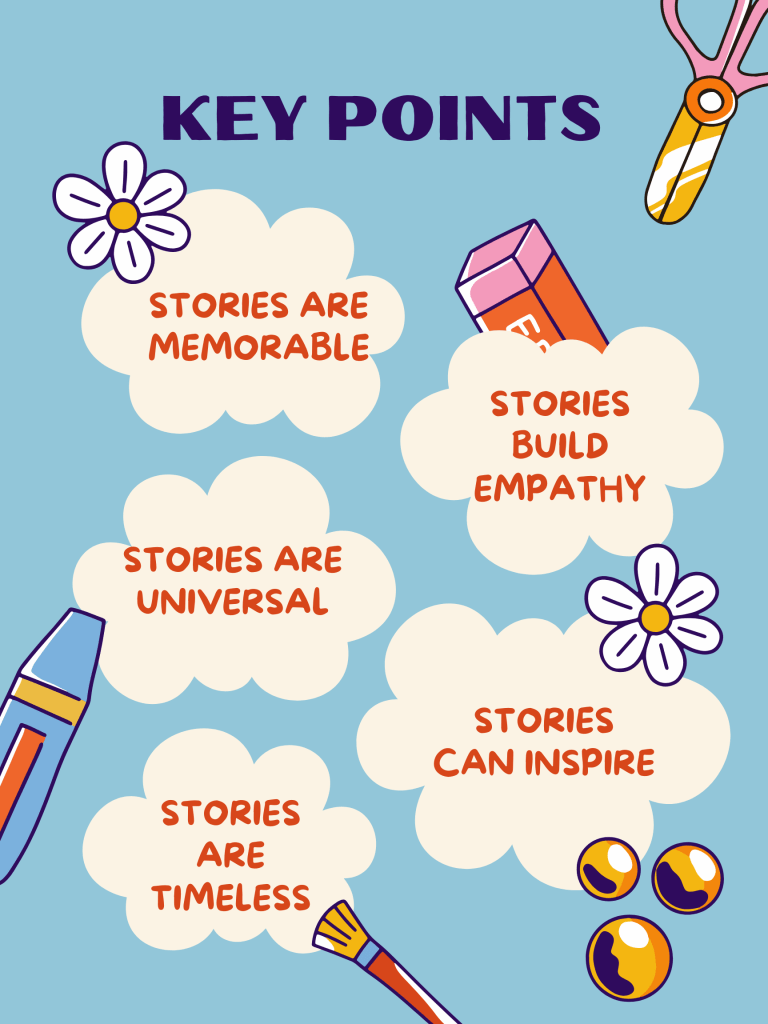
Storytelling is a powerful tool for communication that can help us remember information, build empathy and understanding, inspire action, and connect with others across language and cultural barriers. Whether we’re marketers, educators, advocates, or simply human beings trying to connect with one another, storytelling is a skill that we can all cultivate and harness for greater impact. By embracing the power of storytelling, we can make our messages more memorable, our relationships more meaningful, and our world more connected.
Here’s an infographic summarizing the key insights of this blog post.
Sources:
Doyle, J. (2017). The Science Behind Why Stories Sell. Harvard Business Review.
Green, M. C., & Brock, T. C. (2000). The Role of Transportation in the Persuasiveness of Public Narratives. Journal of Personality and Social Psychology.
Pratten, R. (2016). Getting to the Heart of Storytelling: 10 Steps to Creating a Compelling Story. Forbes.
Salmon, C. T., & Atkin, C. K. (2016). Storytelling: A Critical Review. The Handbook of Communication Science.
Thompson, C. (2016). The Power of Storytelling. TEDx talk.
I’ve always been told I’m fiercely independent. And if I’m being completely honest, it’s a blessing and a curse. I’m certainly not one to ask for help, especially when I should. However my husband, Mike, works in the Northwest Territories on a 2 week in, 2 week out rotation, so sometimes you gotta do what ya gotta do to keep projects moving forward.
We’re in full renovation mode at the moment, and are hoping to have our house ready to sell in the next month, so time is of the essence. I’ve been focusing on the lighter projects and leaving the bigger things for when Mike’s home. Today, as no exception.
Our main bathroom was in need of some minor polishing. I recently painted and changed out the lights, all that’s left is to paint the vanity, caulk some seams and hang a new mirror. Follow along as I hang a mirror by myself – maybe we’ll all learn something new today.
While I’ve read twitter story threads in the past, I’ve never had a twitter account until today. It was a cool experience to see that even a small household task can turn into an opportunity to tell a story. Throughout my series of tweets, I used many storytelling techniques to engage my audience. The plot has twists and turns, there’s conflict and foreshadowing. The use of hashtags brings in humour and teasing the audience as to what is coming next. I really enjoyed this activity and it’s inspired me to incorporate twitter moving forward in my professional life.
A question everyone needs to ask themselves when addressing aquatic species conservation.
This week we were tasked with live tweeting a story in real time, and while I can honestly say I did not excel at this task, I think that my story is kind of cute and quirky and I am going to repurpose it when I actually know how to use this technology. This tweet may be just the thing that draws more people into the wonderful world of aquatic species conservation, right!? (sigh, one can dream can’t she?)
Using Twitter is new to me. As I noted in my first Twitter post for this class, I always thought that it was for people with opinions (mostly political ones), and while I have lots of those, I don’t necessarily think that anyone needs to hear them.
I loved tweeting TBH. It allowed me to explore alternate ways to draw people into the projects I am working on. To think about key messaging and what I am really trying to communicate. And, while Twitter may not be where I excel in the realm of social media, it made me think that maybe it could just be a tool for me to use to draw people to my Instagram, Facebook and project websites whereIactually know what I am doing.
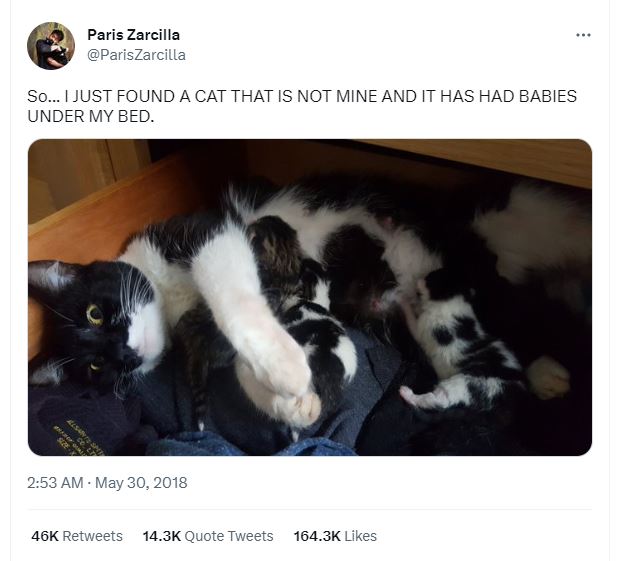
For my tweet I took advice from Gary Vayernchuk. He says, “Document. Don’t Create”, so that is what I did. I documented what I was doing at that moment, which was starting my journey to create a fish exhibit (thrilling, I know!). I then thought of the Cat dad on Twitter and his story thread, and tried to draw on that style of posting.
I pulled the flow and story development from the 8 Point Story Arc. I tried to set the scene, create the rise of action, and start the quest early in my post.
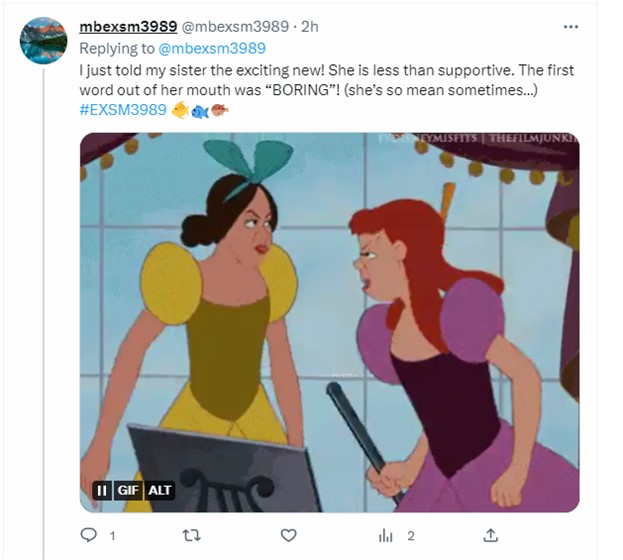
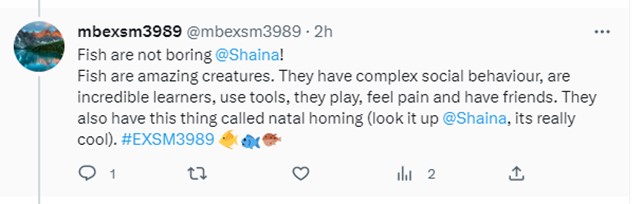
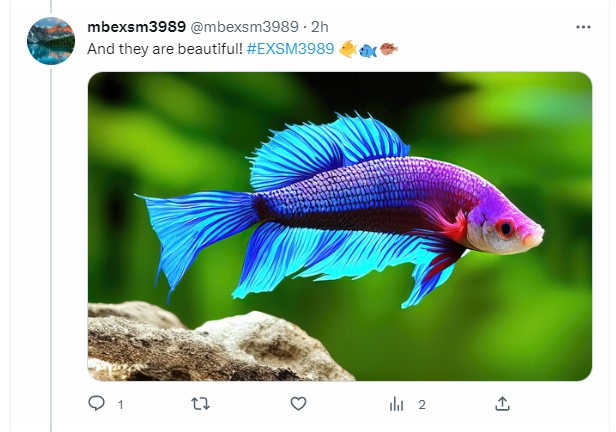
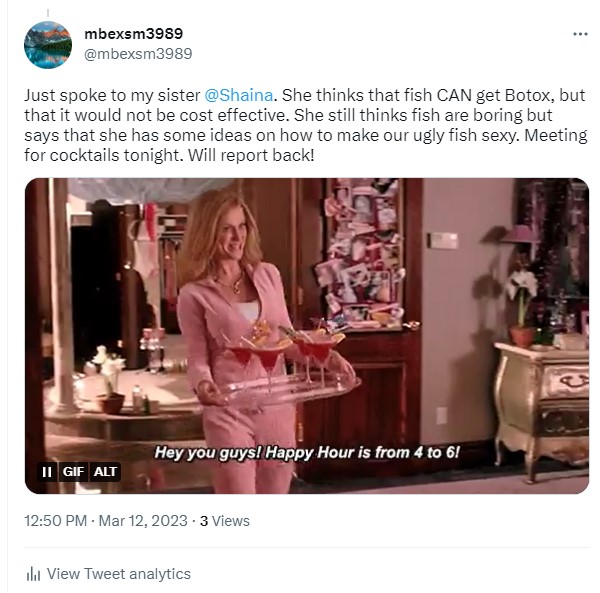
The protagonist is (obviously) me and the villain is my real life sister, Shaina. Shaina thinks that fish are boring, and I set out to show her that they are not boring. They are, in fact, very cool and beautiful.
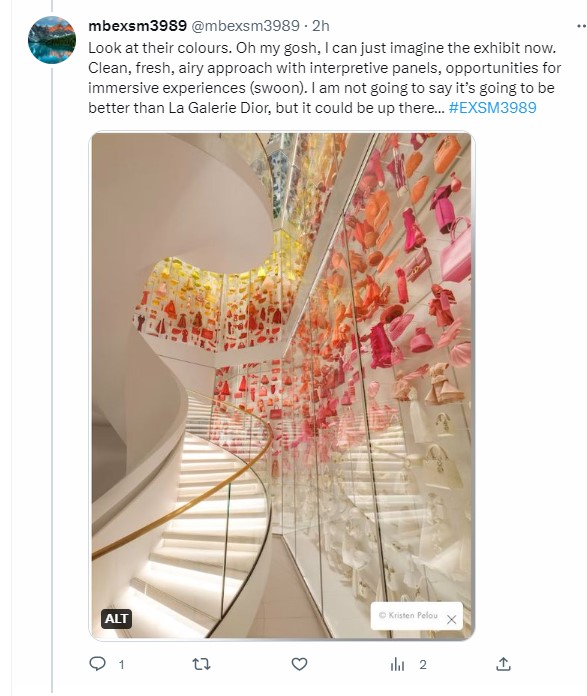
I let myself dream in the tweet about what this fish exhibit will look like. I talk about colour, beauty, and glamour, and lead my readers into thinking that this is going to be one pretty little exhibit that I am going to create.
Then I drop the surprise.
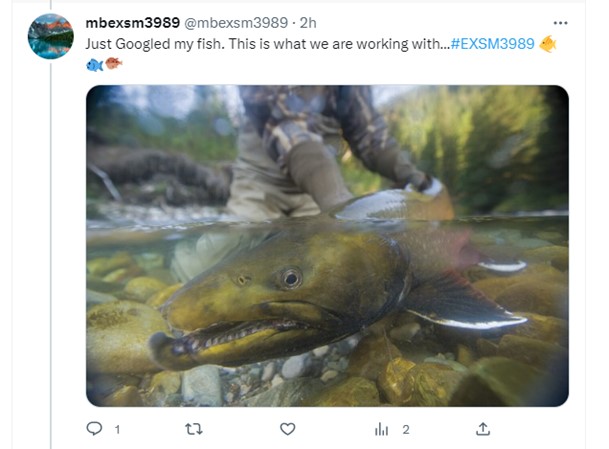
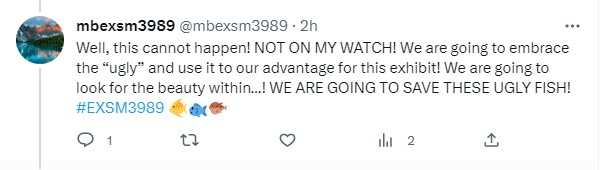
It is not that fish are boring. It’s that the one we are creating the exhibit around is … how do I say this?… it’s ‘UGLY’ (gasp!).
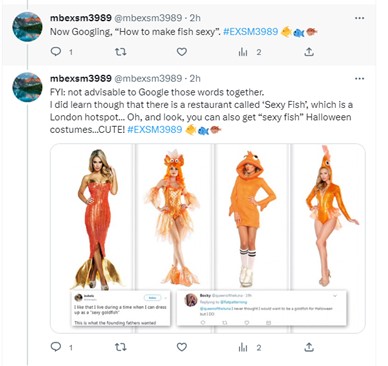
Now my quest is not to show that fish are cool, my quest is about how I am going to make this species beautiful and sexy; in order to sell their conservation and protection. This task takes us on a wild ride of ups and downs that are full of information and dialogue that no one see’s coming (hang on, it gets intense).
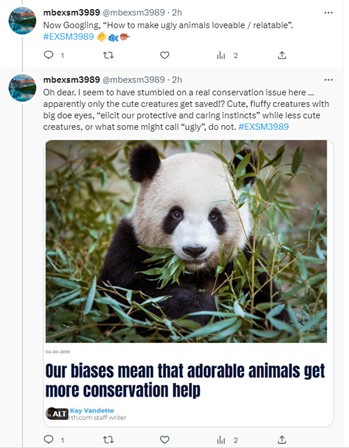
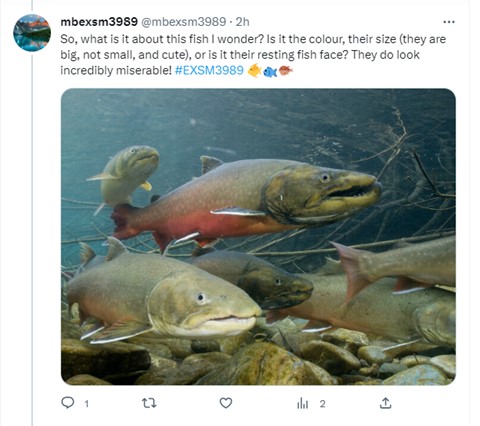
I tried to build tension in the thread and get to the point where I ask readers, why does everything have to be pretty and cute for us to pay attention to it? Why can’t we just embrace something that many would deem ‘ugly’ and use it as an advantage? What is it about this fish that people think is ‘ugly’? Is it their colour or their size? Or…. is it their RESTING FISH FACE?
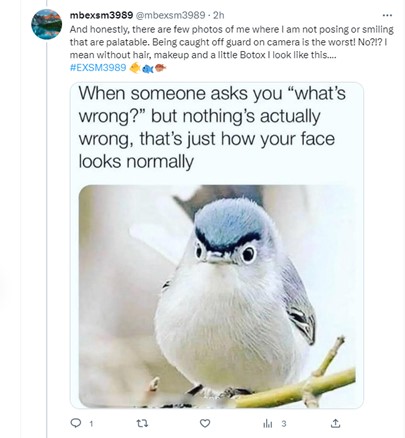
I then tried to pose some questions about beauty standards to the readers. I hope that this will help many of the readers relate to these poor, ‘ugly’ fish, in a funny and sympathetic way.
I then tried to bring this thread and what I consider the first part of the fish story, to a climax. I consider that it is pretty unfair that we hold nature to the same beauty standards that we have for our selves.
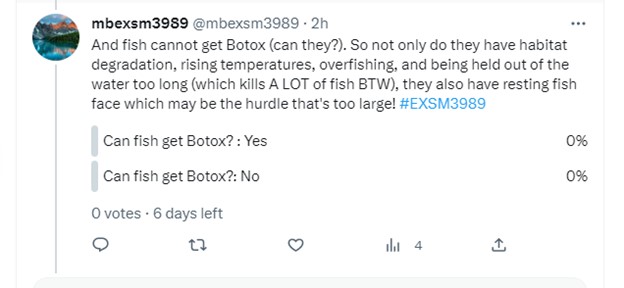
I mean, fish can’t get Botox, can they?
So, not only is their habitat slowly being destroyed, their waterways are rising in temperature, they are overfished, and they are commonly held out of the water too long by overzealous fisher people; on top of all of this, we don’t think they are cute enough. And, they cannot even help that because they are limited in their beauty regime.
What is interesting is that that fact alone may actually be the biggest hurdle I need to overcome in my fish exhibition journey.
Can fish get Botox? is a question that is meant to throw the reader for a loop, to catch them a bit off guard, make them laugh, but also make them think. I tried to add an interactive component where people can vote.
Bringing it to a close, I wanted to sign off, but leave an opportunity to pick the story back up at a later date and build on it. I wanted to leave the readers on a little bit of a cliff hanger in order to keep their interest. I re-introduce my sister, the villain, who may not actually be the villain after all. She calls and says she has some ideas for how we can make our ‘ugly’ fish sexy and maybe, a little less boring.
I hope readers will stay with us as we figure out how to make people care about these ‘ugly’, but important fish.
This blog post is for my mentally ill pals and my mentally ill pals ONLY. Ok, now that it’s just us, when’s the last time you had a shitty mental health day where you didn’t want to get out of bed?!
Mine was this past Saturday. I woke up and instantly knew, today is not my best day. I could’ve laid in bed all day and sat in my sorrow but instead, I tried to turn the day around with the help of my pal Michelle. (I am Michelle and she is ALSO Michelle. Strange I know but you’ll get used to it.)
Michelle, who will now be lovingly referred to as Mich2 for clarity, had to go to work for an hour at The Great Canadian Theatre Company (GCTC) and invited me along. We decided we would go thrifting afterwards because thats what the Hot Girls are doing these days.
OMG a v immersive theatre experience. JK the fire alarm went off right before the show started and everyone had to evacuate. Turns out no fire, just someone who doesn’t know how to cook in the condo building above 😂 a relaxing start to a mental health day pic.twitter.com/gbI2xo8eVS
There was a little “potential fire” drama at the theatre but it turned out to be a false alarm. Honestly, what is a theatre without the drama?! After the alarm was shut off and the patrons were back in the building, we headed out to Value Village to find some special items.
The goal is to find a retro chip and dip. Will I find it? Probs not. Will I end up with some sort of used ashtray? Perhaps 😎 #EXSM3989pic.twitter.com/jvkmAByuOe
Before we made it to VV, we had to make a pit stop at Metro to get some hot crossed deals from the bakery. Mich2 had heard about an app where you can get baked good surprise bags that are about to expire for only $5.99! We did a quick “unboxing” moment for all 42 of my followers to enjoy.
After the unboxing we headed to VV and found some great treasures. The day finished off with a big fountain pop and some kitten snuggles. It was a great escape from my own head, even if it was just for a day! You can read our whole adventure here.
Now let’s chat Twitter and threads. I love a good tweet thread. Short sentences, cut up into easily digestible chunks? Hell to the yes.
I think when someone takes the time to write a Twitter thread it’s because they really have something to say. It’s always a funny story, an angry rant, or an interesting topic and I eat it up, every time.
I think Twitter threads work so well for today’s audiences because we have super short attention spans. If I saw a huge paragraph on Twitter, I’m probably scrolling by. If I see a thread, you’ve immediately got my attention. Add GIF’s, photos, or videos and I’m fully invested.
Twitter is a great way for authors to quickly share their thoughts and feelings BUT they do need to watch what they post. Because we can share information with the push of a button, it’s easy to post things that are misinformed. News outlets, for example, use Twitter to give rapid updates on evolving situations. This is a great way to keep people informed BUT it’s also very easy to post info that isn’t necessarily 100% accurate.
Twitter doesn’t do as great of a job verifying information like Facebook does. Anybody can post and have people believing it’s true. Blue checkmarks used to be a way to verify information coming from a source. For example, celebrities could tweet something and if they had a checkmark we knew it was actually coming from them. Today, anyone can pay for a checkmark, thanks Elon, and make it seem like they’re a verified account. A man pretended to be a pharmaceutical company and tweeted that insulin was now free. The actual company had to put a statement out that it wasn’t true.
All in all, I still think Twitter is a great way to share information. Just make sure you double check sources and make sure that what you’re actually reading is factual.
The live tweet story, describes the human/animal connection by presenting the benefits of having animals in a family and how they can help emotionally, aid in learning, improve communication, offer support and teach responsibility.
The thread begins with the author providing a familial setting to the importance of human-animal bond and presents how pets can address conflict by encouraging positive connections in our daily lives.
The tweet closes by referring to the valuable lessons that animals can teach their humans.
I had no idea what to live tweet about so I decided.. why not a walk with my dog?? It’s always an interesting time when we go on our adventures!
Find the link to see the full thread below:
Let’s go for a walk! Today, I’ll be bringing you along with me on my daily walk with my dog, Avy. It’s always an interesting adventure 😂#EXSM3989pic.twitter.com/gGVc6lSzHa
To summarize, whenever I go on a walk with Avy, there is always a common sequence of events:
Goofy dog zoomies
Avy on a mission to find some birds
Excitement once he finds a critter (spoiler: HE FOUND A RABBIT)
Then cuddly naps and snacks when we get home.
I adore this goof ball so much 🥹
Storytelling Principles Used
When doing this live tweet I tried to include some of the methods we’ve been taught so far. Such as, making sure it had a clear beginning, middle and end. I made sure that the subject was generally interesting to the readers (I mean.. dogs are the best!). And, I used photos and videos to make the reader really feel like they were on the journey along with us!
I hope you all enjoyed our walk as much as we did. Animals are just so good for the soul and I’m glad I was able to share a snippet of my life with all of you. ☺️
Some people lose items regularly. One of my friends seems to be always misplacing his ID, wallet and phone. Me, on the other hand, does not misplace things often. That’s why I was at a loss when I did lose an important object – my phone. https://twitter.com/glauriousmorn/status/1634289494534029312
Honestly, it sucks losing something. I’m sure you can relate. You are sure it should be in a certain spot, and look that spot over once, twice, three times. By the fourth search in the same spot, you start going crazy. There’s no way it could be there after your fourth search!
I decide to wait till the next day to search the same spots again. No luck.
By the fourth post in the thread, I’m sure the readers can relate. We’ve introduced the who (myself), where (at home), when (Thursday night), what (the problem is the lost item).
Next step – giving up
This isn’t the way I imagined it going. I was sure I would find the phone at home the next day.
So I decided to move on, and replace it.
I parked in a new spot returning home and while walking up to the driveway spotted my phone facedown. It had fallen out of my pocket when I went out to warm up the car. When we were leaving I knew I didn’t have my phone in my pocket so I assumed it was at home.
I had looked in the vehicle but not under it!
Story Telling Principles
The story moves forward from the beginning, using a negative trigger to push us on in the search for the phone. The quest of the character is to find the phone. It is not successful and we move into the outcome which is replacing the phone. In this case, the surprise happens after the resolution – when I find the phone.
It was not my most exciting Sunday ever, but nonetheless, I have captured the bulk of my day in this live tweet assignment. I am not one for using Twitter – I’m more of a LinkedIn/Facebook kind of girl. I enjoyed the readings this week, and have done my best to apply my learnings to my first ever two Twitter threads.
I started off the tweet thread with a declarative, ambitious statement – with the intent to entice the reader to read-on to see what’s next…
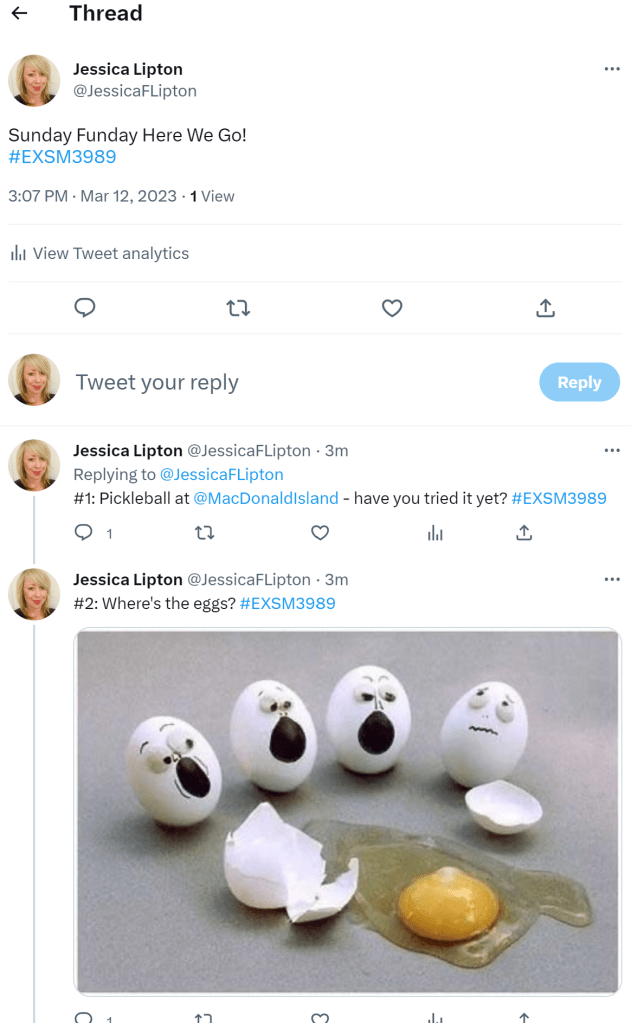
I chose to number my activities after reading that numbers are helpful to capture a reader’s attention – as per the Buzzfeed Headlines reading assignment. It also helps the reader to ensure they’re reading the tweets in order (another common option: 1/4, 2/4, etc.) I chose a funny GIF to add some excitement to my breakfast!
In #4, I chose descriptive words to create the setting and prompt the reader to wonder where I was going.
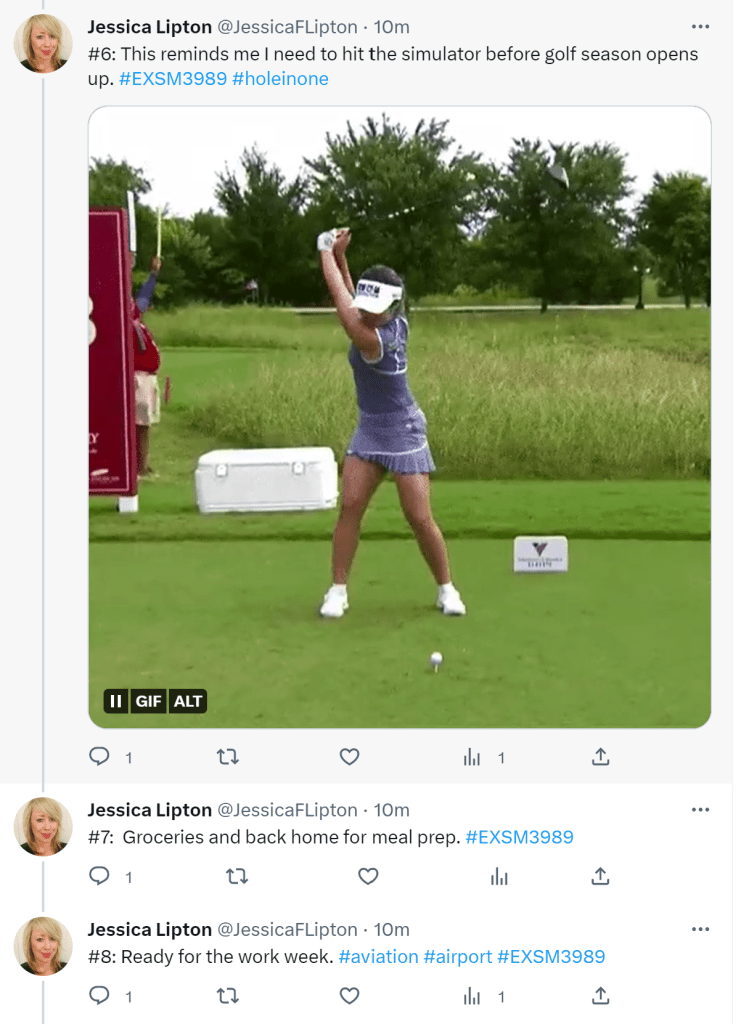
Overall, the arc is supported with a beginning, middle and end. An early morning rise tweet, ends with meal prep, and a positive outlook to the work week starting. Visually stimulating GIFs and images, paired with easy-to-read, short statements keep the reader enticed.








 EXSM 3989 - Digital Storytelling Class Blog