Categories
Uncategorized

Nier: Automata – A Story Which May Leave You with an Existential Crisis, but in a Good Way

Whenever I experience a new story, I always begin with the hope that the story will leave me yearning for more — that the story will leave a lasting impression, that it will keep me up late at night after I’ve finished it and leave me with an endless stream of thoughts related to it. As someone who has read, played, and watched their fair share of stories and had several lasting impressions, there is one story that was able to do all of the above, except it wasn’t just for one night; it was for a whole week. And that story is called Nier: Automata.

Nier: Automata is an action RPG that follows earth in a dystopian future, one where androids (created by humans) and machines (created by aliens) are locked in a constant war. At its surface, Nier: Automata seems like a generic, dystopian plot – but that is far from what the story of the game is. The story of Nier: Automata is one that will ask you philosophical questions about life, death, the future, and everything in between. Now, why does this story resonate so much with me?

Nier: Automata goes beyond the five W’s. The game implements each excellently throughout the story to strengthen the narrative — it goes beyond to leave an impression, to leave the player wanting more. Within the game lie my personal taste of dream ingredients: loveable characters, an emotional rollercoaster of a story, quest lines that enhance the world, and music that is some of the most atmospheric I’ve ever heard in a game.

Take a listen to this song from the soundtrack. Do any of these words sound familiar? Do they sound kind of like a language, but not really? The story is set in the future, a future where they use “Chaos Language” — a language that is made from our own languages, but blended together as if the languages merged as time went on. The producer of the game, Yoko Taro, mentions that “[w]e wanted something that could truly serve as background music. If you don’t know what these mysterious words mean, you can’t get side-tracked.” By using a unique style of music like this, you not only keep the audience engaged with the story, but keep them engaged after the story — why the music uses what sounds like jumbled lyrics is actually a brilliant way to emphasize the dystopian world and make the world within the story stand out even more.

An element of storytelling that Nier: Automata uses to keep going beyond the five W’s, especially ensuring that different viewpoints are told and fair to who the story represents, is the fact that the game has three separate protagonists — 2B, 9S, and A2. Not only does the game have three protagonists, each protagonist has their own section of the game, and their own ending. Yes, that’s right — multiple endings. To get the true story of Nier: Automata, you must beat the game three times. (You probably want to play it an extra two times, too, to get the full story.) By playing as each separate protagonist, you get a feel for each character — you see their perspective of the same events, the differences in thoughts and feelings, and feel more of a connection to each character. Each character reacts to events differently; and that is part of what makes Nier: Automata such a special narrative experience. By showing how adversely different characters in the same situation can react — and letting the audience react with them.
Nier: Automata tells its story of the future through its soundtrack, its story of motivation and drive through its characters, its story of the world through quests and the narrative itself. There is one thing we do not have yet: what is the driving question of Nier: Automata? There is a reason that I’ve left this for last:

The game is unique in that you do not know the driving question until you finish the game. 

 At first, the story of the game may leave you with more questions than it asks you. The weaving of several endings and interwoven storylines leaves the player to have to piece together questions to end up at that answer. And once the story gives you the answer, it will leave you in awe. Because the question that comes up throughout the story is:

 “What is the point? Why is the game’s narrative going in this direction?”

and then, the core question of the game clicks. All the puzzle pieces click together to ask you,

“What would you do if you found out everything you’ve been fighting for is pointless — there was no point. Would you keep fighting? Who would you keep fighting for?”

Nier: Automata is not a happy story, it is a story of strife, determination, about a bleak future where there does not seem to be an end to the fighting. But, there is one key element to Nier: Automata, and that is hope. Even when everything seems pointless, like there’s nothing more left, there still is one crucial element left: hope. Whether that hope lies in the world, in someone you love, or within yourself, that hope still shines through. That is why Nier: Automata’s narrative is one of my favourite: it excellently uses its format of a video game to weave that theme of hope everywhere: within the characters, the soundtrack, the world, and most importantly, the story. 

When you need a reminder that hope still exists, check out Nier: Automata — it will be worth it.

Categories
Uncategorized

Entergalactic: an animated love story

The movie Entergalactic balances storytelling with visuals and a soundtrack that could have easily taken over had the story not been so strong.

The story follows the key storytelling guidance similar to Pixar’s 6 Rules of storytelling Pixar’s 6 rules of storytelling and hits the mark for “Great stories are universal”. The love story between the two main characters is very natural and real, built organically through chance meetings.

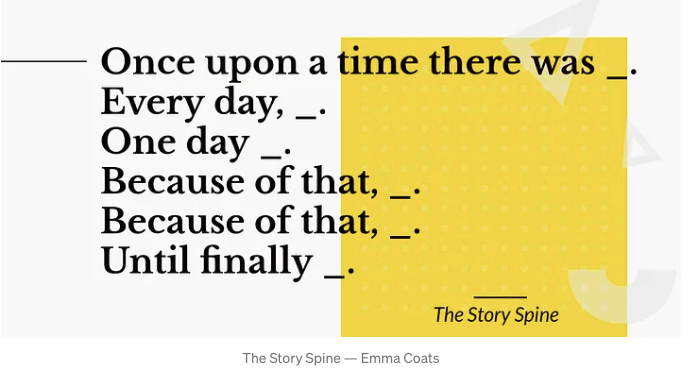
The story spine can also be found intact in this film:

Once upon a time there was an artist that has recently moved into a swanky apartment in Manhattan after being hired by Cosmic Comics to turn his original character into a comic book series.

Every day the artist grapples with his newfound success and the everyday life of friends, ex-girlfriends, and the general excitement of the city.

One day he bumps into his neighbour while she is playing loud music during a party at her apartment while he is trying to sleep and experiences love at first sight.

Because of that he struggles to balance these feelings of love with trying to stay focused on a successful life that doesn’t seem to have time for romance.

Because of that he has a hard time expressing his true love for his neighbour which allows a misunderstanding to grow into the pair parting ways.

Until finally friends and family force the two to realize that they are truly in love and it is worth the effort. A quote from the main characters sister sums it up perfectly. “Love is the easiest thing in the world when it happens by accident, but it doesn’t get real until you do it on purpose.”

The movie uses strong visuals and an amazing soundtrack that support the story, with a flowing animation style and “As a sort of psychedelic outgrowth of a studio album, Entergalactic hits its marks. quoted in this review Craig Jenkins New York Magazine / Vulture

As Ashley Fell discusses in her Tedx talk we are living in an era of message saturation and digital disruption, it can be difficult to cut through the noise and capture attention and make our voice heard. The soundtrack and animation in Entergalactic sets this romantic comedy apart from the classic romantic comedies. The visuals create interest and involve the watcher in the art, the story instructed us by immersing the viewer in the day-to-day life of the main character and his struggles all on a backdrop of the animated cityscape that added depth. The story also inspired the viewer with a true love story that was real and relatable. No rich businessman falling in love with a prostitute, no million dollar pay out for a night with one’s wife, no emails written by sons of widowed fathers just chance encounters, romantic connection and the daily realities of modern life.

In the book by Scott Meslow called From Hollywood with Love: The Rise and Fall (and Rise Again) of the Romantic Comedy the author writes “There is something just fundamentally pleasing and satisfying about the arc of love. It’s a story that many, many people can relate to in one way or another. It’s enjoyable to watch people spar and banter and fight about what they really want. And when they come together, I mean, that’s as satisfying as it gets,”

This movie artfully adds visuals and soundtrack to elevate this romantic comedy above the standard Rom-Com fare.

Categories
Uncategorized

Friendship, Loyalty, and Being True to One’s Self

Books were great companions growing up. Call me a bookworm, but over the course of a quiet Sunday afternoon during my 90’s childhood, I could easily lose myself in a storybook or two. One book that I never tired of re-reading was The Cricket in Times Square, by George Selden. Written in 1960, this children’s book follows Chester Cricket and his brave front over finding himself initially stuck and alone in New York City’s infamous Times Square. Along the way, we learn of the friends he makes in the unlikeliest places: Mario Bellini and his family at their newsstand in Time Square subway station, best buds Tucker Mouse and Harry Cat in an abandoned drainpipe, Mr. Smedley, who is a music teacher and frequent patron of the Bellini newsstand, and even shop owner Sai Fong, who generously supplies Chester’s diet of mulberry leaves.

Not only were Garth Williams’ illustrations throughout the storybook appealing, but the descriptions of each setting and action, along with the constant and universal themes of friendship, loyalty, and being true to one’s self, threaded throughout the chapters, captivated my attention until I reached the book’s back cover.

Like many or most stories, I found that The Cricket in Times Square fit quite well into Kenn Adams’ Story Spine structure. I can envision how the sketching and initial drafting of the story’s basic building blocks came into fruition, before blossoming into the award-winning story that’s existed since the 60’s.

Once again, I found all 4 I’s of Engaging Storytelling evident in my favourite children’s book:

  • Interest: A tiny cricket lost in the big and bustling world of Times Square? How did he end up there? Where is he from? How will he get back home?
  • Instruct: The book was structured clear enough for a nine-year-old to understand and follow. Although many characters (and their backgrounds) were introduced throughout the story, you could always tell that the main focus was on Chester and his adventure.
  • Involve: Can you remember a time when you got lost? How alone and scared did it make you feel? How did it make you feel when you made a new friend? Someone you connected with and got along really well with?
  • Inspire: Does Chester’s story make you want to go out and seek your own adventures? Perhaps, be a bit braver when venturing out on your own? Does it make you see people and strangers in a different way? Perhaps people are more helpful and generous than you’re willing to give them credit for? Although change can be a good thing, how do you stay true to yourself at the end of the day?

A classic children’s story that fits many of the storytelling principles out there, The Cricket in Times Square contains your classic beginning, middle and end. It even leaves behind a teaser ending for a sequel, in which George Selden actually ends up writing six of! Of course, those sequels provided further reading entertainment for my young self, but really, the OG is always the best one.

Categories
Uncategorized

Paris, Texas: True Grit of Storytelling

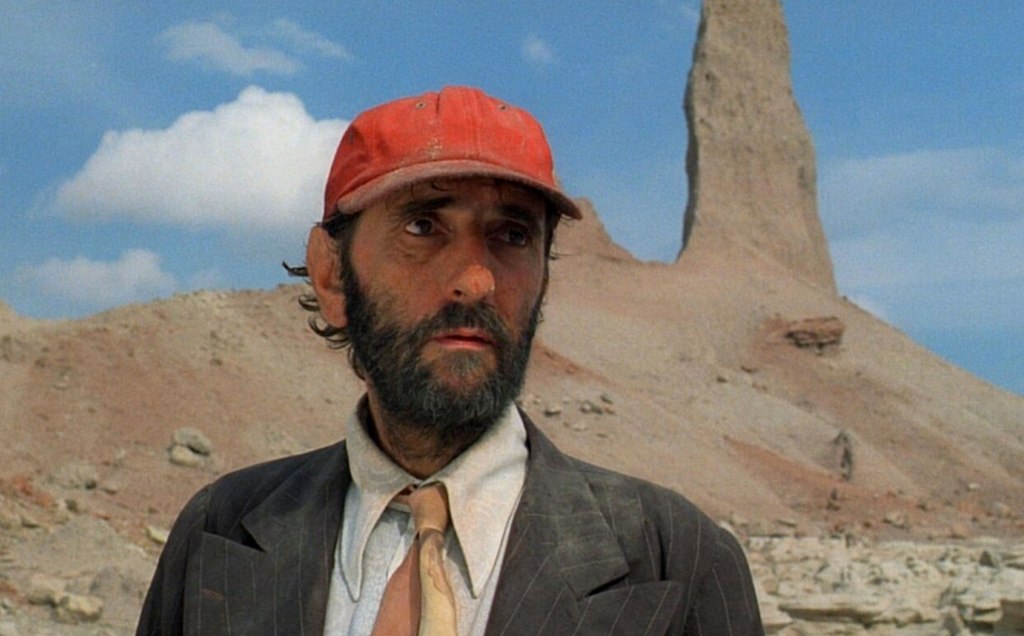
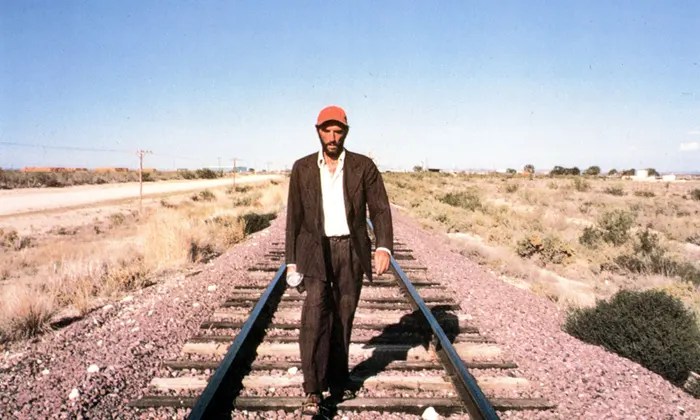
One of my favorite movies is Paris, Texas, directed by Wim Wenders. Displaying the most painful past in the most beautiful way, it is like a sugar-coated painkiller for the adult. 

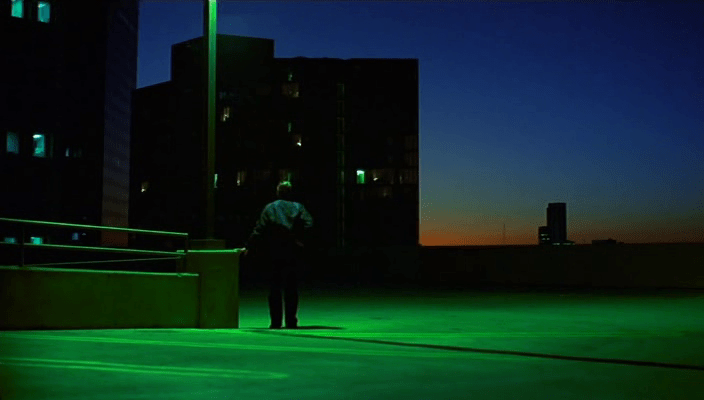
Both the sound and vision of this film are fantastic. From the moment the opening scenes grace the screen, the story of Paris, Texas takes hold of your emotions and refuses to let go. Ry Cooder’s evocative and hauntingly beautiful score adds an additional layer of emotion, enhancing the storytelling and capturing the essence of the characters and landscapes.

What makes this film truly unforgettable is its remarkable ability to resonate with viewers on a personal level. Through its raw and honest portrayal of its characters, Paris, Texas creates an intimate connection, making their joys and sorrows feel palpable and relatable. It is a tale that explores the complexities of human relationships, the haunting weight of past mistakes, and the enduring power of love and redemption.

The film also follows the story spine structure. 

Once upon a time, There is a man named Travis, who wanders the desolate Texan landscape, haunted by a profound sense of loss and disconnection. 

But one day, Travis resurfaces, disheveled and silent, in the scorching heat of a small town. The enigma surrounding his disappearance begins to unravel, revealing a heart-wrenching tale of love, fractured relationships, and a desperate yearning to reconnect.

Because of that, Travis embarks on a transformative odyssey, driven by an ardent desire to reunite with his estranged wife, Jane, and their young son. 

Because of that, Travis must confront his own demons, find the strength to communicate, and bridge the emotional gaps that have plagued his life. 

Until finally, in a poignant climax, Travis faces the bittersweet truth, leaving their son to his wife, and leading to a glimmer of hope. The film’s ending leaves a lasting imprint, resonating with its audience long after the credits roll.

What’s interesting about the structure is that, through remembering the past and retelling their love story, Travis provided another story spine structure, the consequences of which lead to the present one. It feels like opening a box and only find us standing inside it. 

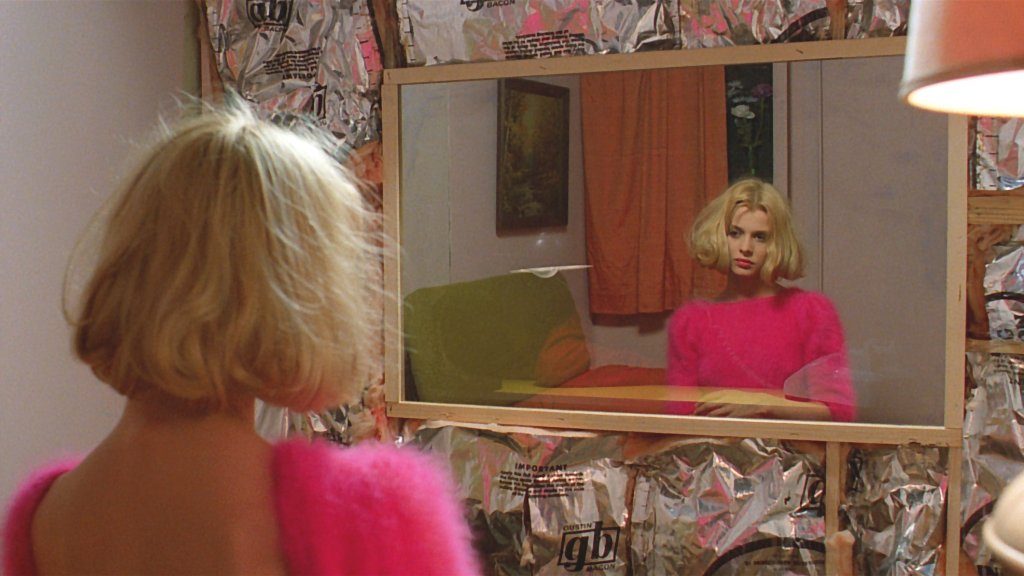
The performances in Paris, Texas are nothing short of exceptional. Harry Dean Stanton‘s portrayal of Travis is hauntingly authentic, capturing the inner turmoil and vulnerability of a man yearning for redemption. And Nastassja Kinski, who played Jane, Travis’ wife, combines both astonishing beauty and fragility that echo so strong with Travis’ regrets. The chemistry between the characters, the tender moments shared, and the unspoken emotions conveyed through nuanced gestures all contribute to the film’s captivating power.

Beyond its technical brilliance, Paris, Texas leaves an enduring impact through its exploration of universal themes. It speaks to the power of forgiveness, the significance of human connection, and the potential for redemption even in the face of our deepest regrets. It reminds us that, ultimately, love has the ability to heal wounds and bridge the gaps that time and distance create.

There are films that entertain and films that profoundly move us. Paris, Texas belongs to the latter category. Its ability to touch the soul, its portrayal of the complexities of human nature, and its exploration of love, redemption, and connection make it an enduring masterpiece that continues to resonate with audiences, myself included.

Categories
Uncategorized

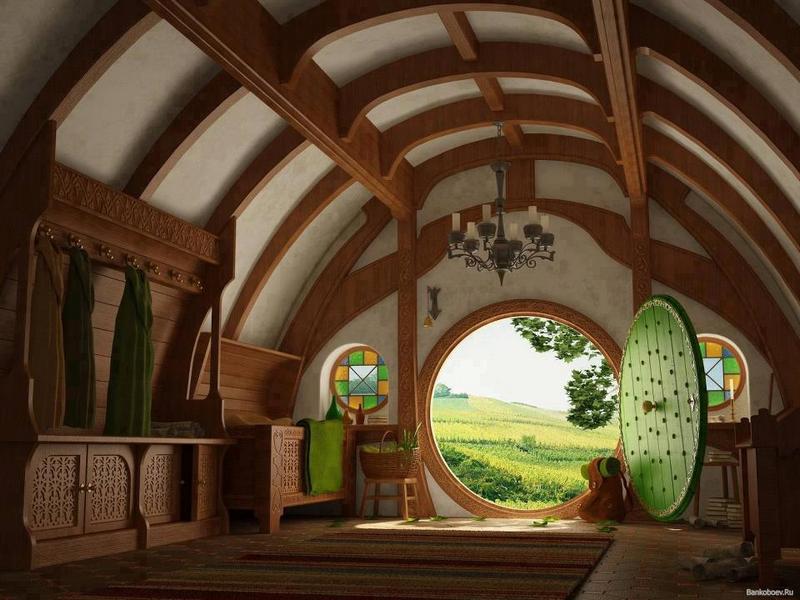
“In a hole in the ground…”

My father’s office always fascinated me; it was a strange room with black wood paneling and reddish yellow shag carpeting from the 70’s, plus an old electric fireplace in the back of the room that I used to turn on from time to time and see fake, flickering “fire.”

In this office stood piles of magazines and newspaper clippings that my father kept as future references that he never used. I ignored these stockpiles, as news bored 10-year-old me. However, A bookshelf with its rows and rows of classic novels did pique my interest. Here, I often scanned the spines of books (like Treasure Island or Journey to the Centre of the Earth) and pulled them out to read while sitting near the electric fireplace.

One day, I pulled out a book that caught my eye because of its unusual shape and its enigmatic title The Hobbit, by JRR Tolkien.

“What is a Hobbit?” I asked myself.

I hadn’t heard about this book before or seen a movie about it, but this “deluxe version” of the book drew my eyes instantly. The book was beautifully illustrated, which was important to a child my age. So, I took it down and began to read.

The book started with what, I did not know at the time, was possibly one of the most famous lines in fantasy literature:

            “In a hole in the ground there lived a hobbit…”

From there, the story weaved its way through the many adventures of Bilbo, the wizard Gandalf, and his Dwarfish friends – evading goblins, riddling with Gollum, and escaping from an Elvish prison – until they faced the mighty dragon, Smaug.

In the end, a great battle of five armies was fought to decide the fate of the dragon’s golden horde. Luckily, Bilbo survived, but he was never the same again.

The story was very simple, which makes sense, since Tolkien intended it for a younger audience, and is said to have read it to his own children. Nonetheless, The Hobbit did teach valuable, universal lessons about good vs. evil, the overwhelming power of greed, and the importance of enjoying a simple life back in one’s own “hobbit hole.”

Entranced, I kept reading it while enjoying the drawings and colorful character designs that made the imaginary world of Middle Earth come to life.

It wasn’t long before I had read the whole book, which was about 200 pages or so. I was happy with myself because I didn’t often read books that long (I mostly flipped through comic books). Right way though, something about this story grabbed my attention. Perhaps it was the main character Bilbo, who seemed so relatable, and, like many of us, are so accustomed to our home comforts, never daring to go out into the great, big world until inspired by an adventure that comes knocking on our door:

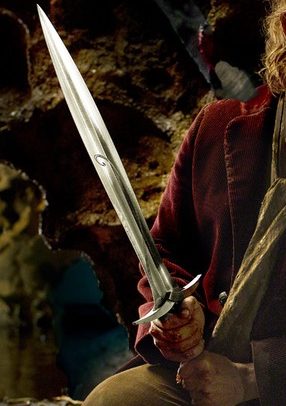
“…and he wished to go and see the great mountains, and hear the pine-trees and the waterfalls, and explore caves, and wear a sword instead of a walking-stick.”

My love of reading continued as I enjoyed other books from my father’s library, but I often went back to reading The Hobbit again and again. This was rare for me, as I often didn’t read the same book more than once. In fact, I read The Hobbit so much that I wore out the spine of the book and had to have my parents replace it with one of those back plastic ring spines you see use for work reports.

The Hobbit inspired me to explore fantasy even further. Right way, I noticeable that the pictures in the book I read was from a cartoon movie or tv show. So, I searched high and low for this film, until I found a VHS copy in a local store. I watched with zeal; it was great to see characters like the fiery wizard Gandalf come to life. From there, I began to read other fantasy books, like the Dragonlance series and Conan books.

Eventually, as I got older, I felt bold enough to tackle The Lord of the Rings, a sequel of sorts to The Hobbit. This book massive. It was composed of three books totalling 1,200 pages or so. Typically, I wouldn’t even think of reading such a lengthy tome, but my childish interest in The Hobbit pushed me forward. I finished The Lord of the Rings quickly, and it became one of my other favourite books of all time. However, The Hobbit will always have a special place in my heart, as it was the book that catapulted me into the world of fantasy writing.

I no longer have the old book with me, but I do have the money to buy a nice, new version of the book.

Nowadays, people often speak about other fantasy works; but, in my head I always think the same thing…

Categories
Uncategorized

A Lifelong Love of Gargoyles

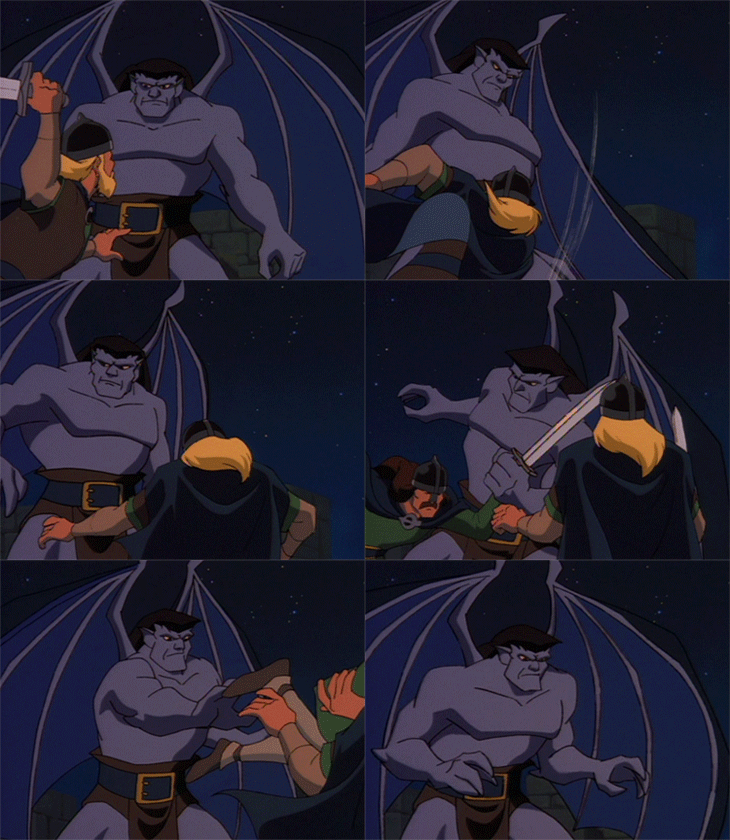
Growing up, my mother was big on introducing me to shows she watched as a child, which were primarily shows produced by Disney. One that has stuck with me from a young age was Disney’s Gargoyles, an animated show not normal for Disney in that time, the 90’s. It had complex storytelling, darker themes and would be considered a melodrama. I think the first time I watched it, I was in elementary school, I might’ve been as young as 8 or 9 when my mother introduced me to the show.

Even now, at 20 years old, I’ll go back and rewatch episodes of Gargoyles now that it’s available 24/7 on Disney+. It’s a show I’ve grown to immensely love and want to delve into deeper if given the chance, something I’d absolutely write an entire essay on if I was allowed. The show had on-going character development over the course of the four years it was aired, 1994-97.

The show’s darker themes and continuous storylines was probably what drew me in. I enjoy shows that aren’t episodic with its storytelling, like normal kids cartoons meant to keep children’s attention for the standard 15-20 minutes. The show would keep continuity from the first episode all the way to the end of season two. It ran for 65 episodes, plus a 13 episode third season that is not considered to be part of the main continuity, both by fans and the creator, Greg Weisman.

Overall the show is something I happily recommend to those looking for something new, or maybe even reminding people who have seen it before that it exists, prompting them to rewatch it like it’s brand new to them. It has dark themes and lots of tie-ins to Shakespeare works, giving interesting world building. I continuously rewatch it, probably having more than a few episodes subconsciously memorized at this point, and I’m happy to have it easily accessible so I can watch it now that I can fully comprehend the topics and overall story. The creator has even gone on to currently continue the series with comics, working more on the storytelling and happily showing more of what he wanted to do with the original series.

Gargoyles tells stories of the nocturnal, titular species, gargoyles, showing them grow accustomed to ‘modern day’, at least at time of first release it was. They were originally from 994, living in a castle in Scotland, before being forced to sleep in stone for a thousand years. ‘Modern day’ is referring to 1994, the year they awoke from their spell. It’s then, in Manhattan, that they must adapt to all the new technology and human customs in order to keep their clan alive. The show goes on to follow them in 1994, while occasionally diving back into the past either before 994 or in the thousand years of sleep, showing other characters’ backstories and how they came to still be alive and kicking in 1994. The episodes are full of brilliant ways to give children life lessons you’d traditionally find in other kids shows, though the show is more straightforward and doesn’t hide behind needing to censor everything to make sure it’s appropriate for young children to see.

We get to learn about and befriend all the characters we’re meant to learn to love, and we follow the characters through betrayals, losses and across-the-world adventures. The show gives us characters we’re meant to hate, but then learn why they act the way they do, and that they weren’t always the villain, now acting out of fear and self-hate for what they did in the past.

The show is a beautiful example of amazing, long term, storytelling, giving us reasons to pity the villains, love the heroes, and even give us chances to disagree with the characters we love the most. Practically every character ends up written so wonderfully that it’s clear any character flaws are meant to be a normal flaw you’d find in a person you’d meet every day.

I enjoy Shakespeare probably a little more than the average 20 year old, not a crazy amount, but just a slightly above average love that originated from Gargoyles. It used characters like Macbeth, Puck, Oberon and many more from Shakespeare’s works. It had characters use the same names and mirror the love triangle from the play Othello. The use of his works in Gargoyles made me interested in reading the actual plays, and I always get excited when it’s brought up in conversation.

I think the show is a wonderful example of storytelling and giving life lessons, not being afraid to delve into darker themes while still retaining its rating of TV-Y7. I’ll always recommend it to people and love hearing people get back to me after they’ve watched a few episodes and tell me their opinions!

Categories
Uncategorized

Uncle Ben said it best…

With great power, comes great responsibility. Even to this day, those words spoken famously by Uncle Ben to his nephew Peter Parker, send chills down my spine. It is a quote forever marked in time. The story of Peter Parker, AKA Spider-Man will be forever marked in time. It has been classified as good storytelling since its inception by Stan Lee and Steve Ditko in August 1962.

The story has evolved over time, from comics to tv shows, to numerous franchise movie reboots. Some done better than others (*Cough* Tom Holland *Cough*).

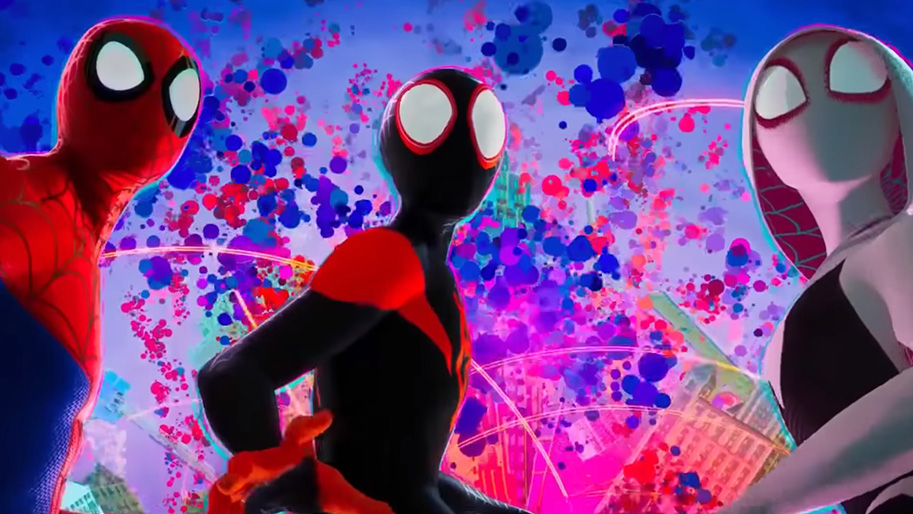
But most recently, Sony Pictures created a newly animated Spider-Man story that follows a young New York teenager named Miles Morales in the movie Spider-Man: Into the Spider-Verse, and this story has inspired a new and great storytelling platform for Spider-Man.

This story still has the fundamentals that make Spider-Man good, the unlikely hero we love and cheer for. Good vs. evil, the witty loveable supporting characters, the struggle to triumph journey. But what sets Into the Spider-Verse apart? It’s the visual storytelling.

The colours, the animation, and the digital design all draw you in because it is new and exciting. Something we have not seen done before.

Let’s dive deep into how visual storytelling is setting itself apart and why it’s paving the way for new ideas.

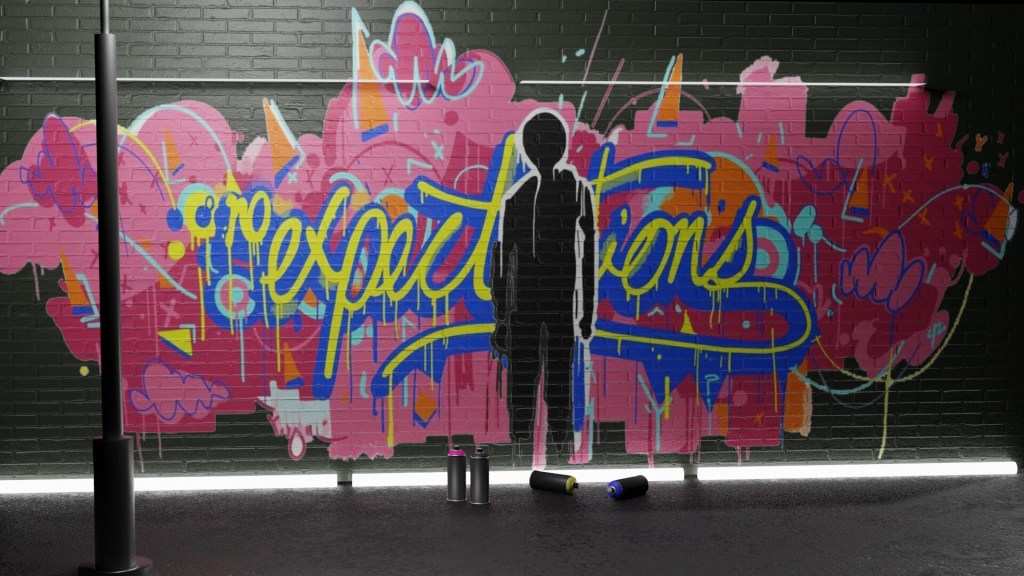
The unique modern-day comic book design hits the nostalgia button for all comic book readers, which still includes action and thought bubbles. The colours are bright and vibrant, which is shown off in the spray paint art Miles does at the beginning of the film, or the portals that open between different multiverse. You can’t help but have your eyes drawn in by it all.

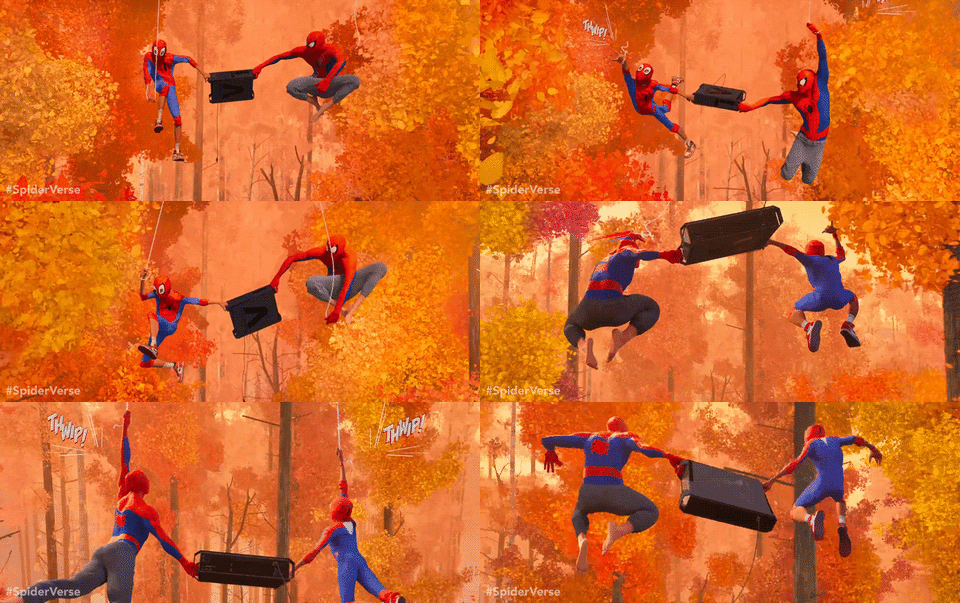
But the most intriguing aspect of the movie is the frames per second (FPS). When you first watch the movie as Miles learns about his powers and starts his journey to becoming Spider-Man, he is displayed as clumsy, awkward, and lacking confidence in the way he moves. Compared to Peter Parker, who is teaching Miles the ropes of being Spider-Man, who moves smoothly, and effortlessly across the screen. Typically, in animation, this is hard to show. Animators would have to use incidents, like dumping into things, falling down, etc. This conveys to our brain that the character is indeed, clumsy.

But as you watch Miles, his walking, running, and swinging just seems…wrong. This is where it gets interesting, and where Sony has stepped up visual storytelling. The movie and characters were filmed at a 24 fps for Into the Spider-Verse.

Watch how Peter Parker swings verses how Miles Morales swings…

But, Miles, at the beginning, was filmed at 12 fps compared the 24 fps around him. This creates a message to our brain, that something is off, that he seems to be slower and clumpier. As Miles becomes more confident as Spider-Man, Sony began to increase the fps on Miles until the end when he is finally at 24 fps with the rest of the film and easily glides across the screen. Pretty cool huh! This small attention to detail has set this film apart from other visual storytelling. It has become one of the most beloved Spider-Man movies to date.

Visual storytelling allows us to create these magical worlds and scenarios that seem impossible and fantastical. But when you take that storytelling outside of the box, like filming at different frames per second, the storytelling is taken to a whole new level.

For me, the story, the animation, and the characters have made Spider-Man: Intro the Spider-Verse one of my favorite stories, and it will continue to be for a very long time.

Categories
Uncategorized

Why Arthur Christmas Tops My Holiday Watch List

No one will ever convince me that Arthur Christmas is not the greatest Christmas movie ever made.

Released in 2011, this animated film addresses the question of how Santa is able to deliver presents to all the boys and girls of the world in just one night–and what it means when even just one child gets overlooked.

The story revolves around Santa’s youngest son Arthur, and it follows Kenn Adams’ story spine structure:

Once upon a time…there was a klutzy but well-intentioned boy named Arthur whose father was about to retire as Santa Claus, the current figurehead of a family-run organization that delivers presents to every child on Christmas Eve.

Every day…Arthur answered letters to Santa from children around the world and did his best to share the magic of what makes Christmas special.

But one day…he discovered that Santa’s high-tech gift-delivery operation somehow missed a child, and the folks who ran the show said it was an unfortunate error that couldn’t be rectified.

Because of that…he snuck out on a time-critical mission to personally deliver the gift.

Because of that…he overcame many setbacks and obstacles to get to the child’s home before she woke on Christmas morning.

Until finally…Arthur delivered the gift just in time.

And ever since then…Arthur’s genuine devotion to the Christmas spirit made the other Clauses realize that clumsy, lovable Arthur deserved to take over the role of Santa.

I first saw the film with my young kids, and I was so taken with the story that I made watching it an annual tradition (even though my kids are teenagers now and so sick of the movie that they roll their eyes when I suggest it.)

Why was this particular movie so memorable? For starters, the premise was intriguing. In a modern world where we can track anything through smartphones and GPS, how does the concept of Santa in a sleigh fit in? It was an interesting update of an old storyline, which was enough to pique my interest.

I stayed hooked because I could totally identify with the main character, a good-hearted soul who means well but inadvertently causes problems everywhere he goes. You can’t get made at someone who is so nice and tries so hard, but you still want to throttle them sometimes because of the havoc they wreak.

Arthur’s noble struggle to overcome his shortcomings, defy expectations, and do the right thing had me rooting for him every step of the way. And as Pixar storyboard artist Emma Coats reminds us, we admire a character for trying more than for their successes.

What really stands out about the film for me is the way it jokes about things you would never expect to hear mentioned in a traditional Christmas movie. The funniest character is crotchety old Grandsanta, who has lines like:

  • “The elf fell out of the sleigh over Lake Geneva. Never saw him again.”
  • “Dasher! Dancer! Prancer! What are the others called? I could never ruddy remember. Bambi?”
  • “I didn’t know it was the Cuban Missile Crisis! I nearly started World War III!”

The ending is never really in doubt (of course Arthur delivers the gift and saves Christmas) but there’s enough charm, humour, and originality along the way that it leaves me with a smile on my face.

Every single time.

Categories
Uncategorized

Lights. Camera. Action. Behind the curtain of a photoshoot.

Details aren’t just details, they’re the key to the whole thing

– Virgil Abloh, Off-White –

I wanted to share my most recent experience I had at a photoshoot for Goat Track, a lifestyle x golf clothing brand based in Edmonton, Alberta. This was an opportunity for me to showcase the brand’s latest spring collection and bring their creative vision to life. Although the day had its challenges, we managed to overcome them and create some ideal content, for both social media and their online store.

Prepping for this photoshoot required a lot of setup. I began by searching out for 2 models who aligned with the brand’s core identity. And, that also had that evening free. Next, I chose a location that would complement the clothing collection. That place? A warehouse off Whitemud Drive. Doesn’t sound ideal, but the space I had to work in was perfect. Paired with studio lighting, a white backdrop, a couple models and some quality clothing to showcase.We were ready to cook! You couldn’t even tell we were in a warehouse, just behind Leon’s on 50th street.

On the evening of the photoshoot, I arrived early to set up the equipment and finalize the models’ looks. Everything was going smoothly. Everyone arrived on time, had all the pieces of clothing on hand (been known to forget a piece or three) and smiles were big and bright. We only had one minor issue.

I forgot to mention to the team to remove their shoes before stepping on the white paper backdrop. So, when our first model stepped into the frame for the first shot. The backdrop was instantly covered in soot and dirt. We are in a warehouse after all! That’s on me! But, despite the minor issue with the backdrop, we kept focused and worked together to get the job done. After 3 hours and 297 photos later, that was a wrap.

After the shoot was done, I headed back to my studio (also known as my house) and began to review all of the images and selecting the best ones for editing. In post-production, I use a couple basic techniques to enhance the images, including color correction and a little retouching. I tried to remove the dirt footprints from the floor. But, after reviewing with the team, we decided to keep it in. We felt it actually added to the photos, spoke more on the brand of what Goat Track is.

Real, raw and unfiltered (just a little edited).

The final images from the Goat Track photoshoot are a testament to the hard work and dedication from the entire team. I feel they showcase the essence of the brand and will hopefully capture the attention of their target audience.

The process of creating these images was a complete labor of love, and I’m so proud of the results. I invite you to visit the Goat Track instagram (@goat.track) to learn more about the latest collection.

Thank you for reading and I can’t wait to share my next photoshoot with you soon!

Categories
Uncategorized

Jordan River Anderson

For this assignment, I wanted to do something different by telling the story of a young boy who sparked the child-first initiative called Jordan’s Principle through my organizations social media instead of my own. You can see the short story video about Jordan on our organizations Facebook page here.

Jordan’s Principle is an initiative to ensure that all First Nations children have fair and equal access to health, social and education services as other children in Canada.

Jordan’s Story

Jordan was a young boy from Norway House Cree Nation in Manitoba born in 1999 with various disabilities. For example, he had a rare, genetic, muscular disorder called Carey-Fineman-Ziter Syndrome which includes facial weakness or paralysis, and a small or retracted chin among other symptoms that range from mild to severe.

Due to these health conditions, Jordan had to stay in the hospital for over two years and then the doctors approved Jordan to have in-home care. This is when a dispute started between the provincial and federal government about who was responsible for paying for Jordan’s care. Essentially, pointing fingers at each other without taking accountability.

Why was this a dispute???

  • Status First Nations people have access to something called “Non-Insured Health Benefits (NIHB)” which is federally managed. These benefits help cover basic prescriptions, dental care, medical supplies and equipment, etc.
  • Non-Status, Status First Nations and, non-Indigenous people also have their general healthcare (Hospital visits, doctors visits, etc.) managed provincially, for example, through Alberta Health Care.

Due to this dispute… Jordan was not able to stay in a real home with his loving family. Jordan stayed in the hospital unnecessarily for over two more years until he passed away in 2005 at the age of 5. Jordan’s mother also passed away six months later. It was a truly devastating time for their family.

Jordan’s Principle

Jordan’s life, his story and his family have sparked this child-first initiative intended to prevent any other First Nations children from falling through the cracks like this again. To ensure that jurisdictional disputes won’t interfere with a child’s ability to be home with their family and to have fair and equal access to social, health and education needs.

In Alberta, the First Nations Health Consortium helps families with submitting Jordan’s Principle requests to Indigenous Services Canada to ensure that First Nations children in our province are given fair and equitable treatment.

To learn more about Jordan River Anderson, his life, his family and Jordan’s Principle, I invite you to watch the documentary “Jordan River Anderson, The Messenger” by Alanis Obomsawin.

Design a site like this with WordPress.com
Get started