I chose to live-tweet as I watch Forged in Fire on Disney+, Mostly because I don’t have anything more exciting to live-tweet about!!
Personally I found the thread by Paris Zarcilla very funny and while I may not have conjured the same chaotic-panic energy as that live-tweet adventure, it’s what I was mostly inspired by!
And I followed some of the advice from Eric Goldschein with simply ‘Write the way you talk’. It made me feel more relaxed about the whole assignment.
BACKGROUND
The show Forged in Fire is a show in which four contestants (all people who work as bladesmiths) compete in three rounds to win a cash prize! I first watched it with my friend about five days ago, around midnight up until… about 2:30! We had been hanging out all day and just weren’t quite tired enough to actually commit to falling asleep, but man did I wish I had live-tweeted when we were watching, something tells me uber-tired live-tweeting would’ve added to the experience… but I digress.
I highly recommend the show to even just play in the background!
It was pretty fun to essentially just tweet all my thoughts! Might not be something I do in the future because I got distracted with tweeting over actually watching the show sometimes, but it was fun to get to do!
For my live-tweet experience, I wanted to do something I never have done before, which is live-tweeting as I’m doing something. I decided to go shopping, so I thought I’d live tweet that!
Story
I definitely wanted a thread of beginning, middle, and end within my thread, so I started before we went shopping and my thought process behind that decision, why I went shopping, and what the atmosphere was like. I centred my overarching theme around going to the bookstore, because I love the bookstore and am extremely passionate about it! As well, I love the atmosphere of the bookstore, and wanted to convey that within my story. I wanted to express how I feel in a bookstore, what runs through my mind in there!
Techniques
One highlight that stood out to me was Vanyerchuk’s “Document. Don’t Create.” Where Vanyerchuk wrote:
“Describe your journey, outline your vision, and describe your thoughts, ideas, actions, wins, losses, anxieties and ambitions online.”
Vanyerchuk, How to Tell a Story on Social Media
This quote stands out to me as an excellent way to inspire and form my live-tweeting, even for something as mundane as … shopping! When you don’t live a rather exciting life (or, well, one that many would not consider exciting, but its exciting in your own way) it’s hard to do something to live tweet! But, thinking about anything you document being a journey, using your own thoughts to format that journey into something special, like a story told on Twitter, I think that’s incredible. Anything can make a story, even live-tweeting a shopping trip to your favourite store, and it’s all about how you word it, what you make of it, and the threads that you weave within, well, that very same thread, on Twitter!
I chose to live-tweet a championship rugby game involving my son’s team. A sports story has a clear beginning, middle, and end, and lends itself well to suspense, so it seemed like a good event to try.
THE STORY IN A NUTSHELL
After a season in which I didn’t actually get to many matches (parenting fail!) I finally had a chance to watch my son compete in the U16 rugby championship. I only know the very basics of rugby and had to rely on the spectators around me to figure out what was happening, but even I could tell the first half didn’t go well.
In the second half, my son’s team tied it up, then pulled ahead, but at the very last minute had a penalty called against them and had to hope the other team missed the kick. Thankfully the kick was no good, time ran out, and my son’s team were crowned champions. It was almost like a movie.
Yep, that’s my son with the tampons in his nose
STORYTELLING TECHNIQUES I USED
The question of who would win the championship drove the suspense. It was interesting to write from a perspective of not knowing the ending; even I was invested in finding out what happened, so I tried to make the reader feel the same way.
I kept the posts short, wrote in a casual style, and used sentence fragments for the most part, much like a play-by-play situation. But I deliberately set out not to just parrot the action. To provide value with each post like Eric Goldschein advised, I tried to entertain the reader or add interesting context to the unfolding events. I also added visual elements including photos, gifs, and emojis.
Following a Hootsuite tip on live-tweeting and writing for social media, I even created a poll to engage the audience and provoke a response.
THE OVERALL EXPERIENCE
The agony of watching your kid compete and not knowing how things will turn out is a universal theme that I think a lot of people can relate to, and I enjoyed experimenting with the live-tweeting format. I’m not a very visual thinker (or writer), so this was a challenging but interesting project.
Photo by TranStudios Photography & Video on Pexels.com
My live-tweet thread shares the story of an important event in my life – my engagement.
In my 10 + tweets, I conveyed my feelings, and the difficulty, of asking my wife if she would marry me.
STORY FORMAT
The story started off lovely enough. We arrived at a castle hotel in Ireland, near Galway, that we had booked ahead of time to “treat” ourselves.
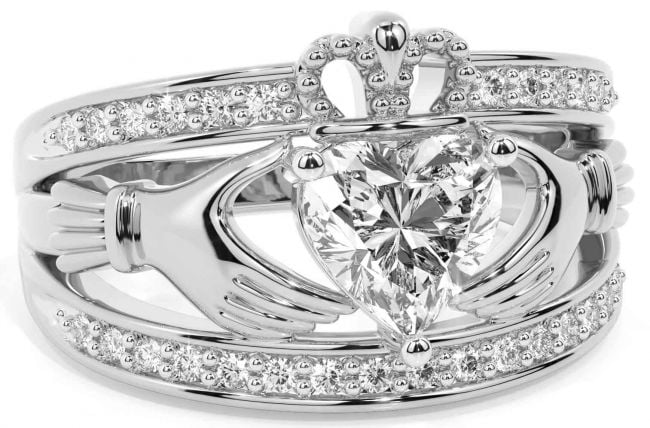
While in our room, I tried to find a means to ask her if she would marry me without a ring at hand (because I was going to suggest that we shop for a ring in Galway, so she could pick what she wanted – a nice traditional Irish Claddagh ring).
c/o Glencara.com
In the middle part of my live-tweet story, I figured out a way to propose to her (with a note under her pillow); but, my worst fears were realized when she didn’t find the note before she went to sleep.
The next morning, at the end of the story, I took matters into my own hand – I gave her the note; she said “Yes”; and we set out to find the perfect ring.
“ENGAGING” STORY
Would she find the note or not helped to create much of the suspense in the story and helped to keep the audience engaged.
The stakes were high for me personally (“Would she say “No”?”), but I felt pretty confident I knew the answer before I even asked (But, you never know!).
STORYTELLING TECHNIQUES/PRINCIPLES
As Eric Goldschein suggested in his article posted in Social Media Today, I tried to write the way I talk (or think) to make the story more natural and authentic. The personal perspective also helped up the suspense, as I didn’t know what was going to happen next.
I also tweeted short posts, including ones with “…” and reactions like “WTF?”, as this helped to build up the intrigue, which Joe Wodlington stated in his “How to use Tweet threads” article was important for good social media writing.
All in all, I felt the personal writing style made the posts highly relatable to anyone who has ever planned something out in their mind, only to fall flat on their face.
I’ve got to say, for me, watching the series Twin Peaks is one of the most artistic, sensory, surreal experiences ever. Most importantly, it is unlike anything I have viewed before, and my mind will always be blown by Mark Frost’s and David Lynch’s unforgettable television and film masterpieces. Don’t believe me? This scene may change that.
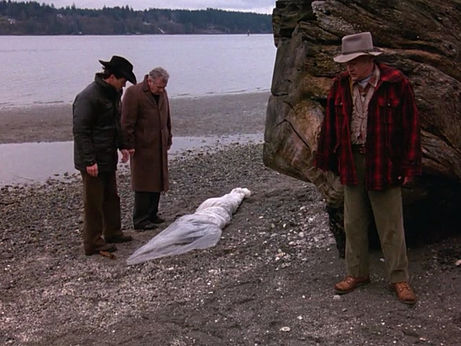
Twin Peaks debuted as a television series in 1990. A feature film was released two years later (Twin Peaks: Fire Walk with Me), and to my excitement, a 25 year revival of the show aired in 2017 (Twin Peaks: The Return). In a nutshell, the story revolves around the murder of the town’s adored prom queen, Laura Palmer, who was found washed up on a beach, dead, and wrapped in plastic. The question that everyone wants to know is “Who killed Laura Palmer?”, and the answer is far from expected.
What makes the story of Twin Peaks so darn good and memorable?
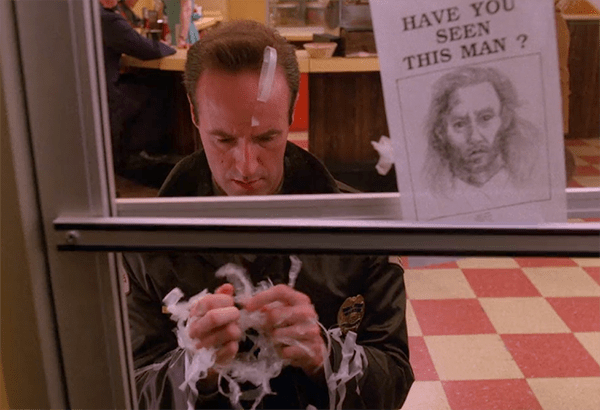
It defies norms and conventions of traditional murder mysteries by incorporating bizarre, dreamy, supernatural aspects. Despite the show being centered around a very dark, tragic event, the show stands out by providing awkward, wacky, humorous moments too, which can harken back to the bafoonish comedy style of the 1950s. A prime example would be Andy, one of the deputies, getting entangled with tape while hanging up a “Have you seen this man?” poster, or almost knocking himself out while accidentally stepping on a loose board during an investigation. Andy is one of my favourite characters of the show because of his clumsiness and his sensitive side – he often lacked elegance and poise, and tended to cry at every murder scene he went to, going against the typical, stoic deputies found in many TV crime shows. A successful story can certainly be described as one that you can relate to, and Twin Peaks provides a vast array of quirky, richly detailed characters with unconventional personalities that I think many people are able to find aspects of themselves within.
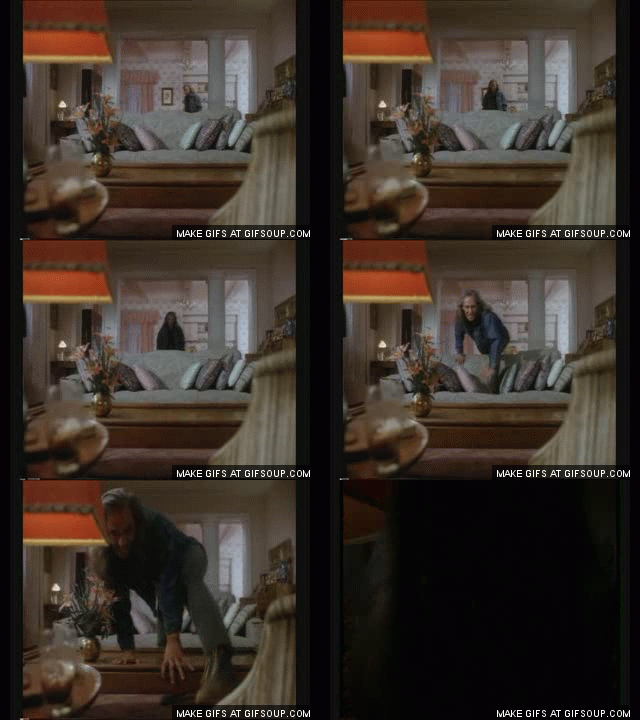
Good stories are universal, and even though Twin Peaks is so unusual and atypical in a lot of ways, the overarching theme of good vs. evil is is at the heart of this story – a common battle that most of us have been faced with at some point in our lives. This a strong and pervasive theme in many classic stories, like Little Red Riding Hood vs. the wolf for example, or Cinderella vs. the evil stepsister. All enthralling stories need to have conflict and a focused theme (in this instance, good vs. evil), and Twin Peaks successfully accomplishes this in a unique way, by showcasing evil as a force named BOB. Although he looks human, he is a spirit who feeds off of pain and sorrow and inhibits individuals, possessing individuals to commit horrific acts, like the murder of Laura Palmer. Great stories are also ones that are so influential that they stick with you, and BOB’s terrifying nature haunts me to this day. In the show, he is often seen appearing in mirrors and dimly-lit living rooms. I’ve never been able to look at either of those the same since. (Even including the GIF below made the hairs on my neck stand up!)
As noted in Ashley Fell’s TEDx Talk, “Why storytelling is so powerful in the digital era”, a good story engages our attention, much like a good campfire does for example, because it has colour, picture, and movement. David Lynch’s one-of-a-kind artistic direction, along with Angelo Badalamenti’s expressive musical compositions, made the saga of Twin Peaks even more unforgettable and powerful by transforming the mood to bring us right into the eccentric, chaotic, scary, yet beautiful town of Twin Peaks. A quality story is visual, and by adding such evocative imagery and sound, it made the series even more sensational and helped to strike an emotional cord with the audience. I could listen and watch the intro to the show all day – it brings me right into the story every time I hear it! But, even if the stunningly eery visuals and hauntingly alluring music were stripped away, the story of Twin Peaks will remain an amazing one because of it’s boundary pushing. If you enjoy murder mysteries, I will definitely always recommend this revolutionary, experimental, unreal take of a heartbreaking small-town death.
Barely even friends Then somebody bends Unexpectedly
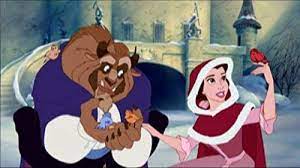
Disney’s Beauty and the Beast
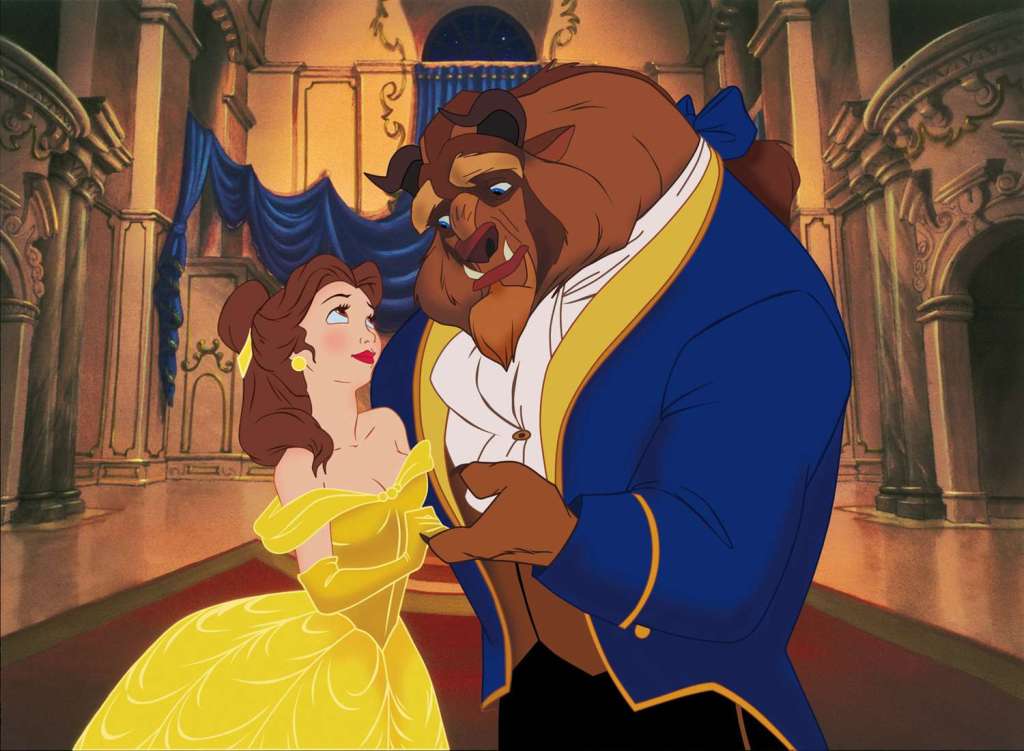
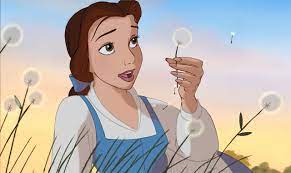
A story that has always stuck close to me is Disney’s Beauty and the Beast. The quiet, book-loving, and beautiful heroine, the dark and tortured prince, and the magical castle; while the gender stereotypes may be questionable now, this is a tale as old as time for several reasons.
It’s Relatable
Who doesn’t want to live happily ever after? This is one of the defining features of Disney’s version of various fairy tales, making them the perfect escapist fantasies. Beauty and the Beast is no different. Sure, most people are not turned into a beast, or forced to live with one, but everyone wants to achieve some form of happiness in their lifetime.
Belle’s love changes the Beast and ultimately breaks the spell. The search for true love is seen in all mediums of entertainment because it is a universal theme. Perhaps even more relatable is the idea one is worthy of love, regardless of their outward appearance, an idea that this story drills home.
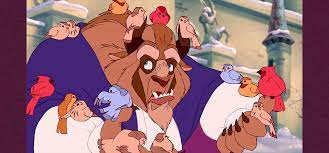
Another relatable theme in this story is the idea of second chances. How many people have never made a mistake, never wished they could get a do-over? Not many. The Beast learns from his mistakes (at least, that is what we can hope) and gets a second chance at being human. There is implied forgiveness and growth, two things that many of us strive for.
Bittersweet and strange Finding you can change Learning you were wrong
The answer is d) All of the above and more. There are several morals in this story and lots of lessons to take away and apply in the real world. At least, that’s what we tell ourselves we’ll do after we watch the movie. Whether we apply the lessons or not, the story allows us to feel inspired, even if momentarily.
Certain as the sun Rising in the east
Disney’s Beauty and the Beast
It’s Interesting
Disney unlocked the key to capturing its audience a long time ago. With its fairy tales, a big draw is the musical pieces. People aren’t just watching characters talk; they’re watching characters sing and dance, usually with songs that are hard to forget. It’s not unusual for Disney songs to get stuck in one’s head.
As already hinted at earlier in this post, the romance is one of the attractions of this fairy tale. Is the Beast worthy of love? Will Belle love him? Can Belle love him? For someone watching the movie for the first time, these are the questions that would run through their head. And even for those of us who have already seen the movie, there is still a certain charm as we watch Belle and the Beast slowly fall in love.
And Finally, It Makes Sense
Beauty and the Beast follows a distinct order, or better yet, it follows the Story Spine by Kenn Adams, a generally foolproof method of constructing a successful story. There is a beginning, event, middle, climax, and end, and as a result, there is no clashing with our internal logic over this story.
Tale as old as time Song as old as rhyme Beauty and the beast
“But especially he loved to run in the dim twilight of the summer midnights, listening to the subdued and sleepy murmurs of the forest, reading signs and sounds as a man may read a book, and seeking for the mysterious something that called—called, waking or sleeping, at all times, for him to come.”
London, Jack. The Call of the Wild.. New York, Macmillan, 1963.
And that call, was the call of the wild
Perhaps one of the best book-to-film adaptations in history, The Call of the Wild boasts an even better film production than its written counterpoint. With a medium that reveals the raw beauty of the Yukon and Alaskan wilderness, story adjustments from a gruesome ending to a wholesome character metamorphosis, and added visual effects to demonstrate the personification of Buck’s character, evoke feelings which truly can’t be compared to the original written by Jack London.
Don’t get me wrong, I’m a sucker for a good classic. I had originally read the book as I learned my Great Opa had read it to my Oma when she was a young girl who had freshly moved to Canada from Germany in order to learn English. Which, after reading the book myself, I now understand why her diction is so well-articulated if that was her first base for learning the language. The book was written in 1963, so as a Gen Z kid, I struggled a bit to understand the archaic diction and romantic language that seems to have dissipated from our everyday dictionaries.
I did my best to learn the world of Jack London and put myself in my Oma’s shoes, but there were parts of the story that just did not resonate with me. I had loved the overarching message of being called to the wilderness from a domesticated and civilized life, but the gruesome stories, animal violence, and inappropriate names for indigenous peoples had made me sick to my stomach (especially the anti-climactic ending, which resulted in several politically incorrect slurs).
So what exactly made the movie superior?
While the book shares the classic building blocks of a good story (i.e., contains a beginning, middle, and end), the film adaptation shares similar values to Pixar’s 22 rules of storytelling (despite it being under the production of 20th Century Fox studios) -which make it a great story. A few examples of these key components are as follows:
The story’s why had changed; rather than focusing on gruesome battles and messages of being consumed by the wild, the family-friendly movie had shifted its message towards finding your true purpose. Whether that purpose was as a friend in an unlikely situation (returning a musical relic to another character), the love that can be experienced in found-family (his unique dogsled team), or finding your true self within the confines of the wild.
They created more relatable characters. It’s difficult writing a book from the perspective of a dog when audiences jell more stories they can feel themselves a part of. Which is why the plot changes to having John Thornton and Pierrault’s characters more developed with further heart-wrenching backstories, not only has us rooting for their successes, but also in tears upon their downfalls.
And finally, they created memorable scenes which the audience remembers long after having seen the film. A few that come to my mind is the peace I felt as John and Buck resided in that old trapper’s cabin beside that glacial run-off creek; the sadness I felt when seeing John life being torn from him, with Buck nuzzling him at his side until his very last breath; the inner consciousness of Buck, which exposed itself as a black wolf in the wilderness, calling him to choose his path in life (the one certainly less travelled).
It was a movie that not only spoke to my wild side, but a film that inspired me to take action
From gut-wrenching pain at the loss of my favourite characters, to tears of joy for Buck’s several found-families, The Call of the Wild, remains to be my comfort movie still to this day. It’s one with personal ties to my family, from my Oma’s language learning journey, to my father’s Alaskan expedition along the Chilkoot Trail (which was featured in the movie, further inspiring me to do the expedition myself)! Each step of the way, I had felt immensely for a creature of CGI because it’s story stands greater than its visuals -which were awe-inspiring to begin with.
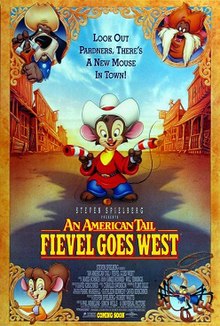
Fievel Goes West – This was one of my most favourite movies as a child. I still have a stuffed Fievel, that my Grandparents got me on a trip.
Introduction:
In this blog entry, I will delve into one of my favorite stories, “An American Tail: Fievel Goes West,” a heartwarming animated movie that captivated audiences with its memorable characters, engaging plot, and expert storytelling techniques. Drawing upon the principles and concepts learned from this week’s module video and required readings, I will explore why this story has remained etched in my memory.
Engaging Characters:
“An American Tail: Fievel Goes West” revolves around the Mousekewitz family, particularly Fievel, the brave young mouse who embarks on a thrilling adventure in the Wild West. From the outset, the characters are introduced in a way that immediately captures the audience’s attention. Fievel is portrayed as a relatable protagonist, with his dreams, fears, and unwavering determination to protect his family. The antagonist, Cat R. Waul, is expertly crafted as an oily con artist, adding a layer of suspense and intrigue to the narrative.
Compelling Plot:
The story begins with the Mousekewitz family’s decision to move to the West, lured by the promise of a cat-free existence. However, little do they know that they are falling into a trap set by the cunning Cat R. Waul. This plot twist immediately creates tension and propels the story forward, leaving the audience eager to see how Fievel will outsmart the devious villain and save his family.
Storytelling Principles:
One storytelling principle that stands out in “An American Tail: Fievel Goes West” is the effective use of suspense. Throughout the movie, the filmmakers skillfully build anticipation through well-paced action sequences, unexpected plot twists, and moments of peril that keep viewers on the edge of their seats. This not only creates an engaging viewing experience but also enhances the emotional impact of the story.
Another principle that shines through in this film is the theme of resilience. Fievel and his family encounter numerous obstacles and setbacks, but they never lose hope or give up. This resilience resonates with the audience, inspiring them to persevere in their own lives, even in the face of adversity.
Memorable Moments:
“An American Tail: Fievel Goes West” is filled with memorable moments that leave a lasting impression. One such scene is when Fievel, disguised as a cowboy, confronts Cat R. Waul who is intent on his own sinster plan.
Fun Fact: Premiering at the Kennedy Center on November 17, 1991, An American Tail: Fievel Goes West began its American theatrical run on November 22. This was the same day Walt Disney Pictures‘ Beauty and the Beast(1991) was distributed, making it the third instance of two animated films being released on the same date. Fievel Goes West was promoted with a wide array of tie-ins and started in the top ten at the box office. The film grossed $22 million in the United States against a budget of $16 million. Some film journalists and executives attributed this to having to compete with the Disney film.
Pride and Prejudice is novel by Jane Austen that was published in 1813 and since then, there has been numerous movie and show adaptations of this book by Austen.
Call me cheesy but ever since I was a little girl, I have been obsessed with love stories and pretty much anything romantic. It was no surprise when my aunt made me watch the 2005 movie adaptation of Pride and Prejudice for the first time as a teen that it would become my favourite movie of all time.
Even though it was written more than two hundred years ago, I personally believe Pride and Prejudice to be one of the most romantic love stories, showing all of us that a good story is truly timeless.
I am sure you are wondering what this story is all about. The story starts with our main character, Elizabeth Bennet.
Once upon a time there was a young woman named Elizabeth. Elizabeth was truly ahead of her time as she was very outspoken and very well read. She lived with her four sisters (one older, three younger) and parents.
She spent most of her time reading, going for long walks and truly enjoying her life while her sisters were in a desperate search for a husband. Even though finding a suitable husband was seen as main task for women in that time period, Elizabeth was quite skeptical of men, and truly believed that she would die an “old maiden”.
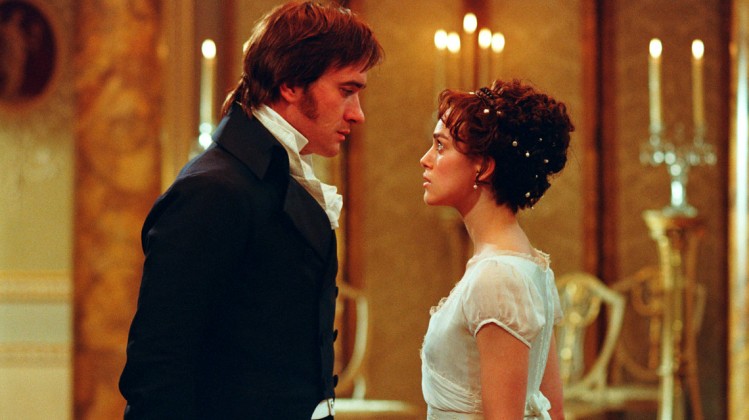
But, one day while she was at a ball with her family, handsome (and quite wealthy) Mr. Darcy walks in. They lock eyes for a second and Elizabeth realizes that this was the first time in her life that she intrigued by a man. However, as a daughter of a farmer, Mr. Darcy saw Elizabeth as ‘socially inferior’ as he was known for his rank and fortune.
Because of his prejudice of Elizabeth’s social standing, Mr. Darcy was rather snobby around Elizabeth, putting her down on multiple occasions and letting his friends do the same.
Because of Mr. Darcy’s unbearable pride and snobby nature, Elizabeth started thinking Mr. Darcy was quite stuck-up, and believed the rumours that were spread about his ‘evil’ character.
Until finally, Elizabeth finds out that despite his snobby demeanor, Mr. Darcy has been helping her sisters in secret by finding them suitable husbands and financially supporting them. Mr. Darcy then confesses his love to Elizabeth and apologizes for letting his prejudice cloud his judgement.
As a result, Elizabeth also apologizes to him for judging him so harshly due to her negative first impression and believing the rumours about him. They get married and live happily ever after.
While the storyline nothing extraordinary, I find the most recent movie adaptation to be extremely memorable due to it being able to tell this story with a female gaze. Even though the characters live in the 1800s, Elizabeth and all the other women in the story are not portrayed as the “perfect little creatures” that men fantasize about, but rather as flawed and relatable characters that show strength and vulnerability simultaneously.
The complexity of the characters, longing stares and gentle touches between lovers, the light piano soundtrack, the elegant yet simple regency era fashion, and the beautiful landscape of England work together to create the most memorable love story of all time.
When I first saw the marketing material for Denis Villeneuve’s highly anticipated sequel to one of the most influential films of all time, I was very excited. I’d never seen the original Blade Runner, but was well aware of the influence it had had on the sci-fi genre. Having seen Arrival and Sicario, which were both directed by Villeneuve and had blown me away, I had a feeling that this fresh new take on the Blade Runner universe would scratch that sci-fi itch that I always seem to have.
From the opening shot of Blade Runner 2049, I was completely captivated. The colour palette, the vehicles, the buildings, the dialogue, the score. There were numerous moments throughout the film where I found myself thinking, “this is my favourite movie ever.” Ryan Gosling’s Officer K picks up right where Harrison Ford’s Rick Deckard left off. The journey one takes throughout the film is





 EXSM 3989 - Digital Storytelling Class Blog