Continuing off my Twitter thread (found below), my trip to Asia was quite eventful. I had already come into it with the mindset that I wanted to record as much as I could.
Categories
Continuing off my Twitter thread (found below), my trip to Asia was quite eventful. I had already come into it with the mindset that I wanted to record as much as I could.
Over the past 13 years, my skills as a photographer have grown, and how I approach it has evolved.
I’ve taken a gazillion photos of many, many children, including my own. Some are filled with laughter. Some are silly. Some are exciting. Some are loud. But every image has one thing in common, they’re honest.
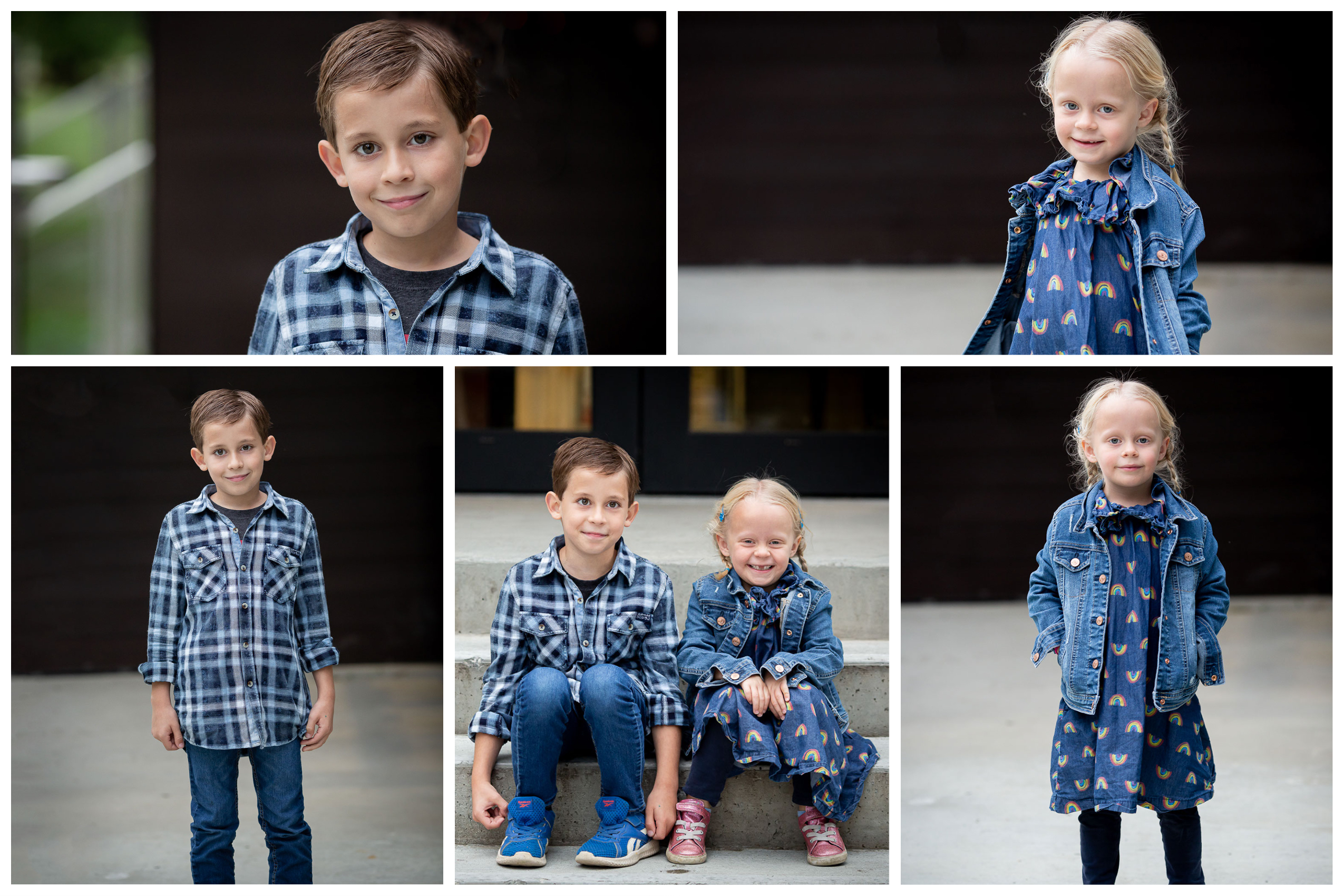
When I flip through the photos from a shoot, I’m looking at what’s happening in the frame, but I’m also interested in what extends beyond it – connections between parents and children, brothers and sisters, husbands and wives. It’s the emotions that tie us together;
With my son’s love of hockey, I’ve been fortunate to capture proud glances and big saves, telling his story playing between the pipes. Check out this video, highlighting his journey into goaltending, he sure has grown!
In one of the most challenging experiences of my life, I captured snippets of my mom’s journey awaiting a transplant — in the hopes of documenting her journey from beginning to end. Sadly, the outcome wasn’t what we had hoped for, but I am so thankful I have them, they are my most cherished photos.

Throughout my journey behind the lens, I have discovered that it’s not always about having the perfect lighting or backdrop; it’s about capturing the perfect moment to relive for years to come.
You don’t take a photograph. you make it.
Ansel Adams

The world of wine can be intimidating. For those who partake, it’s a lovely addition to a meal, particularly around the holidays. However, if you’re not much of a wine drinker, or are just starting to get into it, the sheer amount and variety of wines on the market can make selecting a bottle nearly impossible!
I absolutely love to cook, and when I have time on the weekend to whip up a slightly more involved meal, I really enjoy finding a fun wine pairing to go along with it. It can make you feel like you’re at a restaurant, right in your own dining room. At a time when travel is restricted, food and wine can also be a fun way to take your taste buds on a trip around the world.
If you’re completely lost in the wine aisles and accustomed to simply picking whatever label catches your eye, don’t worry — there are a few simple rules that can help you begin to figure out which bottles will be perfect for serving up with your upcoming holiday feast.
Identify certain characteristics that tantalize your taste buds
Don’t really understand what people are talking about when they discuss the ‘nose’ or the ‘body’ of a wine? Don’t stress — you absolutely do not need to know all the terminology just to know what you like! Start by identifying a few characteristics you enjoy. For example, figure out whether you prefer a sweeter wine, or something very dry. High or low acidity? Something on the lighter end of the spectrum, or a heavier choice?
It can also be helpful to think of the types of flavours you enjoy in other foods — if you absolutely love berries, for example, a wine that mentions notes of currants, blackberries, raspberries, etc., on the back of the label just might be perfect for you.
Find a small wine store
When the amount of choices seems overwhelming, sometimes finding a wine store with a smaller, more curated selection can be a lifesaver. Many people are too nervous to enter these types of retailers, as they feel they’re only for ‘serious’ wine drinkers, but that couldn’t be further from the truth. The staff there is likely to be more knowledgeable, and can help steer you towards something you’ll love. For #yeg locals, I cannot recommend Color de Vino enough.
Dig deeper when you find a bottle you love
If you’ve ever had a glass of wine that you really enjoyed, you don’t have to just buy the exact same bottle again and again — instead, do a bit of digging. Look at the label and identify a few things. Where was it grown? What type of grape? How is it described on the label? Looking at wines grown in a similar style or region, or with similar descriptors, just might yield another winner.
What grows together, goes together
It’s an old saying, but it can be a great place to start if you’re pairing wine with a meal. Think of the dish you’re looking to serve and find something from the same area. For example, if you’re putting together a cheese board with French cheeses, you may want a sparkling wine from France. For gingerbread, I suggest a semi-dry Riesling — and Germany just happens to produce amazing options.
Bonus:
When it comes to opening a bottle of sparkling wine, many of us get visions of flying corks and geysers of Champagne going in all directions. I’ve created a short video outlining the steps to popping that cork with more control.
Hi everyone! I hope you enjoyed my story on Twitter!
Before my best friend Piper arrived I was pretty bored. I thought I’d share with you all the activities I got up to.
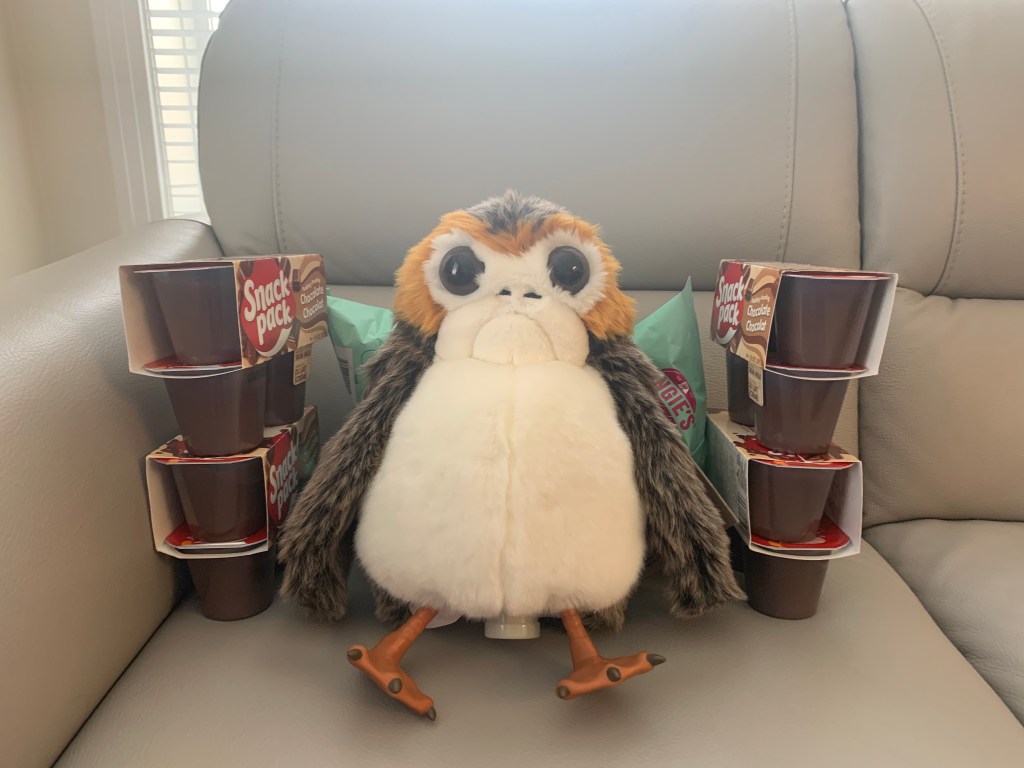
Amanda bought a lot of junk food and I had fun making a fort with pudding and kettle corn. Then I ate all of it. It was so good but after awhile I wanted to eat healthy again!

I put together a puzzle with a winter scene. I learned my new home has snow even when it’s not winter. Weird!
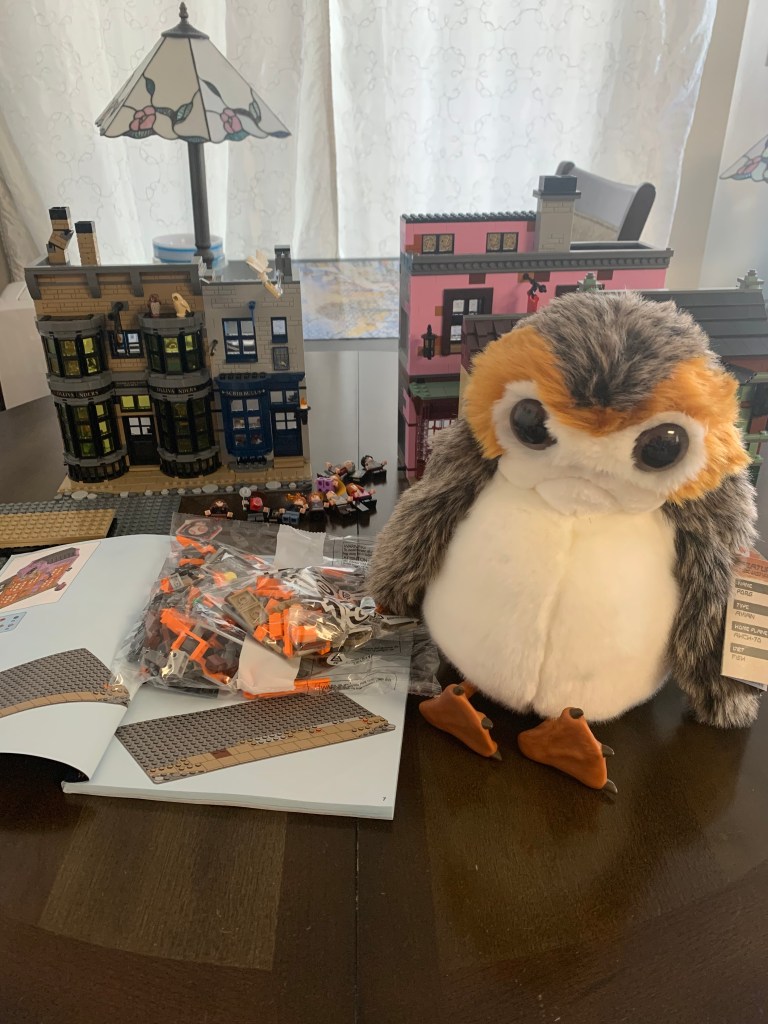
I built a LEGO set. It has over 5,000 pieces and took a long time to build!

I watched a lot of TV. My favourite shows were the funny ones but I watched a few scary ones too!

I read so many books! This one’s a mystery novel. Amanda loves mystery novels so there were a lot to choose from.
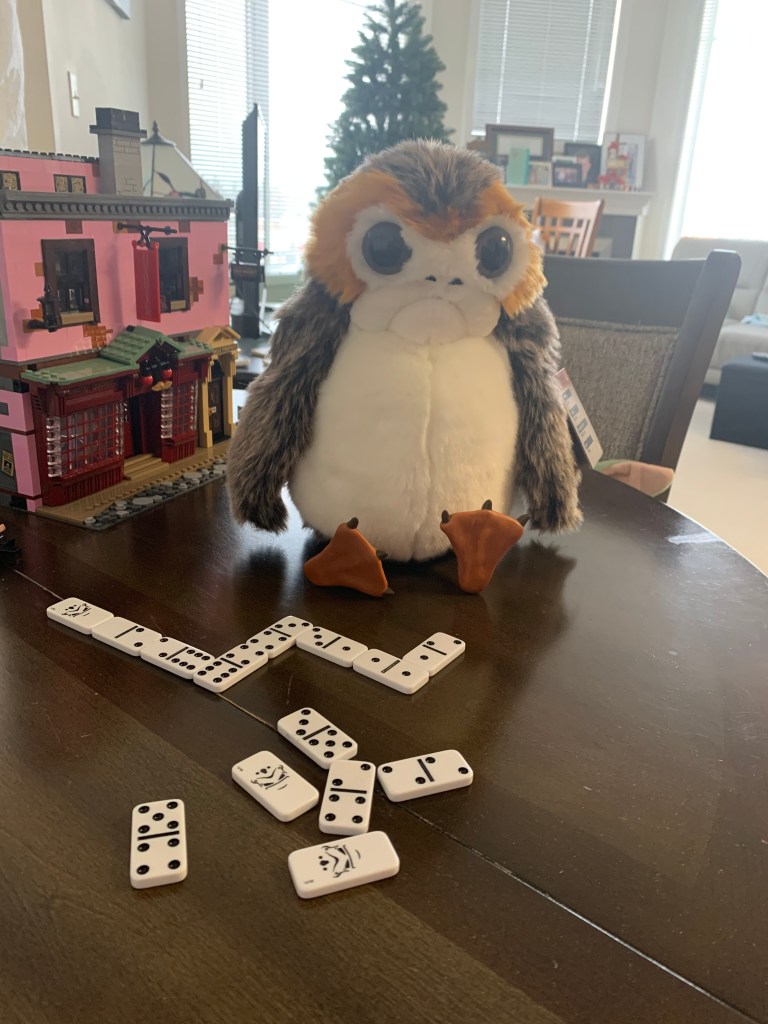
Playing dominoes was fun for awhile.

I took lots of naps and dreamed about making a new friend.
After Piper came home, we had lots of fun together. Check out Amanda’s Instagram to see our friendship story: https://www.instagram.com/p/CIEKxz8hqjL/?igshid=m3ht1bveep9o

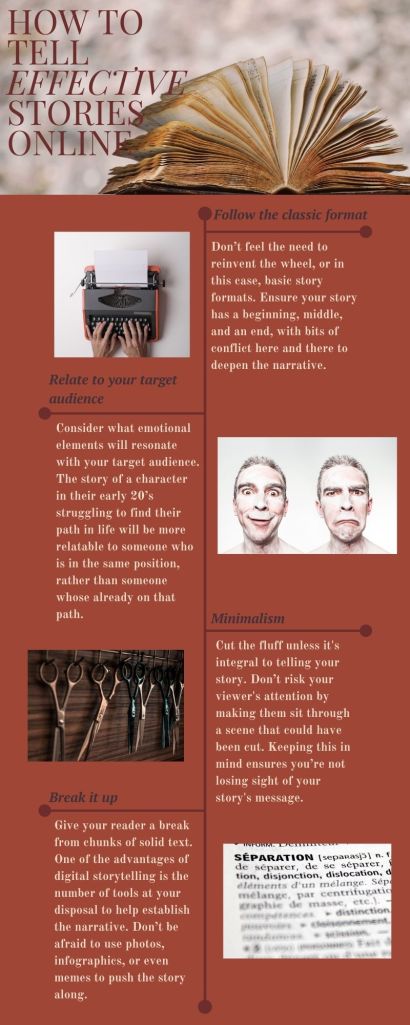
Digital storytelling is a useful tool for advertising, blogging, and more. It is important, however, not to get ahead of ones-self and realize that while there is some overlap between traditional storytelling and online storytelling, there are also some distinct differences.
With digital storytelling it is important to realize the limitations of your viewers attention span, and to make the most of capturing their focus and doing something with it.
A few tips to consider when writing digital stories are:
We expand on these points in the following infographic, which is another example how different tools and mediums can be useful when telling your story and driving the narrative along.
For more resources, explore these links:
Continuing with the thread of my fostering journey, I’ve decided to focus my last assignment on “A Day in the Life” of my foster puppy, Dove. This illustrates the typical things that she goes through during a day and maybe sheds a little bit of light on what to expect if you’re expecting a puppy! Please enjoy the cuteness!

Dove’s day starts bright and early, although she has been getting better and better at sleeping through the night. I start her off with breakfast – the most important meal of the day! Then I let her and Zola play it out, hoping that she’ll be tired when I leave for the day.
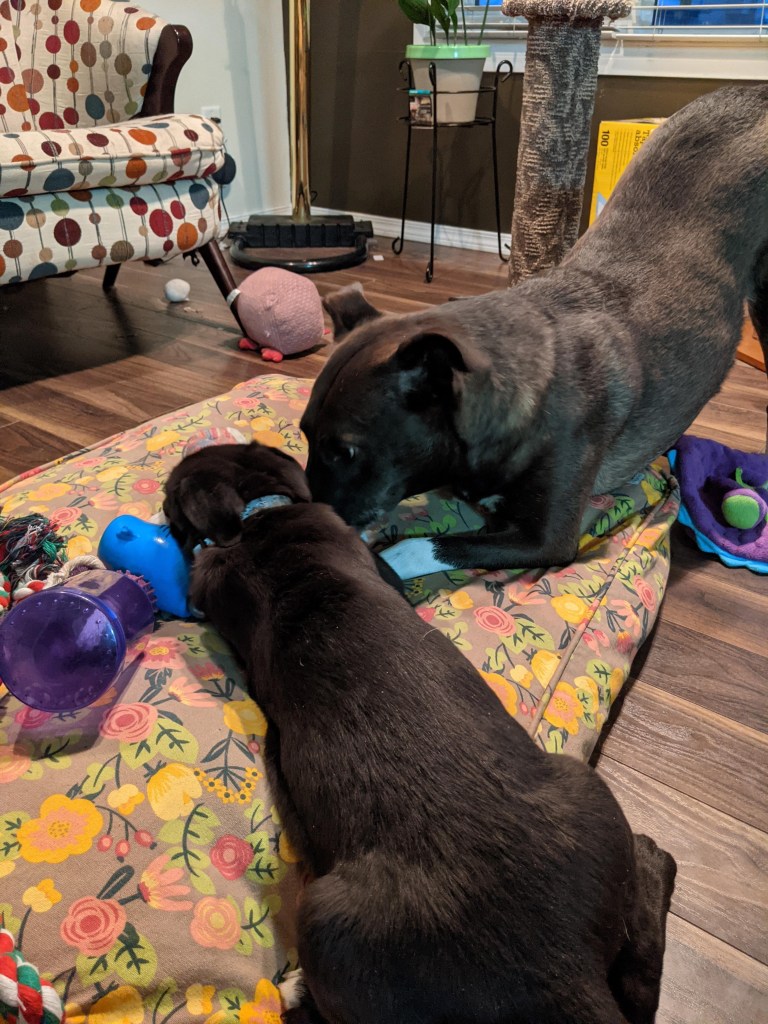
I have a playpen set up for Dove with all sorts of snacks and things to keep her occupied while I’m gone. I’m sure she cries a little bit but the neighbors haven’t complained yet!
I come home and it’s pretty much a repeat of the morning shenanigans except that we do some leash training and work on the basic commands. Dove loves treats so I use a clicker to mark the behavior that I want. It’s all positive reinforcement here!
After more fun and excitement, it’s bedtime for the day. We’ll wake up and do it all again tomorrow! Dove isn’t quite ready yet for her forever home but she and her siblings will be available for adoption through Zoe’s Animal Rescue soon. Thanks for following me on this journey. I hope it has either inspired you to adopt your next furry friend or consider fostering yourself!
Erin
PS: Here’s the full video for you to enjoy!
“Great stories are those that are human. Great stories are those that evoke emotion, and those that cause a reaction. If you are a brand or business that is thinking of using digital storytelling as a new tool for engagement, consider the four ‘I’s of storytelling first. These are the four new principles that form the basis of the future of storytelling” – Simon Heyes

Writing has been around for thousands of years, humans have always had a story to tell. From ancient symbols on cave walls to sending emojis over text message. What we’re going to talk about today is how to tell a good story! One that will capture your audience, whether you’re talking about selling sneakers, or what kind of mischief your pets got up to this week. Even if you think to yourself “Oh My Gosh, this is not even a story worth telling” I promise you, there is a way to make it worth writing!
There are so many things to keep in mind before you begin your writing expeditions. The Four I’s of writing is a great place to start:
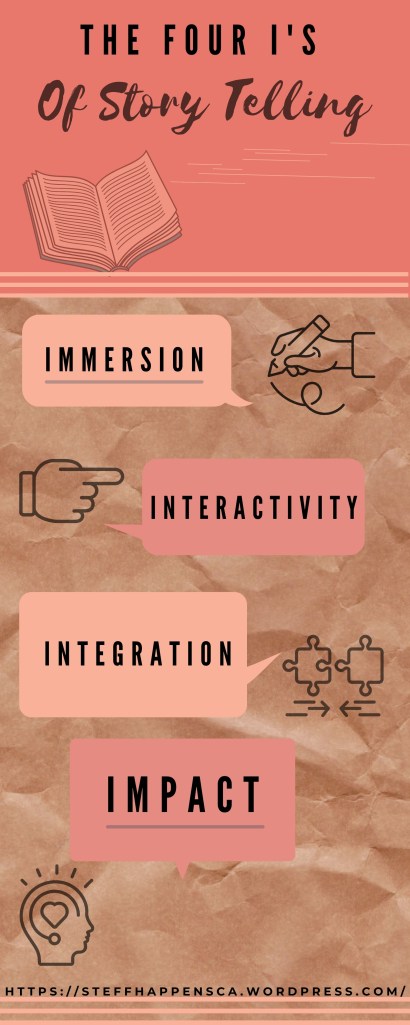
I know what you’re thinking, “Cool Steff, some words… what am I supposed to do with those!?” I promise, I’m not going to leave you in the dark. Let’s dive a bit deeper into each of the four I’s.
1. Immersion:
You’ll want to consider details that help build your story. It could be describing the characters traits, the weather, clothing, food, music that’s playing. All of this cue’s will allow your reader to go deeper into the story.
2. Interactivity:
This is your opportunity to allow your reader to influence or change a part of the story. My favourite example of this is the movie created by Black Mirror “Bandersnatch”. This is a very powerful, more personal way to engage your audience. It subtly blurs the boundaries of fiction and reality. In the digital it can be tricky to keep your readers focused, but this is a fabulous platform that will allow for more interactivity.
3. Integration:
In 2020 integration is a key thing to keep in mind when you tell a story. Basically, you want to make sure that your story is versatile enough to be shared on many different platforms, ensure that it reads when both on a computer, ipad, and mobile device. Even if you think “Oh, I just want people to be able to access it on a mobile device alone” you should consider the fact that maybe someone will start out on mobile, maybe at work, and want to finish the story at home on their desktop. Show that you’re with the “times” and choose transmedia storytelling.
4. Impact:
If you really want to leave an impact on your audience you’re going to need to evoke some emotion in your story.
I‘ve learned that people will forget what you said, people will forget what you did, but people will never forget how you made them feel.
Maya Angelou
The hope is to leave the viewer wanting to interact and share the content. Maybe it leads your reader wanting to make a purchase or donation. The story should inspire the viewers to take action, in some form.
I really hoped you enjoyed reading all about the “Four I’s of Storytelling”. For more fun and useful writing blogs, hit that subscribe button!
Did you find information that you think will help you in your next writing endeavour? Leave a comment below to share your thoughts, what do you think the most challenging “I” would be in writing?
So, you’ve decided it’s time to get your organization or company’s data to do some serious heavy-lifting for your brand story. You’ve pulled the numbers, hired a designer and now you’re ready to put up the scaffolding. Whether it’s the number of donations you received last year, your edge on last month’s sales next to the competition, or your latest reader survey results, remember to put storytelling principles first.
Keep these tips in mind as you start story construction:
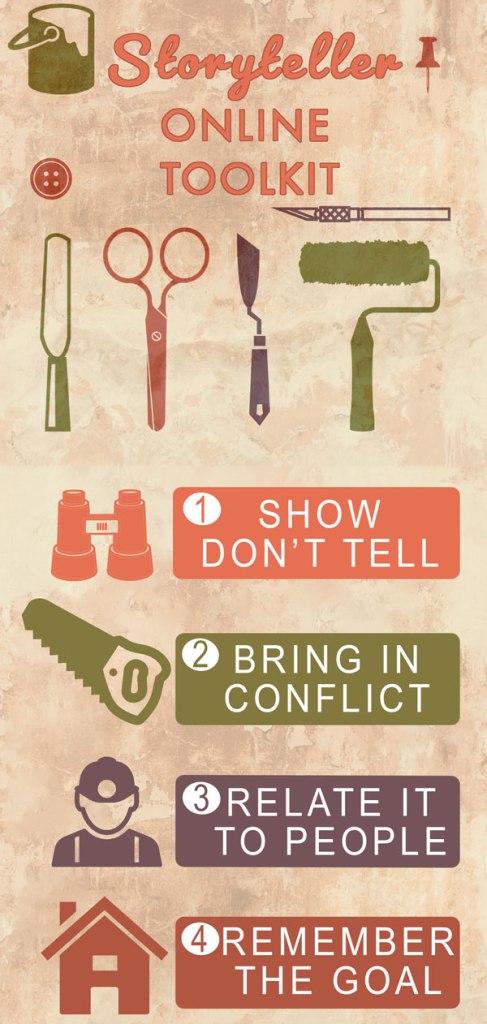
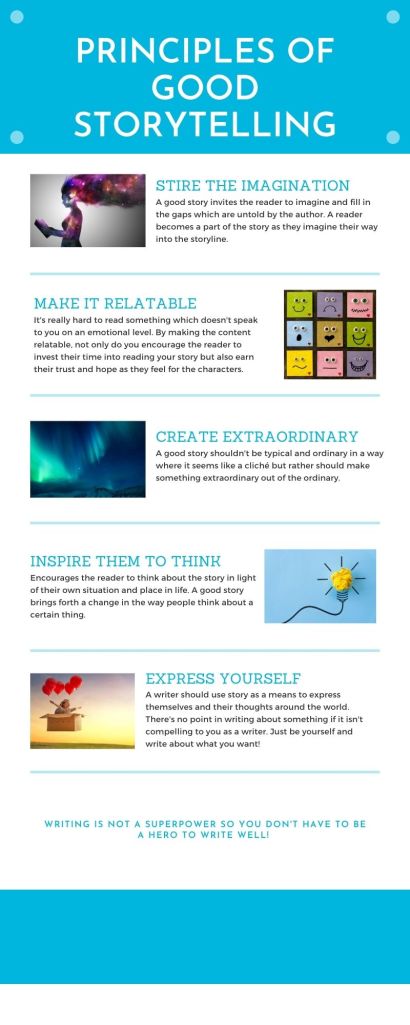
This week’s topic of using visual storytelling aids, such as infographics, memes, etc. to tell stories was quite interesting and informative. In my opinion, Infographics work to provide information to the audience in a way which seems less intensive and more straightforward than reading a longer piece of writing. Infographics are convenient for not only the readers in helping them understand the important information related to a particular topic, but also help the creators in composing a creative and informative piece of writing.
My infographic discussed the topic of principles of good storying. It is comprised of 5 points which make a story appealing to the audience. I think that writing well is not a superpower and one doesn’t have to be a hero to write well. One simple needs to have the will to work towards creating a good story. I hope the tips I highlighted in my infographic help the reader do just that!
-Rigvi-
This weeks lesson was an interesting topic, exploring a number of ways we communicate on social media using captioned images, short animated videos, or infographics.
These types of visual communication highlight a new type of language that does not need to be translated and has the ability to resonate with the audience.
In every great story, there is always an overarching theme that establishes the setting, defines the problem, identifying the main takeaway (from the characters perspective), and summarizes the happy and in some cases not so happy ending.
But what sets a story apart from the others? What makes a story enticing, relatable, and most importantly memorable? Its the characters experience and emotions that are portrayed through visual techniques that have the ability to communicate, connect, and inspire the audience on a much deeper emotional level.
As Charles de Lint once wrote:
“Once upon a time there was what there was, and if nothing had happened there would be nothing to tell.”
Below I have summarized 4 step by step principles of good storytelling, highlighing the importance supplementing a story with visuals.
Thanks for reading!
-Payton

 EXSM 3989 - Digital Storytelling Class Blog