While I consider myself a natural-born storyteller, as soon I sat down to tell a tale, my whole body began to panic and my mind went blank. How could I not tell a story when I believe this to be one of my greatest talents?
I go forth for my sister who a teacher, much like these nurses in this underground library parkade, has less choice than me and needs more support than most. #EXSM3989
The blessing of hindsight allowed me to find humour in the situation while still capturing the anxiety I felt not only about the actual nasal swab, but the reality of living through pandemic in general. I believe that both the ability to laugh at myself while also reflecting on all my emotions add strength to my story as they follow the principles of Kristin Tysnki’s analysis of Buzzfeed’s best performing articles.
Additionally, I capitalized on my strengths as a millennial to craft the story specific to what works best for Twitter as a platform, and incorporated GIFs as a visual aid to represent the feelings of the story.
I get into my vehicle and drive into…the underground parkade of my local library where a temporary clinic has been set up because this pandemic has gotten us closer to dystopia than I ever hoped to see. #EXSM3989
Overall, this was a fun exercise and a tale that I hope would inspire others to a) Overcome the fears of the nasal swab (because as I now know it truly isn’t that bad) and b) Remember the value frontline workers have provided throughout this pandemic and beyond, and the prioritization they require in government policy.
With this assignment, I had fun going with the flow and being creative. It was meant to be silly and the topic was pretty unimportant, but I feel the use of humor and GIFs make it a fun read.
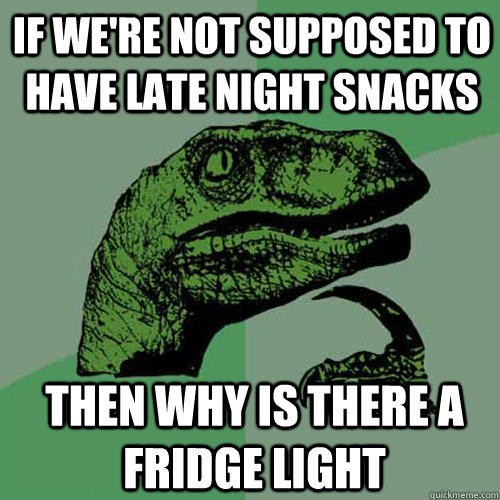
I started the thread with a question as I felt that would encourage readers to think about the topic at hand before getting into my story. I wanted to keep the story dynamic with different visuals and types of visuals, so I incorporated photos, videos, GIFs, and emojis. I was also honest with my posts, so while the posts themselves weren’t very emotional, I feel the readers will resonate with my feelings about a bedtime snack.
A Twitter thread like this would be great for a food/drink company to do to market their products. I highlight Lotus Biscoff cookies and Nespresso in my thread, and do it in a way that shows how satisfying and delicious those items are. It’s so easy to do and when paired with the right influencer or celebrity, a quick thread promotion like this could have a great ROI.
My fiance has been a helicopter pilot for over a year now…
and ever since he graduated flight training, he’s been dying to get me in the helicopter. I, however, have been patiently waiting for him to rack up some extra hours and gain experience (I’m not scared – you are!) Today just so happened to be the right time and perfect opportunity for him to take me for a ride.
We flew in a Robinson 44 helicopter (with the doors off!) and I can’t lie…I was very afraid during takeoff. The machine was loud and started to rumble and shake. I was happy I had the side mission of live tweeting the experience to keep me somewhat occupied while we gained altitude…
He wanted to take me for a couple of laps around the downtown area before we flew to our final destination at the Villeneuve Airport. Besides flying over many fields of green, we were able to see the Muttart Conservatory, the Alberta Legislature, and of course the core of downtown YEG! It was absolutely stunning.
I was so incredibly proud of my fiance and couldn’t believe how talented he was! I mean I hear his stories every day…but to live it is a whole other experience! I was almost sad (yet genuinely relieved) when we came up on our arrival station.
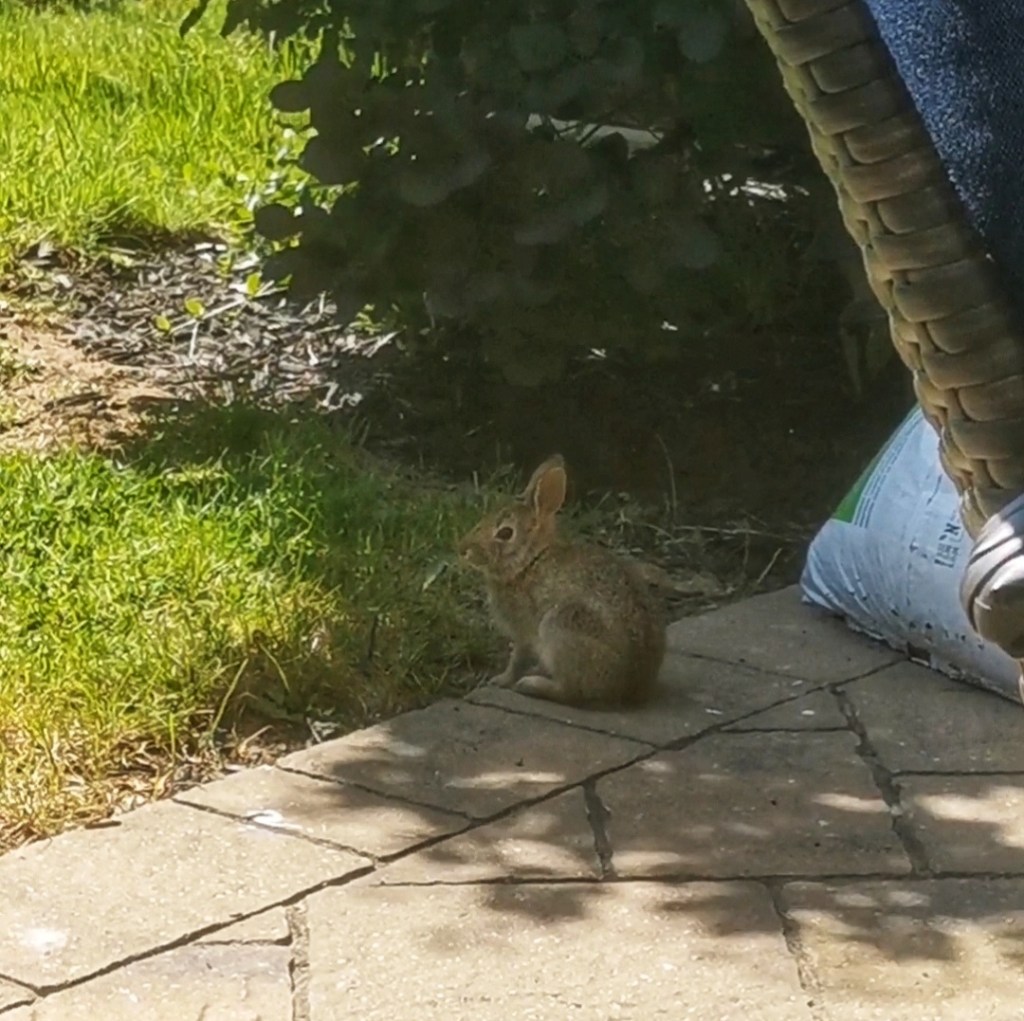
I am taking four courses this summer for postgraduate certificates in Social Media and Event Management. Earlier today I was studying for an Event Theory test I have on Thursday and finding it hard to focus given the weather was finally great (the past week had consisted of an unbearable heat wave followed by all of the rain imaginable). In the midst of trying to fill my head with knowledge, I looked up from my laptop and saw that I had company!
My mom had mentioned that there were bunnies living under her deck but the family had a hard time believing her because no one else had ever seen them. I was glad to have a study buddy, but also wondered: how is one expected to study with this adorable furballl around?! I decided to live tweet my bunny watch (and failed attempt at studying) until – spoiler alert – the bunny was chased off by another creature of phenomenally cute proportions. Check out my journey down the rabbit hole and then read on for a discussion on what story elements I used to craft my live tweet thread.
Currently studying for a test in my mom's backyard (and desperately trying not to focus on the 500 other things I could be doing on this beautiful morning) when I look up to see this furball. #EXSM3989pic.twitter.com/Ap0AWE1J1H
In general terms, there are five main components to a story: setting, character, plot, conflict, and arc. I tried to incorporate these elements into my live tweet thread in the following ways.
Setting
I let the viewer know my location right away by stating in the first tweet that I was in my mom’s backyard. I also explained that it was a beautiful morning and the videos I attached to my tweets provided both visual imagery of the sunny weather and examples of sounds I was hearing (peaceful breeze and singing birds).
Character
While the bunny was the main character that the viewer sees and learns about (I named the bunny Thumper, inspired by the classic Disney movie Bambi), there are secondary characters in the birds that sit on the fence and the hero of the story, my mom’s dog, Milo. I also tried to infuse personality into the narrator of the live thread (me!) by showcasing a little humour with GIFs and hashtags.
Plot
The plot refers to the actions undertaken by the characters within the setting as they pursue a goal. I tried to describe the events that were occurring in the backyard as they happened – i.e. finishing my plate of cookies, the arrival of the birds, the bunny’s movement, etc.
Conflict
The conflict in the live tweet thread revolves around my attempt to study in a prime-summer setting while other distractions continue to arise. My academic grade is at stake (and it turns out so is my mom’s pot of planted lettuce) and I have to be able to concentrate.
Arc
Good stories have a beginning, middle, and end. My live tweet thread starts off with the arrival of the bunny, continues with commentary on the ways in which the bunny distracts me from studying, and finally ends with a “hoppy” ending when my mom’s dog scares the bunny away (that was the quickest bunny hopping I’d ever seen!)
In addition to incorporating story elements into my tweet thread, I also tried to convey the story in my own voice and tone (which is key to writing good social media copy). I tried to pretend like I was having an in-person conversation about the bunny with my friends. All in all, I got some studying in and it turned out to be a very productive day! And the best thing that came out of my encounter with Thumper: we now know that my mom wasn’t just imagining the bunnies. Ha!
My (first!) Twitter story tells of my recent hair journey of shaving my head to support a friend with cancer, and the reflections I’ve had on our society’s obsession with hair. It’s not entirely live, but by telling it from the start, when I was nervous and unsure about shaving it, I was able to add some suspense to the theme of norms or expectations around hair. I was already thinking about culture and identity, but I decided on that angle according to the finding by Tysnki (2019) that Buzzfeed’s most popular topic according to shares was identity, as well as the top theme within emotion-based categories. While those results are largely pertaining to Facebook, this story was told using Twitter best practices, making it more likely to perform well on that platform. Without further adieu, read about the beginning, middle and end of the process of shaving my long hair:
The daughter of a long-time family friend was diagnosed with leukemia after being admitted for #COVID19–a double whammy for this kind young woman that we all adore. Offering support like delivering food was a no-brainer, but the question was: do we shave our hair?! #EXSM3989
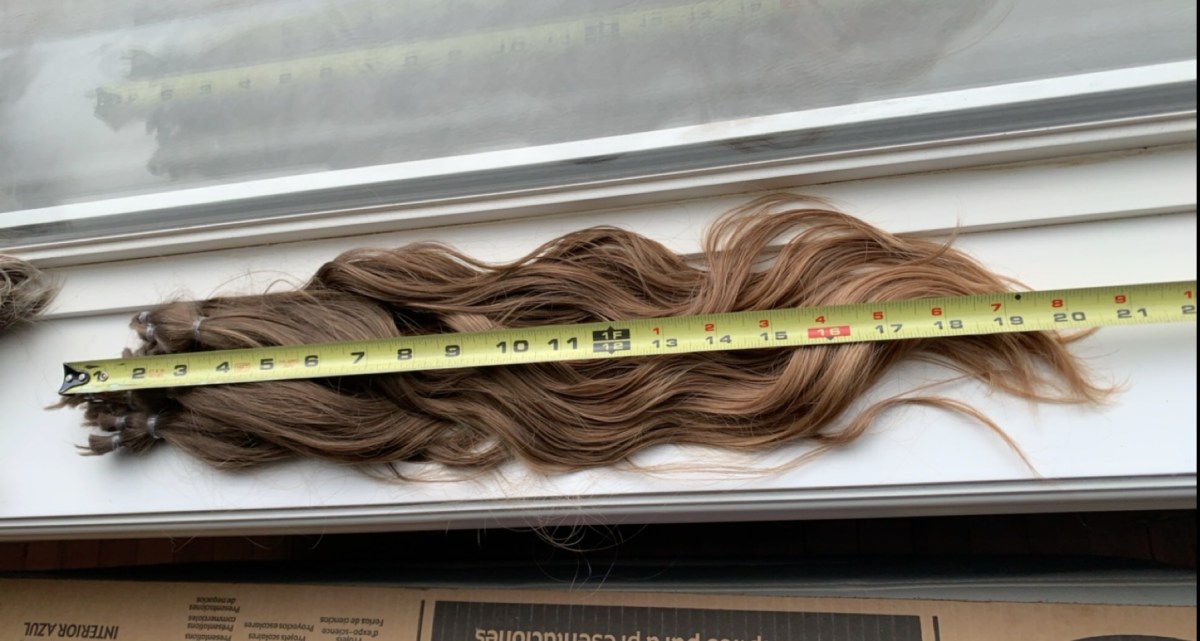
Goldschein (2019) recommended stories be written the way a person talks, which is what informed the tone of my story. While I could have used terms from sociology to discuss identity or culture, I told the story how I would naturally, making it more relatable and interesting. See for example my excessive use of capitals, showing emphasis as I would when speaking. I also took this author’s advice to use visuals, especially because my story lead well to visual interest with the shaved hair photos. While I write that I donated 20″ of hair, it works just as well to show the length of hair and drive the point home! Unfortunately in terms of graphics, the last GIF, which I found in Twitter’s library, was blurry when I saw it on the browser, which is a mistake I can learn from when selecting images.
Pointing to Emotion in a Relatable Story
In thinking about my potential audience, North Americans, I knew the topic of hair is one they’d be familiar with, making the story relatable as was suggested in the Module 3 video (Brown, 2021). To up the stakes and bring the story to life to readers, I used emotion–another recommended tool–to improve this story. I used the “fear in the middle of the night” example to vividly show my anxiety, or the anecdote of my grandmother’s angry response to make readers laugh and also remember a time they disappointed an elder. I don’t think this story needed emotion if it were to be an identity piece, but I think it helps keep readers engaged and will make them more invested to actually pause and consider what societal norms hold them back from, as is my final call to action.
Conclusion
Telling a story in ten parts was initially overwhelming, but breaking down a story into pieces was an interesting exercise. Like the suggestion by Educational Tutorials (2016) to have an 8-point story arc, ascribing parts of the story to points on a ten-part map helped keep the theme clear and the prose concise. For example, as Instructor Brown suggested to “write first, edit heavily,” I first drafted a story in a traditional format and then condensed and cut into the ten-tweet format. I was worried about using this snippet format, but it went better than I expected! I can already see how I’d improve for next time.
Thanks to anyone who read my story. I hope it inspired you to reflect on your own identity and judgements or stereotypes, and perhaps even has you considering doing something that you’ve always wanted to try, but are held back by fear of repercussion or standing out. Good luck!
My twitter story thread follows the action at my 10-year-old’s baseball game. A good baseball game has all the elements of a great story – suspense, humour, and a whole lot of emotion. This one did not disappoint!
Even when live tweeting something as fast-moving as a ball game, adding photos, hashtags and GIF’s makes it more engaging.
This is solid advice from Gary Vaynerchuk, who reminds us that there is a never ending supply of content happening all around us, and all we need to do is document it.
My family has always been a baseball family, much to any Canadian’s dismay. Canada is a hockey country, everyone knows that, but the Laferriere family has never cared much for hockey. We love baseball, through and through. My parents met in their twenties playing baseball (on opposing teams, funnily enough), which basically made it destiny for the rest of us to love the sport. My brother is especially invested. He has autism, and as a result, he is hyper-focused on and passionate about baseball, and only baseball. In order to support him and his dedication to the sport, my family makes sure to watch as many games as we can. That way, when he talks about how the Jays’ starter was sluggish on the plate, the argument isn’t totally lost on us. That is why for this assignment, I decided to live-tweet the baseball game on Saturday, between the Toronto Blue Jays and the Tampa Bay Rays.
So, what happened during the game?
The game itself was slightly disappointing (which I will get to). Rays were leading us 1-0 until the top of the third inning, when we had a two-run homer, bringing the score to 2-1 Jays. Exciting, sure, but short-lived. In the bottom of the third, the Rays had two homers, making the score 4-2 Rays. The rest of the game felt entirely uneventful, the Jays clearly not putting their best foot forward. This being said, their defense was okay, given that they prevented any more runs from coming in until the ninth inning. We still had a small chance of at least tying the game up to go into extra innings, with someone on 1st and 3rd, but we were down to our last out and didn’t manage to bring them home. The final score ended up being 5-2 for the Rays. Drats!
I live-tweeted relevant updates about the game, but nothing too detailed as I was more enraptured in the game than I expected I’d be. This link will bring you to the first tweet of the thread if you want to see the abbreviated updates!
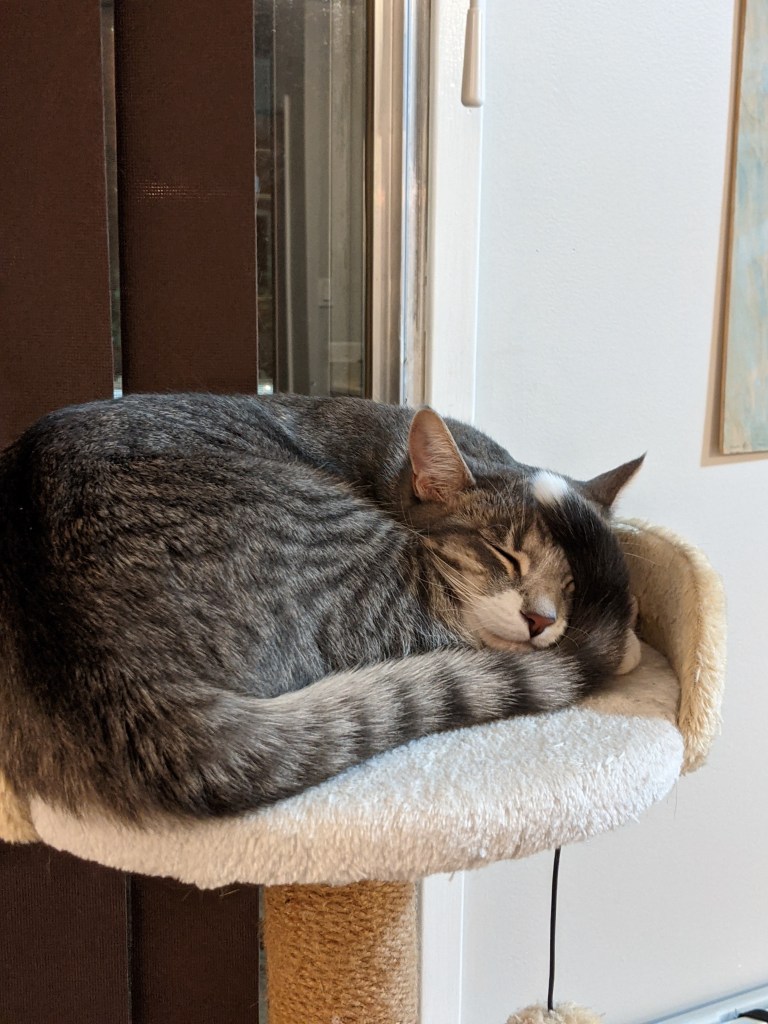
I moved into a new apartment last week. For my live-tweet thread, I chose to document my cat exploring his new home. I was curious about what he thought of the whole moving process. What is it like for a cat to suddenly be in an entirely new place without understanding why or how he got there?
This is River. River recently moved, and it's been kind of overwhelming, but mostly super exciting. The best part is having all new places to explore… #EXSM3989pic.twitter.com/qOfZ1WhyiG
To tell River’s story, I roughly followed the 8-Point Story Arc. This outline for setting up a plot goes like this:
1. Stasis: sets the stage for the story, introduces the characters and setting, and shows what the protagonist’s every day life is like.
2. Trigger: the spark for the story, which is outside of the protagonist’s control, and leads to the evolution of the story.
3. Quest: the protagonist embarks on an adventure as a result of the trigger.
4. Surprise: during the quest, unexpected events take place and provide obstacles or assistance to the character.
5. Critical choice: the protagonist must make a decision on the quest, which reveals their true character.
6. Climax: as a result of the protagonist’s choice, the story reaches the climax, which is the highest point of tension.
7. Reversal: the characters undergo a major change as the result of the critical choice and the climax.
8. Resolution: the characters reach a new stasis and have evolved and learned new things from their journey.
River’s Journey
The live-tweet thread starts by introducing River, my high-energy poorly-behaved cat, and the main character of this story.
The trigger in this story is clear: he’s moved into a new place and must explore this environment and find new opportunities to get into trouble.
During his adventure, he encounters new surprises, strange smells, and unexpected furniture. Many of these surprises are good – some take him a little bit longer to get used to.
After he almost gets into trouble, he decides that he likes this new place, and is willing to give it a try and make his home here.
Due to this journey, he learns that as long as he has a warm place to sleep and good food, he can be happy anywhere. A real lesson for all of us to appreciate the important things in life.
Twitter storytelling
Keeping the principles of good storytelling in mind helps plan out how to write content for social media and engage readers, no matter what the format of your story is.
For this assignment we were tasked with playing around with the practice of live-tweet storytelling. To say that I was intimated would be an understatement, after all only two days have passed since I set up my twitter account. What I learnt, you can tell a story about anything from watching paint dry, a trip to the grocery store, or in this particular case the trials and tribulations of finding balance between work and play.
By using basic principles such as Educational Tutorials. 2016. “How to Write a Great Short Story – The 8-Point Story Arc.” https://www.youtube.com/watch?v=W0HEqI3pJIM [New Tab] anyone can master the art of storytelling.
“The number one rule of thumb is to write the way you talk.”
So here goes, to set the stage, my sister and five month old niece who live with me are on away on holidays, my kids are visiting their Nana, I’ve been invited to my friends cabin for the weekend to enjoy some down time and while I’m excited to go, I couldn’t be less prepared when the time comes.
I've been looking forward to this weekend for sometime now. Friends have invited me to their cabin at Perch Lake, Saskatchewan #EXSM3989pic.twitter.com/TJuKNo70Oa
I would like to preface this post by saying that I am not a regular Twitter user nor am I a dedicated video game player so this blog in general is very outside my comfort zone. But, I do enjoy a good story and have been told by strangers on the internet that I can tell a pretty good one, so this assignment wasn’t all that bad.
I decided to live-tweet about something that happened while I was playing Animal Crossing: New Horizons on the Nintendo Switch this weekend. I realize I’m a little late to the game (sharing your game-play of ACNH is so 2020) but since I’m notoriously late to everything, it checks out. My sister got the game for Christmas and together we’ve been building up our island, Odyssea, for the past 7 months.
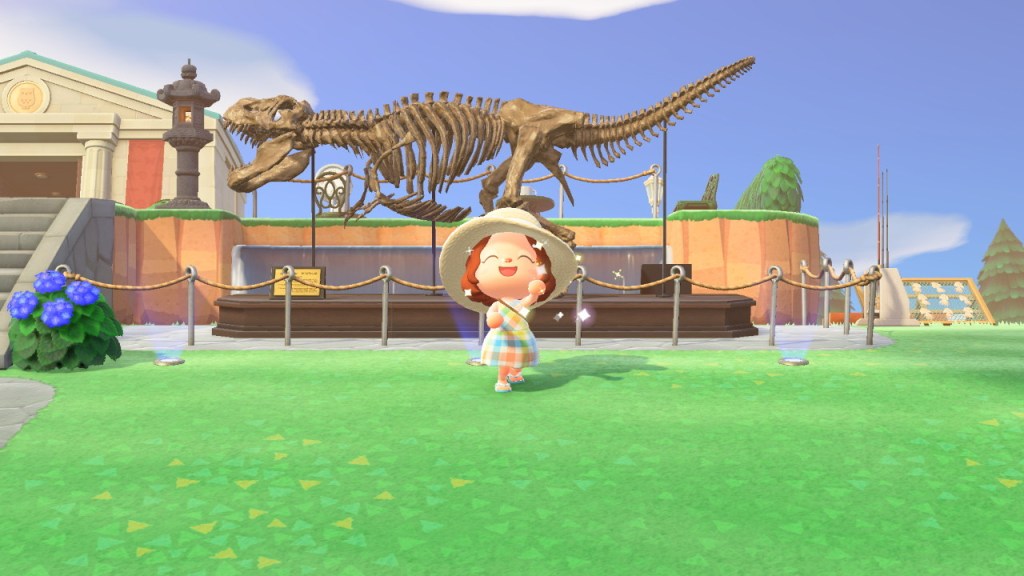
Not to brag, but Odyssea is pretty great (and yes, the name is a pun on the Odyssey. Both my sister and I really love Greek mythology). We’ve got a cool museum full of dinosaurs and art, a camping spot next to the orchard, an outdoor pool and basketball court, and a whole neighbourhood for our 9 villagers.
My Animal Crossing avatar outside the Odyssea Museum
During a normal evening on the island catching fish and bugs as I tried to pay off a massive loan to Tom Nook, I happened across the event that sparked my Twitter thread story time.
The story goes like this: my sister and I have been competing in a self-imposed pitfall seed battle for the past few months. We take turns burying the seed on our island in hopes that the other person walks over it and falls in. This time, instead of one of us falling in, one of our villagers was the unfortunate victim.
This live-tweet thread was lots of fun to create and highlights some important storytelling techniques. Read on to see the 3 storytelling techniques I used to tell my Twitter story!
3 Storytelling Techniques to Use in Live-Tweet Stories
Start with a good hook
If your story isn’t interesting from the very beginning, people aren’t going to want to read it.
This is especially true with Twitter storytelling. People nowadays have very short attention spans so if your first tweet doesn’t catch their attention and make them stop scrolling, then they’re not going to read the rest of your story.
I decided to start my live-tweet thread with a bold statement: “OMG I JUST PUSHED MY NEIGHBOUR INTO A HOLE!?” It’s written in all caps to make people stop and take notice. And while it’s exciting, it doesn’t give away too many details – people will have to read the rest of the thread to see what happens. But I did include #acnh to let people know this happened on Animal Crossing.
Have a beginning, middle, and end
Remember that plot diagram from middle school? Those same principles still apply when you’re writing stories for social media.
In the beginning of my Twitter thread, I set the scene and introduce the characters. In the first few tweets its revealed this event takes place on my Animal Crossing island, and that Hornsby, a villager on the island, and I are the central characters.
In the rising action, I discover the potential pitfall seed danger and realize I have to save Hornsby before he falls in. I use suspense to draw this section out longer.
Following this simple narrative pattern helps to organize your story and ensures you have all the elements of a good story (setting, characters, conflict, plot, etc.).
Use emotion
Social media is the perfect place to put emotion into your writing. If your story doesn’t evoke any emotion, people aren’t going to be interested in reading.
I chose to make my story humorous for obvious reasons (watching Hornsby fall into the hole was very funny). I express this emotion through the words I used, my use of capslock text, and the GIFs and hashtags I included in some of the tweets.
Part of the humor also comes from the dramatic nature of my story. I find stories, especially funny ones, are always better if they’re dramatized a bit. This event is something that happens normally in Animal Crossing and is much less dramatic that what I made it out to be. Villagers falling into pitfall seeds is just part of the game and really isn’t something all that interesting. But through my use of humor, I’ve made it interesting.
Plus, the pros at Buzzfeed say using humor is a surefire way to drive engagement so who am I to ignore their advice.
But humor isn’t the only emotion I evoke in my story. I also build sympathy for Hornsby be describing him as an innocent bystander in the pitfall seed battle my sister and I were having.
And there you have it folks, 3 easy ways to tell good stories on social media. Now you’re ready to harness those 280-characters and tell the best story you can.




 EXSM 3989 - Digital Storytelling Class Blog