Categories
Uncategorized

A Day in the Life of Brooklyn

For my live-tweet I chose to showcase a day in the life of my dog, Brooklyn — because why not? As we learned from Paris Zarcilla’s viral tweet thread “I just found a cat that is not mine and it has had babies under my bed,” readers love pet content.  And a major takeaway from Kristin Tynskni’s article “Beyond Buzzfeed’s Juicy Headlines: Article Types and Themes that Earn Outstanding Shares and Insanely Valuable Links,” was that Pets/Animal content fared well in terms of social sharing.

Brooklyn’s day begins like any other day, with a rude wake up call from me. Then follows a morning walk and breakfast before she settles in for her big day of, well, sleeping. There’s a lot of sleeping frankly, then an afternoon walk, followed by the anticipation of Dad coming home, before finishing her jam-packed day. 

The story spine

While my story has a beginning (waking up), middle (lots of napping), and end (Dad coming home), following a “proper” storytelling structure is much harder to do when your story isn’t pre-planned. However, if we apply the story spine more loosely, her day goes a little something like this:
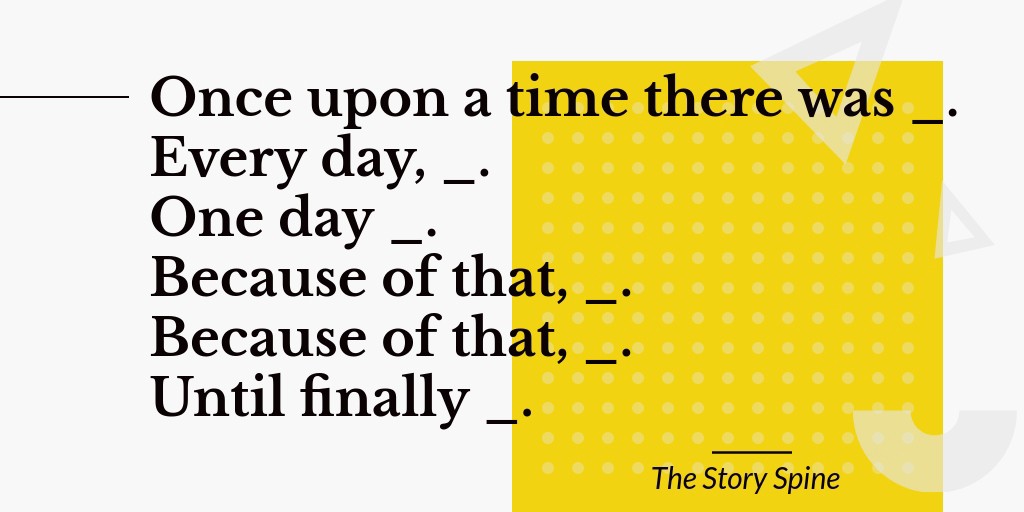
Once upon a time, Brooklyn begins another day by being rudely woken up by her parents.

Everyday, she is hugely unimpressed with this inconvenience.

Because of that, she continues to sleep all day.

Until finally, her Dad is home and she is happy to have her family reunited.

And, ever since then, all is right in the world and she stayed awake (well, for the rest of the evening!)

Storytelling principles for social media

While live-tweeting Brooklyn’s day I attempted to keep storytelling principles in mind, particularly those that work well for social media — I took a lot of my inspiration from how Paris Zarcilla told his story, too. Ultimately, I attempted to incorporate the following elements from this week’s learnings into my story:

  • Write the way you talk: As someone who writes for professional audiences for a living, I found it challenging to write simply, and “less professionally” per se. I worked really hard to keep in mind my tone and choice of language, as Eric Goldschein explains in his article. I used slang that we use in our household daily, like “walkies” and “scritches.” I also wrote sarcastically, because I’m often a very sarcastic person. 
  • Maintain suspense: As we learned from Gary Vaynerchuk, “to tell a great story, the number one thing you have to do is evoke a reaction.” A reaction can often come from creating suspense, which I integrated into several of my tweets, including the very first one where I build suspense on what my tweet thread is going to be about. I carry this trend throughout the day when I tell readers to “stay tuned” for what’s next, followed by “losing” Brooklyn around lunchtime.
  • Style choices: I often used all caps throughout my live-tweet to convey emotion, primarily excitement, to put emphasis on a particular word,  or to showcase something from Brooklyn’s perspective. 
  • Add visual elements: I incorporated a photo, article or GIF into 18 of my 25 tweets because adding a visual element is more engaging for readers as we’ve learned we are more visual by nature. Plus, the more cute dog photos the better, right?

Document. Don’t create.

Lastly, my live tweet of Brooklyn’s day achieved Gary Vaynerchuk’s idea of “Document. Don’t create.” I simply told the Twitter-world what was happening in Brooklyn’s day. I did not create something out of nothing, or force her day to appear more exciting than a typical one is. This also helped me to feel less pressure as I was telling the story. As a result, I believe my story was more natural and authentic. It didn’t try to be something it wasn’t. 

Categories
Uncategorized

Live Tweet – Beer Tasting

Since I blog about beer, I thought it would be neat to have my first ever live tweet thread to be about me tasting a beer.

The link to my thread is here.

I aimed to keep my live Tweet story simple, and I wrote just the way I talk as well. I even pre-wrote everything and did some heavy editing to remove elements that were out of focus and took away from the story. In the end, I ended up with the beginning, the middle, and the end.

The Beginning

In the beginning, I shared a few notes about how I am part of the Blending Club Membership, who Trial & Ale is, what I am going to taste, and how I will assess the beer.

The Middle

The middle of my story is the bulk of everything going on with this beer, from how I have to open it (because it’s a cork) to the overall assessment. Then I hook you a little with but wait, there’s more because now I am pairing it with some local nuts from Mezos Roastery!

The End

In the end, the beer is great. The food pairing is amazing. And my Sunday evening dinner is now beer and nuts.

Categories
Uncategorized

Ready to Begin

My live-tweet story is Big Timber’s Season 2: Episode 1 “Ready to Begin.” My story has 12 tweets;  hashtags are #BigTimber and #EXSM3989. This episode is streaming in Stack TV, but I pretended it was a live TV show. As I was watching it for the first time,  it felt like a live story to me.

The Beginning

This is the continuing documentary of everyday life (stasis) of Vancouver Island entrepreneur Ken Wenstob and his family who own and run Wenstob Timber Resources. As this episode begins, we learn it is springtime, but the snow has not melted on the mountain where Wenstob Resources has their new logging claim. The weather, a trigger beyond their control, makes it too dangerous to try to get their massive equipment up the mountain. Then there is a second trigger. Ken, our protagonist, learns that he has been fined $1M by the government for leaving logs on the mountain last year when the logging season shut down early due to forest fires and then snow and he could not get the logs out.  He has only 16 weeks to pay this fine or his operations will be shut down. And so, Ken begins his quest to find another source of cedar logs to fill the spring orders coming into the mill.

The Middle

As we move into the middle of the story, there are surprises. Ken decides to enlist a couple of his old boats to beachcomb for huge cedar logs on the beaches. These logs are free to take but very had to get to due to remote locations. There are more surprises as Ken’s team works on the boat strategy to access the logs. First, there is Seacrest, a very old landing barge that has two powerful diesel motors but only one will start. The mechanic works hard and finally it starts. Second, the digital engine of a new boat carrying the crew will not start. The mechanic does not know this type of motor, but he does figure it out while patience between the workers has worn very thin. The third surprise is the tide is going out and they are losing opportunity to begin yarding logs.  

But Ken’s critical choice is that he never thinks of giving up on anything. He calls in a reinforcement, his cousin who comes via his own boat,  to help the team start yarding the logs. This is the climax. Ken’s cousin brings expertise and equipment which pushes the rest of the crew to get to the site and start logging. They try to pull the huge logs off the beach without cutting them which would give them highest value per log. But, another surprise, none of their pulling equipment can withstand the pressure. So, ultimately, they are forced to cut the logs into pieces to yard them.

The End

As the episode ends, there are major changes (reversals) for the entire team. Ken, the protagonist, has created a new stasis (resolution), to get the cedar logs he needs for his mill to make boards and generate revenues to pay his $1M fine.  Instead of using logging trucks on mountain roads to log his claim, he uses barges on the ocean to yard free cedar logs from the beach. This episode is a perfect story arc.

In Conclusion

Live tweeting is a new experience for me. It was challenging to absorb the information and write posts that quickly without losing the ongoing storyline. I was very busy for the full 45 minutes of the episode, a few minutes before, and a few minutes after. Thank goodness for the commercials that gave me a minute or two to catch up.  I had prepared some images in advance that I used as I tweeted. Rereading my tweets today, I think there is an engaging story arc that has clear structure and purpose; that generates feelings and emotions; that is simple; and that gives us a character, Ken Wenstob, to root for.  I also think there’s room for me to improve. Next time I will work to make the tweets shorter and remember Gary Vaynerchuk’s hack  that I’m documenting, not creating.   #BigTimber is a Canadian documentary. The storyline is as large as Ken Wenstob’s life.

Categories
Uncategorized

Opening up online- My first Twitter story

This week I used Twitter for the first time; yes, I know,  that took me long enough.

I told the story about when I forgot to bring a mask to an event. The story’s premise is that I was driving to the event, and I noticed I had no mask; I had a specific amount of time to pick up people and then get to the event. The story has 3 parts: a beginning, a middle, and an end. The opening establishes the context within which the story took place. The middle presents the issue I had to resolve in a timely matter, and the end is the resolution of the problem.

I used pictures to provide the reader some sense as to where I was. I use hashtags and gifs for some comedic relief and appropriate accessories commonly used on the platform. I told the story in the first person and used commentary to let people “inside my mind” with the hopes of being a relatable story for people who experience anxiety. I described anxious thoughts to establish my uncertainty; I was unsure if any store attendants would allow me to go in without a mask.

The story is relatable since it emphasizes common thoughts people encounter when commuting via car and getting to a place faster.

To read the story, please click below.  https://twitter.com/GigitaSA/status/1457454794084261890

Categories
Uncategorized

It’s Dinner Time

Live-tweeting a story

I live-tweeted our dinner preparation last night. We decided to make pizza at home and I provided a step-by-step account of the progress we made.

Read my live-tweeted story here.

Constructing my story

The basics

Photo by Sigmund on Unsplash

My story had a beginning, middle, and end.

The beginning: Everyone’s hungry and the decision is made.
The middle: All ingredients are ready and we construct the pizza.
The end: Everyone has eaten and left the table.

This was the easy part of live-tweeting the story.

The story spine

Photo by James on Unsplash

My story follows the story spine:

Once upon a time, the family was hungry.
Every day we have dinner.
But one day, we decided to make pizza.
Because of that, we made dough.
Because of that, we chopped vegetables.
Because of that, there were consequences to cutting some of the vegetables.
Until finally, we constructed the pizza and had to wait for it to bake in the oven, before we could eat it.
And, ever since then, everyone was satisfied.

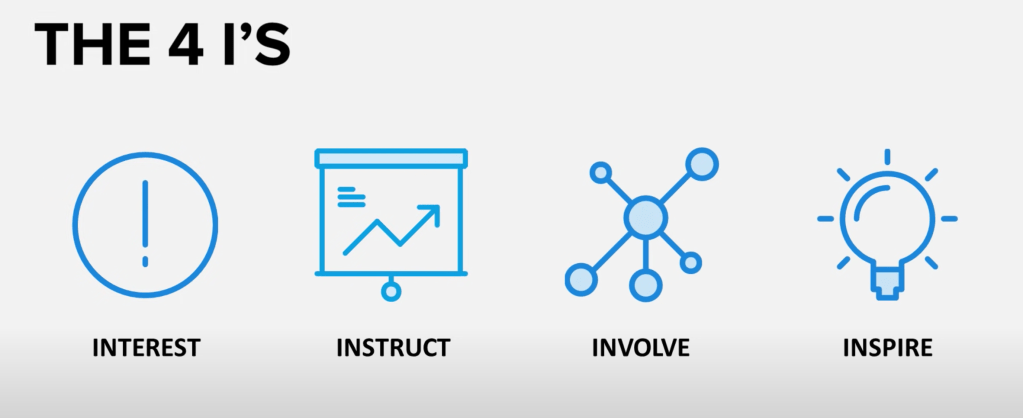
The 4I’s

Why storytelling is so powerful in the digital era | Ashley Fell

My story also involves the 4I’s:

Interest: How are we making this pizza?
Instruct: Step-by-step instructions are included.
Involve: Drawing in the audience with fun videos and graphics.
Inspire: Showing easy instructions and a tasty photo of the finished product.

The 8-point story arc

Photo by SpaceX on Unsplash

I missed a step in using the story arc:

Statis: The family is hungry at dinner time.
Trigger: The decision is made to make pizza.
Quest: The ingredients are prepared.
Surprise: There are consequences from chopping the onions.
Critical choice: My story misses this point.
Climax: The ingredients are all put together.
Reversal: Emotions are high as everyone is very hungry.
Resolution: Pizza is served.

In hindsight, I should have introduced a dilemma, such as a missing ingredient, but I didn’t plan for that.

In review

The main “character” in the story is the pizza itself, while my family and I are the support characters providing assistance and elements of conflict.

Thinking of my audience, I tried to use engaging and relatable imagery, including using fun gifs and slow-motion/timelapse videos. These short snippets are fun agents in stopping the audience from scrolling their feed and drawing them back to your story. It helps if they’re hungry!

Checking your grammar and ensuring you’re using hashtags can sometimes go by the wayside while live-tweeting. It can be difficult to have someone check that for you and on Twitter, as you’re unable to edit your tweets, it’s really important to stay on top of that.

This story seemed simple enough in planning and execution, but creating it was quite stressful in the moment! I think this reveals how important it really is to plan in advance as much as you can, and ensure you have all of the elements that you need to create a good story.

Categories
Uncategorized

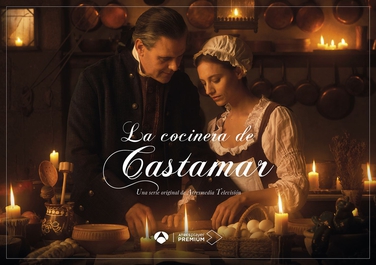
The Cook of Castamar

The Cook of Castamar

The Story Arc for the first episode introduces the beautiful setting of Castamar.  Nick Reese prepared an outline of the elements needed to craft better tweets.

The Setting:

It is a “period piece” set in Spain around 1720. The widowed Duke of Castamar is going to get romantically involved with Clara, the new cook at his castle.

The costumes, sets and scenery are incredibly beautiful.  It is, quite literally, a feast for your eyes. And the castle and gardens of Castamar are pretentious and befitting of “royalty”. Since La Cocinera de Castamar (the Cook of Castamar) is a Spanish production, it has been dubbed in English.  Don’t get caught up in lip reading.

The characters: The first episode is called The Essential Ingredient.  It introduces Duke Diego, still in mourning two years after the death of his wife, and Cook Clara who has been raised cooking in an orphanage and is agoraphobic. There are many other characters and story lines and subplots, so many that it becomes confusing. It’s hard to keep every character and their roles straight but my assumption is they will each have some sort of impact on Duke Diego or Clara, the cook.

The conflicts: Duke Diego has been called by the King🤴 to assume a powerful position in the Court. Diego is still in mourning for his wife and initially refuses the Kings order. He is very resistant to returning to public life.

The people around Duke Diego, including his mother, want him to put aside his grieving.  They also want him to find someone else to care about and marry. 👰The Duke is completely uninterested.

The bad guys, Enrique de Arcona, Marquis of Soto and Lady Sol Montijos, are intent on destroying the Duke, for reasons as yet undetermined.

In this episode, the bad guys collude on getting the Duke involved with Lady Emilia Castro, who has a disgraceful secret past, discovered by the evil Count Enrique.  He uses this information to gain Lady Emilia’s co-operation with his plan to ensnare the Duke.

There is a big gala planned at Castamar and the king🤴 is to attend. Clara, through hard work and culinary skill has garnered the position of head cook.  She has managed thus far to hide her agoraphobia.

The ending: It turns out the King is quite Looney Tunes 😱and he goes missing on the way to the gala. The worry is he has been kidnapped since there is so much civil unrest within the country.

The episode ends with a large search party going out, lead by Diego.  Not exactly the PARTY the guests had expected as they are all ushered into the safety of the castle.

All the elements of a good story have been combined to make an entertaining first episode of the Cook of Castamar. Really an enjoyable story set in early 18th century Spain. Loved it!!!💖

See Twitter thread here: https://twitter.com/wordsmith732/status/1457069534729228288

See Twitter thread for explanation

Categories
Uncategorized

Forty Rules of Love

I can hardly finish a book! If a novel doesn’t capture my heart and mind, there is no chance that it will capture my time. During my travel to Jordan, I randomly checked street bookstores. Unlike the typical bookstores— those are tiny booths with books everywhere: hanging from the windows, organized in the stand and some carefully places on the ground.

Forty Rules of Love

What could go wrong if I read this book? But I was hesitant.

“This will transform your life,” said the friendly older shopkeeper.

I’m not sure if the novel transformed by life. But it sure captured my heart and mind. The Turkish novelist, Elif Shafak mastered the art of storytelling in her Forty Rules of Love. I read the book in English and Arabic, and each time, the story reveals secrets from the realms of mysticism.

The book, in the form of a novel, is about Rumi and his companion Shams Tabrizi. It’s a novel within a novel— with fictional characters from the present and Rumi and Shams from the past. Main characters find love that’s not far from the love Rumi found.

Elif managed to make Rumi’s journey of spiritual transformation through his encounter with Shams relatable to someone like me— centuries separate us from Rumi (born in 1207).

In a conversation with Penguin Random House, Elif tells her readers why she wrote the Forty Rules of Love: “I wanted to write a novel on love but from a spiritual angle. Once you make that your wish the path takes you to Rumi, the voice of love. His poetry and philosophy have always inspired me. His words speak to us across centuries, cultures.”

Rumi’s words speak to us across centuries and cultures. When put in a story, those words will indeed find their way across cultures and languages.

I’m going to go beyond my personal opinion and will let some of Pixar principles judge how great Forty Rules of Love is!

Great stories are universal

Yes! Spiritual experience transformed to something that everyone can experience— love. Rumi becomes a relatable figure, not only a poet. He becomes a friend who, just like anyone of us, experienced challenges of life. But he becomes a guide too, more than a friend to the reader, without enforcing his mysticism values or teachings.

Great stories have a clear structure and purpose

Once upon a time….  

The clear structure and the interwoven stories and purpose make Forty Rules of Love a easy read, despite its length.

Great stories have a character to root for

Rumi? Shams? Find out!

Great stories appeal to our deepest emotions

I’m biased here. I will this to you. Let me know if Forty Rules of Love will appeal to your deepest emotions. It sure will!

Great stories are surprising and unexpected

Trust me! You will be surprised and will spend your night turning pages to find what’s next.

Great stories are simple and focused

Very simple and focused, despite all of the texts inspired by poetry and 13th century Persian, Arabic and Turkish literature. The simplicity of the novel made it possible to be translated to several languages without compromising its essence

Categories
Uncategorized

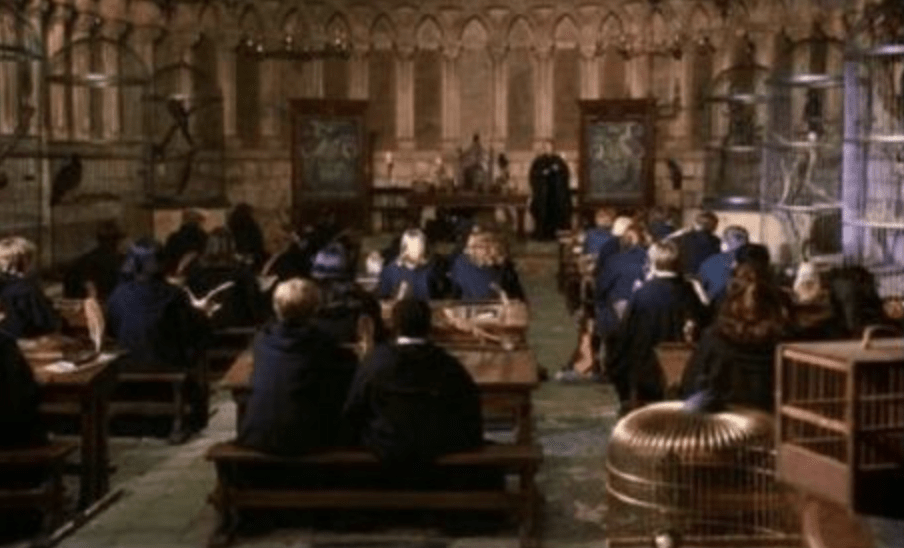
Harry Potter

The story of Harry Potter is a story that I love. I’ve read the books, watched the movies, listened to the e-books, and visited the theme park! In fact, when I found out my sister hadn’t read the books or watched the movies, I insisted we do a movie marathon together the last time she visited (that was only two months ago)!

So why do I like it so much? Each and every book in the series, as well as the overarching story, are all well-structured and focused in their construction. They all deal with the same good versus evil narrative, and in fact, the the Story Spine doesn’t change:

Once upon a time, there was a boy who lived with his horrible aunt. Every day, this good-natured boy would be mistreated or bullied by his family.  But one day, he was told he was a wizard. Because of that, he was able to go to a special school for wizards, and because of that, he made new friends and learned new things. And because of that, he learned what happened to his parents, and the evil things that caused him to lose his parents came back to haunt him. Until finally, he won the battle and good overcame evil. And ever since then, he lived happily ever after.

Each story seems to use every structural rule that is possible, from the journalists 5W’s and additional rules, to Ashley Fell’s 4I’s. Once the foundation is laid, it’s up to the latter 4I’s to really draw you into the story, and this is where I think that the story of Harry Potter is very successful. From an interest perspective, as children, we dream of living fantastical lives whether at home or school, and as adults, we may have the two-fold level of interest: the first being that we remember what it was like to be in school along with the trials and tribulations of being a teenager, and the second being, as an adult who may actually deal with teenagers!

These stories draw you in with parallels to reality, and keep you guessing as to what’s going to happen next.

These stories naturally instruct us, as they’re based on school life! Additionally, they include the moral compass, teach ethics, virtue, and values along the way. The stories compel you by drawing on real emotions, feelings, and experiences that are felt by everyone.  You might have known someone who looked like or acted or behaved like one of the characters. You may have been treated the same way, experienced similar excitement or trepidation.  And in the end, with good overcoming evil, we are inspired by the strength, integrity and courage that brings our story to the end.

I think these stories are special because we grow up with them. While the story itself is the age-old good versus evil plot, we become invested in the lives of the characters as if they’re someone we know personally, and we want them to succeed. We are immersed in that whole journey with them, and while there are obvious areas where we suspend our disbelief, their development from unsure, innocent children to mature, confident teenagers is very real, and we celebrate their success with them.

The stories have also been successfully translated into so many other mediums. They started off as physical books and have been translated to audio books and movies. There are many fan websites, such as Wizardingworld.com, formerly Pottermore, where they encourage people to get involved in different activities and clubs. Sightseeing and studio tours, theme parks and vacation packages and interactive toys have all sprouted from these stories, making them truly multi-media!

Categories
Uncategorized

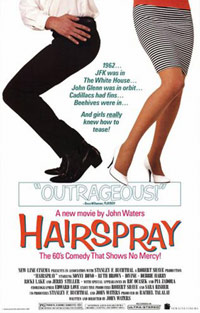
Hairspray (1988)

Most people are familiar with the hit Broadway musical Hairspray and the 2007 film adaptation starring Nikki Blonsky, Zac Efron and John Travolta. Fewer are familiar with the original 1988 film it was based on. Directed by cult film icon and “Ru Paul’s Drag Race” guest John Waters, the film stars Rikki Lake, Jerry Stiller and frequent Waters’ collaborator Divine.

Source: Wikipedia

The basics of the plot, about a plus-sized teen named Tracy Turnblad who becomes a dancer on a local program called The Corny Collins Show, fits well into Ken Adams’ story spine breakdown:

Every day, Tracy watches a dance show after school and practices her dance moves.

But one day, she tries out for an open spot for featured dancers and becomes one of the most popular on the show.

Because of that, Tracy is nominated for the show’s talent pageant and begins a relationship with a dancer she has a crush on.

Because of that, she angers her rival, the rich mean girl Amber, who bullies Tracy.

Then, Tracy learns more about racial segregation of the show that keeps Black dancers from participating.

Because of that, Tracy begins to speak out against injustice as part of her pageant platform and challenges the status-quo of the show.

Then, a riot over integration breaks out at a live show taping and Tracy gets arrested.

Because of that, Tracy is banned from the pageant and her friends and family help her fight back and crash the pageant live on-air.

Until finally, Tracy is crowned the winner, and the hosts announce that The Corny Collins Show is officially integrated.

Of course, this simple summary doesn’t include all the fantastic details and side stories that made this film so appealing to me when I first saw it as a preteen. As a plus-sized girl, it was refreshing to see a larger girl written to be accepting of and confident in herself, a universal theme that would meet the standards of the Pixar storytelling model. Tracy is unashamed of her body and pursues the affections of the leading man without any hesitation or reservation. When Amber, her mean girl rival with conventional looks, criticizes Tracy’s body, Tracy holds her own and impresses the judges for dance council with her answers and poise while Amber is sent home and suspended from the show for her bullying. The people who criticize Tracy are presented in a poor light while the movie shows her moving on and becoming successful without changing her appearance to suit others.

Source: Filmfed.com

In a Twitter thread recounted by the Gizmodo article, “The 22 rules of storytelling according to Pixar,” storyboard artist Emma Coats wrote that a character should be admired for “trying more than for success.” In Hairspray, Tracy uses her popularity to speak out against injustice for others and not just for herself. She speaks up for her friends who are not allowed to dance and joins a protest against segregation over being on an episode. She is admirable in her convictions and even her hairstyles are a metaphor for Tracy’s journey and the changing times as she goes from popular tall and ratted styles to the more modern sleek styles of the latter part of the tremulant 1960s.

Source: Warner Bros

The outrageous fashion and exaggerated takes on popular hairstyles of the 60s give it the eye-catching appeal that allows you to instantly recall the feel and setting of the film. The story is told with a visual flair and an over-the-top aesthetic characteristic to John Waters’ direction. Though not digital elements, they are an example of how visuals make an impact and help us to remember a story, as discussed by Ashley Fell’s Ted Talk on digital storytelling.

Even though it is, as critic Pauline Kael noted in her New Yorker review, more of a parody of a teen comedy and not as sincere as its musical counterpart, the 1988 Hairspray is still full of heart and endearing in its universal messages of acceptance and social justice. It deserves to be remembered as much as its musical adaptation and enjoyed as an introduction to John Waters’ wild film canon.

Source: Pinterest

Categories
Uncategorized

In the Dark- Season One Review

In the Dark is a US series that I recently finished watching. My taste is eclectic, but I recognize that the plot of the series had me begging for me!

Linda Come To Me GIF by XXXLutz KG Österreich

There are 3 seasons out, but today I would like to focus on season one!

So, you may ask, Ana, why did you like the first season?

The plot was interesting; let me break it down for you using the  Disney formula!

Once upon a time, there was a blind woman in her twenties named Murphy Mason.  She used to drink a lot and have meaningless sexual encounters. She used to work at Guiding Hope, a company created by her parents, to train service dogs. She lived with her best friend (Jess), who she had known since childhood, a vet who ALSO worked at Guiding Hope; Jess was Murphy’s handler. Murphy is depicted as a very sarcastic, inconsiderate, and emotionally detached character.

#casey deidrick from dumb bitch energy.

Here are some moments that bring to life the funny, yet irreverent nature of Miss Mason from season one  https://www.youtube.com/watch?v=UUnSHCEaYCc

One day, Murphy goes to her usual spot where she  smokes in an alley close to her apartment and calls out to her best friend (underage and super cute!) Tyson Parker. ( Click here to see Tyson Parker’s cuteness! https://cwatlanta.cbslocal.com/2019/05/03/in-the-dark/)

How did this unlikely pair meet?
Tyson saved Murphy from a violent mugging.

Tyson is usually in this alley since he is a dealer, and the alley is where he moves his product.  Murphy finds Tyson lying on the ground and is non-responsive; she identifies him by feeling his face.   Murphy leaves the alley to get help, and when she comes back with the police, the body is gone.  The police are skeptical to look for Tyson since Murphy is intoxicated. The way she identified the body was not considered substantial evidence to assume Tyson was dead or kidnapped.

Because of that, Murphy engages in an unskilled investigation to find Tyson or Tyson’s body. This gives her life purpose.

Because of that, Murphy undergoes a series of events where she, her best friend, and another Guiding Hope worker (Felix, who pretty much got roped into this mess) go against drug dealers, steal illegitimate money,  and go to jail. The unfortunate events keep rolling in; Murphy gets stranded in the woods and has a fallout with her best friend Jess…You get the picture!  Towards the end of the season, the police discover Tyson’s body. Murphy is not content because she wants to know WHO killed Tyson. Her search for answers continues.

Until finally, in the last episode of season 1, Murphy learns that Tyson’s killer was actually one of the detectives (Dean) assigned to the case, who was giving information to a drug dealer (Nia)  in exchange for financial support. Nia was Tyson’s boss!.

Whoa GIF by Justin

Murphy sleeps with Dean and gets him to confess that he killed Tyson, also offering that he killed Tyson because the latter found out about his agreement with Nia (Murphy secretly recording this conversation!). Murphy tries to escape with the recording, but Dean catches up to her and forces her into a car. Murphy physically assaults Dean while he is driving, which causes him to hit her back and lose control of the wheel. The car literally falls off a bridge and FLIPS OVER. Somehow, Murphy and Dean make it out alive!

Meme Reaction GIF

Oh yeah….. The culmination of season one happens when  The drug dealer Nia forces Murphy, Jess, and Felix (new owner of Guiding Hope) to launder money for her (The best part of the season!).  Also, even though Murphy gave the recording to the police, Dean gets out scotch-free!  If you are interested to see the trailer for season 2, click here https://www.youtube.com/watch?v=TIEnbqve3rY

Besides the plot, I like the portrayal of characters. They are complex individuals driven by various factors to behave in specific manners.  While usually inconsiderate, Murphy cares deeply about her friend Tyson because she actually made an emotional connection with him; it shows her humane and gentle side. However, it came at the expense of creating tension with Jess. Murphy does not appreciate anything that Jess does. On the other hand, Jess realizes the unfair manner in which Murphy treats her. Furthermore, I enjoy watching relationship dynamics and seeing how characters navigate complex emotions. I believe a series is good when there is character development, which happens very slowly for Murphy, by entering a romantic relationship, developing a relationship with her service dog, and recognizing her unfair treatment towards Jess.

Peter Rabbit Aww GIF by Sky

Thank you for reading my review! Let me know if you have watched the show and share your favorite moments!

Design a site like this with WordPress.com
Get started