Categories
Uncategorized

5 Tips for Your Digital Storytelling Toolkit

Storytelling is an art form that takes time, intention and practice to craft. When you add the digital sphere to the mix, it certainly adds to the complexity. What is “good” digital storytelling? How do you convey your message and keep your audience wanting more? Thankfully for you, I’ve done the research and am about to share the basic blocks to build your digital story!
  1. Always, and I mean, ALWAYS Storyboard.

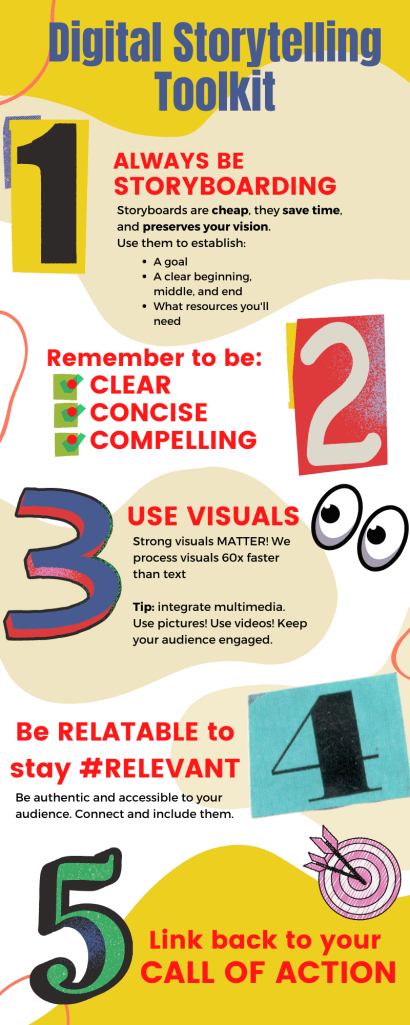
If you have even the teeniest tiniest of inklings to become a digital storyteller, you must have a handy dandy storyboard ready. Storyboards are an inexpensive way to map out your ideas, and to make sure your vision carries through. When storyboarding, ask yourself:

  • What is the goal of this story? (Hint: Your goal should ALWAYS be your Call To Action.)
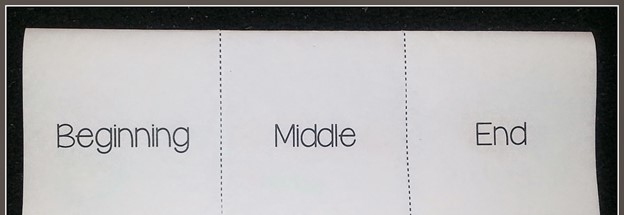
  • What is my story’s concept? What is the beginning? The middle? The end?
  • ^^ Do each of the above align with my story’s goals?
  • What am I doing to increase my audience engagement through my story? (Consider using geotags, stickers, hashtags to increase your visibility.)

It’s important to remember that it’s okay to edit your storyboard. Ultimately, the goal of the storyboard is to help you plan and make note of which resources you’ll need, including the types of visuals you may need to create. Creating unique storyboards to cater to different social media platforms will help ensure that you are maximizing your reach.

2. The 3 C’s

A good story is clear, concise, and importantly, compelling. The author pays close attention to providing their audiences with the right amount of information– not too much, and not too little.

Introduce your character/brand/message, and spend time showing your audience why they should care. Compel them to care. Without audience buy-in, it’s unlikely your story will take off.

3. Use Visuals

Don’t underestimate the power of visuals AKA don’t forget to add the “Digital” in your storytelling.

In an ever increasing online world, an author is tasked with staying well-versed with the changing online platforms. While these platforms might change, what remains consistent is that humans are visual beings. In fact, 90% of information transmitted to the brain is visual, and we process visuals 60x faster than text.

When creating your story, consider which platforms you’re using and integrate multimedia where possible. Have pictures? Awesome. Videos? Even better! Using Instagram stories? Consider adding stickers or animated text to keep your viewers engaged. Attention to the visual details matters.

4. Be Relatable

Let’s face it, you can write the coolest story to ever exist, but if your audience can’t relate to it in any capacity, the likelihood of them remember it is slim. Of course, you want to stay authentic, but being authentic and being relatable are not two different things. A good story is a universal story, and universal stories are remembered. Universal stories are the ones that stick long after they’ve been read.

Look for opportunities to create engagement with your audience, whether that’s through comments, stories, or re-shares.

5. Connect it back to your Call of Action

Don’t be a sneaky Pete with your Call to Actions. It’s important to remind your audience what you’re asking them to do. Give them clear instructions and make the process easy. If you’re asking them to subscribe to your newsletter, embed that signup link where they can clearly find it.

If you found these tips helpful, drop a comment below!
Categories
Uncategorized

The 4 I’s Always Apply

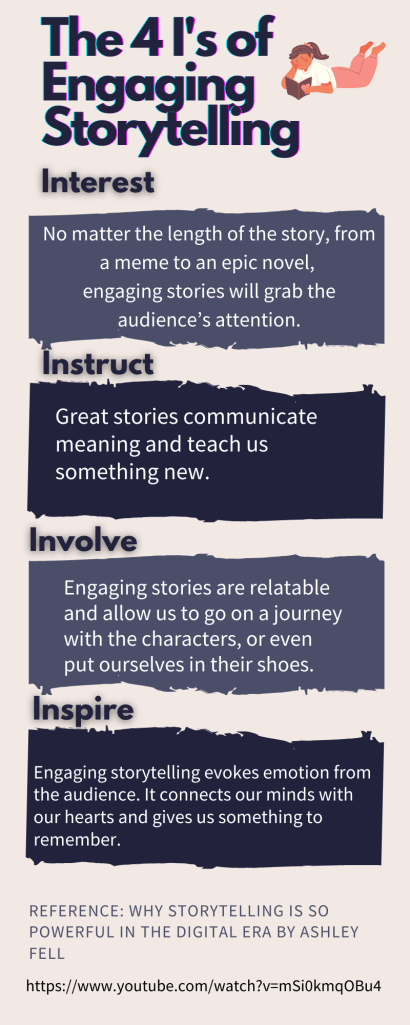
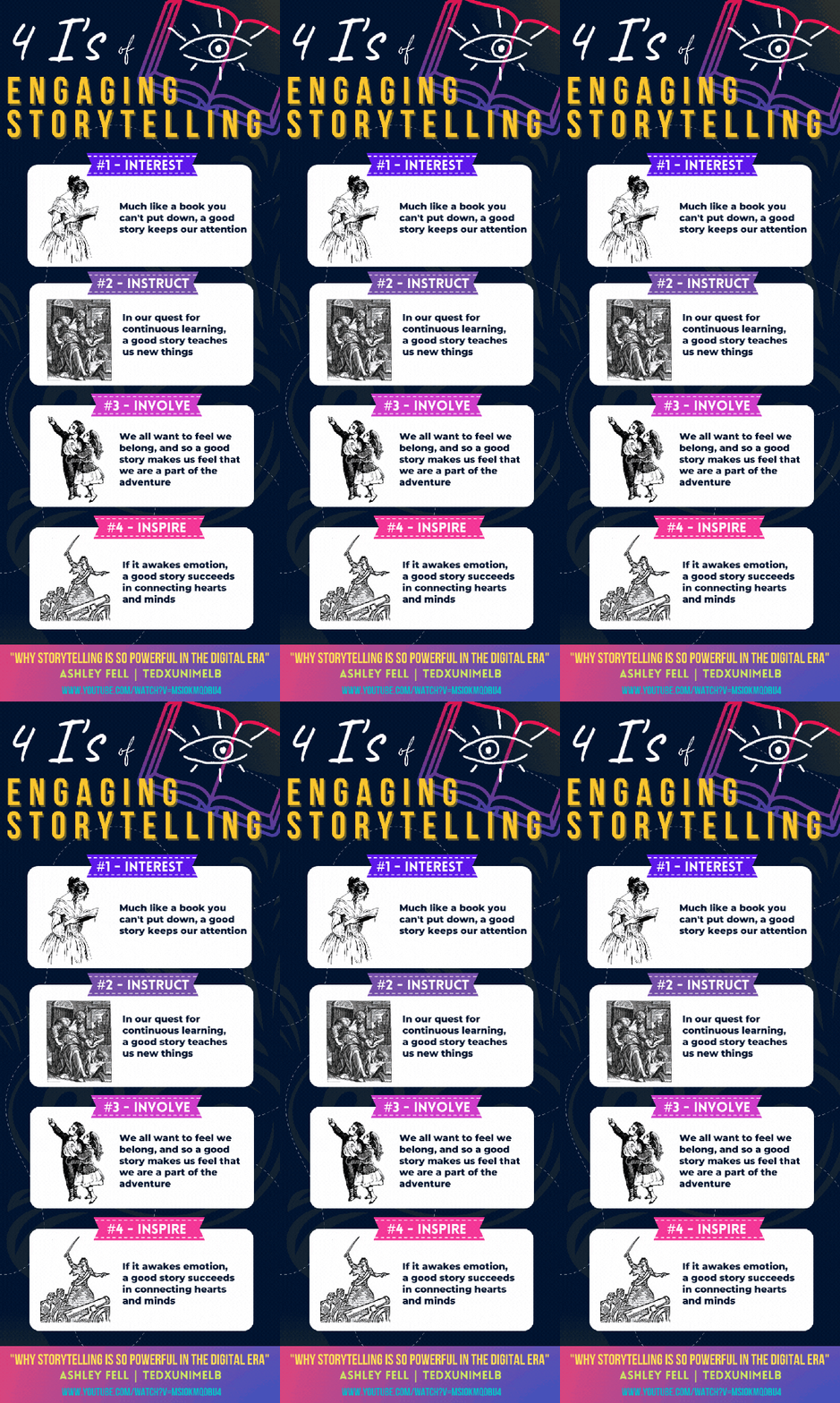
As our class has progressed, we have explored different forms of digital storytelling and not necessarily what makes them different, but what makes them the same. There are fundamental storytelling principles that are applied to all story formats from epic novels to GIFs and literally everything in between. One of these principles is the 4 I’s of Engaging Storytelling that Ashley Fell talks about in her 2017 TED Talk, “Why storytelling is so powerful in the digital era.”

One of the things we love about storytelling is that it is inherently visual, even without pictures. Humans are by nature visual creatures, and we process visuals 60,000 faster than text. It makes sense that our brains want to turn things into pictures. Add ever-advancing technology and diminishing attention spans to the mix, and its not a stretch to see the challenge in presenting information to today’s audience. But through engaging storytelling, you can capture your target audience and get your point across. I’ve even made a picture for you!*

*I did not make this GIF.
*I did make this infographic.
Categories
Uncategorized

5 principles of good storytelling

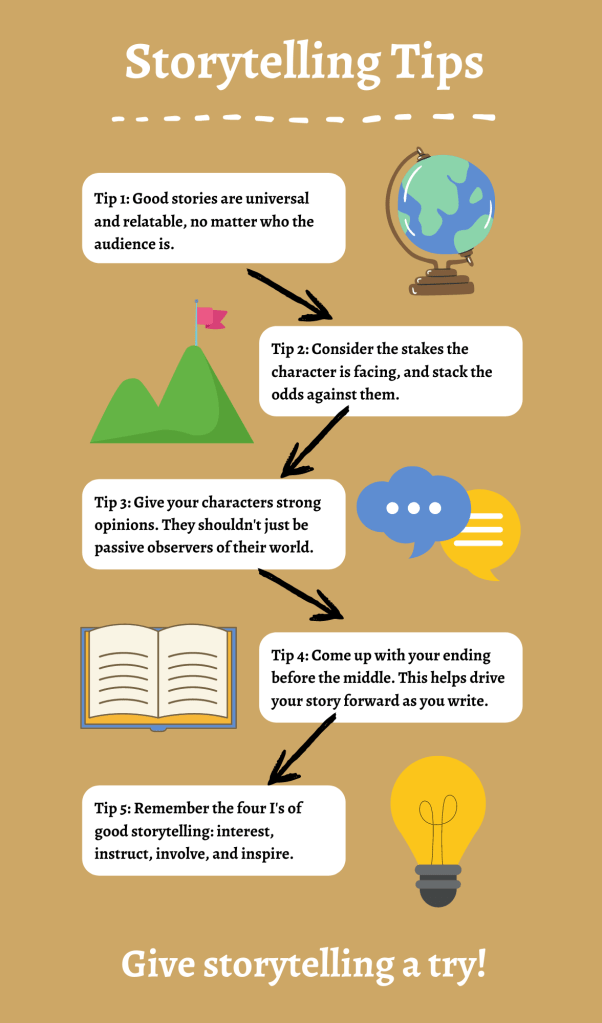
I have put together a infographic to quickly tell the 5 key principles of good story telling. Infographics are a great visual way to connect with the audience and offer quick facts. Rather than reading 5 paragraphs of text with no fun graphics the reader can save this visual and it becomes more memorable. People also tend to respond better to visual information. When we were children we preferred picture books to keep us interested, digital content today is the same.

My design includes some human elements in the graphics to draw the audience in and so they can relate to the visuals. The graphic also uses bright colours and only 5 points. Keeping an infographic quick and to the point helps ensure the reader doesn’t scroll.

I hope you enjoy my 5 quick tips and learn how to write a better story. 🙂

Categories
Uncategorized

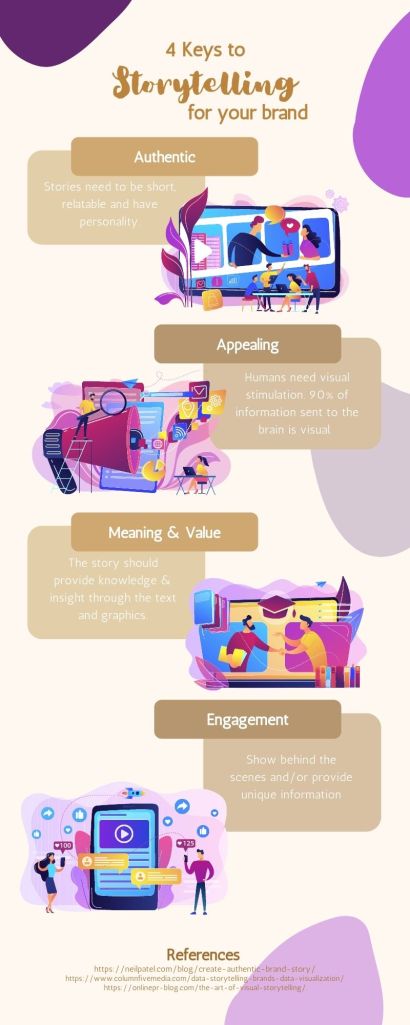
4 Keys to Storytelling

As a business, customer engagement is key to driving people to your website to purchase goods or services. In order to grab the attention of customers, you need to be able to tell stories. This infographic below provides some quick key items to keep in mind when telling stories to your audience:

Authentic & Engaging:
Consumers want ads that feel like a story and it can be very impactful. Is your story including moods and emotions? When writing a story for a brand, you need to keep this in mind. Perhaps provide viewers with BTS (behind-the-scenes) moments that give the consumers a feeling of being included. As human beings we are drawn to wanting community. As a brand, if you can story tell and include consumers, you will see engagement.

Appealing Visuals:
Consumers also need visuals. Telling these stories with visuals are beneficial as our minds process images 60% faster than reading words.

These visuals need to be a combination of images, GIFs, short videos and appealing graphics. Compiling all of these graphics with text can be a balancing act but when done right, can leave a lasting impression on a consumers.

A bonus tip: Tell stories from your customers. Get real life stories from your customers and ask them to share in their own visual way. Can’t get more authentic then that!

Resources:
There are many resources available to help you on your story telling journey:

Good luck and have fun sharing stories!

Categories
Uncategorized

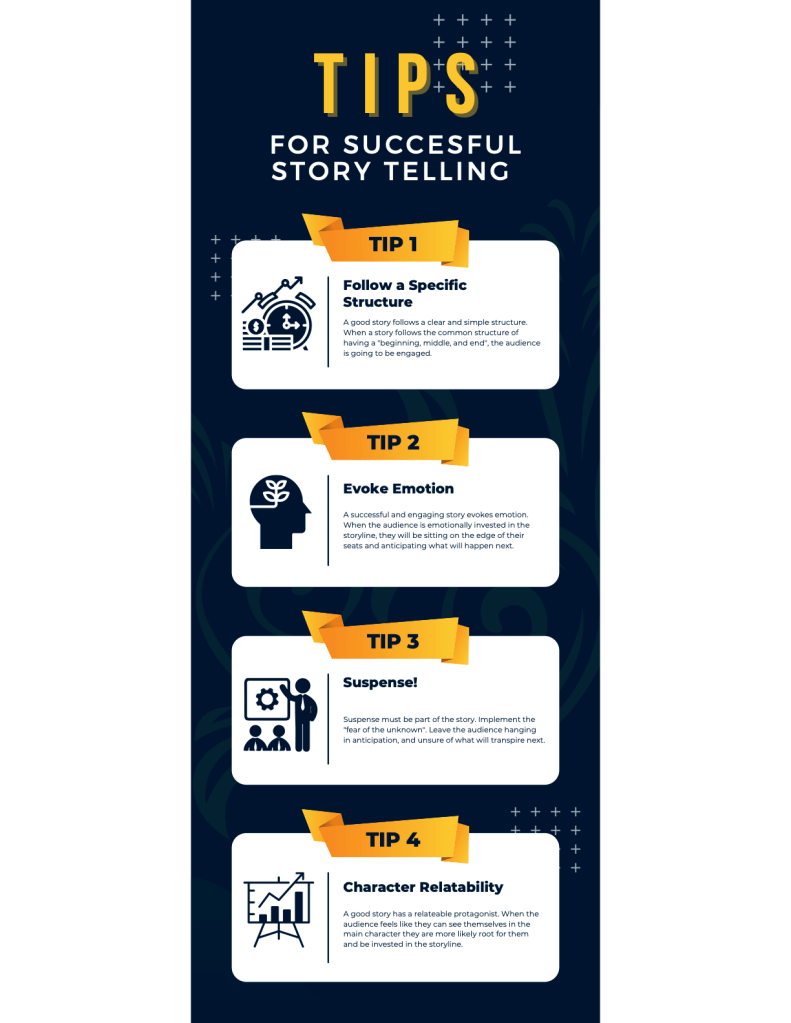
Successful Story Telling

Categories
Uncategorized

The Benefits Of Storytelling When Marketing Your Brand

Photo by Vlada Karpovich on Pexels.com

Let me start off by asking you a quick question: when you wake up in the morning, grab your phone, and open your social media app, how many times have you thought to yourself, “Gosh I can’t wait to be sold to today!”? I bet the answer is NEVER. So why would you market your brand with a typical pushy sales pitch? In a digital world bombarding us with ads at every scroll, swipe and search, your brand needs to stand out from the rest.

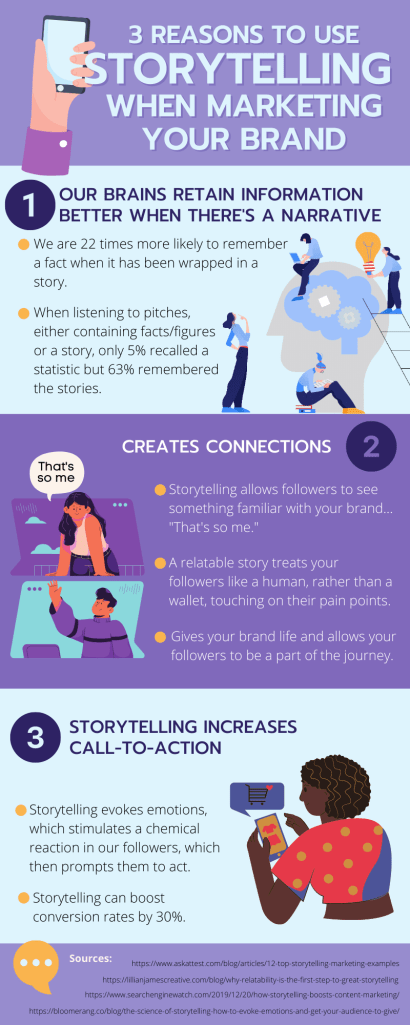
When it comes to marketing, storytelling is a powerful and underrated tactic to get in front of your audience and HAVE THEM LISTEN. Although creating a story is more time consuming, and requires more work and thought, here’s 3 reasons why you should be using storytelling to market your brand:

What exactly is storytelling?

Now that you understand the importance of storytelling in your marketing efforts, perhaps you now need a better understanding of what exactly storytelling is. Let me give you a quick example:

Let’s say I have a business selling lip balms. Which of these pitches are you more likely to act upon and click the [BUY NOW] button?

SALES PITCH:

Dry lips? Here’s a lip balm made to soothe the driest of lips, guaranteed! Made with 100% all-natural ingredients, like vitamin E and beeswax, this lip balm is sure to please.

STORY PITCH:

After struggling with dry lips for years, finding a good quality soothing lip balm seemed impossible. Even the all-natural lip balms often contain questionable ingredients. I came to the realization, that if you want something done right, you’ve got to do it yourself! After months and years of perfecting the ultimate lip balm recipe, only using high quality, skin nourishing, all-natural ingredients you know and trust, like beeswax, vitamin E, cacao butter, shea butter, and honey, I finally created a lip balm that worked! Moisturizing and protecting, my search for the perfect lip balm was over. And I’m happy to share it with all of you.

See the difference? A sales pitch will leave your mind as quickly as it came in. A story pitch will compel and stick with you for a long time.

More storytelling examples

Here’s a wonderful storytelling example from Volvo. Note that it never mentions the brand during the ad, except at the very end, letting the story do all the talking:

Also applies to social media

We’ve all scrolled through our social media, seeing pictures of whatever our friends posted that day (like what they ate for dinner), and thought to ourselves “okay, that’s nice, but do I care?”. But what if the caption held a story to go along with that otherwise uninteresting picture?

Here’s a post I recently added to Instagram. I could’ve just posted a picture of my new tattoo with a simple “check out my new sleeve!” caption, but is that what my followers really want to see? Rather, I made it engaging and inspiring, by sharing my story.

Are you ready to dive in?

Have I convinced you? Have I shed a light on the importance and impact storytelling could have for your brand? Good!! Now it’s time to put that spark into action.

Good storytelling doesn’t just happen overnight. Like everything in this world, it takes time and practice. The Web is filled with a plethora of storytelling information; explaining the What, Why, Where, When, Who and How’s of it all, and expand your knowledge for better success.

Here’s a great article by The Next Ad, which explains Storytelling and Advertising – How To Bring The Two Together, further acknowledging my point and giving more great examples.

And this article, bringing you to the start with the basics, Aerogramme Writer’s Studio helps teach the fundamentals of writing a great successful story using The Story Spine.

Off you go!

Don’t let that imposter syndrome hold you back! Just start, and you’ll only get better overtime.

Oh! And don’t forget to have fun with it 🙂

Categories
Uncategorized

The 4 I’s you need to know for optimal storytelling

In her TEDxUniMelb Talk “Why storytelling is so powerful in the digital era,” communications specialist Ashley Fell explains that in this evolving digital era characterized as the “great screen age,” visual storytelling has become more important than ever.

As screen-time increases and attention spans decrease, it is becoming vital to appeal to the visual mind. In fact, our brain responds to, and processes visuals, a whopping 60,000 times faster than text. Because of this, Fell argues that the way to effectively communicate a message or information which can be productively processed by the brain is to use principles of good storytelling.

For Fell, an engaging story, no matter what the medium, includes the four I’s – good stories create interest, they also instruct, involve and inspire us.

Let’s take a closer look at each:

  1. Interest – a good story succeeds at maintaining our attention, such as through a good story arc with a rise in tension. We become invested in the action and want to know what happens, how the tension is resolved.
  2. Instruct – for a story to have meaning, there has to be some sort of value for the listener which can present itself in the form of a ‘how to,’ ‘lesson learned’ or moral of the story each of which provide a teachable moment that will often be what the audience will remember when the story ends.
  3. Involve – making someone feel they are a part of the story gives them a stake in the story itself. Thus, the audience goes from a passive, listening role to an active, participatory one.  
  4. Inspire – when a story can create an emotional response from the listener, it succeeds in being more relatable and thus memorable. This is what Fell describes as connecting our minds and hearts. People probably won’t remember your words but they will remember the emotion those words brought out.

“[A good story] connects not just with the eyes of the head but with the eyes of the heart.”

– Ashley Fell, TEDxUniMelb

In closing, remember that stories are visual even without the use of pictures, so choose not only your visuals but your words wisely!

Categories
Uncategorized

Storytelling Tips

Storytelling, whether for a book, movie, or social media post, is an exciting and creative process. In the business and marketing world, storytelling is a wonderful way to engage your readers, viewers, and potential customers. By telling a story, the audience can view themselves within it. It lets you show your product, explain benefits, and focus on your customer without screaming “buy this”! But, it is far from easy. Below I’ve included a few of my favourite tips we learned to help storytellers along their journey!

Categories
Uncategorized

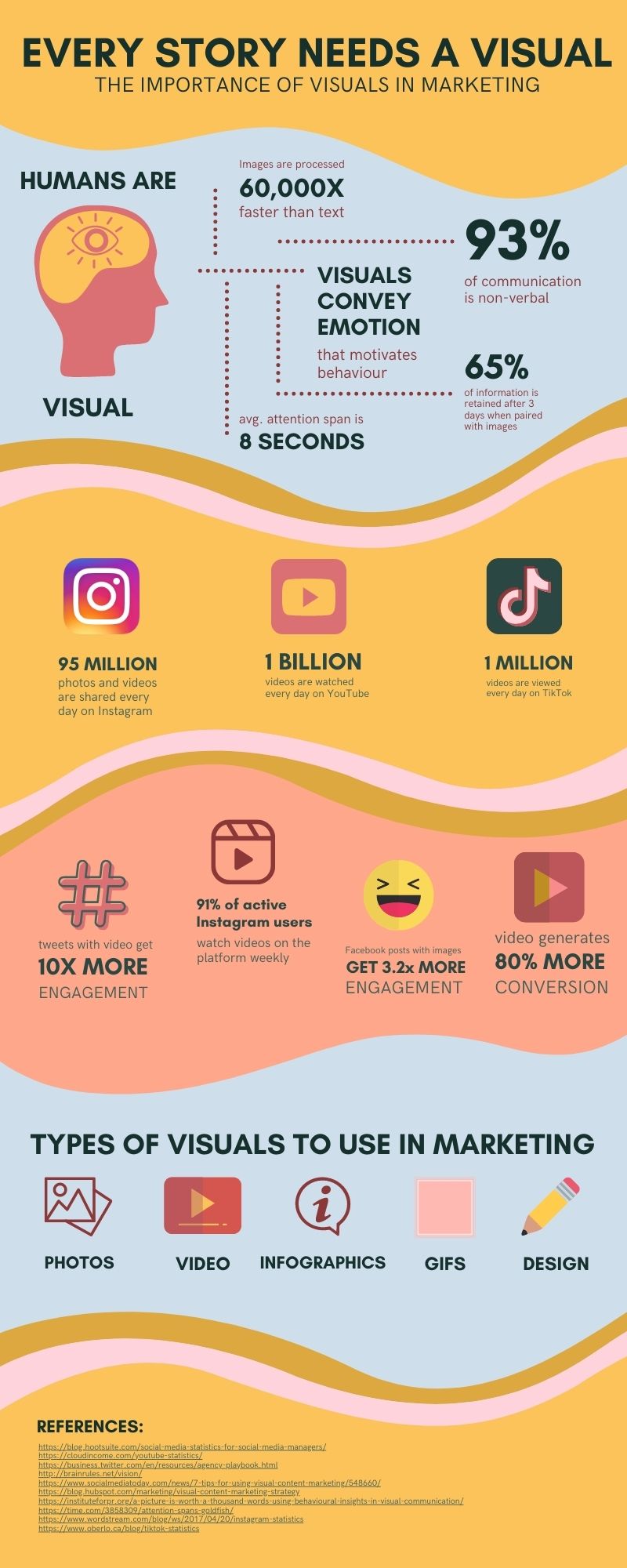
Every story needs a visual element

When it comes to storytelling, visuals are the best way any brand can convey its message to its audience. Whether it’s in good graphic design online, videos that give step-by-step instructions on how to use their products, or photos that convey the emotions that they want their audience to feel.

Categories
Uncategorized

The Perfect Story

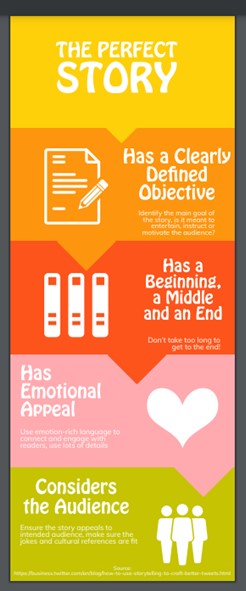
Storytelling helps us connect with one another and writing the perfect story is no easy feat, not impossible, but a few key points can ensure you write the Perfect Story!

Planning

Every perfect story has a clearly determined objective.  Is the story meant to entertain, instruct, inspire, motivate the audience? Determining the goal of the story ensures a clear, concise text. In this stage of crafting the perfect story, it also sets in motion the planning for the best platform in which to tell the story.  Decisions around where will this story best be received? If the story is to be told digitally, what are the plans about where to post, how to illustrate, what will be length of story?

Concept

Every perfect story has a clear Beginning, Middle, and End.  This allows the story to introduce the concept of the story, cover any details of the story, and then a wrap up that can also include a call to action.  All great stories share some common elements such as: setting, character, plot, conflict and arc, regardless of the length of the story.

Appeal

Every perfect story has Emotional Appeal.  Using emotion-rich language helps readers activate their decisions and their own reactions to the story.  This engages readers and builds connections to the story the more details that are given.  The perfect story is one that is emotive and memorable.

Audience

Every perfect story Considers its Audience.  The story must resonate with the intended audience.  Need to ensure the story appeals to appropriate readers so that any humour or cultural references are understood and are a fit for getting the message of the story across

Practice, practice, practice!

Crafting the perfect story takes practice. 

We all have a story in us to tell, remembering to make it emotive, relatable, simple and, voilà – the perfect story!

Sources:

https://business.twitter.com/en/blog/how-to-use-storytelling-to-craft-better-tweets.html https://hbr.org/2014/07/how-to-tell-a-great-story https://training.npr.org/2016/12/13/beyond-the-5ws-what-should-you-ask-before-starting-a-story/

Design a site like this with WordPress.com
Get started