
Categories
Uncategorized

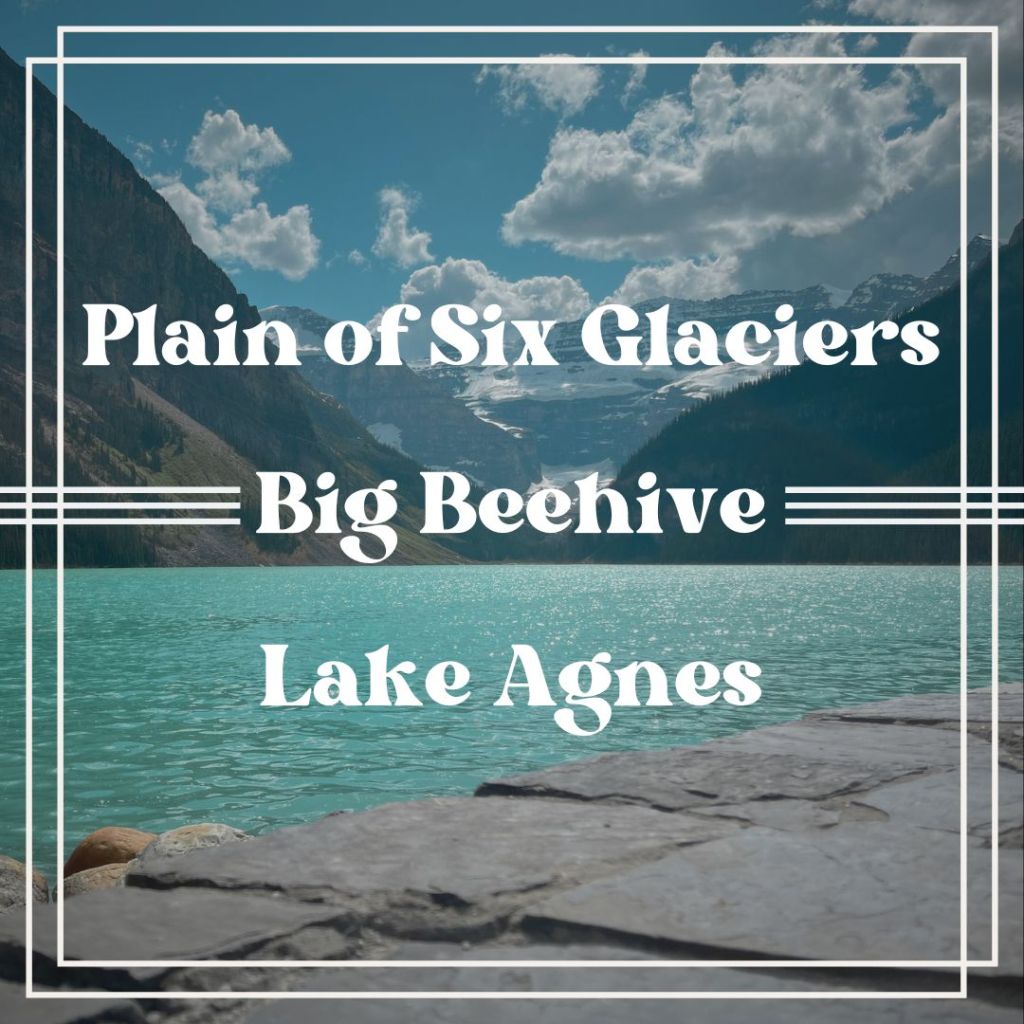
Plain of Six Glaciers – Big Beehive – Lake Agnes

  • Distance: 18.2km
  • Elevation gain: 1,017m
  • Time it took me: 5 hours (with stops and a lunch break!) 
  • Difficulty: Moderate (AllTrails rated Challenging)
  • Best time to go: The tea houses are only open from June-October, but this is also peak season for tourists, so definitely make it an early morning as the parking lots fill up by 7am!
    • Otherwise, they have shuttles available (which you can pre-book as well).  I did this hike on May 30th, which, by the way, is still a part of avalanche season, if you are thinking of heading into the Plain of Six Glaciers, which is notorious for its avalanches.  

AllTrails Link: https://www.alltrails.com/explore/trail/canada/alberta/plain-of-six-glaciers-big-beehive-lake-agnes-tea-house

Land Acknowledgement

These lands and waters are Treaty 7 territory and is the traditional, ancestral, and unceded home to the Ktunaxa ɁamakɁis, Stoney Nakoda, Blackfoot, Siksika, Tsuut’ina, and Métis peoples.  I’d like to thank them for sharing their land with us so we may have the opportunity to experience and appreciate the beautiful glacial lakes, pine forests, glacier-topped mountains, diverse forms of wildlife, and culture-rich lands of Banff National Park. 


*I had trouble finding a specific land acknowledgement for the Lake Louise area and so I created one using https://native-land.ca/.  If I have missed any treaty lands and/or nations, please let me know in the comments so that I may rectify my mistake in this post 🙂
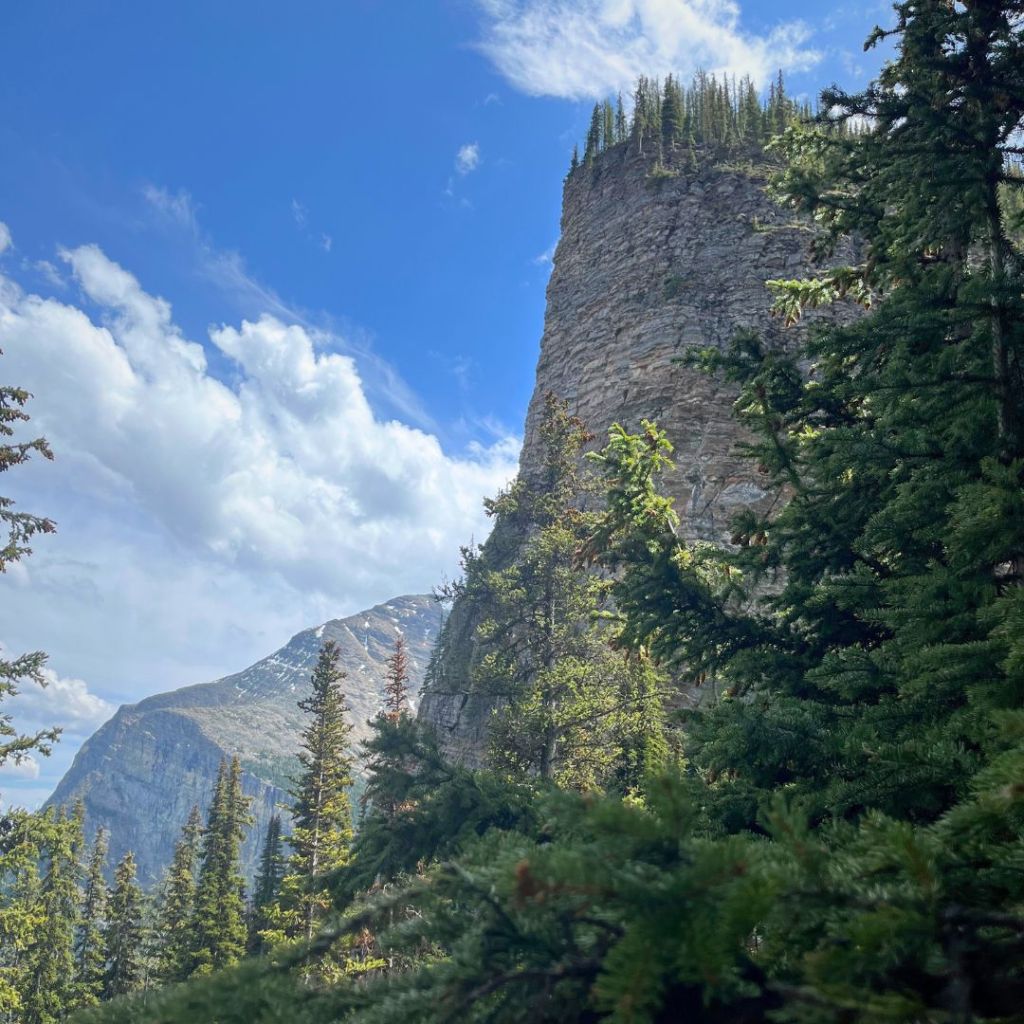
Hiking the Plains of Six Glaciers – Big Beehive – Lake Agnes Teahouse

If you’ve ever been to Banff, you’ve likely heard of the infamous Lake Louise.  It boasts millions of tourists each year and really is the star of many Canadian postcards.  For some, visiting the lake and village below it is enough to suffice their travel goals for the national park.  Maybe they’ll even rent a canoe for an hour or two to get those perfect photos for the gram.  But the real gems of Lake Louise lie hidden among the glaciers and forests surrounding the lake, for those happy to hike a bit, that is.  

I’ve visited Lake Louise on many occasions with my international friends from summer camp.  Typically, we’ve done the Lake Agnes Teahouse hike, which is gorgeous on its own. But did you know there was another tea hut? Honestly, yeah, there are signs for it… and maps… and I’m sure other blogs such as this one.  I was just never observant enough to look through them and take notice. 
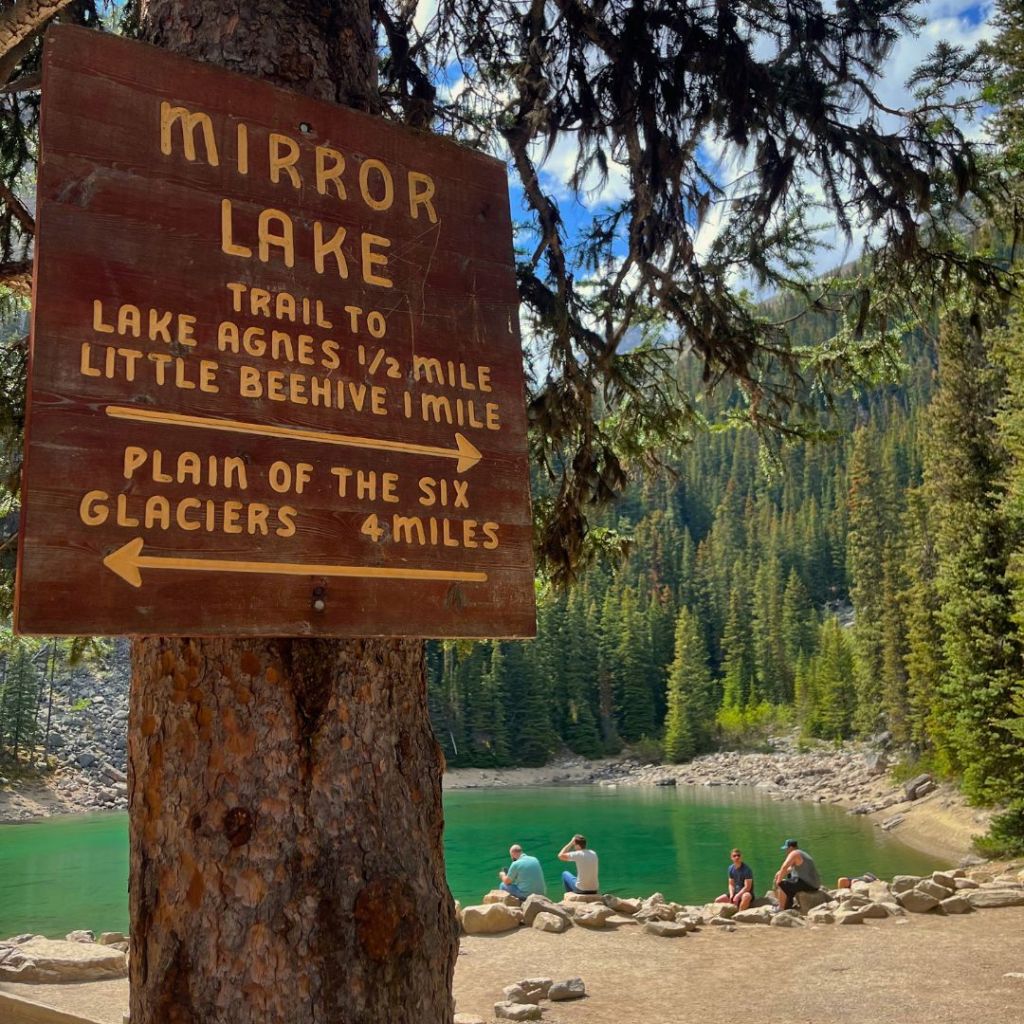
When I found I had a few days off on my own, I was adamant on going on my first ever solo hike.  My criteria being that it had to be a SUPER busy trail, as I’m terrified of bears (don’t worry, I still carried bear spray and everything).  So in looking up Lake Louise, one of the busiest places in Banff that I knew of, I found out about the Plain of Six Glaciers Teahouse.  I was curious.  And figured it was time that I challenged myself a bit.  
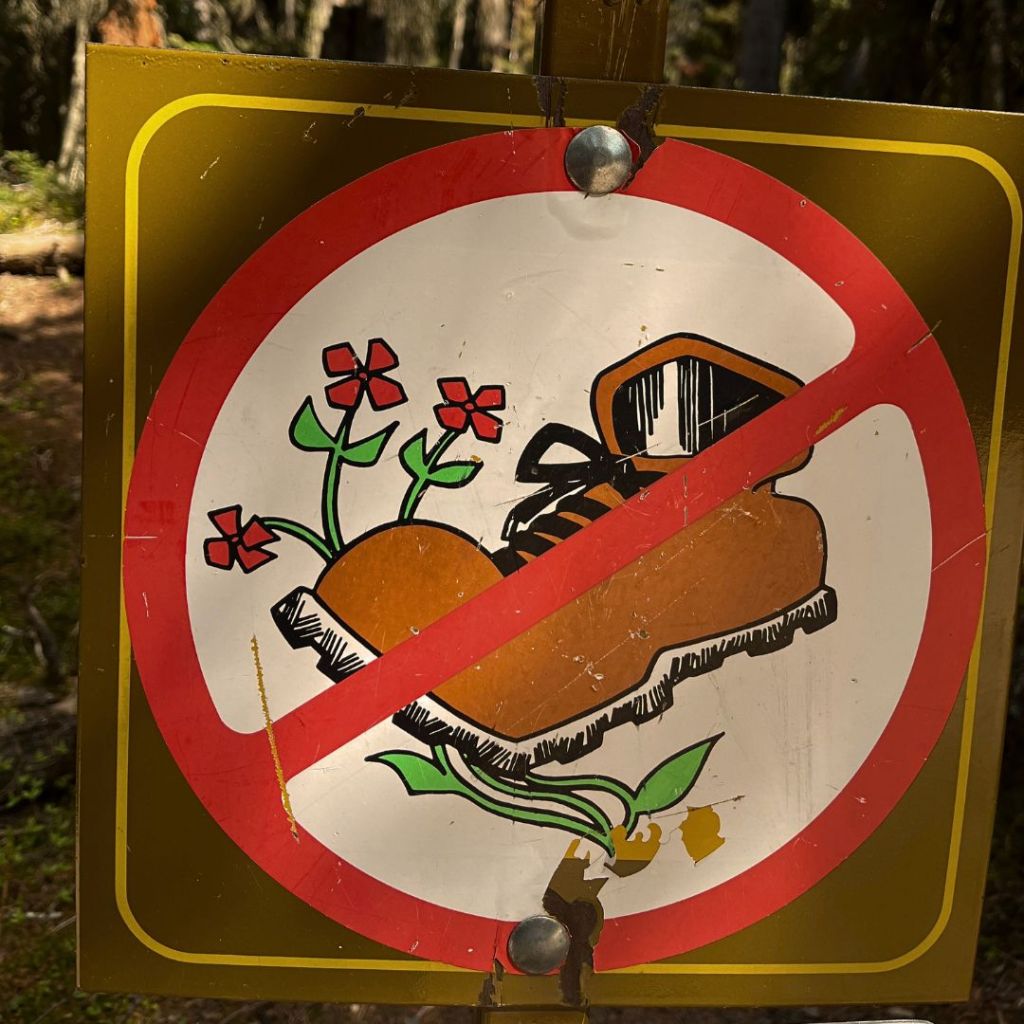
Here’s some tips for hiking the Plain of Six Glaciers – Big Beehive – Lake Agnes Teahouse trail:

  • Get to the Lake Louise parking lot EARLY: Even though I went in the ‘off season’ (May 31st), the parking lots were nearly full by 9am.  I also went on a weekday (a Wednesday) and ended up sleeping in a little later than I had planned.  Regardless, this is a tourist hotspot, so if you don’t plan on getting up early to be at the lake lots by 6am, then book a shuttle, or maybe try out a less famous hike…
  • Bring the Ten Essentials (and bear safety equipment!): I had seen families and couples hiking with only one water bottle each and no bear spray.  While I didn’t have to use my can personally, I had overheard some Parks people dealing with a bear kill at the first teahouse (Plains of Six Glaciers) -I’m not sure how recent the bones were, but still a pretty decent reminder that bears like tourist traps too.  I also learned about a week after my hike that the Plains Teahouse had only recently reopened due to being the home to a Grizzly family with cubs.  Disregarding the anecdotes, bear spray and extra water are always a must.
  • When AllTrails fails, GoogleMaps apparently has hiking trails as well?: The Lake Louise to Lake Agnes Teahouse trail is fairly straightforward, but the junction trail from the Plains of Six Glaciers to Lake Agnes? A little confusing… Especially with snow covering a good component of the trail.  When my AllTrails app malfunctioned, I figured I’d go out on a limb and check GoogleMaps, which, to my surprise, also had the walking path marked out neatly? It helped me get back on track after the snow-covered crossings, but I’ll definitely be looking into more reliable navigational features in the future, as I’m sure I won’t always be able to rely on my phone and having cell service in the forest. 
  • Don’t be afraid to be friendly:  Lake Louise, and Banff in general, hosts travelers from all over the world on a daily basis.  Don’t be afraid to step out of your comfort zone and say hi to some of them! I had asked a sweet looking older couple if they could take my photo on the hike and I noticed they had a French Canadian accent -turns out, we lived about thirty minutes apart back in Ontario/Quebec!  Hikers in general tend to be a friendly crowd and you’ll never know who you’ll get to meet until you try talking to them. 
  • Last but not least, take a cold plunge: there is absolutely nothing better than dipping in a glacial lake after a hike on a hot day! I’ve made it a tradition to either dunk my head or dive into any body of water at the peak or end of the trip, and I don’t think I’ll ever be able to resist the icy blue waters at Lake Louise.  When I dunked myself at the Lake Agnes Teahouse, there was a chorus of cheers from passing hikers, which hyped me up aptly for my descent!
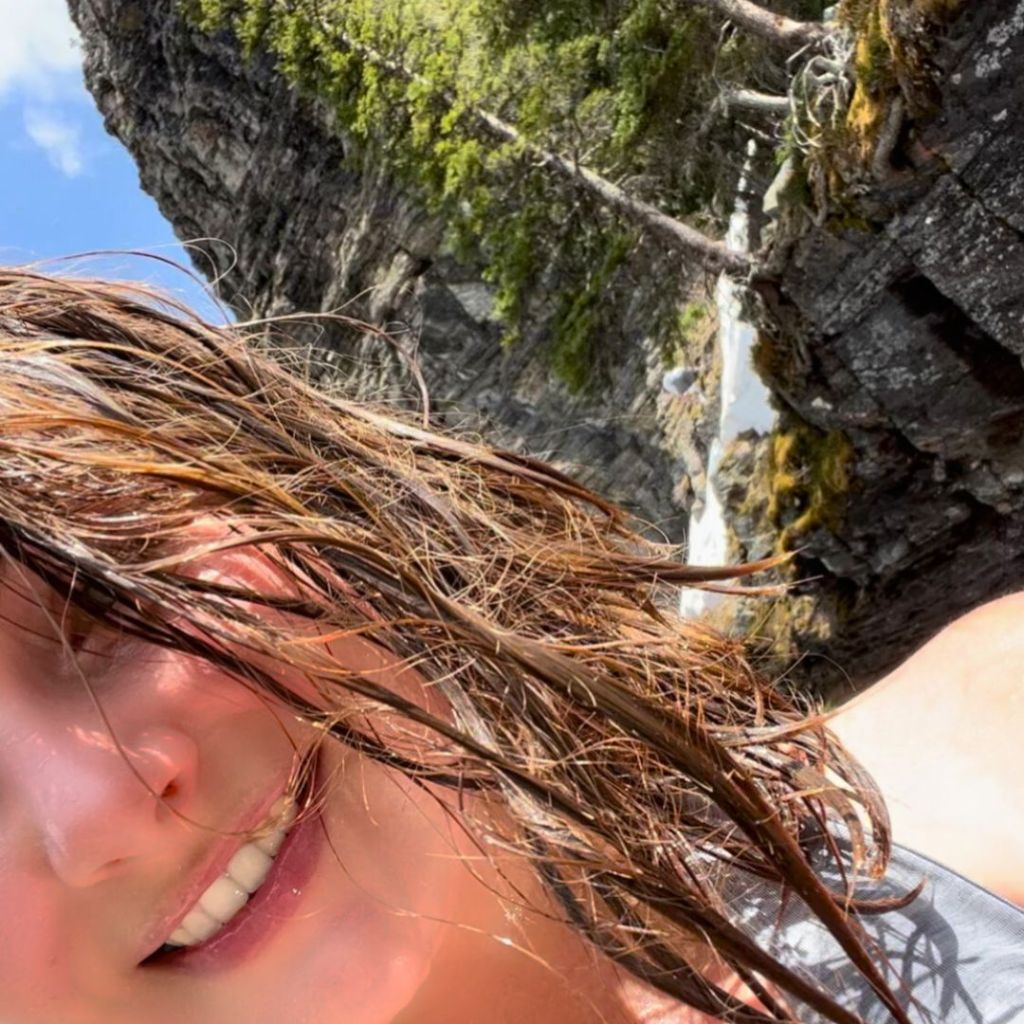
At the end of the day, I’d have changed the rating of this hike to Moderately Challenging as opposed to its current Difficult rating, but overall, this hike was worth every kilometre, and in the future, I’d definitely recommend doing an earlier hike when the teahouses are open!

Categories
Uncategorized

4 Tips for Effective Storytelling

It can be difficult to navigate the world of writing. There are no amount of books or articles or how-to’s that can show you everything you need to know about multimedia and digital storytelling.

It’s a learned experience for the most part.

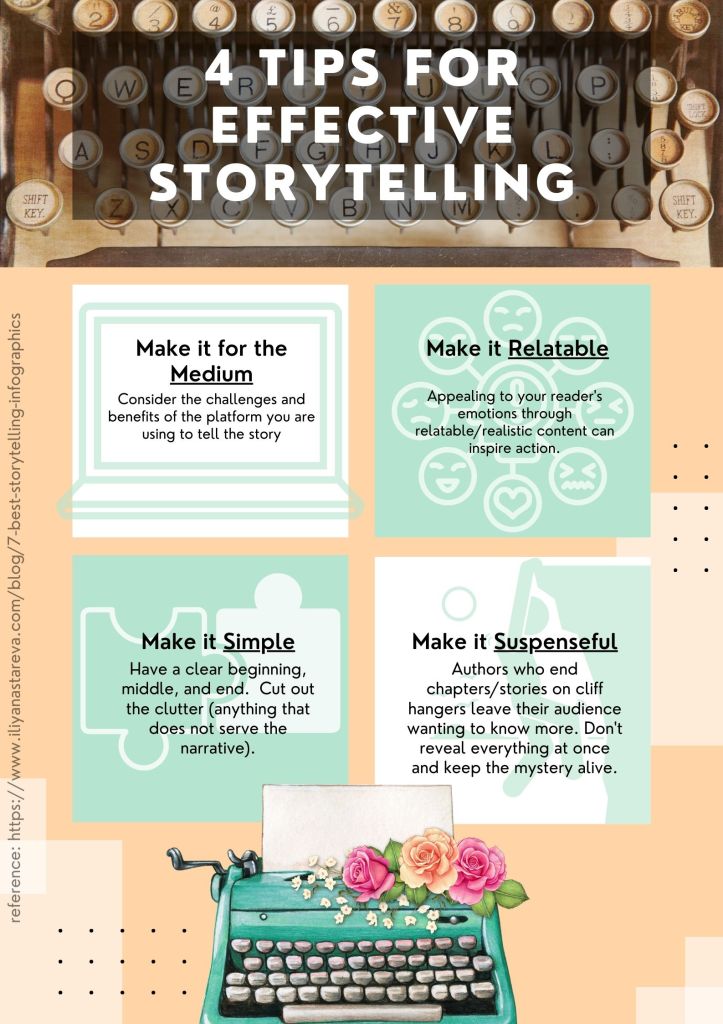
But there are certainly some tips and tricks to the trade. Check out my infographic below on some of my key components for effective storytelling (or keep reading for the sparksnotes)!

Make it for the Medium

How you write a blog article is going to be totally different than how you’ll write an Instagram caption or Tweet. Consider the challenges and opportunities of the platform you’re using!

Make it Relatable

Choose language that your audience is going to understand and appeal to common emotions of the aforementioned audience.

Make it Simple

On that note, cut out the clutter. If it doesn’t fit the story, then it’s not important. CUT IT.

Make it Suspenseful

There’s a reason why people who often say ‘1 more chapter’ -end up reading a few more than that. It’s because authors often end on cliff hangers, which leave the audience wanting more.

Got any other storytelling advice? Comment yours down below!

https://www.iliyanastareva.com/blog/7-best-storytelling-infographics (infographic reference)
Categories
Uncategorized

Lessons I Learned from my First Time Live-Tweeting

Let’s face it, this digital era of social media? It’s confusing. Or at least, I’m confused (and I am indeed a Gen Z kid). While I feel somewhat a master at all things Pinterest, Instagram, and Facebook, Twitter had always been an unknown territory to me.

I love to write. I have been creating stories of my own as soon as I could learn to read them. So when Twitter started to gain popularity among my group of friends, I struggled to fit the fad of the platform with the harsh word count and character restrictions.

Consequently, that’s also why I decided to take this course. I wanted to gain familiarity with platforms that I hadn’t become accustomed to, and overall, improve my storytelling skills across all mediums.

So here are some of the lessons I’ve learned from my first time live-tweeting an event:

  1. Provide more background context. My first tweet of the event dove right in to the action, which is a great attention getter and hook for short stories, chapters, and so on. A tweet? Maybe not so much. <blockquote class="twitter-tweet"><p lang="en" dir="ltr">It’s raining. They’re one player and team captain down. He’s subbing and has never met the team before… what could possibly go wrong? <a href="https://twitter.com/hashtag/EXSM3989?src=hash&amp;ref_src=twsrc%5Etfw">#EXSM3989</a> <a href="https://twitter.com/hashtag/soccer?src=hash&amp;ref_src=twsrc%5Etfw">#soccer</a> <a href="https://twitter.com/hashtag/football?src=hash&amp;ref_src=twsrc%5Etfw">#football</a></p>&mdash; Nic (@outdoorseffect) <a href="https://twitter.com/outdoorseffect/status/1680732607787720704?ref_src=twsrc%5Etfw">July 17, 2023</a></blockquote> <script async src="https://platform.twitter.com/widgets.js" charset="utf-8"></script> While I’m aware that I’m talking about my boyfriend, my audience may not, so a little more context there (or in that thread in general) definitely could have helped.
  2. Grab their attention, but be specific. I followed the initial tweet with some added context in a way which I felt may further hook the audience’s attention. <blockquote class="twitter-tweet"><p lang="en" dir="ltr">Did I mention he’s from Australia? And doesn’t have any of his equipment with him? No cleats, no shin pads, just a love for the game <a href="https://twitter.com/hashtag/EXSM3989?src=hash&amp;ref_src=twsrc%5Etfw">#EXSM3989</a> <a href="https://twitter.com/hashtag/soccer?src=hash&amp;ref_src=twsrc%5Etfw">#soccer</a> <a href="https://twitter.com/hashtag/live?src=hash&amp;ref_src=twsrc%5Etfw">#live</a></p>&mdash; Nic (@outdoorseffect) <a href="https://twitter.com/outdoorseffect/status/1680733023711686657?ref_src=twsrc%5Etfw">July 17, 2023</a></blockquote> <script async src="https://platform.twitter.com/widgets.js" charset="utf-8"></script>
  3. Stick to the basics of storytelling -how are you going to build your rising action? Just because you’re live-tweeting, doesn’t mean your thread can’t include a climax or rising action. I’ve created tension in my tweets but communicating the internal struggles of my main protagonist (my boyfriend) as well as celebrating his feats with my audience each time he (or his team) scored a goal. <blockquote class="twitter-tweet"><p lang="en" dir="ltr">CLEARLY IT DIDN’T MATTER! First five minutes in and he’s got the first goal of the game!!!! <a href="https://twitter.com/hashtag/gobilly?src=hash&amp;ref_src=twsrc%5Etfw">#gobilly</a> <a href="https://twitter.com/hashtag/soccer?src=hash&amp;ref_src=twsrc%5Etfw">#soccer</a> <a href="https://twitter.com/hashtag/EXSM3989?src=hash&amp;ref_src=twsrc%5Etfw">#EXSM3989</a></p>&mdash; Nic (@outdoorseffect) <a href="https://twitter.com/outdoorseffect/status/1680734471136636929?ref_src=twsrc%5Etfw">July 17, 2023</a></blockquote> <script async src="https://platform.twitter.com/widgets.js" charset="utf-8"></script>
  4. Remove the clutter. Just as concise diction helps clean up a story’s main message, a simple tweet (or thread) is better for the platform… And perhaps not every update on the event is necessary. <blockquote class="twitter-tweet"><p lang="en" dir="ltr">2-0 for team subs! <a href="https://twitter.com/hashtag/EXSM3989?src=hash&amp;ref_src=twsrc%5Etfw">#EXSM3989</a> <a href="https://twitter.com/hashtag/soccer?src=hash&amp;ref_src=twsrc%5Etfw">#soccer</a></p>&mdash; Nic (@outdoorseffect) <a href="https://twitter.com/outdoorseffect/status/1680736915782524928?ref_src=twsrc%5Etfw">July 17, 2023</a></blockquote> <script async src="https://platform.twitter.com/widgets.js" charset="utf-8"></script> (the tweet I probably could have foregone in my live-tweeting)
  5. Add in perspectives/emotion. In the live-tweeting of his game, I shared the confusions I experienced with the sport’s formalities, the goals scored by the other team, and even the brief shoving-match (kerfuffle) of players to entice emotion from my audience. <blockquote class="twitter-tweet"><p lang="en" dir="ltr">There was a kerfuffle, some shoving, and several shots aimed. Some.. scored? Honestly we were both very lost on what actually went in there… <a href="https://twitter.com/hashtag/EXSM3989?src=hash&amp;ref_src=twsrc%5Etfw">#EXSM3989</a> <a href="https://twitter.com/hashtag/soccersub?src=hash&amp;ref_src=twsrc%5Etfw">#soccersub</a></p>&mdash; Nic (@outdoorseffect) <a href="https://twitter.com/outdoorseffect/status/1680759465593937920?ref_src=twsrc%5Etfw">July 17, 2023</a></blockquote> <script async src="https://platform.twitter.com/widgets.js" charset="utf-8"></script>

Overall, my first time spectating for my boyfriend resulted in some hard lessons learned on using Twitter for updates.

It may not be my most favourite platform, but it certainly has a place amongst the other social mediums and absolutely requires a different skillset for storytelling than I am used to.

Also, thanks Billy for allowing me to use your game as my homework assignment!

Categories
Uncategorized

The Call of the Wild

“But especially he loved to run in the dim twilight of the summer midnights, listening to the subdued and sleepy murmurs of the forest, reading signs and sounds as a man may read a book, and seeking for the mysterious something that called—called, waking or sleeping, at all times, for him to come.”

London, Jack. The Call of the Wild.. New York, Macmillan, 1963.

And that call, was the call of the wild

Perhaps one of the best book-to-film adaptations in history, The Call of the Wild boasts an even better film production than its written counterpoint. With a medium that reveals the raw beauty of the Yukon and Alaskan wilderness, story adjustments from a gruesome ending to a wholesome character metamorphosis, and added visual effects to demonstrate the personification of Buck’s character, evoke feelings which truly can’t be compared to the original written by Jack London.

Don’t get me wrong, I’m a sucker for a good classic. I had originally read the book as I learned my Great Opa had read it to my Oma when she was a young girl who had freshly moved to Canada from Germany in order to learn English. Which, after reading the book myself, I now understand why her diction is so well-articulated if that was her first base for learning the language. The book was written in 1963, so as a Gen Z kid, I struggled a bit to understand the archaic diction and romantic language that seems to have dissipated from our everyday dictionaries.

I did my best to learn the world of Jack London and put myself in my Oma’s shoes, but there were parts of the story that just did not resonate with me. I had loved the overarching message of being called to the wilderness from a domesticated and civilized life, but the gruesome stories, animal violence, and inappropriate names for indigenous peoples had made me sick to my stomach (especially the anti-climactic ending, which resulted in several politically incorrect slurs).

So what exactly made the movie superior?

While the book shares the classic building blocks of a good story (i.e., contains a beginning, middle, and end), the film adaptation shares similar values to Pixar’s 22 rules of storytelling (despite it being under the production of 20th Century Fox studios) -which make it a great story. A few examples of these key components are as follows:

  • The story’s why had changed; rather than focusing on gruesome battles and messages of being consumed by the wild, the family-friendly movie had shifted its message towards finding your true purpose. Whether that purpose was as a friend in an unlikely situation (returning a musical relic to another character), the love that can be experienced in found-family (his unique dogsled team), or finding your true self within the confines of the wild.
  • They created more relatable characters. It’s difficult writing a book from the perspective of a dog when audiences jell more stories they can feel themselves a part of. Which is why the plot changes to having John Thornton and Pierrault’s characters more developed with further heart-wrenching backstories, not only has us rooting for their successes, but also in tears upon their downfalls.
  • And finally, they created memorable scenes which the audience remembers long after having seen the film. A few that come to my mind is the peace I felt as John and Buck resided in that old trapper’s cabin beside that glacial run-off creek; the sadness I felt when seeing John life being torn from him, with Buck nuzzling him at his side until his very last breath; the inner consciousness of Buck, which exposed itself as a black wolf in the wilderness, calling him to choose his path in life (the one certainly less travelled).

It was a movie that not only spoke to my wild side, but a film that inspired me to take action

From gut-wrenching pain at the loss of my favourite characters, to tears of joy for Buck’s several found-families, The Call of the Wild, remains to be my comfort movie still to this day. It’s one with personal ties to my family, from my Oma’s language learning journey, to my father’s Alaskan expedition along the Chilkoot Trail (which was featured in the movie, further inspiring me to do the expedition myself)! Each step of the way, I had felt immensely for a creature of CGI because it’s story stands greater than its visuals -which were awe-inspiring to begin with.

Design a site like this with WordPress.com
Get started