Categories
Uncategorized

Decorating for Christmas: An Evolution

Decorating for Christmas. It’s a time of year and activity that so many cherish and look forward to. Taking a Sunday afternoon family drive to the local Christmas tree farm, pulling the decorations down from the attic, and sipping eggnog while perfectly placing the ornaments on the brightly lit tree. By now you’re probably picturing a scene from a movie or pulling from your own fond memories. But what may come as joy and warmth for some, doesn’t resonate with everyone. Somewhere out there, is a child, teen or adult for whom this time of year doesn’t bring immense delight and cheer. One of those adults is me – or at least it used to be. 

Now, I won’t let you jump to conclusions and paint my childhood Christmases with a completely terrible brush. So let’s start from the beginning. Every year my Jewish-raised mother forced my Scrooge-like father to climb into the attic and drag out the tree and boxes of garland, beads, and ornaments. My mother and I would stand holding the ladder as dust and who knows what else fell on our heads as my father would curse that he couldn’t believe it was that time of year again already. The minute he climbed down, Mum and I were on our own—he wanted no part of what was to come next.  We were never really sure why he hated Christmas, or claimed to—a family mystery that’s yet to be solved. Now, he had his own way of enjoying the season, primarily through music. Each night through the month of December he would put on his favourite Christmas album to accompany dinner; sounds I can still hear when I close my eyes. 

So there my mother would stand in front of the large bay window, fussing and fluffing the artificial tree and cursing under her breath as she painfully strung the lights. In those moments I learned a valuable life lesson: buy a pre-lit tree. Then came the ribbon, followed by the ornaments, where I came in to assist. Every year I watched my mother struggle and sweat to do something for her child and thankless husband after she’d worked all day, commuted home, and cooked dinner. As an adult, I now understand how valuable those evenings are and how much work was put into making the house Christmas ready when all she wanted to do was sit and breathe. Hours later my father would emerge from the basement, nod and say “oh, you did it like that this year,” or if he was in a good mood, a simple, “looks good.”

Decorating my childhood Christmas tree.

They’re vivid memories that fill me with stress and anxiety and just a hint of happiness. The weeks leading up to Christmas Day were filled with more Scrooge-like tendencies from my father and my mother working so hard to make happy memories. I’d wait to open presents on Christmas morning until my father got home from work, then find my mother crying in the kitchen as she slaved over the turkey and inevitably cooked 10 pounds of potatoes unnecessarily. Unable to read a room, my father would then call the turkey “dry” followed instantly by my mother chucking a dinner roll at his head. Now, it wasn’t all horrible. (In fact, you may even laugh, because by the food fight, I was). There were happy memories, laughs, and fondness when I look back on those times. It just wasn’t how Hallmark portrayed it. And maybe Hallmark is who I should blame for my Christmas traditions not living up to the idyllic imagery they adorned.

But what happens when you meet your future husband who was raised in an over-the-top Christmas loving, Hallmark-infested household? You choke all those feelings of dread, anxiety, and disappointment down. Far down. And you pretend to love it for as long as you can.  You watch his parents be infantilized by the holiday season, trimming not one, but two trees. You watch painfully terrible Christmas movies with them like National Lampoon’s Christmas Vacation that apparently every child but you grew up watching, and you throw yourself into the family gingerbread house decorating contest. Exhausting is one way to put it. Pretending to be someone you’re not, is another. And then comes the day that you admit that while you’re very happy for them and their traditions, Christmas just isn’t very much your thing. And you watch their faces glaze over with horror and confusion. 

And that might be the hardest part of it all frankly. When others are so mesmerized by the allure of Christmas that they can’t possibly fathom someone not being filled with utter glee and amazement during the most joyous time of the year. In fact, my story is just the tip of the iceberg for many who struggle with the holiday season, and for reasons much more detrimental than mine. Some have struggled with losing loved ones around the holidays, faced financial peril and stress over making the holiday season special, or endured abusive households at the hand of increased holiday-stress. But before this gets too dark, let me tell you about the other side to my Christmas-loathing coin. A side where I started to find balance.

As my husband and I merged our lives and consequently our holiday traditions, I’ve tried to err on the side of softness when it comes to Christmas. I try not to let the idea of decorating for Christmas fill me with stress and anxiety, and he doesn’t force me to play the role of Mrs. Claus that I was never destined for. He respects my no-decorating until the first of December boundary and I do my best to get into the Christmas spirit when we drag the tree up from the basement. Luckily, I’ve used my love for interior design and home decorating as the positive light in my adult Christmas journey. I’ve found joy in sourcing beautiful Christmas decor, styling shelves with bottle brush trees, pinecones, and tiny Christmas houses. I carefully hang the garland on the mantle above the fireplace and begin to trim the tree. Naturally, I suffer from Perfect Ornament Placement Disorder, sometimes referred to as P.O.P.D., but I’d like to think my husband finds it endearing when I fix every Christmas ball he’s placed on the tree. In fact, this year, I went WAY out of my comfort zone and placed some unconventional ornaments on my tree! Check them out here.

Our Christmas tree today

Christmas morning is no-longer filled with waiting and deciding it will be a disappointment before it’s even begun. We make homemade pizza on Christmas Eve and cinnamon buns for Christmas breakfast like his family did, while adding in mimosas (hold the orange juice!) and bagels and lox like mine. At the end of the day,  I’ve grown to realize Christmas is now about creating our own traditions. Traditions for the family that I’ve chosen and for my children to come. Despite some of the challenges my childhood Christmases encountered, and the unsettling feelings I still carry, I’m grateful for my experiences and the good memories I do have. I know to respect those who find that this time of year brings pain, stress, and guilt, and have learned to set boundaries and dabble in a little compromise. 

Check out some behind the scenes thoughts and photos from when we decorated our house for Christmas this year! Are you a pre-December first decorator, or a one-month and done person, like me!

Categories
Uncategorized

Acing Data Storytelling

Good data storytelling isn’t just piecing together a few charts and numbers, it requires several ingredients, according to Katy French. Through data storytelling, you can make better decisions, create effective content that connects with the right people, and improve your content marketing operation overall.

The right ingredients

I’ve always been fascinated by those who could present data and numbers in an appealing, compelling, and easy to understand manner. As French explains in her article “Why Data Storytelling is Marketing Gold for Your Brand,” the “ingredient” list to achieving good data storytelling, and as my infographic portrays, must include:

  1. Good data
  2. Synthesis
  3. Narrative
  4. Data visualization

Numbers have an important story to tell. They rely on your to give them a clear and convincing voice.”

Stephen Few, data visualization expert

Helping your brand

Data storytelling can be used in several different ways and can help marketers gain unique insights and communicate effectively. Numbers can tell a lot about a company, but finding an engaging way to put them into a narrative for your audience, clients, or competitors is key. Data storytelling can help your brand for several reasons: it’s credible, engaging, versatile, and can make your message stick with an audience. When presented well, audiences may discern and drawn conclusions through data storytelling easier or quicker than they would from reading a 800-word report, for instance.

Telling a great story with data

French explains that good data storytelling is about blending two worlds: hard data and human connection. As point three in the infographic explains, finding a compelling narrative to translate your data into is key and helps bring that human element into your story. Just like a story with words your data needs to have a clear beginning, middle, and end.

Lastly, here are the four tips to ace data storytelling:

  1. Source credible data.
  2. Find the story.
  3. Craft an interesting, engaging, and enlightening narrative.
  4. Design data according to best practices.

Categories
Uncategorized

A Day in the Life of Brooklyn

For my live-tweet I chose to showcase a day in the life of my dog, Brooklyn — because why not? As we learned from Paris Zarcilla’s viral tweet thread “I just found a cat that is not mine and it has had babies under my bed,” readers love pet content.  And a major takeaway from Kristin Tynskni’s article “Beyond Buzzfeed’s Juicy Headlines: Article Types and Themes that Earn Outstanding Shares and Insanely Valuable Links,” was that Pets/Animal content fared well in terms of social sharing.

Brooklyn’s day begins like any other day, with a rude wake up call from me. Then follows a morning walk and breakfast before she settles in for her big day of, well, sleeping. There’s a lot of sleeping frankly, then an afternoon walk, followed by the anticipation of Dad coming home, before finishing her jam-packed day. 

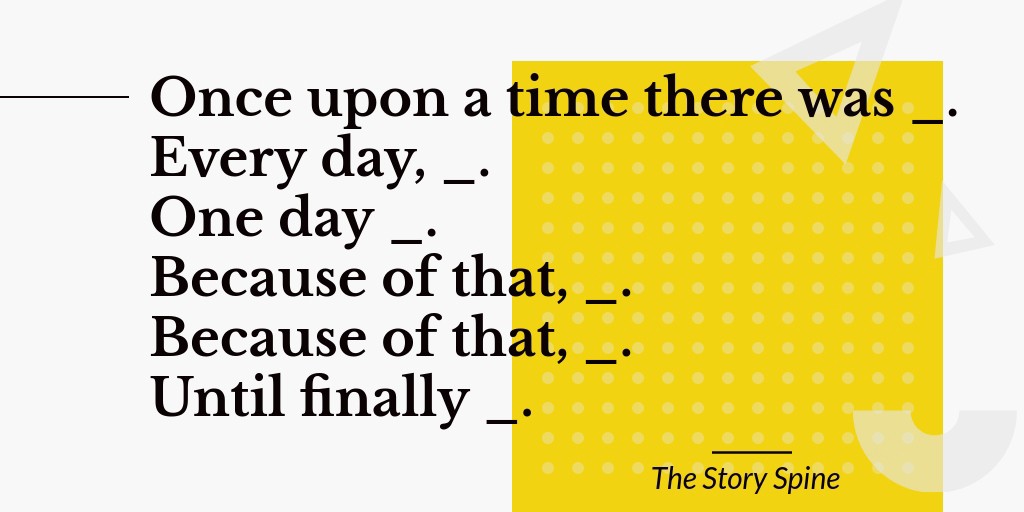
The story spine

While my story has a beginning (waking up), middle (lots of napping), and end (Dad coming home), following a “proper” storytelling structure is much harder to do when your story isn’t pre-planned. However, if we apply the story spine more loosely, her day goes a little something like this:

Once upon a time, Brooklyn begins another day by being rudely woken up by her parents.

Everyday, she is hugely unimpressed with this inconvenience.

Because of that, she continues to sleep all day.

Until finally, her Dad is home and she is happy to have her family reunited.

And, ever since then, all is right in the world and she stayed awake (well, for the rest of the evening!)

Storytelling principles for social media

While live-tweeting Brooklyn’s day I attempted to keep storytelling principles in mind, particularly those that work well for social media — I took a lot of my inspiration from how Paris Zarcilla told his story, too. Ultimately, I attempted to incorporate the following elements from this week’s learnings into my story:

  • Write the way you talk: As someone who writes for professional audiences for a living, I found it challenging to write simply, and “less professionally” per se. I worked really hard to keep in mind my tone and choice of language, as Eric Goldschein explains in his article. I used slang that we use in our household daily, like “walkies” and “scritches.” I also wrote sarcastically, because I’m often a very sarcastic person. 
  • Maintain suspense: As we learned from Gary Vaynerchuk, “to tell a great story, the number one thing you have to do is evoke a reaction.” A reaction can often come from creating suspense, which I integrated into several of my tweets, including the very first one where I build suspense on what my tweet thread is going to be about. I carry this trend throughout the day when I tell readers to “stay tuned” for what’s next, followed by “losing” Brooklyn around lunchtime.
  • Style choices: I often used all caps throughout my live-tweet to convey emotion, primarily excitement, to put emphasis on a particular word,  or to showcase something from Brooklyn’s perspective. 
  • Add visual elements: I incorporated a photo, article or GIF into 18 of my 25 tweets because adding a visual element is more engaging for readers as we’ve learned we are more visual by nature. Plus, the more cute dog photos the better, right?

Document. Don’t create.

Lastly, my live tweet of Brooklyn’s day achieved Gary Vaynerchuk’s idea of “Document. Don’t create.” I simply told the Twitter-world what was happening in Brooklyn’s day. I did not create something out of nothing, or force her day to appear more exciting than a typical one is. This also helped me to feel less pressure as I was telling the story. As a result, I believe my story was more natural and authentic. It didn’t try to be something it wasn’t. 

Categories
Uncategorized

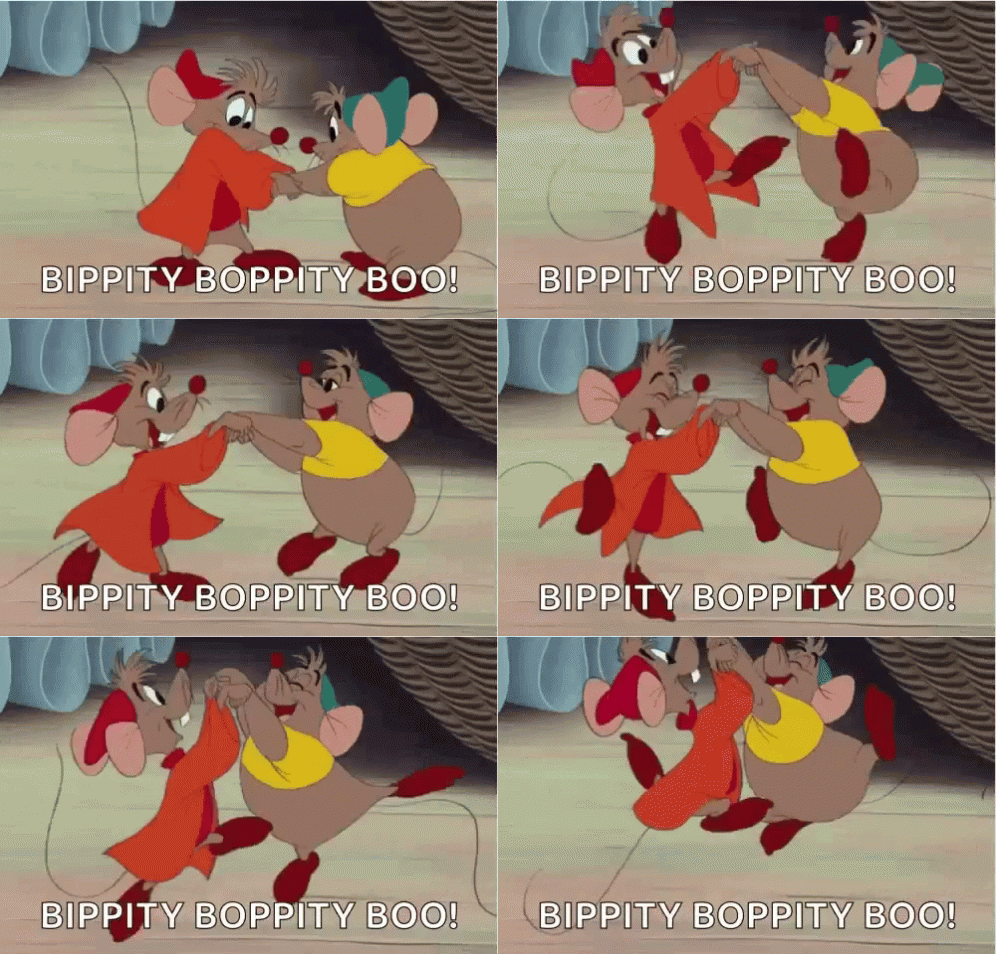
Cinderella

Like many children over the past few decades, I grew up with a catalogue of Disney VHS tapes lining my family’s basement bookshelf. I don’t remember exactly how old I was when I pulled Cinderella off the shelf, but no one was stopping this nearly-black haired grade one student from dressing up as her favourite Disney princess for the school Halloween parade.

Source: Disney

The Cinderella that most of us have come to know was brought to life on the big screen by Walt Disney in 1950, but the folk tale is told in thousands of variants around the world. In fact, the earliest known version of the Cinderella story dates back to ancient Greece sometime between 7 BC and 23 AD with the story of Rhodopis.

To me, Cinderella extends far beyond the girl loves princesses stereotype, but rather brings about one of my fondest memories, with my favourite person. As a child, whenever my Gran came to visit, she would sit at the end of my bed and recite Cinderella to help me fall asleep. Much like The Very Hungry Caterpillar to Ashley Fell, Cinderella evokes emotion in me, and is therefore my first favourite story. I often thought of my Gran as my fairy godmother, and that I was Cinderella when I spent time with my older cousins who were two sisters that by default, picked on me. So while I didn’t come from rags, or evil stepmothers, as a child I still found a way to connect with the story.

Source: Tenor

Disney: Pixar before Pixar

Disney followed a formula long before Pixar, and Cinderella is no exception. The story adheres to Pixar’s four storytelling principles:

  1. Great stories are universal. Cinderella is recounted in hundreds of countries around the world in many languages, and has been reimagined in several remakes over the past 70 years. From the love story to the troublesome family, to the friends cheering her on, everyone can find some element of Cinderella’s story relatable. 
  2. Good stories have a clear structure and purpose. As with many fairy tales, Cinderella follows the story spine as imagined by Kenn Adams. It has a clear structure beginning quite literally with “once upon a time.” More on this later.
  3. Good stories are simple. They are focused.  At the core of Cinderella is a story about acceptance, love, and kindness. 
  4. Good stories give you a character to root for. Every viewer is rooting for Cinderella to escape her wicked stepmother and stepsisters and win the Prince’s heart. 
Source: Tenor

The story spine

When told via the story spine, Cinderella goes a little something like this:

Once upon a time, a young girl named Cinderella lived with her evil stepmother and stepsisters and was forced to work all day looking after them and the house. 

Everyday, she woke early to cook the meals, scrub the floors, and stoke the fire, all while enduring ridicule from her family members.

But one day, the King and Queen decide to host a ball to find the Prince his Queen, and invite all the young ladies in the land.

Because of that, with the help of her Fairy Godmother, animal friends, and a little magic, Cinderella goes to the ball in the most beautiful gown and glass slippers. 

Because of that, when the clock strikes midnight, Cinderella will turn back into a normal girl. After dancing with the Prince, the clock ticks near and she rushes out of the ball leaving behind one glass slipper. 

Because of that, the Prince searches the land for the foot that fits the glass slipper, belonging to his one true love. 

Until finally, the Prince arrives at Cinderella’ home only to discover that her foot fits perfectly into the glass slipper.

And, ever since then, Cinderella married the Prince and lived happily ever after.

Design a site like this with WordPress.com
Get started