Categories
Uncategorized

How COVID Made the World More Accessible

For two years, people across the world have navigated the COVID-19 pandemic and the new reality that it brought. While the restrictions implemented because of the pandemic have provided unique stressors and negative implications for the way individuals navigate day-today life – our society’s transition to utilizing online resources for daily activities has provided some with the tools they have been asking – or quite frankly begging – for.

As COVID has impacted the public’s access to almost all facets of day-to-day life, the shift towards accessibility has shed light on the importance of inclusion; and how Canada’s pre-COVID routines have negatively impacted the disabled community for years.

The Reality

While we can view the changes made towards more accessible and inclusive communities as a ‘win’ – the reality is that COVID-19 has highlighted the gaps in equitable situations for people with disabilities, and that really has to change.

Since March 2020, society as seen a significant shift – with a significant increase in resources available to support accessibility. These solutions are a result of organizations, public services and independent businesses looking to meet their audience where they are – something the disability community has been advocating for for years.

Globally, over 1 billion people live with some form of disability – yet it took a pandemic to implement real change to address the challenges these individuals face.

Now that non-disabled people are experiencing, for the first time, how it feels to have external barriers, countries around the world have finally put policies and practices in place to make public spaces, workplaces and other aspects of society more accessible; however, this doesn’t mean all is well that ends well.

What’s Next?

Are there other ways the world could become more accessible? The answer is yes. We don’t have to have all the answers now but engaging those who have experiences external barriers their whole life is a start.

If we have learned anything through this pandemic, its that human connection means a lot to a lot of people. Let’s continue with that human connection, by inviting everyone to the table and starting the discussion about what we can do better.

Variety – The Children’s Charity of Alberta (Variety Alberta) supports children who are facing physical, developmental, emotional, or learning challenges through education, advocacy, direct support and community outreach. Variety Alberta, and its clientele, have firsthand experience in attempting to break down barriers, and have seen the incredible changes possible when the world needs accessible services.

The pandemic had shed light on a very real issue and has started the conversation. It is our role, as humans, neighbours, friends and families of those living with disabilities to a conscious effort to continue the conversation, engage with those who are directly impacted, and make changes to positively impact our communities.
Categories
Uncategorized

Keeping The 5W’s In Mind

Keeping The 5W’s In Mind

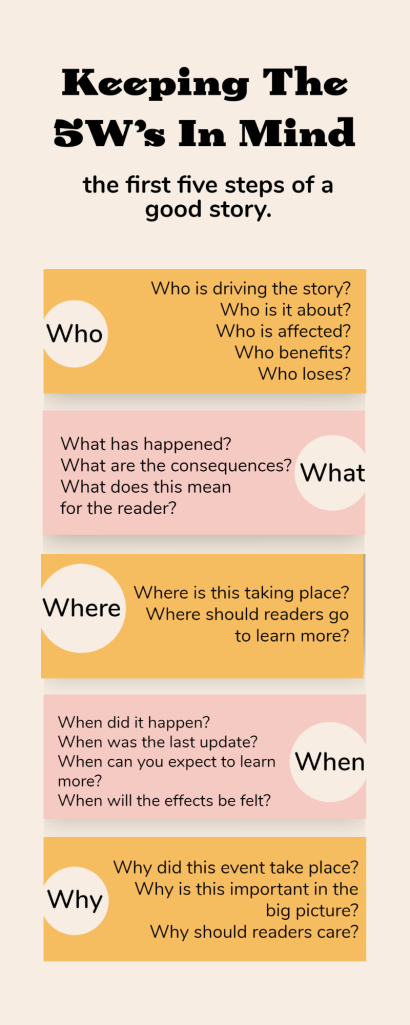
We’ve all heard of the 5W’s (and one H) tin various capacities – whether it’s for a communications strategy, projects team development or even related to an investigation. However, the classic “5 W’s” can be considered the basics for any good story development.

Starting at the route of any good story – the who, what, where, when, why (and bonus, “how”) are the starting point from which any good story is developed. Understanding these five core concepts of a story ensures consistency, clarify and transparency in storytelling.

The following infographic provides a quick overview of things to consider before starting a story, and a basis from which to develop a storyline.

Categories
Uncategorized

Where this fairytale ends, a revenge thriller begins.

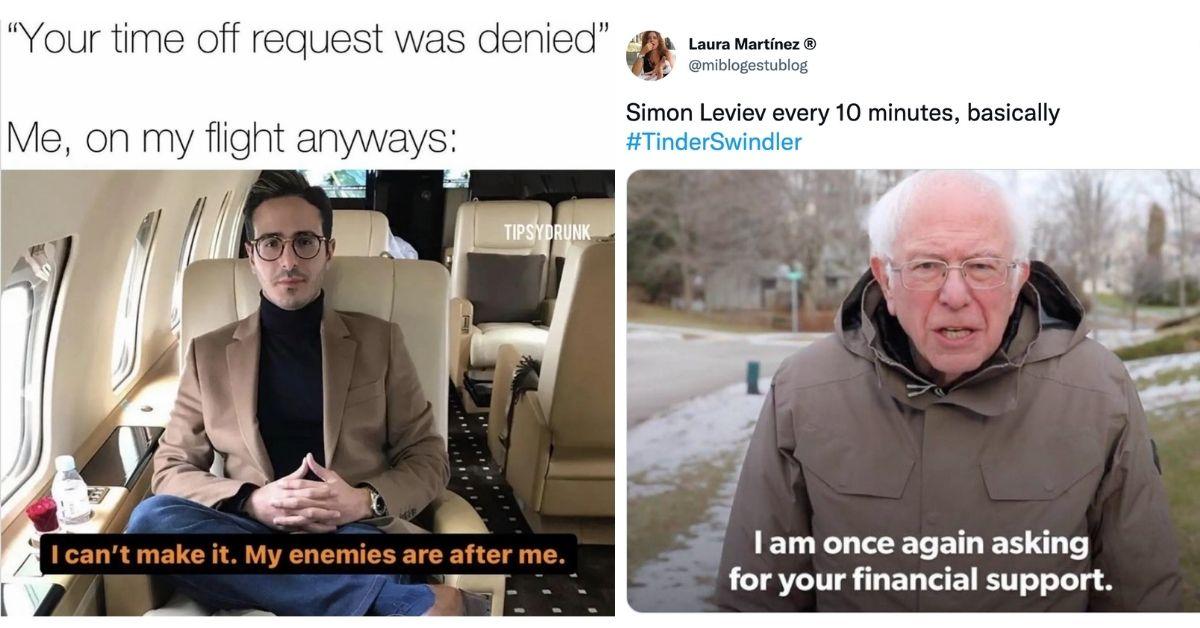
By now, I’m sure you have all heard about – or at least seen the memes – of the infamous Tinder Swindler. The Netflix original documentary shares the story of a group of women who were the victims of a dating app-based swindler posing as a wealthy, jet-setting diamond mogul.

The story left me with a mix of emotions, shock, awe, frustration, humour – all mixed in a one-hour and 54-minute documentary. The story left me with a mix of emotions, shock, awe, frustration, humour – all mixed in a one hour and 54-minute documentary. While the story continues to unfold in front of our eyes, with the story’s villain, Simon Leviev, claiming his innocence, the documentary combines true crime and a familiar dating app to portray an all too relatable story.

From the beginning, readers are attracted to the romance, mystery, and relatability of a modern-day love story. Referencing The 8-Point Story Arc, the Twitter thread’s statis provides a familiar landscape that readers can identify – swiping on Tinder; a setting that over 75 million monthly active Tinder users can relate to.

As noted in Nick Reese’s article, How to use storytelling to craft better Tweetsthe almost two-hour documentary is now into digestible chunks by breaking the storyline down into a twitter thread. 

Following topics conveyed in Victoria Smith’s Ted-Ed video How to make your writing suspenseful, the Twitter thread follows the documentary’s cliff hanger ending – suggesting that the story is not over yet and encouraging the readers to want to learn more.

Categories
Uncategorized

But who looks out for the Quarterback?

There is nothing quite like a life-struggle chronicle based on a true story to pull at the heartstrings. Detailing the trials and tribulations of Michael Oher, The Blind Side depicts a story of a teenage boy from impoverished circumstances in Memphis, Tennessee, to NFL stardom as an offensive with the Baltimore Ravens.

“Don’t worry, I got your back.”

Michael Oher

The story provides a strong protagonist, who viewers empathize with from the get-go. Michael Oher walks through the inner-city housing where he grew up, aptly named “Hurt Village,” backed by an opening monologue from Leigh Anne Tuohy (Sandra Bullock), foreshadowing the impact a “Left Tackle” will have on her life. The opening scene alone appeals to two of PIXAR’s principles – have a character to root for (an underdog) and appeal to an audience’s deepest emotions.

As the story progresses and Michael is introduced into the Tuohy family. Viewers are captivated by the contrast of the uncommunicative teenage boy to that of Leigh Anne Tuohy, the strong-willed and dedicated matriarch of the Tuohy family. As the movie’s plotline progresses, viewers unravel the dynamic relationship between Michael and the Tuohy family while seeing glimpses of his past and upbringing. While the topic is not an easy one to digest, the portrayal of Michael’s story is simple and has a clear structure.

At the climax, The Blind Side evokes the surprising and unexpected PIXAR principle, depicting the actions of Leigh Anne Tuohy as somewhat underhanded when she is questioned as to her true intentions of caring for and supporting Michael on his journey to the NFL.

Following the climax of the movie, Ashley Fell’s four I’s – Interest, Instruct, Involve and Inspire – can be seen. While the story sparks interest; the true intrigue stems from the moral dilemma presented when the Tuohy family’s seemingly selfless and loving actions are viewed as profit motivated; hoping to ensure their alma mater, Ole Miss, secures the best collegiate football players. This pivot in the storyline instructs viewers to consider alternative pre-conceptions of the Tuohy family. As the story continues and follows Michael back to Hurt Village, viewers, who have grown to love and care for Michael, are now concerned for his well-being and rooting for his safety.

As this story is based on true events, the alignment of the events with the elements of great storytelling could be considered more complex than traditional storytelling – as the story had to ring true to the events of individuals and respect their experiences. Alison Macadam’s Beyond the 5 W’s: What should you ask before starting a story? provides a great basis for understanding if, and how, a story should be told – and how to ensure the story conveys what it is intended to.

  • What is my story’s driving question?

In a simple sense, for all characters, the driving question is “Why you should never judge a book by its cover.” While Michael Oher is a shining example of this – all characters within the movie depict unique characteristics of stereotypes.

  • What is the story not about?

Football. While Michael Oher is known now for his impressive football career, this story focuses on Oher facing adversity, overcoming challenges, and inspiring the people around him.

  • How will I ensure my story is fair to the people and ideas it represents?

The balance between true events and an exciting narrative is nuanced. While some of the characters attributes may be extenuated, ultimately, the storytellers stayed true to the story of Michael Oher, making it that much more relatable to a wider audience.

  • How will I engage my audience — and hold them?

Throughout the story, the slow and steady release of information relating to Oher’s backstory demonstrates the storyteller’s ability to know what intrigues an audience. It was less about what they know, but what they don’t know is what holds the audience’s attention in this story.

  • What are my dream ingredients?

Oher’s courage and resilience driving him to pursue a dream – the typical American Dream. Michael’s story contained sentiments of a harsh reality mixed with humor and feel-good family moments, the dream recipe.

  • What will the audience remember when it’s over?  

The ending of this movie depicts inspiration – a true rags to riches story that is dependent on things the everyday person can provide – kindness and humanity.

Design a site like this with WordPress.com
Get started