
Categories
Uncategorized

Jeju Island: A quick guide for expat explorers

FILEPHOTO: Hills Views & Valleys

When I first arrived in South Korea to work as an ESL teacher, I received many recommendations on how to fill my free time and where to go. Many expats around me highly recommended checking out Jeju-do, or Jeju Island.

Also known as the “Island of the Gods,” Jeju is Korea’s largest island and hugely popular with tourists, both local and foreign.

Although this is just a snapshot of what Jeju is like and has to offer, keep reading for some quick travel tips to help you decide whether or not to put Jeju on your bucket list!

FILEPHOTO: Korea Travel Post

Best time to visit

Jeju is great any time of the year, really. As with many touristy destinations, summer is always considered peak season. The weather is great and kids are on school vacation. My personal favourite season in Jeju is early spring, when the weather is still mild and travel prices are lower.

Getting around

Although there are bus tours you can join and public transportation available, renting a car is very affordable and easy to do on the island. If you decide to do this, remember to get your international driver’s license. I recommend this method of travel because the island is so big and attractions can be far apart from each other, as well as further away from the cities. If you aren’t going to include a GPS navigation system as part of your car rental, be sure to have the Naver Maps app available on your phone. Naver Maps is the Korean version of Google Maps and way more accurate. Don’t worry though, they have an English-language version that you can download.

Places to stay

Like any popular destination, there are plenty of hotels to choose from for your stay. However, if you’d prefer a more affordable and authentic experience with a local feel, I recommend hostels. Before you start turning your nose up at my option, hear me out. If you’re an expat, you’re not getting paid the big bucks in Korea. Hostels in Korea are also cleaner and more comfortable than your stereotypical image of a hostel in say, Europe. In fact, all my hostel experiences in Korea to date have always made me feel at home, giving me great sleep at night and tasty breakfasts each morning before I head out exploring for the day. Definitely give hostels a chance if you’re travelling around Korea!

What to eat

Surrounded by great weather and nature, farming and fishing are very common lifestyles, depending on the villages that you visit. As a result, you can get some pretty tasty and fresh products and dishes during your stay.
FILEPHOTO: My Travel Buzzg
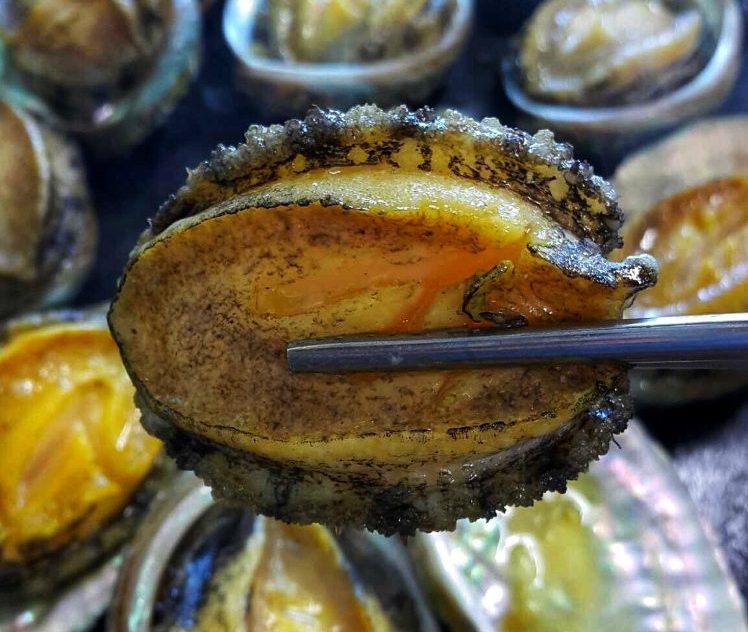
  • Abalone: Fresh abalone is top notch here. Island female divers, also known as haenyeo, dive 10 to 20 metres under the sea, without the aid of oxygen masks, to harvest a variety of shellfish. Their collection consists of abalone, octopus, conch, etc. Pretty impressive, right? Abalone is served in a bunch of ways, including abalone porridge, grilled abalone, and abalone sashimi.
FILEPHOTO: Our Korean Story WordPress
  • Black pork: Black pigs are only available on the island, as evident by the many organic pig farms that dot the landscape. Black pork is best served via barbeque on hot charcoal, accompanied by a special dipping sauce. If you’re a carnivore, this is the dish for you.
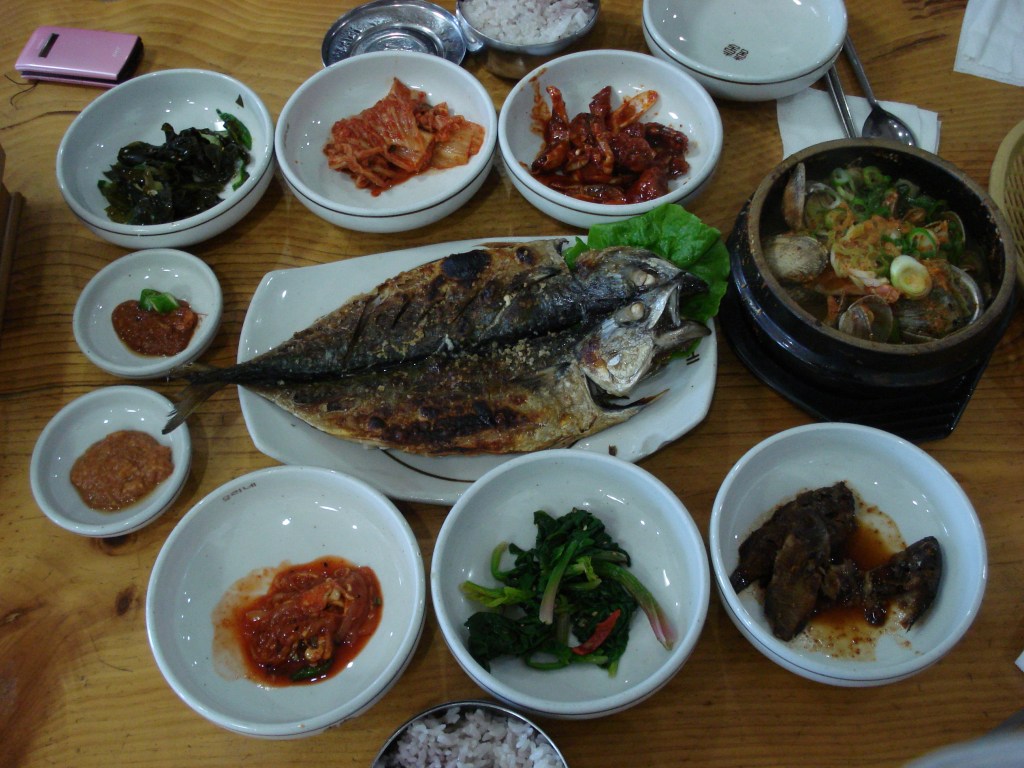
  • Grilled mackerel: In addition to harvesting shellfish from the sea, fishing is popular pastime and way of life here. Mackerel is in huge abundance and when grilled and served with side dishes and rice, it’s heaven.
  • Oranges: Hallabong is a Korean tangerine and native to Jeju Island. Easily recognizable from its top protruding stem, this fruit is super juicy and sweet. Aside from eating it fresh, its flavour is frequently infused into chocolates, tea, and desserts around the island.

What to see and do

Being an island definitely comes with its scenic perks. Whether you’re a nature lover or museum explorer, there’s something for everyone here. Here are just a few of my favourite examples!

Nature lovers

FILEPHOTO: Expatolife
  • Mount Halla, or Halla-san, is Jeju’s most famous landmark and South Korea’s highest peak. There are a multitude of trails to choose from, ranging from quick jaunts to all-day treks. You can walk around the base of the mountain or make your way to the top.
FILEPHOTO: Jeju Olle Trail Guide
  • Coastal trails, also known as Olle trails, stretch alongside the island’s coast if you’re looking for more views of the sea, rather than forest.
  • Seongsan Ilchubong: Also known as “Sunrise Peak,” this volcano is a UNESCO World Natural Heritage site and a popular climb to view the sunrise. The aforementioned haenyeo (female divers) can also be spotted performing here throughout the day.
FILEPHOTO: Visit Jeju
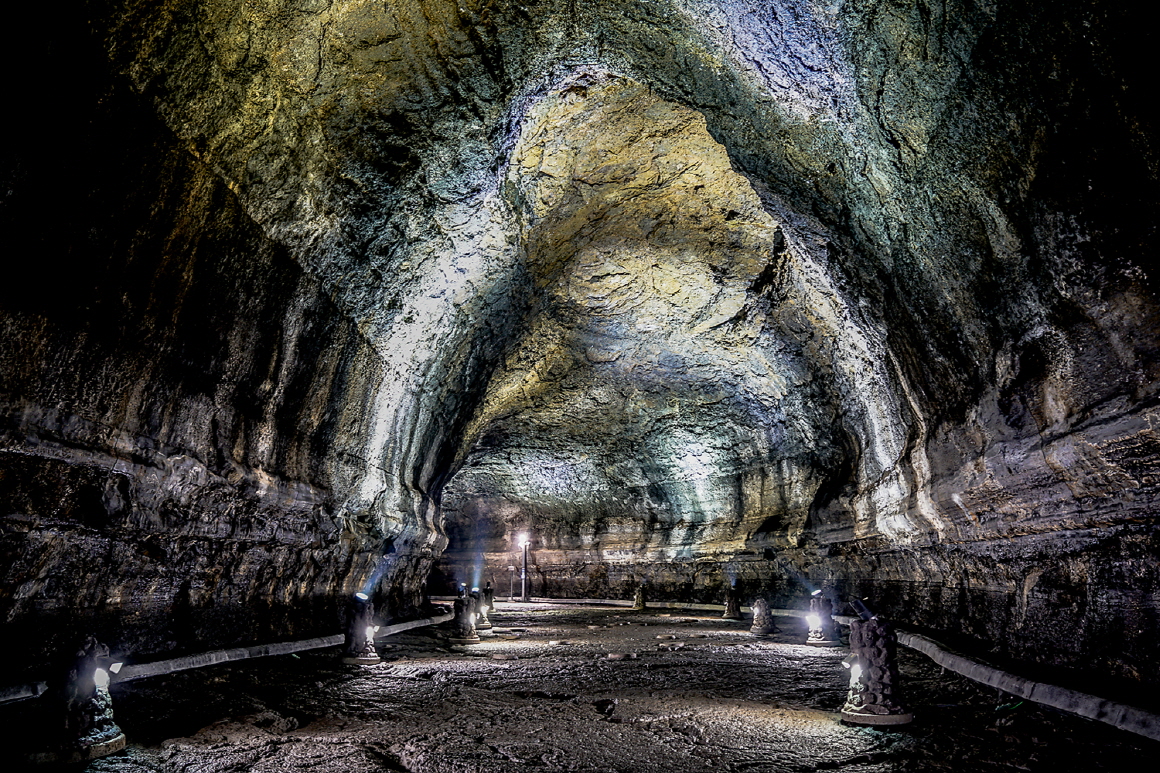
  • Manjanggul Lava-tube: Another UNESCO World Natural Heritage site, these lava tubes are accessible via entry to a cave. Once inside, you can check out stalactites, stalagmites, and other cave-worthy formations.

Museum explorers

FILEPHOTO: Visit Korea
  • O’Sulloc Tea Museum: If green tea is your bag, then you need to check this out. It’s a pretty Instagrammable spot where visitors can walk amongst the actual plantations of green tea. Once you’ve frolicked to the max, head inside the museum learn more about their production line, as well as shop their souvenir shop and sample desserts from their teahouse.
FILEPHOTO: Korea Track
  • Jeju 4.3 Peace Park: On a more somber note, visit this memorial park and museum to read about the Jeju uprising, which occurred from April 1948 to May 1949 and was noted for its extreme violence, leading to the death of 14,000 to 30,000 people killed.  

I hope this blog post has given you a good snapshot of what Jeju Island has to offer. Check out my other blog posts for other places I’ve visited in South Korea!

Now, get packing!


Check out my other travel posts on Twitter (@JSummer8824) and Instagram (jsummer88).

Categories
Uncategorized

Originally original

Origin stories are all the rage these days.

From Wolverine and Batman to more realistic individuals like Jackie Robinson and King George VI, you can find their stories in books, film, and throughout the world wide web. Not everyone’s origin story is interesting though.

If you want to capture a reader’s attention and not lose it along the journey, Carmine Gallo says you need four basic elements in order to execute a good story: structure, characters, conflict, and resolution.

  • A story’s structure absolutely impacts how the plot develops and how its main points are introduced to the reader.
  • Writing in characters that readers connect with will result in a greater chance that any message you’re trying to send will be received.
  • Objectives and obstacles lead to more exciting plot lines, further holding a reader’s attention span.
  • When the story ends, bring some closure along with it. Providing relief or inspiration will make readers feel like the journey is complete.

And there you have it. Craft these four basic elements carefully and thoroughly and the origin story will write itself!

Categories
Uncategorized

Uncool, Dad.

I chose to tweet about a childhood memory that’s never really been forgotten. A classic 90’s Dad move where he decided to leave some of his kids in the car to run a “quick” errand, because he thought it’d be too much work to bring them along.

A POV story from my five-year-old self, the memory evokes the fear and panic I felt on that day. It turns out that my Dad had only been gone for less than 10 minutes. However, in the heat of the moment, stuck in a car with a crying kid, it felt like we’d been abandoned for hours.

Out of all of Module 2’s readings, I felt the most connected to the Eight Point Arc:

  • Stasis: Teresa and her weekly piano lessons
  • Trigger: Dad leaves Ken and I in the car. Ken starts crying and won’t stop.
  • Quest: I need to get Ken to stop crying.
  • Surprise: Since it’s Fall, the sky is getting darker earlier. We’re surrounded by multiple apartment buildings and in a full carpark. I don’t see a single soul around. It feels like hours since Dad left us.
  • Critical choice: Do I leave to find Dad? Do I bring Ken with me or not?
  • Climax: I decide to open the door.
  • Reversal: Dad shows up just as I opened the door.
  • Resolution: I realized that not as much time had passed as I’d imagined. Dad also realizes he never should’ve left us alone and I never should’ve tried to leave the car. Ken stops crying and we head home for dinner.

Categories
Uncategorized

Friendship, Loyalty, and Being True to One’s Self

Books were great companions growing up. Call me a bookworm, but over the course of a quiet Sunday afternoon during my 90’s childhood, I could easily lose myself in a storybook or two. One book that I never tired of re-reading was The Cricket in Times Square, by George Selden. Written in 1960, this children’s book follows Chester Cricket and his brave front over finding himself initially stuck and alone in New York City’s infamous Times Square. Along the way, we learn of the friends he makes in the unlikeliest places: Mario Bellini and his family at their newsstand in Time Square subway station, best buds Tucker Mouse and Harry Cat in an abandoned drainpipe, Mr. Smedley, who is a music teacher and frequent patron of the Bellini newsstand, and even shop owner Sai Fong, who generously supplies Chester’s diet of mulberry leaves.

Not only were Garth Williams’ illustrations throughout the storybook appealing, but the descriptions of each setting and action, along with the constant and universal themes of friendship, loyalty, and being true to one’s self, threaded throughout the chapters, captivated my attention until I reached the book’s back cover.

Like many or most stories, I found that The Cricket in Times Square fit quite well into Kenn Adams’ Story Spine structure. I can envision how the sketching and initial drafting of the story’s basic building blocks came into fruition, before blossoming into the award-winning story that’s existed since the 60’s.

Once again, I found all 4 I’s of Engaging Storytelling evident in my favourite children’s book:

  • Interest: A tiny cricket lost in the big and bustling world of Times Square? How did he end up there? Where is he from? How will he get back home?
  • Instruct: The book was structured clear enough for a nine-year-old to understand and follow. Although many characters (and their backgrounds) were introduced throughout the story, you could always tell that the main focus was on Chester and his adventure.
  • Involve: Can you remember a time when you got lost? How alone and scared did it make you feel? How did it make you feel when you made a new friend? Someone you connected with and got along really well with?
  • Inspire: Does Chester’s story make you want to go out and seek your own adventures? Perhaps, be a bit braver when venturing out on your own? Does it make you see people and strangers in a different way? Perhaps people are more helpful and generous than you’re willing to give them credit for? Although change can be a good thing, how do you stay true to yourself at the end of the day?

A classic children’s story that fits many of the storytelling principles out there, The Cricket in Times Square contains your classic beginning, middle and end. It even leaves behind a teaser ending for a sequel, in which George Selden actually ends up writing six of! Of course, those sequels provided further reading entertainment for my young self, but really, the OG is always the best one.

Design a site like this with WordPress.com
Get started