Sometimes it feels as though there is always a new cause to support. A new fight to be had. For myself, as a first generation Canadian citizen born in China and raised in Canada, there are many fights to be had. Although there are a plethora of problems that are concerning in our country, we can’t deny that we do live in a country with great privilege. Living in a privileged country where we don’t have to worry about the threat of our safety through war and where we have the right to vote or express ourselves freely is one that is often taken for granted. However, I believe that with this privilege comes great responsibility as Canadian citizens living in a first world country. It’s our duty to actively learn and to be aware of the issues that plague our globe. As we become more and more interconnected, it is our responsibility to look out for one and another and to take care of each other because many of these issues revolve around basic human rights.
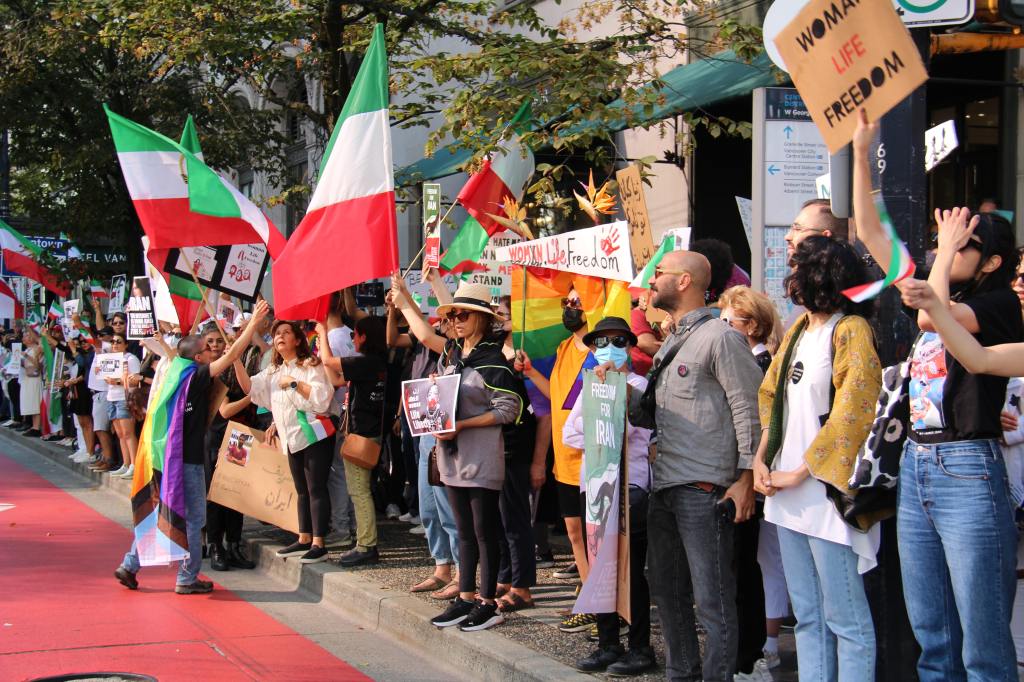
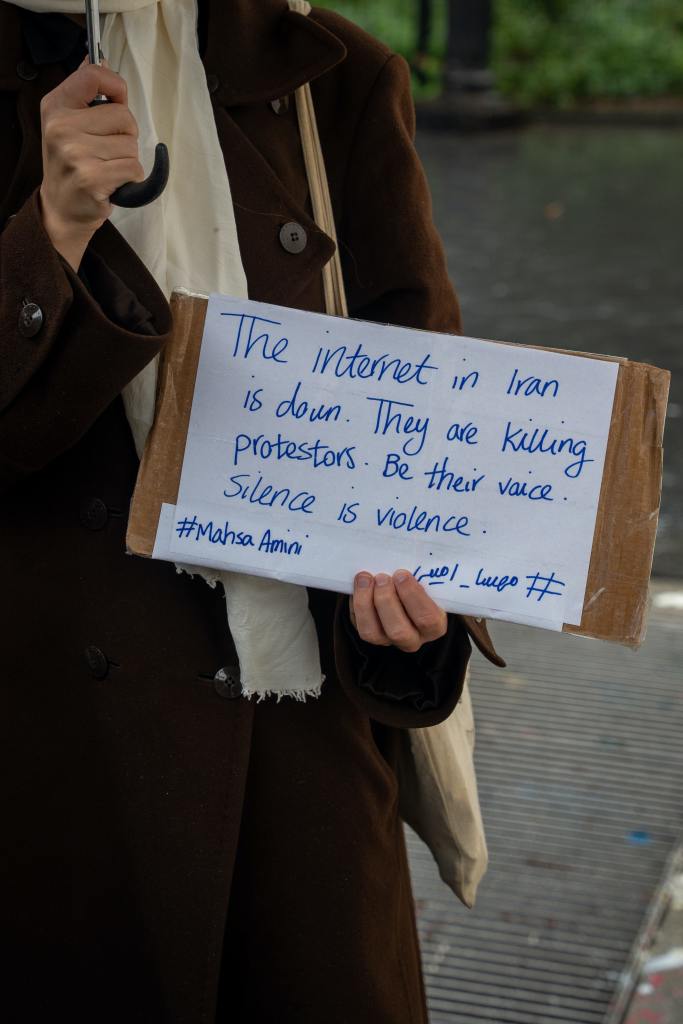
The most recent Iranian protest has been ongoing now since September 17, 2022. This is an important story that is happening right now and not enough people are talking about it; not enough action is being taken. For context, on September 12, 2022, a 22 year old Kurdish woman by the name of Mahsa Jina Amini was arrested by the Iranian morality police due to a few strands of hair sticking out. She was then taken to a police station to be “educated” on the law—the law that requires all women in Iran to keep their hair covered. A few days later, she had fallen into a coma and then was pronounced dead. A post-mortem CT scan shows signs of skull fractures, hemorrhage and brain injury.
Following her funeral, a protest erupted which helped kickstart and launch the current Iranian revolution that is happening right now. But this revolution and demand for regime change did not happen overnight, it is the result of a dictatorship that has been regularly persecuting its own people and denying them the right to basic human self-expression. Things like being a member of the LGBTQIA2S+ community and even singing or dancing can get you killed.
How has the Islamic Republic been responding to these protests?
With more murder, as of November 29, 2022: 488 people have been killed by security forces in Iran according to Iran Human Rights group. This number includes both women and children. Read more about the people who were killed in the protest and why it is challenging to verify the identities of those murdered in this BBC article. 15,000 protestors have also been arrested and Kurdish civilians are being systematically targeted, kidnapped, arrested and murdered. Iranian people are knowingly attending protests so that they can fight for their basic human rights and know that there is a chance that they won’t make it back home to their loved ones.
Diaspora and how it relates to this Revolution
What this leads us back to is our need to be aware of the situation in Iran and understand how it is affecting both Iranians living in Iran as well as Iranians living in other countries such as Canada.
Diaspora is not a new term, however, this is a term that has often come up for Iranians living in countries other than Iran since the protests have began. In history, we have seen this term being used to refer to modern day Jews living outside of Israel and descendants of African countries being moved and living in various parts of the world outside of Africa. In the context of Iran diaspora, we are referencing Iranian people or those with Iranian ancestry living outside of Iran who may have ties back to their migrant country of Iran—more specifically, in the face of these revolutions. These ties come in many forms and may be cultural or religious ties or identity ties but sometimes come with a sense of longing or wanting to return to Iran.
Again, I want to emphasize that the term diaspora is a term that many cultural groups and people from all backgrounds may identify with. However, for the purpose of this post, we are referring specifically to Iranian diaspora. Click the link here to learn more about diaspora as a general term.
We’ve taken the time to speak to two Canadian-Iranian women to learn more about their perspective on how these recent protests have shaped their identity and the rising phenomenon known as “diaspora”.
The first interview is with a woman named Taraneh and the second interview is with a woman named Shiva and includes an audio transcription. Follow along to the interviews here.
Next Steps
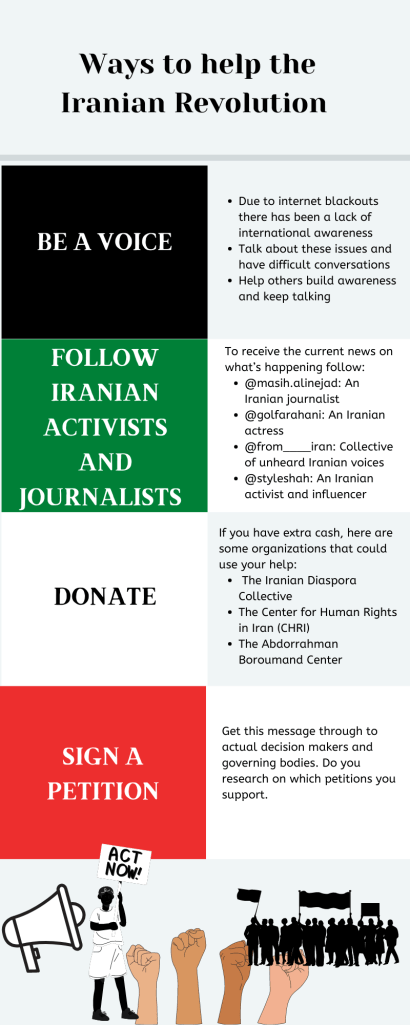
Here is an infographic with ways to help the Revolution.
Important social accounts to follow
Style Shah—an Iranian social media influencer & activist—(@styleshah)
Chelsea Hart—an LGBTQ+ and human rights activist (@chelseahart)
If you have the capacity, a donation to an organization that directly supports and helps Iranian human rights issues would go a long way.
Here is a list of some organizations to look into:
The Center for Human Rights in Iran (CHRI): This organization protects and fights for human rights in Iran. Money that is donated will be used to research all incidences of humans right violations that take place in Iran. Additionally, the funding will go towards documentation as well. Donate here.
The Iranian Diaspora Collective: This coalition gathers artists, writers, journalists and other professionals belonging to the Iranian diaspora. The Collective invests 100% of their funding into purchasing advertising space in high traffic and visible areas to help accelerate and spread the movement related to women-led protests in Iran. Donate Here.
Although, this information has only scratched the surface of what is happening in Iran, I hope that it has helped create some awareness and that as a global citizen you feel ready to take action and to learn more about what is happening in Iran. It’s our responsibility and call to action to help spread this awareness. We need to continue talking, learning, having difficult conversations and to be their voice.
We asked them their views on what’s going on in Iran and how these protests and the revolution has affected them
By Joanna Chu
“This revolution is not over. We’re in month number three, going into four. This is just the beginning. Please keep sharing, please keep listening and please keep keeping yourself educated.”
Shiva, 2022
In the midst of all the chaos of what is happening in Iran, I’ve taken the time to hear to two stories from Iranian-Canadian women living in Canada. They still have friends and families in Iran and during this time, it is important to hear their stories and to keep talking and to keep sharing.
The first interview that we had was with Taraneh (Tara for short). I have known Tara for a long time now. We used to both work at Town Shoes and when this opportunity arose to share this story, I knew I wanted to involve her. I also had a privilege to speak to one of my dear friends, Shiva, about this. Shiva has been teaching me a lot about the injustices that are happening in Iran and I knew that she was the perfect person to share this story.
Please follow along to the interviews below. We have Tara’s interview transcribed below and Shiva’s audio interview with transcription below.
Interview with Taraneh
“The protests have been really hard on my family and friends. I feel that we all share a feeling of collective trauma – we all know what it’s like in Iran, we have lived it.”
Taraneh, 2022
Joanna: Hi Tara, Thanks for joining us today. Can you tell me a bit about yourself and more about what is going on in Iran right now and how it has impacted you or your family and friends?
Tara: Hi! My name is Taraneh, I’m 26 years old and I just graduated law school. My family moved to Edmonton from Mashhad in 2003, when I was 7 years old. My parents considered immigrating to Toronto or Vancouver, but they thought those cities would be more difficult to make it as new immigrants, so they chose Edmonton.
My entire extended family lives in Iran. I have 14 aunts and uncles, and even more cousins. They all live in Iran. The protests and executions that are happening are in my hometown Mashhad, where all my family lives. When the revolution first started, and the government cut off the Internet, communication with my family became very difficult. Our group chat went completely silent, and we couldn’t talk to my family at all. It’s better now, but their internet is still slow and it’s hard to get videos of what is happening in Iran now.
The protests have been really hard on my family and friends. I feel that we all share a feeling of collective trauma – we all know what its like in Iran, we have lived it. So when we see the protests on the news, or the names of people who have died, it feels very personal to us. It’s a feeling that’s hard to describe, but every Iranian understands the pain, even if they are living outside of Iran.
For my family living inside Iran, the biggest thing for them is that they don’t feel heard—especially at the beginning of the protests. I remember messaging my aunt on Instagram (who lives in Iran still), asking her what I could do to help. All she said was that I continue being their voice. With Western media largely ignoring what is happening in Iran, the biggest thing for my family is feeling that people outside of Iran understand what is happening.
Joanna: What can you tell me about diaspora in the context of the Iranian Revolution?
Tara: The Iranian diaspora refers to all the families that left Iran after the Islamic revolution in 1979. There are huge groups of Persians all around the world, for example Vancouver has a huge Persian community. Almost every 3rd person I see on the street in Vancouver is speaking Farsi. The diaspora is really coming together during this revolution. There are massive protests all across the world supporting what is going on inside of Iran. It’s really heartwarming to see all Iranians come together, no matter where we are.
Joanna: What does the statement “Women. Life. Freedom.” mean to you?
Tara: The phrase “Women. Life. Freedom” has come to mean a lot to me. In Iran, women are treated very poorly. We are told what to do at every step in our lives. The only way that Iran can be truly free is if our women are free.
Joanna: Can you tell me more about the morality police? How are they enforcing morality laws?
Tara: The morality police have been around since the Islamic revolution. Personally, I have been stopped on the streets of Iran as a kid by these police. When I was 7, I was stopped with my family, and the police asked my parents why I had nail polish on. Nail polish is against Islam. My dad came to my defence, stating that I was just a child. They let me go with a warning.
My mom has also been stopped many times, because her pantyhose was not “thick” enough. My dad (who is an atheist) has been stopped for drinking water in 40 degree heat in the months of Ramadan, as the religious holiday states you are not allowed to eat or drink.
Joanna: What do you want people to know about Iran or this cause?
Tara: What I want Canadians to understand about Iran is that our country was not the way the news has typically made it out to be. We were free before. When my mom was in University pre-1979, she wore skirts, and never covered herself. It’s frustrating to me that people in the West don’t realize that Iran was free, and we are not this ultra-Islamic state that people imagine. I think the lack of international awareness plays into this—the West doesn’t realize that we want to be free, that we don’t want war.
Joanna: How can your fellow citizens help this cause?
Tara: I think the best way for other citizens to help is to inform themselves on what is going on, and to continue the conversation. The only reason this momentum is still going is because people are talking about it. We have to keep going, keep posting, and show our governments that we care about Iran and the people who are fighting for freedom.
Interview with Shiva
*Transcription below the audio*
Joanna: All right. So we have Shiva joining us today, and she is a Canadian-Iranian woman. Shiva has been living in Canada since 1996, and she’s actually doing her PhD here at the University of Alberta. And recently she’s been interested in the phenomenon of Iranian diaspora in the context of the current revolution and the protests that have been happening. We’re really lucky to be speaking with her today and to learn more about what is happening in Iran from the perspective of an Iranian woman living abroad.
Thank you so much for joining me today. Shiva, can you tell me more about what is going on in Iran right now and how it has impacted you or your family and friends?
Shiva: Thank you so much, Joanna, for having me. So I just want to say before we begin that though, what is happening in Iran and the experience of Iranian diaspora is very universal. It’s also very personal story. So this is just my perspective on what’s going on. So I think we all kind of know about the revolution that’s happening and the way that it’s impacted me and my family and my friends is the revolution signifies and symbolizes a lot of more things for all of us. It symbolizes the amount of injustice that’s been happening and has happened over the last 40 years to our people and our country. And it symbolizes really a battle between an extremely oppressive government that has committed unspeakable crimes to its people, and not only the Iranian people living in Iran, but the Iranian people around the world.
It’s really complex in Iran because we don’t know everything that’s going on. And even my family and friends who live there are shielded from the news. Like sometimes we even know more than them. Like we’re telling them what’s happening. But my family and friends are safe there. I do have a lot of younger friends and family that have been active in the protests and they are obviously trying to stay safe, but you never know what’s going to happen in Iran. But yeah, my family here, I think it’s just very, very weary to be really hopeful because Iran has historically quelled so many uprisings and revolutions, but we’re all just really hopeful that things will turn around for Iran and that we’ll be able to go back to our country.
Joanna: Can you tell me a bit more about the morality police and how they’re enforcing the morality laws in Iran?
Shiva: OK, so the morality police is an organization that works for the Islamic Republic of Iran. They were created in 1979 after the Islamic Revolution. Prior to the revolution, Iran was a very Westernized kind of place in the sense that women were allowed to dress however they wanted, just like they do in Canada or the US.
So the morality police are basically a group of very violent people that drive around or walk around the streets of Iran. And sometimes you can tell who they are, sometimes they’re undercover, but they will walk around and basically they are surveying the women and the way they’re dressed. So in Iran, you have to be covered with a hijab, so you’re all of your hair has to be covered and you have to wear what we call a monteau.
So it’s like a long jacket. And Iran is very hot in the summer months, especially, extremely hot. So you can imagine how hard it is to dress like that. And so for example, in the case of Mahsa Amini, her Kurdish name is Jîna. Jîna was visiting Tehran, the city that is like the capital of Iran, and she was visiting with her family. She’s a Kurdish woman and her hijab was just slipping a little bit and she was taken by the morality police and questioned. And they have these things like these places they take you for reeducation classes, they call it. And this is usually where they will be violent with women, especially if they show any kind of resistance. And I mean even just like verbally resisting what they’re saying. And so the morality police are there to enforce these laws of how women should dress. If they think that you’re with like a boyfriend, if you’re holding hands, they will be aggressive towards you and they will take you in. And it really is scary because it just depends on the day and how they’re feeling. There’s no real like unifying laws that they have to follow and they don’t answer to anyone. I know many people who have been taken by the morality police, family and friends. It’s such a universal experience in Iran as a woman. And like I said, it just depends on the day. It depends on how they’re feeling. So the morality police are there to enforce the laws of how you should dress and behave as a woman in Iran and historically, they have taken a lot of women into custody and to beaten, raped, sexually assaulted and murdered women. But Jîna Amini is the first one. That kind of her imprisonment was captured on video and that’s why it caused so much outrage.
Joanna: All right. Thank you, Shiva. And my next question is, what do you want fellow Canadian citizens to know about Iran and the protests that are happening right now?
Shiva: So I think in the term, in the context of Canada, there are so many Iranian immigrants living here. We have been so lucky to be able to immigrate to Canada. And in Edmonton, Vancouver, Montreal, Toronto, we have such a high level of Iranian immigrants, especially in the bigger cities. So I think that non-Iranian Canadian citizens. What we would want them to know is that Iran is very much suffering right now and that the voice of the non-Iranians are actually what has gotten this uprising into a revolution, starting by a woman-LED uprising into a mass country revolution. And I want Canadians to know that there’s a lot of, as much as social media has helped our cause, there’s a lot of misinformation. It’s really difficult to keep yourself.
Educated on the right things, but I I would really press anybody who cares to really think about where they’re getting their sources from. And like I said before, this is a human rights issue. That’s what I want all citizens of the world to know. This is not an Iranian issue. We have an entire country of millions of people that are quite literally fighting for the right to exist, basic human rights, and we need the voice of Canadian citizens. We need the voice of people who are showing the Islamic Republic of Iran that they won’t stand for this.
Joanna: One of the chants and sayings that have been said at many Iranian protests around the world is women, life, freedom. What does the statement mean to you?
Shiva: So the slogan Women Life, Freedom that we hear in worldwide protests and also in Iran, in Farsi, it’s Zan, Zendigi, Azadi. It actually is rooted in the Kurdish slogan. It is a popular political Kurdish slogan, and it’s used in the Kurdish independence and democratic movements. And it was originated in Turkey and in Kurdish, it is Jin, Jîyan, Azadî. And it’s important to know the roots of this, because Mahsa Amini and her Kurdish name, which is important to know, is Jîna Amini. She was actually Kurdish and the Kurdish people in Iran have historically been severely oppressed, even over other groups of people, including women.
So Kurdish women are very oppressed, and the term is a universal slogan. I think it means something to all of us. And even men in Iran really love this slogan because it’s kind of tying in the fact that our life and our liberty and our freedom is tied in with the life and liberty of women.
And as long as women are oppressed, there is no way for the rest of the people to be oppressed. And this is really important in the Iranian movement because though it was a women led revolution, it started with women leading the way.
You can see that men are standing right next to women. And this is something we don’t know in media. I think media has portrayed Iranian men to not be supportive. But this is like Iranian men are so supportive of Iranian women’s freedom, and they know that their freedom and liberty is personal, only tied in with Iranian women’s freedom and liberty.
Joanna: Thank you for providing that context. My next question is why do you think there has been a lack of international awareness and action regarding this revolution and the ones that have come before?
Shiva: So there are so many different answers to this question.
Since the Islamic revolution of 1979, there have been multiple protests and uprisings and they have been ignored by the world for many reasons. I think one of the biggest ones is that Iran is really good at these things called media blackouts.
And they are, they’ve literally, essentially, in the past, uprisings completely silenced the rest of the world and the reigning community from the rest of the world. So the world’s actually doesn’t know what’s going on.
I also do believe that there has been many efforts around the world and around different international media sources to downplay what’s happening in Iran. The difference this time is that we have a TikTok generation that has started this battle and has made this battle known. We are seeing on TikTok live things that are happening. You cannot refute these things like it’s horrible images and videos, but they’ve actually made the rest of the world see that there’s severe and horrific injustice going on right now in Iran.
And this time the Iranian government, though they did have media blackouts during this entire thing and they still do, they were not able to shut out Iran from the rest of the world. I also do believe, like I said, that we see so many conflicting things in media and we don’t know a lot of the times other people, not Iranians, don’t know what is right and what is wrong and that’s fair.
But social media in that way has been a saving and revealing grace for Iranian people and also something that has deterred their efforts.
Joanna: Okay, my last question is how can we help? How can your fellow Canadian citizens help this cause? What are things and ways that we can help mobilize support to help this Iranian revolution?
Shiva: This is a great question. So in my experience, Canadians who know what’s going on. Non-Iranians who know what’s going on, a genuine understanding are able to help.
So starting with if you don’t know what’s happening, posts like this or blog posts like this, information like this really do help Canadians to know what’s going on. And for example, my friends during this difficult time in my life have supported me so much, much.
By coming to protests with me. They’ve shared all of the posts I share. They’ve shared the posts I make. So listening to the Iranian community, there’s a few prominent Iranian activists that I would suggest that I think that you will suggest.*
And sharing these posts and the contributions of these activists is really important. If there are protests in your city, the numbers in these protests mean the most. People don’t realize that the Islamic Republic is watching. They are scared. They’re very scared. And seeing more non Iranians around the world supporting this is the thing that scares them the most. And I can say with confidence, by talking to my cousins in Iran and my friends in Iran, they have said that the number one thing that has kept them risking their lives, every protest and every time they go out without a hijab is seeing the rest of the world watching them.
There is so much power in unity around the world. We have felt as Iranians that we have been shut out from the rest of the world and demonized in Western media and made to be something we’re not for so long. And now that we see people are finally listening to us and they’re supporting us around the world, people of all different backgrounds. It is the most powerful thing. And this is what keeps Iranians going.
So I would say sharing as much as you can. This revolution is not over. We’re in month number three, going into four. This is just the beginning. Please keep sharing, please keep listening and please keep keeping yourself educated.
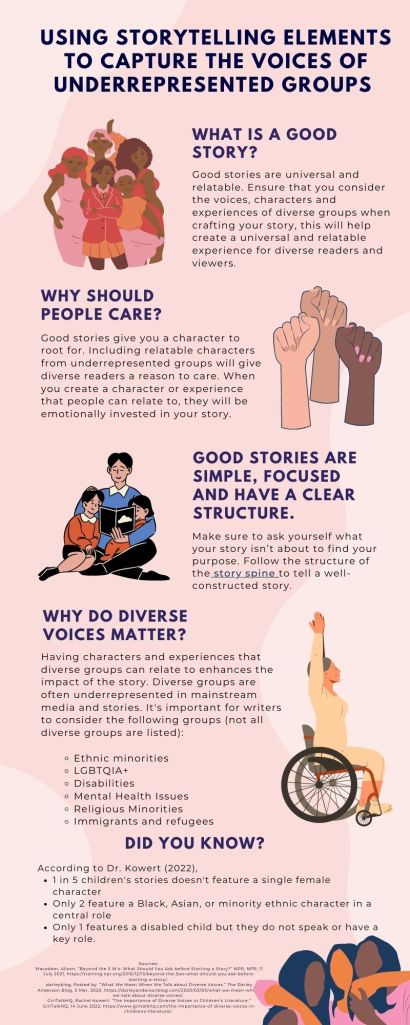
As companies start to write their digital brand stories, it’s important to consider diversity and inclusion in their storytelling. Despite many organizations adopting diversity, equity and inclusion efforts, there are still many barriers and issues that hinder underrepresented groups and their stories from being portrayed and represented within brands.
In addition to considering elements of storytelling on digital platforms, brands need to consider who they are telling these stories to/for and whether or not these stories are reaching all audiences. Audiences want to hear stories about their peers and this is especially true for diverse and minority groups that may not feel that they fit within a brand story due to underrepresentation.
How to use basic storytelling elements to include diverse voices?
Create a relatable story. A story that will stick with your audience is one that is universal—this universality can be the message or theme, characters, setting or experience. If your diverse audience is able to relate to your story and you have created universality for them then they are more likely to identify with your story.
Think about the purpose of your story. What is the goal or reason that you are writing? What will make your diverse audience care? Is there a character that they care about because they relate to it? What about a certain setting or language? A message?
All stories should have a clear structure and focus. Write your story following the story spine structure and you will have a clear story arc.
Some diversity elements to consider when writing include ethnic groups, levels of physical capabilities, levels of mental health, religious groups and sexual orientation. This is not a comprehensive list but a starting point when considering the voices of underrepresented groups in digital storytelling.
It is important for all digital storytellers and marketers to consider these storytelling elements when representing diversity groups. Stories that represent diversity, equity and inclusion help create and foster safe spaces—it leads the groundwork for important conversations. That’s why it is important for brands and organizations to try harder to consider underrepresented groups in their digital storytelling and the digital medias that they produce.
When I first set out to do this Twitter assignment, I tried to incorporate elements of short-form storytelling but found it oddly challenging and the results left me disappointed with myself.
I wanted to tell a story about a topical event that was happening to me which was receiving my MRI, finally after waiting 3, almost 4 months. I thought that this would be a good story to tell because there might be people who resonated with the long wait times, receiving a major injury and also find it educational. However, after I was re-reading my tweets and story, I found it very messy, at points un-engaging and honestly, rambling. This is the link to my first attempt. I wanted to keep it on my Twitter account as a great lesson and an example to learn from while putting the elements of snippet storytelling to life.
What I was able to determine and critique from my old tweets is that it didn’t do the job of capturing audience attention in a short span of time. It also did not have a clear focus or purpose. I jump from one topic of my MRI to the next topic of how I started playing hockey, etc. I thought that I was doing a good job of tying the story together but I think that there are ways I could’ve cut it down into less tweets that are more purposeful.
This is the link to my second attempt at live-tweeting. I think that this story does a better job of conveying a message in snippet form because it captures the audience’s attention and each tweet is short, sweet and purposeful.
Nick Reese thoroughly explains in this article, which important elements of storytelling we should include in Twitter threads. The setting, characters, plot, conflict and the inclusion of the story arc.
In my second set of tweets the following elements of story telling are outlined:
Setting is established at beginning of tweets: bathroom/at home-this is a setting that many users can resonate with and may capture attention due to familiarity
Characters in the set of tweets serve a purpose for the story. In this story, I am the narrator and Ryan, my partner and Penny, my unnamed dog are established as the main characters.
The plot is established with the goal of bath time for my dog.
Conflict arises when we run out of shampoo!
The arc is complete when we end the story with a clean and beautiful dog.
In this story, I also strategically decided to cut down copy (compared to my old story) and use more photos, videos and gifs to evoke emotion and engagement. This is a true testament to how digital mediums can enhance stories in a fashion that is brief, purposeful and relevant.
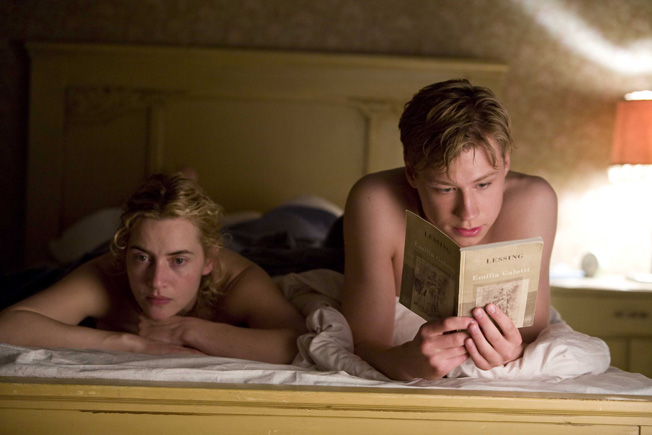
I can still recall the moment I first decided to watch The Reader, a romance/drama film set in post-Nazi Germany. I was a budding young pre-teen who was starting to understand the intricacies of our world, and the forbiddenness of watching a movie that was rated R made the film and the story to follow so much more enticing to me. I first watched this movie on a flight, and it would become the “long-lost film” in my head as I could not recall any details from it other than the main plot. It wasn’t until early adulthood, when I discovered Yahoo Answers (RIP), that I could pop my question in and long lost, it was no longer. This movie really affected me, and I thought about it often. The simple fact that I could not determine or figure out what movie this was caused even more internal conflict and drama because I wanted to find out so badly!
Although The Reader only scored a 63% critic rating on Rotten Tomatoes, I can assure you that the Google audiences scored this film relatively high with a 90% positive rating. It may make you cry, it may anger you and it may even make you question your morals–all the great tensions and emotions that come with compelling storytelling.
(Warning: Spoilers Ahead!)
The movie follows the protagonist and narrator, Michael Berg, who we learn is having a sexual relationship with an older woman, Hanna Schmitz, when he is only 15 years old. Frequently, before their passionate love-making, Michael would read to Hanna upon her request. “Reading first. Sex afterwards.” One day, Hanna packs up and leaves without warning, and it isn’t until later in the movie, when Michael is a young law student, that their paths cross again. We discover that Hanna is on trial for Nazi war crimes and her part in being an SS prison guard. Michael battles with his moral beliefs but ultimately decides to rekindle a relationship with Hanna while she is in prison. He sends audio tapes of himself reading aloud like he did when he was younger, and we unearth Hanna’s biggest secret: she is illiterate. The theme of illiteracy is vital in this film because it sets the tone for a moral dilemma for Hanna and is a turning point for the audience when they discover this. Hanna should be paying for her part in the Nazi war crimes, however, there is a part of you that almost feels bad for her due to the context of the illiteracy. (Trigger warning ahead: mention of death and suicide). Before Hanna is about to be released from prison Michael decides to visit Hanna. Shortly after, Hanna dies by suicide, leaving the viewer to wonder if she passes due to her struggle with her moral dilemmas or Michael visiting her.
Impactful stories are universal and relatable. This story caused an internal struggle within me, where the simple concepts of right and wrong and what justice is began to blur. It was not so black and white. Kate Winslet, who played Hanna Schmitz, expressed how difficult it was to portray this character and that the most challenging element to display accurately was “learning how to be illiterate.”
The Reader does a good job of following the Story Spineand, fundamentally, is written as a well-constructed story with a proper beginning and end, a groundbreaking event, a middle part that covers the consequences and a primary and secondary climax. This story is compelling as it displays tension from the different viewpoints presented and has even been criticized for displaying themes of Holocaust Revisionism for making Hanna the object of audience sympathy. The film is adapted from the novel, The Reader by Bernhard Schlink. With that, the author and director could have been more mindful of the questions to ask before starting a story. The question that may have combatted some of this critique would be to ensure that this story is fair to the people and ideas it represents. Conclusively, this proves that this story was captivating as it had the power to engage its audience, hold them and ensure that they would remember it for years to come.
 EXSM 3989 - Digital Storytelling Class Blog