Categories
Uncategorized

Food for Thought

Photo by George Dolgikh on Pexels.com


A new school term is around the corner. The Students Association of Northwestern Polytechnic Executive Team is thrilled to have the halls filled with students once again. It’s eerie being in an empty building all summer getting organized for the year ahead. Although attending post-secondary schooling is an exciting milestone in one’s life it is also an expensive endeavor. For some student’s tuition and rent take priority over diet and hygiene needs. A Macleans article stated a staggering 40% of Canadian post-secondary students are food insecure (Sing, 2021).  Here at the Students’ Association (SA) we want students to thrive in class and be focused on their STUDIES not their next meal. We have a student foodbank entitled the Room of Plenty to aid in food insecurities on our campus as well as hygiene needs. The items are collected via donation at various events the SA will be hosting for students on campus through out the school terms.

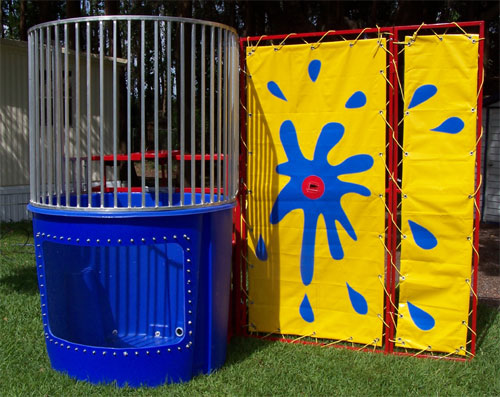
The first event of the year that we will be hosting in order to collect donation items is a Drunk Tank for well…dunking! Those sitting awaiting their fate will be NWP staff members including the Deans and various department professors and staff members. Wanting to donate and item to try to dunk a specific staff member into cold water? Their timeslots are noted on the poster with their photo and name on them, please come to the SA to view who is on the roster or check out the campus bulletin boards! The dunking begins at 10 am on Sept 2, 2022 at the Outdoor Amphitheatre. Check out the NWPSA events page for more information and to view other events hosted by the SA on campus.
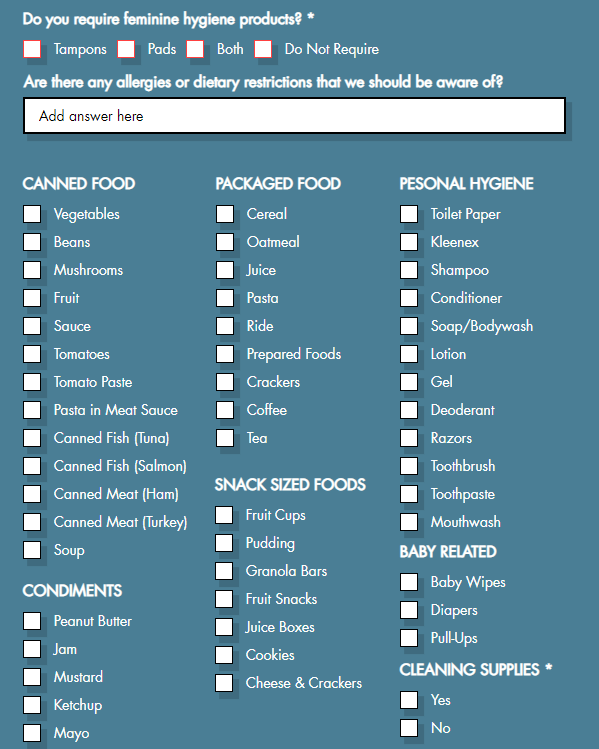

Know of a fellow student who is food insecure or in need of some hygiene products? Perhaps you are a bit strapped for cash this month and are in need of some assistance. If so, don’t sorry you don’t have to come into the SA and disclose your situation if you don’t want to, you may simply fill out this simple form on the NWPSA website. You will receive an e-mail when your order has been filled much like a ‘click and collect’ service the SA will have your items placed discretely in one of the NWP bags all students receive during orientation week so no one will notice you leaving our offices with grocery bags.  
Several studies have associated food insecurity with mental health issues such as depression, anxiety disorder, mood disorders or suicidal thoughts. If you are in need of mental health resources, please note there are several resources for students to access. We wish everyone on campus a wonderful school year and hope the Room of Plenty as well as other student lead initiatives on campus ensure each student thrives in their studies!

Photo by Stanley Morales on Pexels.com

References

Sing, Nathan. 2021, October 21. The flight to end hunger on Canadian university campuses https://www.macleans.ca/education/the-fight-to-end-hunger-on-canadian-university-campuses/

Unknown. n.d. Understanding Household Food Insecurity. Proof Food Insecurity Policy Research. Retrieved from: https://proof.utoronto.ca/food-insecurity/#health

Categories
Uncategorized

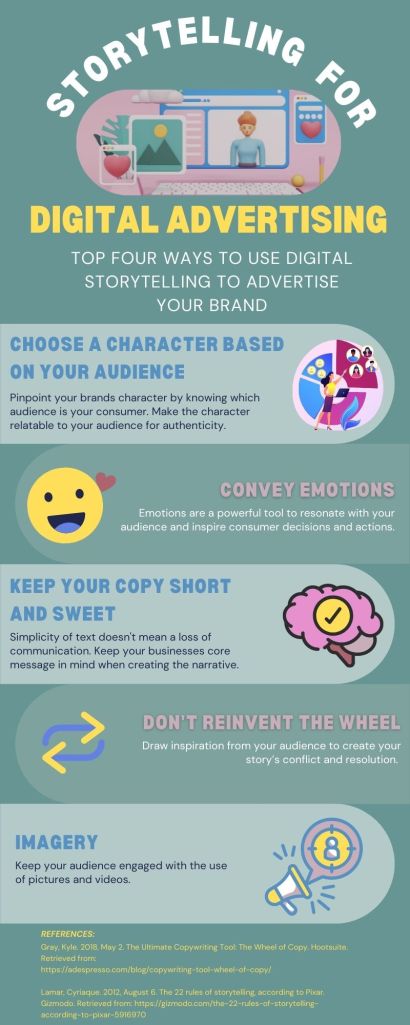
Ways to use digital storytelling to advertise your brand

Photo by Pixabay on Pexels.com

For centuries storytelling has been a way to connect with others. Graphics can be found at archeological sites and caves to tell historic tales. Elders bonded with youth via storytelling passing on their wisdom and language.  Storytelling has no doubt changed over the years as digital platforms allow businesses to connect worldwide with their audience. If you’re a business owner wanting to connect with your audience digitally via storytelling but don’t know where to start don’t fret, I have put together an infographic of the tops four ways (in my opinion) to utilize digital storytelling for your ads. So, you will swim rather than sink so to speak. This article will go more in depth as to why they are my key points to include in your thought process.

#1 Choose a character based on your audience.

Pinpoint your brands character by knowing which audience is your consumer. If your audience are children, then a cartoon character is suitable, but it is not transferable to an adult audience. The character you choose also has to fit the narrative you want to sell. If it is adventure you are selling than someone outgoing, tanned and toned will give authenticity to the story as they will look experienced in the outdoors. I myself am a soon to be Mom I don’t want to be sold a breast pump by a male, when I go into a Buy Buy Baby I want to speak with an older female sales staff such as an experiences grandma for tips and tricks that are tried and true. Thus, the main character in your story needs to be relatable to your audience for authenticity.

#2 Convey Emotions.

Emotions are a powerful tool to resonate with your audience and inspire consumer decisions and actions. There is a wide spectrum of human emotions to depict in your storytelling and evoke from your audience. No matter which you choose to portray bear in mind the tone in which your story will be perceived by your audience. For more ideas on emotions to use for your brands marketing strategy please read this article by Hootsuite https://adespresso.com/blog/copywriting-tool-wheel-of-copy/

#3 Keep your copy short and sweet.

Keep your audience engaged with the use of pictures or videos. The infographic I created for the purposes of this lessons is a prime example. It had condensed text that still got my message across and the use of illustrations to be eye catching and engaging. Even though this blog article expands on the topic and this contains more text, it is still pleasing to the eye as there are breaks in the text with graphics.

#4 Don’t reinvent the wheel.

The fundamentals of storytelling do not differ from traditional story writing you learnt academically when changing to media advertising. Your story will still need a conflict and resolution to keep your audience’s attention. Don’t spend hours of brain power conjuring up ideas for your story, draw inspiration from your audience to create your story’s conflict and resolution. What is a conflict in your audiences’ life and how can your product or service aid them in resolving the issue at hand?

I hope you find this helpful to get your storytelling ideas percolating for your next campaign!

Categories
Uncategorized

Cat Mom Fail

Photo by Pixabay on Pexels.com

Although I think my life is quite habitual and unappealing to others due to my routine consisting of working, cooking, watching TV and reading with my spouse before bed with the off chance of gaining the motivation to use my yoga membership, I decided to try to document a scenario that occurred in my day for a Twitter thread. I challenged myself to use Vaynerchuks philosophy to simply document rather than create. “Just tell the world what’s going on. Describe your journey, outline your vision, and describe your thoughts, ideas, actions, wins, losses, anxieties and ambitions online.”  I was surprised that the storytelling basics applied to my interaction with my cat that had me in hysterics and took a dip into my bank account. I came home to find my usually loyal cat meowing loudly in the basement, not at his usual place at the garage door keenly awaiting my return. I went downstairs to find him staring at a spider crying. I was a bit taken aback that he cowered in front of such a tiny creature, but I digress because I am no fan of any small critters myself. I took a Kleenex and swiftly disposed of the spider. The horrified look on my cat’s face when I did so, turned me from hero to villain within minutes. I used to be a beloved cat Mom, but my cat now painted me as a spider killer and refused to look at me physically turning his back when I entered the same space as him. Ridiculous? Absolutely! But I yearned for redemption. I ended up caving and going to Petsmart to purchase him yet another toy for his pile. And no, I did not get him a mouse now knowing he is not a hunter.

I documented the encounter in ten bulletin points I later used as my ten tweets, and spaced their posting using Dorney’s timed intervals. She stated “When publishing one Tweet at a time, we recommend waiting about an hour after publishing your first Tweet to publish your second, and waiting another 15 minutes or so to publish your third.” I was surprised that a minute event in my day turned into a whole saga when laid out on paper with a clear beginning, middle and end to the short story and achieved the the classic “5 W’s” of storytelling by Macadam.

Who? – myself and my cat

What? – a disgusting spider

Where? – my basement

When? – late afternoon, main character returns from work

Why? – cat was scared of spider and then owner

The bonus question of “how” I was going to keep the audience’s attention was by using a GIF to convey my cats horror. The short story also had the suspense of wondering why my loyal cat didn’t greet me at the door, a bit of comical relief with a GIF chosen, and a plot twist making it engaging, because who doesn’t love when the heroine becomes the villain? Well…clearly not me as I was emotionally invested in my pet! However, it taught me that storytelling does not have to be complex. A story can be achieved from a small insignificant part of your day that you found interesting or inspiring.

Photo by u0410u043bu0435u043au0441u0430u043du0434u0430u0440 u0426u0432u0435u0442u0430u043du043eu0432u0438u045b on Pexels.com
Categories
Uncategorized

Balloons, Wizardry, and a Villain Oh My!

Photo by Padli Pradana on Pexels.com

If you loved princesses, magic and balloons as a child of the 90’s then The Balloon Tree was likely on your bookshelf. The children’s storybook written and illustrated by Phoebe Gillman the author widely known for her popular children’s book Jillian Jiggs, also created a story that engaged children with a princess in peril, a villain and a wizard that comes to her rescue with a spell.

Rather than give a synopsis, the following outline of the book will be conveyed using the method of the story spine structure created in 1991 by Kenn Adams, detailing the main elements of the story. The story spine to The Balloon Tree is as follows:

Once upon a time there was a princess, Leona, who lived in a hilltop kingdom with her father the king.

Every day, the happy princess loved to sing, dance, and play with balloon which the castle was always full of.

But one day, an invitation arrived for the King summoning him and his knights to a Royal Tournament.

Because of that, the evil Archduke was put in charge of the kingdom.

Because of that, the Archduke ordered all the balloons in the kingdom to be destroyed and the princess be locked in her room.

Because of that, Leona escaped her room via a secret passageway and asked the wizard for help in creating more balloons to signal her father home.

Because of that, the wizard gave Leona a spell for the tree in the garden to produce more balloons.

Because of that, Leona searched the kingdom for a balloon to cast the spell, and was triumphant.

Because of that, balloons started sprouting from the tree filling the lands with balloons.

Until finally, the king saw a balloon at the edge of the forest and rushed home to rescue his daughter and townspeople from the Archduke.

And ever since then, the townspeople have been joyous and the Archduke has been in the dungeon blowing up balloons.

Much like a Disney movie the main character lived in a kingdom far, far away and was in distress. However, this story resonated with me not only due to my love of balloons as a child, but that the main character was a young girl. Unlike many movies and tales whose protagonist was an adult, Leona was a child who was very brave and able to be her own heroine. No knight or prince came to her rescue as often depicted in stories. A cleaver little boy did help her in time of need, and the wizard provided her a solution, but she was able to fulfill her mission of signaling her father by her own tenacity. “If the premise or character is relatable than the reader will be attached to the story due to the emotional tie” stated Social Media Strategist Linda Hoang in her lecture for Digital Storytelling and following Pixar artist Emma Coats rules 1 & 4 of storytelling. As a young child I was connected to the princesses character wanting to be savvy problem-solver, but also dependent on others for assistance. I was unaware of the term ‘girl power’ as I read this story for the first time in my grade two classroom, retrieving the book from a bin in the “read to self” corner of the room. However, I certainly retained the sense of empowerment and checked the book out of the library to continue reading it at home until my parents purchased me a copy which I have since gifted to my cousins children. This book has become an enduring favourite in their household as well. It entangles the concepts of courage, guidance and teamwork to achieve freedom. If you would like to add a copy to your children’s literary collection it can be purchased via Amazon or Chapters/Indigo.

Design a site like this with WordPress.com
Get started