Categories
Uncategorized

Reflections

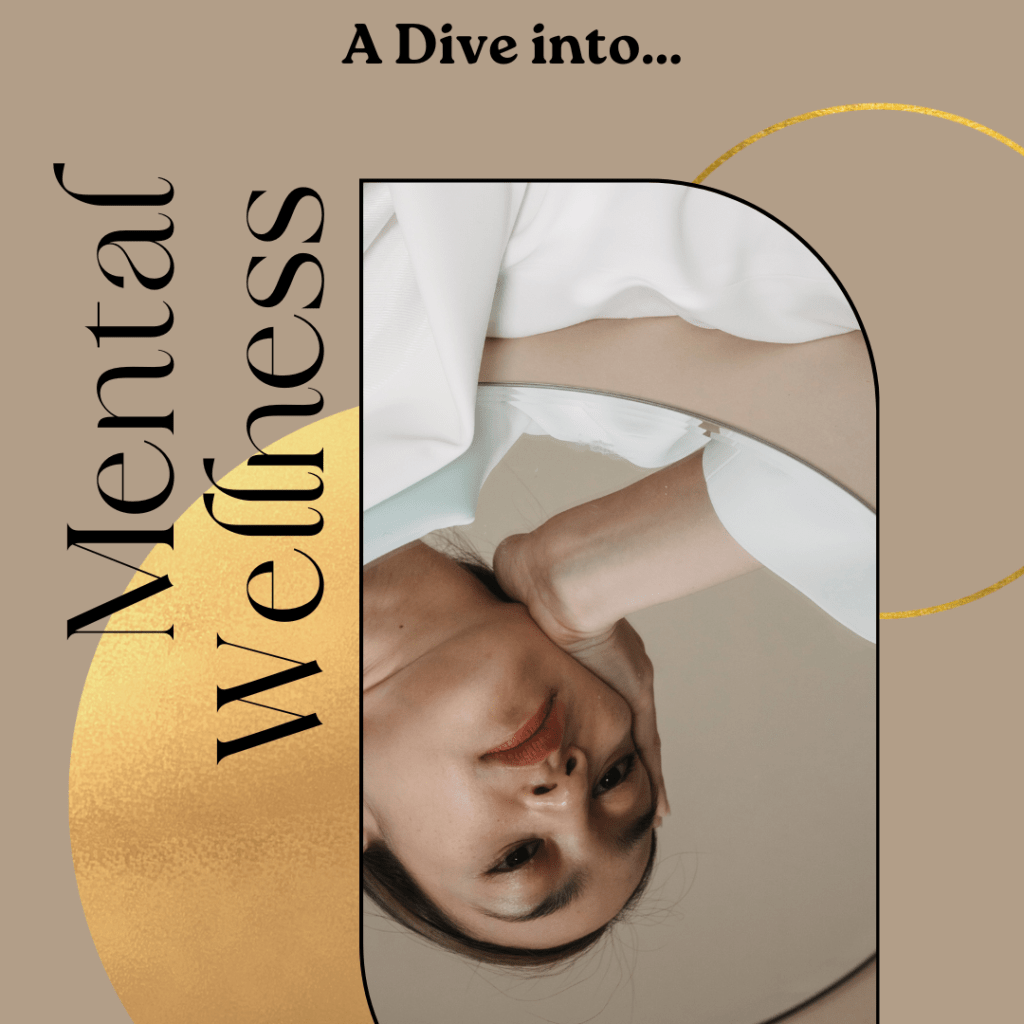
I am a mirror, and I have seen it all. From the happiest moments to the darkest ones, I have reflected them all. But the thing that haunts me the most is the sadness I have seen in the eyes of the people who stare at me. I am just a piece of glass, but they seem to look at me as if I hold all the answers to their problems.

Today, a young girl came in, and she seemed lost. Her eyes were red, and tears were streaming down her face. She looked at me with a broken gaze, and I reflected back the pain I saw in her eyes. It was clear that she was struggling with mental health issues, and it made me feel helpless.

It is not just her, though. According to the World Health Organization, approximately 1 in 4 people in the world will be affected by mental or neurological disorders at some point in their lives. That’s a staggering number, and it’s disheartening to see that so many people are struggling to cope with their mental health.

As I watch people come and go, I wish I could do something to help them. But I am just a mirror, and I can only reflect what I see. I can bear witness to their struggles, but I can’t change anything. The truth is, we need to take action to support those who are dealing with mental health issues.
Depression is one of the most common mental health disorders, affecting over 264 million people worldwide. It’s a debilitating illness that can affect every aspect of a person’s life, including their work, relationships, and physical health. But the good news is that depression is treatable, and early detection can make a huge difference. As the famous psychiatrist and psychoanalyst Carl Jung once said,

“Your vision will become clear only when you can look into your own heart. Who looks outside, dreams; who looks inside, awakes.”

One of the keys to recognizing the early signs of depression is to pay attention to your own thoughts and feelings. Depression often starts with feelings of sadness or hopelessness, but it can also manifest as irritability, anger, or frustration. Other signs of depression may include changes in appetite or sleep patterns, difficulty concentrating, and a loss of interest in activities that were once enjoyable.

A twitter thread discusses a simple self-driven approach to help conquer these hidden monsters, because we can’t wait to be saved, can we? If I could, I would tell all those catching their glimpse in me to take matters into their own hands before I shatter under the weight of their pain.

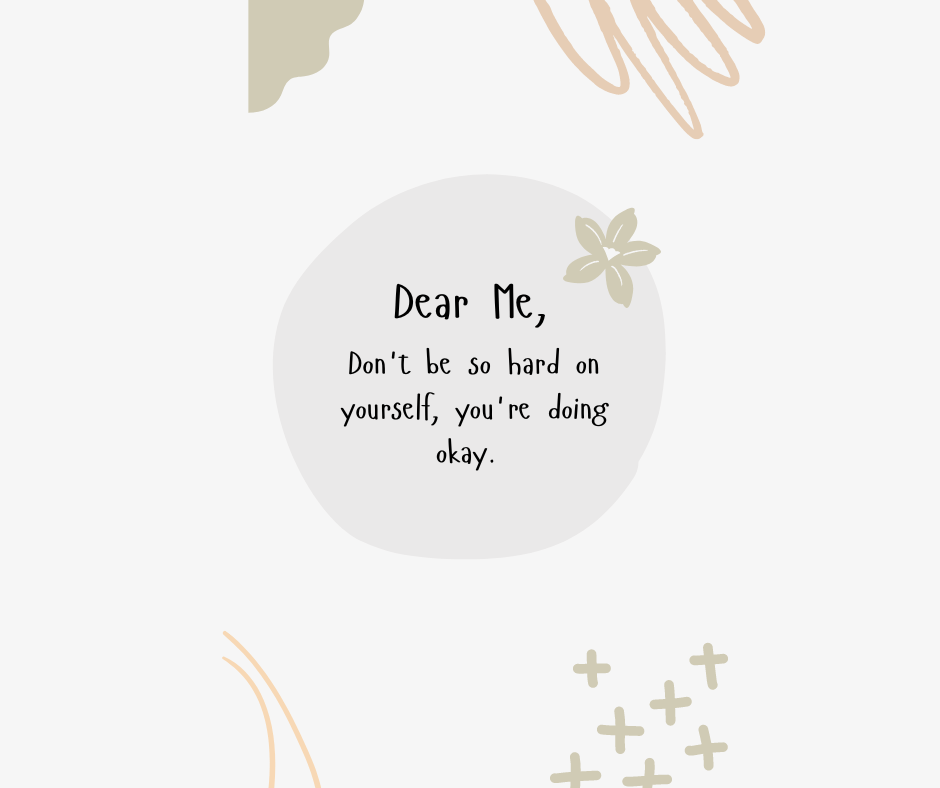
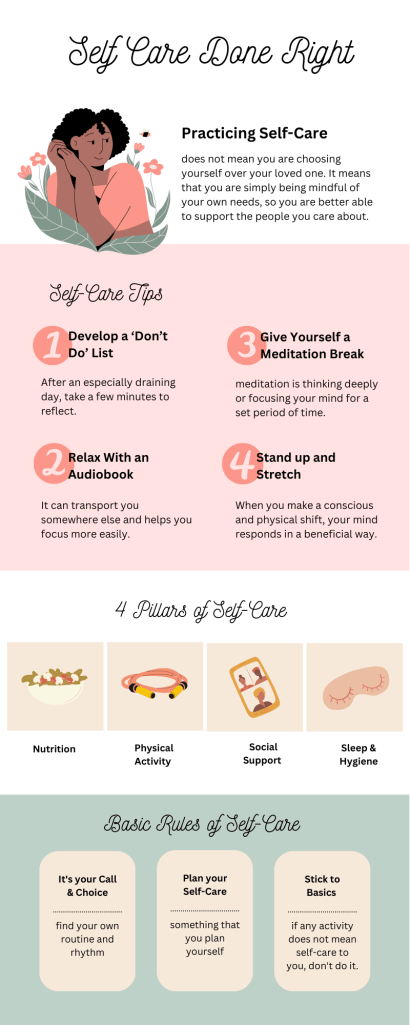
Self-care is one of the most important things that people can do for their mental wellness. Self-care is all about taking care of yourself, both physically and mentally. It’s about recognizing your own needs and taking steps to meet them. Self-care can take many forms, such as exercise, healthy eating, meditation, spending time with loved ones, and pursuing hobbies and interests. Let me share an infographic here to help drive the point home.
Another way to help is to practice mindfulness. This involves paying attention to our thoughts and feelings without judgment, and learning to let go of negative thoughts that can contribute to depression. Mindfulness practices such as meditation and deep breathing can help us develop a sense of inner peace and calm.

Lastly, it’s important to remember that seeking help is a sign of strength, not weakness. If you’re struggling with depression, don’t be afraid to reach out to a mental health professional for support. They can provide you with the tools and resources you need to overcome your depression and live a fulfilling life.
Just like the weather, life has its different seasons. Sometimes it’s bright and sunny, and other times it’s dark and gloomy. Depression can feel like a never-ending storm, but just like we take an umbrella to keep the rain away, we can take steps to care for our mental health during the tough times. Maybe it’s talking to a therapist, taking a mental health day, or practicing self-care activities like exercise or meditation. Whatever it may be, remember that it’s okay to seek help and take care of yourself. Just like the seasons, life will change and brighter days will come. Keep holding on, and remember that you’re not alone.

P. S. As a mirror, I can only reflect and these reflections can be daunting sometimes. If you’re looking for a quick and fun way to incorporate mindfulness into your daily routine, check out this video on Instagram! It has some simple steps with a dash of humour to help you unwind after this deep dive into reality. Here’s the link: Mind… It Matters! Let me know in the comments what you think!
Categories
Uncategorized

The Power of Storytelling: Why it Matters?

We all love a good story. Whether it’s a captivating book, a favorite movie, or a memorable conversation with a friend, stories have a way of engaging us and leaving a lasting impression. But storytelling isn’t just about entertainment – it’s a powerful tool for communication that can inspire action, build empathy, and help us remember important information. In this blog post, we’ll explore the power of storytelling, and explain why it matters in our personal and professional lives.

“Listen, and you will realize that we are made not from cells or from atoms. We are made from stories.”
― Mia Couto

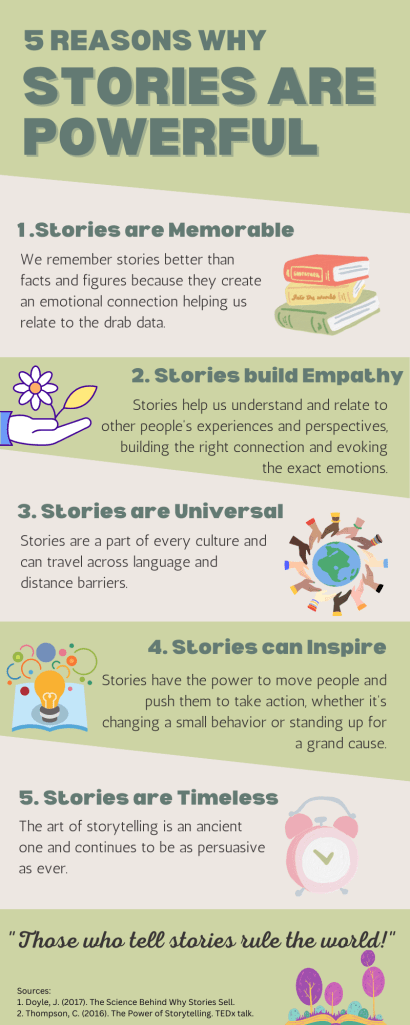
Stories are memorable…

One of the key benefits of storytelling is that it helps us remember information better. Research has shown that we remember stories better than facts and figures because they create an emotional connection that helps us relate to the information. When we hear a story, our brains release oxytocin, a hormone that helps us feel more connected and engaged with the information. This is why marketers, educators, and communicators often use storytelling to help people remember important messages.

Stories build empathy…

Another important benefit of storytelling is that it helps build empathy and understanding. When we hear a story, we are more likely to put ourselves in the shoes of the person telling the story, and to relate to their experiences and perspectives. This is why storytelling is often used in diversity and inclusion training, as well as in social justice movements. By sharing stories that illustrate different perspectives and experiences, we can build empathy and understanding across different groups.

Stories are universal…

Stories are a part of every culture and can be used to communicate across language and cultural barriers. Even if we don’t speak the same language, we can still understand the emotions and themes conveyed through a story. This is why storytelling is such a powerful tool for cross-cultural communication and understanding. By sharing stories that resonate with people from different backgrounds, we can build bridges and foster greater understanding and connection.

Stories can inspire…

Perhaps one of the most powerful aspects of storytelling is its ability to inspire action. When we hear a compelling story, we are more likely to be moved to take action – whether it’s changing our behavior, supporting a cause, or sharing the story with others. This is why storytelling is often used in advertising, advocacy campaigns, and social movements. By crafting stories that inspire action, we can create positive change in the world.

Stories are timeless…

The art of storytelling has been around for thousands of years and continues to be a powerful tool for communication. Whether it’s around a campfire, in a book, or on social media, stories have a way of capturing our attention and engaging our emotions. As we continue to grapple with complex challenges in our personal and professional lives, the power of storytelling will only become more important.

To conclude…

Storytelling is a powerful tool for communication that can help us remember information, build empathy and understanding, inspire action, and connect with others across language and cultural barriers. Whether we’re marketers, educators, advocates, or simply human beings trying to connect with one another, storytelling is a skill that we can all cultivate and harness for greater impact. By embracing the power of storytelling, we can make our messages more memorable, our relationships more meaningful, and our world more connected.

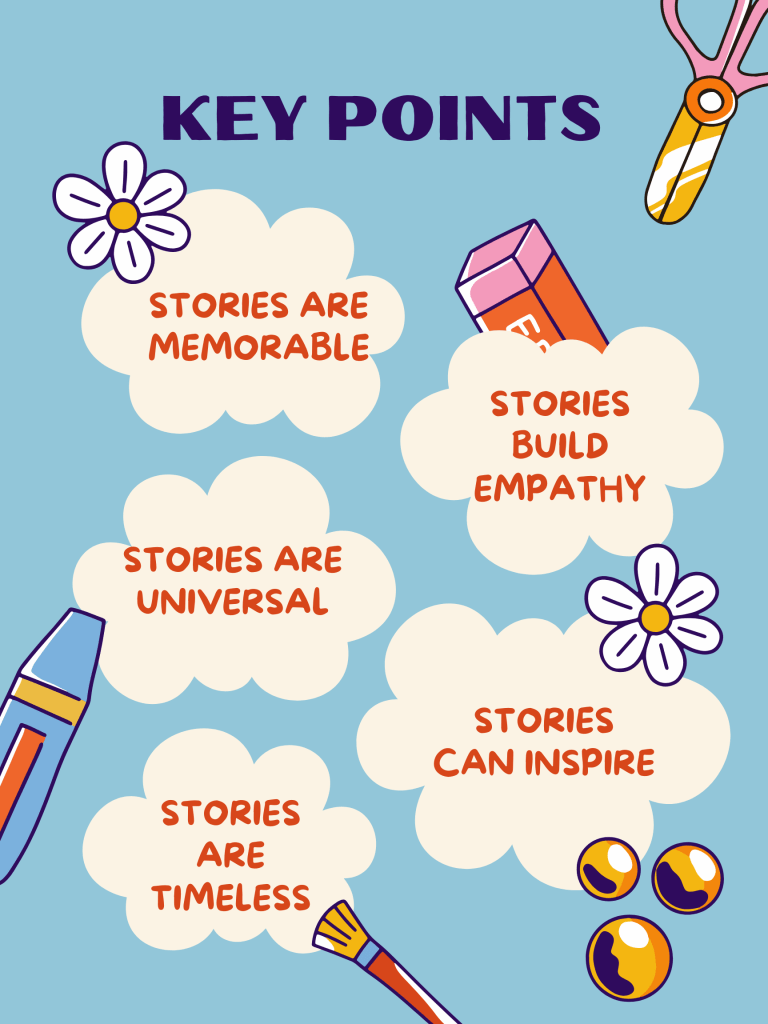
Here’s an infographic summarizing the key insights of this blog post.

Sources:

  1. Doyle, J. (2017). The Science Behind Why Stories Sell. Harvard Business Review.
  2. Green, M. C., & Brock, T. C. (2000). The Role of Transportation in the Persuasiveness of Public Narratives. Journal of Personality and Social Psychology.
  3. Pratten, R. (2016). Getting to the Heart of Storytelling: 10 Steps to Creating a Compelling Story. Forbes.
  4. Salmon, C. T., & Atkin, C. K. (2016). Storytelling: A Critical Review. The Handbook of Communication Science.
  5. Thompson, C. (2016). The Power of Storytelling. TEDx talk.
Categories
Uncategorized

Journey Vs Destination

How often have we heard the phrase “it’s not about the destination, it’s about the journey”? While there is some truth to this statement, sometimes the opposite can be just as true: the destination is more important than the journey.

Recently, a Twitter thread went viral in which a user described missing their flight and deciding to drive from Regina to Edmonton in a Volkswagen Tiguan. The thread was full of anecdotes and observations about the drive and all the things that went wrong, but what stood out the most was the user’s desperation to get back home to their wife and kids.

As the user set out on the 8 hour long drive, there is no mention of the snowy Canadian landscape, but only the desire and impatience to get back home. And as the fate would have it, the journey is not without its fair share of obstacles.

The Twitter user @CherryVibesOnly weaved a compelling story around their drive. They started the thread with a clear conflict: they missed their flight and had to get back home as early as possible. This created tension and immediately drew the reader in.

The user shared the actual details like the make of the rental car (Volkswagen Tiguan), the time (8 hour long) and the distance (85 km left when the trouble began); all of this made the journey feel more real and relatable.

The user’s personality and perspective were a big part of what made the thread interesting. They were funny, observant, and relatable, which helped the reader to connect with them and care about what happened next.

The thread included several images and funny gifs which added variety and helped spice up the narrative. The user’s journey from Regina to Edmonton had a clear and compelling plot, with several twists and turns along the way. They had to navigate through a setback which kept the story moving forward.

As the car threatened to break down with the EPC signal flashing, the reader could feel the desperation of the user to get back home safe and sound. In situations like these, the destination becomes the most important thing. It’s not about the journey or the scenery, it’s about making it to home to your loved ones. The journey becomes a means to an end, a necessary obstacle to overcome in order to reach your goal.

Of course, this doesn’t mean that the journey is completely irrelevant. The Twitter user’s thread was full of amusing anecdotes about their drive, from an emergency signal flashing in the car to the absurdly long wait-time for road assistance. The journey added an element of adventure and excitement to the whole experience. But at the end of the day, the destination was the main priority.

Sometimes, when you have a clear goal in mind, when you are driven by a passion or a need, the destination becomes more important than the journey. It becomes the focal point of your energy and attention, the reason you keep going even when the journey gets tough.

In the end, the Twitter user made it to their home. They may have missed their flight and driven through a long distance with their heart in their mouth, but they also had a story to tell and a sense of accomplishment. Sometimes, the destination is more important than the journey, but that doesn’t mean the journey can’t be an adventure.

Categories
Uncategorized

O Me! O Life!

O me! O life! of the questions of these recurring,

Of the endless trains of the faithless, of cities fill’d with the foolish,

Of myself forever reproaching myself, (for who more foolish than I, and who more faithless?)

Of eyes that vainly crave the light, of the objects mean, of the struggle ever renew’d,

Of the poor results of all, of the plodding and sordid crowds I see around me,

Of the empty and useless years of the rest, with the rest me intertwined,

The question, O me! so sad, recurring—What good amid these, O me, O life?

                                       Answer.

That you are here—that life exists and identity,

That the powerful play goes on, and you may contribute a verse.

– Walt Whitman

What will your verse be? asks John Keating (played by Robin Williams) to a bunch of high school boys in the 1989 movie, Dead Poets Society. 

And as I watch the movie for the umpteenth time, I can’t help but wonder what will my verse be? And will I be brave enough to sing it out loud to the world? The worth of life lies in life itself, doesn’t it? This movie always leaves me with many questions to ponder over. Isn’t that precisely what a good story does? It poses questions that make you think differently. 

Dead Poets Society is considered a coming-of-age classic about an unconventional teacher who turns around the life of his students. Such was the power of the movie that the profound verse O Me! O Life! by the great poet Walt Whitman is associated first and foremost with the movie, and not with the poem that it is. More than 30 years after its premiere, the movie remains an inspiration


In brief, the movie is about a teacher named Mr. John Keating (Robin Williams) who comes to an all-boys school (Welton Academy) that is rooted in tradition with boys who are expected to follow the unbudging notions of their parents regarding their education. Keating’s unorthodox methods use poetry to help the boys honor their individual identity and desires. The story majorly follows the lives of four boys Neil, Todd, Knox and Charlie and highlights their search for happiness and purpose. It follows a traditional story arc and can be neatly framed into Kenn Adam’s Story Spine. The setting and characters are introduced. Todd is presented with an opportunity to change but sticks to his routine. Until one day he is challenged by Keating who leads him to perform shedding his inhibitions in one of the most poignant scenes of the movie. 


The boys all set out on their own journey to find their purpose and meaning in life. Each of their stories is very different and they all try to ‘seize the day’ as put by Mr. Keating. Not giving away too much of the plot, all I’d like to say here is that everything in this movie is on point and brilliantly done! Mr. Keating not only showed what true education ought to look like, but also how we should lead our lives freely, choosing and believing in the beauty of our dreams. 

The movie leaves me with questions that are not easy and seldom comfortable. Sometimes, it’s the fears that we have to face, sometimes it’s about the dreams that we dare to dream and sometimes it’s the reality that is painful, but has to be lived nevertheless. We tend to run away from what seems uncomfortable, but facing it is the only way to actually grow. Maybe, all we can do is hold the moment, and let our verse out and then wait for the magic to unfold!

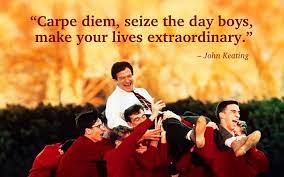
Or as Keating puts it: “Carpe diem. Seize the day, boys. Make your lives extraordinary.”

Design a site like this with WordPress.com
Get started