Categories
Uncategorized

LGBTQ2S+ Books, Identity and Reminiscing

In which a girl in her early twenties is transported back to her teens by finding the one book that changed everything for her — in a good way.

You’re cleaning your room for the first time in who knows how long — and who knows what you’ll find. You get to your bookshelf, which is stacked with more than a hundred books and even things that aren’t books, but you have no idea where to put them. You need to de-clutter, so clearing the shelf and determining which books stay and which books are to be donated is quite the challenge. What do you hold on to, and what do you give away? And then, perhaps, you stumble upon one of the oldest books on your shelf, which means you should give it away, right? Except it’s that one book that brings back a flood of memories — being in high school, your first introduction to queerness via your favourite medium — books. You remember that first day picking it up, looking at it, and being intrigued. Then you bring it home, you read it, and for the first time, you feel seen. You feel like you are not the only one who feels the way you do any more. There is a book, your favourite thing in the world, letting you know that you might not be as different as you think you are. That there are other people out there like you out there, and that you are not alone.

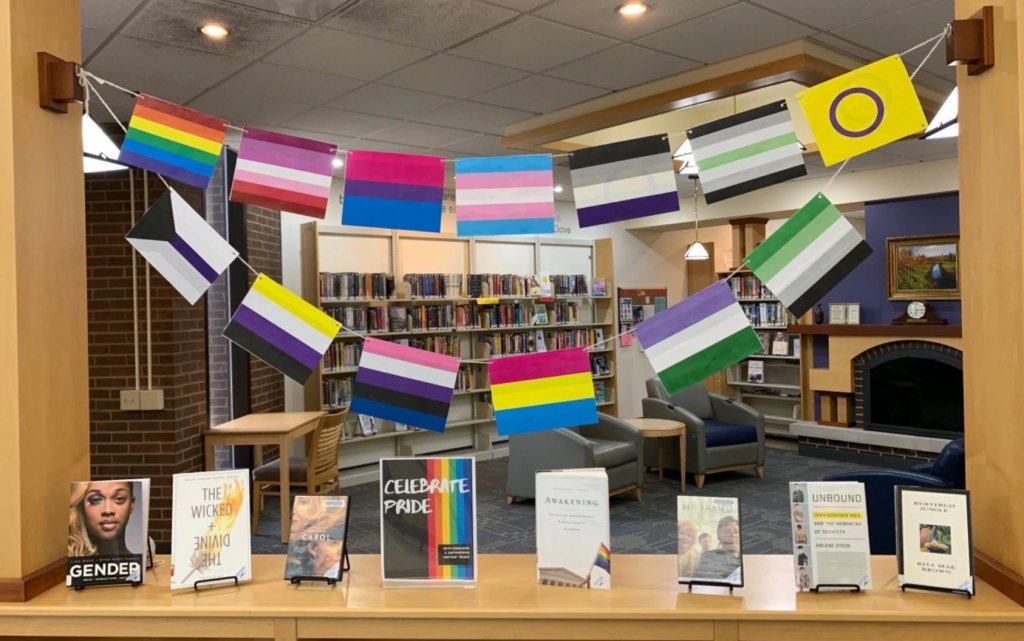
It’s incredible what different meaning books can hold for different people. Perhaps they are a loving memory from a friend or an old book passed down through generations. But, for me, just like the books themselves — they hold a story. A story of finding oneselves identity and acceptance through media: specifically, through the discovery of LGBTQ2S+ books. 
Flashback

I’d been reading like every other kid did in elementary school, but I didn’t fall in love with it until about Grade 6, where I discovered the book Found by Margaret Peterson Haddix, and I could not stop reading it. For the first time, I realized just how amazing books are. That they held stories, which I loved, just like the TV shows I watched and games that I played. Thus, my collecting grew and grew, and I loved sitting on the couch, playing Avril Lavigne on repeat on my iPod Nano and curling up with a good book. As I grew older, I discovered that on the internet, was a whole community dedicated to books, and eventually, I’d find one dedicated to just the type of books I needed at that age.

Now, I’m not one of those people who knew I was queer right from when I was little. It was a slower discovery — one that I only started realizing as I grew into my teens. My first introduction was the TV show, Glee, where they had a story line about one of the characters realizing they are a lesbian. I remember it made me feel … weird, like there was something that resonated with me with that story line, but I couldn’t exactly click what it was. So I ignored that feeling — but it did get me researching other media with similar topics. Thus, I discovered LGBTQ2S+ books — and then, down the rabbit hole I went.


In about 2015 and 2016, LGBTQ2S+ books were nowhere near as many as there are in 2023. The Goodreads lists had the same books as the lists on any other media website, and I really wanted to check one out. So, when I went to Chapters and saw Simon Vs. The Homosapiens Agenda by Becky Albertalli. I remember reading it constantly — I’d bring it to school and read in the cafeteria, under my desk, whenever I could. And it was the first time it hit me, as I was reading, that I felt just like Simon, the main character. A bit scared of what everyone would think, that I may actually like girls, and not boys. (Which, is, well, opposite of the main character, technically, but in general terms, it’s the same experience.)
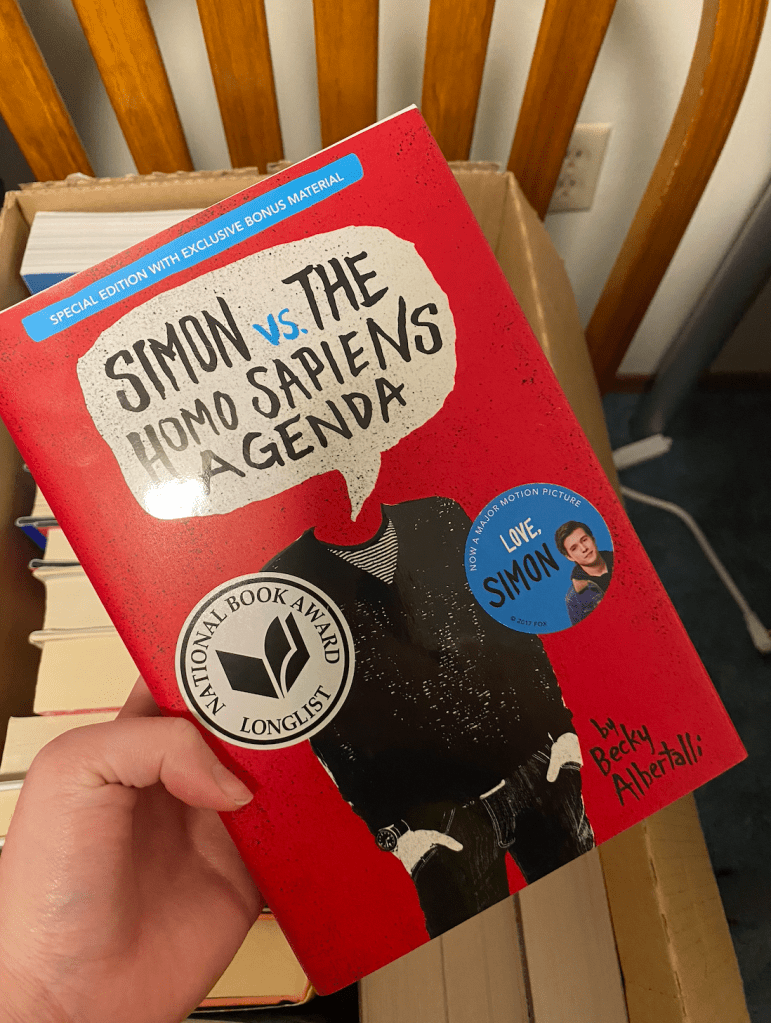
Sometimes you cannot put your feelings into words themselves. Especially if they are scary and unfamiliar. So, books can do it for you. I flipped through the book and found this quote: 

So, I keep thinking about the idea of secret identities. Do you ever feel locked into yourself? I’m not sure if I’m making sense here. I guess what I mean is that sometimes it seems like everyone knows who I am except me.

Simon vs The Homosapiens Agenda by Becky Albertalli, page 56

And that quote, that quote hit me like a truck. It feels like I never understood myself, but some of my friends did and would say things that I just didn’t understand. So, to understand myself more, I read. I read more and more books to help me understand and find myself — because as someone who loves stories and fiction, it resonates with me more than anything else could. 

Keep Moving Forward

Flash forward 7 years, and here I am, still reading books to help discover myself. We never stop growing as people — we constantly learn and change and adapt. And for me, being in my early twenties, that’s definitely one of the most self-discovering times of life. And I still let books help guide me through that. And LGBTQ2S+ books aren’t even only about self-discovery — there are also books where queerness just is, something that isn’t different and just exists, which is much needed and much therapeutic. As a connoisseur of queer books these days, I’ve made an infographic about some of my favourites for different genres if you want to step your toes in! Even if some of the books are very fantastical and out of this world, I still see myself in each of these books, and I hope you can, too.

Finding that book on my shelf while doing some summer cleaning brought back these memories for me — and I even reminisce about that a bit on Twitter, if you’d like some more spur of the moment thoughts. It’s incredible what finding one book can bring back for you, and how you just can’t get rid of it because of the special meaning for you. Simon vs. The Homosapiens Agenda will live on my shelf forever, and continue to tell an important story — the story within it’s pages, as well as my story.

Categories
Uncategorized

Thinking Beyond the Basics: Storytelling

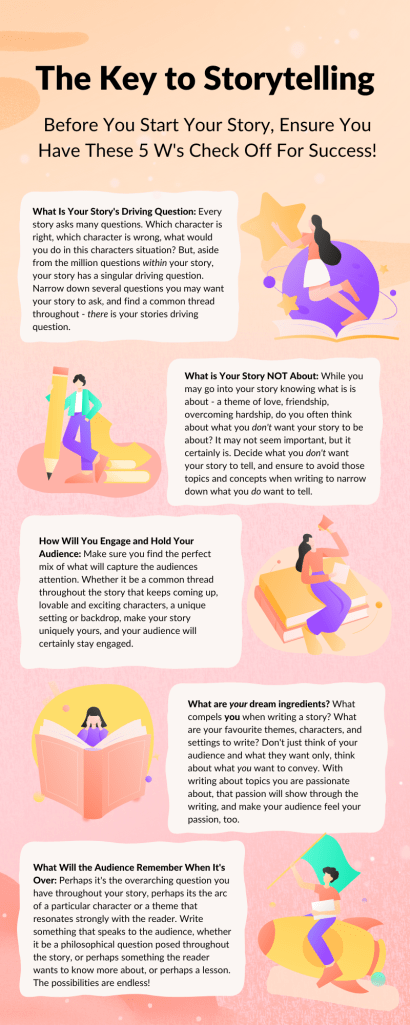
Ever since I was introduced to the “Beyond the 5 W’s” of Storytelling, I have not stopped thinking about them. As someone who has been writing for over half of my life, I cannot believe the idea of thinking beyond the basics I have been introduced to did not occur to me. Going beyond the 5’s lets me narrow down my stories more than before and find the perfect balance of what I want and don’t want in my stories; and I think there are many like me who would benefit from going Beyond! So, I decided to create my Infographic based around going Beyond the 5 W’s. Take a look:

Thanks to Alison Macadam’s article, I have a new outlook on storytelling, and I hope this info-graphic helps you out, too!

Categories
Uncategorized

Evening in the Life

For my live-tweet experience, I wanted to do something I never have done before, which is live-tweeting as I’m doing something. I decided to go shopping, so I thought I’d live tweet that! 

Story

I definitely wanted a thread of beginning, middle, and end within my thread, so I started before we went shopping and my thought process behind that decision, why I went shopping, and what the atmosphere was like. I centred my overarching theme around going to the bookstore, because I love the bookstore and am extremely passionate about it! As well, I love the atmosphere of the bookstore, and wanted to convey that within my story. I wanted to express how I feel in a bookstore, what runs through my mind in there!

Techniques

One highlight that stood out to me was Vanyerchuk’s “Document. Don’t Create.” Where Vanyerchuk wrote:

“Describe your journey, outline your vision, and describe your thoughts, ideas, actions, wins, losses, anxieties and ambitions online.”

Vanyerchuk, How to Tell a Story on Social Media

This quote stands out to me as an excellent way to inspire and form my live-tweeting, even for something as mundane as … shopping! When you don’t live a rather exciting life (or, well, one that many would not consider exciting, but its exciting in your own way) it’s hard to do something to live tweet! But, thinking about anything you document being a journey, using your own thoughts to format that journey into something special, like a story told on Twitter, I think that’s incredible. Anything can make a story, even live-tweeting a shopping trip to your favourite store, and it’s all about how you word it, what you make of it, and the threads that you weave within, well, that very same thread, on Twitter!

Categories
Uncategorized

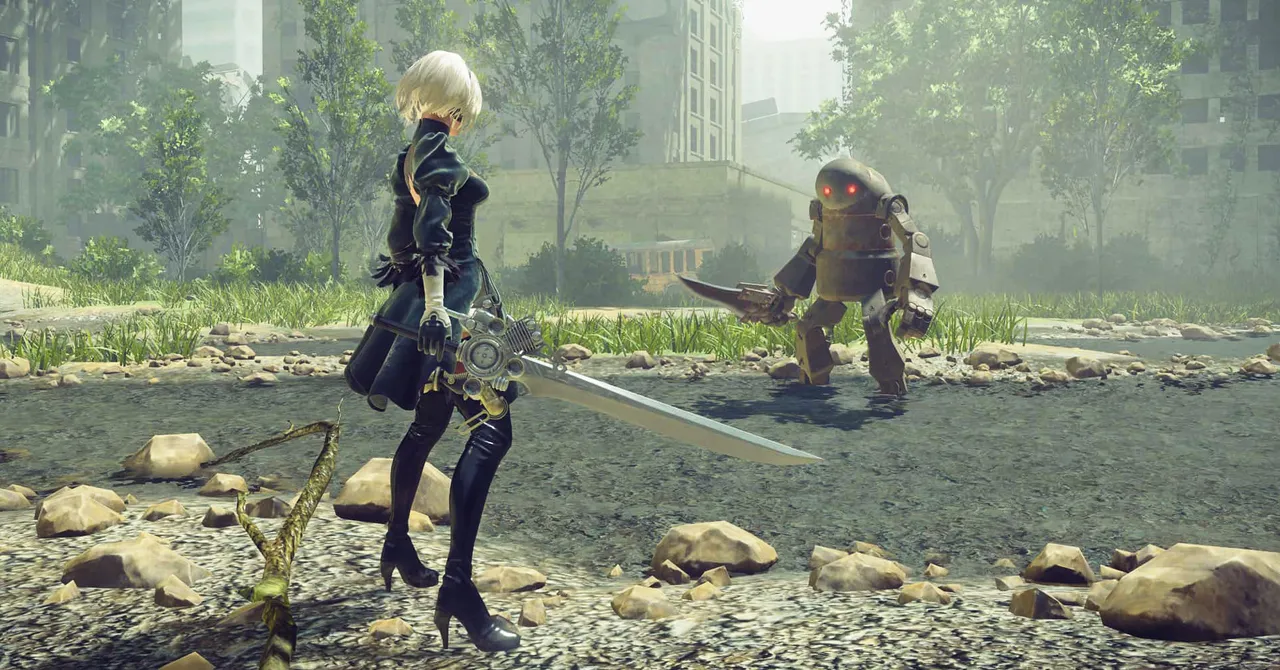
Nier: Automata – A Story Which May Leave You with an Existential Crisis, but in a Good Way

Whenever I experience a new story, I always begin with the hope that the story will leave me yearning for more — that the story will leave a lasting impression, that it will keep me up late at night after I’ve finished it and leave me with an endless stream of thoughts related to it. As someone who has read, played, and watched their fair share of stories and had several lasting impressions, there is one story that was able to do all of the above, except it wasn’t just for one night; it was for a whole week. And that story is called Nier: Automata.

Nier: Automata is an action RPG that follows earth in a dystopian future, one where androids (created by humans) and machines (created by aliens) are locked in a constant war. At its surface, Nier: Automata seems like a generic, dystopian plot – but that is far from what the story of the game is. The story of Nier: Automata is one that will ask you philosophical questions about life, death, the future, and everything in between. Now, why does this story resonate so much with me?

Nier: Automata goes beyond the five W’s. The game implements each excellently throughout the story to strengthen the narrative — it goes beyond to leave an impression, to leave the player wanting more. Within the game lie my personal taste of dream ingredients: loveable characters, an emotional rollercoaster of a story, quest lines that enhance the world, and music that is some of the most atmospheric I’ve ever heard in a game.

Take a listen to this song from the soundtrack. Do any of these words sound familiar? Do they sound kind of like a language, but not really? The story is set in the future, a future where they use “Chaos Language” — a language that is made from our own languages, but blended together as if the languages merged as time went on. The producer of the game, Yoko Taro, mentions that “[w]e wanted something that could truly serve as background music. If you don’t know what these mysterious words mean, you can’t get side-tracked.” By using a unique style of music like this, you not only keep the audience engaged with the story, but keep them engaged after the story — why the music uses what sounds like jumbled lyrics is actually a brilliant way to emphasize the dystopian world and make the world within the story stand out even more.

An element of storytelling that Nier: Automata uses to keep going beyond the five W’s, especially ensuring that different viewpoints are told and fair to who the story represents, is the fact that the game has three separate protagonists — 2B, 9S, and A2. Not only does the game have three protagonists, each protagonist has their own section of the game, and their own ending. Yes, that’s right — multiple endings. To get the true story of Nier: Automata, you must beat the game three times. (You probably want to play it an extra two times, too, to get the full story.) By playing as each separate protagonist, you get a feel for each character — you see their perspective of the same events, the differences in thoughts and feelings, and feel more of a connection to each character. Each character reacts to events differently; and that is part of what makes Nier: Automata such a special narrative experience. By showing how adversely different characters in the same situation can react — and letting the audience react with them.


Nier: Automata tells its story of the future through its soundtrack, its story of motivation and drive through its characters, its story of the world through quests and the narrative itself. There is one thing we do not have yet: what is the driving question of Nier: Automata? There is a reason that I’ve left this for last:

The game is unique in that you do not know the driving question until you finish the game. 

 At first, the story of the game may leave you with more questions than it asks you. The weaving of several endings and interwoven storylines leaves the player to have to piece together questions to end up at that answer. And once the story gives you the answer, it will leave you in awe. Because the question that comes up throughout the story is:

 “What is the point? Why is the game’s narrative going in this direction?”

and then, the core question of the game clicks. All the puzzle pieces click together to ask you,

“What would you do if you found out everything you’ve been fighting for is pointless — there was no point. Would you keep fighting? Who would you keep fighting for?”

Nier: Automata is not a happy story, it is a story of strife, determination, about a bleak future where there does not seem to be an end to the fighting. But, there is one key element to Nier: Automata, and that is hope. Even when everything seems pointless, like there’s nothing more left, there still is one crucial element left: hope. Whether that hope lies in the world, in someone you love, or within yourself, that hope still shines through. That is why Nier: Automata’s narrative is one of my favourite: it excellently uses its format of a video game to weave that theme of hope everywhere: within the characters, the soundtrack, the world, and most importantly, the story. 

When you need a reminder that hope still exists, check out Nier: Automata — it will be worth it.

Design a site like this with WordPress.com
Get started