Categories
Uncategorized

Grow something tasty.

Winter in Edmonton is long and frigidly cold, while summers are warm and short. To make the most of a condensed growing season, the Edmonton gardener needs to start early (but not too early) and plant wisely. With some good advice (and good luck), you can have a bounty of fresh fruit and vegetables throughout the late summer and fall, even in our northern climate.
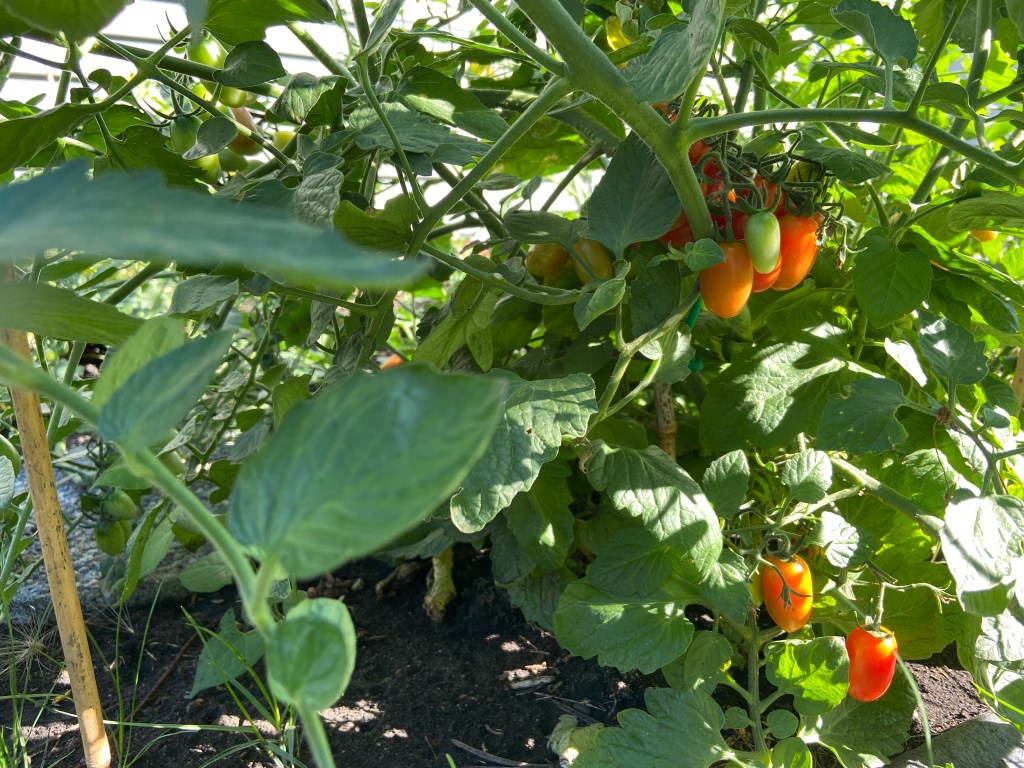
Grape tomatoes on the vine

Choose wisely.

First off, don’t try to grow something tropical, like pineapple, in Edmonton. It won’t work. You will be disappointed.

There are lots of plants that thrive in our climate. Some personal favourites are raspberries, carrots, rhubarb and tomatoes. Raspberries and rhubarb are perennials, meaning they will come back every year. Carrots, beets and other root vegetables grow well from seed, planted after the last frost. Most Edmonton-area gardeners will plant during, or just before, the May long-weekend. If you’re not sure whether something grows well in our climate, ask the experts at a local greenhouse (Salisbury and Kuhlmanns are both excellent).

Fresh raspberries

Grow things you like and use.

Lettuces grow easily in our climate, but that doesn’t change the fact that no one in our house eats it. Frankly, the effort to pick and clean lettuce that tastes exactly the same as the stuff you can buy at the grocery store just isn’t worth the effort. Same story with zucchini.

When you’re choosing fruits and vegetables to grow, consider what you like to eat or what just tastes better when it comes from your garden (ever compared a garden strawberry to a store-bought one? Night and day!)

Just because something can grow in your garden, doesn’t mean that it should.

Enjoy your harvest.

No matter how big or small your garden is, the reward comes when you harvest your crop and feast on the fruits (and veggies) of your labour.

With all the heat earlier this summer, our tomato plants have thrived and taken over the garden. Grape tomatoes are so sweet and they taste amazing right off the plant, but if you have some extras, this tomato jam is a delicious way to use them up.

Don’t have any garden tomatoes to use? No problem, this recipe works just fine with store-bought grape, cherry or roma tomatoes.

Tomato Jam Crostini

Ingredients:

2 cups grape tomatoes

2 tbsp. olive oil

1/2 tsp. salt

1/2 tsp. pepper

1 tbsp. brown sugar

1 clove garlic, minced

drizzle of glazed balsamic vinegar

1 baguette

Goat cheese (or soft cheese of your choice)

Instructions:

Preheat oven to 325F.

Rinse tomatoes and cut into quarters. Tip! Cutting lots of little tomatoes (grape, cherry, etc.) can be time-consuming. Watch this video for an easier way.

Place tomatoes on a baking sheet, add olive oil, salt and pepper.

Mix together and move them to one side of the sheet. In a single layer but all touching.

Place in oven, set timer for 30 min.

Remove from oven. Most of the moisture should be gone and the tomatoes should be mushy and slightly caramelized. Give them a mix and put them back in the oven for 20 min.

Remove again and add brown sugar, garlic and drizzle of balsamic glaze. Mix to combine and put back in for 15 min.

Remove from oven and mix. They should be mostly mushy and resemble a chunky jam.

While tomatoes cool, cut the baguette into 1″ rounds and toast slightly.

Spread a thin layer of goat cheese (or ricotta or any soft cheese) onto the toasted baguette. Top with 1 tbsp. of tomato jam per crostini.

Plate and drizzle with more balsamic.

Share with people you really like (or save them all for yourself!)

Happy growing!

Categories
Uncategorized

Planning a great story? Start here.

Every story starts with an idea. But, to make a good story great, ask yourself these questions as you work through the story planning process.

Who are you writing for?

What do they look like? How do they behave? By identifying your audience before you start writing your story you can weave in aspects that are important to them, and reflect their values. Look to make the audience the hero, if possible.

What’s the message?

Summarize your key message into one compelling statement. Think about the moral of the story and avoid confusing your audience with multiple messages.

What do I know about this?

Avoid making yourself the hero (leave that for the audience!) but include your own experiences as much as possible. Highlight the emotion of your personal struggles, to help others relate.

Reference: Carolyn O’Hara, How to Tell a Great Story, Harvard Business Review.

Categories
Uncategorized

Benny’s Big Game

My twitter story thread follows the action at my 10-year-old’s baseball game. A good baseball game has all the elements of a great story – suspense, humour, and a whole lot of emotion. This one did not disappoint!

Even when live tweeting something as fast-moving as a ball game, adding photos, hashtags and GIF’s makes it more engaging.

Just tell the world what’s going on.

This is solid advice from Gary Vaynerchuk, who reminds us that there is a never ending supply of content happening all around us, and all we need to do is document it.

Wondering who won the game? Here’s the thread.

Categories
Uncategorized

The Kite Runner

One day, not so long ago, my 10-year-old asked me, “what was it like to grow up in the 1900’s?” I was a bit thrown off at the phrasing, but recovered and explained that it was very similar to today, without the internet. He looked horrified.

Way back in the 1900’s, entertainment, at least in my house, meant reading. I’ve always appreciated a good story and have dozens of favourites, making it hard to pick just one. I recently re-read a beloved tale, The Kite Runner, by Khaled Hosseini, and was reminded why it consistently stays near the top of my list.

Following the story spine, The Kite Runner goes something like this.

Once upon a time, a young man named Amir grows up in 1970’s Afghanistan, with his wealthy, widowed father and their servants.

Every day, he enjoys his childhood with his servant and best friend, Hassan, while trying to earn his father’s affection.

But, one day, while helping Amir win a kite-fighting contest, Hassan suffers a horrific sexual assault and Amir does nothing to stop it. To make things worse, he frames Hassan for something he didn’t do, forcing Hassan and his father to leave their home.

Because of that, Amir’s family is torn apart. Hassan and his father move away. Amir and his father emigrate to the United States, and 20 years pass without contact with Hassan. Afghanistan is ravaged by war. Amir and his father struggle in America, and his father dies of lung cancer. Amir marries, but he and his wife are unable to have children.

Until finally, Amir returns to Afghanistan and learns what has happened to Hassan. He is given the opportunity to atone for his mistakes, but not without risk and sacrifice, including a confrontation with the person who assaulted Hassan years earlier.

And, ever since then, Amir does his best to move forward and tries to make up for the horrible decisions of his childhood by adopting Hassan’s orphaned son and bringing him to America.

Memorable characters and vivid description.

The Kite Runner has received critical praise and more than its share of controversy. It has sold millions of copies by following the principles of good storytelling. The story relies on universal themes, including strained father/son relationships, and redemption.

Amir is not always likeable, and there are many points in the book where the reader may find themself silently urging him to act differently. But, his guilt betrays his humanity. While he initially shows cowardice, it’s no more than anyone might expect of a 12-year-old boy, and he’s forced to grow up quickly with the resulting impact. This makes him, if not likeable, at least relatable. He’s a real person, who does some awful things as a boy, and then carries the weight of those decisions into adulthood.

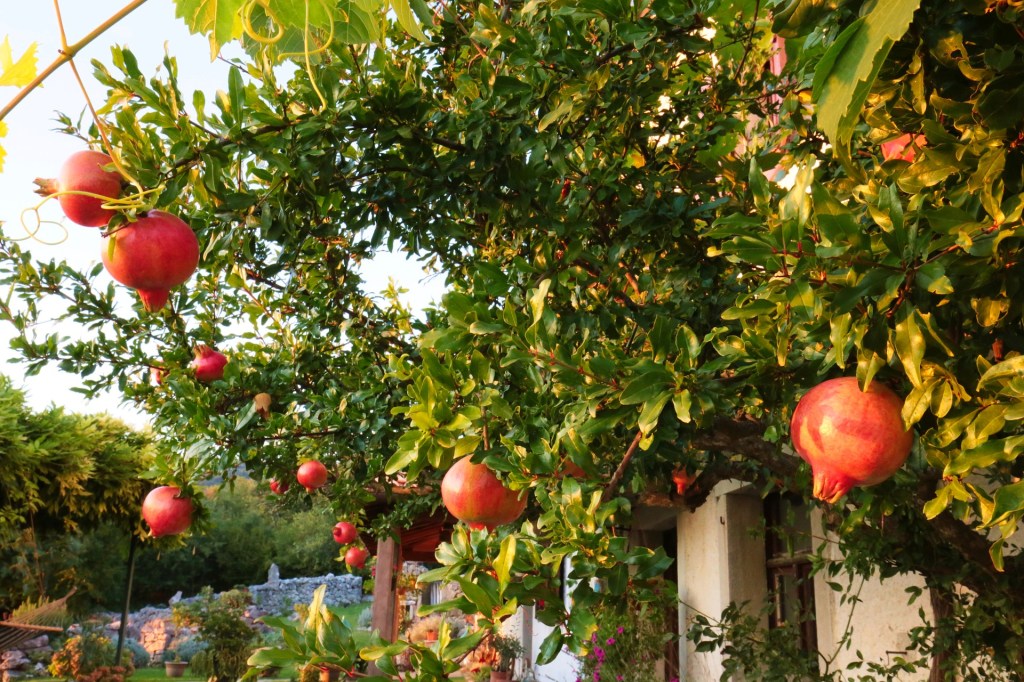
Kabul, and then California, are described with rich detail, allowing the reader to imagine themselves sitting beneath an ancient pomegranate tree or browsing the crowded aisles at the Afghan flea market in San Jose. For someone like myself, who grew up watching images of Afghanistan on television, depicted as a hot, sandy desert filled with war and terror, the startling beauty of the country came to life through this book.

Pomegranate Trees

While this book takes place over several decades, and across continents, it remains a simple story of family, and doing what’s right, even when it’s hard. There are twists along the way that keep the reader guessing and interested, and emotional passages that have me in tears every time I read it.

Design a site like this with WordPress.com
Get started