In the fascinating world of storytelling, every great narrative creates a story that is trying to help you. Whether you’re writing a book, blog, or a simple post, there are certain principles to develop your story from ordinary to captivating. Let’s unlock the secrets with these 5 essential storytelling principles:
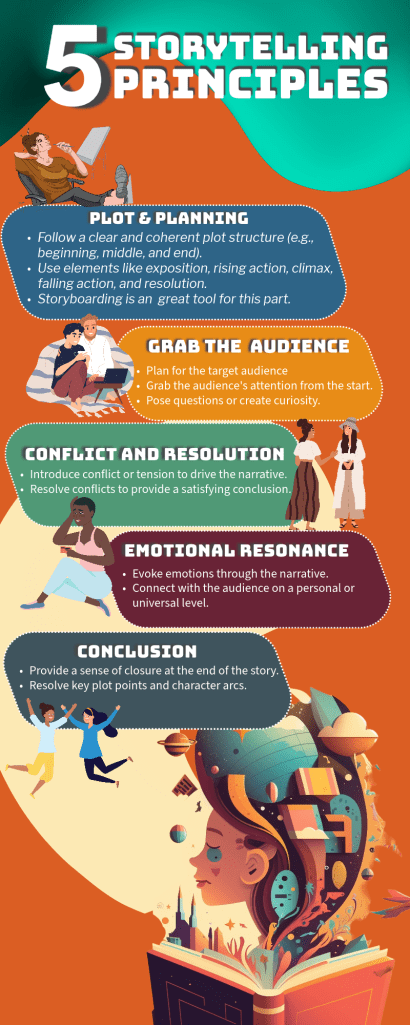
1. Plot & Planning:
Plot and planning is the architect of the story, a blueprint that guides the characters throughout the journey. Thoughtful planning helps to develop a cohesive and engaging story, that leads the audience on a fascinating adventure. A Storyboard is helpful in this creative process it will flush out the main ideas.
2. Captivate the Audience:
A captivating story is one that grabs its audience from the start. By creating characters or a story that is relatability, and will solve an issue. Draw the readers or viewers into a place where they can invest emotionally. Captivating the audience requires building a connection between your audience and the story /characters, making them care about the outcome.
3. Conflicts & Resolutions:
A story is must contain conflict. It is the crucible in which characters are tried and changed. Conflicts and resolutions add layers to the story that develop tension and uncertainty. Whether internal struggles or external challenges, conflicts afford the risks that keep the audience wanting to know more. We want a solution, even in digital media the audience is looking for resolutions.
4. Emotions that Resonate:
Emotion is the essence of any story. Emotions that resonate stay with the audience long after the story ends. Whether it’s joy, sorrow, anger, or fear, evoking genuine emotions generates a thoughtful connection. Showcasing the human experience in all its complexity enhances storytelling, the story becomes unforgettable and impactful.
5. Conclusion that Makes Sense:
A satisfying conclusion is the string that ties a story together. A Conclusion that makes sense doesn’t automatically mean a tidy ending; rather, it suggests a resolution that feels earned and reasonable. It answers remaining questions, supplies closure to character arcs, and leaves the audience with a feeling of fulfillment.
 EXSM 3989 - Digital Storytelling Class Blog