Storytelling is a timeless art form that has been a part of human culture for centuries. From campfires to books, movies to podcasts, storytelling has evolved over time, but the principles of what makes a good story remain the same. At its core, storytelling is about engaging an audience and transporting them to another world, whether that be a fantastical realm or a real-life experience. The power of a good story lies in its ability to connect with people on an emotional level, leaving a lasting impact long after the story has ended. In this blog post, we will explore the principles of good storytelling and how they can be applied to create compelling narratives that captivate and inspire.
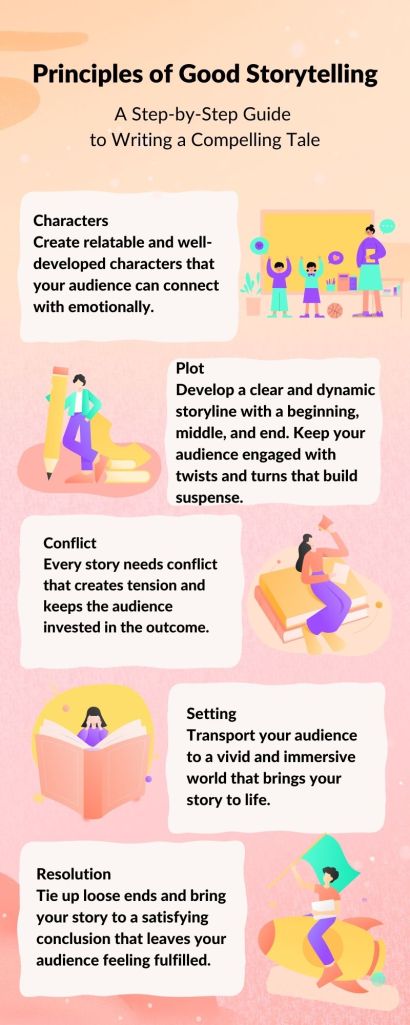
Characters
Create relatable and well-developed characters that your audience can connect with emotionally. Characters are the heart of your story, and they need to be fully realized in order for your audience to care about them. Consider giving your characters distinct personalities, backstories, and motivations that drive the plot forward. Whether your characters are heroes or villains, make sure they have flaws and weaknesses that make them more human and relatable.
Plot
Develop a clear and engaging storyline with a beginning, middle, and end. Keep your audience engaged with twists and turns that build suspense. A good plot takes your characters on a journey and challenges them to overcome obstacles along the way. Consider using storytelling techniques like foreshadowing and cliffhangers to keep your audience guessing and invested in the outcome. A strong plot should have a clear structure that guides the audience from the setup to the climax and resolution.
Conflict
Every story needs a conflict that creates tension and keeps the audience invested in the outcome. Conflict can take many forms, whether it’s a physical battle, an emotional struggle, or a moral dilemma. Consider what your characters want and what’s standing in their way, and then raise the stakes to keep the tension high. Conflict is what drives the plot forward and keeps the audience engaged.
Setting
Transport your audience to a vivid and immersive world that brings your story to life. The setting of your story can be just as important as the characters and plot. Consider the time and place in which your story takes place, and use sensory details to create a vivid and immersive world that your audience can picture in their minds. Use setting to create atmosphere and mood, and to help establish the tone of your story.
Resolution
Tie up loose ends and bring your story to a satisfying conclusion that leaves your audience feeling fulfilled. A satisfying resolution is what separates a good story from a great one. Make sure that your ending is consistent with the rest of your story and that it resolves any lingering questions or conflicts. Consider what your audience will take away from your story and what message or emotion you want to leave them with. A good resolution should tie up loose ends while also leaving room for interpretation and reflection.
“A life without stories would be no life at all. And stories bound us, did they not, one to another, the living to the dead, people to animals, people to the land?”
https://blog.hubspot.com/marketing/storytelling-quotes
— Alexander McCall Smith
Each of these principles helps to create a powerful and memorable story that resonates with your audience. By mastering these principles, you can become a skilled storyteller who captures the hearts and minds of your listeners or readers. So go ahead, embrace the principles of good storytelling, and bring your stories to life.
 EXSM 3989 - Digital Storytelling Class Blog