By Joanna Chu
I can still recall the moment I first decided to watch The Reader, a romance/drama film set in post-Nazi Germany. I was a budding young pre-teen who was starting to understand the intricacies of our world, and the forbiddenness of watching a movie that was rated R made the film and the story to follow so much more enticing to me. I first watched this movie on a flight, and it would become the “long-lost film” in my head as I could not recall any details from it other than the main plot. It wasn’t until early adulthood, when I discovered Yahoo Answers (RIP), that I could pop my question in and long lost, it was no longer. This movie really affected me, and I thought about it often. The simple fact that I could not determine or figure out what movie this was caused even more internal conflict and drama because I wanted to find out so badly!
Although The Reader only scored a 63% critic rating on Rotten Tomatoes, I can assure you that the Google audiences scored this film relatively high with a 90% positive rating. It may make you cry, it may anger you and it may even make you question your morals–all the great tensions and emotions that come with compelling storytelling.
(Warning: Spoilers Ahead!)
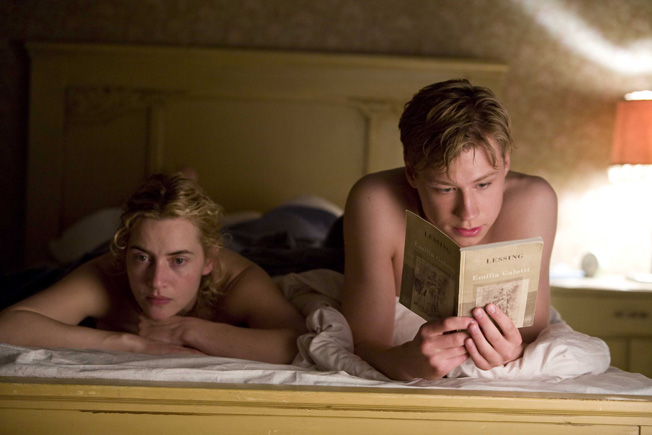
The movie follows the protagonist and narrator, Michael Berg, who we learn is having a sexual relationship with an older woman, Hanna Schmitz, when he is only 15 years old. Frequently, before their passionate love-making, Michael would read to Hanna upon her request. “Reading first. Sex afterwards.” One day, Hanna packs up and leaves without warning, and it isn’t until later in the movie, when Michael is a young law student, that their paths cross again. We discover that Hanna is on trial for Nazi war crimes and her part in being an SS prison guard. Michael battles with his moral beliefs but ultimately decides to rekindle a relationship with Hanna while she is in prison. He sends audio tapes of himself reading aloud like he did when he was younger, and we unearth Hanna’s biggest secret: she is illiterate. The theme of illiteracy is vital in this film because it sets the tone for a moral dilemma for Hanna and is a turning point for the audience when they discover this. Hanna should be paying for her part in the Nazi war crimes, however, there is a part of you that almost feels bad for her due to the context of the illiteracy. (Trigger warning ahead: mention of death and suicide). Before Hanna is about to be released from prison Michael decides to visit Hanna. Shortly after, Hanna dies by suicide, leaving the viewer to wonder if she passes due to her struggle with her moral dilemmas or Michael visiting her.
Impactful stories are universal and relatable. This story caused an internal struggle within me, where the simple concepts of right and wrong and what justice is began to blur. It was not so black and white. Kate Winslet, who played Hanna Schmitz, expressed how difficult it was to portray this character and that the most challenging element to display accurately was “learning how to be illiterate.”
The Reader does a good job of following the Story Spine and, fundamentally, is written as a well-constructed story with a proper beginning and end, a groundbreaking event, a middle part that covers the consequences and a primary and secondary climax. This story is compelling as it displays tension from the different viewpoints presented and has even been criticized for displaying themes of Holocaust Revisionism for making Hanna the object of audience sympathy. The film is adapted from the novel, The Reader by Bernhard Schlink. With that, the author and director could have been more mindful of the questions to ask before starting a story. The question that may have combatted some of this critique would be to ensure that this story is fair to the people and ideas it represents. Conclusively, this proves that this story was captivating as it had the power to engage its audience, hold them and ensure that they would remember it for years to come.
 EXSM 3989 - Digital Storytelling Class Blog