Based on the article by Carolyn O’Hara

Stories are for telling, whether to exchange knowledge or entertain. Each person has a story to tell, be it fiction or based on true events.
Sharing stories has been an art and a way for safeguarding our history (or fiddle with it) for millennia. Stories let express our opinions and emotions about our surrounding, but also unleash our creativity.
In this blog, I summarize the article titled “How to Tell a Great Story” by author Carolyn O’Hara, published in 2014. Although Carolyn focuses on how to tell a compelling story in a business context, I try here to take the learning and generalize them to any storytelling form and context.
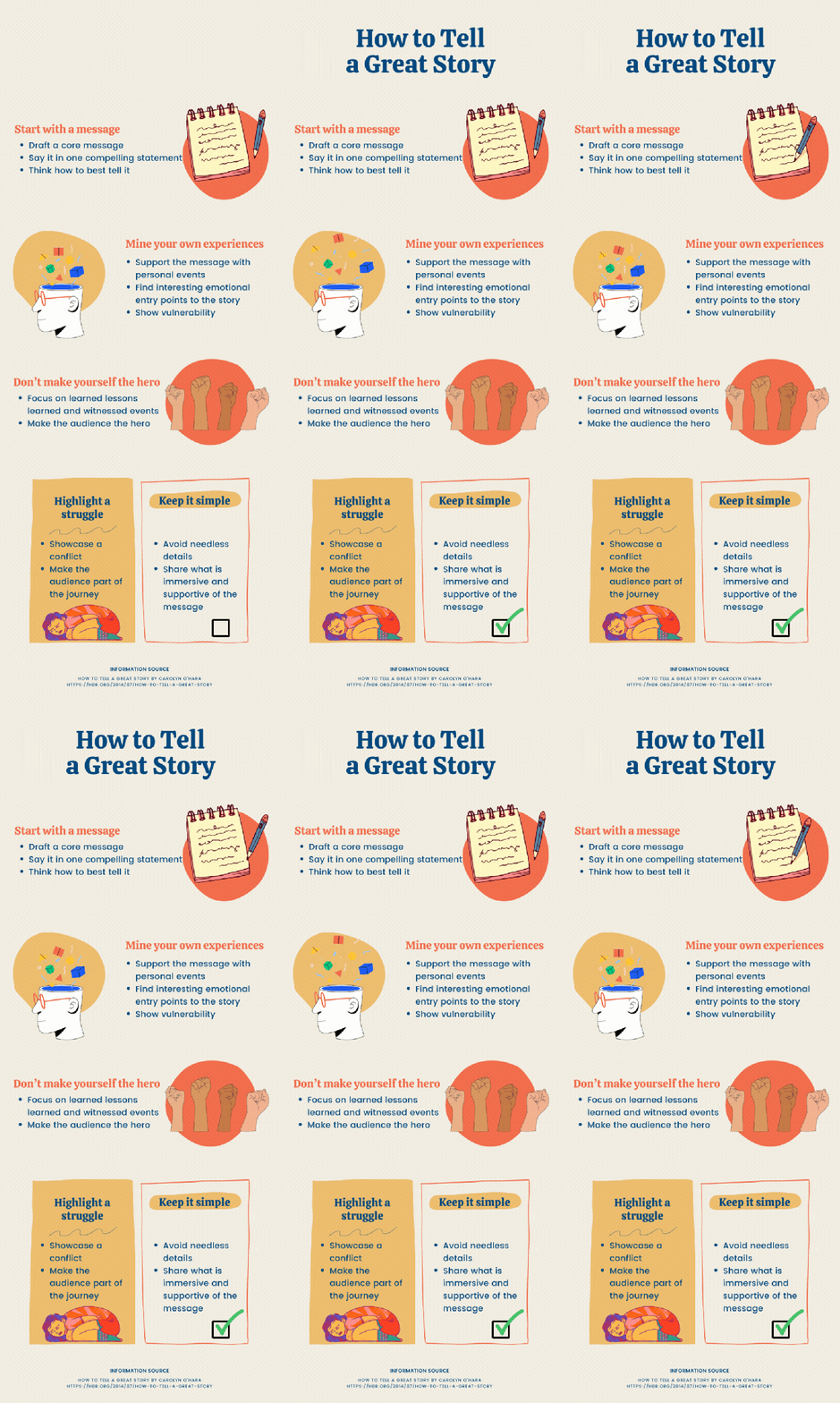
At the end, I add an infographic to summarize these learnings and tips, in case you would like a visual brief summary.

Stories create long-lasting memories and evoke emotions that are way more powerful than graphs and reports alone! Here’s what Carolyn suggests to tell a successful story, in 5 brief and practical tips.
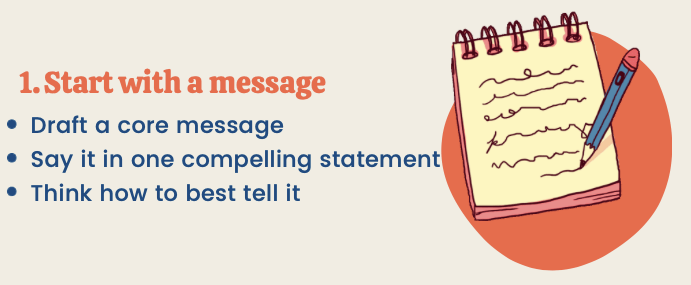
If not the most important element of any story, it is one of the most important: the moral of the story! What message are we conveying to the audience we are engaging? And how can we ensure the engagement is successful? According to O’Hara, each decision about your story should flow from those questions.
It is crucial for your story to be able to state its core message in one single compelling statement. “Beyond the 5Ws: what should you ask before starting a story?” is a great read by Alison Macdam exploring the additional questions one should ask when writing a compelling story. An awesome summary of the article is in the image below:

Now how to make the story relatable and engaging? The following section got some tips on thay!
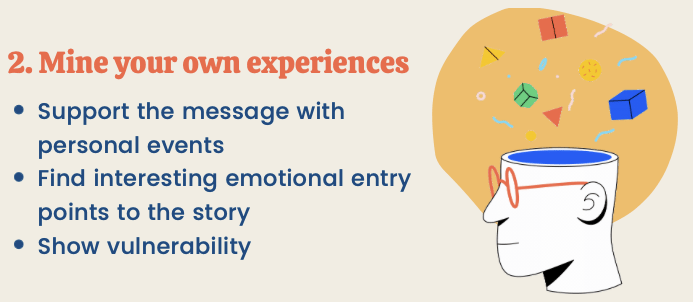
According to Plymouth University associate professor, Julie Parsons and Senior Lecturer in Education, Brunel University London, who recently examined our interest in reading about people’s experiences during the pandemic, this behaviour is part of our genetic make up as a species. Our stories are shaped by engaging with others’ stories and experiences. According to the author, this is an active type of exchange allowing us to make sense of the world around us. “We’re always looking to the Other because we’re storied beings – because we make sense of our lives in relation to others,” according to Chappell.
O’Hara suggests asking ourselves: What events in our life make us believe in the idea we are trying to share? These emotional entry points, be it a struggle, failure, and barriers overcome add a layer of authenticity and relatability to the story. “The key is to show your vulnerability”.
But in doing so, another challenge arises: falling into the faux-pas of portraying oneself as the hero! What should the focus be instead? Next section talks about that.

Let’s not confuse being the hero if the story with being the central figure!

The main focus of the story and the engaging component should be “lessons you’ve learned, or events you’ve witnessed.” says O’Hara. Not only that, but to get that extra engaging element, strive to make the audience the hero! According to the author, this would improve engagement and buy-in, thus contributing to the story’s success. And nothing steers interest like a struggle. Why? Keep reading!

Now that we have the compelling message and moral of the story all figured out, supported by a bouquet of lived experiences, are we done? Nope! According to Aerogramme Writers’ Studio’s “Back to the Story Spine” an important element of the story spine is “But, one day”! What does mean? A conflict, a challenge, a routine break! A highlighted struggle will make the story relatable and believable! Who hasn’t struggled before? And it’s always rewarding to be part of the solution process; part of the journey!


What’s the final tip to making your story great? Keep it simple! Drama and twists are always fun, but overdoing it might be a big turn off! I always ask myself I delete this or that detail, would my story be impacted? And would the experience be less engaging or entertaining! I the answer is NO, saying goodbye is then easy! The main purpose to focus on what is immersive and supportive of the message!
A summary infographic of the 5 tips
 EXSM 3989 - Digital Storytelling Class Blog