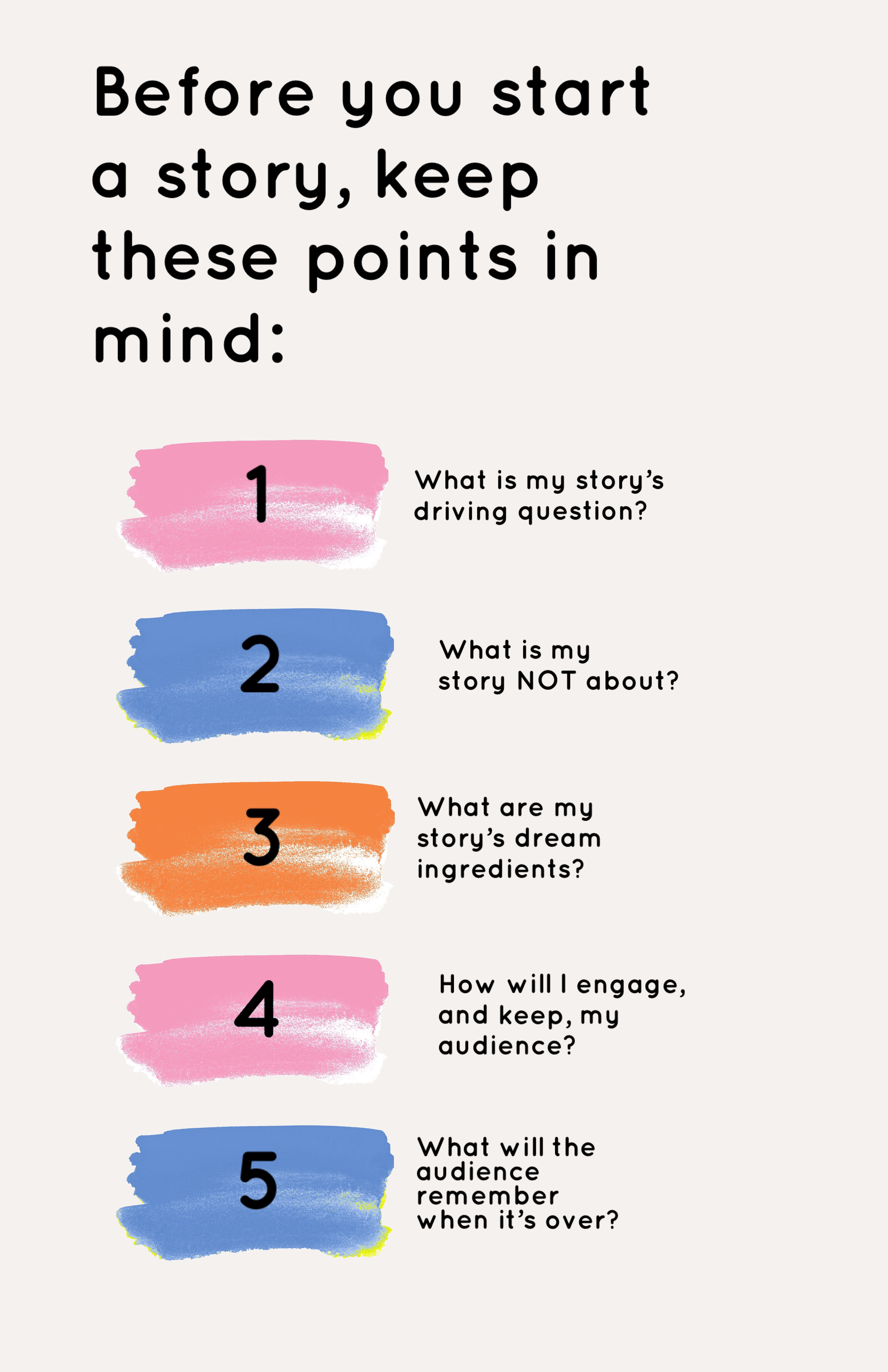
The infographic below outlines five things you need to consider at the outset of your story making process. It reflects an investment in your creative process that informs the story and guides you to its completion.
1. What is my story’s driving question?
Think of this question as a challenge to find the focus of your story. Without a clear mission or purpose for your story, you can lose focus on your message and end up challenging your reader to decipher it rather than leading them on a effortless journey. Think of what question the reader wants answered by your story and form it with the answer to that question firmly in mind.
2. What is my story NOT about?
The challenge here, before you start writing a story, is to become aware of the balance between providing a comprehensive, informative story and overwhelming the reader with extraneous details that, while relevant, distract from the central message of the story. Think of this question as an invitation to trim the fat by making a list of the details and context that will distract the reader from the focus of the story. You want to answer the driving question the reader is looking to have answered by your story, not leave them with more questions.
3. What are my story’s dream ingredients?
Another way of asking this is what elements to your story are crucial to its message. Here, you’ll want to consider any complex issues that require context. What will your story require to be memorable? How can you tie various story elements together cohesively?
This step doesn’t require that you know all of your essential ingredients in advance. A lot of those will come through the writing process. What it does, however, is assist you in forming your best story right from the start.
4. How will I engage, and keep, my audience?
This consideration is your reminder to get creative with your story and your storytelling process. Keep in mind the why of your story, your driving question. How can you make that interesting? Can a theme or thread be weaved throughout the story that makes it more compelling? Consider why your audience is here and what will make the biggest impact on them.
5. What will the audience remember when it’s over?
Focusing on what you want the audience to remember guides you in building the story. Being aware that nobody remembers entire stories, what scenes or ideas do you want to leave your audience with? What new perspective or expansive idea do you want them leaving with? Know that, and write towards it.
 EXSM 3989 - Digital Storytelling Class Blog