L.M. Striemer
It’s 2007, I’m delayed in northern Thailand waiting for a boat ride to take me south towards Bangkok. I had been visiting my grandfather and step-grandmother, who live in Chang Rai, for the past few months working on the farm. While waiting for the boat, I decided to wonder to the free library hanging on the streetlamp – I was really hoping for something interesting, there were few books, and even fewer printed in English except for one – “A Quick Little Run Around the World” by Rosie Swale Pope.

At the age of 57, after losing her husband to Cancer, Rosie put on her running shoes one day and decided to go for a quick walk around the block. After 5 years and 20,000 miles later, Rosie became the only person in the world to have run-around-the-world solo and unsupported by carrying her belongings on a cart behind her – https://rosieswalepope.co.uk/
I now see how Rosie, back in 2003, had already applied the advice offered by Carolyn O’Hara in her article “How to Tell a Great Story” published almost 11 years later. Carolyn O’Hara offers specific Do’s and Don’ts when telling a story:
Principles to Remember
Do:
- Consider your audience — choose a framework and details that will best resonate with your listeners.
- Identify the moral or message your want to impart.
- Find inspiration in your life experiences.
Don’t:
- Assume you don’t have storytelling chops — we all have it in us to tell memorable stories.
- Give yourself the starring role.
- Overwhelm your story with unnecessary details.
In remembering Rosie’s story, I also now understand how well her story was constructed by her usage of the above key principles. Rosie is considerate of her audience by not only including her personal story with her struggles, challenges and wins, but by also by weaving the stories of the people she meets on her journey into her story. Rosie offers her story in this framework to Identify her message that she wants to impart – the importance of getting testing for cancer. She uses the inspiration from her experience of running around the world to showcase the perseverance, resilience of the human spirit and the small simple kind acts of others.
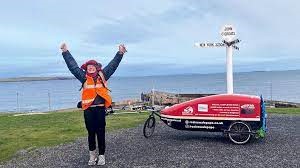
What made this story so memorable for me was how I felt after reading it. Rosie’s story is compelling, insightful, adventurous and humbling. It made an impact on me because I was so engaged with her adventures and her challenges of running around the world solo that I was inspired and found myself cheering her on, each turned page.
If you have multiple questions, you probably have multiple stories. Stick to one and answer it well. Your audience will stay with you.
Alison Macadam, Beyond the 5 W’s: What should you ask before starting a story?
And just like the advice given in the article Beyond the 5 W’s: What should you ask before starting a story?, Alison Macadam points out that it’s also important to identify what the story is NOT about. In Rosie’s story, it was not about her grief, her loss or the specifics of the illness of cancer itself, but rather about the human spirit, its experiences with illness, its resiliency, its triumphs, its challenges, its similarities no matter where one lives or the language they speak.
In the few hours that I was waiting for the boat, I finished the book! I couldn’t put it down, page after page I was hooked, time flew by, and I felt so inspired and humbled after those few hours that since reading Rosie’s story, I often have moments where I ask myself, what would Rosie do? I will always remember this story simply because it ultimately made me miss my boat!
Have you ever missed something or forgotten to do something because you got caught up in a story?
 EXSM 3989 - Digital Storytelling Class Blog