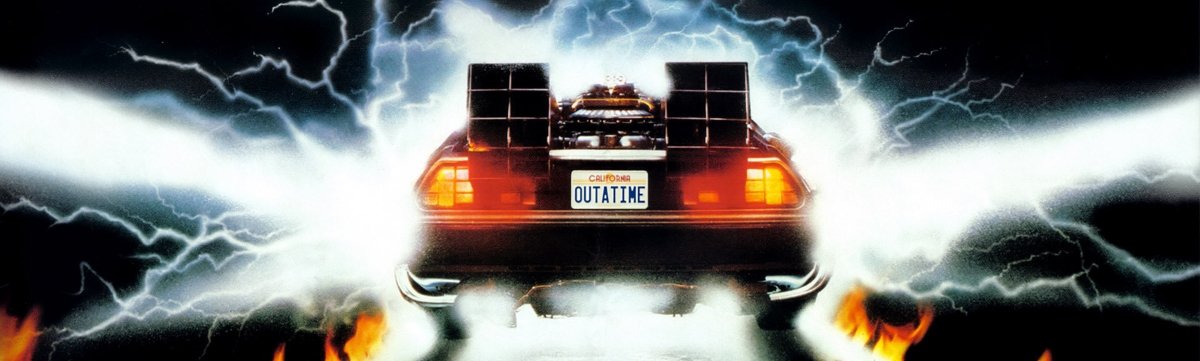
For a certain sci-fi fandom, words such as “DeLorean,” “gigawatt,” “88 MPH” and “flux capacitor” can only mean one thing: the BACK TO THE FUTURE trilogy. The adventures of Marty and Doc as time-tourists, told through three original motion pictures, have been one of my favourite stories since childhood.
When released, the first Back to the Future (BTTF) movie was an immense success becoming the highest grossing film of 1985. Two sequels were soon added, and since then the trilogy has inspired a theme park ride, cartoon series, merchandise and, most recently, a musical.
What makes this science fiction story a timeless classic for countless adoring fans, myself included? Let’s examine some of the basic storytelling principles at work in BTTF.
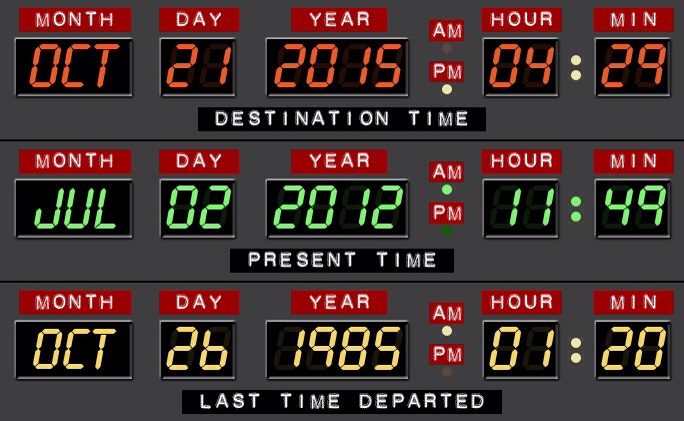
The Driving 88 MPH Question
For starters, the plot’s genesis was a simple question from co-creator Bob Gale: if he and his dad attended high school together, would they have been friends? For Alison MacAdam, having a question that drives the story is key at the beginning of the creative process. In her article “Beyond the 5 W’s: What should you ask before starting a story?,” she explains that this question provides the storyteller with a mission. From Gale’s initial question, a great story was born.
If we break BTTF’s story down to its Story Spine, a tool described by Kenn Adams in his article “Back to the Story Spine,” it would read something like this:
- Once upon a time, there was a typical American teenager named Marty McFly who was friends with an eccentric scientist named Emmett L. “Doc” Brown.
- But one day, Marty gets sent to the past (November 5, 1955 to be exact) in Doc’s time machine.
- Because of that, he must locate 1955 Doc to help him get back to the present.
- Because of that, he runs into his future parents setting off a chain reaction that puts his very existence in danger.
- Because of that, he must first work to make things right so that his parents fall in love before he can get back to the future.
- Until finally, Doc helps him successfully return to his life in 1985 (which is somewhat altered because of his adventures in 1955).
- Ever since then, cue the sequels!
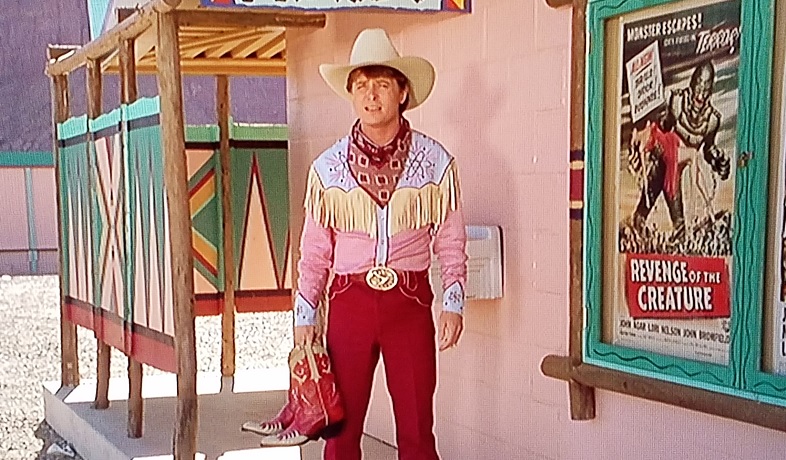
Nobody calls me chicken: the endearing protagonist
At its most basic, the BTTF story is not only simple and focused, but it also provides an endearing character to root for in the form of Marty McFly. These fundamental elements are described in the article “The 22 rules of storytelling, according to Pixar,” in particular rule #16 which stipulates that the audience needs a reason to cheer on the protagonist who has the odds stacked against them when the stakes are high.
To quote the U.S. National Film Registry (of which BTTF is an inductee), Marty “must not only find a way home, but also teach his father how to become a man, repair the space/time continuum and save his family from being erased from existence. All this, while fighting off the advances of his then-teenaged mother,” oh, and not to mention do it all with enough time left to be in the DeLorean going 88 MPH precisely as the Clock Tower is struck by lightning. With so much high-stakes drama, the audience must hang on for a wild ride!
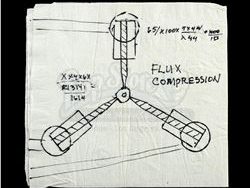
Whoa, this is heavy: the universal space/time continuum conundrum
BTTF’s story succeeds and resonates with audiences because it addresses an ageless and universal issue: time travel. Whether a trip to the past or the future, who among us, from school-aged children to NASA scientists, hasn’t at some point pondered this fundamental question?
For myself, this fascination with time travel has gone hand-in-hand with my love of history and longing to magically travel through time to witness historic moments in the making (and hopefully return unscathed to the present!).
In the end, there are many elements that make this story memorable to audiences. Certain images from BTTF, like those mentioned in the opening paragraph – as well as others such as Mr. Fusion, hover conversion and hoverboard – have become iconic, leaving indelible impressions upon our imagination.
But perhaps most compellingly, the lasting message from these movies is one of optimism: you control our own destiny. As Doc so eloquently puts it in BTTF III: “Your future hasn’t been written yet. No one’s has. Your future is whatever you make it, so make it a good one!”

Your kids are gonna love it: a touch of nostalgia
To end on a personal note, the BTTF trilogy is not only a great story but, from a nostalgic and emotional perspective, it will forever live in my heart because of the cherished memories I have of spending time with my family watching these films together. The number of movies we agree on as a family is few and far between, but BTTF has always been, and will always be, a story that units us and one we all love – Great Scott!
If you put your mind to it, you can accomplish anything.
– George McFly
If you love all things BTTF, be sure to check out the official site:
~ OUTATIME / The End ~
 EXSM 3989 - Digital Storytelling Class Blog