
One of my favourite movies of all time is Mulan, the 1998 animated classic.

This story follows the story spine perfectly, making it a clear and concise tale:
- Once upon a time there was a girl named Mulan who was afraid of disappointing her parents.
- Everyday she struggled to fit in the role she was meant to play in society.
- But one day her father was called to war, and she took his place instead.
- Because of that she joined the army as a man.
- Because of that she was discovered and told to go home.
- Because of that she became determined to save China and her friends.
- Until finally she protected the emperor from his attackers.
- And ever since then she was seen as a hero, by both her family and her country.
As you can see, Mulan fits the story structure, having a beginning, middle, and end. Another reason this story is so well enjoyed is because it sticks to some of the fundamental rules of storytelling. Firstly, it’s universal. It is a story about a girl struggling to fit in to her world, wanting to please her parents, and deciding to help others- themes that most people can relate to. As well, the story gives you someone to root for, to care about. The audience sympathizes with Mulan’s struggle and wants her to succeed and save the day. The story is also simple and focused, it doesn’t drift away from our main character or over complicate the themes by adding too many subplots and extra characters. It works to engage the audience through its stunning graphics, catchy songs, funny jokes, unique characters, and action filled plot. Just like Ashley Fell mentioned in her TED Talk on powerful storytelling, the story includes colour, picture, and movement which grab our attention.

Another area of the story that really brings it to life is that the characters are given opinions, as mentioned in by Cyiaque Lamar in the article “22 Rules of Storytelling According to Pixar”. This is best seen in the musical number “A Girl Worth Fighting For”, where the different characters express what kind of women they like, all having their own fantasies of what the perfect girl would be. One of the rules mentions that the character should be admired for trying more than for their success. This is very true in Mulan’s story. She fails many times, messing up her meeting with the matchmaker, struggling to train for the army, etc. But through hard work she eventually succeeds. These aspects make her character more relatable to the audience, as we admire her imperfections, courage, and effort.
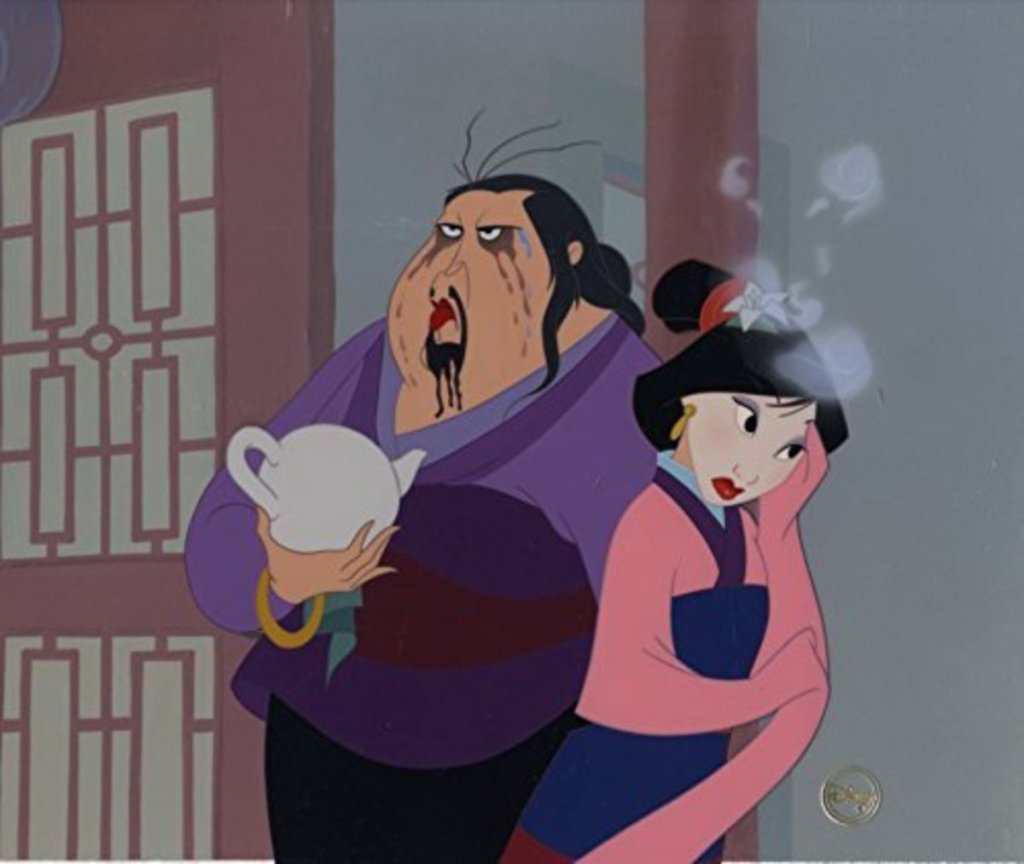
One of these 22 rules also mentions that coincidences should get your characters in trouble, not out of trouble. This happens in the story when Mulan is injured in battle, coincidently on her chest, meaning the doctor discovers that she is a woman. Lamar also reminds us that stakes are an important part of storytelling. The movie is full of high stakes for the main character. First, she has to make her family proud with the matchmaking meeting, then there is the high stake of trying to not be discovered as a woman, then there are the stakes of war and if she and her friends will survive, as well as the stakes of saving the emperor. The movie’s stakes get more and more intense over time, until Mulan’s actions lead to saving her own country!

Overall Mulan is a relatable, universal, inspiring, and action-packed tale that has still excites viewers like myself today, no matter how many times I watch it! It follows many story rules and points that allow it to hold its ground as timeless classic.
Images Retrieved From:
https://reelrundown.com/animation/Mulan-1998-Being-True-to-Ones-Heart
http://www.opinionatedpodcast.com/moviereviews/2020/9/13/mulan-1998
https://ketagalanmedia.com/2020/09/19/mulan-1998-is-still-a-film-worth-fighting-for/
 EXSM 3989 - Digital Storytelling Class Blog