
I would like to preface this post by saying that I am not a regular Twitter user nor am I a dedicated video game player so this blog in general is very outside my comfort zone. But, I do enjoy a good story and have been told by strangers on the internet that I can tell a pretty good one, so this assignment wasn’t all that bad.
I decided to live-tweet about something that happened while I was playing Animal Crossing: New Horizons on the Nintendo Switch this weekend. I realize I’m a little late to the game (sharing your game-play of ACNH is so 2020) but since I’m notoriously late to everything, it checks out. My sister got the game for Christmas and together we’ve been building up our island, Odyssea, for the past 7 months.
Not to brag, but Odyssea is pretty great (and yes, the name is a pun on the Odyssey. Both my sister and I really love Greek mythology). We’ve got a cool museum full of dinosaurs and art, a camping spot next to the orchard, an outdoor pool and basketball court, and a whole neighbourhood for our 9 villagers.
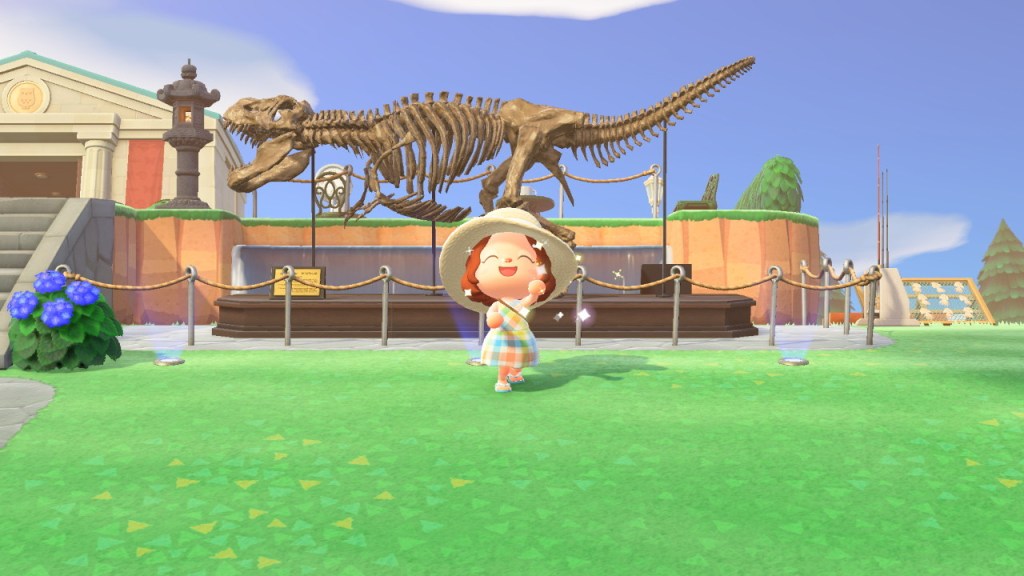
During a normal evening on the island catching fish and bugs as I tried to pay off a massive loan to Tom Nook, I happened across the event that sparked my Twitter thread story time.
The story goes like this: my sister and I have been competing in a self-imposed pitfall seed battle for the past few months. We take turns burying the seed on our island in hopes that the other person walks over it and falls in. This time, instead of one of us falling in, one of our villagers was the unfortunate victim.
This live-tweet thread was lots of fun to create and highlights some important storytelling techniques. Read on to see the 3 storytelling techniques I used to tell my Twitter story!
3 Storytelling Techniques to Use in Live-Tweet Stories
Start with a good hook
If your story isn’t interesting from the very beginning, people aren’t going to want to read it.
This is especially true with Twitter storytelling. People nowadays have very short attention spans so if your first tweet doesn’t catch their attention and make them stop scrolling, then they’re not going to read the rest of your story.
I decided to start my live-tweet thread with a bold statement: “OMG I JUST PUSHED MY NEIGHBOUR INTO A HOLE!?” It’s written in all caps to make people stop and take notice. And while it’s exciting, it doesn’t give away too many details – people will have to read the rest of the thread to see what happens. But I did include #acnh to let people know this happened on Animal Crossing.
Have a beginning, middle, and end
Remember that plot diagram from middle school? Those same principles still apply when you’re writing stories for social media.
In the beginning of my Twitter thread, I set the scene and introduce the characters. In the first few tweets its revealed this event takes place on my Animal Crossing island, and that Hornsby, a villager on the island, and I are the central characters.
In the rising action, I discover the potential pitfall seed danger and realize I have to save Hornsby before he falls in. I use suspense to draw this section out longer.
The climax is where, instead of saving Hornsby, I push him into the pitfall seed hole.
The falling action and conclusion is where I gave Hornsby an apology gift and decide to stop the pitfall seed battle I’ve been having with my sister.
Following this simple narrative pattern helps to organize your story and ensures you have all the elements of a good story (setting, characters, conflict, plot, etc.).
Use emotion
Social media is the perfect place to put emotion into your writing. If your story doesn’t evoke any emotion, people aren’t going to be interested in reading.
I chose to make my story humorous for obvious reasons (watching Hornsby fall into the hole was very funny). I express this emotion through the words I used, my use of capslock text, and the GIFs and hashtags I included in some of the tweets.
Part of the humor also comes from the dramatic nature of my story. I find stories, especially funny ones, are always better if they’re dramatized a bit. This event is something that happens normally in Animal Crossing and is much less dramatic that what I made it out to be. Villagers falling into pitfall seeds is just part of the game and really isn’t something all that interesting. But through my use of humor, I’ve made it interesting.
Plus, the pros at Buzzfeed say using humor is a surefire way to drive engagement so who am I to ignore their advice.
But humor isn’t the only emotion I evoke in my story. I also build sympathy for Hornsby be describing him as an innocent bystander in the pitfall seed battle my sister and I were having.
And there you have it folks, 3 easy ways to tell good stories on social media. Now you’re ready to harness those 280-characters and tell the best story you can.
 EXSM 3989 - Digital Storytelling Class Blog