My favourite story is “Pride and Prejudice” by Jane Austen. She wrote her first draft when she was only 21 in 1796, although it was only published in 1813, four years after death. Not only did Jane produce 6 long novels without formal education (or a typewriter), she intuitively understood what to include in her stories and what to leave out to catch and hold the attention of her audience.
Major themes
One of the central questions in Pride and Prejudice is whether it is better to follow social conventions and marry for money and respectability or to marry for love and happiness. Some possible themes such as Marriage, Wealth, Class, and Self-knowledge, are described on Wikipedia.
It is easy to look backwards and evaluate a piece of writing centuries later, but from a contemporary perspective, Jane was writing about what she knew from her own life and experiences. She is following guidelines we considered in our reading “How to tell a great story”;
Do:
- Consider your audience — choose a framework and details that will best resonate with your listeners.
- Identify the moral or message your want to impart.
- Find inspiration in your life experiences.
Don’t:
- Assume you don’t have storytelling chops — we all have it in us to tell memorable stories.
- Give yourself the starring role.
- Overwhelm your story with unnecessary details.
I especially like how this connects to the sixth extra question in “Beyond the 5W’s: What should you ask before starting a story?”, which is “What will the audience remember when it’s over?”. As a young unmarried woman, Jane might have been considering whether social conventions can or should be openly challenged, but in the end her female characters end up happily married to very attractive and financially stable partners. The message seems to be challenge if you wish, but do the right thing anyway to create a happy ending for all.
The Beauty of the Printed Text
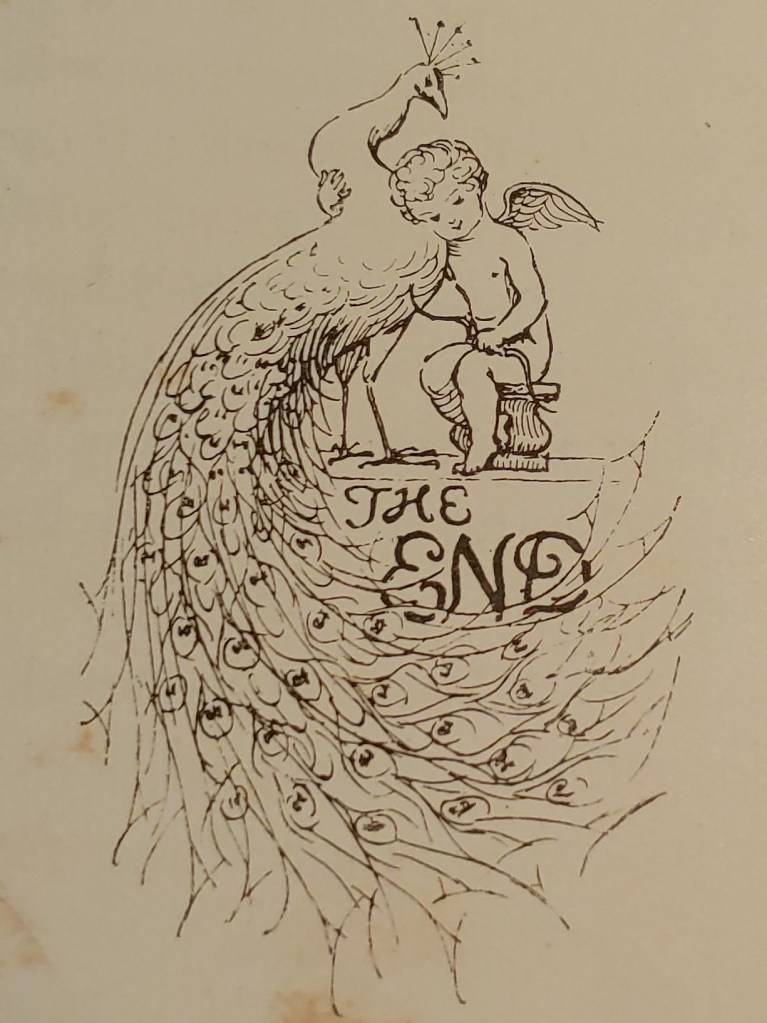
My favourite edition of it is the Peacock Edition, illustrated by Hugh Thomson and published in 1894. A description and images of it, and the asking price of various different copies of it, are found at AbeBooks.

The artistic quality of the physical book should not affect the reader’s satisfaction with the story, but it does enhance the experience, especially by providing illustrations that suggest the beauty of the ladies and the positive qualities of the gentlemen. Illustrations were used to encourage the reader to use imagination to create a solid impression of the characters, without an actual representation of an individual. They also added a beauty of their own.
In modern times with technology, readers can find links to various movie adaptations of Pride and Prejudice. If you have read the book a few times, you probably already have a solid impression of what Mr. Darcy looks like. Is that really Colin Firth?
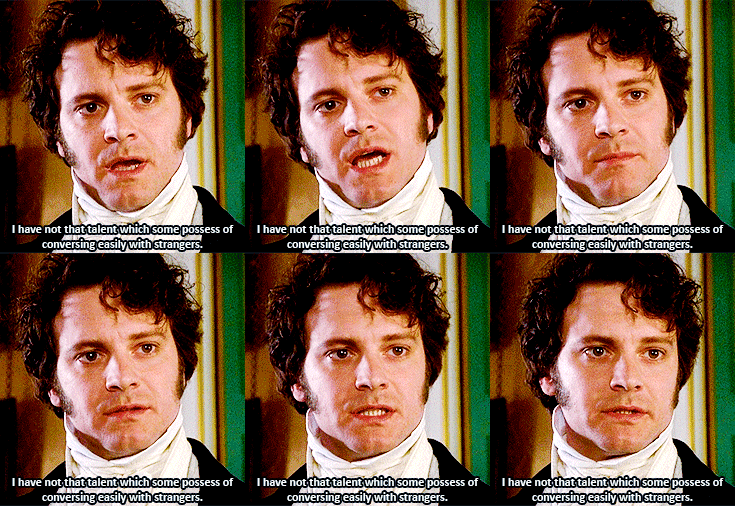
Even worse, let’s not even talk about Pride and Prejudice and Zombies (trailers easily found online).
I will stick with my hard copy of the story, with or without beautiful illustrations. A good story has a virtue of its own, without the modern tools of technology. The moral of Jane Austen’s story holds true, almost as long as Shakespeare’s. Surely there is something to be learned, and enjoyed, in that.
 EXSM 3989 - Digital Storytelling Class Blog