“Great stories are those that are human. Great stories are those that evoke emotion, and those that cause a reaction. If you are a brand or business that is thinking of using digital storytelling as a new tool for engagement, consider the four ‘I’s of storytelling first. These are the four new principles that form the basis of the future of storytelling” – Simon Heyes

Writing has been around for thousands of years, humans have always had a story to tell. From ancient symbols on cave walls to sending emojis over text message. What we’re going to talk about today is how to tell a good story! One that will capture your audience, whether you’re talking about selling sneakers, or what kind of mischief your pets got up to this week. Even if you think to yourself “Oh My Gosh, this is not even a story worth telling” I promise you, there is a way to make it worth writing!
There are so many things to keep in mind before you begin your writing expeditions. The Four I’s of writing is a great place to start:
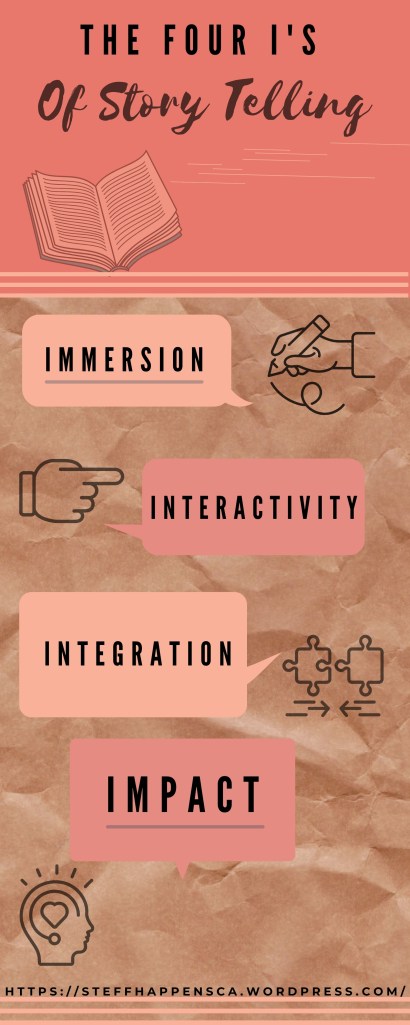
I know what you’re thinking, “Cool Steff, some words… what am I supposed to do with those!?” I promise, I’m not going to leave you in the dark. Let’s dive a bit deeper into each of the four I’s.
The Four I’s:
1. Immersion:
You’ll want to consider details that help build your story. It could be describing the characters traits, the weather, clothing, food, music that’s playing. All of this cue’s will allow your reader to go deeper into the story.
2. Interactivity:
This is your opportunity to allow your reader to influence or change a part of the story. My favourite example of this is the movie created by Black Mirror “Bandersnatch”. This is a very powerful, more personal way to engage your audience. It subtly blurs the boundaries of fiction and reality. In the digital it can be tricky to keep your readers focused, but this is a fabulous platform that will allow for more interactivity.
3. Integration:
In 2020 integration is a key thing to keep in mind when you tell a story. Basically, you want to make sure that your story is versatile enough to be shared on many different platforms, ensure that it reads when both on a computer, ipad, and mobile device. Even if you think “Oh, I just want people to be able to access it on a mobile device alone” you should consider the fact that maybe someone will start out on mobile, maybe at work, and want to finish the story at home on their desktop. Show that you’re with the “times” and choose transmedia storytelling.
4. Impact:
If you really want to leave an impact on your audience you’re going to need to evoke some emotion in your story.
I‘ve learned that people will forget what you said, people will forget what you did, but people will never forget how you made them feel.
Maya Angelou
The hope is to leave the viewer wanting to interact and share the content. Maybe it leads your reader wanting to make a purchase or donation. The story should inspire the viewers to take action, in some form.
I really hoped you enjoyed reading all about the “Four I’s of Storytelling”. For more fun and useful writing blogs, hit that subscribe button!
Did you find information that you think will help you in your next writing endeavour? Leave a comment below to share your thoughts, what do you think the most challenging “I” would be in writing?

 EXSM 3989 - Digital Storytelling Class Blog