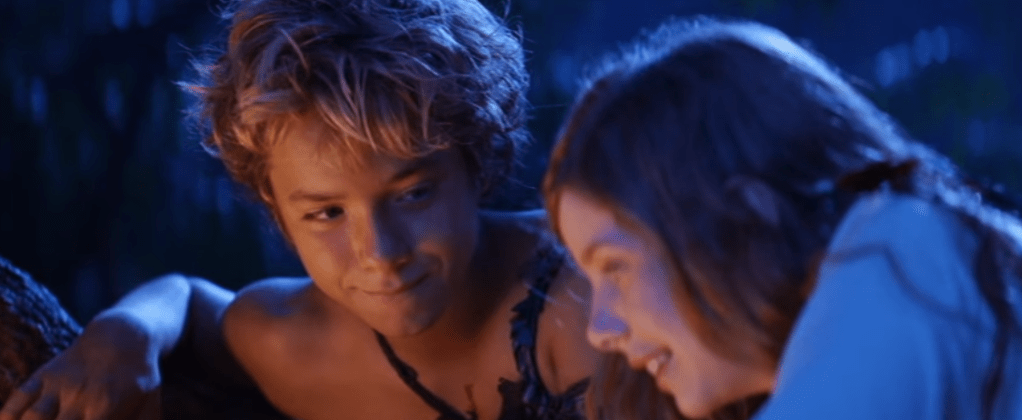
Back in middle school, P.J Hogan’s 2003 film Peter Pan was on the top of my list of guilty pleasures to indulge in after school. The film itself was enchanting to watch as a teenager. The colors were amazing, the music score magnificent, and the story? Honestly, it still has me in its grip.
There are plenty of things I can say about the story of Peter Pan and every iteration of the character made since J. M. Barrie brought him to life. At it’s core, Peter Pan is a story about a young boy who’s long been wisped away from his home to a land that grants him eternal youth. Every now and then, he leaves Neverland to collect Lost Boys to keep him company, and that is where Hogan’s film takes off from.
The catalyst for the meeting between Wendy Darling and Peter Pan is her father’s angry outburst at the young girl after embarrassing him at his work. “It’s time for you to grow up!” He hisses in front of his teary-eyed children. Later that night, Peter crashes into the children’s bedroom and takes them away to Neverland for a journey they wouldn’t forget.
“Oh, Wendy… You shouldn’t have…”
I think it would be fair to say that we all feared growing up at some point. Peter Pan’s position as The Boy Who Wouldn’t Grow Up takes the storytelling of every iteration of Barrie’s character into a bittersweet spin of that universal fear. What makes Peter Pan an amazing story to me, is that not only does this facet of Pan’s character tap into something I can closely relate to, it’s also extended to the entire realm he inhabits.
Though at the top of Pixar’s list of rules is the declaration that “You admire a character for trying more than for their successes“— Pan is a character that constantly triumphs over his nemesis. And yet we, as the audience, still root for him. What holds me to the story, despite that, are the rules of the land he occupies and the juxtaposition between both the neveraging Boy and the Adult he faces.
The story of Peter Pan is so simple and focused on this facet of Pan’s character that it doesn’t leave much to spare in terms of the worldbuilding of Neverland. To be perfectly honest, it doesn’t need to. The story is a simple child’s tale about a young boy, and the simplicity of Neverland matches that in tone. The rules don’t need to be overly complex because children don’t care for the details. You need pixie dust in order to fly. Fairies stop existing if you stop believing in them. Simple and clean.
“The second star to the right
Brooke, Jonatha. “Second Star To The Right .” 2002.
Shines with a light that’s rare.
And if it’s Never Land you need
Its light will lead you there.”
Even if you take the mythic boy out of the equation, Neverland is still an alluring environment to explore and that is all in thanks to how well the story has managed to merged Peter Pan and Neverland into one being.
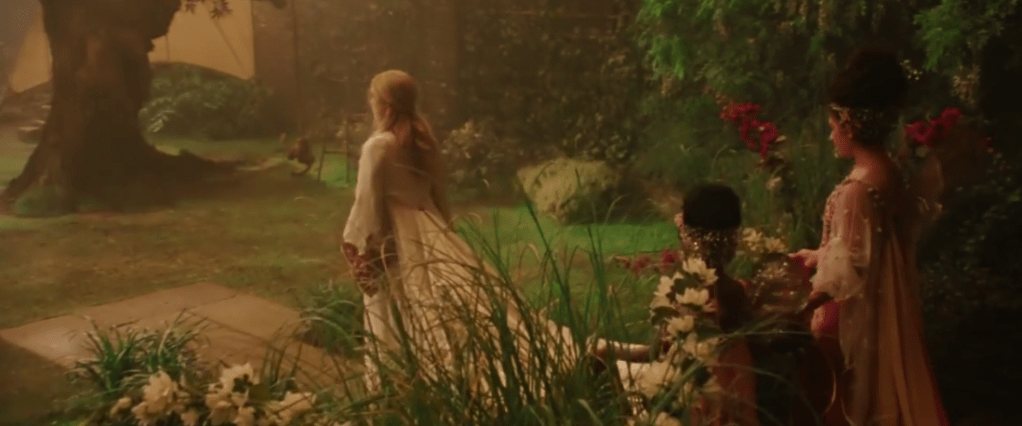
It doesn’t need to be questioned that the above image is of Neverland. Neverland as an extension of Peter Pan’s character is a place of magic and youth; and we can see this even though the above is just a stage designed to mimic the place.
The story of Peter Pan and all of its iterations are what I believe excellent uses of Kenn Adams’ story spine and what it is meant to be at its core. In his final thoughts: “… the Story Spine is not the story, it’s the spine. It’s nothing but the bare-boned structure upon which the story is built.” The fundamentals of Peter Pan’s character are so simple and focused, that both Peter Pan and Neverland build off of each other and can still remain separate.
The storytelling is so compelling to me because Peter Pan was someone I related to as a child who too didn’t want to grow up, and as the years went, I no longer related to Pan but still found myself holding onto Neverland. This hold on me is what makes the story of Peter Pan one of my favorites.
 EXSM 3989 - Digital Storytelling Class Blog