“It is a truth universally acknowledged, that a single man in possession of a good fortune, must be in want of a wife.”
—Jane Austen
The first sentence of Jane Austen’s Pride and Prejudice is extremely well-known, and for good reason. It immediately captures the reader’s attention by making a bold statement, and also offers a concise summation of the entire plot. The book revolves around a group of sisters and their potential suitors, and highlights the centrality of advantageous marriage in the Regency era. It has managed to captivate readers for well over 200 years, and though different print versions all had their own style, the core story is what has people coming back, generation after generation.
“Netherfield Park is let at last!”
—Mrs. Bennet
As Ashley Fell explained in a TEDxUniMelb talk, good stories have colour, picture and movement. Given that so much of the novel is set indoors, in ball rooms and drawing rooms, it may seem as though the characters aren’t really going anywhere. However, there is in fact constant movement, with individuals calling on friends, attending events, gathering in the drawing room for conversations and more. Austen also peppers the story with visual details that allow the reader to truly immerse themselves in the world, documenting everything from the trim on a dress to the scathing look delivered across a dance floor. These rich descriptions mean the story lends itself well to adaptations, such as the 1995 miniseries or the 2005 feature film starring Keira Knightley as Elizabeth Bennet.
“To Elizabeth it appeared, that had her family made an agreement to expose themselves as much as they could during the evening, it would have been impossible for them to play their parts with more spirit, or finer success.”
—Jane Austen
As outlined in “The 22 rules of storytelling, according to Pixar,” good stories are universal. While the customs and courtship portrayed in the novel are from an earlier time, the concepts of love and family are themes that every human is impacted by.
There are several different models of marriage presented in the novel, from the passion-filled courtship between Elizabeth and Mr. Darcy to Charlotte Lucas’ decision to marry Mr. Collins, simply because the match would provide her with financial security. Every character navigates the expectations of the Regency period in their own way, deciding what they value most.
The family connections that characters have serve a tremendously important role in the process as well. Elizabeth often feels embarrassed by the behaviour of her family, from her younger sisters’ antics to her mother’s schemes, and must navigate those complications as she tries to make sense of her romantic feelings.
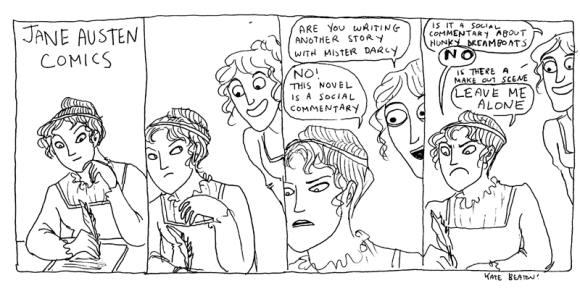
There’s a reason that romantic comedies remain popular to this day, and that there are still sitcoms revolving around zany families and their interactions — the themes of love and family are universal.
“I am no longer surprised at your knowing only six accomplished women. I rather wonder now at your knowing any.”
—Elizabeth Bennet
One of the reasons Elizabeth is such a beloved character is precisely because of how opinionated she is, particularly when contrasted against many of the other, more passive women in the novel. As the above quote demonstrates, she’s quick to point out that Mr. Darcy has unrealistic expectations of women, and through their interactions she proves time and time again that she considers herself his equal.
This is particularly notable when considering the stakes at play. The Bennet sisters were in a social class where an advantageous marriage was the only real way to achieve stability and independence, a fact underscored by Mrs. Bennet’s clear desperation to get all her daughters married off ASAP.
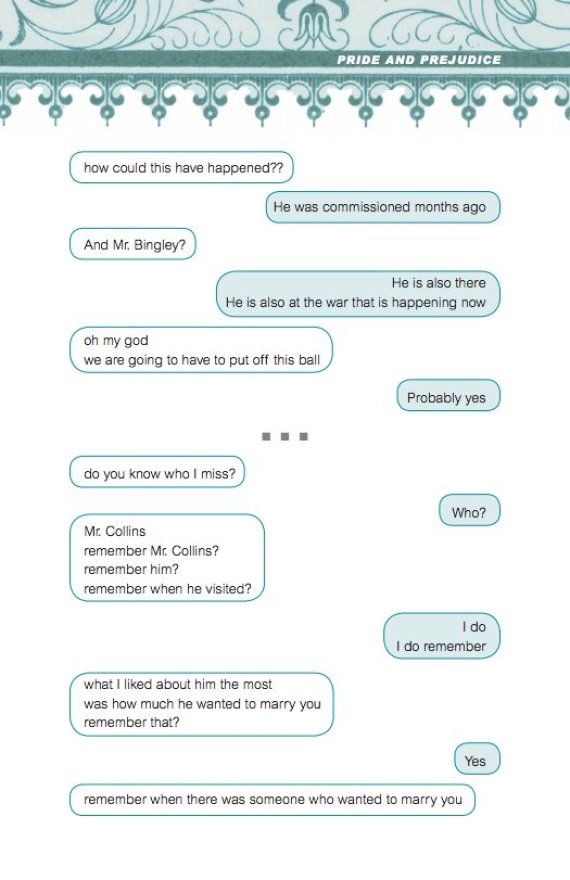
A page from Mallory Ortberg’s Texts from Jane Eyre: And Other Conversations With Your Favorite Literary Characters, in which she imagines a text conversation between Elizabeth Bennet and Mrs. Bennet.
This undercurrent amplifies the significance of Elizabeth’s bold nature — she is unwilling to compromise, as Charlotte Lucas did, and marry someone she doesn’t feel is the right match, even though it would promise her a life of comfort.
Elizabeth Bennet, 2.0
In a 2016 piece published for NPR, Alison Macadam urges her followers to look beyond the simple 5W’s of journalistic storytelling and ask an important question — “what will the audience remember when it’s over?” In the case of Pride and Prejudice, it is the characters that truly stand out, which is perhaps one of the reasons they have been at the centre of so many additional works. Readers were desperate for more about the characters, and there are countless new stories that explore the world through their eyes.
 EXSM 3989 - Digital Storytelling Class Blog